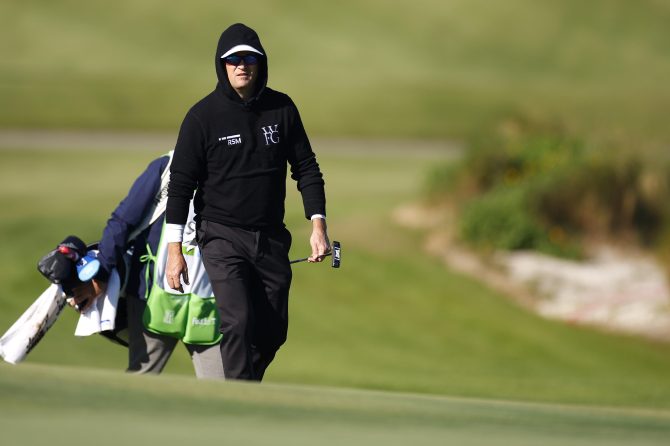
Xander Schauffele ended a season-long drought with a final-round 7-under 65 to claim the Baycurrent Classic at Yokohama Country Club, his first victory of 2025. This article examines the clubs he carried that week-driver through putter-and how equipment choices helped power his winning charge.
Driver and fairway woods: Why Schauffele trusted a mid-launch driver with a light composite shaft at Baycurrent – and when club golfers should consider the same approach
Reports from Yokohama indicate Xander Schauffele chose a driver setup that favored a controlled, mid-height ball flight combined with a lightweight composite shaft (~45-55 g). That pairing traded a small amount of peak yardage for more predictable dispersion on a course that penalizes errant tee shots. Data shared by observers suggest his driver was producing a launch angle around 11°-13° and spin rates near 1,800-2,500 rpm – figures that limit ballooning in gusts and increase rollout on receptive turf. The practical result: Schauffele hit more fairways while keeping enough carry to hold long championship holes. Coaching takeaway: opt for a controllable trajectory rather than chasing maximum distance when course design or wind magnifies the cost of misses.
Getting the most from a mid‑launch head and a lighter shaft requires intentional setup and an efficient motion. Start with the ball slightly forward of center for the driver, create a spine tilt of roughly 10°-15° toward the target to promote an upstroke, and rotate the shoulders to create width rather than lateral sliding. During the swing, focus on a relatively shallow attack and preserving lag through transition so the club approaches the ball on a mildly upward path; target a positive attack angle of +1° to +4° and a dynamic loft that supports the desired launch window. Useful practice drills to ingrain this feel include:
- Impact‑tape practice: place tape on the face to train center contact - aim for at least 70% of strikes inside the central 2‑inch zone.
- Controlled takeaway progression: 10 reps from a half‑speed takeaway into a full swing to preserve width and a shallow plane.
- Spine‑tilt mirror check: 20 deliberate, slow reps to cement a consistent 10°-15° tilt at address.
these exercises help turn the lighter shaft into an advantage instead of a hindrance.
Amateurs considering SchauffeleS approach should be selective. A practical guideline: players with driver swing speeds in the 105-120 mph range can benefit from a mid‑launch head paired with a lighter composite shaft to achieve a similar balance of control and distance; players below about 95-100 mph risk losing ball speed unless they have exceptionally smooth tempos. When testing, try drivers in the 9°-12° loft window with shaft weights between 45-60 g, and monitor launch and spin on a launch monitor. Validate changes on the course with a two‑week experiment:
- Log 30 range drives and 30 course drives, tracking carry, dispersion and subjective feel.
- Increase loft by 1° if launch falls under 9° or spin climbs above ~3,000 rpm; move to a stiffer or heavier shaft if lateral dispersion exceeds a 20‑yard target for mid‑handicappers.
A common error is dropping in a lighter shaft without adapting tempo – this often causes wider dispersion. Correct by rehearsing tempo drills and shadow swings to stabilize sequencing.
Fairway woods were an significant complement in Schauffele’s Baycurrent bag: a low‑spin 3‑wood for tee options and a 5‑wood for long approaches when scoring windows were tight. When moving from driver to fairway woods, shorten the shaft by about 0.75-1.25 inches,shift the ball slightly back in your stance,and flatten the swing arc to compress through turf for consistent carry. Use these clubs in line with course management: on tight tee boxes or into greens protected by hazards,choose a 3‑wood or 5‑wood to minimize lateral risk and raise green‑in‑regulation chances. Training suggestions:
- Greens‑to‑fairway drill: pick 10 targets spaced 10 yards apart to fine‑tune trajectory selection and club choice.
- Wind‑control session: hit 20 fairway‑wood shots at ~90% of normal clubhead speed to practice trajectory control in breezy conditions.
Routine like this, combined with reliable yardage book habits, produces measurable scoring gains.
Ultimately, pair equipment selection with a focused practice plan and a mental routine so technical improvements become lower scores. Set weekly performance goals such as cutting driver dispersion to a 20‑yard corridor, boosting fairway‑hit percentage by 10%, or narrowing approach distance variance by one club. Diagnostic checkpoints should include:
- Contact consistency: center‑face strikes ≥70%.
- Launch/spin targets: launch 11°-13° and spin 1,800-2,500 rpm for a mid trajectory.
- Tempo stability: maintain a practiced backswing-to‑downswing rhythm (for example, a 4:1 ratio in measured drills).
Keep gear conforming to the Rules of Golf and schedule a brief fitting before switching to a markedly lighter shaft – the aim is to copy Schauffele’s approach, not necessarily his exact components: fit the clubs to your swing, prioritize controllability over raw distance, and practice with measurable metrics so range decisions carry over to tournament and recreational play.
irons and scoring clubs: Loft mapping, gap management and flight‑control tweaks that delivered reliable approaches in event conditions
Consistency with approach shots starts with disciplined loft mapping and measuring true carry distances on a launch monitor or at the range. Coaches advise recording carry, total distance, launch angle, spin and attack angle for every scoring club; as a reference, many players see a 7‑iron carry of about 150-170 yards with launch between 12°-16° and spin commonly in the 3,000-6,000 rpm range, while wedges frequently enough spin between 6,000-11,000 rpm. Convert that data into a usable gapping plan by targeting roughly 8-12 yards between clubs so you can pick a club for a particular flag location with confidence. Observers of Schauffele’s week at Baycurrent noted his emphasis on tight gapping and repeatable numbers – a strategy players at every level can adopt: record your distances, adjust them for course conditions, and carry a laminated card into competitive rounds.
After you know your distances, fine‑tune the swing to produce predictable flight. Begin with setup basics: a slightly narrow stance for scoring irons, the ball just forward of center for mid‑irons and a touch farther forward for long irons; keep roughly 55-60% pressure on the lead foot through impact. To achieve consistent compression and spin, work toward a mildly downward attack angle around −2° to −4° with irons – this fosters crisp contact and repeatable divots.Helpful drills include:
- Impact‑bag drill: practice forward shaft lean and rotation for better compression.
- Gate drill with tees: enforce a square face at impact.
- One‑footed half‑swings: develop balance and tempo awareness.
These exercises suit beginners (who need stable balance and clean contact) and better players (who can fine‑tune attack angle and shaft lean), with measurable objectives such as reducing range dispersion by 25-40% over four weeks.
Trajectory control bridges swing mechanics and strategic club selection. Three dependable levers are impact loft (shaft lean), swing length/speed, and face path/face angle. To lower ball flight in wind, move the ball back by about one ball‑diameter, add a degree or two of forward shaft lean to cut dynamic loft by roughly 2°-3°, and shorten the backswing to keep tempo consistent; this lowers launch and increases rollout. To hold firm greens, increase dynamic loft (less forward shaft lean), accelerate through impact to raise spin (for wedges aim near 7,000-10,000 rpm), and move the ball slightly forward for a higher trajectory. Drills that train trajectory control:
- Flight‑window drill: hit progressively lower then higher shots through a fixed target to feel the differences.
- Partial‑swing ladder: use 30%, 50%, 75% and 100% swings to chart carry versus swing length.
These routines help convert numbers into reliable on‑course flight choices.
Gap management connects equipment and technique to tangible scoring decisions. A common scoring wedge set is PW 46-48°, GW 50-52°, SW 54-56°, and optional LW 58-60°, which typically yields usable gaps around 8-12 yards. If your launch‑monitor data show wider gaps, consider re‑lofting, adding a gap wedge, or changing shafts to tighten distances. Course rules of thumb: when unsure, play to a preferred side of the green; accept a small hook/fade bias (as an example, a 3‑yard hook or 1‑yard fade) in windy crosswinds; and choose the club that leaves an uphill chip rather than a long, downhill putt. Mirroring schauffele’s Baycurrent approach, he often selected the club that left the most manageable recovery area when pins were risky – a mindset every level can use to translate technical strengths into lower scores.
Pre‑tournament routines and the mental plan make practice count under pressure. Build a concise warm‑up: 15 minutes on wedges (30-80 yards partials and stopping control), 10-15 minutes with mid‑irons (rehearse nine specific yardages from your loft map), and 10 minutes on bunker/short‑game work. Carry a laminated yardage card and note green speed and firmness after the practice round. common errors and fixes include:
- Over‑clubbing: trust measured carry numbers; prefer easier up‑and‑downs to long putts.
- Excess body sway: correct with a feet‑together balance drill.
- Inconsistent spin: check loft at impact and strike quality (thin contact reduces spin; heavy,fat strikes reduce distance and spin).
Tie physical preparation to mental routines: use a short pre‑shot sequence,commit to a shot shape (draw or fade) based on yardage and pin,and adopt Xander‑style principles – prioritize high‑probability targets and tight loft gapping – to turn approach repeatability into better tournament scoring.
Wedges and the short‑game toolkit: Bounce and grind selection, spin control and shot plans for tight lies and bunkers
Equipment choices determine the repertoire of short‑game shots available. Instructors evaluate loft, bounce and grind together: choose a higher‑bounce wedge (around 10°-14°) for soft sand and fluffy turf, and a lower‑bounce option (4°-8°) for tight lies and firm turf. At Baycurrent, Schauffele’s bag reflected that balance – reportedly a 50° gap with low bounce for tight approaches, a 54° sand wedge with medium bounce for greenside work, and a 58° lob wedge with a versatile grind for open‑face shots.Less experienced players should generally favor more bounce to prevent digging, while skilled players can exploit specialized grinds (for example, a C‑grind for open‑face versatility or an S‑grind for neat turf interaction) to shape shots. Setup principles to pair with equipment: ball back of center for low running chips; weight forward (60-70%) for bunker exits and compact‑lie punches; and pronounced shaft lean (hands ahead of the ball) when crisp contact is required.
Spin control starts with strike quality and the condition of grooves.To maximize spin, hit a clean, descending blow and maintain face loft through impact; to reduce spin, de‑loft a touch and accelerate with a shallower attack. Aim for consistent compression on short shots that keeps launch variance within ±2° and carry variance within ±5 yards for predictable spin results. Drills to refine contact and spin response include:
- Impact‑mark drill: strike 20 short chips and mark ball/groove contact to confirm center‑face hits.
- Edge‑tape drill: position thin tape 1-2 inches behind the ball to train taking sand just after the ball for high‑spin bunker shots.
- Spin ladder: from 30, 40 and 50 yards try to stop the ball inside progressively smaller rings; aim for a 70% success rate inside a 10‑yard ring after four weeks.
These progressions help beginners build repeatable contact, intermediate players refine trajectory, and better players control spin for pinpoint distances.
Tight‑lie shots require both gear tweaks and technique changes. On firm lies,reduce bounce or close the face slightly so the leading edge engages; alternately,pick a lower‑lofted option (such as,Schauffele’s 50° gap) and play a bump‑and‑run. Steps to execute:
1) move the ball marginally back in stance, 2) put 60-70% weight on the front foot, 3) hinge the wrists less and shorten the swing to keep the arc shallow, and 4) accelerate through to avoid fat shots. Troubleshooting:
- If you fat: check forward weight and feel for forward shaft lean at address.
- If you thin: stop trying to scoop – keep a firm left wrist through impact.
- If the ball bounces too much: slightly close the face or play a bump‑and‑run with the same loft.
On firm days at Baycurrent, schauffele often favored a lower‑bounce 50° for tight approaches and relied on careful club choice to leave makeable wedge shots.
Bunker technique is both mechanical and tactical, tied to bounce and grind. For soft sand use a wider sole and higher bounce (about 10°-14°) and open the face to increase effective bounce; for compact sand choose lower bounce and a grind that lets the leading edge slide under the ball. key setup cues: open stance, ball slightly forward of center, set the clubhead 1-2 inches behind the ball at setup, and use a steep, accelerating stroke that lets sand carry the ball out. Bunker practice routine:
- Spend 15 minutes per session on a repeatable sand‑contact drill – target a consistent sand entry 1-2 inches behind the ball.
- Hit 30 bunker shots at varying distances (5-35 yards) and track sand‑save style recoveries; set a goal of 60-70% success on 10-20 yarders after a month.
Remember rules: do not ground your club in the bunker to test sand before the stroke, and plan around recovery angles – Schauffele’s sand‑wedge choices at Baycurrent highlighted his adaptability.
merge short‑game technique with tactical thinking and a calm mental routine to lower scores. Before each shot run a brief checklist: lie, wind direction and speed, green firmness, and whether pin‑high is worth the risk versus chipping to the middle.Follow schauffele’s patterns: when greens are soft and pins are tucked, use the 58° lob with an open face for control; when greens firm or wind rises, opt for lower lofts and bump‑and‑runs to limit spin variability. Mental/practice drills:
- A compact 30‑second pre‑shot routine focusing on target, intended shape and a single swing thought (such as, “accelerate through”).
- Weekly targets: 100 short‑game swings (30% bunker, 40% tight‑lie chips, 30% pitch shots) with outcome tracking and a short progress log.
By aligning equipment choice, consistent setup checks and focused practice, players can turn wedge mastery into fewer putts and lower scores.
Putter and putting routine disassembled: alignment habits, face construction and distance control methods that protected pars
Begin putting with a repeatable posture routine typical of tour players: neutral spine tilt, eyes over or just inside the ball, and a putter length that keeps wrists relaxed – commonly around 33-35 inches for adults. From available Baycurrent bag insights, Schauffele’s putter choice matched his stroke type (face‑balanced heads for straight strokes, toe‑hang for slight arcs). Try a simple on‑course check: lay an alignment stick on the target line and perform three pre‑shot routines; if the putter face returns within 1-2 degrees of that stick consistently, the putter and length are likely well matched. Beginners should place the ball center to slightly forward with feet about shoulder width; better players fine‑tune weight distribution to keep the lower body stable through the stroke.
Putter face design alters roll and feel. Milled faces generally promote earlier forward roll, while polymer inserts give a softer sensation and slightly different initial launch. In fitting, compare results on a reference green: on a 9-11 Stimp surface test a 20‑foot putt with a milled face and an insert, noting skid length (frequently enough the first 1-2 feet) and eventual roll‑out. Be aware of equipment restrictions: you may change equipment between rounds, but during a stipulated round switching putters can carry penalties unless local rules permit – so commit after testing. Adjust loft and lie so the face sits near 0-3 degrees of loft at address and returns square at impact to minimize sidespin.
Strong alignment habits come from a short, repeatable pre‑putt routine. On the practice green: stand behind the ball and select an aim point; step in, set the putter behind the ball with the shaft inclined to align the face to that aim; take two small practice strokes to feel tempo, then strike. Train this process through drills:
- Gate drill: place tees a putter‑head width apart and stroke through to eliminate face rotation.
- String‑line drill: run a string 10-20 feet toward a target to validate face alignment at setup and impact.
- Three‑spot routine: make three consecutive six‑footers from different angles before leaving the circle to simulate pressure.
These exercises help correct common flaws – such as an open face at address or wrist breakdown - and build a visual‑to‑motor link for all skill levels.
Distance control depends on consistent tempo and stroke amplitude rather than brute force. For lag putting, aim for a backswing‑to‑follow‑through ratio near 1:1.2 (slightly longer follow‑through) and scale stroke length to distance: 8-10 inches for 6-12 feet, 12-16 inches for 15-30 feet, and longer for >30 feet. Helpful drills include the Ladder Drill (place tees at 5‑foot intervals and try to leave each putt within 3 feet) and the Half‑Stroke Clock (use clock‑face degrees to cap backswing for consistent lag). Adjust for green speed and slope: on a fast surface reduce stroke length by 10-15%; on uphill putts add force but keep tempo unchanged.At Baycurrent, Schauffele emphasized leaving putts slightly above the hole and used a higher‑MOI mallet to maintain face angle under pressure – a practical equipment/strategy link for players seeking steadiness.
Combine mechanics, course sense and a steady mind to save strokes under pressure. When confronted with multi‑break putts or wind‑affected rolls, favor the safer line and try to leave putts above the hole; use down‑grain breaks to your advantage. Set measurable targets like: make 70% of inside‑6‑footers and leave 60% of lag putts (20-40 ft) within 3 feet after a focused two‑week cycle. Address typical mistakes – over‑reading greens, altering tempo under pressure, or wrong putter length selection – by creating pressure practice: play match‑play on the practice green or enforce a shot clock to keep routines.Blend visual drills (alignment sticks), feel work (eyes‑closed pendulum strokes) and data feedback (impact tape, launch monitor) to build a measurable path to fewer three‑putts and lower scores, as illustrated by Schauffele’s Baycurrent performance.
Shafts, grips and personalization: How flex, torque and grip diameter shaped feel and repeatability – and what to prioritize in a fitting
at elite fittings and in course play, shaft flex, torque and grip size interact to determine feel and shot consistency. Choose shaft flex primarily by swing speed and tempo: roughly <80 mph benefits from senior/regular flex, 80-95 mph from regular‑to‑stiff, and >95-100+ mph from stiff to extra‑stiff. Torque (commonly ~2.0-6.0° on modern shafts) affects perceived twisting at impact and face stability – lower torque gives a firmer feel and reduces face rotation for players with aggressive transitions.Observers of Schauffele’s Baycurrent bag noted a preference for lower‑torque, firmer shafts in the long clubs to produce a penetrating flight and tighter dispersion in blustery conditions. In practical fitting,begin by measuring clubhead speed,launch and attack angle on a launch monitor,then narrow shaft options by flex and torque until you hit the target launch/spin window for your swing.
Grip diameter is the tactile bridge between intention and impact; small changes can alter release and face control. Standard diameters range from around 0.540″ (standard men’s thin) to 0.600″+ (oversize/midsize); pick a grip that allows a neutral wrist hinge and relaxed fingers at address. A quick on‑course check is the pencil test: hold a pencil across the palm and grip the club – if the pencil tips toward the thumb side you may need a thicker grip to calm excessive hand action and hooks; if it falls toward the little‑finger side you may prefer a thinner grip to encourage release. Pros like Schauffele frequently enough favor slightly thinner grips to preserve wrist hinge and feel, but amateurs should prioritize control and comfort. Use these checkpoints while testing grips:
- Neutral wrist at address with slight ulnar deviation (for right‑handers), avoiding an overly cupped or bowed position.
- Relaxed forearms with minimal tension; calm breathing before swings.
- Repeatable hand‑placement marks so you can reproduce the setup under pressure.
Shaft profile and kick point also influence shot shape and trajectory. A tip‑stiff shaft with a low kick point boosts launch for lighter swingers, while a butt‑stiff shaft with a higher kick point flattens flight for players seeking workability. In real course situations – such as Schauffele’s delicate approach into a firm‑out pin at Baycurrent where spin management mattered - a mid‑to‑high kick point in irons helped keep descent predictable and enabled shaping into the wind. A simple on‑range fitting sequence is: (1) record baseline numbers (ball speed, launch, spin, carry), (2) test three shafts that vary mainly in torque, (3) hit 10 shots per shaft and track dispersion and carry variance, (4) iterate with ±0.5° loft or lie changes. Set measurable targets such as reduce 7‑iron carry dispersion to <10 yards or raise smash factor by 0.03-0.05 through better fitting.
Equipment changes should be tied to swing work and course strategy.When refining consistency,pair shaft selection with targeted drills: use impact tape to diagnose toe/heel misses and then tweak grip size or butt taper to improve face control; use a tee‑drill (ball on a 1-2″ tee) to train central contact and compare smash factor across shafts. Practice suggestions:
- Impact‑tape test: 30 shots per shaft/grip setup and map impact patterns against dispersion.
- Tee‑to‑turf drill: alternate fairway wood and long‑iron swings to find attack consistency; revisit shaft flex if early release persists.
- Wind‑shaping routine: practice a low punch 7‑iron and a high draw 5‑wood to learn how flex and torque affect shape in crosswinds.
Prioritize personalization during a full fitting and translate it into on‑course strategy. Start with the driver shaft to lock in launch/spin, then proceed through fairways, hybrids and irons, finishing with wedges and putter grips – let measured numbers drive choices rather than looks. Key fitting priorities: swing speed & tempo, attack angle, ball‑flight tendency, and preferred shot shape. Make small adjustments (for example, change grip diameter by +0.020-0.040″) and re‑test a set of swings, using realistic course simulations to validate performance under varied lies and wind. Ensure all equipment complies with USGA/R&A rules for competitive play. the psychological confidence from properly matched shafts and grips - a consistent feel that supports a repeatable pre‑shot routine – often translates into better club selection, smarter management in difficult conditions, and measurable score improvements across the bag for players from beginners to low‑handicappers.
Course management and club selection: How Schauffele aligned clubs to Baycurrent conditions and practical rules for smarter shot choices
On windy, firm setups like Yokohama, pros often prize trajectory control and rollout prediction more than outright carry. Observers noted Xander Schauffele paired a low‑spin, slightly lower‑lofted driver (near ~9°) with a 3‑wood and a 3‑hybrid (18-20°) to create multiple workable options from the tee and into tight, fast greens. Basic course management guidance: measure to the front, middle and back of the green, then pick the club that carries to the front edge plus expected rollout - on firm turf assume an additional 10-20% rollout. For example, if the front of the green carries 150 yards and firmness suggests 20% rollout, choose a club you can carry 125-135 yards so the ball releases toward the pin rather than running well past it.
Shot shape and trajectory control were central to Schauffele’s plan; he blended controlled fades and lower‑trajectory draws to check wind and run approach shots onto greens. To produce these shapes focus on setup and attack angle: keep the ball slightly forward for a lower driver flight, use neutral to slightly forward position for hybrids and long irons, and aim for an attack angle near +1° to +3° with the driver but about −2° to −4° with irons for crisp turf contact. Beginners should practice a simple path/face gate drill using two alignment sticks; advanced players should use a launch monitor or carry charts to choose the club that delivers the right mix of launch angle, spin rate and carry for each wind vector and lie.
Short‑game and approach strategy followed a simple rule: land it where it will stop. On fast Baycurrent greens (stimpmeter readings were frequently in the 10-12 ft range during daytime play), select wedges that control spin and trajectory: a 56° sand wedge for standard bunker and chip shots and a 60° lob for high, soft stops when pins demand it. Identify landing zones that funnel the ball to the hole – on a downhill approach aim to land the ball 8-15 ft above the cup to allow for rollout. Practice with measurable drills such as chipping to a towel target from three distances and track the percentage of shots stopping within a 6-10 ft radius; aim for 70% of chips within 10 ft over four weeks.
Smart course management also means choosing the lower‑risk option under pressure. Schauffele’s Baycurrent rounds showed consistent conservative distance control into tight pins and aggressive lines when reward justified it. Practical rules: if the pin is tucked behind a slope, play to the center; if wind tops 15 mph and you need to hold the green, club up and use a lower trajectory. Observe the Rules of Golf – play the ball as it lies unless a local preferred‑lie is in effect – and consider a provisional ball near OB to avoid losing strokes. Favor the safer side of the green with more bailout room; that extra conservative club can turn a likely bogey into a par.
Make these tactics reliable by practicing them in a weekly routine: combine full‑swing calibration with short‑game simulations. Start sessions with a 15‑minute launch‑monitor check to verify carry numbers, then spend 30 minutes on wedge landing‑zone drills, and finish with pressure chipping and putting (for instance, make 12 of 18 from inside 10 ft to end). Troubleshoot common faults with targeted fixes: if approaches are coming up short, check shaft lean at address and increase attack angle by 1-2°; if chips spin too much, close the face a touch and widen the stance.Use these in‑round checkpoints:
- Pre‑shot measure: front/mid/back distances and wind vector
- Club selection rule: carry to front + rollout allowance
- Trajectory decision: lower flight for wind, higher for soft holding greens
- Conservative target bias: favor center or bailout when risk outweighs reward
Practice these repeatable actions and adopt Schauffele‑style club‑matching logic to convert strategy into fewer big holes and steadier scoring.
Q&A
Q: Why focus on Xander schauffele’s clubs after the Baycurrent Classic?
A: Schauffele’s win in Japan – his first on tour in 2025, as reported by CBS Sports – ended a difficult stretch and refocused attention on the equipment and tactical choices that helped him close. Fans and coaches often dissect a winner’s bag to learn what tools and decisions produced late‑season form and a tournament victory.
Q: what’s the general composition of the bag Schauffele used at Baycurrent?
A: Like many top players, Schauffele’s set was built for tournament play: a driver, at least one fairway wood, a hybrid or long‑iron option, a matched set of mid‑ and short‑irons, several scoring wedges, and a putter. Shafts and lofts are commonly custom‑fit to each player’s swing profile.
Q: Did Schauffele debut any headline equipment changes before the event?
A: Coverage of the Baycurrent Classic emphasized his return to winning form more than new gear.The CBS Sports write‑up did not highlight any major sponsor or model changes, suggesting he played a set he had used through the season.
Q: Which club categories stood out in his victory?
A: Tournament success usually hinges on solid short‑iron play and consistent putting. Observers noted Schauffele’s ball‑striking precision and reliable iron play – traits that translate into hitting greens in regulation and converting birdie chances. On fast new greens in japan, wedges and the putter also took on increased importance.
Q: Are the exact club models publicly confirmed?
A: The CBS Sports summary did not publish a full “what’s in the bag” list. Definitive model inventories usually appear via manufacturer releases, post‑round interviews, bag photos, or equipment databases; those sources are needed for a model‑by‑model confirmation.
Q: How does Schauffele’s equipment profile reflect his style?
A: His setup emphasizes consistent ball striking, tee‑to‑green accuracy and deft wedge play. The configuration leans toward control and predictability over raw distance – a setup that supports precise approach shots and efficient scoring from inside 150 yards.
Q: Where can readers find a verified WITB breakdown?
A: For an authenticated “what’s in the bag,” consult official interviews, detailed equipment features at major golf outlets, manufacturer announcements, high‑resolution winner photos, and specialized tour equipment databases - these outlets often publish full lists shortly after an event.
Q: Will this victory spark equipment changes?
A: Wins sometimes prompt adjustments but rarely wholesale, immediate overhauls. Players and manufacturers typically review performance data before altering setups. Given the narrative of Schauffele’s long season and the premium on consistency, any changes are likely to be incremental and evidence‑based.
If you’d like, I can pull post‑event coverage and equipment databases to produce a verified model‑by‑model WITB for Schauffele’s Baycurrent Classic bag. Which level of detail would you prefer?
Schauffele’s Baycurrent Classic triumph – a final‑round 7‑under 65 at Yokohama Country that delivered his first win of 2025 – highlighted how intentional club selection and fitting translated into results. As the season progresses, his equipment decisions will remain under scrutiny as he pursues additional titles.

inside Xander Schauffele’s Winning Arsenal: The Clubs That Conquered Baycurrent
Baycurrent Classic – the context
In October 2025 Xander schauffele returned to the winner’s circle at the Baycurrent Classic, firing a final-round 7-under 65 at Yokohama Country Club and edging out Max Greyserman in a tight finish. That week showcased the full complement of tools elite players rely on: power off the tee, mid-iron precision, and a short game that saves strokes when course setup and tight pin locations demand it.
The modern professional bag: an overview of Schauffele-style priorities
What the winning arsenal emphasizes:
- Consistent driver that balances distance and accuracy for strategic tee shots.
- Reliable fairway wood and hybrid options for long approach control and recovery.
- Irons with tight yardage gapping to attack greens at scoring opportunities.
- Multiple wedges (different lofts and bounces) for varied lies and spin control.
- A putter that promotes confidence on fast, tricky greens.
Bag Breakdown – Club-by-club (typical pro setup reflecting Schauffele’s game)
| Club | purpose | Notes / typical Specs |
|---|---|---|
| Driver | Controlled distance off the tee to set up approach shots | 9°-11° loft; low-mid spin; strong-but-forgiving head |
| 3‑ & 5‑Wood | long approach or tee-on-par-5 scoring | Wood for launch with workable trajectories |
| Hybrid (2/3) | Long trouble shots and tight fairway misses | Higher launch than long irons; easier turf interaction |
| Irons (4-9) | Approach shots and shaping into the green | tight gapping with progressive forgiveness |
| Wedges (Gap,Sand,Lob) | Score-saver shots,bunker play,spin control | Lofts ~46°-60°; varied bounce for turf/lie versatility |
| Putter | stroke consistency on medium-fast greens | Face technology for feel; matched to stroke type |
How each club contributes to a Baycurrent-style victory
Driver – pick the tee shots you can trust
A modern champion’s driver is never “all distance.” For Schauffele-style success at courses like yokohama Country Club, the priority is placement and predictable ball flight. Hitting fairways sets up shorter irons into greens where birdie opportunities appear. Workable trajectory and moderate spin help golfers hold greens and stay out of collection areas.
Fairway woods and hybrids – scoring options and safety valves
Fairway woods turn par-5s into scoring chances and hybrids bail you out of long rough or awkward tee positions. Using a 3‑wood on tighter par-5s or long par-4s gives pro‑style players alternate ways to get the ball close without needing driver every time – essential for course management under tournament pressure.
Irons – the iron game that won tournaments
Tight distance gapping between irons is a hallmark of elite setups. When you can reliably predict how far each iron goes, you can attack pins with higher confidence. For schauffele, consistent iron striking – especially in the final round – converts birdie chances and avoids bogeys.
Wedges – where champions save strokes
Schauffele’s win featured outstanding wedge play and scrambling from tricky lies. Multiple wedges with intentional loft gaps (for example a gap wedge, sand wedge, and a higher‑lofted lob wedge) allow a player to control spin, trajectory, and landing angle - crucial on greens with slopes or soft landing zones.
Putter – converting chances and closing the door
A reliable putter is the backbone of tournament scoring. Lower three-putt frequency and a hot streak from 8-15 feet can be the difference in a tight duel. Schauffele’s final-round scoring was supported by steady putting, as seen in his 7-under performance.
Practical tips: Build a winning bag like a pro
- Prioritize gapping: Test yardages on the range and course. Aim for 10-15 yards between clubs through the scoring irons and 6-8 yards between wedges.
- Mix forgiveness with workability: Keep a couple of forgiving clubs but maintain workable heads in the scoring irons to shape shots when needed.
- Choose wedges with varied bounce: Low bounce for tight lies, medium for general play, and high for soft sand and fluffy turf.
- Dial in shafts: Shaft profile matters as much as club head. Choose flex and torque that create consistent launch and spin for your swing speed.
- Practice simulation sessions: Recreate tournament pin placements and practice scramble scenarios so you’re ready when course conditions are tight.
Wedge setup checklist (rapid reference)
| Item | Why it matters |
|---|---|
| Loft spacing | Even yardage gaps avoid distance overlap |
| Bounce options | Match bounce to course conditions/lie types |
| Groove condition | Newer grooves give more spin on greenside shots |
| Grip size | Controls feel for delicate short-game strokes |
Case study: How precision wedges and course management sealed Baycurrent
During his final round at the Baycurrent Classic, Schauffele demonstrated the classic pro combination: hole-by-hole discipline and wedge precision. A 7-under 65 in a final round is rarely the product of pure power - it’s controlled aggression.By selecting the right club off the tee to leave preferred approaches and dialing wedge distances into the greens, he minimized risky recovery shots and maximized birdie chances.
Key takeaways from that performance you can emulate:
- Play to your strengths on approach. If you’re confident with a 56° wedge from 80 yards, look for ways to use that shot rather than forcing a long iron.
- On week-long events, adjust loft and bounce to match green speeds and turf conditions early in the week.
- Stay mentally even when the leaderboard piles up – consistent pre-shot routine and sticking to club decisions are decisive under pressure.
Practice drills inspired by Schauffele’s short game
- Distance ladder with wedges: From 40 to 120 yards, hit shots every 10 yards and track dispersion to confirm gapping.
- Landing zone drill: Place towels at landing distances for your wedges; practice hitting to specific landings to control rollout.
- Up-and-down rotation: Practice bunker-to-putt and rough-to-putt scenarios in sets of three to simulate scrambling pressure.
- Speed drills for putting: Use ladder drills from 20,30 and 40 feet to control pace and avoid three-putts.
First-hand approach: course management tips you can use
- Scout the hole: identify safe miss areas where your recovery wedge will be effective.
- Choose the club that gives you the target you want - not the one that “feels” powerful.
- Use wind and slope to your advantage: adjust club selection by 1-2 clubs when wind or elevation changes are notable.
- When pin is tucked, aim for center-of-green vs.chasing a tough pin – par is often a win compared with risky approaches.
SEO keywords and intent mapping (for editors)
Include these target keywords naturally across the article: Xander Schauffele, Baycurrent Classic, Baycurrent Classic 2025, driver setup, golf clubs, wedge gapping, short game drills, PGA Tour winner, club fitting, course management, wedge strategy, golf bag setup. Use variations in H2/H3 tags and image alt text for best optimization.
Quick “what to change in your bag” checklist
- Confirm yardage gaps with a launch monitor or on-course checks.
- Add or remove a hybrid to replace a long iron if you’re inconsistent from turf.
- Tune wedges so you have a reliable scoring loft around 50-100 yards.
- Match putter head style to your preferred stroke path (arc vs.straight-back-straight-through).
Notes and sources
This article references Xander Schauffele’s baycurrent Classic victory (final-round 7-under 65) and contemporary coverage of the event. For tournament specifics, consult primary coverage from PGA Tour and tournament reports. The equipment philosophy and club recommendations are based on standard professional bag-building practices and on-course strategy that mirror how top pros convert scoring opportunities under pressure.