
Introduction
Recent improvements in sensors, computational capacity, and analytical techniques have shifted the study of human movement from rule-of-thumb coaching toward precise, evidence-driven assessments of sport-specific biomechanics. In golf-where tiny refinements in movement can yield large performance returns-quantitative analysis provides a reproducible framework to describe the multi-segment, time-critical act of the swing. By combining kinematic and kinetic measurement systems (for example, optical motion capture, inertial measurement units, and force platforms), advanced signal processing, and multivariate modeling, practitioners can isolate the mechanical drivers of clubhead speed, shot consistency, and injury exposure across ability levels and settings.
Despite increasing uptake, the field is still heterogeneous in measurement protocols, feature extraction workflows, and the way lab-derived metrics are converted into coaching plans.Challenges include disentangling player technique from equipment influences, accommodating anatomical and motor-control differences across athletes, and choosing analytic pipelines that tolerate noise and ecological variability.Overcoming these hurdles demands not only accurate data capture but also careful submission of statistical learning, time-series methods, and biomechanical modeling to reveal likely causal mechanisms-not just correlations-linking movement features to outcomes.
This review consolidates modern analytical strategies for studying the golf swing with a focus on methodological soundness and on-field utility. We survey sensor technologies and data-processing techniques, appraise commonly used indicators of sequencing and energy transmission (for example, segment angular velocities, torso-pelvis separation, and ground reaction force signatures), and outline multivariate approaches for predicting performance and tailoring interventions. Practical recommendations for experimental design, interpretation, and coach-researcher collaboration are highlighted to promote reproducible, evidence-informed practices that improve both results and athlete health.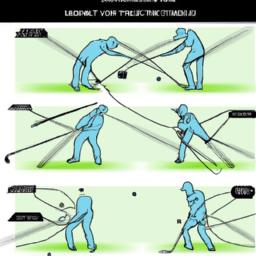
Sequencing and Timing: Kinematic Principles for Efficient Energy Flow
The golf swing attains efficient mechanical transfer through a coordinated proximal-to-distal cascade: the hips begin rotation, loading the trunk, which in turn leads shoulder and arm motion before the club is accelerated. This ordered activation elevates distal angular velocities while reducing dissipative interactions; more formally, effective intersegmental power transfer requires phase offsets so that each downstream segment peaks after its upstream partner. Core mechanical concepts include proximal-to-distal sequencing, conservation of angular momentum, and timely intersegmental torque handoff-each essential for maximizing clubhead speed and shot repeatability.
defining objective temporal markers within the downswing allows consistent assessment and targeted training. The table below offers representative windows for peak angular velocity expressed as a percent of the downswing (normalized from top of backswing = 0% to impact = 100%). Use these bands for comparison and trend identification rather than as rigid prescriptions.
| segment | Representative Peak Window (% of downswing) | Primary Role |
|---|---|---|
| Pelvis | ≈20-40% | Initiates rotation; contributes ground impulse |
| Trunk | ≈40-65% | Transfers torque; central sequencing element |
| Shoulders & Arms | ≈65-85% | Power amplification; sets wrist preload |
| Club head | ≈85-100% | Final velocity generation at impact |
Mechanically,efficient sequencing is resolute by three linked kinematic properties: (1) the size and timing of relative segment rotations (intersegmental displacement),(2) the velocity profiles of those rotations,and (3) the accelerative impulses produced by muscle-tendon units. Reducing unproductive co-contraction and eccentric braking between adjacent links preserves forward energy transmission. Athletes who show clear temporal separation of segment peaks-short inter-peak intervals with progressively larger distal peaks-tend to have better energy-transfer efficiency and lower compensatory loading on passive tissues.
Reliable analysis relies on time-normalized kinematic records and validation across methods.Typical techniques include:
- marker-based motion capture with inverse dynamics to estimate joint moments and intersegmental power exchange.
- Cross-correlation and phase-angle procedures in the time domain to quantify sequencing consistency across swings.
- Dimensionality-reduction methods (for example, principal component analysis) to reveal dominant coordination modes and their variability.
- Spectral and wavelet analyses to detect brief timing shifts and preparatory activation patterns.
Converting kinematic findings into training focuses more on timing refinement than only on adding strength. Practical strategies include tempo-controlled drills that compress or lengthen inter-peak intervals,rotational plyometrics and medicine-ball work to raise segmental power,and sensorimotor drills to reduce harmful co-activation. Using wearable IMUs or auditory/visual tempo cues supports iterative tuning of the temporal sequence, improving performance while moderating joint loads and long-term injury risk. In short, precise timing adjustment is as important as force development within an evidence-based development plan.
Ground Forces and CoP: How the Feet Drive Launch Conditions
Understanding how the athlete interacts with the ground is central to explaining how mechanical energy is created and routed up the chain. Force plates record the three components of the ground reaction force (vertical, anterior-posterior, and medial-lateral) and permit calculation of impulse and rate of force development (RFD). Pressure-mapping insoles provide center-of-pressure (CoP) paths that show when and where load shifts between feet. For impact-rich phases, high sampling rates (≥1,000 Hz recommended) and synchronized kinematics improve interpretability, with baseline trials used to capture intra-individual variability.
An efficient CoP pattern commonly includes a controlled lateral move in the takeaway, a quick medial transition, and a forefoot-forward bias at impact to maximize compressive force into the ball. Departures from these patterns-excessive lateral sway, premature CoP reversal, or a rearward CoP at contact-often correlate with lower clubhead speed or inconsistent strikes. Analysts emphasize CoP excursion magnitude and timing, CoP velocity, and the synchrony of peak shear forces with upper-body rotation onset to infer effective force coupling.
To increase power output, training should address both the size and orientation of GRF: generate strong vertical impulses while producing horizontal shear opposite the intended ball direction to translate ground force into club acceleration. Technical cues and conditioning measures include creating a rigid front-leg reaction, optimizing stance width to trade off stability and torque, and timing hip extension with torso rotation so peak GRF aligns with impact. Conditioning that targets RFD (plyometrics), unilateral strength to correct asymmetries, and resisted rotational throws tends to improve GRF profiles and more favorable CoP behavior.
Immediate feedback from pressure insoles or portable force platforms accelerates learning when paired with practical cues such as:
- “Push the ground back” (encourage posterior-anterior shear during the downswing),
- “Forefoot at contact” (aim for anterior CoP at impact),
- “Lock the lead leg” (raise peak vertical GRF and reduce sideways drift).
Below is a compact monitoring reference for session prescription and athlete benchmarking.
| Metric | Common Range | Coaching Objective |
|---|---|---|
| Peak VGRF | ~1.2-2.5 × bodyweight | Target a 10-20% increase over 8-12 weeks |
| cop AP excursion | ~3-8 cm toward forefoot | Establish forward CoP at impact |
| RFD (normalized) | Large individual differences | Improve within-subject RFD by 15%+ |
Interpreting GRF and CoP requires individualized baselines, normalization to mass, and time-series-aware statistical methods (for example, ensemble averaging or statistical parametric mapping). Balancing force development with movement resilience helps ensure GRF/CoP improvements carry over to on-course outcomes without increasing injury probability.
Torso-pelvis Coordination: Measuring Separation and Platform Control for Repeatable Strikes
Reliable ball striking depends on the coordinated relationship between pelvis and torso: rotational separation stores elastic energy, while pelvic stability provides a steady foundation for the distal chain. Trunk anatomy-including obliques, erector spinae, rectus abdominis, and deep stabilizers-limits both the achievable separation angle and the ability to resist unwanted translations. Quantitatively, separation is the relative rotation (degrees) between thorax and pelvis about the spine’s long axis, combined with measures of pelvic translation or acceleration.
Objective evaluation uses multiple instruments and clearly defined outputs. Typical measurement tools include optical tracking,IMUs,force plates,and sEMG. Core metrics are:
- Rotation separation (°): peak thorax-pelvis angular offset at the top and at transition.
- Timing (ms): delay between pelvis rotation onset and trunk rotation peak.
- angular velocity (°/s): rotation speed during the downswing.
- Pelvic stability (mm or m/s²): RMS lateral translation or acceleration around impact.
- Muscle activation: timing and amplitude of obliques, gluteals and lumbar stabilizers (sEMG).
Practitioners benefit from practical threshold bands. Example ranges observed in consistent striking and their coaching implications are shown below.
| Metric | Typical Band | Implication |
|---|---|---|
| Rotation separation | ~20°-45° | Greater separation often relates to higher clubhead speed if pelvic control is preserved |
| Pelvis translation | <20 mm (ML) | Lower lateral motion supports repeatable impact location |
| Pelvic accel (RMS) | Low trial-to-trial variance | Indicates effective stabilizer control near impact |
Analyses should target separation and stability together: boosting rotational capacity without improving pelvic control often increases variability, while excessive rigidity can blunt power. Advanced pipelines fuse kinematic segmentation with force templates and sEMG phasing to identify dysfunctional timing. Training typically includes anti-rotation core work, single-leg stability progressions, and tempo drills that encourage earlier pelvic initiation while maintaining pelvic-centroid alignment.
An evidence-based loop supports progress: collect baseline measures (rotation separation, timing, pelvic translation), apply a focused intervention (motor-control drills, strength work, biofeedback), then retest using the same metrics and report changes in means and variability. Developing rotational potential and stabilizing control in parallel-monitored objectively-tends to produce more consistent ball striking. Repeatable outcomes arise when mobility and control are advanced together and tracked systematically.
Clubhead Speed: Wrist Release Dynamics and Shaft-Load Insights
Maximizing clubhead speed requires close attention to distal mechanics-especially wrist behavior-and to transient shaft loading. Mechanically, speed at the club head reflects coordinated angular-momentum transfer along the chain, with the wrist release functioning as a rapid distal amplifier. Research and practical observation show that modest changes in the timing and rate of wrist unhinging can yield outsized increases in club tangential speed, provided proximal sequencing (hips and shoulders) remains intact. The practical aim is controlled conversion of stored shaft energy into clubhead kinetic energy at impact rather than simply increasing wrist motion.
Wrist behavior is usefully divided into two phases: lag maintenance during the downswing and a swift release during the late downswing/impact period. Preserving wrist angle (lag) until the appropriate release moment increases shaft bend and elastic energy storage; the release should be a short, high-velocity unhinging with minimal hand deceleration immediately before contact. Key markers include wrist angle at transition, release angular velocity, and the timing between maximum shaft bend and impact-these together predict clubhead speed more reliably than raw hand speed.
- Wearables: IMUs and strain sensors to quantify release timing and peak shaft load.
- Launch monitor data: high-frequency club and ball telemetry for correlational analysis.
- High-speed video: frame-by-frame reconstructions of wrist angle and release timing.
| Metric | Representative Range | Practical Meaning |
|---|---|---|
| Peak shaft deflection (°) | ~2-6° | More elastic return can raise clubhead speed |
| Release angular velocity (°/s) | ~1,500-3,000 | Faster release tends to increase ball speed |
| Hand deceleration (ms before impact) | ~0-20 ms | Minimal deceleration preserves energy transfer |
Turning measured targets into gains combines neuromuscular timing training and progressive mechanical loading. Strengthening wrist flexors and extensors under graded overload, plus perturbation-resisted swings, increases the capacity to keep lag at higher rotational speeds. Motor-learning drills that delay release (for example, tempo sets or pause-at-top repetitions) refine sequencing. Real-time feedback-via sensors or launch monitor readouts-helps align athletes’ subjective sensations with objective metrics such as shaft load and release velocity, speeding adaptation.
Practical drills should be short, consistent, and measurable. Useful practices include controlled short-swing lag holds tracked by a launch monitor, impact-bag repetitions to feel shaft rebound, and progressive weighted swings to raise tolerated shaft loading. Coaches should emphasize measurement reliability and incremental progress: small, trackable shifts in shaft deflection or release speed can be correlated to clubhead-speed changes across sessions. When biomechanical insight,accurate measurement,and disciplined training are combined,athletes achieve predictable increases in clubhead speed with fewer compensatory faults.
Neuromuscular Screening and Targeted Training to Improve Consistency and Mitigate Injury
Modern performance screening blends clinical neuromuscular evaluation with sport-specific biomechanics to reveal deficits that undermine repeatability and raise injury risk. Instrumented measures-such as sEMG, dynamometry, and muscle stiffness profiling-are adapted to quantify phase-specific activation, onset timing, and fatigue susceptibility during swing tasks. These data form the basis for individualized plans that distinguish variability caused by timing errors, insufficient force production, or maladaptive reflex stiffness-each requiring a different corrective approach.
Recommended components of a golf-oriented neuromuscular battery are practical for field use. Typical tests include:
- sEMG timing analysis across segmented swing drills to quantify sequencing and co-contraction;
- Rate of force development (RFD) and maximum voluntary contraction measured with field-friendly devices;
- Dynamic balance and proprioception assessed with single-leg rotational or perturbation tasks;
- Muscle stiffness and range checks to identify hypertonicity that may skew loading patterns.
These measures provide discrete, actionable metrics aligned with both performance goals and clinical warnings.
Interpreting results is best done through neuromuscular phenotypes rather than isolated thresholds. For instance,early trunk co-contraction with delayed gluteal activation suggests a strategy sacrificing rotational elasticity for perceived stability,which can amplify lumbar shear during the downswing. Conversely, low RFD in lead-hip musculature may show up as inconsistent impact timing even when maximal strength is adequate. Detecting consistent patterns-excess stiffness, sluggish reflexes, or delayed onset-lets clinicians and coaches separate motor-control problems from pathologies that need medical referral.
Interventions should be progressive, targeted, and measurable. Core elements include motor-timing retraining with phase-specific sEMG biofeedback,explosive concentric and eccentric work to raise RFD and tendon tolerance,and neuromuscular re-education to foster anticipatory postural responses for rotational loads. Supporting strategies-graded exposure to heavier swings, rotation-focused plyometrics, and mobility routines that preserve elastic trunk properties-help reduce compensatory patterns responsible for overuse. Programs should specify clear progression thresholds (for example, RFD gains ≥10% across 6-8 weeks) and pair quantitative improvements with observable swing changes to confirm on-course transfer.
Monitoring progress relies on repeated, standardized tests and simple decision rules for increasing load and complexity. The table below offers a field-ready triage and progression guide. Use objective cutoffs to intensify training or to refer for deeper neuromuscular evaluation if deficits persist despite targeted work.
| Assessment | Practical Metric | Progression Rule |
|---|---|---|
| sEMG timing | Glute activation ≤30 ms before hip rotation | Correct activation order before returning to full-speed swings |
| RFD | ≥10% enhancement within 6-8 weeks | Progress to plyometric rotational drills |
| Dynamic balance | Single-leg rotational stability ±3° | Introduce perturbations and loaded transfers |
Modeling and Simulation: From Mechanistic Insight to Personalized Change
Modern biomechanical modeling brings together kinematics, kinetics, and neuromuscular data to explain swing behavior and predict outcomes. Building individual musculoskeletal representations and applying inverse and forward dynamics translates observed motion into estimates of joint loads, muscle forces, and segmental energy flows. Model-based inference links candidate mechanical inputs (for example, altered trunk timing) with functional outputs (clubhead speed, launch parameters) under stated assumptions. Applying physiologically plausible constraints and multi-objective cost functions enhances ecological relevance of simulated adjustments.
Model personalization uses varied inputs and parameter-estimation methods to capture athlete-specific anatomy and control.Typical model inputs include:
- Anthropometry: segment lengths and inertial properties from scaling equations or imaging;
- Kinematics: marker or IMU-derived joint trajectories;
- External kinetics: force-plate and club-sensor traces for ground and club interaction forces;
- Muscle architecture: MRI/ultrasound estimates or literature priors adjusted through optimization.
Simulation workflows commonly use optimal-control formulations and parameter sweeps to search for movement patterns that improve performance while limiting injury risk. Objectives might maximize clubhead speed, constrain lumbar shear, or meet target spin-rate windows. Computational approaches span gradient-based trajectory optimization, stochastic policy search, and surrogate-assisted design-tools that help explore performance-risk trade-offs in silico before implementing changes in training.
Predictive models can also estimate cumulative tissue loading and prospective injury risk under altered mechanics. By approximating internal loads (for example, compressive/shear forces at the lumbar segments or peak eccentric loads on the shoulder) and running sensitivity analyses, simulations quantify intervention robustness. validation strategies include short perturbation experiments and longitudinal tracking to compare simulated trajectories against observed adaptation; these steps strengthen predictive claims and reveal when an athlete’s constraints call for conservative modifications.
To be coach-friendly, models are often reduced to simpler surrogates and embedded within user-centric feedback loops so outputs are timely and interpretable. Machine-learning regressors trained on high-fidelity simulations can produce near-instant predictions of outcome metrics for candidate kinematic changes. Example model-derived prescriptions might read:
| Adjustment | Estimated Performance Effect | estimated Injury Effect |
|---|---|---|
| Advance hip rotation timing | +3-5% clubhead speed | Neutral to decreased lumbar torque |
| Reduce excessive late arm extension | −1-2% speed; improved repeatability | Lower shoulder peak loads |
| Increase weight-shift force | +~4% launch energy | Varies with knee control (monitor valgus) |
Bringing Wearables and Capture into Coaching: Real-Time, Practical Feedback
Coaching systems now combine compact wearables and optical capture to create rich kinematic and kinetic descriptions that support instant corrective guidance. IMUs placed on pelvis, trunk, and club, synchronized with optical trackers or high-speed cameras, produce complementary streams-angular velocities, linear accelerations, segment orientations, and club trajectories-that together depict sequencing, X-factor behaviors, and impact kinematics quantitatively.
real-time usefulness depends on robust preprocessing and sensor fusion that produce actionable metrics within acceptable latency. Kalman and complementary filters, plus machine-learning fusion schemes, help reconcile IMU drift and fill optical occlusions; feature-extraction modules produce temporal markers (transition time, peak angular velocity) and derived measures (clubhead speed, horizontal impact force). For on-field coaching, keeping end-to-end latency below ~100 ms preserves the contingency between cue and response while achieving acceptable repeatability (intra-session CV <5%).
Effective interfaces distill telemetry into prioritized cues: immediate signals for the player (audio,haptic,or simple color feedback) and detailed dashboards for the coach to guide drill choice and monitor trends. the coaching cycle becomes closed-loop: propose a change, athlete executes, sensors quantify the effect, and the coach adjusts instructions based on measured outcomes-creating an empirical learning loop rooted in data.
Practical deployment requires attention to technical and ethical constraints influencing data quality and user trust. Recommended practices include:
- Session calibration: run dynamic-to-static alignment routines each day to limit IMU drift.
- Habitat management: reduce reflective surfaces for optical systems and check for wireless interference outdoors.
- Latency handling: prefer on-device preprocessing for cues that demand sub-100 ms responsiveness.
- Data stewardship: anonymize records,secure storage,and clear consent procedures to protect athlete data.
Proving effectiveness needs reproducible validation and clear metric reporting.The table below lists common sensor types, the principal coaching metric they deliver, and typical latencies seen in field setups.
| Sensor Class | Key Metric | Typical Latency |
|---|---|---|
| IMU (wearable) | Segment angular velocity | ~20-50 ms |
| Optical motion capture | 3D clubhead path | ~40-120 ms |
| Pressure insoles / force plate | Ground reaction force | ~30-80 ms |
Evidence-Guided Practice Structures and feedback Systems for Lasting Learning
Contemporary training plans for swing development adopt evidence-based designs borrowed from clinical and sport-science research. Single-case experimental designs, randomized trials when feasible, and crossover formats each strengthen causal inference about interventions. at the individual level, establish baseline stability with repeated pretests, then introduce interventions using staggered or alternating schedules to separate learning effects from contextual change. Prioritizing internal and ecological validity ensures observed improvements reflect genuine motor learning rather than short-term fluctuations.
Robust feedback systems combine objective measurement with instructional scaffolding to speed skill acquisition. Immediate kinematic feedback (from IMUs or launch monitors),delayed video review,and coach-delivered perceptual cues form a complementary toolkit. Common feedback types include:
- Concurrent augmented feedback (live dispersion or clubhead-speed readouts) for immediate correction;
- Terminal feedback (post-shot biomechanical summaries) to support retention;
- Descriptive (video + metrics) and prescriptive (specific drill instructions) feedback for technique change.
Choosing feedback frequency carefully avoids athlete dependence while preserving error awareness and motivation.
Progressive skill work is implemented via task simplification, measured complexity increases, and transfer-focused practice.Training blocks use clear gating criteria for progression: consistency (proficiency), adaptability (tolerance for variability), and transfer (on-course application). The compact monitoring table below summarizes common gating nodes used to guide progression across cycles.
| Metric | Sampling | Progression Criterion |
|---|---|---|
| Clubhead speed (m/s) | Per session, 10 swings | ±2% stability across 3 sessions |
| Launch dispersion (m) | block average, 20 shots | Standard-deviation reduction of 10% |
| Pelvic rotation timing | Weekly biomech session | Repeatable sequence in 4 of 5 trials |
High-quality monitoring applies statistical process control and predictive analytics to separate learning trends from random noise. use rolling averages, control charts, and simple regressions to detect meaningful shifts and anticipate plateaus.Data governance-timestamping, context tags (fatigue, weather) and cross-device calibration-supports measurement integrity. closed-loop coaching relies on concise dashboards that combine objective metrics with coach interpretation to guide iterative program decisions.
Q&A
Note: search results supplied with the prompt pertain to analytical chemistry and were not applicable to golf biomechanics; the following Q&A is compiled from domain knowledge in biomechanics, sports science, and data analysis and is aligned with an article on “Analytical Approaches to Golf Swing Mechanics.”
Q1. What is the main purpose of applying analytical methods to the golf swing?
A1. To quantify the mechanical and control factors that determine swing outcomes (power, accuracy, and repeatability) using rigorous measurements and analyses. The aim is to identify efficient movement solutions, sources of variability, and how technique, equipment, and conditioning affect results so that interventions for performance improvement and injury prevention can be grounded in data.
Q2. Which biomechanical measures are most informative?
A2. Important measures include kinematics (joint angles, angular velocities, segment orientations, club path), kinetics (ground reaction forces, joint moments and powers), timing of peak segment velocities (the kinematic sequence), center-of-mass motion and rotational dynamics, clubhead speed and face angle at impact, and ball-flight outputs (launch, spin, carry). Quantifying variability and consistency is also crucial.
Q3. What technologies are typically used to capture swing data?
A3. Common tools are marker-based optical systems, markerless computer-vision capture, IMUs, force plates and pressure mats, high-speed cameras, launch monitors (radar/Doppler), and electromyography. Hybrid setups combining these modalities offer complementary perspectives.
Q4. How should data collection be structured for validity and reliability?
A4. Standardize club and ball selection and environmental conditions; allow warm-up and familiarization; collect enough trials to characterize within-player variability; ensure consistent marker/sensor placement; use appropriate sampling rates (e.g., motion capture ≥200 Hz for most fast segments); and perform routine equipment calibration. Check reliability using test-retest metrics and validate against gold standards where possible.
Q5. What preprocessing steps are recommended?
A5. Synchronize time across devices, align coordinate systems, filter noise (e.g., low-pass Butterworth with cutoffs chosen by residual analysis), fill gaps in marker data, smooth derivatives for velocity/acceleration estimates, normalize time (percent of swing cycle) for comparisons, and normalize kinetic values to body mass or dimensions for between-subject analyses.
Q6. Which analytical frameworks help interpret swing mechanics?
A6.Useful frameworks include inverse dynamics for joint moments and power estimates, kinematic-sequence analysis for proximal-to-distal transfer, PCA and functional data analysis for reducing time-series complexity, cross-correlation and time-lag methods for coordination, dynamic-systems approaches for variability, and musculoskeletal modeling (e.g., OpenSim) for muscle-tendon force estimates.Q7. How can statistics and machine learning help?
A7. Statistical models (mixed-effects, repeated-measures ANOVA) allow hypothesis testing while accounting for nested data. Machine-learning methods (regressors, classifiers, random forests, SVMs, deep nets) can predict outcomes like clubhead speed or dispersion from high-dimensional sensor streams, identify movement subtypes by clustering, and automate feedback. Careful validation (cross-validation, holdout data) and explainability (feature importance, SHAP) are necessary.
Q8. What is the kinematic sequence and its importance?
A8. The kinematic sequence is the order and timing of peak angular velocities across segments (pelvis → trunk → arms → club). A well-ordered proximal-to-distal sequence typically maximizes clubhead speed through efficient angular momentum transfer and limits energy loss.
Q9. How do performance metrics relate to injury risk?
A9. High joint loads (for example, elevated lumbar shear/extension moments), poor sequencing that creates compensatory forces, and large variability in load distribution increase risk-especially in the lumbar region, shoulder, and wrist. Combining kinetics, EMG, and kinematic thresholds helps identify risky profiles for preventive interventions.
Q10. What role do launch monitors and ball-flight data play?
A10. Launch monitors provide direct outcome metrics-clubhead speed, smash factor, spin rate, launch angle, and dispersion-that serve as dependent variables in biomechanical analyses. Linking body and club mechanics to ball-flight outcomes helps determine which mechanical features most strongly predict on-course performance.
Q11. How can coaches apply analytical findings?
A11. Coaches can set measurable objectives (improved sequencing, greater GRF application) and design drills targeting identified deficits.Biofeedback (visual, auditory, haptic), AR-guided practice, and progressive strength and mobility plans informed by biomechanical testing accelerate learning. Interventions should be individualized and re-assessed iteratively.
Q12. What are best reporting practices for swing-analysis studies?
A12. Reports should document equipment, sampling rates, filtering and event definitions, participant characteristics, trial counts/exclusion criteria, statistical methods (effect sizes, confidence intervals), validation of measurement systems, and shareable analysis pipelines where possible to support reproducibility.
Q13.What limitations exist in current analytics?
A13. Limitations include transferring lab findings to the field, equipment and environmental variability, sensor/model errors (soft-tissue artifact, IMU drift), small study sizes limiting generalization, and difficulties inferring causality from observational work.
Q14. How might markerless capture and wearables change practice?
A14. Markerless and miniaturized sensors boost ecological validity by enabling data collection in realistic practice and competition, supporting large-scale longitudinal monitoring and personalized models of fatigue and technique. these tools must be validated against laboratory standards and scrutinized for algorithmic bias.
Q15. Which modeling techniques show promise for future research?
A15.Promising approaches include forward-dynamics musculoskeletal simulations,real-time inverse dynamics in wearables,physics-informed machine-learning models that embed biomechanical priors,and probabilistic models that represent inter- and intra-subject variability.
Q16. How should individual variability be handled?
A16. Accept that multiple movement solutions can achieve similar outcomes (equifinality).Use within-subject baselines, individualized models, and clustering to identify movement phenotypes. Apply group findings cautiously and tailor interventions to each athlete.
Q17. What ethical and governance issues arise?
A17.Biomechanical data can be identifying and sensitive. Informed consent,secure storage,de-identification,and transparent policies for sharing and secondary use are required. AI model applications need fairness assessment and safeguards against misuse (such as, unauthorized profiling).
Q18. How can analytics be validated in applied settings?
A18. Validation includes cross-system comparisons (markerless vs marker-based), criterion checks against clinical gold standards, ecological validation showing lab changes translate to on-course gains, and longitudinal studies demonstrating reliability and responsiveness.
Q19. What statistical design points matter?
A19. Conduct power analyses for sample-size planning, handle repeated measures and nested data structures properly, include suitable control/comparison groups, correct for multiple testing when evaluating many variables, and report uncertainty (confidence intervals, effect sizes) alongside p-values.
Q20. What should future work prioritize in golf swing analytics?
A20.Key directions are: validated field-ready sensing and analysis workflows; integrated models combining biomechanics, physiology, and equipment interaction; personalized predictive tools for performance and injury; randomized interventions to strengthen causal claims; and open datasets and reproducible code to accelerate progress.
If desired, the author can:
– Convert this Q&A into a formatted FAQ for publication;
– Compile a reference list of foundational biomechanics and sports-analytics literature;
– Draft appendices for methodology (data-collection protocol, analysis code outline).
Key Takeaways
The rigorous application of analytical methods to golf swing mechanics creates a pathway to both better performance and lower injury risk. By combining accurate sensing (optical capture, IMUs, force platforms), quantitative modeling (musculoskeletal and aerodynamic simulations), and advanced analytics (signal processing, machine learning, individualized statistics), teams and coaches can move from subjective description to objective, repeatable assessment of swing kinematics and kinetics. That analytical view enables precise detection of inefficiencies, measurable intervention targets, and reliable tracking of adaptation over time.
Translating analysis into practice requires methodological care: consistent sensor calibration, transparent modeling assumptions, proper statistical validation, and sensitivity checks. Insights from other measurement-intensive fields emphasize the necessity of error quantification, reproducibility, and benchmarking when introducing new workflows in sport biomechanics. Future priorities should include standardized data-collection and reporting protocols, larger and more diverse cohorts to build normative ranges, and longitudinal interventions that link analytic targets with tangible performance improvements. advances in wearable sensing and real-time analytics are narrowing the gap between laboratory-grade assessment and on-course application, allowing coaches and athletes to implement evidence-based adjustments in training and competition.
Optimizing the golf swing through analytical approaches is inherently multidisciplinary, benefiting from collaborations among biomechanists, data scientists, engineers, clinicians, and coaches. With rigorous methods, open validation, and a commitment to practical translation, these tools can sustainably enhance power, accuracy, and player well-being.

Here are Some Engaging Title Options – Pick a Tone and I Can tailor More
Below are compelling title options grouped by tone and audience. After the list you’ll find a deep, SEO-optimized article that explains the science behind each concept and gives coaches, recreational players, and researchers practical, evidence-based content to act on.
Title Options (Pick a Tone)
- Unleashing Power: Biomechanics of the Perfect Golf Swing
- The Science Behind the Swing: Kinematics, Force & Precision in Golf
- Swing analytics: How Motion-capture Reveals Golf’s Hidden Mechanics
- From Torque to Target: Engineering a More Consistent Golf Swing
- Kinematic Sequencing for better Ball Striking: A Data-Driven Guide
- Inside the Swing: Neuromuscular Secrets for Speed and Accuracy
- Golf Swing decoded: Motion-Capture Insights for Peak Performance
- Precision Through Science: Analytical Techniques for Better Swing Mechanics
- Mastering the Mechanics: Biomechanical Strategies to Improve your Swing
- Data-Driven Golf: Using Motion Analysis to Boost Distance and Control
- The Anatomy of a Great Swing: Force, Sequence, and Coordination Explained
- Swing Science: Translating Biomechanics into On-Course Results
Want titles targeted to specific audiences?
Choose one of these audience-focused directions and I’ll tailor titles and article tone:
- coaches / Instructors – pragmatic, drill-focused, easily implemented in lessons
- Recreational Players – approachable language, practice plans, and quick fixes
- Research Audience – technical, citations, methodology and motion-capture detail
Quick Title + Audience Matrix
| Title | Best Audience | Tone |
|---|---|---|
| Unleashing Power: Biomechanics of the Perfect Golf swing | All / Coaches | analytical & Practical |
| Swing Analytics: How Motion-Capture Reveals Golf’s Hidden Mechanics | Researchers / Coaches | Technical & Data-driven |
| Inside the Swing: Neuromuscular Secrets for Speed and Accuracy | recreational Players | Accessible & Actionable |
The Science & mechanics Behind an Optimized Golf Swing
Whether you are a coach designing drills, a recreational golfer chasing distance and consistency, or a researcher exploring human movement, an optimized golf swing depends on integrating biomechanics, kinematics, neuromuscular control, and clever practice. the sections below explain the key concepts and provide practical steps you can use right away.
Key SEO keywords used in this article
- golf swing
- biomechanics
- kinematics
- motion capture
- swing analysis
- kinematic sequencing
- clubface control
- ball striking
- swing tempo
- golf coaching
1. Grip Mechanics and Clubface Control
Grip is the primary interface between the player and the club – small changes dramatically alter clubface orientation and launch conditions. From a biomechanics perspective:
- Neutral vs. strong/weak grips: Neutral promotes consistent clubface rotation; strong grips can reduce slice but may close the face excessively.
- Pressure distribution: excessive grip pressure reduces wrist mobility and decouples the kinetic chain; aim for a firm-but-relaxed hold (4-6/10 perceived tension).
- hand relation to shaft: Correct lead-hand placement improves prebend and helps manage loft at impact for better control of launch angle and spin.
Coaching tip
Use alignment sticks and high-speed video to check led hand vs. shaft center. Make small adjustments and measure ball flight changes over 10 shots.
2. Posture, Setup and Alignment for Power
Optimal posture primes the body to create efficient torque and ground reaction forces. Critical setup factors include:
- Tilt the pelvis slightly forward; maintain a neutral spine to allow hip rotation.
- Flex the knees enough to engage the posterior chain - glutes and hamstrings drive rotation.
- Ball position and stance width vary by club but should place the center of mass in a position to allow a stable base for rotation.
Quick check
- Feet shoulder-width for mid-irons; wider for driver.
- Ball forward for driver (inside front heel), centered for wedges.
3. Kinematic Sequencing - The Engine of Consistency
Kinematic sequencing refers to the timed activation of body segments (hips → torso → arms → hands → club). A correct sequence maximizes clubhead speed while preserving control.
typical kinematic sequence (ideal)
- initiate downswing with a grounded lateral force and hip rotation.
- Torso follows the hips (separation creates stretch in obliques and latissimus dorsi).
- Arms and hands lag in a controlled way to create a whip-like release.
Motion-capture research shows elite players display consistent inter-segment timing and a predictable pattern of peak angular velocities.Disruptions to sequencing cause early release, loss of speed, or inconsistent impact.
Practice drill – Step-through sequencing
- start with slow swings focusing on hip rotation initiating movement.
- Add video or motion-capture if available; look for peak hip angular velocity before torso peak.
4. Ground Reaction Forces & Torque
Ground reaction forces (GRF) and torque generated through the lower body are the primary sources of power in the swing. Efficient transfer of force from the ground through the legs into the core and upper body is essential.
- Drive off the trail foot at transition and shift weight to the lead foot through impact.
- Use rotational torque from the hips rather than pure arm strength to increase swing speed.
Training tip
Medicine ball rotational throws, hip-rotation cable chops, and single-leg balance work increase GRF efficiency and sequencing.
5. Neuromuscular Coordination & motor Control
Speed and accuracy depend on neuromuscular timing: the nervous system’s ability to recruit the correct muscles at the right time. Improving motor control reduces variability in swing mechanics and ball striking.
- High-repetition, variable-practice sessions build robust motor patterns.
- Use delayed feedback sessions (no immediate hotline to numbers) to encourage internal sensing and proprioception.
6. Motion-Capture & Swing analysis – What to Measure
Modern swing analysis combines high-speed video, marker-based or markerless motion-capture, and launch monitors. Key metrics to track:
- Kinematic sequencing (segment angular velocities)
- Clubhead speed and smash factor
- Attack angle and dynamic loft at impact
- Clubface angle and face rotation rate
- Ground reaction force patterns
Interpreting these metrics helps coaches and players move from feel-based fixes to data-driven adjustments.
Simple motion-capture checklist for coaches
- capture at >120 fps for phone video, >240 fps preferred for high-precision.
- Record both down-the-line and face-on for complete kinematic view.
- Synchronize launch monitor data with video when possible to link mechanics with ball flight.
7. Drills,Practice Plans and Tempo Work
translate analytics into action with targeted drills. Below are categorized drills for power, sequencing, and accuracy.
Power & speed drills
- Medicine ball rotational throws – 3 sets of 8-10 explosive reps.
- Overspeed training with lighter-than-usual swing aids (careful, short blocks only).
Kinematic sequencing drills
- Pause at top – start downswing with lower body only.
- Step-and-swing – step forward to simulate ground force application and follow-through.
Clubface control & accuracy drills
- Gate drill for path control - two tees spaced to encourage desired path.
- impact bag work to feel solid contact and correct loft at impact.
8. Programming: Weekly Microcycle for Recreational Players (Simple)
| Day | Focus | session |
|---|---|---|
| Mon | Mobility & tempo | 20 min mobility + 30 min tempo swings |
| Wed | Sequencing & contact | 30 min drills (pause, gate) + 20 balls on range |
| Sat | Power & measurement | Power drills + 36-hole practice simulated on course |
9. Case Study Snapshot (Coach-Oriented)
Player: 45-year-old amateur with slice and low distance. Intervention:
- Week 1-2: Grip and stance correction, relaxed grip pressure, ball position adjustment.
- Week 3-4: Kinematic sequencing drills (hip lead, pause at top), medicine ball throws.
- outcome (8 weeks): 12-18 yards increase in driver carry, reduced side-spin by 700-1,200 rpm, more consistent dispersion.
10. Data-Driven Adjustments for Researchers
Researchers exploring swing mechanics should prioritize:
- Standardized marker sets or validated markerless pipelines for reproducibility.
- Synchronizing force plates, EMG, and high-speed video for multi-modal insight.
- Reporting kinematic sequencing using peak angular velocity timestamps and inter-segment timing ratios.
Suggested experimental variables
- Clubhead speed, face angle at impact, vertical and lateral GRF, EMG timing of trunk/obliques.
- Intervention comparisons: strength training vs. motor-control training vs. technique coaching.
Benefits & Practical Tips
- Benefit – Greater consistency: Proper kinematic sequencing reduces variability in clubface orientation and impact location.
- benefit – Increased distance: Efficient GRF and torque transfer yields higher clubhead speed with less energy waste.
- Practical tip – Measure, change one thing only, re-test: small iterative changes produce reliable results.
- Practical tip – Use video feedback daily and motion-capture weekly for progressive refinement.
Call to Action - How I Can Help
Pick a tone (Coaches, Recreational players, or Research). I’ll:
- Create 5 title variations tailored to that audience.
- Produce a lesson-plan, 8-week practice program, or experimental protocol depending on your goal.
- Provide suggested social copy and SEO meta tags for your chosen title.
If you want, tell me which title and audience you prefer and I’ll tailor a full article, lesson plan, or research outline in that tone – complete with drills, video cues, and shareable infographics suggestions for social platforms.