
Introduction
Handicap indices constitute a foundational metric within recreational adn competitive golf, intended to quantify a player’s demonstrated scoring ability and to enable equitable competition across diverse courses and fields.Recent standardization under the World Handicap System (WHS) has consolidated disparate national systems, linking individual performance to course-specific parameters such as Course Rating and slope Rating. Despite this standardization, the handicap remains a composite construct, shaped by measurement decisions, short- and long-term performance variability, and contextual factors including course setup and environmental conditions. A rigorous analytical treatment of handicaps is therefore essential both for interpreting what a handicap index reveals about player capability and for identifying how it can be used to optimize strategic decision-making and training.
Existing literature has tended to address handicaps descriptively or procedurally-outlining computation rules and administrative implications-while leaving empirical questions about reliability, bias, and predictive validity comparatively underexplored. Key issues include the extent to which handicap indices reflect true latent skill versus transitory fluctuations; how course-specific adjustments and rating systems propagate error; and how handicap-informed strategies (e.g., club selection, risk-taking, or course selection) can be tailored to maximize individual performance. moreover, the increasing availability of granular scoring and shot-level telemetry presents an opportunity to reconceptualize handicaps as dynamic, model-estimated entities that can inform individualized coaching and competition handicapping wiht greater precision.
This article presents an analytical framework for evaluating golf handicaps and examines their implications for on-course performance. First, we review the theoretical foundations and operational mechanics of contemporary handicap systems. Second, we introduce statistical methods for decomposing observed scores into components attributable to underlying skill, stochastic variation, and course/context effects, drawing on longitudinal and hierarchical modeling techniques. Third, we assess the practical implications for player development, course selection, and competitive fairness, illustrating how refined handicap analytics can inform strategy and training interventions. By integrating methodological rigor with applied insights, the study aims to clarify the informational content of handicaps and to provide actionable recommendations for golfers, coaches, and governing bodies seeking to optimize performance outcomes.
Theoretical Foundations and Statistical Properties of Golf Handicap Systems
Handicap indices function conceptually as statistical estimators of a golfer’s latent skill: they summarize a series of noisy round scores into a single scalar that is comparable across players and venues. From a theoretical standpoint, indices are best interpreted within a measurement‑error framework in which observed scores = true ability + course effect + random fluctuation. **Course rating** and **slope** are treated as covariates that adjust raw scores toward a common scale, while the index itself is an estimator with bias-variance trade‑offs determined by the method of aggregation and outlier handling.
Empirical distributions of handicap indices exhibit characteristic features that inform reliability and interpretability: non‑normal skew for amateur populations, heteroskedastic variance across ability bands, and occasional heavy tails driven by anomalous rounds. Central limit effects justify the use of averages for long series,but for sparse data robust measures (trimmed means,winsorized averages,or median‑based indices) reduce sensitivity to extreme values.Practically, analysts should quantify **confidence intervals** around indices and report **standard errors** when making performance comparisons or seeding competitions.
Dynamic modeling captures temporal evolution of ability more effectively than static aggregates. useful approaches include autoregressive time‑series, state‑space (Kalman) filters, and Bayesian hierarchical models that pool information across players and courses. Key modeling considerations include:
- Time decay – weighting recent rounds more heavily to reflect learning or decline.
- Covariate adjustment – incorporating weather, tee placement, and course set‑up.
- Hierarchical pooling – borrowing strength across similar players or venues to improve estimates for low‑volume golfers.
Calibration of course factors and index formulas is essential to fairness and predictive validity. Regression‑based calibration against a large corpus of rounds can detect systematic mis‑rating and inform slope adjustments; cross‑validation helps prevent overfitting to seasonal anomalies. The short table below summarizes illustrative statistical summaries for nominal handicap bands used in analytical diagnostics:
| Handicap Band | Mean Index | Std.Dev. | Reliability |
|---|---|---|---|
| Low (0-9) | 6.2 | 1.8 | High |
| Mid (10-18) | 13.5 | 2.9 | Medium |
| High (19+) | 24.1 | 4.6 | Lower |
Translating statistical insight into practice yields concrete policy and tactical implications. Tournament organizers should use **uncertainty‑aware seeding**, coaches should emphasize variance reduction when appropriate (e.g., short‑game consistency), and players can prioritize interventions that the model identifies as highest marginal gain. Recommended operational steps include:
- report uncertainty alongside indices (confidence intervals or reliability scores).
- Implement time‑weighted indices for active players to reflect current form.
- Calibrate course factors regularly using pooled regression diagnostics.
These measures preserve comparability while enabling data‑driven optimization of practice and strategy.
Decomposing Handicap Variance by Skill domains: Driving,Approach,Short Game,and Putting
Framing the analysis requires a clear methodological stance: to decompose total handicap variance is to separate it into constituent skill-driven components,echoing dictionary definitions that describe decompose as breaking a whole into simpler parts. Applied here, variance decomposition isolates how much of score dispersion arises from distinct skill domains – driving, approach, short game, and putting – enabling precise attribution of performance differences across players and rounds. Robust techniques such as mixed-effects models, ANOVA, and hierarchical regression support this separation while accounting for course and environmental covariates.
An illustrative partition clarifies the concept and informs practice. the table below shows a representative allocation of relative variance contributions derived from a mixed-model analysis of amateur rounds (example values):
| Skill Domain | Estimated Variance (%) |
|---|---|
| Driving (length & accuracy) | 30 |
| Approach (iron play) | 25 |
| Short Game (50 yards & in) | 25 |
| Putting (inside 30 feet) | 20 |
Driving typically contributes a large share of variance through two interacting dimensions: aggregate distance and directional dispersion. Greater mean distance can reduce approach-club complexity, but excessive dispersion increases recovery shots and penalty risk. Quantitatively, metrics to monitor include carry distance variance, fairway hit probability, and lateral dispersion (standard deviation). Interventions that reduce dispersion frequently enough yield outsized reductions in score variance compared with marginal gains in raw distance.
Approach and short-game domains exert complementary effects: approach performance governs proximity-to-hole and GIR frequency, while the short game determines conversion of non-ideal approaches into pars. Practically, focus areas include:
- Approach metrics: proximity to hole (10-30 yd bands), iron dispersion, club-selection error rates.
- Short-game metrics: up-and-down percentage, sand-save rate, distance control inside 50 yards.
Statistically, interactions between these domains are notable – a player with above-average approach consistency but weak short-game recovery will show asymmetric variance contributions that standard univariate analyses can miss.
Putting often exhibits the smallest direct share of variance yet remains decisive in converting good rounds into excellent ones.As putting variance is highly context-dependent (green speed, contour), time invested in situational practice and speed control drills can disproportionately lower overall handicap volatility.From an applied standpoint, allocate practice resources guided by the decomposed variance: prioritize the domain with the largest marginal reduction in expected score variance, then iterate using regular reassessments. Combining domain-specific drills with ongoing data capture and variance decomposition creates a feedback loop for optimized performance gains.
Impact of Course rating and Slope on Handicap adjustment and Competitive Equity
Course Rating and Slope Rating quantify different dimensions of difficulty: the Course Rating estimates the expected score for a scratch golfer, while the Slope scales relative difficulty for a bogey golfer. Together they determine a player’s course handicap through the standard conversion: Course Handicap = Handicap Index × (Slope / 113) + (Course Rating − Par).This mathematical relationship means that two players with the same Handicap Index playing different combinations of course rating and slope will receive different stroke allocations, which has direct implications for fairness in both individual and field competition.
The interaction of rating and slope affects competitive equity across multiple axes, including variance in net scoring dispersion and relative advantage for shot-makers versus putters. Key implications include:
- Skill-specific biases: higher slope amplifies differences in ball-striking ability relative to short-game skill.
- Net-score compression: on more difficult-rated courses, net scores cluster more tightly for mid-handicap players, altering tie frequency and playoff dynamics.
- Event integrity: tournament results become sensitive to course selection when handicap allowances are not adjusted for playing conditions.
These dynamics demonstrate that equitable handicapping requires both correct calculation and contextual interpretation by committees and players.
From a strategic standpoint,players should translate course- and slope-derived handicap adjustments into concrete game plans. On high-slope layouts, conservative tee strategy that minimizes ball-striking variance will, on average, protect net scores; conversely, on low-slope, target-oriented play that exploits par-5 scoring opportunities yields a higher expected net differential.Coaches should emphasize risk management matrices tailored to a player’s handicap band: low-handicappers may accept aggressive lines that yield birdie potential, while higher-handicappers prioritize minimizing three-putts and penalty strokes.
To illustrate practical effects,consider a simple conversion table comparing two hypothetical tees on the same par-72 layout:
| Tees | Course Rating | Slope | Index 12.4 → Course HCP |
|---|---|---|---|
| Blue | 74.2 | 130 | 12.4 × 130/113 + (74.2−72) ≈ 15 |
| White | 71.0 | 113 | 12.4 × 113/113 + (71.0−72) ≈ 11 |
This compact example shows how the same Handicap Index converts to different course handicaps-creating opportunities and obligations for equitable stroke allocation and adjusted pacing in match play or stroke competitions.
Practical recommendations for tournament committees and competitive players emphasize transparency and adaptive policy:
- Committees: apply Playing Conditions Calculation (PCC) when weather or course setup deviates from normal, and publish the conversion methodology with tee assignments.
- Players: review the expected course Handicap well before competition and plan conservative shot charts for high-slope venues.
- Coaches: integrate slope-aware practice sessions that simulate the variability amplified by higher slope ratings.
Adhering to these measures helps preserve competitive equity while allowing handicaps to remain a reliable mechanism for cross-course performance comparison.
methods for Measuring and Modeling Performance Consistency and Trajectory
Robust assessment of golfer performance requires formal quantitative frameworks that integrate time-series behavior with error structures intrinsic to sport data. Techniques such as longitudinal modeling, moving-window statistics, and variance-component analysis provide a rigorous basis for separating transitory noise from durable change. Emphasis is placed on repeated-measures designs that treat rounds, holes, and shots as nested observations, permitting inference on both within-player variability and between-player differences while accounting for clustering and heteroscedasticity.
Key scalar and distributional metrics serve as inputs to these frameworks. examples include measures of central tendency, dispersion, and tail behavior, each mapping to distinct aspects of consistency and trajectory:
- Handicap volatility – standard deviation of handicap or adjusted score over a rolling window (captures medium-term stability).
- Score dispersion – interquartile range or standard deviation of round scores (identifies erratic performance).
- Shot-level dispersion – lateral and distance deviation distributions for tee and approach shots (links technical execution to outcomes).
- Trend slope – estimated change per unit time from regression or spline fits (quantifies advancement or decline).
These metrics are normalized where appropriate to enable cross-course and cross-condition comparison.
Advanced modeling approaches enhance predictive fidelity and interpretability. Mixed-effects (hierarchical) models decompose variance into player-specific random effects and situational residuals, while state-space and Bayesian dynamic models allow real-time updating of a player’s latent ability. Machine learning models-regularized regressions,gradient-boosted trees-can complement statistical models for non-linear covariate interactions,but should be evaluated against parsimonious baselines to avoid overfitting. Crucially,covariates such as course rating,weather,round type (practice vs competition),and playing partner quality must be incorporated to reduce confounding.
Visual and tabular summaries operationalize trajectory assessment for coaches and analysts. Control charts and CUSUM plots flag systematic shifts; heatmaps of shot dispersion reveal persistent spatial patterns; penalized spline fits depict smoothed trend envelopes. A concise example summary for a prototypical seasonal evaluation is shown below:
| Metric | Value | Interpretation |
|---|---|---|
| median Handicap | 12.4 | Stable baseline |
| Score SD (30 rounds) | 3.1 | Moderate variability |
| Trend Slope | -0.6 HCP/yr | Gradual improvement |
| Consistency Rating | 0.72 | Above cohort median |
These artifacts support both retrospective diagnosis and prospective forecasting.
Translating measurement into practice requires explicit thresholds, monitoring windows, and validation protocols. Recommended actions include:
- Define monitoring windows (e.g., 20-40 rounds) that balance sensitivity to change with robustness to short-term noise;
- Establish intervention triggers based on statistically significant deviation from a player’s expected trajectory;
- Perform out-of-sample validation and backtesting to ensure the model’s predictive utility across seasons and course contexts.
anchoring coaching decisions to empirically derived triggers and continually recalibrated models ensures that handicap analysis becomes a reliable tool for optimizing performance development rather than a retrospective descriptor alone.
Strategic Course Selection and Tactical Play to Optimize Net Scoring Outcomes
Effective selection of playing venues requires an analytic match between measurable course attributes and a player’s demonstrated capabilities. By privileging courses whose design emphasizes a player’s strengths-shorter par‑4s for players with superior wedge play, receptive greens for less consistent approach shots-practitioners can reduce the dispersion of net scores across rounds. This process is a form of intentional planning in which the term strategic denotes choices that materially help to achieve performance objectives, particularly when handicap index and hole difficulty data are synthesized.
A succinct, comparative framework clarifies how specific features translate into net‑score risk and opportunity. The table below provides an illustrative taxonomy that supports decision-making when preparing a seasonal schedule or choosing tees for a given competition.
| Course Feature | Probable Effect on Net Score | Recommended Handicap Range |
|---|---|---|
| Length (long par‑4s) | Increases reliance on driver accuracy; higher variance | 0-12 |
| Tight fairways / OB | Penalty‑sensitive; favors controlled ball‑strikers | 0-18 |
| Small, fast greens | Amplifies short‑game importance; fewer up‑and‑downs | 0-24 |
| Low hazard density | Lower penalty risk; promotes conservative scoring | 12-36 |
On‑course tactics must operationalize course selection by converting pre‑round knowledge into discrete shot choices during play.Tactical prescriptions include conservative tee placement to protect the handicap, targeted layups that convert forced carries into pro‑active positions, and prioritized practice sequences that reflect anticipated scoring zones. Emphasizing the contrast between aggressive scoring attempts and expected net gain yields a disciplined playbook: when expected strokes gained from aggression do not exceed potential penalty cost, restraint is the optimal decision.
To make these principles actionable, implement an operational checklist before competition and use simple performance metrics afterward. consider monitoring:
- Tee selection fidelity – percentage of drives within target corridor;
- Layup conversion rate – triumphant approach after strategic short game setups;
- 3‑putt frequency – indicator of green management;
- Net‑score volatility – standard deviation across rounds.
Such an evidence‑based, iterative approach enables players and coaches to align course choice with tactical templates, thereby creating reproducible pathways to improved net scoring outcomes.
Evidence Based Practice Interventions and Training Prioritization for Handicap Reduction
Contemporary research supports a targeted, domain-specific approach to handicap reduction that begins with systematic assessment. Baseline measurement using reliable metrics-**strokes gained**, fairways hit, greens in regulation, putts per round, and proximity to hole-is essential to identify the highest-leverage deficits. Integrating on-course data with observational skill assessment produces a prioritized intervention map that separates short-term tactical fixes (e.g., course management) from longer-term capability development (e.g., swing mechanics, fitness). Evidence indicates that interventions aligned to measured deficits yield substantially greater handicap reductions than generic practice programs.
Prioritization should follow an evidence-based hierarchy that emphasizes high-impact,high-transfer activities first. Practitioners should prioritize:
• Short-game and putting (highest strokes-gained return per minute practiced),
• Approach play and distance control (reduces large-scoring variability), and
• Course management and decision-making (immediate reduction in penalty and recovery shots). Driving consistency and physical conditioning are scheduled subsequently to consolidate gains and prevent regression. This ordering reflects aggregated effect-size findings from skill-acquisition and performance research.
Intervention design must incorporate principles from motor-learning literature: deliberate practice with specific, measurable goals; variability to enhance transfer; and contextualized, pressure-simulated drills to bridge practice-to-play gaps. use of blocked practice for early technical acquisition and randomized practice for consolidation is advised, with progressive overload and specificity applied across phases. Additionally, integrating mental skills training-pre-shot routines, arousal regulation, and decision heuristics-has demonstrable effects on competition performance and should be embedded in drill design rather than treated as an adjunct.
Effective implementation requires periodized planning and continuous measurement. Establish short (4-6 week) microcycles focused on a primary skill, with measurable metrics and pre-registered performance tests to evaluate transfer to on-course outcomes. Example monitoring metrics: mean putts/round, up-and-down percentage, and strokes-gained: approach. Set adaptive thresholds for progression (e.g., 10-15% improvement or stable transfer across two test rounds) and schedule maintainance phases to avoid skill decay. This iterative, data-driven cycle aligns with best practices in sport science for lasting handicap reduction.
Operational recommendations for coaches and players emphasize efficiency and accountability: adopt objective data collection (shot-tracking apps, launch monitors), commit to time-boxed deliberate-practice sessions, and use collaborative goal-setting with regular performance reviews. Practical implementation checklist: • Define one primary deficit per month, • Allocate 60-70% of weekly practice to high-leverage drills, • Use simulated pressure tests biweekly.When followed with fidelity, these structured, evidence-based interventions typically produce measurable reductions in handicap within 3-6 months, with continued gains under progressive periodization and ongoing feedback.
Monitoring Progress through Metrics, Data Collection Protocols, and Feedback Mechanisms
Effective progress monitoring begins with a principled selection of metrics that map directly to competitive performance and handicap dynamics. Priority metrics include **Adjusted Score Differential**, **strokes‑gained components** (off‑the‑tee, approach, around the green, putting), **score dispersion** (standard deviation of scores across rounds), and context indicators such as **course rating/slope** and **weather adjustments**. Selecting a parsimonious set of complementary indicators reduces analytical noise and strengthens inferential validity when linking practice interventions to handicap movement.
Robust data collection protocols are essential to ensure comparability and reproducibility across time and players. Protocol design should mandate standardized scorecard entry, consistent course and tee identification, uniform round conditions metadata (e.g., wind, temperature), and explicit shot tagging when using shot‑tracking systems.These procedures minimize measurement bias and enable longitudinal analyses that reflect true performance change rather than artefacts of inconsistent recording.
- Standardized scorecards with course/tee identifiers
- Timestamped round records and environmental context
- Controlled device calibration for GPS/shot trackers
- Routine audits and cross‑checking against official results
Data governance and quality assurance underpin reliable feedback. Implement automated validation rules to flag improbable values (e.g., extreme hole scores), define protocols for treating missing or partial rounds, and apply robust outlier detection techniques prior to analysis. Attention to **data security** and informed consent is also critical when integrating wearable or mobile tracking-ethical stewardship ensures player trust and regulatory compliance while preserving analytical utility.
Feedback mechanisms must close the observation-intervention loop through timely, actionable reporting. Dashboards should present trend visualizations, forecasted handicap trajectories, and prioritized recommendations derived from both statistical models and coach judgment. The table below illustrates a succinct reporting schema commonly employed in performance monitoring systems.
| Metric | Target | Reporting Cadence |
|---|---|---|
| Adjusted Score Differential | ↓ 1.0 over 8 rounds | Weekly |
| Strokes‑Gained: Putting | ≥ +0.3 per round | Per round |
| Score Dispersion | SD ≤ 3.5 strokes | Monthly |
Embedding these monitoring practices within iterative training cycles converts measurement into meaningful performance improvement. Regular review meetings should combine quantitative reports with qualitative coach observations to recalibrate practice emphasis; such as, shifting focus from long‑game drills to short‑game repetitions when data indicate persistent strokes‑gained deficits around the green. Through disciplined metrics, standardized protocols, and closed‑loop feedback, handicap analysis becomes an operational tool for targeted, evidence‑based performance enhancement.
Policy Implications for Handicap Governance and Recommendations for Players and Coaches
Governance frameworks for handicap systems should be grounded in the same conceptual clarity that defines public policy: a statement of intent implemented through clear procedures.Drawing on standard definitions of policy as a plan of action and a mechanism for consistent decision-making, regulatory bodies must adopt rules that balance statistical rigor, fairness, and accessibility. Effective governance recognizes handicaps as both a performance metric and a tool for equitable competition, requiring clear protocols for course rating, data validation, and dispute resolution.
Practical policy interventions should prioritize measurable integrity safeguards. Key actions include:
- Data integrity controls – standardized score submission windows, automated anomaly detection, and audit trails;
- Standardized course evaluation – regular re-rating cycles and transparent slope/course-rating methodologies;
- equity provisions – defined adjustments for seasonal conditions, temporary course alterations, and accessible appeals processes.
These measures reduce bias, improve comparability across venues, and increase player trust in handicap outcomes.
Coaches and players must be integrated into governance through education and applied guidance. Coaches should translate handicap data into training priorities-emphasizing shot-level performance that most influences a player’s index-while players should be trained to interpret handicap changes as signals for targeted practice rather than as sole performance judgments. Recommended on-course behaviors include:
- Use handicaps diagnostically to identify weaknesses (e.g., short-game vs. off-tee accuracy);
- Adjust course strategy based on net scoring expectations and hole difficulty;
- Engage in continuous record-keeping to support accurate index calculation and to provide empirical feedback for coaches.
| Metric | Purpose | Review |
|---|---|---|
| Submission Compliance | Ensure timely, accurate score inputs | Monthly |
| Course Rating Variance | Detect rating drift vs. peers | Annually |
| index Volatility | Identify outliers and model errors | Quarterly |
Implementation should emphasize capacity building and continuous evaluation. Governing bodies ought to provide modular training for club administrators, require certification for course raters, and incentivize clubs to adopt digital scorekeeping platforms. For sustainability,embed a cyclical review that combines quantitative monitoring with stakeholder consultation,and publish summary performance indicators to promote accountability. By aligning technical policy elements with educational outreach and routine audits, the handicap system can better serve both competitive equity and player development.
Q&A
Note on search results: The supplied web search results refer to recent news items unrelated to golf handicaps. They do not inform the Q&A below. The following Q&A is produced based on accepted handicap methodology (World Handicap System) and contemporary analytical practices in golf performance research.Q1: What is a golf handicap and what dose it measure?
A1: A golf handicap is a numeric representation of a player’s demonstrated potential ability, expressed so that players of differing skill levels can compete equitably. It is intended to estimate the number of strokes above (or below, for elite players) scratch a golfer is expected to play on a neutral course of standard difficulty. as an index, it summarizes past performance while incorporating adjustments for course difficulty and playing conditions.
Q2: How is a Handicap Index derived under current widely used systems?
A2: Modern systems derive a Handicap Index from recent competitive and recreational scores by computing score differentials for rounds, adjusting for course difficulty and conditions, and summarizing the lower-performing differentials to represent potential ability. A score differential is typically calculated as:
Score Differential = (Adjusted Gross Score − Course Rating) × 113 / Slope rating.The Handicap Index is then computed from a defined subset (e.g., the best differentials from the most recent set of rounds) and subject to caps/limits and other procedural adjustments specified by the governing system.
Q3: How is a Course Handicap calculated and used in match play or stroke play?
A3: A Course Handicap converts a Handicap Index to the number of strokes a player receives on a specific course and set of tees, accounting for that course’s difficulty. The conversion formula commonly used is:
Course Handicap = Handicap Index × (Slope Rating / 113) + (Course Rating − Par),
with jurisdictional rules determining rounding. Course Handicap determines stroke allowances in competitions and informs tactical play.
Q4: What are the principal components of the handicap system that affect its accuracy?
A4: Key components are:
– Score differential calculation (accurate course and slope ratings are essential).
– Sample size and selection (number of recent rounds used and whether best differentials are selected).- Adjustments for abnormal playing conditions (e.g., abnormal course or weather adjustments).
– Caps and movement controls (soft/hard caps, upward movement limits).
– Score posting requirements and treatment of incomplete or exceptional rounds (e.g., net double bogey).
Each component influences bias, variance, and responsiveness of the index.
Q5: How does handicap reliability depend on sample size and score variance?
A5: reliability increases with the number of posted rounds and with lower within-player score variance. Small sample sizes produce wide confidence intervals for true ability; using only the best differentials reduces upward bias but increases variance.Statistical techniques (e.g., shrinkage estimators, Bayesian updating) can improve reliability by trading off bias and variance.
Q6: How does a handicap index relate to actual on-course performance metrics like Strokes Gained?
A6: Handicap Index is an aggregate measure of total strokes relative to course difficulty and does not decompose performance into facets (driving, approach, short game, putting). Strokes Gained metrics provide component-level analyses and typically explain more variance in scoring when combined with a handicap index. Integrating strokes-gained data with handicap history improves diagnostic accuracy and targeted interventions.
Q7: What statistical methods are useful for analyzing handicaps longitudinally?
A7: Useful methods include:
– time-series analysis (e.g., moving averages, exponential smoothing) to detect trends.
– Mixed-effects models to separate within-player from between-player variance.- Bayesian hierarchical models to incorporate prior information and produce probabilistic forecasts.
– Change-point detection to identify sudden changes in ability (improvement or decline).
– Reliability analyses and calculation of standard errors for handicap estimates.
Q8: How should players and coaches interpret short-term fluctuations in handicap?
A8: Short-term fluctuations often reflect random variation, temporary form, or specific course effects. Coaches should distinguish systematic trend changes from noise by considering multiple rounds, course mix, and external factors (injury, equipment change). Statistical confidence intervals and trend tests can prevent overreaction to short-term noise.
Q9: What are the implications of handicaps for strategic course management and shot selection?
A9: A player’s Course Handicap informs expected scoring and optimal risk-taking. Lower-handicap players may adopt aggressive lines where upside exceeds downside; higher-handicap players often maximize scoring by minimizing large numbers (e.g., playing conservatively to avoid hazards, emphasizing short game). Strategy should be informed by hole-level expected stroke outcomes and a player’s strengths/weaknesses.
Q10: How can handicap analysis inform practice prioritization?
A10: Combine handicap-derived scoring patterns with skill-component measures (e.g., strokes gained) to prioritize training. For example,if a player’s handicap is driven by lost strokes around the green,devote structured short-game practice and simulate pressure-based scenarios. Use outcome-based metrics (conversion rates, up-and-downs, green-in-regulation) to set measurable goals.
Q11: what are limitations and potential biases in handicap systems?
A11: Limitations include:
– Dependence on accurate course ratings and slope; rating errors bias differentials.
– Selective posting or non-representative courses (e.g., playing only easy courses) can misstate ability.
– Systemic biases for players who play few rounds or who play under unusually favorable/unfavorable conditions.- Handicap indices capture scoring potential, not shot-by-shot skill or consistency nuances.
Q12: how should playing conditions and course setup be accounted for?
A12: Modern systems include provisions for Course Rating adjustments and Playing Conditions calculation (PCC) to account for atypical scoring conditions. For analysis,explicitly model environmental covariates (wind,temperature,course firm/softness),and include course-specific fixed effects in statistical models to control for setup variability.
Q13: What ethical and integrity considerations are associated with handicaps?
A13: Accurate posting of scores is essential for fairness. Manipulation-intentionally under-posting poor rounds or misreporting scores-undermines competition equity.Administrators should communicate rules, enforce posting, and use automated checks to flag anomalous patterns. Education on the purpose and mechanics of handicaps promotes compliance.
Q14: How can technology improve handicap accuracy and player feedback?
A14: Technologies such as shot-tracking apps, launch monitors, and GPS-based data collection enable rich datasets for decomposing performance into specific actions. Automated score and shot capture reduce posting errors. Analytical platforms can integrate these data to generate personalized practice plans, probabilistic forecasts of handicap trajectory, and in-round decision-support tools.
Q15: How do handicaps affect format selection and handicap allowances in competitions?
A15: Different formats require different allowance calculations (match play, four-ball, foursomes). Handicap committees use published allocation tables and formulas to assign strokes by hole difficulty or percentage allowances. Analytical work can evaluate whether existing allowance systems produce equitable outcomes across ability ranges and suggest refinements.Q16: What research directions are promising for handicap-related performance analysis?
A16: Promising directions include:
– Integrating high-resolution shot-level data with handicap histories to model causal skill changes.
– Developing dynamic, personalized handicap estimators using Bayesian updating.
– Investigating psychological contributors to handicap volatility (pressure, confidence).
– Evaluating equity of handicap allocations across diverse populations and course types.
– Machine learning models for predicting short- and long-term handicap changes and recommending interventions.
Q17: What practical recommendations can be summarized for players seeking to optimize performance relative to their handicap?
A17: Recommendations:
– Post all required scores accurately and consistently.
– Use both aggregate (handicap) and component metrics (strokes gained) to diagnose weaknesses.
– Prioritize practice on high-leverage skills identified by analysis.
– Choose courses and tees aligned with current ability to ensure enjoyable, developmentally appropriate competition.
– Use conservative game plans when avoiding big numbers is crucial; be selective in aggression based on expected value analysis.
Q18: How should handicap changes be communicated to players and used by coaches?
A18: Communicate changes with context: indicate whether movement stems from recent form, course-mix, or system adjustments. Provide confidence intervals or qualitative descriptors (e.g., “statistically meaningful improvement”) so players understand meaning. coaches should align training goals with measurable handicap-related targets and monitor progress with periodic re-evaluation.
Selected references and standards (for further reading)
– World Handicap System documentation (R&A and USGA).
– USGA Rules and Guidance on Handicap Calculation and Posting.
– Contemporary literature on strokes gained analysis and sports performance statistics.
If you would like, I can convert this Q&A into a printable FAQ, expand any answer with equations or empirical examples, or produce a short appendix with suggested statistical formulas and code snippets for researchers.
In Retrospect
In sum,this analysis underscores the centrality of the handicap construct as both a diagnostic and practical tool for understanding individual performance in golf. By deconstructing handicap components and their relationship to course evaluation metrics, the study demonstrates how handicaps can illuminate consistent strengths and weaknesses, inform course and tee selection, and guide targeted practice interventions. The findings highlight that handicaps, when interpreted alongside situational variables (course slope, weather, play format), provide a nuanced indicator of performance potential rather than a singular measure of ability.
Notwithstanding these contributions, the interpretation and request of handicap data are bounded by methodological limitations. Variability in score reporting, heterogeneity across course ratings and conditions, and the influence of psychological and competitive factors can confound straightforward inferences. Future research should therefore pursue longitudinal and multi-site studies, integrate wearable and shot-tracking technologies, and examine how non-technical factors (e.g., decision-making, stress response) interact with handicap-derived profiles to produce on-course outcomes.Practically, coaches, players, and course managers can use the insights of this analysis to tailor training regimens, optimize tee placements, and design competitive formats that better align with player capabilities. Policy implications include the potential refinement of handicap calculation and communication to increase transparency and utility across diverse playing contexts. Ultimately, a rigorous, context-aware approach to analyzing handicaps promises both to refine performance optimization strategies and to enrich the evidence base that supports equitable and informative handicap systems.
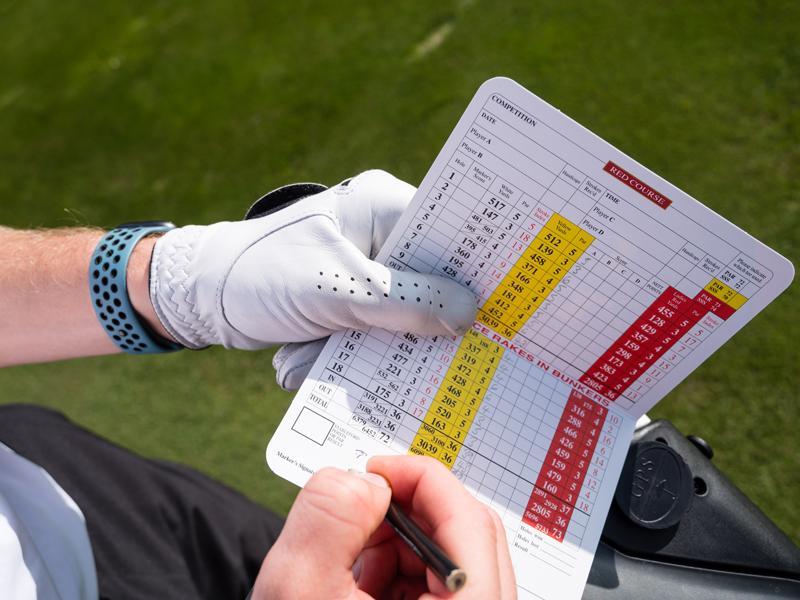
Analyzing Golf Handicaps: Implications for Performance
Understanding Handicap Basics
A golf handicap is more than a number – it’s a performance metric that helps golfers of different skill levels compete fairly and plan rounds strategically. The World Handicap System (WHS) centralizes many concepts under the familiar Handicap Index, while local course data (Course Rating and Slope Rating) translate that index into a playable Course Handicap for a specific tee and course.
key terms to know
- handicap Index – a portable number that reflects a player’s demonstrated ability (WHS/GHIN).
- Course Rating – expected score for a scratch golfer from a given set of tees.
- Slope Rating – how much harder the course plays for a bogey golfer vs.a scratch golfer (standard is 113).
- course Handicap – the number of strokes a player receives on that course and set of tees.
- Net Score – gross score minus course handicap, used in handicapped competition.
- Strokes Gained – advanced stat that measures performance relative to the field or a benchmark.
How to Calculate Course Handicap
The WHS formula used most commonly is:
Course Handicap = Handicap Index × (Slope Rating / 113) + (Course Rating − Par)
In practice the Course Rating − Par adjustment is often small and sometimes zero for standard tees; the Slope factor does most of the work. Here’s a swift conversion table showing sample Course Handicaps across three common slopes for a range of Handicap Index values.
| Handicap index | Slope 96 (easier) | Slope 113 (standard) | Slope 130 (tougher) |
|---|---|---|---|
| 5.0 | 4 | 5 | 6 |
| 12.0 | 10 | 12 | 14 |
| 20.0 | 17 | 20 | 23 |
| 28.5 | 24 | 28 | 33 |
Why the conversion matters
Converting your Handicap Index to a Course Handicap is essential because it tells you exactly how many strokes you get on that day from that tee. That guides:
- Tee selection – choosing a tee that provides a competitive and enjoyable match between your ability and the course difficulty.
- Shot planning – where to take risks and where to play conservatively given your net-shot budget.
- Practice focus – identifying whether short game, tee shots, or approach shots have the highest ROI on lowering your net score.
Interpreting Handicap vs. Performance
Handicap Index reflects typical scoring ability across recent rounds, but performance has nuance:
Consistency vs. peak performance
- A low Handicap Index indicates the ability to produce lower scores consistently.
- Peak rounds (personal bests) are useful but less predictive than the index for future expectations.
Strokes gained and sub-skill breakdown
Use strokes-gained metrics (off-the-tee, approach, around-the-green, putting) to connect handicap to specific strengths and weaknesses. for example:
- High strokes-gained putting but negative approach numbers suggest practice priorities should shift toward iron play and distance control.
- Poor strokes-gained from the tee often inflates your score through missed fairways, blocked approach shots, and recovery penalties.
Strategic Implications for Gameplay
Once you understand how your handicap translates to a Course Handicap, you can make smarter in-round decisions and long-term plans to lower your net score.
Tee selection and course setup
- Choose tees that produce a Course Handicap within the intended challenge range for your group – competitive golf is often most fun when Course Handicap is between 12 and 24 depending on skill level.
- Playing from tees that are too short can artificially suppress driver use and reduce development of long-game skills; too long can cause frustration and excessive penalty shots.
Match play vs stroke play adjustments
- In match play, you may use your handicap stroke allowance strategically (e.g., conceding short putts, or avoiding risky shots when you don’t need a stroke).
- In stroke play, focus on minimizing big numbers (double bogeys or worse) – hole management becomes critical to protect your handicap-based net score.
Shot selection and risk management
Understanding where strokes are won and lost allows you to choose lower-variance shots on holes where your handicap matters most. Examples:
- If your Course Handicap gives you strokes on par-4s,play conservatively on tight par-4s and attack reachable par-5s where you can actually make birdie.
- On holes where you receive a stroke, prioritize hitting the green in regulation and two-putting rather than aggressive low-percentage recovery shots.
Benefits and Practical Tips for Lowering Your Handicap
Handicap analysis is actionable when paired with focused practice and game-planning. Here are practical, high-ROI steps:
Practice plan based on handicap diagnostics
- Identify your weakest strokes-gained category and devote two-thirds of practice time to that area each week.
- If short game is your limiting factor, practice 50-75 short chips and pitches per session and 30-50 putts from inside 20 feet with pressure drills.
- Use on-course practice rounds to simulate pressure situations (e.g., count only net pars/birdies from holes where you expect to receive strokes).
In-round routines and mental approach
- Pre-shot routine: reduce variability by having a consistent setup for every shot.
- Course management: mentally map which holes you’ll play for par, which you’ll attack and where to concede a hole (match play).
- Recovery hierarchy: prioritize getting back to the fairway or green in the fewest strokes rather than heroic attempts that risk big numbers.
case Study: Applying Handicap Analysis to a Round
Scenario: Alex, Handicap Index 14.2, plays a course with Course Rating 72.4 and Slope 129 from the blue tees (par 72).
- course Handicap calculation: 14.2 × (129 / 113) + (72.4 − 72) = 16.2 → rounded to 16 strokes.
- Goal setting: Alex wants to shoot net par (72). That means gross target = 72 + 16 = 88.
Plan derived from analysis:
- Identify four holes where Alex is likely to receive strokes – treat those holes as ”must make pars” and play conservatively.
- Attack two reachable par-5s where Alex can realistically gain strokes.
- Focus practice for the week on approach shots into par-4s where historically Alex leaves himself 20-40 feet for birdie (high variance area).
result after implementing the plan for three rounds: Alex’s average gross score dropped by 3-4 shots and strokes-gained approach improved by 0.25-0.4 per round, translating into a lower Handicap Index over time.
Common pitfalls & First-hand Experience
I’ve seen many recreational golfers make the same mistakes when using handicap data:
- Relying solely on Handicap Index without checking tee-dependent Course Rating/Slope - leads to under- or over-estimating stroke needs.
- Failing to translate weaknesses into practice priorities – spending equal practice time across all areas slows advancement.
- Ignoring mental game and course management - better decisions often save more strokes than marginal swing changes.
Personal tip: track your best and worst three holes over 20 rounds. If the same holes show up repeatedly,that’s where targeted course management and practice will yield the quickest handicap gains.
Tools, Apps, and resources
- GHIN and other national association apps – official handicap tracking and score posting.
- Shot-tracking apps (Game Golf, Arccos, Shot Scope) – provide strokes gained and hole-by-hole analytics.
- Course guides and digital scorecards – check Course Rating and Slope before teeing off to set realistic targets.
- World Handicap System documentation – read the rules and calculation notes to ensure your index is accurate and updated.
How to Monitor Progress and Adjust
monitor these KPIs over a 3-6 month window to determine if your plan is working:
- Handicap Index trend (downward movement is the goal).
- Average gross and net scores.
- Strokes-gained subcategories – approach, tee, around-the-green, putting.
- Frequency of double bogeys or worse (reduce these first for fast handicap improvement).
When to change strategy
If after 8-12 rounds you see little change in Handicap Index or strokes-gained, consider:
- Hiring a coach for a focused swing or short-game overhaul.
- Re-evaluating practice structure for more intentional, measurable sessions.
- Adjusting tee selection to keep golf enjoyable and competitive while continuing to improve.
SEO & Content Optimization Notes (for WordPress)
- Primary keywords used: golf handicap, Handicap Index, course handicap, slope rating, course rating, strokes gained, net score.
- Secondary keywords used naturally: tee selection, course management, GHIN, WHS, handicap calculation.
- Suggested permalink: /analyzing-golf-handicaps-implications-for-performance
- Use
<h1>for title,<h2>for major sections and <h3>for specifics; include keywords in at least two subheads. - Include schema: Article and SportsActivity fields (author, datePublished, keywords).
If you want, I can convert this into a ready-to-publish WordPress post (with Yoast SEO-friendly meta fields, alt text suggestions for images, and recommended internal linking) – tell me your target audience (beginners, mid-handicap, low-handicap) and I’ll tailor it further.