

The golf swing is a complex, highly coordinated motor task that integrates multisegmental kinematics, external and internal kinetics, and finely tuned neuromuscular control to transform a static setup into a high-velocity, precision-directed strike. Its performance determinants-clubhead speed, strike consistency, and shot dispersion-emerge from the interplay of ground-reaction forces, intersegmental timing, and torque generation across the lower limbs, pelvis, trunk, and upper extremity. Simultaneously, the repetitive high-load demands placed on the lumbar spine, shoulder, and elbow create a substantive risk profile for overuse and acute injury, underscoring the need for technique refinement that balances performance objectives wiht tissue protection.
This article synthesizes current biomechanical evidence on golf-swing mechanics to provide an integrated framework for practitioners and researchers. We review kinematic descriptors (segmental angles and velocities, kinematic sequencing, X‑factor and separation angles), kinetic contributors (ground-reaction forces, joint moments, club-ground interactions), and neuromuscular dynamics (timing and magnitude of muscle activation, stretch-shortening contributions, and motor-control variability). Measurement modalities-three-dimensional motion capture, force platforms, electromyography, inertial sensors, and simulation modeling-are discussed regarding their strengths, limitations, and translational value for coaching and rehabilitation.
Drawing on this evidence base, we identify biomechanical principles that reliably predict performance outcomes and injury mechanisms, and we translate these into practical, evidence-based recommendations for technique modification, training focus, and load management. we highlight methodological gaps and propose research priorities-such as longitudinal monitoring, individualized modeling, and ecological validity in on-course assessment-to advance both scientific understanding and applied interventions aimed at optimizing performance while minimizing injury risk.
Overview of biomechanical determinants of effective ball trajectory and consistency
Effective control of ball trajectory arises from a constrained set of physical variables that interact at impact. At the macroscopic level, **ball speed**, **launch angle**, and **backspin rate** principally determine carry distance and apex. Secondary modifiers-such as sidespin and atmospheric conditions-alter lateral dispersion and landing behavior. Practically, these determinants form a triad that coaches and researchers target for optimization: increasing ball speed (via efficient energy transfer), optimizing launch angle for the chosen club and shot shape, and regulating spin to balance carry and roll.
the club-ball interface transduces kinematic inputs into those macroscopic outputs; thus, impact conditions are critical. Key impact parameters include **clubhead speed**, **face-to-path relationship**, **dynamic loft**, **angle of attack**, and **impact location on the face**. Small deviations in any of these produce predictable changes in trajectory and dispersion. The table below summarizes typical directional effects of common impact perturbations for rapid clinical interpretation.
| Impact Variable | Typical Effect on Trajectory |
|---|---|
| Face open to path | Push/Draw bias; increased sidespin |
| Higher dynamic loft | Higher launch, increased backspin |
| Downward angle of attack | Lower launch, potential for lower spin (irons) |
| off-center impact | Loss of ball speed; unpredictable ball flight |
Consistency of these impact conditions is driven by coordinated whole-body kinematics. Robust performance correlates with reproducible **proximal-to-distal sequencing**, stable pelvis-to-thorax separation at transition, and consistent wrist-**** release timing. Objective markers useful in assessment and training include:
- Pelvis and thorax rotation peaks (timing and magnitude)
- Lead knee and ankle kinematics for base-of-support stability
- Wrist-release timing relative to pelvis rotation
Kinetic phenomena underpin the kinematic patterns and ultimately the energy transferred to the ball. Ground reaction forces (vertical and horizontal),intersegmental ground torque,and joint moments (hip,knee,lumbar) create the mechanical surroundings for effective sequencing. Quantifiable kinetic targets for effective trajectory control are **timely medial-to-lateral ground force submission**, **adequate vertical impulse during transition**, and **controlled deceleration moments at the lead arm**-all of which enable repeated high smash factors while mitigating excessive spinal loading.
Neuromuscular dynamics determine how biomechanical determinants are realized under variable conditions. Motor control strategies that reduce variability-such as pre-activation patterns, optimized feedback corrections, and fatigue-resistant recruitment-support repeatable impact conditions. Evidence-based interventions include plyometric and rotational power training to enhance rate of force advancement, proprioceptive drills for impact-location consistency, and periodized endurance work to preserve technique under fatigue. Emphasizing these neuromuscular elements both improves trajectory predictability and reduces cumulative injury risk by distributing loads across joints and tissues.
Segmental sequencing and proximal to distal transfer of angular momentum with practical technique cues
Coordinated activation of body segments is the essential mechanism by which rotational power is generated and delivered to the clubhead. In the golf swing this means a predictable, time-ordered progression of motion that begins with the feet and legs, advances through the pelvis and trunk, and finishes with the upper limbs and club. Each segment contributes angular momentum that is added and then redistributed; efficient players produce a smooth, overlapping sequence rather then simultaneous, uncoordinated movement. Conceptually, this orderly cascade minimizes internal dissipation of energy and allows maximal transfer of torque into clubhead speed.
from a biomechanical perspective, the flow of angular momentum obeys conservation principles and is strongly influenced by intersegmental torque and joint moments. Effective coordination produces a phase lead where proximal segments peak earlier and distal segments peak later, creating relative motion (or “separation”) between pelvis and thorax that increases stretch in the oblique and shoulder musculature. Ground reaction forces provide the initial impulse; their vector orientation and timing determine how much net angular impulse enters the kinetic chain. Precise timing of segment peak velocities is therefore as important as absolute strength for maximizing distal output.
Coaching cues that encourage the desired sequence should be concise, kinesthetic, and repeatable.Emphasize the sequence by cueing a controlled lateral shift and early pelvic rotation followed by a relaxed trunk turn and delayed wrist release. Use bold, simple prompts: “Lead with the hips,” “Create separation,” “Preserve the lag,” and “Unwind last”. Below are practical, field-ready cues that translate biomechanical concepts into repeatable actions:
- Lead with the hips: initiate downswing with a subtle hip turn toward the target to start the proximal impulse.
- Create separation: feel a slight pause in the torso as the hips rotate-this stretch stores elastic energy.
- Preserve the lag: maintain wrist hinge until the last portion of the downswing to maximize clubhead acceleration.
- Unwind last: allow hands and club to release after the torso has begun decelerating.
Targeted drills and training modalities accelerate motor learning of the sequential pattern. A short table summarizes representative interventions and their primary objective:
| Drill | Primary Target | Key Outcome |
|---|---|---|
| Medicine-ball rotational throws | Pelvis→trunk timing | Improved proximal impulse |
| Slow-motion mirror swings | Segmental sequencing awareness | Refined timing |
| Resistance-band downswing | Maintain lag | Greater stored elastic energy |
Objective feedback and simple on-course checkpoints allow coaches to quantify progress. Measure peak segment angular velocities,X-factor separation,and the time gap between pelvis and torso peak rotations when possible; or else,use practical proxies such as consistent ball-flight dispersion and repeatable impact positions. Watch for common faults-premature arm pull, early hip clearance, or collapsing posture-and correct with the opposite cue (e.g., “hold the angle”, “finish with the chest”). Integrating biomechanical measurement with targeted cueing fosters durable motor pattern change and more efficient distal output in the swing.
Three dimensional kinematic analysis of pelvis,thorax,and upper limb motion with implications for swing refinement
Three-dimensional motion capture of the pelvis,thorax,and upper limb reveals complex,multi-planar relationships that underpin effective ball-striking. Using global and segmental coordinate systems, investigators quantify rotations about the vertical (axial), mediolateral (flexion/extension), and anteroposterior (lateral flexion) axes to capture pelvic yaw, thoracic rotation, and scapulohumeral kinematics with high temporal resolution. Such analyses emphasize **segmental degrees of freedom**, intersegmental coupling, and the temporal alignment of peak angular velocities; these metrics are essential for interpreting how proximal motion contributes to distal clubhead velocity and accuracy. Accurate reporting also requires normalization for body size and an explicit description of joint centres, given their influence on computed angles and derived kinetic estimates.
Empirical patterns consistently show a proximal-to-distal sequence in which **pelvic rotation precedes thoracic rotation**, producing a pelvis-thorax separation that stores elastic energy in the trunk. The magnitude and timing of this separation (often termed the X-factor and X-factor stretch) correlate with peak thoracic angular velocity and subsequent clubhead speed. Additionally, frontal- and sagittal-plane alignments-pelvic tilt and lateral bend-modulate the effective radius of rotation and affect impact geometry. Deviations from optimal timing, such as early thoracic rotation or inadequate pelvic deceleration, reduce energy transfer efficiency and increase compensatory loading on the upper limb.
Upper limb kinematics are characterized by coordinated scapulothoracic motion, glenohumeral external rotation during the backswing, and staged elbow and wrist actions through downswing and release. The **scapulohumeral rhythm** facilitates safe ranges of motion while preserving lever length; conversely, aberrant scapular motion or premature elbow extension can compromise clubface control and elevate shoulder or medial elbow stress. Interindividual variability-driven by anthropometrics, flexibility, and skill level-necessitates individualized targets, yet common high-performance signatures include late peak wrist **** maintained into early downswing and a rapid sequential release of elbow and wrist segments timed to maximum thoracic angular velocity.
Translating 3D kinematic insights into refinement strategies requires an integrated emphasis on mobility, motor control, and sequencing drills. Practical coaching foci include:
- Pelvic initiation drills to ensure early and controlled yaw.
- Thorax restraint and counter-rotation exercises to preserve separation through transition.
- Scapular stability progressions to support safe glenohumeral rotation.
- Tempo and sequencing constraints (e.g., pause drills) to re-time peak angular velocities.
These approaches should be periodized with strength and tissue-preparatory work to mitigate overload and to align neuromuscular control with desired kinematic patterns.
| Kinematic Target | Coaching Focus | Injury Consideration |
|---|---|---|
| Pelvic Yaw: Early Peak | Lead with hips; resisted band drills | low-back shear if over-rotated |
| Pelvis-Thorax Separation | Maintain trunk counter-rotation into transition | Excessive stretch → lumbar strain |
| Scapulothoracic Control | Scapular retraction & stability work | Shoulder impingement risk if dysfunctional |
| Wrist **** Timing | Late ****, preserved until early downswing | Early release increases medial elbow load |
Empirical measurement and iterative feedback (video, wearable IMUs, or laboratory capture) allow refinement of these targets and reduce reliance on heuristic cues alone, enabling evidence-based adjustments tailored to the athlete’s morphology and injury history.
Kinetic contributions of ground reaction forces and clubhead acceleration to power generation and control
Contemporary biomechanical analysis indicates that the generation of clubhead speed is not solely a function of segmental rotational velocities but is critically influenced by the transmission of forces from the ground through the lower extremities and trunk to the club. The interaction between the **ground reaction forces (GRF)** vector and the golfer’s center of mass creates moments about the hip and trunk that are converted into angular momentum. Effective transfer requires coordinated timing such that GRF peaks precede or coincide with maximal trunk rotational acceleration, producing a proximal-to-distal energy cascade that amplifies clubhead velocity without excessive muscular co-contraction.
Decomposing GRF into vertical, anterior-posterior and mediolateral components clarifies their distinct kinetic roles: the **vertical component** provides support and contributes to impulse for upward/downward center-of-mass modulation; the **anterior-posterior component** facilitates weight shift and generates shear forces that assist rotational torque; the **mediolateral component** stabilizes the base of support and modulates rotational axis.Clubhead acceleration is tightly coupled to these components through the timing of hip rotation and trunk extension, with small phase shifts (<50 ms) between GRF peaks and maximum angular accelerations producing measurable differences in launch speed and dispersion.
Practical performance indicators that link ground kinetics to clubhead outcomes include:
- Peak vertical GRF: correlates with net impulse and capacity to generate proximal power.
- Rate of force development (RFD): predicts how rapidly the golfer can translate weight shift into rotational acceleration.
- Timing offset between GRF peak and trunk angular acceleration: a metric of sequencing efficiency.
- Peak clubhead acceleration: the terminal expression of effective kinetic transfer.
| kinetic Metric | Primary Contribution | Coaching Focus |
|---|---|---|
| Peak vertical GRF | Support & impulse | Explosive lower-limb drive |
| Mediolateral GRF | Stability & axis control | Base-of-support training |
| Peak clubhead acceleration | Ball speed & launch | Sequencing & timing drills |
From a control and injury-prevention perspective, mis-timed or disproportionately high GRF-notably excessive anterior-posterior shear-can elevate lumbar and knee joint loads, increasing injury risk. Optimization therefore prioritizes efficient sequencing and eccentric control: coachable strategies include emphasizing a controlled lead-leg bracing to accept GRF, progressive overload exercises to improve RFD in the posterior chain, and tempo modulation to align peak GRF with trunk rotation. These interventions,when paired with objective measurement (force plates,high-frequency IMUs),allow targeted gains in power while preserving joint integrity through mechanically favorable force distribution.
Neuromuscular activation patterns and timing during the swing with targeted recommendations for motor control training
Electromyographic investigations consistently demonstrate a proximal-to-distal activation pattern during the golf swing, beginning with early contraction of the hips and gluteal complex, followed by timed engagement of the lateral trunk rotators (external oblique/contralateral internal oblique), and culminating with rapid activation of the shoulder girdle and forearm musculature immediately prior to impact.Surface EMG and motor-point mapping techniques-common in neuromuscular laboratories-confirm that optimal performance is associated with precise temporal offsets between segments rather than maximal isolated force output.Typical onset latencies show preparatory activity in the pelvis approximately 150-200 ms before ball impact, trunk peak activity near 60-80 ms before impact, and peak distal (wrist/forearm) activity within 10-20 ms of impact.
Inter-individual variability in activation patterns reflects skill level, club selection, and swing intent; however, two neuromuscular themes recur: (1) anticipatory postural adjustments that stabilize the spine prior to high-velocity rotation, and (2) graded co-contraction around the shoulder and elbow to tune club-face control. Objective assessment informs targeted training and should include:
- dynamic sEMG profiling across swing phases,
- kinematic sequencing via 3D motion capture, and
- force-plate analysis for ground reaction timing.
these measures align with established neuromuscular diagnostic approaches used to evaluate motor point function and neuromuscular transmission, adapted here for high-performance movement analysis.
motor control interventions must be phase-specific and evidence-driven. Begin with quiet-accurate activation drills (low-load, high-fidelity) to restore correct onset timing, progress to loaded rotational power drills to build rate of torque development, then integrate context-specific perturbation and variability to enhance robustness. Practical examples include: slow-motion downswing repetitions with biofeedback to train pelvic-to-trunk onset; resisted band rotations emphasizing delayed distal release; metronome-paced tempo work to normalize sequencing; and perturbation throws or catches to improve reactive trunk control. Emphasize repetition with feedback to consolidate feedforward timing.
neuromuscular efficiency and injury risk reduction are complementary objectives. Train eccentric control of the trunk rotators and scapular stabilizers to attenuate high deceleration loads post-impact, and reduce maladaptive co-contraction that elevates joint compressive stress. The following concise table summarizes targeted emphases and simple exercise prescriptions used in motor-control curricula:
| Muscle Group | Training Focus | Example Drill |
|---|---|---|
| Hips/Glutes | Proximal initiation | Single-leg Romanian deadlift → controlled rotation |
| Trunk Rotators | Timed eccentrics | Slow Russian twists with eccentric hold |
| Scapular Stabilizers | Dynamic stability | Banded rows with scapular retraction hold |
Programmatic recommendations emphasize objective monitoring and gradual progression: employ frequency of 2-3 targeted motor-control sessions per week, integrate into on-course practice, and progress intensity by increasing velocity, perturbation, or resistance.Use measurable benchmarks-EMG onset latency reductions, improved pelvis-to-trunk sequencing ratio, and reduced variability in impact kinematics-to guide advancement. Monitoring tools and outcome metrics include:
- sEMG timing profiles (onset latency & amplitude ratios),
- force-plate sequencing (vertical and rotational impulse timing),
- kinematic chain metrics (angular velocity peaks and intersegmental delays).
These objective markers enable tailored motor-control prescriptions that simultaneously enhance performance and mitigate neuromuscular contributors to injury.
spinal loading, shoulder and elbow stress mechanisms and evidence based strategies to mitigate injury risk
The golf swing imposes complex loads on the lumbar spine through a combination of axial rotation, lateral bend and rapid deceleration at ball impact. These motions produce simultaneous **compressive**,**shear** and **torsional** stresses that are concentrated in the lower lumbar segments when rotation is coupled with side-bending or early extension. Repeated exposure to these multi-planar loads-particularly under high clubhead speed or poor sequencing-contributes to accelerated intervertebral disc degeneration, facet joint overload and, in susceptible athletes, pars stress reactions. Kinematic errors such as excessive lateral flexion,loss of pelvic stability,or abrupt vertical motion at the top of the swing magnify spinal loading and should be considered primary mechanical drivers of low-back pathology in golfers.
At the shoulder and elbow, injury mechanisms reflect the extreme ranges, high angular velocities and rapid eccentric decelerations inherent in the swing.The lead shoulder is vulnerable to internal impingement and posterior-superior labral stress when excessive horizontal adduction or early arm overpower occurs; the rotator cuff and biceps anchor absorb high eccentric loads during follow-through. The trailing elbow and lead elbow are subject to repetitive valgus and varus moments and persistent wrist flexor/pronator contraction, respectively, which predispose to medial epicondylopathy (golfer’s elbow), ulnar neuropathy and chronic tendinopathy. Crucially, distal joint loading increases when proximal segments (hips, thorax) fail to generate or sequence energy effectively-illustrating how poor **kinematic sequencing** converts benign swing velocity into localized overload.
Evidence-based mitigation requires an integrated approach that addresses both technique and tissue capacity. Key, research-supported strategies include:
- Restoring proximal mobility: thoracic rotation and hip internal rotation improvements reduce compensatory lumbar rotation.
- Optimizing sequencing: emphasize proximal-to-distal energy transfer (pelvis → torso → shoulder → arms) to minimize distal eccentric demand.
- Targeted strength and motor control: anti-rotation core work, gluteal strength, scapular stabilization and rotator-cuff conditioning decrease injurious joint moments.
- Tendon-focused loading: progressive eccentric and heavy-slow resistance protocols for wrist flexor/pronator and shoulder tendons.
- Load management and technique modification: periodized practice volume, dynamic warm-up, and temporary swing adaptations (reduced X‑factor, shallower launch) during rehabilitation.
Each intervention should be prescribed relative to the player’s deficits identified on assessment rather than applied generically.
| Injury | Primary Mechanism | Quick Mitigation |
|---|---|---|
| Lower back pain | Repetitive torsion + axial compression; pelvic instability | Hip/thoracic mobility + anti-rotation core program |
| Shoulder impingement | Eccentric overload & internal impingement during follow-through | Rotator cuff & scapular control; adjust arm path |
| Medial epicondylitis | Repetitive wrist flexor/pronator strain | Eccentric loading + reduce excessive wrist action |
Practical implementation requires baseline screening, progressive reconditioning and ongoing monitoring. Objective assessment (thoracic/hip ROM, core endurance, scapular kinematics) should guide individualized programs, while practice loads and swing tempo are adjusted according to symptom response and performance metrics.Close collaboration between coach,strength clinician and medical provider ensures that technical change is supported by tissue adaptation-an approach that,when consistently applied,has the strongest evidence for reducing spinal,shoulder and elbow injury risk while preserving or improving performance.
Measurement methods and wearable technology for objective swing assessment and individualized feedback
Contemporary assessment of the golf swing integrates both laboratory-grade systems and portable devices to capture kinematics, kinetics, and neuromuscular activity with objective precision. Optical motion-capture remains the reference standard for whole-body joint trajectories, while **inertial measurement units (IMUs)**, **pressure insoles**, and **surface electromyography (sEMG)** have matured into field‑ready tools that enable on-course evaluation. Wearable consumer devices such as smartwatches and fitness bands can provide coarse tempo and heart-rate context, but sport‑specific wearables offer the temporal and spatial resolution necessary for biomechanical interpretation. Choosing an appropriate measurement configuration requires balancing validity, reliability, ecological validity, and practitioner resources.
Sensor selection and placement are critical to obtaining interpretable data; standardized protocols improve repeatability across sessions and subjects. typical wearable configurations include:
- IMUs: sacrum,thorax,lead wrist,lead forearm,lead thigh – for segment orientations and angular velocities.
- Pressure insoles / force sensors: under both feet to capture center-of-pressure shifts and phase timing.
- sEMG: bilateral erector spinae, gluteus medius/maximus, and lead-side forearm flexors/extensors – for recruitment timing and amplitude.
Force and pressure measures quantify ground reaction forces and weight transfer patterns that underpin the kinetic chain, while sEMG elucidates temporal sequencing of muscle activation associated with speed generation and injury risk. Integrating IMU-derived angular velocities with force-derived impulses enables calculation of segmental power and the canonical proximal-to-distal sequencing metrics used in swing analysis. calibration and sensor fusion algorithms (e.g., complementary filters, kalman filters) are necessary to reduce drift and align kinematic streams with kinetic and electromyographic time bases; validation against gold-standard motion capture and force plates should be performed when available.
Processed data can be transformed into actionable, individualized feedback through automated feature extraction and modeling. Typical workflow steps include segmentation of swing phases,extraction of key performance indicators (e.g., peak hip and shoulder rotation speeds, X‑factor, lead arm acceleration), and comparison to normative or performance-specific baselines. Machine learning techniques – from regression models to unsupervised clustering – facilitate identification of atypical patterns and suggest tailored interventions. Real-time systems must manage latency and present feedback via **audio**,**visual overlays**,or **haptic cues**,with closed‑loop personalization achieved by adaptive thresholds and longitudinal tracking.
Practical deployment requires attention to device ergonomics, battery life, data security, and clinician/coach interpretability; cost and ease-of-use often determine adoption more than technical capability. The table below summarizes common wearable sensors, the primary metrics they produce, and typical applications in coaching or rehabilitation:
| Sensor | Primary Metrics | Typical Application |
|---|---|---|
| IMU (wearable) | Segment angles, angular velocity | Technique sequencing, tempo |
| Pressure insole | center-of-pressure, weight transfer | Balance, stance optimization |
| sEMG | Onset timing, activation amplitude | Muscle coordination, rehab progress |
Best practices include standardized placement, regular cross-validation against laboratory systems, and delivering feedback that is specific, measurable, and limited in quantity to avoid motor overload.as wearable sensors become more integrated and unobtrusive,their greatest value will be realized through validated algorithms that translate raw signals into concise,evidence‑based coaching cues tailored to the individual athlete.
Evidence based coaching interventions and conditioning programs to enhance performance and reduce injury incidence
Coaching decisions should be grounded in objective profiling that links swing kinematics to physiological capacity. Routine assessments – including 3D motion capture or synchronized inertial measurement units (IMUs), force-plate ground-reaction analysis, and standardized strength/mobility screens – create an empirical baseline for intervention. These data permit precise identification of impairments (such as, restricted thoracic rotation or delayed kinematic sequencing) and enable coaches to target the causal factors of performance deficits rather than merely treating symptoms. Data-driven profiling therefore underpins individualized programming and risk stratification.
Program design must follow applied exercise-science principles: specificity, progressive overload, periodization and task-relevant transfer. Core components typically include the following evidence-based elements:
- Mobility and motor control – thoracic rotation, hip internal rotation, ankle dorsiflexion with integrated movement patterns;
- Strength and eccentric capacity – posterior chain and scapular musculature to manage high deceleration loads;
- Power and rate-of-force development – rotational medicine-ball throws, loaded anti-rotation drills, and plyometrics timed to golf-specific sequencing.
These components should be sequenced within macro- and microcycles to align peak potentiation with competition and practice demands.
Translating laboratory findings into field-ready practice requires careful exercise selection and coaching cues that preserve swing mechanics while increasing physical capacity. Exercises such as cable woodchops, single-leg Romanian deadlifts, rotational medicine-ball throws and scapular stabilization progressions have demonstrated transfer to club-head speed and swing control when dosed appropriately. Concurrent monitoring strategies – session RPE, objective velocity/power outputs, and periodic isometric mid-thigh pull or jump testing – help regulate load and mitigate maladaptive fatigue responses.
preventing injury demands targeted prehabilitation and return-to-play criteria informed by tissue-specific risk.The table below summarizes common anatomical targets and concise, evidence-aligned interventions that reduce recurrence and support performance.
| Injury Area | Primary Deficit | Targeted Intervention |
|---|---|---|
| Lumbar spine | Excessive extension/rotation | Core anti-rotation + hip mobility |
| shoulder/rotator cuff | Scapular dyskinesis | Scapular stability + eccentric rotator cuff work |
| Elbow (medial) | Excessive valgus/overuse | Forearm eccentric strengthening & workload control |
Continuous evaluation closes the intervention loop: define measurable outcomes (e.g., club-head velocity, kinematic-sequence timing, pain scores, workload tolerance), retest at prespecified intervals, and adapt programs based on responsiveness. A multidisciplinary approach – integrating coach, strength and conditioning specialist, physiotherapist and sports scientist – optimizes transfer, adherence and long-term athlete development. Emphasizing education, objective feedback and pragmatic progressions yields durable gains in performance while reducing the incidence of chronic, preventable injuries.
Q&A
Note on search results: the provided web search results returned unrelated judicial documents and did not supply academic sources relevant to golf biomechanics. The Q&A below therefore draws on established biomechanical principles and peer-reviewed literature in the field (general knowledge up to mid‑2024) rather than the unrelated search results.
Q&A: Biomechanical Analysis and Technique of the Golf Swing
1) Q: What is the primary objective of a biomechanical analysis of the golf swing?
A: To quantify the kinematic (movement), kinetic (forces and moments), and neuromuscular (muscle activation and coordination) determinants of swing performance and injury risk; to identify inefficient or injurious movement patterns; and to provide an evidence‑based foundation for technique refinement, training prescription, and rehabilitation.2) Q: How is the golf swing typically partitioned for biomechanical study?
A: Common phase models divide the swing into address,takeaway (backswing initiation),backswing,transition/top,downswing,impact,and follow‑through.These phases help align temporal kinematic and kinetic events (e.g., peak pelvis rotation, peak thorax rotation, peak angular velocities).
3) Q: What kinematic variables are most strongly associated with clubhead speed and ball velocity?
A: Key kinematic correlates include rotational range of motion and velocity of the pelvis and thorax (torso), timing and magnitude of pelvis‑to‑thorax separation (frequently enough called “X‑factor” or hip‑shoulder separation), proximal‑to‑distal sequencing (timing of peak angular velocities), and wrist/forearm motion that preserves lag until late in the downswing.Successful swings typically show large rotation ROM combined with high peak angular velocities and efficient timing.
4) Q: what is proximal‑to‑distal sequencing and why does it matter?
A: Proximal‑to‑distal sequencing refers to the ordered timing of peak angular velocities from central segments (pelvis) to more distal segments (thorax → arms → club). This sequence optimizes energy transfer and allows peak clubhead speed with reduced required distal muscle force. Disruptions (e.g., early arm acceleration) reduce efficiency and increase stress on distal joints.
5) Q: Which kinetic measures are useful in swing analysis?
A: Ground reaction forces (vertical, mediolateral, anteroposterior), center of pressure (COP) progression, net joint moments (hip, knee, lumbar, shoulder), and segmental angular impulse. Analysis of force timing and magnitudes reveals how athletes generate and transfer force through the lower body and trunk into the club.
6) Q: What neuromuscular features characterize an effective swing?
A: Well‑timed sequencing of muscle activation patterns: early activation of hip and trunk rotators during downswing, timely eccentric control of trunk extensors and lateral stabilizers in transition, and coordinated forearm/wrist muscles to preserve lag and release the club. Efficient swings demonstrate anticipatory postural adjustments and optimized stretch‑shortening cycles.
7) Q: Which muscles are most important for generating power in the swing?
A: Hip extensors and rotators (gluteus maximus, gluteus medius), trunk rotators and stabilizers (external/internal obliques, multifidus, erector spinae), and scapulothoracic and shoulder muscles for control (rotator cuff, latissimus dorsi). forearm flexors/extensors and wrist stabilizers are crucial for managing club release and impact forces.8) Q: What are common kinematic patterns associated with poor performance or injury risk?
A: Examples include:
– Early extension (loss of hip flexion during transition), which reduces rotational ROM and increases lumbar extension and shear.
– Over‑rotation or reverse spine angle (excessive lateral bend opposite the target),associated with elevated lumbar loads.
– Casting or early release of wrist angle, lowering clubhead speed and increasing distal joint stress.
– Poor weight transfer or asymmetric COP progression, reducing force generation from the ground.9) Q: Which injuries are most commonly linked to golf swing mechanics?
A: Low back pain (most common), shoulder injuries (rotator cuff, labral pathology), elbow conditions (medial and lateral epicondylalgia), wrist and thumb problems, and hip/groin strains.Mechanisms frequently enough involve repetitive high torsional and shear loads on the lumbar spine, eccentric overload of shoulder/forearm musculature, and abrupt decelerations at impact.
10) Q: how does lumbar spine load arise during the swing?
A: Combined high trunk rotation, lateral bending, and extension-especially when coupled with early extension or poor sequencing-produces substantial compressive and shear forces on lumbar vertebrae and intervertebral discs. Repetition and inadequate muscular control increase cumulative tissue loading and injury risk.
11) Q: What assessment methods are commonly used in biomechanical analysis?
A: 3‑D motion capture with optical marker systems,inertial measurement units (IMUs),force plates for ground reaction forces and COP,surface and fine‑wire electromyography (EMG) for muscle activation,instrumented club/shaft sensors for clubhead kinematics,and musculoskeletal modeling to estimate joint loads and internal forces.
12) Q: What are the advantages and limitations of wearable sensors versus lab‑based systems?
A: wearables (IMUs, instrumented grips) enable field assessment, high ecological validity, and longitudinal monitoring, but generally have lower spatial accuracy than optical motion capture and can be sensitive to mounting errors.Lab systems provide high precision and rich data (kinematics + kinetics) but are resource‑intensive and may alter natural swing behavior.
13) Q: what evidence‑based technical cues can improve performance while reducing injury risk?
A: Cues that emphasize:
– Maintaining dynamic spine tilt and posture through impact (avoid early extension).
– Preserving wrist lag in the downswing (delayed release).
– Initiating downswing with lower‑body rotation/weight transfer (not just arms).
– controlled sequencing: accelerate pelvis → follow with thorax → arms → club.
– Smooth tempo and deceleration through follow‑through to dissipate loads.
Cues should be individualized based on physical capacities and swing characteristics.
14) Q: How should strength, power, and mobility training be integrated?
A: A multimodal program is recommended:
– Strength: hip, trunk, and scapular stabilizers to support force production and control.
– Power: rotational medicine‑ball throws, jump‑style drills, and resisted rotational exercises to improve rate of force development and transfer to the club.
– Mobility: targeted hip, thoracic spine, and shoulder mobility to enable required ROM without compensatory lumbar motion.
– Motor control: swing‑specific drills to rehearse sequencing and timing under varying loads and speeds.
Progress loads while monitoring technique and symptoms.
15) Q: How can clinicians use biomechanical data to guide rehabilitation and return‑to‑play?
A: Use objective metrics (segmental ROM, peak angular velocities, timing of peak velocities, ground reaction force patterns, EMG activation patterns) to identify deficits.Rehabilitation should restore mobility and strength first, then reintroduce swing mechanics through graded, monitored drills, resolving identified compensatory patterns before full return. Compare post‑injury metrics to baseline or normative values when possible.
16) Q: What metrics should be reported in an academic biomechanical study of the golf swing?
A: Clear definitions and units for: segmental ROM and angular velocities (pelvis, thorax, lead/trail arm), X‑factor and its stretch (difference between pelvis and thorax rotations), timing of peak angular velocities (expressed relative to impact), ground reaction force magnitudes and COP pathways, joint reaction forces/moments if modeled, and EMG amplitude and timing normalized to maximal voluntary contraction. Report sampling rates, filter settings, participant characteristics, club type, ball‑address conditions, and statistical methods.17) Q: What common methodological pitfalls should researchers avoid?
A: Small or unrepresentative samples, inadequate reporting of data processing (filtering, event detection), inconsistent phase definitions, failure to normalize kinetic data (e.g., to body mass), lack of ecological validity (unrealistic balls/targets), and overinterpretation of cross‑sectional associations as causal.18) Q: how can coaches use biomechanical findings practically without laboratory equipment?
A: Focus on observable proxies for efficient mechanics: smooth and balanced weight transfer, visible hip lead in downswing, maintained spine angle through impact, delayed wrist release, and consistent impact positions. Use simple tools (video at 240 fps, force‑sensing mats if available, measurable ball flight metrics) to monitor changes. Combine observational assessment with strength/mobility screens to inform individualized interventions.
19) Q: What are current gaps and future directions in golf swing biomechanics research?
A: Needed advances include: longitudinal studies linking mechanics to injury incidence, individualized musculoskeletal models for personalized load estimation, integration of machine learning with wearable sensors for real‑time feedback, better understanding of neuromuscular fatigue effects on swing mechanics, and translation studies on how biomechanical interventions modify on‑course performance and injury rates.
20) Q: What practical assessment protocol would you recommend for a routine biomechanical screen of a golfer?
A: components:
– pretest: medical/playing history, symptom screening, physical screens (ROM, strength, single‑leg balance, thoracic mobility).
– Warm‑up: standardized dynamic warm‑up.
– Motion collection: multi‑trial swings at standardized intent levels (e.g., driver full, 7‑iron full), recorded with high‑speed video or motion capture; force plates if available.
– Data targets: pelvis/thorax ROM and peak angular velocities,X‑factor,timing of peak velocities,COP path,impact kinematics.- Interpretation: compare to normative or baseline values, identify deviations (early extension, casting, poor weight transfer), and prioritize interventions.
document interventions and re‑test periodically.
21) Q: How should findings be conveyed to athletes and coaches?
A: Provide concise, actionable insights: one or two primary deficits, prioritized corrective actions (technique drills, mobility/strength targets), measurable short‑term objectives, and timeline for re‑assessment. Use video examples and objective metrics to track progress.
22) Q: Are there population differences to consider (age, sex, handicap level)?
A: Yes. Older golfers may have reduced ROM and power and higher prevalence of degenerative spinal changes; women and men can differ in strength and segmental ROM patterns; high‑handicap golfers often show less efficient sequencing and smaller rotational ROM. Interventions should be tailored to the athlete’s capacity and goals.
23) Q: What are evidence‑based drills that target sequencing and rotational power?
A: Examples include:
– Medicine ball rotational throws (from quarter, half, and full turns) emphasizing rapid hip initiation.
– Step‑through rotational throws to train weight transfer with rotation.
– Slow‑to‑fast swing drills preserving lag (e.g., slow to 75% to full speed).
– Impact position drills (e.g., pause at mid‑downswing) to ingrain correct shaft/arm positions.
progress drills from low to high speed and monitor transfer to actual swing.
24) Q: Summary: key takeaways for clinicians, coaches, and researchers?
A: Effective and safe golf swing mechanics rely on coordinated kinematics, efficient force generation and transfer, and robust neuromuscular control. Biomechanical analysis provides objective targets for improving performance and reducing injury risk, but must be integrated with individualized physical assessments and progressive training. Future work should emphasize longitudinal and translational research, wearable sensor integration, and personalized load modeling.
If you would like, I can:
– Convert this Q&A into a concise handout for coaches/clinicians.
– Produce a sample assessment report template with suggested thresholds and drills.- Draft a short literature summary with citations (I will need permission to perform a targeted literature search).
In Conclusion
Note: the supplied web search results did not contain material relevant to golf biomechanics,so the following conclusion is based on domain knowledge and the article’s scope.
a biomechanical perspective on the golf swing synthesizes kinematic sequencing, kinetic causation, and neuromuscular control into an integrative framework that both explains performance variability and guides evidence-based intervention. Precise patterns of segmental sequencing and timing-characterized by coordinated pelvis-trunk separation,efficient energy transfer through the kinetic chain,and optimized clubhead kinematics-underpin effective ball-striking. Complementary kinetic analyses highlight the roles of ground reaction forces, joint moments, and power generation/absorption in producing clubhead speed while mitigating deleterious joint loads. Neuromuscular investigations further reveal how motor control strategies, muscle activation timing, and fatigue influence consistency, adaptability, and injury susceptibility.
For practitioners, these insights translate into concrete priorities: emphasize reproducible sequencing and timing over isolated motion changes; adopt training that develops force production and dissipation capacity across the hips, trunk, and upper limbs; integrate neuromuscular conditioning and motor learning principles to stabilize technique under variable task and environmental demands; and use individualized assessment to align technique refinement with the athlete’s morphology, physical capacities, and injury history. Objective measurement-via motion capture, force platforms, wearable sensors, and validated performance metrics-should guide intervention selection and progression, enabling iterative feedback and reducing reliance on anecdotal cues.
For researchers, advancing the field requires longitudinal, ecologically valid studies that link biomechanical markers to performance outcomes and injury incidence across diverse populations. Methodological standardization, improved sensor fusion, and the application of machine learning to large multimodal datasets will enhance predictive models of performance and risk. Translational work must also evaluate how biomechanical prescriptions integrate with coaching practices, behavior change strategies, and athlete adherence in real-world settings.
Ultimately, integrating rigorous biomechanical analysis with individualized coaching and strength-and-conditioning programming holds significant promise for elevating performance while reducing injury risk. Continued collaboration among scientists, clinicians, and coaches will be essential to translate biomechanical knowledge into practical, enduring improvements in golf technique and athlete health.
Biomechanical Analysis and Technique of the Golf Swing
What golf biomechanics tells us about grate swing technique
biomechanical analysis of the golf swing applies kinematics (motion) and kinetics (forces) to the full swing sequence to help players hit the ball farther, straighter, and more consistently. By studying the kinematic sequence, center of mass transfer, and clubhead speed progress, coaches and players can translate data from motion capture systems and launch monitors into targeted technique changes and drills.
Key golf swing concepts every player should know
- Kinematic sequence: Proper timing of pelvis → thorax → arms → club to maximize power and consistency.
- Swing plane: The path and angle the clubhead follows; efficient swings stay near the ideal plane for the desired shot.
- Clubhead speed & ball speed: Primary determinants of distance; influenced by lever mechanics and sequencing.
- Ground reaction forces (GRF): How a golfer uses the ground to generate torque and linear force into the ball.
- Center of pressure and weight shift: balance and transfer from trail to led foot set up a consistent impact position.
- Launch conditions: Launch angle, spin rate, and attack angle drive carry, roll, and overall trajectory.
Phases of the swing: biomechanical focus and technique cues
Address and setup
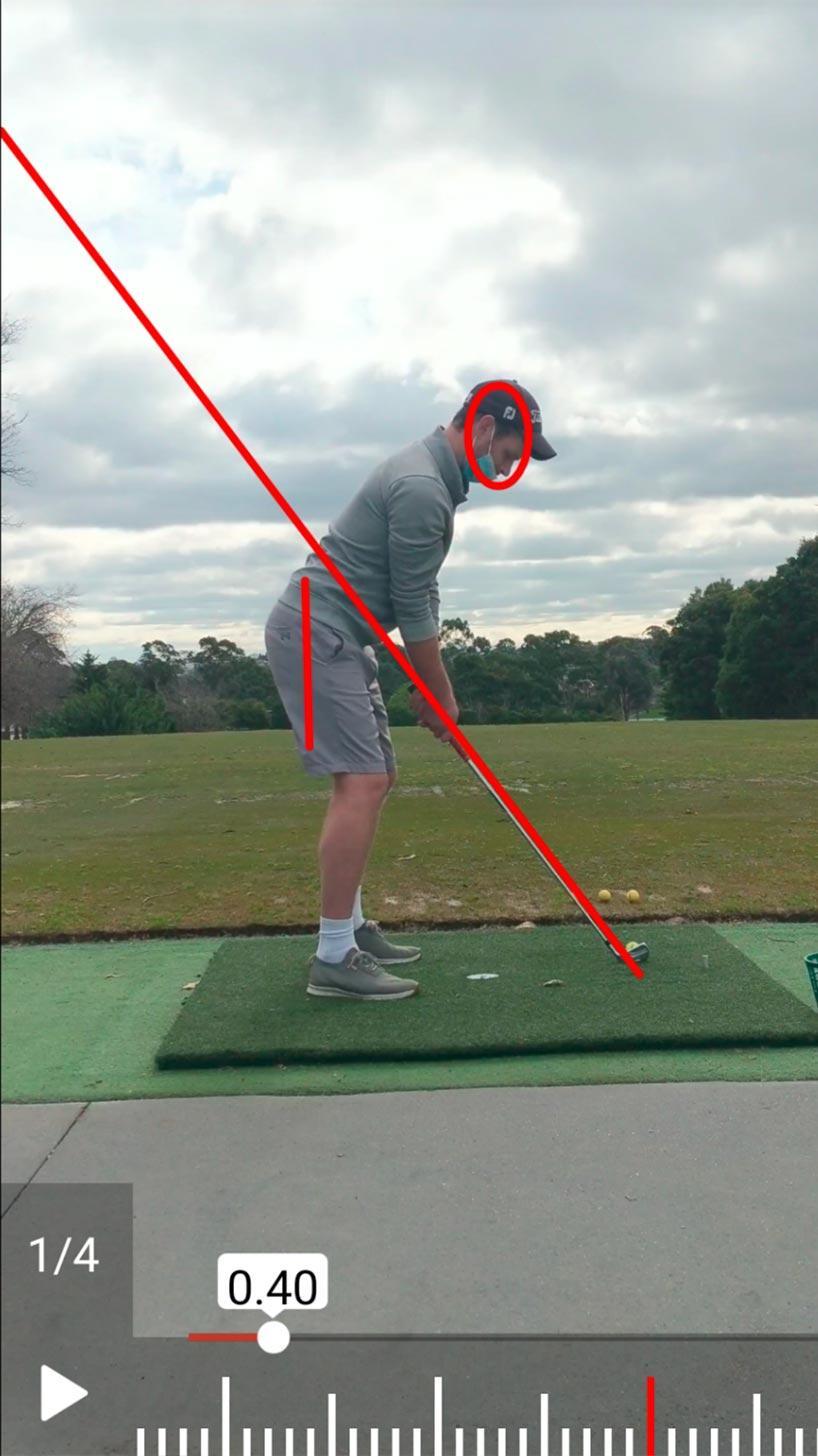
Address sets the biomechanical baseline. Efficient posture and a consistent grip improve reproducibility of the swing plane and clubface control.
- Neutral spine with slight hip hinge – allows rotation without excessive lumbar flexion.
- Knees slightly flexed; weight ~50/50 to 55/45 (lead/trail) depending on club.
- Hands in front of the ball for proper shaft lean at impact with irons.
Takeaway and backswing
Early backswing is about creating a safe, in‑plane motion while building coil (torque) between the shoulders and hips.
- Maintain wrist triangle and wide arc – creates leverage for clubhead speed.
- Controlled hip turn (lead hip stability,trail hip rotation) to load the ground and store elastic energy.
Transition and downswing
transition is where the kinetic chain is initiated: a ground-based push (GRF) through the trail leg, followed by a sequenced unwinding of hips, torso, arms, and club.
- Initiate downswing with lateral shift and hip rotation toward the target.
- Maintain spine angle; avoid early extension (standing up) which ruins impact geometry.
Impact
Impact is the result of prior sequencing and posture. Key metrics: clubhead speed, attack angle, loft/face orientation, and dynamic loft at contact.
- Stable lead side and forward shaft lean for crisp iron contact.
- Square clubface and correct path to manage shot shape (draw, fade, neutral).
Follow-through and deceleration
A balanced follow-through indicates proper energy transfer and sequencing. deceleration should be smooth; abrupt stops often indicate swing faults or compensations.
Kinematic sequence: the engine behind speed and repeatability
The ideal kinematic sequence shows a proximal-to-distal activation pattern: hips peak first, then torso, forearms, and finally the club. Deviations-such as early arm acceleration or delayed hip rotation-reduce clubhead speed and create inconsistency.
- Hip peak angular velocity → trunk peak → hand/arm peak → club head peak.
- Train sequencing with tempo and rhythm drills; resistive training (band pulls) can accentuate proximal drive.
Measurable golf swing metrics and what they mean
| Metric | Why it matters | Typical target |
|---|---|---|
| Clubhead speed | Primary driver of distance | Variable by level: 85-115+ mph for amateurs |
| Ball speed | Directly correlates with carry distance | ~1.4× clubhead speed (driver) |
| Launch angle | Optimizes trajectory for carry and roll | Driver: 10-14°, Irons: lower depending on club |
| Spin rate | Affects stopping and roll | driver: 1800-3000 rpm (depends on goal) |
Grip mechanics and clubface control
Grip influences clubface orientation through impact. Small grip changes can create or correct shot shapes.
- Neutral grip reduces extremes; strong grip promotes draws, weak grip promotes fades.
- Grip pressure: hold firm enough to control the club but relaxed enough to allow wrist release – often described as a 4/10 to 6/10 tension.
- Hands ahead of the ball at address for irons helps compress the ball and reduce spin variability.
Posture, alignment, and balance for consistent contact
Good posture creates a stable rotational axis and helps the club return to the correct impact location.
- Spine angle should tilt from the hips,not the lower back.
- Shoulders, hips, and feet roughly parallel to target at address (adjust for shot shape and stance).
- Balance test: be able to hold finish for 2-3 seconds – lack of balance indicates issues with weight shift or swing path.
Common biomechanical faults and corrective cues
- Early extension: hips rise toward the ball in transition. Fix: posture drills with a chair or foam roller behind hips to feel hinge.
- Over-swing or reverse pivot: excessive lateral head or shoulder movement. Fix: slow-motion swing and alignment poles to train center of gravity control.
- Casting (early release): loss of lag and reduced ball speed. Fix: towel-under-arm drill or impact bag to promote late release.
- To steep/too shallow swing plane: leads to slices/hooks. Fix: plane sticks or alignment rod drills to groove the correct path.
Drills to train biomechanics and technique
- Step drill: Promote proper weight shift and sequencing by stepping into the shot at transition.
- Pause at top drill: trains tempo and allows the body to start the downswing rather than the arms.
- Resistance band hip turn: Builds rotational power and timing of hip-to-shoulder separation.
- Impact bag drill: Encourages correct impact position and forward shaft lean for irons.
- Alignment stick plane drill: Groove the ideal swing plane for driver and irons.
Integrating technology: motion capture, launch monitors, and smart coaching
Modern analysis tools translate biomechanics into actionable data:
- 3D motion capture: Measures joint angles, sequence timing, and velocities to diagnose inefficiencies.
- High-speed video: Useful for frame-by-frame kinematic checks (wrist angles,shaft lean,spine angle).
- Launch monitors: Provide ball speed, launch angle, spin rate, smash factor, and attack angle to align technique with desired ball flight.
- Force plates: Quantify ground reaction and weight transfer to improve power generation and balance.
Strength, mobility, and injury prevention
Physical training complements biomechanics-strength without mobility can produce compensations and injuries.
- Prioritize hip mobility, thoracic rotation, and ankle stability for an efficient swing.
- Build rotational strength (medicine ball throws, cable chops) and single-leg stability (lunges, single-leg deadlifts).
- include pre-round dynamic warm-ups and post-round mobility routines to protect the spine and shoulders.
Sample 8-week practise plan (technique + fitness)
| week | Focus | Session Structure |
|---|---|---|
| 1-2 | Setup, grip, posture | 30 min drill + 30 min range (short irons) |
| 3-4 | sequencing & weight shift | Tempo drills, step drill, medicine ball work |
| 5-6 | Launch & path control | Launch monitor sessions + alignment stick work |
| 7-8 | Power & consistency | Long game practice, strength training, on-course simulation |
Practical tips for on-course application
- Use a pre-shot routine that stabilizes posture and sets consistent tempo.
- Check one mechanical thing to change at a time-over-coaching reduces performance under pressure.
- practice with purpose: simulate on-course lies and wind conditions rather than endless balls from a mat.
- Periodically validate swing changes with a launch monitor or video to ensure transfer to ball flight.
Case study: small sequencing change, big results
A mid-handicap player struggled with inconsistent distance and slices. Motion capture identified early arm acceleration (casting) and delayed hip rotation. A targeted 6-week program emphasizing hip-first transition (band resisted hip drives), towel-under-arm drill to reduce casting, and impact-bag training improved kinematic sequence and increased average carry by 18-25 yards with reduced dispersion.
SEO-pleasant keywords used in this article
golf swing biomechanics, golf swing technique, kinematic sequence, clubhead speed, launch monitor, swing plane, grip mechanics, posture, weight shift, ground reaction forces, launch angle, spin rate, swing analysis, motion capture, golf drills, golf training
Fast checklist: biomechanical swing setup
- Neutral grip and relaxed pressure
- Hip-hinged posture with spine tilt
- Balanced stance with athletic knee flex
- Wide takeaway and full but controlled shoulder turn
- Initiate downswing with the hips
- Forward shaft lean at impact (irons)
- Finish balanced, able to hold for 2-3 seconds
For players and coaches, combining biomechanical insight with targeted practice and physical training delivers measurable improvements in clubhead speed, consistency, and shot control. Use the drills and tools above to create repeatable swing mechanics that translate to lower scores and more enjoyment on the course.




