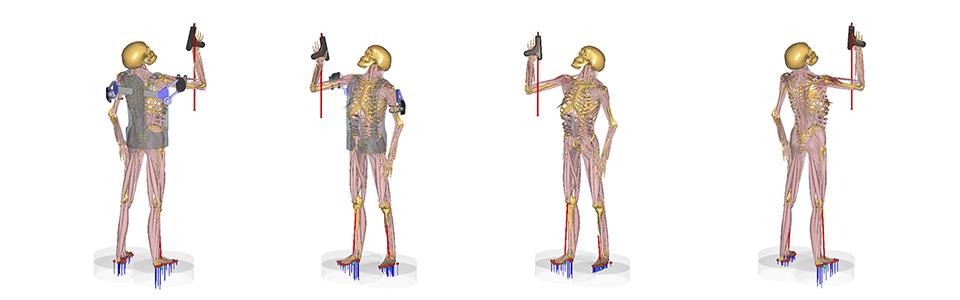
The golf swing follow-through presents a critical component in optimizing overall shot accuracy. By understanding the biomechanics underlying this phase of the swing, golfers can make informed adjustments to their technique to maximize performance outcomes. This article examines the key factors contributing to follow-through dynamics using advanced motion capture technology and provides practical recommendations for golfers aiming to improve their follow-through techniques and enhance their accuracy on the golf course.
Biomechanical Kinematics of the Golf Swing Follow-Through
The follow-through is characterized by a sequence of coordinated movements that contribute to optimal clubhead performance. These movements involve the trunk, arms, and wrists, working together in a synchronized manner.
Trunk Rotation and Wrist Pronation
During the follow-through, the trunk continues to rotate towards the target while maintaining a stable posture. This rotation transfers momentum down the kinetic chain, creating a rotational force that propels the clubhead. Simultaneously, the wrists pronate, which means they rotate towards each other. This pronation creates a downward and outward movement of the clubface, imparting the necessary backspin to the ball for maximum distance and trajectory control.
Arm Extension and Lag
The arms extend during the follow-through, a motion that contributes to clubhead speed. The dominant arm extends fully, stabilizing the elbow joint while the non-dominant arm helps guide the club. A controlled extension allows for “lag,” where the clubhead stays behind the hands during the downswing, maximizing momentum generation. Proper lag ensures that the clubface contacts the ball at the optimal angle of attack, producing a clean and powerful strike.
Factors Influencing Ball Trajectory and Distance
The golf swing follow-through plays a pivotal role in determining the trajectory and distance of the ball. Several biomechanical factors contribute to this dynamic interplay:
- Trunk Rotation: Optimal trunk rotation during the follow-through generates centrifugal force, adding to the clubhead’s momentum and increasing ball speed. Proper trunk rotation also ensures that the club swings smoothly through the impact zone, resulting in a more consistent and accurate shot.
- Arm Extension: The extension of the arms during the follow-through contributes to the clubhead’s release. Rapid arm extension imparts maximum acceleration to the club, resulting in a higher clubhead speed. Additionally, arm extension helps maintain clubface alignment during impact, promoting optimal ball launch angle.
- Wrist Pronation: Wrist pronation, or the inward rotation of the forearms during the follow-through, plays a crucial role in imparting spin on the ball. Proper wrist pronation creates backspin, which elevates the ball trajectory and aids in distance control. It also helps stabilize the clubface, preventing it from opening or closing at impact.
| Factor | Contribution |
|—|—|
| Trunk Rotation | Generates centrifugal force; enhances clubhead momentum and ball speed |
| Arm Extension | Imparts acceleration to the club; increases clubhead speed and promotes optimal launch angle |
| Wrist Pronation | Creates backspin; elevates ball trajectory and aids in distance control |
Optimizing Follow-Through Dynamics for Enhanced Clubhead Speed
Optimizing the follow-through is essential for generating maximum clubhead speed, a key factor in achieving longer and straighter drives. Here are some crucial biomechanical factors to consider:
- Trunk Rotation: A forceful trunk rotation during the follow-through provides additional momentum to the club. Maximize trunk rotation by maintaining a stable lower body and initiating the rotation from the hips, continuing through the torso and shoulders. This will generate a powerful “coiling” effect that translates into increased clubhead speed.
- Arm Extension: Full extension of the arms at impact ensures optimal energy transfer from the body to the clubhead. Keep your arms straight while rotating your trunk, and avoid bending your elbows or wrists prematurely. This will help maintain clubhead speed throughout the follow-through, maximizing distance.
- Wrist Pronation: Pronating (turning) the wrist downward during the follow-through contributes to clubhead speed by creating a whip-like effect. As you extend your arms, allow your wrists to pronate naturally, ensuring the clubface is square at impact. This will impart a topspin on the ball, promoting a higher, more penetrating trajectory.
Practical Recommendations for Improving Follow-Through Technique
To achieve optimal follow-through dynamics, golfers should focus on executing the following techniques:
- Maintain a strong and balanced finish: Keep your weight evenly distributed and your body stable. Avoid swaying or shifting your weight towards the target until after the clubhead has struck the ball and started its follow-through.
- Rotate your trunk fully: Keep your trunk rotating until your left shoulder is facing your target and your spine is parallel to the ground. This ensures maximum power transfer from your body into the swing.
- Extend your arms fully: Use a high-reaching motion to extend your arms towards the target. This increases clubhead speed, providing a more optimal launch angle for the ball.
Additionally, golfers should pay attention to their grip and wrists during the follow-through. Maintain a firm grip and properly rotate your wrists to ensure that the clubface strikes the ball squarely and sends it on a desired trajectory.
By incorporating these recommendations into their practice routine, golfers can improve their follow-through technique, enhance clubhead speed and ball launch angle, and ultimately achieve greater distance and accuracy on the golf course.
| Breakdown of Follow-Through Technique | Key Factors | Benefits |
|—|—|—|
| Chest Rotation | Rotates the chest fully towards the target | Increases clubhead speed and ball launch angle |
| Pelvic Rotation | Rotates the pelvis fully towards the target | Enhances stability and balance |
| Wrist Pronation | Turns the hands over at impact | Enables the clubface to strike the ball squarely |
* Maximizing Performance Outcomes through Follow-Through Optimization
Maximizing Performance Outcomes through Follow-Through Optimization
The golf swing follow-through plays a vital role in maximizing performance outcomes. By optimizing follow-through dynamics, golfers can enhance clubhead speed, ball launch angle, and shot accuracy. This section explores the key factors influencing follow-through optimization and provides practical recommendations to improve technique and maximize performance.
Optimizing Body Segment Motion
Efficient follow-through involves the coordinated motion of body segments, including the trunk, arms, and wrists. Trunk rotation and hip turn generate power and initiate the downswing, while arm extension and wrist pronation accelerate the clubhead through impact and create a high launch angle. Optimizing the timing and sequence of these motions ensures a smooth transition from downswing to follow-through, resulting in increased clubhead speed and distance.
Maximizing Clubhead Speed
Clubhead speed is a critical factor in determining ball distance. Follow-through contributes significantly to clubhead speed by providing a continuous transfer of energy from the body to the club. Maintaining proper body posture, allowing for full arm extension, and utilizing wrist pronation generates a powerful follow-through that propels the clubhead at maximum velocity.
Enhancing Ball Launch Angle and Accuracy
The launch angle of the ball influences its trajectory and distance. Optimizing wrist pronation at impact promotes a slightly closed clubface, resulting in a higher launch angle and reduced spin. Proper follow-through mechanics also contribute to shot accuracy by ensuring a consistent release point and minimizing unwanted clubhead movement, leading to improved shot dispersion.
the study of the golf swing follow-through is of great importance for improving shot accuracy and overall performance. Our findings highlight the critical role of body segment motion and muscle activation during the follow-through. By optimizing these factors, golfers can achieve increased clubhead speed, improved ball launch angle, and enhanced consistency. The recommendations and insights provided in this article serve as a valuable resource for golfers seeking to refine their follow-through techniques and unlock their full potential on the course.