The follow-through portion of the golf swing-too often dismissed as mere finishing style-actually encapsulates essential biomechanical processes that shape shot accuracy,consistency,and long-term musculoskeletal well‑being. Biomechanics-the study of mechanical laws applied to living systems-offers a precise language for describing how joint kinematics,intersegmental forces,and neuromuscular coordination create,transmit,and absorb energy at and after impact. Viewing the follow-through through this lens recasts it as an active element of the kinetic chain,not just the aftermath of the downswing,with direct consequences for performance tuning and injury prevention.
This article takes an interdisciplinary, evidence‑informed approach to the follow-through by examining three interlocking domains. First, we revisit the kinematic and kinetic signatures of effective follow‑throughs-how sequencing, angular momentum flow, and ground reaction forces (GRFs) interact. Second, we distill findings on neuromuscular control: the timing of muscle activation, purposeful co‑contraction, and sensory feedback that stabilizes joints and refines clubface alignment after impact. Third, we review practical measurement approaches-motion capture, force plates, electromyography, and wearables-that make follow‑through mechanics measurable and trainable.
Combining biomechanical theory with empirical evidence and coaching practice, our aims are to (1) explain how distinct follow‑through traits affect accuracy and repeatability, (2) flag mechanical patterns that undermine performance or increase injury risk, and (3) outline concrete, measurable training strategies to develop a dependable follow‑through. ultimately, the follow‑through should be treated as a deliberate, measurable phase of the swing that links power generation to safe, repeatable energy dissipation.
Kinematic Sequencing in the Golf Follow‑Through: An Updated Look at Hip, Thorax, Shoulder, elbow and Wrist Coordination
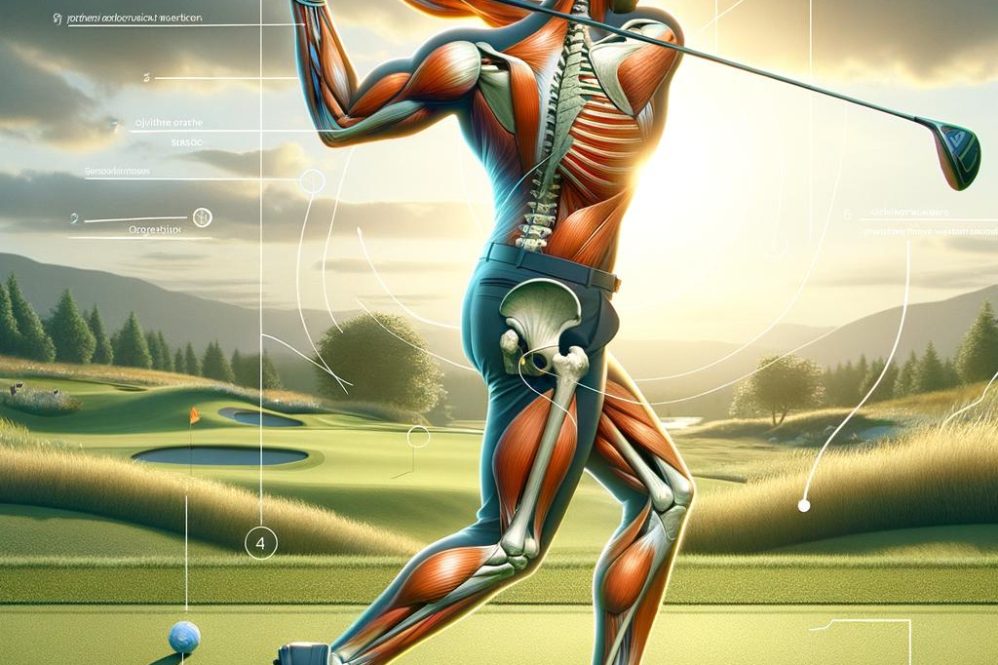
the follow‑through is the terminal expression of the kinetic chain, where leftover angular momentum is redistributed and attenuated among successive body segments.Modern analyses consistently show the continuation of the classic proximal‑to‑distal pattern: the pelvis initiates post‑impact rotation, the torso (thorax) follows, then the shoulder complex, with final extension and release at the elbow and wrist. Time‑series plots of angular velocity typically reveal sequential peaks across joints rather than a simultaneous burst, reflecting orderly momentum transfer that supports both shot quality and joint safety by avoiding excessive distal force spikes.
The hip/pelvic system acts as the principal proximal engine during the finish.Instantly after contact,the pelvis decelerates its internal rotation yet continues to extend and translate,serving as a stable mechanical platform that channels residual rotational energy into the trunk. This pelvic behavior reduces transverse shear on the lumbar spine and tempers distal accelerations. Applied research shows players with cleaner follow‑throughs present smoother pelvic deceleration curves, smaller lumbar shear impulses, and less compensatory shoulder over‑rotation-signs of effective proximal control.
The thorax and shoulder segments form the middle link in the sequencing chain. The trunk rotates and then dissipates angular velocity in a controlled way, enabling scapulothoracic and glenohumeral joints to continue motion without excessive torque. Proper timing through these segments helps maintain clubface orientation in the crucial milliseconds after impact; an early trunk stop or excessive shoulder lag can shift face angle and spin. Typically, thoracic peak velocity occurs after the pelvis and before maximal shoulder activity, creating a phase coupling that limits loading of the cervical and upper thoracic regions.
Distal segments-the elbow and wrist-reflect the chosen braking strategy. The elbow frequently enough extends in a graded manner while the wrist completes a coordinated radial/ulnar deviation and extension pattern to finish the release. Rather than chasing maximal distal speed, elite performers emphasize controlled deceleration to disperse energy safely. Useful monitoring metrics validated by motion capture include:
- Time‑to‑peak angular velocity for each segment (to verify sequencing).
- Deceleration rate at the elbow and wrist, highlighting damaging spikes.
- Intersegmental phase angles to quantify smooth momentum transfer.
These indicators separate efficient releases from compensatory, injury‑prone patterns.
To convert sequencing data into coaching action, use objective assessment and constraint‑led progressions. Wearable IMUs or simple 3D analysis can flag departures from expected timing, and focused drills (pelvic lead‑throughs, thoracic rotation progressions, and controlled wrist‑release routines) rebuild proper sequencing.the table below summarizes approximate phase relationships observed in applied settings and can serve as a baseline for assessment thresholds.
| Phase | Primary action | Typical time to peak (ms, rel. to impact) |
|---|---|---|
| Hips | Pelvic rotation/extension | ~0-30 |
| Thorax | trunk rotation & deceleration | ~20-60 |
| Shoulder | Glenohumeral rotation & stabilization | ~30-80 |
| Elbow/Wrist | Extension and controlled release | ~40-120 |

Momentum Transfer and Energy Dissipation: Shaping Ball Flight with Timing and Ground Forces
At the heart of an effective follow‑through is efficient conversion of body rotation into clubhead speed and, ultimately, ball velocity. A coordinated proximal‑to‑distal sequence-starting at the hips, passing through the torso, and finishing with the wrists and clubhead-maximizes angular velocity at impact while limiting internal losses. When segmental timing preserves angular momentum, clubhead linear speed increases without excessive distal muscular input; poor timing instead converts useful rotational energy into wasted internal work and heat. In short, sequencing and strategic stiffness modulation are central to delivering a clean impulse through impact.
Ground reaction forces (GRFs) are the external lever that enables and shapes rotational accelerations. The vertical and horizontal GRF components under the lead foot create ground torque that helps spin the pelvis and establish a stable base for upper‑body rotation. Timely braking and force redirection let the lower body act as a temporary anchor so the torso and arms can unload energy into the club. Faulty GRF timing-excessive lateral sway or delayed lead‑leg brace-turns rotation into whole‑body translation,reducing launch quality and repeatability.
Energy loss in the late downswing and follow‑through can be traced to specific mechanical faults: early wrist release (casting), excessive grip tension and forearm co‑contraction, lateral COM shifts, and asynchronous segment timing. These dissipative pathways include:
- Neuromuscular inefficiency-heightened antagonist activation that converts output into internal losses;
- Mechanical leakage-unwanted translations or rotations that divert momentum from the clubhead;
- Impact inefficiency-suboptimal clubface‑path interactions that increase spin and reduce ball speed.
Reducing these leaks raises the proportion of body energy that becomes ball energy.
Training should focus on reproducible modifications to angular velocity profiles and force application. Useful interventions include resisted rotational medicine‑ball throws to reinforce timed pelvis‑thorax separation, single‑leg bracing drills to sharpen lead‑leg GRF timing, and high‑speed video or IMU feedback to quantify peak segmental velocities and their sequencing. Coaching cues such as “lead foot firm, hips through” and “delay the wrist release” are valuable when validated by measurable outcomes (clubhead speed, launch angle, spin rate) so they improve energy transfer rather than just changing feel.
The matrix below links biomechanical targets to measurable proxies and training actions practitioners can apply immediately:
| target | Measurable Proxy | Training Cue/Drill |
|---|---|---|
| Maximize clubhead speed | Peak angular velocity at the wrists (rad/s) | Explosive med‑ball throws; impact‑bag repetitions |
| Optimize GRF timing | vertical GRF peak under lead foot (N) | Single‑leg bracing with force‑plate or pressure insole feedback |
| Reduce energy leakage | COM translation during downswing (cm) | Line‑drill stability + tempo control |
Use these proxies to track objective progress so that sensory changes,cueing,or equipment tweaks demonstrably increase energy transfer and optimize ball flight characteristics. Recent applied evaluations using wearables have shown measurable improvements in dispersion and launch metrics when sequencing and GRF timing are trained with objective feedback.
Controlled Deceleration: Muscle Activation, Eccentric Strength, and Reducing Injury Risk
Prosperous follow‑through control depends on precisely timed muscle activations that move the system from peak power output into structured deceleration. After proximal‑to‑distal momentum transfer reaches impact, a coordinated sequence of eccentric and isometric contractions absorbs kinetic energy. Primary contributors include trunk rotators and extensors, eccentric activity of the lead‑arm musculature (notably biceps and wrist extensors), and stabilizing co‑contraction in the hips and contralateral gluteal muscles. These patterns damp post‑impact oscillation, limit clubhead wobble, and preserve launch conditions that determine accuracy.
Eccentric control is the swing’s braking system, dissipating angular and linear momentum while keeping segment alignment. Rotator cuff and scapular stabilizer eccentrics slow humeral rotation; wrist and finger eccentrics modulate club release and face angle; trunk eccentricity reduces axial rotation loads on the lumbar spine. Because eccentric muscle actions can generate high force with relatively lower metabolic cost, progressive eccentric conditioning raises the system’s tolerance for rapid velocity reversals without neuromuscular breakdown.
EMG studies highlight timing as the key variable: a preparatory pre‑activation tens of milliseconds before impact primes tissues, while rapid eccentric bursts immediately post‑impact continue for hundreds of milliseconds depending on swing velocity and follow‑through length. Protective co‑contraction around vulnerable joints is common, but excessive global stiffening increases compressive loading and may paradoxically raise injury risk. optimal deceleration thus looks like selective, time‑locked eccentric firing rather than a full‑body brace.
from both performance and injury‑prevention standpoints, practitioners should expand eccentric capacity and refine timing. practical methods include progressive eccentric posterior‑chain and shoulder loading, reactive deceleration drills that exaggerate follow‑through demands, and fatigue management to prevent late‑round neuromuscular failure. Examples of targeted exercises:
- Eccentric single‑leg romanian deadlifts to build hip‑pelvis braking capacity
- slow external‑rotation negatives to improve rotator‑cuff deceleration
- Resisted rotational swings with slow return to train axial eccentric control
- Controlled eccentric wrist curls to govern club release mechanics
These interventions should be periodized and integrated with on‑course practice to support transfer.
Coaches can monitor capacity‑to‑function links using a compact battery of measures. The table below outlines practical assessment metrics and targets for applied settings.
| Measure | What it Indicates | Practical Target |
|---|---|---|
| Single‑leg eccentric RDL load | Posterior chain braking capacity | progressive overload with controlled 10-20% weekly increases |
| Rotator cuff eccentric tolerance | Shoulder deceleration reserve | Pain‑free 3-5s negatives |
| Movement symmetry score | Sequencing balance L/R | <10% asymmetry |
| Perceived fatigue / session | Neuromuscular readiness | Remain within planned thresholds |
Regular monitoring and tailored eccentric loading reduce overuse injuries while preserving the fine timing essential for consistent dispersion and long‑term availability.
Linking Swing Phases: Smoother Transitions from Acceleration into Follow‑Through
Linking the high‑speed acceleration phase with the follow‑through depends on a coherent kinematic chain that preserves useful momentum while routing deceleration into larger, more resilient segments. Instead of an abrupt stop, an optimal transition gradually shifts angular velocity from distal towards proximal structures-club to hands to forearms to shoulders-so residual energy is either imparted to the ball or safely absorbed by robust tissues. This timed redistribution minimizes late‑phase perturbations in clubface orientation and trims variability at impact, which are primary drivers of accuracy and dispersion.
Coaches can monitor a small set of temporal and spatial checkpoints that indicate a healthy transition. Observables to track in the split‑second after impact include:
- Pelvic lead: pelvis rotation initiating toward the target within ~20-40 ms post‑impact.
- Thoracic lag: maintained torso‑to‑pelvis separation to preserve elastic recoil and torque transfer.
- Arm extension timing: proximal‑to‑distal deceleration sequence to avoid premature wrist release.
- COM trajectory: a forward and slightly upward displacement with controlled vertical acceleration.
these markers form a reproducible motion signature linked to consistent ball flight and lower lateral dispersion.
Deceleration is predominantly governed by eccentric contractions and coordinated intersegmental timing rather than single‑joint braking. Posterior cuff muscles, scapular stabilizers, obliques and hamstrings act eccentrically to absorb energy while keeping alignment. Emphasizing eccentric control of the lead arm and a stable spine angle through the early follow‑through protects the lumbar region and prevents compensations that undermine accuracy. From a kinetic perspective, steadily reducing angular velocity while maintaining symmetric GRFs supports performance and load management.
Progressive drills speed learning by simplifying sensory goals and reinforcing safe motor habits. A practical drill matrix for range sessions:
| Drill | Purpose | Duration |
|---|---|---|
| Half‑swing to hold | Reinforce pelvis‑to‑thorax timing | 6-8 reps |
| Slow‑motion deceleration swings | Train eccentric braking | 10-12 reps |
| Impact tape feedback | Check face alignment consistency | 5-10 strikes |
Combine these with stepwise speed increases and objective feedback (video, pressure mat) to quantify improvements in transition execution.
Closing the training loop requires measurement: high‑speed video, IMUs, and force‑plate data expose timing, magnitude, and asymmetry issues that subjective coaching can miss. Prioritize metrics such as time‑to‑peak pelvis rotation,thorax rotation lag,and lead‑arm deceleration rates. When applied systematically these data inform load management that both improves consistency and lowers overuse risk, turning transient technical gains into durable performance improvements.
biomechanical assessment and quantitative Metrics: motion Capture, Force Plates and Wearables for Follow‑Through Evaluation
A multimodal testing strategy merges high‑resolution kinematics with kinetic and wearable signals to produce repeatable measures of follow‑through quality. Optical motion capture quantifies 3D joint kinematics and segmental angular velocities, letting practitioners calculate peak trunk rotation speed, shoulder‑pelvis separation, and wrist pronation at release.When tied to club telemetry, these outputs reveal the timing relationships that underpin efficient energy transfer and desired launch conditions.
Force platforms add kinetic depth by measuring GRFs, center‑of‑pressure (COP) pathways, and inter‑limb force asymmetries around impact. Useful kinetic markers include vertical GRF impulse during weight shift, mediolateral COP excursion during lateral release, and frontal‑plane torques that stabilize the lower body while upper segments decelerate. These metrics help locate inefficient weight transfer patterns and asymmetries that can reduce consistency or elevate injury risk.
Wearables-principally IMUs and pressure insoles-extend assessment beyond the lab, providing high‑temporal‑resolution angular velocity, acceleration, and plantar pressure across repeated swings. Field IMU setups on pelvis, thorax, lead wrist and clubshaft estimate sequencing and peak timing; pressure insoles capture dynamic load redistribution in the follow‑through. Even though wearables increase ecological validity,their algorithms should be calibrated against gold‑standard motion capture for rotational measures like wrist pronation.
Recommended metrics for follow‑through evaluation include:
- kinematic: peak trunk rotation velocity, shoulder‑pelvis separation angle, wrist pronation at release
- Kinetic: vertical GRF impulse, COP excursion magnitude, peak frontal‑plane torque
- Temporal: time from impact to peak pelvis velocity, intersegmental velocity sequencing index
Best practice synthesizes motion capture, force plate and wearable streams in time‑synchronized pipelines and multivariate models to establish normative ranges and individualized targets for training or rehab. The table below maps sensors to practical metrics and sampling needs for applied work.
| Sensor | Primary metric | Minimum Sampling |
|---|---|---|
| Optical motion capture | Segment angular velocities, joint angles | 200-500 Hz |
| Force plate | Vertical GRF, COP trajectory | 1000 Hz |
| IMUs / pressure insoles | Angular velocity sequencing, plantar load | 200-1000 Hz |
targeted Training: Strength, Mobility and Motor‑Control to Improve Sequencing and Braking
Modern training for the follow‑through emphasizes integrated adaptations that boost the kinetic chain’s ability to transfer energy efficiently and to decelerate in a controlled manner. Three interdependent domains should guide programme design: strength (especially eccentric and rotational strength), mobility (segmental ranges that permit safe sequencing), and motor control (timing and proprioceptive acuity). Interventions aim to restore or enhance the activation flow from the ground through the pelvis, trunk and upper limbs while ensuring residual momentum can be absorbed at impact and during the finish.
Resistance work must balance concentric power production and eccentric braking ability. Favor multi‑planar, posterior‑chain dominant and anti‑rotation movements that mirror swing vectors and deceleration demands. Emphasize loading schemes that raise the rate of force progress for initiation and eccentric strength to arrest motion cleanly after impact. Examples include fast hip‑hinge variations, loaded anti‑rotation holds, and single‑leg posterior‑chain progressions that match the unilateral stance of the golf swing.
- Rotational power – medicine‑ball rotational throws,cable chops (fast intent,moderate load)
- Eccentric control - slow RDLs,Nordic progressions,controlled split‑squat descents
- Segmental mobility – thoracic rotation mobilizations,hip internal/external rotation series
- Proprioception & timing – perturbation‑resisted swings,variable‑tempo contact drills
Mobility and motor‑control work should be specific and progressive. Restore thoracic rotation to allow trunk follow‑through without compensatory lumbar extension; preserve hip rotation and ankle dorsiflexion for stable weight transfer; and train scapular mechanics to absorb shoulder deceleration forces. Motor control sessions ought to include variable‑pace swings, tempo gating, and perturbation exercises that force adaptive sequencing under fatigue. These strategies reduce pathological loading and improve reproducibility of the kinetic sequence.
| Exercise | Primary Target | Typical prescription |
|---|---|---|
| Med Ball Rotational throw | Rotational power | 3-5 x 6-8, explosive |
| Cable Anti‑Rotation Hold | Trunk stability | 3 x 20-40s, progressive load |
| Slow Eccentric RDL | Eccentric posterior chain | 3-4 x 6-10, 3-5s descent |
| Thoracic Rotation Mobilization | Segmental mobility | Daily, 2-3 sets x 8-12 reps |
Integrate training in phases: general capacity (mobility and baseline strength), specific transfer (power, eccentric tolerance and sequencing), then on‑course transfer (tempo‑managed swings and fatigue resistance). Monitor progress with objective metrics-barbell velocity, symmetry indices and pain/function scores-to guide progression and minimize injury risk. A disciplined, evidence‑driven blend of strength, mobility and motor‑control work yields measurable gains in sequencing fidelity, deceleration precision and sustained performance.
Technique Adjustments and Coaching Cues: Practical Range Implementation and Personalization
Effective correction of follow‑through faults maps diagnostic findings to targeted interventions. Coaches should restore a reliable kinematic sequence-pelvis rotation before thorax rotation before arm release-so energy flows efficiently through impact into the braking phase. Small changes in wrist hinge, arm extension timing or trunk tilt can disproportionately affect clubface orientation during the finish; therefore every corrective cue should address the specific mechanical fault revealed by analysis rather than serve as a generic styling preference.
On the range, use concise, repeatable cues that produce measurable changes. Empirically supported examples:
- “Lead with the hips” – promote early pelvic rotation to fix late‑arm release.
- “Finish with extension” – encourage complete elbow and shoulder extension to reduce early release and blocks.
- “Rotate, don’t slide” – discourage lateral translation that disturbs the COM path and balance.
- “Hold the angle” – a brief isometric hold around impact for golfers who flip their wrists.
Pair cues with immediate feedback (video, impact tape, ball flight) and constrained reps that isolate the targeted variable.
| Common Fault | Likely Biomechanical Cause | Range Cue / drill |
|---|---|---|
| Early Release | premature forearm supination; weak deceleration control | “Hold angle to 12 o’clock” – short‑swing tempo drill |
| Blocked Finish | Insufficient pelvis rotation; lateral slide | “Lead with hips” - step‑through drill |
| Collapsing Posture | Limited trunk extension or mobility | “Chest tall” – posture holds with mirror feedback |
Progression should follow an objective→contextual→autonomous pathway: (1) isolate the mechanical element with low‑load reps and augmented feedback, (2) reintroduce full‑speed swings with varied targets, and (3) validate transfer via on‑course or pressure simulations.Use measurable goals-pelvic rotation degrees, clubhead speed at impact, and follow‑through alignment-to set clear performance thresholds. Employ technology selectively: high‑frame‑rate video for kinematics, launch monitors for carry and spin, and pressure mats to quantify weight transfer through the finish.
Individualization depends on integrating physical assessment into cue selection and practice dosing. For limited thoracic rotation, prescribe short mobility prehab plus modified technical cues (e.g., slightly reduced backswing with emphasis on axial rotation through the finish). For golfers with shoulder history, prioritize safe ranges and submaximal tempo before increasing intent. Sample micro‑program elements:
- Load management: limit high‑effort swings to 10-20 per session when introducing new mechanics.
- Mobility pairing: perform two brief mobility drills before range work to enable intended rotation.
- Assessment checkpoints: weekly video reviews and biweekly metric comparisons to confirm durable change.
These individualized, biomechanically grounded prescriptions cut injury risk and accelerate reliable follow‑through improvements.
Equipment and Environmental Factors: Club Design, Shaft Properties and Surface Effects on Follow‑Through
Club geometry and mass distribution influence follow‑through kinematics by determining inertia, angular momentum and impact vibration characteristics. Clubs with rearward centers of gravity and higher MOI generally stabilize the head through impact, smoothing the post‑impact arc and permitting a more continuous trunk and limb rotation. In contrast,low‑MOI,forward‑weighted clubs magnify the sensitivity of follow‑through trajectory to small timing errors,increasing launch variability. Thus, club design must be considered part of the athlete‑equipment system rather than an autonomous variable.
Shaft flex and torsional stiffness alter the timing of energy transfer and the clubhead’s release profile, which affects follow‑through mechanics and dispersion. Flexural behavior changes the phase relationship between trunk rotation and distal extension, shifting wrist‑pronation timing and the club path through impact. Generalized laboratory and on‑course findings are summarized below.
| Characteristic | Typical Biomechanical effect | Follow‑Through Implication |
|---|---|---|
| Stiff Shaft | Earlier energy transfer; reduced deflection | Shorter, more abrupt follow‑through; demands faster trunk rotation |
| Regular Flex | Moderate lag and release timing | smoother extension; balanced follow‑through dynamics |
| Flexible Shaft | Delayed kick and greater clubhead bend | longer arc with prolonged wrist action; can hide lower rotational speed |
Grip size, shaft length and lie angle interact with flex to shape leverage and distal trajectories; fitting choices should reflect intended follow‑through behavior. Key selection criteria include:
- Desired release timing (earlier vs. later peak clubhead speed),
- Control of shaft deflection to limit unwanted wrist‑pronation variance,
- anthropometrics (forearm‑to‑height ratio) that change natural extension ranges.
These factors are crucial when matching equipment to reproduceable end‑of‑swing positions associated with lower dispersion.
Playing surface and shoe traction create the GRF habitat that supports follow‑through stability. soft turf or dense rough can impede lateral weight transfer and provoke compensatory upper‑body strategies-early trunk truncation or arm overextension-that hurt post‑impact consistency. Conversely, excessively hard surfaces or poor footwear traction may raise torsional loads on the lead limb and alter rotational momentum retention. Fitting should therefore consider surface conditions and recommend footwear that preserves consistent kinetic‑chain behavior.
For applied practice, combine motion capture, shaft bending analysis and in‑situ surface testing. Drills that synchronize trunk rotation with distal release (tempo‑controlled swings, targeted wrist strength work) and iterative equipment tweaks help converge on a shaft‑player synergy that supports the desired finish. Practical principles: prioritize shaft‑player fit over raw power, match club geometry to intended follow‑through arc, and validate fittings on the actual playing surfaces. Aligning mechanical constraints with motor strategies improves transfer from practice to performance.
Q&A
1. What is meant by “follow‑through” in the context of the golf swing, and why is it critically important for shot precision and control?
Answer: The follow‑through is the phase immediately after ball contact during which the golfer’s body and club continue to decelerate and distribute energy produced by the downswing. Far from being decorative, it reveals the quality of sequencing, energy transfer and balance earlier in the swing. A biomechanically efficient follow‑through reflects good proximal‑to‑distal sequencing and controlled deceleration, reducing variability at impact and improving repeatability.
2.How does kinematic sequencing relate to the follow‑through and overall swing mastery?
Answer: Kinematic sequencing-the ordered timing of peak angular velocities from pelvis to trunk to upper limbs to club-maximizes energy transfer at impact and produces a consistent follow‑through signature. Timing deviations (early arm acceleration or late pelvis rotation) alter the finish trajectory and frequently enough indicate inefficient energy transfer, increasing dispersion and reducing control.
3. Which biomechanical variables most directly influence follow‑through characteristics and shot outcome?
Answer: Key variables are: (a) timing of peak angular velocities across segments, (b) ground reaction forces (magnitude and timing), (c) COM trajectory and displacement, (d) joint angles and ranges (hips, lumbar spine, shoulders, wrists), and (e) neuromuscular activation patterns. Together they determine how energy is produced, transferred and absorbed-shaping clubhead speed, smash factor and directional control.
4. What role do GRFs and foot mechanics play in a controlled follow‑through?
Answer: GRFs enable the golfer to generate and redirect angular momentum. Effective use of lead and trail foot pressure (vertical and horizontal GRF modulation) supports pelvis rotation and trunk stabilization,enabling orderly sequencing. Sustained force through the lead side during the finish helps controlled deceleration; poor foot mechanics (premature unloading or inadequate force transfer) undermine balance and increase variability.
5. how is balance and COM control assessed for a quality follow‑through?
Answer: Balance is assessed qualitatively by observing a stable finish posture (weight predominantly on the lead foot) and quantitatively via COP trajectories and COM displacement measured with force plates or motion capture. A high‑quality follow‑through keeps COM on a predictable path and avoids excessive lateral sway or forward collapse.
6. Which common biomechanical faults in the follow‑through are associated with loss of precision?
answer: Faults include early extension (loss of posture), casting/early wrist release, reverse pivot or over‑sway (large lateral COM shift), and under‑rotation of pelvis/trunk. Each distorts sequencing, changes impact kinematics, and typically increases dispersion.
7.How do mobility and stability constraints influence the follow‑through?
Answer: Adequate joint mobility (thoracic and hip rotation,shoulder range) allows full sequencing and an unobstructed finish. Restrictions force compensatory motion elsewhere (e.g., excessive lumbar extension), compromising timing and control. Neuromuscular stability-especially core control-lets the golfer resist unwanted motions and sustain repeatable impact geometry.8. What measurement and analysis tools are used to study follow‑through biomechanics?
Answer: Tools include 3D motion capture for kinematics, force plates for GRFs and COP, EMG for muscle timing, high‑speed video for temporal analysis, and launch monitors for club/head and ball metrics. Combining modalities yields the most complete assessment.
9. How can players and coaches translate biomechanical findings about follow‑through into practical training interventions?
Answer: Convert insights into targeted practice: sequencing drills (step‑and‑rotate, pauses), balance/proprioception work (single‑leg stability), S&C for posterior chain and trunk (med‑ball throws, anti‑rotation exercises), mobility routines for thorax and hips, and tempo training (metronome, slow reps) to lock timing. Instrumented feedback accelerates learning by making hidden errors explicit.10. Are there objective kinematic markers of an “optimal” follow‑through that predict lower dispersion?
Answer: No single worldwide marker exists. Optimal follow‑through shows reproducible sequencing with low timing variability, a stable finish posture with COM over the lead foot, and controlled club deceleration on a suitable swing plane. Low intra‑player variability in peak timings and stable COP endpoints correlate with reduced dispersion; prioritize repeatability and outcomes over a fixed aesthetic look.11. How does the follow‑through relate to injury risk,and what biomechanical strategies reduce that risk?
Answer: Poor follow‑through mechanics-excessive lumbar extension,abrupt deceleration without trunk control,or high axial loading-raise spinal and shoulder stress and increase overuse risk. Strategies include improving thoracic mobility, strengthening the posterior chain and core for deceleration, teaching smoother energy dissipation through the chain, and fixing technical faults that overload single joints.
12. What differences in follow‑through biomechanics are typically observed between high‑level and recreational golfers?
Answer: High‑level players usually show consistent proximal‑to‑distal sequencing, lower variability in timing, better COM control and effective use of GRFs. Their finishes are more reproducible and balanced. Recreational players more often have premature release, early extension, and variable finishes that reflect suboptimal sequencing.
13. Which research and disciplinary perspectives inform current understanding of golf follow‑through biomechanics?
Answer: the topic is multidisciplinary-drawing from biomechanics, motor control, sports science, physiology and engineering.Foundational methods come from academic biomechanics groups and applied sports programs; ongoing work refines measurement and training using advanced sensing and neuromuscular tools.14. What practical assessment metrics should a coach track to evaluate follow‑through improvements?
Answer: Track clubhead speed consistency, launch direction and dispersion, timing variability of segmental peak angular velocities, COP endpoint variability, GRF peaks/timing, trunk rotation velocity and finish posture. Assess betterment by reduced variability and better shot outcomes rather than cosmetic changes alone.
15. What are recommended next steps for researchers and practitioners who want to deepen biomechanical application to follow‑through training?
Answer: Next steps include: (a) integrating multimodal measurement (kinematics, kinetics, EMG and launch data) in applied environments; (b) creating individualized biomechanical profiles to target mobility, strength and coordination limits; (c) using objective feedback to speed motor learning; (d) conducting longitudinal intervention studies linking training protocols to on‑course performance and injury outcomes; and (e) maintaining cross‑disciplinary collaboration to translate lab findings into practical coaching solutions. For broader context consult institutional biomechanics overviews and recent review collections in biomechanics literature.
References and further reading (selected):
– Institutional overviews of biomechanics and sport applications (Mass General Brigham).
- Foundational biomechanics resources and multidisciplinary perspectives (Stanford Biomechanics).
– Introductory material on biomechanical principles (fitbudd and similar resources).
– Reviews and recent trends in biomechanics (Nature Biomechanics thematic collections).
If you would like, I can: (a) convert these Q&As into a printable FAQ for coaches; (b) provide a detailed 6‑week progression of drills and gym work to improve follow‑through biomechanics; or (c) outline an in‑field assessment protocol using accessible sensors and software. Which option do you prefer?
In Conclusion
Conclusion
The follow‑through is far more than a cosmetic finish; it is the phase where biomechanical processes initiated earlier are completed, dissipated and integrated into consistent motor patterns. Applying biomechanical analysis-joint sequencing,momentum transfer and controlled deceleration-offers a principled way to understand how the kinetic chain shapes ball flight and how targeted interventions can improve precision and consistency. Attention to timing and intersegmental coordination shows that effective follow‑throughs balance maximizing energy transfer with deliberate attenuation of residual forces to protect tissues and sustain performance.
For coaches and practitioners the message is practical: prioritize coordinated sequencing, efficient release mechanics and graduated deceleration strategies that lower peak joint loads while maintaining clubface orientation through impact and into the finish. Objective assessment-motion capture, IMUs or force platforms-can expose hidden faults, guide individualized interventions, and bridge technique coaching with injury prevention. Blending quantitative analysis with hands‑on coaching optimizes both outcomes and player health.
For researchers, the follow‑through remains a rich area for interdisciplinary work: long‑term trials testing deceleration training, high‑resolution modeling of intersegmental force transfer, and prospective injury surveillance tied to measurable follow‑through mechanics. advances in wearables and computational modeling will help translate lab discoveries into on‑course feedback tools, enabling scalable, evidence‑based improvements in skill acquisition and maintenance.
In short, mastering the golf swing follow‑through requires integrating biomechanical insight, targeted conditioning and continuous measurement. Treat the follow‑through as a core component of the kinetic chain-one that governs final energy distribution and tissue loading-and coaches, players and clinicians can jointly raise performance while reducing injury risk. Continued collaboration between applied biomechanics and coaching practice is essential to turn theory into durable, on‑course gains.

Mastering the Finish: The Biomechanics Behind a Perfect Golf Follow-Through
Choose a tone or title that fits your audience - here are the 12 headline options again, grouped by tone, plus targeted title variations for beginners, coaches, and SEO:
- Coaching: Mastering the Finish: The Biomechanics Behind a Perfect Golf Follow-Through
- Technical: Follow-Through Science: Unlocking Power, Precision, and Injury Prevention
- Practical: Finish Strong: Biomechanical Keys to Consistent, Accurate Golf Shots
- Descriptive: The Anatomy of a Perfect Finish: Joint Sequencing and Momentum in the Golf Follow-Through
- Performance: From Momentum to Control: The Biomechanics of an Elite Golf Follow-Through
- player-focused: Swing Finale: How Biomechanics Boost Accuracy and Protect Your Body
- Intriguing: follow-Through Secrets: The Science of Controlled Deceleration and Better Ball Striking
- Concise: Precision in the Finish: Biomechanical Strategies for Better Golf Shots
- Aspirational: Finish like a Pro: Biomechanics, Timing, and injury-Resistant Technique
- Instructional: The Follow-Through Blueprint: Joint Sequencing for Power, Consistency, and Safety
- Elegant: Flow & Finish: Biomechanics to Turn Your Swing into Reliable Results
- Analytical: Controlled Deceleration: The Science of a Safe, Repeatable Golf Follow-Through
Targeted title and meta variations
Beginner-pleasant
Title: Finish Strong: Simple Follow-Through Tips for Beginner Golfers
Meta description: Easy-to-follow golf follow-through drills and cues for beginners that improve balance, tempo, and ball-striking consistency.
Coach-focused
Title: The Follow-Through Blueprint: Joint Sequencing for Power, Consistency, and Safety
Meta description: Drill progressions, biomechanical cues, and measurement methods coaches can use to teach a repeatable, injury-resistant follow-through.
SEO-optimized
Title: Golf Follow-Through Mechanics: Controlled Deceleration, Joint Sequencing & Shot Consistency
Meta description: Complete guide on golf follow-through mechanics: biomechanics, drills, and injury prevention to boost shot accuracy and consistency.
Why the follow-through matters: the role of follow-through mechanics in accuracy and consistency
The follow-through is not just a cosmetic finish - it’s the mechanical result of how you produced speed, direction, and clubface control through impact. Proper follow-through mechanics reflect balanced weight transfer, correct joint sequencing, and efficient deceleration of the club.When the follow-through is consistent, ball flight, spin, and dispersion improve as the swing delivered the clubhead through the target correctly.
Core biomechanical principles of an effective golf follow-through
1. joint sequencing and segmental transfer
Efficient swings follow a proximal-to-distal activation pattern: hips (pelvis) start rotation, followed by thorax (upper torso), then shoulders, upper arm, forearm, and finally the clubhead. This sequencing maximizes kinetic chain efficiency and reduces torque spikes at any single joint.
2. Controlled deceleration
After impact, muscles must eccentrically decelerate the arms and club to safely dissipate energy. Controlled deceleration keeps the clubface stable through impact, reduces injury risk (especially in the lead shoulder and lower back), and allows consistent clubface closure/opening timing.
3. Balance and center-of-pressure (weight transfer)
A balanced finish – typically with most weight shifted to the lead foot and a stable posture – indicates efficient weight transfer through impact. Poor balance at the finish often signals early extension, sway, or incomplete rotation that cause inconsistent strikes.
4. Angular momentum and timing
The momentum created on the downswing must be timed to deliver the club at the right speed and face angle at impact. Follow-through shows whether angular momentum was built and released correctly; a rushed or collapsing finish usually tracks to a timing fault earlier in the swing.
5. Energy dissipation and injury prevention
Rather than stopping the club abruptly, the body should absorb and redirect forces via coordinated muscle contractions across hips, core, and shoulders.This reduces cumulative stress on the spine, lead shoulder, and wrists.
Common follow-through faults and what they reveal
- Collapsed finish / early release: Indicates arms dominated the swing or weight stayed back. Causes thin shots or hooks.
- Falling back or off-balance finish: shows inadequate weight transfer or poor posture – leads to inconsistent contact and distance loss.
- Over-rotated hips with stalled upper body: Produces open clubface or pushed shots; timing and shoulder turn need work.
- Lead arm bending excessively after impact: Often a lack of extension through impact, causing weak contact and poor launch.
Practical drills and progressions (beginner → advanced)
| Drill | Focus | Best for |
|---|---|---|
| Toe-tap finish | Balance & weight shift | beginners |
| Slow-motion swings | Sequencing & tempo | All levels |
| Impact bag work | Compression & extension through impact | Intermediate |
| Deceleration toss (light ball) | Controlled deceleration | Advanced |
beginner drills
- toe-tap finish: Make half swings and finish on your lead toe to feel weight transfer. This trains balance and encourages rotation through impact.
- Chair-rotation drill: Place a chair behind your hips; rotate through without hitting the chair to learn hip rotation and avoid slide.
- Slow-motion swings: 10-15 slow swings focusing on pelvis → thorax → arms sequencing to ingrain timing.
Intermediate to advanced drills
- Impact bag or towel drill: Hit an impact bag (or wrapped towel) to feel compressing the ball and extending the lead arm through impact.
- Step-through drill: Start with a narrow stance, step the trail foot forward in the follow-through to force full rotation and weight transfer.
- Deceleration toss: Swing a light medicine ball or throw a small ball while mimicking follow-through to practise safe force dissipation.
Coaching cues and diagnostics
Coaches should use simple,repeatable cues that align with biomechanics. Avoid overloading the player with too many corrections at once.
- “Turn the belt buckle to the target” – emphasizes pelvis rotation and weight shift.
- “Hold your finish for two seconds” – builds balance and reveals instability faults.
- “Extend the lead arm through the ball” - promotes compression and consistent contact.
- “Let the hands decelerate” – reminds players to let the body absorb energy, preventing arm-only braking.
Strength, mobility, and injury-prevention exercises
Follow-through quality relies on strength and mobility in key joints. Incorporate thes into warm-ups and training plans:
- Rotational medicine-ball chops and throws - build explosive hip-to-shoulder transfer.
- Single-leg balance with band-resisted rotation – improves balance and anti-rotational stability for a stable finish.
- thoracic rotation mobility drills – increase upper torso turn to allow full follow-through without compensatory lower-back motion.
- Posterior chain strength (deadlifts,bridges) – helps maintain posture and prevent early extension.
Measuring progress: metrics and feedback tools
On-course and range metrics
- Shot dispersion (grouping) – tighter group indicates better repeatability.
- Ball speed and launch angle consistency – reflect effective energy transfer and release.
- Impact location on face – center hits indicate better compression and follow-through.
Technology for coaches
- high-speed video for frame-by-frame sequencing analysis.
- Launch monitors for ball speed, spin rate, and carry consistency.
- Wearable IMUs to analyze pelvis and thorax rotation timing and sequencing.
Practice plan: 4-week block to reinforce a biomechanically sound finish
Repeatable structure - 3 sessions per week (range + gym):
- Week 1 – foundation: 30% drills (toe-tap, chair-rotation), 50% slow-motion swings, 20% short game. Gym: thoracic mobility & single-leg balance.
- Week 2 – Impact focus: Add impact bag, 40% impact and half-swing work, 40% full swings with finish holds. Gym: rotational medicine ball work.
- Week 3 – Speed & deceleration: Introduce faster swings with controlled deceleration drills, use launch monitor feedback for consistency. Gym: posterior chain strength.
- Week 4 – Transfer to course: Practice 9 holes focusing on maintaining the new finish on all full shots; evaluate dispersion and contact quality.
Coaching case study (brief)
Player: Mid-handicap golfer (16→10 hcp over 6 months)
- Problem: Inconsistent ball striking and vacillating finishes (fell back after impact).
- Intervention: Introduced toe-tap finish, impact bag, and single-leg balance drills; weekly progress video review; mobility program for thoracic rotation.
- Outcome: Improved weight transfer, more centered strikes, 15% greater carry consistency, and noticeably improved finish balance – handicap dropped by 6 strokes.
Fast checklist for a reliable follow-through
- Complete pelvis rotation toward the target.
- Upper torso follows the hips (thorax rotation) – shoulders should be open to the target.
- Lead arm is extended through impact and into the finish.
- Hands and club decelerate in a controlled manner; body absorbs forces.
- Finish held for 1-2 seconds to verify balance and control.
SEO keywords to weave into content (use naturally)
golf follow-through, golf swing follow-through, follow-through mechanics, controlled deceleration, joint sequencing, weight transfer, golf balance, swing finish, shot accuracy, swing consistency
Content distribution ideas & WordPress styling tips
- Use H1 for the main title, H2 for major sections, H3 for subsections; include target keywords in at least one H2 and the H1.
- Include internal links to lessons on drive mechanics, short game, and injury prevention pages to boost site authority.
- Use responsive images and add alt text like “golf follow-through biomechanics” for image SEO.
- Add the table above with class=”wp-block-table” to match WordPress blocks; you can add .alignwide for styling in many themes.
If you want, I can: provide a ready-to-publish WordPress post with header image advice, alt text, featured image suggestions, or convert this piece into three targeted posts (beginner, coach, SEO) with custom meta tags and image captions. Which tone and audience would you like me to publish first?