
Introduction
Biomechanics – the request of mechanical principles to living organisms – provides a rigorous framework for analyzing human movement across scales, from whole-body kinematics to tissue-level loading (see e.g.,[1,3]). Within sport science, biomechanical analysis translates abstract physical concepts (force, momentum, impulse) into measurable components of performance and injury risk.in golf, where millimetric changes in clubface orientation and millisecond differences in timing can substantially alter ball flight, a biomechanical perspective is essential for understanding how the coordinated actions of the body produce reproducible, precise outcomes.
The follow-through phase of the golf swing is more than an aesthetic finish; it is an integral component of energy transfer, timing control, and neuromuscular regulation that influences accuracy and consistency. Kinematically, follow-through reflects the resolution of angular momentum generated during the downswing and impact, revealing patterns of segmental sequencing, trunk rotation, and lower-limb stabilization.Kinetically and neuromuscularly, it represents the coordinated deceleration and eccentric control by muscle groups that both dissipate residual energy and stabilize joints-processes that have implications for shot dispersion, repeatability, and injury prevention. Sensory and motor feedback mechanisms (proprioceptive cues, visual facts, and vestibular inputs) further modulate follow-through adjustments on successive swings, supporting online correction and longer-term motor learning.
This article synthesizes current biomechanical principles and empirical approaches relevant to the follow-through in the golf swing. Drawing on tools and concepts from the biomechanics literature – including motion capture kinematics, force plate kinetics, and electromyographic assessment – we characterize typical follow-through strategies, examine their relationships to precision and consistency, and evaluate how altered sequencing or muscular coordination affects performance outcomes. we outline practical implications for coaching, training interventions, and future research directions aimed at optimizing follow-through mechanics to enhance swing precision while mitigating injury risk.
Kinematic and Kinetic Determinants of Follow-Through That Influence Ball Trajectory and Accuracy
The follow-through serves as the kinematic signature of the energy-transfer process initiated earlier in the swing; its spatial and temporal characteristics reveal the efficacy of segmental sequencing and the fidelity of motor patterns. High-resolution analyses show that a proximal-to-distal angular velocity cascade-typically pelvis → thorax → lead arm → club-continues into the follow-through, and that the magnitude and timing of peak angular velocities in the follow-through correlate with residual clubhead speed and face orientation at impact. Deviations in the follow-through trajectory therefore indicate phase errors or premature deceleration that can alter launch conditions and increase lateral dispersion.
specific kinematic features measured during the follow-through have predictable effects on ball flight: lead-arm extension stabilizes clubface path, wrist pronation/supination modulates dynamic loft and spin axis, and trunk rotation continuation preserves centripetal force transmitted to the club. Commonly quantified metrics include:
- Peak angular velocity of thorax and lead arm
- Timing offset between pelvis and thorax peaks (ms)
- clubshaft plane angle and clubface angular displacement post-impact
- Lead elbow extension angle at late follow-through
Kinetic determinants underpinning these kinematic patterns encompass ground reaction forces (GRFs), intersegmental joint torques, and muscular impulse. Sustained medial-to-lateral and posterior-to-anterior GRF vectors during transition and follow-through generate stabilizing moments that allow the upper extremity to decelerate without altering clubface orientation. Joint kinetics-notably hip extensor torque and shoulder rotational torque-mediate the transfer of angular momentum; insufficient or mistimed torque production often forces compensatory wrist or forearm actions that increase side spin and reduce accuracy. Muscle function during follow-through typically involves eccentric control of the trail arm and concentric continuation of trunk rotation to maintain club path integrity.
when kinematic variability and kinetic irregularities are considered together, predictable error patterns emerge: premature trunk deceleration or excessive wrist release in the follow-through commonly corresponds to open-face impacts and a fade/slice tendency, whereas over-rotation with late deceleration tends to close the face and produce hooks. Training interventions should therefore target both temporal sequencing and force application through drills that emphasize controlled continuation of trunk rotation, smooth lead-arm extension, and eccentric braking of the forearm/wrist. Biofeedback that highlights timing offsets (e.g., pelvis-to-thorax delay) and GRF symmetry has been shown to reduce shot dispersion by constraining those sources of variability.
| Determinant | Typical effect on trajectory | Training focus |
|---|---|---|
| Thorax angular velocity | Maintains club speed; late drop → reduced distance | Sequencing drills (medicine ball throws) |
| Lead-arm extension | Reduces face rotation; tight dispersion | Finish-hold practise |
| Wrist pronation timing | Alters dynamic loft and side spin | Release-timing drills with video feedback |
| GRF symmetry | Stabilizes base; reduces lateral miss | Force-plate balance and step-through drills |
Objective assessment using motion capture, force plates, and inertial sensors enables quantification of these determinants and supports individualized thresholds for optimal follow-through mechanics, thereby improving reproducible launch conditions and shot accuracy.
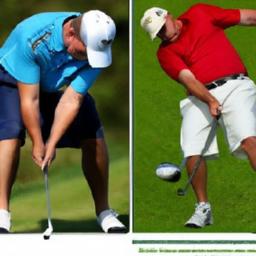
Trunk Rotation Mechanics: Optimal Range, Timing, and Coaching Cues to Maximize Clubhead speed
Optimizing trunk rotation requires quantifiable targets: research and motion-capture analyses commonly identify **thoracic axial rotation** in the range of approximately 80-120° from address and **pelvic rotation** of roughly 20-50°, producing an intersegmental separation (X‑factor) frequently enough between 20-60°. These ranges are not prescriptive for every golfer but provide a biomechanical envelope that balances maximal torque generation with injury avoidance. Excessive thoracic rotation beyond this envelope increases shear and compressive loading on the lumbar spine, while insufficient separation reduces the potential for elastic energy storage in the torso musculature.
timing of segmental peaks is as notable as magnitude. The consistent sequence observed in high-level performers is **pelvic rotation initiation → progressive thoracic counterrotation → rapid thoracic recoil**, with pelvic angular velocity typically peaking earlier in the downswing and thoracic angular velocity peaking at or just before ball impact, continuing into the follow-through. This proximal-to-distal timing ensures efficient intersegmental energy transfer and aligns peak trunk rotational velocity with the critical moment of clubhead acceleration.
From a mechanistic perspective, optimal trunk rotation exploits the stretch‑shortening cycle of the obliques, multifidus, and erector spinae to convert stored elastic strain into rotational work. Adequate hip stability and controlled pelvic rotation create a stable base that permits the thorax to rotate rapidly without excessive lateral displacement. Core stiffness modulates energy transmission – too much rigidity limits separation and peak speed, while insufficient stiffness dissipates torque and reduces shot consistency. Clinicians and coaches should therefore evaluate both mobility and dynamic stability when refining trunk mechanics.
Coaching cues that translate biomechanical principles into reproducible technique focus on sequencing, sensation, and constraint-based feedback. Effective,evidence‑informed prompts include:
- “Initiate with the hips”: encourage early,controlled pelvic rotation to set up the X‑factor.
- “Feel the stretch across the ribs”: promote elastic loading of the torso without lateral sway.
- “Rotate through impact”: cue continued thoracic rotation to align peak angular velocity with ball contact.
- “Maintain a stable base”: emphasize minimal excessive weight shift to protect the lumbar spine.
- “Finish with chest facing the target”: reinforces complete energy transfer and balanced deceleration into the follow‑through.
Summary metrics for practical application are shown below; these targets assist in objective coaching and return‑to‑play decisions.
| Metric | Target Range | Coaching tip |
|---|---|---|
| Pelvic rotation | 20-50° | “Lead with hips” – initiate downswing |
| Thoracic rotation | 80-120° | “Rotate through impact” – aim peak at contact |
| X‑factor (separation) | 20-60° | Controlled stretch, avoid lumbar compensation |
These targets should be individualized within the athlete’s capacity and integrated with mobility, strength, and movement‑quality assessments to maximize clubhead speed while minimizing injury risk.
Upper Limb Coordination and Arm Extension: Biomechanical Strategies for Consistent launch Angle
Consistent launch angle emerges from the precise orchestration of upper limb segments during the immediate post-impact window. The lead (left for right-handed golfers) and trail arms act both as transmitters of rotational energy from the trunk and as fine-tuners of clubface orientation through the release sequence. Biomechanically, optimal outcomes depend on a controlled distal progression in which shoulder rotation, elbow extension, and wrist action follow a predictable temporal pattern that preserves clubhead speed while minimizing unwanted loft variance.
The temporal profile of elbow extension is a critical determinant of launch characteristics. Rapid, premature elbow extension increases dynamic loft and can elevate the launch angle, whereas delayed or incomplete extension tends to reduce loft and increase spin. Concurrently, coordinated shoulder external rotation and scapular stabilization maintain a consistent swing plane; excessive humeral abduction or scapular instability introduces variability into the clubhead path. Wrist pronation at and immediately after impact serves as the final orientation mechanism for the clubface, thus directly influencing launch direction and angle.
Applied strategies to improve segmental coordination include targeted motor-control and strength interventions that emphasize timing and stiffness regulation. Key practical cues and drills include:
- Proximal initiation drill: practice initiating the follow-through with trunk rotation while maintaining soft elbows to preserve the kinematic sequence.
- Controlled extension rep: slow-motion swings emphasizing full, but controlled, elbow extension to ingrain correct timing.
- Wrist stabilization routine: isometric holds at impact position to train pronation timing and reduce excessive dynamic loft.
- Scapular control exercises: banded retractions and low-load rows to enhance shoulder girdle stability across the follow-through.
Below is a concise reference table linking principal muscle groups to their functional role and a focused training emphasis relevant to launch-angle consistency:
| Muscle Group | Primary Action in Follow-Through | Training Focus |
|---|---|---|
| Triceps (lead arm) | Controlled elbow extension | Eccentric-capacity drills, slow extension reps |
| Rotator cuff / Scapular stabilizers | Humeral positioning, stabilizing shoulder complex | Low-load endurance and proprioceptive work |
| Forearm pronators | Clubface rotation at release | Isometric holds, resisted pronation |
Objective monitoring accelerates transfer of biomechanical strategies into performance gains.Use high-speed video or inertial sensors to quantify elbow-extension velocity, pronation timing, and clubface angle through impact; correlate these metrics with launch monitor outcomes (launch angle, spin rate).Progressive training should move from isolated motor-control drills to integrated, tempo-specific swings under variable conditions to ensure robustness of the learned coordination and sustainable improvements in launch-angle consistency.
Wrist mechanics and Pronation Dynamics: Impacts on Clubface Orientation and Shot Dispersion
The distal radioulnar and radiocarpal articulations form a mechanically intricate system that mediates the final orientation of the clubface. Forearm pronation/supination, combined with wrist flexion/extension and ulnar/radial deviation, creates the terminal kinematic state at and after ball contact. key muscles-**pronator teres**, **pronator quadratus**, wrist flexors and extensors-modulate angular velocity and stiffness of the wrist complex, influencing how quickly and in what direction the clubhead rotates through the impact zone.Precise control of these segments during the follow-through is therefore critical for predictable clubface behavior.
Temporal sequencing of pronation relative to wrist unhinging determines whether the face rotates closed, open, or remains neutral as the ball departs.Early, aggressive pronation tends to impart a closed-face bias and can reduce side spin variability when timed consistently; conversely, delayed or insufficient pronation often correlates with an open-face bias and increased lateral dispersion. From a mechanical perspective, the interplay between linear clubhead speed and angular velocity about the forearm axis alters moment arms and rotational inertia, thereby translating small wrist orientation differences into measurable shot dispersion.
Neuromuscular consistency in the follow-through reduces shot-to-shot variance. Training that isolates pronation dynamics and refines proprioception is effective in stabilizing clubface orientation. Useful practice elements include:
- Controlled pronation drills with slow-speed repetitions to engrain timing.
- Impact tape/shot-tracer feedback to correlate wrist motion with face angle at impact.
- Slow-motion video analysis to identify early or late release patterns.
- Weighted club or resistance band work to strengthen pronator/supinator coupling without overloading the wrist.
These interventions emphasize reproducible motor patterns rather than raw speed alone.
| Wrist/Forearm State | Clubface Orientation Tendency | Typical dispersion pattern |
|---|---|---|
| Neutral pronation at release | Square to slightly closed | Narrow lateral spread |
| Early/excessive pronation | Closed face | Pulls or low-left shots (for right-handers) |
| Delayed/insufficient pronation | Open face | Pushes or fades with higher dispersion |
Coaching emphasis should balance performance gains with injury prevention. Excessive radial/ulnar deviation or forceful abrupt pronation can increase stress across the wrist and distal radius, elevating risk for tendinopathy or acute sprain; clinical correlations between repetitive loading and wrist pain are well established. Thus, implement **progressive loading**, monitor range-of-motion and pain responses, and incorporate objective measures (high-speed video, IMU sensors, impact-markers) to quantify face-orientation outcomes.These practices optimize accuracy while preserving long-term wrist health in competitive and recreational golfers alike.
Muscle Activation Patterns and Sequencing During Follow-Through: EMG Insights and Training Implications
Surface EMG studies of skilled golfers reveal a continued proximal‑to‑distal activation cascade that extends through the follow‑through phase: deep trunk rotators and paraspinals attain peak activity immediately around ball contact and remain elevated for the first 50-150 ms thereafter to control torso deceleration and energy dissipation. Concurrently, shoulder and arm musculature show a transition from concentric propulsion to eccentric braking; this shift is temporally precise and correlates with reduced variability in clubface orientation. These temporal features underscore that the follow‑through is not a passive result of impact but an active, neuromuscularly regulated phase critical to shot outcome.
Specific muscle roles observed in EMG recordings include sustained activity of the external and internal obliques and erector spinae for rotational control, eccentric loading of the lead (left) pectoralis major and anterior deltoid to decelerate the arms, and dynamic co‑activation of the forearm pronators/supinators and wrist extensors/flexors to manage clubhead orientation. Lower‑limb contributors such as the gluteus medius/maximus and hamstrings demonstrate phasic bursts that stabilize the pelvis and provide a foundation for trunk rotation. Collectively, these patterns reveal a coordinated, multi‑segment braking and stabilization strategy during follow‑through.
Translating EMG insights into training priorities means addressing both timing and force‑modulation.Key emphases include:
- Timing precision: drills that reinforce the conversion from propulsion to controlled deceleration.
- Eccentric capacity: strengthening programs for lead‑arm and wrist decelerators to tolerate high eccentric loads.
- Rotational stability: neuromuscular exercises for obliques and paraspinals to preserve consistent trunk deceleration.
- Proximal stability for distal accuracy: lower‑limb and pelvic control work to reduce upstream variability transmitted to the hands.
Implementing these emphases reduces inter‑trial variability in EMG onset and amplitude, which is linked empirically to improved clubface control.
Practical drill progressions informed by EMG include resisted rotational swings (band or cable) emphasizing smooth deceleration, eccentric wrist‑curl protocols at moderate speed for lead‑arm braking tolerance, single‑leg balance swings to magnify pelvic control cues, and medicine‑ball rotational decelerations to train coordinated torso and arm braking. Incorporating real‑time surface EMG or auditory biofeedback into these drills can accelerate motor learning by exposing timing errors; coaches should pair biofeedback with contextualized practice (full‑speed swings) to ensure transfer to on‑course performance.
Below is a concise reference linking dominant muscle groups to their primary follow‑through responsibilities and suggested training focus:
| Muscle Group | Primary Role | Training Focus |
|---|---|---|
| External obliques | Trunk rotation control | Resisted rotation, anti‑rotation holds |
| Erector spinae | Spinal stabilization during deceleration | Isometric holds, tempo back extensions |
| Forearm pronators/wrist extensors | Clubface orientation & eccentric braking | Eccentric wrist work, reactive catches |
| Gluteus medius/maximus | Pelvic stabilization & power foundation | Single‑leg RDLs, lateral band walks |
Integrating these targeted interventions, monitored periodically with EMG or high‑speed video, supports measurable improvements in follow‑through control and shot accuracy.
Ground Reaction Forces and Lower Limb Contribution: Stability, Weight Transfer, and Shot Precision
The follow-through is not an aesthetic epilogue; it is the biomechanical consequence of force application through the feet and lower limbs. During the terminal phase of the swing the body continues to interact with the ground, producing and modulating **ground reaction forces (GRFs)** that stabilise the torso and fine-tune club-head trajectory. Vertical and shear components of GRF act together to control the kinematic sequence, attenuate residual rotational momentum, and influence the ball’s launch vector. Accurate measurement of these vector components (vertical, anterior-posterior, medial-lateral) provides objective indicators of how effectively kinetic energy was transferred and dissipated after impact.
Functional differentiation between the rear and lead limb underpins effective weight transfer and post-impact control. The trail limb typically generates a transient posterior-to-anterior GRF impulse during downswing, while the lead limb receives and stabilises a larger vertical load at impact and throughout the follow-through. This asymmetry is deliberate: the trailing side contributes to energy generation and proximal-to-distal sequencing, whereas the lead side is required for **braking, balance and launch precision**. Disruptions to this coordinated role-excessive early lead-leg collapse or insufficient trail-leg push-manifest as altered launch angles and lateral dispersion.
temporal coordination of GRF peaks relative to pelvis and thorax rotation is a critical determinant of repeatability.Optimal outcomes are associated with a consistent pattern in which the peak anterior-posterior impulse precedes maximal pelvic rotation,and peak vertical loading of the lead limb coincides closely with impact. Deviations in timing increase variability in club-face orientation at ball contact and therefore reduce shot precision. High-level golfers display reduced intra-subject variability in these temporal markers, indicating that stability of force-time profiles is as important as the magnitude of peak forces.
At the muscular level, lower limb contributions during follow-through involve a mixture of eccentric braking, quasi-isometric stabilization, and controlled concentric activity to redirect momentum. Key muscles include the gluteus medius/minimus for frontal-plane stability, quadriceps and gastrocnemius for vertical load acceptance, and the hamstrings/hip extensors for deceleration of residual rotation. Practical coaching and performance monitoring therefore focus on both strength-endurance and neuromuscular control. Recommended assessment and training emphases include:
- Force-time profiling: use force plates to quantify GRF peaks and timing variability.
- Balance asymmetry testing: single-leg stance and dynamic reach to detect lead/trail deficits.
- Deceleration capacity: eccentric strength tests for hamstrings and hip extensors.
| Phase | Typical GRF Marker | Primary Lower-Limb Role |
|---|---|---|
| Late downswing | Anterior-posterior impulse peak | Trail-limb propulsive push |
| Impact | vertical load peak (lead) | Load acceptance / launch stability |
| Immediate follow-through | Medial-lateral settling | Frontal-plane balance control |
Injury risk and Load Management Related to follow-Through Mechanics: prevention and Recovery Recommendations
The follow-through represents a critical deceleration phase in which kinetic energy is dissipated across the upper extremity, trunk, and lower limbs; improper mechanics here increase cumulative tissue loading and elevate risk for specific pathologies such as low-back facet irritation, lateral epicondylalgia, and rotator cuff tendinopathy. Biomechanical analyses show that abrupt or asymmetrical deceleration produces high eccentric demands on the lead-side shoulder and lead elbow, while excessive axial rotation or abrupt pelvis arrest can transfer shear forces to the lumbar spine. Recognizing the follow-through as a load-management problem-rather than merely a cosmetic finish-reframes injury prevention around distribution and rate of force attenuation.
Effective load management requires both acute practice-level controls and longer-term conditioning strategies to limit repetitive overload and allow tissue adaptation. Practical measures include:
- Session modulation: limit full-speed swings per session and alternate with technical/half-swing work to reduce peak eccentric exposures.
- Progressive volume: incrementally increase swing counts and intensity across weeks rather than abrupt spikes.
- Recovery scheduling: prioritize 24-72 hour windows of reduced high-load practice after tournaments or intensive training blocks.
- Monitoring: log pain, perceived exertion, and swing counts to detect early signs of overload.
Technique interventions that redistribute load can substantially lower injury risk while preserving performance. emphasize controlled deceleration through improved kinetic sequencing-proximal-to-distal transfer with an active trunk dissipation phase-rather than relying on distal musculature to absorb high eccentric loads.Strength and conditioning priorities should target eccentric capacity of the rotator cuff and forearm extensors, trunk rotational control (including anti-rotation and deceleration drills), and hip/pelvic power to ensure the lower limb-pelvis complex accepts and attenuates energy. Incorporating movement variability drills and tempo-controlled swings reduces the probability of repetitive microtrauma from a single harmful motor pattern.
Rehabilitation and acute recovery should follow a staged, criterion-driven progression aligned with tissue healing and functional benchmarks. Early management focuses on pain control, movement normalization, and isometric loading; subsequent phases emphasize eccentric strengthening, plyometric reintroduction with graded velocity, and sport-specific deceleration drills. The table below summarizes a concise rehabilitation framework commonly used in golf-specific cases:
| Phase | Primary Focus | Typical Progression |
|---|---|---|
| Acute | Pain control, mobility restoration | 0-2 weeks |
| Load Restoration | Eccentric strength, motor control | 2-6 weeks |
| Sport Reintegration | High-velocity deceleration drills | 6+ weeks |
Return-to-play decisions should integrate objective load metrics, symptom behavior, and functional testing rather than rely solely on pain resolution.Useful criteria include pain-free execution of full-speed swing simulations,restoration of pre-injury swing counts without symptom escalation,and normalized eccentric strength ratios (lead vs.trail side) on validated tests. Collaboration between coach, physiotherapist, and, when appropriate, sports medicine physicians ensures that both performance goals and tissue protection are balanced; where symptoms persist despite conservative load-modulation and rehabilitation, timely diagnostic evaluation is indicated to rule out structural contributors requiring specialized care.
Technology assisted Assessment and evidence Based Drills for Biomechanical Optimization of the Follow-Through
Contemporary assessment leverages an integrated sensor suite-high-speed optical motion capture, wearable inertial measurement units (imus), force plates, and club-mounted accelerometers-to quantify the kinetic and kinematic determinants of the follow-through.These systems produce high-fidelity time-series data (≥250 Hz for optical capture; 100-1000 Hz for IMUs and club sensors) that enable precise calculation of angular velocities, joint excursions, intersegmental sequencing, and center-of-pressure trajectories. Advanced signal processing and machine learning pipelines synthesize multi-modal streams into coach-amiable metrics and visualizations, permitting objective identification of deviations from modeled optimal follow-through patterns.
Objective targets and diagnostic variables are prioritized to translate assessment into intervention. Key performance indicators include peak trunk rotational velocity, peak shoulder external-to-internal rotation timing, distal segment lag (arm-to-club release interval), wrist pronation torque, and post-impact ground reaction force symmetry. Typical prioritized metrics are:
- Trunk rotation peak: 400-700°/s (male elite range)
- Arm extension: full extension within 0.05-0.12 s after impact
- Wrist pronation angular impulse: moderate positive impulse timed at release
| metric | Target Range | Coaching Cue |
|---|---|---|
| Trunk peak vel. | 400-700°/s | “Rotate through” |
| Arm extension timing | 0.05-0.12 s post-impact | “Long finish” |
| COP shift (rear→front) | 80-120 ms | “Drive weight forward” |
Evidence-based drills are programmed from these diagnostics to correct specific mechanical deficits and to reinforce desirable motor patterns.Recommended interventions incorporate augmented feedback modalities (visual kinematic overlays, auditory timing beeps, haptic vibration at key joints) and constraint-led tasks that simplify the movement problem. Example drill categories include: rotational sequencing drills (medicine-ball throws with golf rhythm),extension control drills (impact-frame strikes emphasizing follow-through posture),and pronation timing drills (wrist-band resistance releases). each drill is prescribed with a clear fidelity target (kinematic threshold), trial volume, and progression criteria tied to sensor-derived metrics.
Implementation follows a cyclical,data-driven protocol: baseline assessment → targeted drill prescription → short-block practice with real-time feedback → retest using identical sensor configuration. Progress is evaluated against both immediate mechanical change and retention at 24-72 hours to ensure motor learning. coaches should document effect sizes for accuracy (dispersion), launch-angle consistency, and clubhead-speed changes, and adjust load and complexity based on objective thresholds rather than subjective impression. This structured approach facilitates individualized coaching plans and provides reproducible outcomes for both research and applied settings.
Q&A
Q1.What do we mean by the “follow‑through” in the golf swing and why is its biomechanics critically important?
A1. The follow‑through denotes the motion that immediately follows ball impact and continues until the swing is completed. Biomechanically it corresponds to the deceleration and energy‑dissipation phase of the swing and includes coordinated motion of the upper and lower limbs, trunk, and head. Studying its biomechanics is critically important as (a) it reveals how the body safely absorbs and redistributes the kinetic energy generated during the downswing, (b) it contributes to ball‑flight consistency by reflecting the quality of pre‑impact sequencing and clubface control, and (c) it is indeed closely linked to injury risk when deceleration is abrupt or compensation patterns occur.
Q2. What are the primary kinematic characteristics of an efficient follow‑through?
A2.Key kinematic features include: sustained rotation of the pelvis and thorax about a relatively stable spinal axis; continued extension of the lead (left for right‑handed) arm with controlled elbow flexion in the trail arm; elevation and external rotation of the lead shoulder; balanced weight transfer toward the lead foot; gradual reduction in angular velocities of distal segments (wrists and club) following peak pre‑impact values; and an overall smooth, proximal‑to‑distal decay in segmental angular velocity consistent with safe energy dissipation.
Q3. How do kinetics inform our understanding of follow‑through mechanics?
A3. Kinetic analysis-using ground reaction forces (GRFs), joint torques from inverse dynamics, and impulse measures-characterizes how forces and moments are generated, transmitted, and absorbed. GRF patterns reflect weight transfer and braking actions of the lower limbs; joint torque/time integrals quantify the eccentric loading required to decelerate rotating segments (notably at the hips, trunk, and shoulder); and impulse-momentum relationships describe how force application over time reduces angular momentum of distal segments. Efficient follow‑through shows progressive reduction of joint torques and GRF magnitudes rather than abrupt peaks after impact.
Q4. Which neuromuscular processes underpin the follow‑through?
A4. The follow‑through is dominated by controlled eccentric muscle actions that decelerate fast‑moving distal segments, complemented by coordinated concentric and isometric activity to stabilize joints. Proximal musculature (gluteals, hip external rotators, trunk rotators and extensors) typically engage eccentrically to absorb rotational energy, while shoulder stabilizers and rotator cuff muscles regulate distal deceleration. Muscle timing, pre‑activation, and intersegmental coordination (motor programs implementing proximal stabilization before distal deceleration) are critical to both performance and injury prevention.
Q5. Which musculotendinous groups are most involved and what is their typical activation pattern?
A5. Commonly implicated muscles: gluteus maximus and medius, hamstrings, quadriceps (for weight transfer and shock absorption), lumbar erector spinae and obliques (for trunk rotation control and deceleration), scapular stabilizers and rotator cuff (for shoulder control), and forearm flexors/extensors (for wrist and club deceleration). EMG studies typically show pre‑impact peak activation in prime movers (downswing), followed by rapid transition to eccentric activation in trunk and lower limb muscles and sustained co‑contraction in shoulder and forearm to control the club through follow‑through.
Q6. How does momentum and angular impulse behave during follow‑through?
A6. At impact the system has ample segmental angular momentum generated by a proximal‑to‑distal sequencing. Post‑impact, angular momentum must be reduced or redistributed. The body uses angular impulse (integral of torque over time) via eccentric muscle torques and external forces (mainly GRFs) to decelerate. Efficient follow‑through converts and dissipates angular momentum gradually, reducing peak torques and minimizing abrupt stress concentrations.
Q7. What are common biomechanical faults during follow‑through and their implications?
A7. Common faults include: abrupt arm collapse or early stopping of trunk rotation (creating high distal torques and increased risk of lateral epicondylitis or rotator cuff overload); early extension (lumbar spine straightening and anterior translation),which increases lumbar shear and compression forces; insufficient weight transfer (excessive trail‑side loading),reducing stability and increasing compensatory shoulder stresses; and excessive lateral bending or head movement,which can alter impact geometry and elevate spinal loads. Each fault has implications for both performance (consistency, direction) and injury risk.
Q8. How does follow‑through mechanics affect ball flight and shot consistency?
A8. While the majority of clubhead speed is produced pre‑impact, the follow‑through is a marker of correct sequencing and consistent release. smooth,coordinated follow‑through is associated with stable clubface orientation at impact and repeatable swing planes. Abrupt deceleration or compensatory movements in follow‑through frequently enough reflect mis‑timing or early truncation of the downswing, which can manifest as dispersion, spin inconsistencies, and loss of distance.
Q9. Which injuries are most associated with poor follow‑through biomechanics?
A9. Frequently observed injuries include: lumbar spine overload and low‑back pain (from excessive shear, extension or early extension), medial epicondylitis (“golfer’s elbow”) and lateral epicondylitis (from abrupt wrist/forearm deceleration), shoulder overload and rotator cuff tendinopathy (from poor scapular control and excessive deceleration demands), and knee or hip pain (from atypical GRF absorption and twisting torques). These often result from suboptimal eccentric capacity, poor motor control, or repetitive faulty mechanics.
Q10.What measurement modalities and metrics are used to analyze follow‑through?
A10.Typical modalities: 3D motion capture for kinematics; force plates or pressure insoles for GRFs and center‑of‑pressure; surface EMG for muscle activation timing and amplitude; inertial measurement units (IMUs) for field assessments; instrumented clubs and high‑speed video for club kinematics. Key metrics: joint angles and angular velocities, time to peak velocities, joint torque profiles and impulses (inverse dynamics), peak and time‑history GRFs, EMG onset/offset and RMS, and segmental angular momentum.
Q11. What evidence‑based interventions improve follow‑through biomechanics and reduce injury risk?
A11. Interventions include: targeted eccentric and deceleration strength training for trunk and lower limb musculature; neuromuscular control and proprioceptive drills (single‑leg balance, rotational control); mobility work to ensure adequate thoracic rotation and hip range; technique drills emphasizing continuity of rotation and gradual deceleration (e.g., slow‑motion swings, finish‑hold drills); progressive overload conditioning with sport‑specific implements (e.g.,weighted clubs applied judiciously); and coaching interventions that prioritize sequencing and posture (avoid early extension and lateral bending).
Q12. How can clinicians and coaches translate biomechanical findings into practical coaching cues?
A12.Use cues that encourage proximal stability and gradual rotation decay: “rotate through the shot rather than stopping,” “finish towards your target with chest facing left (for right‑handers),” “feel the lead glute absorb and control rotation,” and “maintain spine tilt and allow hips to clear.” Combine cues with objective feedback (video, IMU traces, GRF patterns) and progressive drills that isolate the desired motor pattern.
Q13. What are research gaps and future directions in follow‑through biomechanics?
A13. gaps include longitudinal studies linking specific follow‑through metrics to injury incidence; normative databases stratified by skill level, sex, and age; more field‑valid EMG and IMU protocols; and interventional RCTs assessing the efficacy of specific training programs on follow‑through mechanics, performance, and injury outcomes. Integrating musculoskeletal modeling and wearable sensors to provide individualized torque and tissue‑loading estimates is a promising direction.
Q14. What practical assessment protocol is recommended for evaluating follow‑through in applied settings?
A14. A pragmatic protocol: high‑speed video (sagittal and frontal) or IMU arrays for basic kinematics, a single force platform or pressure insole for GRF/weight transfer, and a targeted battery of functional tests (single‑leg balance, rotational medicine‑ball throw, eccentric trunk‑rotation strength). For clinics/labs, add 3D motion capture, inverse dynamics, and EMG to quantify joint torques and muscle timing. Compare measurements to task‑specific expectations (smooth decay of angular velocities, balanced weight‑transfer, lack of abrupt torque peaks).
Q15. Executive summary for practitioners
A15. The follow‑through is not merely visual finish; it is the biomechanical expression of safe and effective energy dissipation and motor sequencing. Efficient follow‑through features coordinated eccentric braking by proximal musculature, smooth decay of segmental angular velocities, balanced weight transfer, and maintained spinal posture. Assessment should combine kinematic, kinetic, and neuromuscular measures where possible. Interventions should prioritize eccentric strength, motor control, mobility, and technique drills that promote gradual deceleration.These approaches improve consistency and reduce injury risk while preserving performance.
References and further reading
– Overview of biomechanics and movement science: Verywell Fit (Understanding Biomechanics) [1].
– Broad biomechanical research and reviews: Nature – Biomechanics subject page [2].- Institutional resources on biomechanics principles: MIT Department of Biological Engineering – Biomechanics research overview [4].
(For applied articles and sport‑specific studies,consult peer‑reviewed journals in sports biomechanics and golf research for empirical data on joint torques,EMG patterns,and GRF profiles in golf follow‑through.)
The Way Forward
Conclusion
This analysis has delineated the biomechanical underpinnings of the golf swing follow-through, emphasizing the coordinated sequencing of joints, efficient transfer of angular and linear momentum, and the role of controlled deceleration in achieving accuracy, consistency, and injury mitigation. By situating the follow-through as an integral phase-not merely a finishing position-this work highlights how late-stage kinematics and kinetics reflect upstream motor patterns and energy flow generated during the backswing and acceleration phases. Clear patterns of proximal-to-distal sequencing, timely segmental coupling, and appropriately scaled muscular activity for deceleration emerge as central determinants of both shot outcome and musculoskeletal load.
The practical implications are twofold. From a performance perspective, coaching and training programs should target movement timing, intersegmental coordination, and the development of eccentric strength and neuromuscular control to manage deceleration forces without compromising swing tempo or clubhead path. From a clinical and injury-prevention perspective,monitoring aberrant follow-through mechanics can inform early interventions-conditioning,technique modification,and equipment adjustments-to reduce excessive joint loading,particularly in the lumbar spine,shoulder,and elbow.
Future research should leverage multidisciplinary methodologies-high-fidelity motion capture, wearable inertial sensors, electromyography, and computational modeling-to quantify causal links between follow-through kinematics, internal joint loading, and long-term tissue adaptation. Longitudinal and intervention studies are needed to establish evidence-based thresholds for safe loading and to test the efficacy of targeted training protocols across skill levels and demographic groups.
In sum, a rigorous biomechanical understanding of the follow-through offers a pathway to more effective coaching, safer practice regimens, and refined equipment design. Continued integration of biomechanical science with applied coaching and clinical practice will be essential to translate these insights into measurable improvements in both performance and athlete health.
Biomechanics of Follow-Through in the Golf Swing
Why the follow-through matters for shot accuracy, consistency, and control
The follow-through is more than a cosmetic finish – it’s the visible result of what happened from the takeaway through impact. Sound follow-through mechanics reflect proper energy transfer, efficient rotation, balanced weight transfer, and controlled deceleration of the club.A repeatable, biomechanically efficient follow-through helps golfers keep the clubface control, preserve the swing plane, and deliver consistent ball flight whether you’re hitting a driver, iron shot, or wedge.
Foundational biomechanical principles (short primer)
- Biomechanics applies mechanics to living systems – in golf that means studying forces, motion, rotation, and muscle activation that create the swing (see resources from MIT, Stanford,and Britannica).
- Kinematic sequence - the timed activation and rotation of hips, torso, arms, and hands – determines how efficiently energy flows from the body into the club.
- Ground reaction forces (GRF) and weight transfer provide the base of support and drive rotational power; the follow-through demonstrates whether that force was controlled.
- Angular momentum and moment of inertia affect clubhead speed and how the club decelerates after impact.
Key biomechanical components of an effective follow-through
Kinematic sequence and timing
A correct kinematic sequence is hips → torso → shoulders → arms → hands.The follow-through reveals whether you maintained that sequence through impact. If the sequence is broken early, the follow-through will be short, abrupt, or off-plane – signs of late or early release, casting, or an overactive upper body.
Hip rotation and lower-body drive
Efficient hip rotation initiates downswing torque and continues through the follow-through. The left hip (for right-handed golfers) should rotate toward the target and allow the pelvis to lead the torso. In the follow-through the hips should remain rotated toward the target with the right hip (trail hip) moving off the ball area – this shows effective weight transfer and rotational momentum control.
Torso rotation and shoulder turn
The torso continues to unwind after impact.A balanced follow-through has the chest facing the target or slightly closed depending on shot type. Over-rotation or abrupt stopping of the torso in the follow-through often indicates a disconnect between body segments and can create inconsistency in ball flight.
Arm extension and clubface control
following impact, proper arm extension and a stable wrist pattern allow the club to remain on plane. The hands decelerate more later than the shoulders; a smooth retention of arm extension into a balanced finish typically means the clubface tracked square through the impact zone.
Weight transfer and balance
Good follow-through displays clear weight shift to the lead foot with a stable base. Balance in the finish (able to hold the finish for 1-2 seconds) correlates with improved shot accuracy and repeatability.
Ground reaction forces and posture
GRFs communicate how force moved through the feet during the swing. A strong drive into the ground in transition contributes to power; the follow-through should show how that force was redistributed to maintain balance and control deceleration.
Follow-through mechanics by shot type
- driver: Higher swing speed, more pronounced extension and full rotation. Finish often tall and with weight fully on the front foot.
- Iron shots: More controlled deceleration, slightly less extreme finish than driver, emphasis on downward strike and compression through impact; follow-through shows whether low-point control was correct.
- Wedges & short game: Shorter,more controlled follow-throughs. For chips and pitches, the follow-through is typically abbreviated and matched to the desired trajectory and spin.
- Punch shots: Minimal follow-through with a compact rotation and lower finish to keep the ball flight low and controlled.
Common follow-through faults and the biomechanical causes
- early release / casting – caused by trying to hit the ball with the hands rather of the kinetic chain; results in short finish and loss of clubhead speed.
- Over-rotation or flying elbow – uncontrolled upper body rotation or late lower-body lead; leads to inconsistent face control.
- Falling back on trail foot - insufficient weight transfer; follow-through shows weight still on the back foot and poor balance.
- Chicken-wing finish – snapping the elbow and collapsing extension after impact, often due to weak deceleration control.
Practical drills to train a biomechanically efficient follow-through
Use these drills to reinforce correct sequencing, rotation, and balance. practice them slowly, then rebuild speed while maintaining mechanics.
- Finish-Hold Drill – Make normal swings and hold a full finish for 2-3 seconds. This builds balance and teaches the right weight shift.
- Step-Through Drill – Start on the balls of your feet; after impact, step the trail foot forward into the lead side to feel weight transfer and hip rotation.
- Towel-under-Arm Drill – Place a towel under your armpit to promote body connection and prevent the arms from flying away through the finish.
- Slow-Motion Sequence – Execute the swing in slow motion focusing on smooth kinematic sequence to ingrain timing.
- Impact-Bag or Half-Swing Drill - Promotes correct deceleration pattern and helps train wrist and arm control through the finish.
Measuring follow-through: tools and tech
Modern training uses objective tools to analyze follow-through mechanics and validate changes:
- High-speed video for kinematic analysis (compare pre-impact and finish positions).
- Launch monitors (ball flight + clubface data) to see how finish changes affect ball behavior.
- Force plates to quantify ground reaction forces and weight transfer timing.
- Inertial sensors / wearables to measure rotational speeds and segment sequencing.
Combining observation with data-driven feedback speeds learning and helps tailor drills to the biomechanical root cause of a fault.
benefits and practical tips for practice
- Practice with purpose: pick one element (rotation, balance, or extension) per session.
- Use progressive overload: start with slow, balanced drills, then add speed as mechanics hold up.
- Record swings from multiple angles to assess finish relative to intended swing plane and clubface orientation.
- Warm up the body to activate key muscle groups (glutes, core, rotator cuff) that stabilize the follow-through.
- Balance training (single-leg stance, stability work) transfers directly to a more stable finish and better shot consistency.
Case study: 6-week plan for improving follow-through and shot consistency
The sample plan below assumes 3 practice sessions per week plus one on-course session.Focus is on sequencing, weight transfer, and deceleration.
| Week | Focus | Key Drill | Outcome |
|---|---|---|---|
| 1 | Balance & finish hold | Finish-Hold Drill (30 swings) | Improved stability at finish |
| 2 | Hip rotation | Step-Through Drill (w/ mirror) | Clearer lead-side rotation |
| 3 | Kinematic sequencing | Slow-Motion Sequence (5x sets) | Smoother energy transfer |
| 4 | Impact control | Impact-Bag / Half swings | Better compression and clubface control |
| 5 | speed integration | Gradual full-speed swings keeping mechanics | Increased repeatable clubhead speed |
| 6 | on-course submission | Play 9 holes focusing on setup & follow-through | Transfer to scoring situations |
Common coaching cues that relate to biomechanics
- “Lead with your hips” – emphasizes lower-body initiation and correct kinematic sequencing.
- “Finish tall and balanced” – encourages a stable weight shift to the lead foot and controlled deceleration.
- “Extend through the ball” – promotes arm extension and prevents early release.
- “Rotate the chest toward the target” – helps keep the swing on plane and maintains clubface control in the finish.
How to track progress and measure improvement
Track these measurements weekly or bi-weekly:
- Number of balanced finishes held for 2 seconds out of 20 swings.
- Video analysis score: compare finish chest angle and hip rotation metrics.
- Launch monitor metrics: dispersion (accuracy), smash factor and carry consistency.
- Subjective: feel of sequence and confidence in shot shape on the course.
Further reading and resources
- Intro to biomechanics – MIT Department of Biological Engineering: be.mit.edu/research/biomechanics/
- Biomechanics of movement overview – Stanford Biomechanics: biomech.stanford.edu/biomechanics/
- General biomechanics article – Britannica: britannica.com
Use these biomechanical concepts and drills to audit your follow-through and build a finish that supports accurate, repeatable golf shots. Consistent practice with measurement will convert improved mechanics into lower scores on the course.