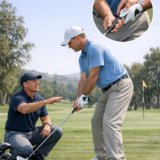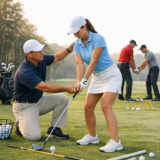
The follow-through of the golf swing represents the terminal phase of a complex, high-velocity motor task in wich kinematic sequencing, kinetic transfer, and controlled deceleration converge to determine shot outcome and musculoskeletal load. Framed within the discipline of biomechanics-the request of mechanical principles to living systems-analysis of the follow-through illuminates how coordinated actions of the lower limbs,trunk,shoulders,and upper extremities dissipate residual energy,stabilize ball flight,and mitigate injury risk (see foundational treatments of biomechanics). Whereas much research on golf has emphasized impact mechanics and ball-club interactions, the follow-through warrants focused study because it reflects the downstream integration of pre-impact sequencing and is critically related to accuracy, repeatability, and tissue loading patterns.
This article synthesizes current biomechanical concepts relevant to follow-through control,emphasizing three interrelated domains: temporal and spatial joint sequencing (timing and magnitude of rotation and extension across hips,spine,and shoulders); momentum transfer and energy redistribution (how angular and linear momentum generated during the downswing are transferred and attenuated after impact); and active deceleration strategies (eccentric muscle actions and joint kinematics that limit excessive loading). By drawing on kinematic and kinetic frameworks, electromyographic evidence, and recent motion-analysis findings, we identify mechanical markers that distinguish efficient, reproducible follow-throughs from patterns associated with lateral variability or injurious loading.
Beyond theoretical exposition, the article translates biomechanical insights into applied implications for coaching, movement retraining, and injury prevention.We discuss measurable performance indicators, diagnostic assessment approaches, and targeted interventions that respect individual anatomical variation while promoting stable deceleration and consistent ball flight. In doing so, the goal is to provide an evidence-informed foundation for practitioners and researchers seeking to optimize both performance outcomes and long-term musculoskeletal health in golfers.
Kinetic Chain Sequencing in the Golf Swing follow through: Optimizing Joint Timing and Muscle Activation for Consistent Ball Flight
Effective follow-through control emerges from a precisely timed transfer of momentum through the body’s kinetic chain. When proximal segments (feet,hips,trunk) generate and sequence rotational energy correctly,distal segments (shoulder,arm,wrist) can deliver the clubhead with consistent orientation at impact and an efficient deceleration thereafter. This coordinated pattern reduces unwanted lateral forces on the clubface and stabilizes launch conditions, thereby improving **accuracy** and **shot-to-shot consistency** while minimizing peak joint loads that contribute to overuse injuries.
The hallmark of optimal sequencing is a proximal-to-distal cascade characterized by staggered peak velocities and phased muscle recruitment. Key elements include:
- Lower limb drive: rapid ground reaction force application and ankle/knee extension to initiate pelvis rotation.
- Pelvic-thoracic dissociation: timed hip clearance followed by trunk rotation to create relative angular velocity between pelvis and thorax.
- Shoulder and arm unfolding: delayed arm acceleration that capitalizes on stored elastic energy and centripetal forces.
- Wrist release and controlled deceleration: final distal impulse with eccentric control to dissipate residual energy safely.
Proper sequencing ensures energy flows through segments rather than being dissipated prematurely in isolated joints.
The following concise timing schema summarizes representative peak-activation windows observed in efficient follow-through mechanics:
| Segment | Relative Peak Activation (post-impact) |
|---|---|
| Hips / Gluteal complex | 0-15% |
| Thorax / Core | 15-35% |
| Shoulder girdle & upper arm | 30-55% |
| Wrist / Forearm | 50-80% |
these ranges are descriptive and intended for programming and feedback; precise timing will vary by individual anthropometry and swing model.
Controlled deceleration relies on timely eccentric activation of specific muscle groups to absorb rotational and translational forces after impact. Critically important contributors include the rotator cuff and scapular stabilizers (eccentric shoulder control), the forearm extensors and flexors (wrist deceleration), and the lumbar-thoracic extensors (trunk dampening). Emphasizing eccentric strength and plyometric control in these muscles reduces valgus and torsional loads at the elbow and shoulder, thereby lowering injury risk. Typical corrective cues and interventions include targeted eccentric training, tempo modulation drills, and neuromuscular re‑education to avoid premature arm casting.
From a coaching and conditioning viewpoint, optimize follow-through sequencing through progressive overload and motor learning principles. Practical prescriptions:
- drills: lead-leg push drills for ground-force timing, med-ball rotational throws for pelvis-thorax separation, and slow-to-fast impact-simulated swings with emphasis on arresting the clubhead eccentrically.
- Metrics to monitor: time-to-peak segment velocity, pelvis-thorax separation angle, and post-impact deceleration rates via wearables or high‑speed video.
- Programming: combine unilateral strength, rotational power, and eccentric control sessions 2-3× weekly, integrated with on‑range technique work.
Consistent attention to sequencing, measurable targets, and progressive drills produces reproducible ball flight while protecting vulnerable joints through effective energy absorption and dispersion.
Momentum Transfer and Energy Dissipation During Follow Through: Biomechanical Principles and Cue Based Interventions
Segmental momentum transfer in the follow-through is governed by proximal-to-distal sequencing: energy produced by the lower extremities and trunk is progressively transferred to the upper extremity segments and ultimately to the club head. This sequential acceleration minimizes intersegmental counter-forces and maximizes club head velocity with reduced compensatory motion. Conservation of angular momentum around the axial skeleton requires that rotational velocities be timed so that peak angular speed of the hands and club occurs after peak pelvic and thoracic rotation; deviations from this timing increase variability and elevate joint loading in distal segments.
Controlled energy dissipation is as important as generation. Eccentric muscle actions-primarily in the rotator cuff,scapular stabilizers and forearm flexors/extensors-modulate deceleration forces and attenuate impulse transmitted to passive structures. Ground reaction forces (GRFs) and center-of-pressure (COP) shifts during follow-through contribute to whole-body braking and affect how much load the shoulder and elbow must absorb. Effective dissipation reduces peak joint stress, lowers the risk of microtrauma, and preserves kinematic repeatability critical for accuracy.
Quantifiable indicators provide objective targets for intervention: temporal separation (pelvis → thorax → arm), peak angular velocity magnitudes, and the rate of angular deceleration at the wrist and shoulder.Below is a concise reference to connect common measured metrics with desired follow-through patterns:
| Metric | Desired Pattern | Practical Threshold |
|---|---|---|
| P→T delay | Clear 20-40 ms lag | Promotes proximal-to-distal |
| Peak hand velocity | Occurs after trunk peak | Reduces distal overload |
| Deceleration rate | Moderate eccentric slope | Protects joint tissues |
- “Lead with the pelvis” – cueing initiates rotation from the ground up, improving sequencing and limiting excessive arm-driven acceleration.
- “Feel a gradual slowdown in the wrists” – encourages eccentric control and reduces abrupt wrist flips that increase face rotation variability.
- “Finish balanced, hold the position” – emphasizes whole-body energy dissipation through GRFs and posterior chain engagement, aiding consistency and recovery.
- “Absorb with the back leg” – shifts deceleration demand to larger lower-extremity muscles, protecting shoulder/elbow tissues.
Implementing these principles into training requires phased interventions: (1) motor-control drills that emphasize sequencing and tempo (e.g., step-through swings, three-quarter swings), (2) eccentric strength and deceleration training for the shoulder and forearm, and (3) reactive perturbation drills to train GRF modulation and balance. Use objective feedback-video kinematics, wearable IMUs or simple timed drills-to monitor temporal sequencing and deceleration slopes. Progress intensity and complexity only after reliable technical execution to optimize performance gains while minimizing injury risk.
Ground reaction Forces and Center of Mass Management: strategies for stability and Controlled Deceleration
Effective exploitation of **ground reaction forces** (GRF) during the follow-through requires explicit attention to both magnitude and vector orientation. The follow-through period is characterized by a reduction of vertical GRF peaks and a controlled redirection of shear forces as the golfer dissipates rotational and linear momentum. Conceptualizing GRF as an impulse delivered to-and absorbed by-the feet clarifies how force-time characteristics (i.e., rate of force development and impulse duration) influence clubhead deceleration and ball-direction variability. Optimization therefore targets not just peak values but the temporal patterning of the resultant vector that stabilizes the base of support.
Managing the athlete’s **center of mass** (CoM) trajectory is central to maintaining balance and minimizing unwanted clubface rotations after ball contact. Effective CoM control involves a coordinated weight transfer from rear to lead foot while preserving an optimal vertical position to prevent excessive lateral sway. Small adjustments in trunk inclination and pelvic rotation alter the CoM path and can either amplify or dampen the coupling between body rotation and clubhead motion; precise postural tuning reduces compensatory muscular co-contractions that impair repeatability.
Practical strategies to enhance stability and controlled deceleration include targeted alterations to stance mechanics and reactive foot control. Key interventions are:
- foot pressure modulation: train progressive medial-to-lateral pressure mapping to absorb rotational moments.
- Stance width optimization: slightly wider bases increase moment arm for GRF absorption without reducing rotational velocity excessively.
- Lead-leg bracing: controlled flexion in the lead knee creates an eccentric brake for pelvis rotation.
- Tempo drills: use tempo-phased swings to train force-time profiles and minimize abrupt deceleration spikes.
Translating these concepts into observable metrics facilitates coaching and monitoring. The table below summarizes distinct swing sub-phases, predominant GRF directions, and primary tissue systems responsible for deceleration, enabling focused intervention design.
| Phase | Predominant GRF Vector | Primary Decelerators |
|---|---|---|
| Impact → Early Follow-Through | Vertical + forward shear | Lead quadriceps, gluteals |
| Mid Follow-Through | Rotational shear (mediolateral) | Obliques, hip rotators |
| Late Follow-Through | Reduced vertical, posterior shear | Hamstrings, calf eccentrics |
A systematic emphasis on **eccentric braking** and refined sequencing reduces injury risk while improving shot consistency. Training should prioritize proximal-to-distal coordination, progressive overload of eccentric capacity in the lower limb and trunk, and objective feedback (e.g., force-plate pressure maps, inertial sensors) to verify smoother GRF curves and desirable CoM excursions.Integrating short,measurable drills that replicate the force-time demands of the follow-through ensures adaptations transfer to on-course performance and sustain mechanical resilience over high-volume practice.
Joint Specific Mechanics and Injury Risk: Shoulder Elbow Wrist and Lumbar Spine Considerations with Preventive Exercises
Shoulder mechanics in the follow-through phase concentrate on rapid deceleration under combined abduction and external rotation, producing high eccentric loads across the rotator cuff and posterior capsule. Excessive late-rotation or inadequate scapular upward rotation increases shear at the glenohumeral joint and compressive loading on the acromioclavicular complex, elevating risk for rotator cuff tendinopathy and posterior labral strain. Targeted preventive strategies emphasize neuromuscular control and eccentric capacity:
- Rotator-cuff eccentric program (slow, controlled lowering at 60-90° abduction)
- Scapular stabilisation drills (Y/T/W progressions to restore upward rotation)
- Thoracic extension mobility to reduce compensatory glenohumeral rotation
Elbow biomechanics reflect transference of distal impulse during follow-through; the lead elbow typically experiences valgus and extension torques while the trail elbow undergoes compressive and supinatory stresses. Repetitive high-velocity loading predisposes to medial epicondylopathy (golfer’s elbow), lateral epicondylitis, and ulnar collateral ligament strain when proximal sequencing is suboptimal. Preventive emphases include progressive eccentric forearm loading, improving pronation/supination control, and restoring proximal kinetic-chain contributions:
- Eccentric wrist-flexor protocols (slow lowering, higher repetitions)
- Forearm rotator conditioning (resisted pronation/supination)
- Kinetic-chain drills to shift load away from isolated elbow torque
Wrist dynamics during follow-through combine extension, ulnar deviation, and rapid deceleration; these motions can drive shear through the radiocarpal joint and tension the triangular fibrocartilage complex (TFCC). Maladaptations such as excessive early release or rigid wrist extension elevate risk for TFCC injury, distal radius stress, and extensor carpi ulnaris (ECU) tendinopathy. Recommended preventive work addresses dynamic stability and tendon resilience:
- Wrist eccentric and isometric conditioning (controlled dorsiflexion/eccentric loading)
- Grip variability and progressive loading to modulate tendon load response
- Proprioceptive retraining (ball catches, perturbation drills)
Lumbar spine considerations focus on repeated axial rotation superimposed on extension during follow-through, creating combined shear and compressive forces at the lumbar facets and discs. Poor lumbopelvic dissociation and limited hip rotation amplify lumbar loading, increasing risk for lumbar facet irritation, pars stress injuries, and discogenic pain. Prevention prioritises lumbopelvic stability, controlled rotation, and hip mobility through:
- Anti-rotation core training (Pallof press progressions)
- Gluteal and hip-rotator strengthening to restore pelvic turn
- Segmental control drills emphasising breath-brace coordination during rotational tasks
Integrating joint-specific strategies into a cohesive program reduces cumulative injury risk by restoring appropriate load distribution across the kinetic chain. The table below synthesises primary mechanical drivers and concise preventive prescriptions for clinical and coaching translation.
| joint | Primary Mechanical Risk | Key Preventive Exercise |
|---|---|---|
| Shoulder | Eccentric overload during deceleration | Rotator-cuff eccentrics + scapular stabilisation |
| Elbow | Repetitive valgus/extension torque | Eccentric wrist-flexor training |
| Wrist | rapid extension/ulnar deviation shear | Wrist stability + proprioception |
| Lumbar | Rotation with extension shear/compression | Anti-rotation core + hip mobility |
Temporal Coordination and Neuromuscular Control: Assessments and Targeted Training to Improve Follow through Precision
Effective follow-through precision emerges from millisecond-level interactions between central motor commands and peripheral musculature. Temporal sequencing of trunk rotation, shoulder deceleration, and wrist release defines the functional window during which the ball’s final vector is resolute. Variability in intersegmental timing-not just peak velocities-predicts dispersion in shot outcome; therefore, analyses must shift from isolated kinematic peaks toward time-series alignment and phase relationships across the entire swing cycle. Temporal fidelity of muscle activations is a primary determinant of directional control and shot-to-shot consistency.
Objective assessment combines laboratory-grade instrumentation with field-capable wearables to quantify neuromuscular timing. Commonly used modalities include surface electromyography (sEMG), inertial measurement units (IMUs), high-speed motion capture, and force platforms. Key assessment tools and what they reveal include:
- sEMG: muscle onset/offset,activation amplitude,and co-contraction indices
- IMUs: intra-segmental timing and rotational velocity profiles in ecological conditions
- Force plates: ground reaction timing and weight-transfer sequencing
Analytic metrics translate raw signals into actionable targets. Typical metrics and their practical interpretation are summarized in the following compact reference table (field targets are illustrative and should be individualized by testing):
| Metric | What it measures | Field target |
|---|---|---|
| Muscle onset latency (ms) | Timing relative to ball impact | consistent ±10-20 ms |
| phase angle coherence (°) | Segmental synchrony | High coherence at deceleration |
| Inter-trial variability (%) | Shot-to-shot timing stability | <20% |
Targeted training must bridge neuromuscular control with sport-specific mechanics. Effective interventions include reactive timing drills (e.g., variable cadence ball strikes), eccentric control work to refine deceleration (slow-to-fast resisted swings), and proprioceptive challenge tasks (unstable surfaces with emphasis on sequencing). Progression criteria should prioritize decreased timing variability and improved phase coherence rather than simple increases in strength or clubhead speed. Evidence supports integrating low-load, high-speed repetitions with sensorimotor challenges to consolidate precise timing under fatigue and pressure.
Implementation requires structured monitoring and individualized periodization. Baseline testing establishes temporal signatures for each player; subsequent microcycles emphasize neural retraining (short-duration, high-frequency sessions) followed by technical consolidation on the range. use objective thresholds-such as a predefined reduction in muscle onset variability or improved phase synchrony-to advance training phases. Clinicians and coaches should employ concurrent qualitative cueing (verbal and tactile) and quantitative feedback (real-time IMU or EMG displays) to align perceptual strategies with measured neuromuscular adaptations, ensuring transfer of temporal control to competitive performance.
Biomechanical Metrics for Monitoring Performance: Using Motion Capture Force Plates and Wearables to Guide Technique Adjustments
The integrated application of three-dimensional optical motion capture,force plates and wearable sensors enables a multidimensional characterization of follow-through mechanics that is both **quantitative** and actionable. Key kinematic descriptors include peak trunk angular velocity, shoulder-to-pelvis separation angle, wrist pronation/supination excursion, and arm extension at impact and through follow‑through. kinetic descriptors derived from ground reaction forces (GRFs) include peak vertical force, medial-lateral force impulse and center-of-pressure (COP) trajectory during weight transfer. To ensure reliable comparisons,capture systems should sample at appropriate rates (typical ranges: **motion capture 200-1,000 Hz**,**force plates 1,000 Hz**,**IMUs 200-1,000 Hz**) and use consistent marker/segment conventions and filtering parameters.
Marker-based motion capture provides high-fidelity joint kinematics and segmental angular velocities that inform energy transfer strategies through the torso-arm-club chain. Using inverse dynamics, one can compute joint moments and segmental power to quantify how much rotational energy is produced by the pelvis and transferred through the thorax to the lead arm during follow‑through. Metrics of particular utility for technique adjustment include **time-to-peak pelvis rotation**, **trunk deceleration rate**, and **segmental power ratio (pelvis:thorax:arm)**.Deviations from efficient patterns-such as premature trunk deceleration or low thoracic power-are diagnostic of energy leaks that reduce clubhead speed and impair post‑impact control.
Force plates and wearables supply complementary kinetic and physiological information that enables targeted coaching interventions. Force plates quantify lateral weight shift, bilateral force symmetry, and the COP path which correlates with stability through the follow‑through. Wearables (IMUs, pressure insoles, and EMG) permit field-based monitoring of wrist pronation timing, impact shock, plantar pressure distribution and muscle activation sequencing. Recommended monitoring metrics include:
- Peak vertical GRF: magnitude and timing relative to impact – indicates push-off effectiveness.
- COP Excursion: mediolateral path – indicates stability and weight transfer quality.
- Trunk Angular Velocity: peak and deceleration slope – indicates rotational contribution and control.
- Wrist Pronation Timing: relative to impact – informs release consistency and face control.
- Muscle Onset Latency (EMG): sequencing of gluteus medius, obliques, and forearm flexors - identifies coordination deficits.
| Metric | Interpretation | Suggested Technical Adjustment |
|---|---|---|
| Peak Trunk Velocity | Low peak or early deceleration | Increase hip drive drills; emphasize sequenced rotation |
| COP Path Width | Excessive lateral excursion | Stability training; narrow stance or balance cues |
| Wrist Pronation Latency | Late or inconsistent pronation | Release timing drills; wrist-speed conditioning |
| GRF Rate of Rise | Slow force development | Explosive lower‑body power work; plyometrics |
For implementation, establish an individualized baseline across multiple swings and use **consistently applied thresholds** (e.g., ±1 SD from baseline or sport-specific normative ranges) to flag meaningful changes.Combine real‑time wearable feedback for acute correction with periodic lab-based motion capture and force plate sessions for deeper diagnostic insight. Emphasize iterative adjustments: small, measurable technique changes, monitored over several sessions, reduce the risk of adverse compensations. report metrics in standardized formats and prioritize a triage of targets-stability, sequencing, and release-so that coaching interventions remain focused, evidence‑based and athlete‑specific.
Progressive Training protocols for Follow through Mastery: Drill Progressions Strength Mobility and Load Management recommendations
A staged, evidence-informed approach yields the best outcomes for follow-through control: start with isolated motor-control drills, progress to integrated kinetic-chain patterns, and culminate in high-velocity, on-course transfer work. Progressive overload applies not only to force but to coordination demands-tempo, decision complexity, and environmental variability must be layered systematically. Prescribing clear stage-goals (accuracy,repeatability,pain-free range) enables objective advancement and reduces injury risk through controlled stimulus escalation.
Drill selection should follow a logical continuum that prioritizes neuromuscular fidelity before speed. Recommended progression:
- Foundational control: slow single-plane follow-throughs with metronome tempo.
- Partial integration: three-quarter swings emphasizing deceleration mechanics.
- Loaded specificity: implements (light med-ball or weighted club) to reinforce momentum transfer.
- Contextual transfer: variable lies and reactive target drills on the range.
Each stage targets a distinct motor pattern and should only advance after objective criteria are met (error reduction, consistent kinematics).
Strength work must be targeted to the muscles that control deceleration and late-phase sequencing: posterior chain, core anti-rotation, and scapulothoracic stabilizers. Typical prescriptions: 2-3 resistance sessions per week, 3-5 sets of 3-8 heavy power or strength reps (e.g., hip hinge variations, loaded anti-rotation chops), and 2-3 sets of 8-15 for endurance-focused stabilizers.A compact reference table below maps exercise examples to simple load guidelines for practical application.
| Focus | Exercise | Load / Frequency |
|---|---|---|
| Deceleration | Single-leg Romanian deadlift | 3×5-8, 2×/week |
| Anti-rotation | Pallof press | 3×8-12, 2-3×/week |
| Power transfer | Rotational med-ball throw | 4×3-6, 1-2×/week |
Mobility and load management are equally critical: restore thoracic rotation, hip internal/external rotation and ankle dorsiflexion to permit safe follow-through arc without compensatory stress. Implement short daily mobility micro-sessions (5-8 minutes) and supervise progressive intensity in swing volume-use session-RPE and objective metrics (ball speed consistency, swing tempo variance) to modulate load. Return-to-swing criteria should combine pain-free full-range mechanics, strength benchmarks, and controlled high-velocity exposures before unrestricted play.
Integrating Biomechanics into Coaching Practice: Communication Strategies and Evidence Based Feedback for Sustainable Improvement
Translating biomechanical data into actionable coaching cues requires deliberate simplification without sacrificing scientific integrity.Coaches should prioritize variables that directly relate to follow-through control-trunk rotation continuity, wrist deceleration, and center-of-mass trajectory-then express these as observable behaviors or concrete targets. By framing metrics as functional outcomes (e.g., “smooth deceleration of the lead wrist through impact” rather than raw angular velocity values) practitioners preserve evidence-based rigor while improving athlete comprehension and adherence.
Effective communication strategies center on clarity, relevance and athlete engagement. Use the following practical approaches to facilitate learning and retention:
- Simplify metrics – convert technical measures into one-to-two word cues tied to feel or outcome.
- Visualize – use video overlays and slow‑motion to link sensation with objective change.
- Immediate biofeedback – employ wearable sensors judiciously for real‑time augmentation of intrinsic feedback.
- Collaborative language – co‑construct goals with the golfer to increase ownership and long‑term compliance.
Evidence-based feedback should be structured, specific and measurable. The following compact reference aligns a feedback modality with a biomechanical rationale and typical coaching phrase:
| Feedback modality | Example cue & rationale |
|---|---|
| Video with overlay | “Hold rotation through impact” - demonstrates continued trunk momentum supporting consistent follow‑through. |
| Wearable tempo cue | “Smooth decel 0.3s” – objective timing target to reduce abrupt wrist snap and inconsistent clubface control. |
| Pressure mat | “Front foot load 60%” - quantifies weight transfer that stabilizes the follow‑through arc. |
Implementation should integrate biomechanics into session design and periodization. Begin with diagnostic assessment, progress through targeted technical drills paired with conditioning that addresses identified kinetic weaknesses, and schedule regular reassessments to quantify change. Emphasize interprofessional collaboration-biomechanists, physical therapists and strength coaches-to align mechanical interventions with tissue capacity and injury prevention strategies.Bold, simple benchmarks (e.g., temporal window for wrist deceleration) provide objective progression criteria.
Sustainable improvement emerges from iterative feedback loops and athlete education. Encourage golfers to internalize the relationship between sensations and measured outcomes, document progress with short performance summaries, and adopt small, incremental goals that reduce cognitive load.Foster autonomy by teaching athletes to self‑monitor (video checklists, simple wearable readouts) and by embedding evidence‑based cues into practice habits; this combination of data, dialog and deliberate practice yields durable enhancements in follow‑through control.
Q&A
Q1: What is meant by “follow-through control” in the biomechanics of the golf swing?
A1: Follow-through control refers to the coordinated sequence of motions and muscle actions that occur after ball contact and during the deceleration phase of the swing. It encompasses joint sequencing,momentum transfer,and active/passive control strategies that complete the kinetic chain’s work,dissipate residual energy safely,and help stabilize the club and body so that the intended ball flight characteristics are produced. Follow-through control is not merely aesthetic; it reflects the quality of the preceding motion and contributes to repeatability and injury risk mitigation.
Q2: Why is the follow-through biomechanically important for accuracy and consistency?
A2: The follow-through is the terminal expression of the kinetic chain. Appropriate sequencing and controlled deceleration ensure that the clubhead has the intended velocity vector and face orientation at impact. Errors in follow-through (e.g., premature arm braking, trunk collapse) often indicate timing or force-distribution faults earlier in the swing that degrade face angle, club path, and spin. As the follow-through integrates the residual angular momentum from proximal segments (hips, torso) into distal segments (shoulders, arms, club), its pattern influences dispersion, shot-to-shot variability, and the probability of compensatory movements that reduce consistency.
Q3: What are the principal biomechanical mechanisms that produce and transfer momentum through the follow-through?
A3: Principal mechanisms include:
– Proximal-to-distal sequencing: initiation of rotation at the pelvis followed by thorax, shoulders, arms, and finally the club, producing angular velocities that peak sequentially.
– Ground reaction forces (GRFs) and leg drive: force application against the ground generates reaction forces that are transmitted up the kinetic chain and contribute to rotational torque.- Angular impulse and torque transfer: coordinated torques at hips and trunk create stored rotational energy that is transferred distally.
– Conservation and redistribution of angular momentum: as mass distribution changes (e.g.,arm extension),angular velocity adjusts per conservation laws to maintain clubhead speed and path.
Q4: How dose controlled deceleration function biomechanically and why is it critical?
A4: Controlled deceleration is achieved primarily by eccentric muscle actions in the rotator cuff, scapular stabilizers, elbow flexors/extensors, forearm muscles, and core musculature. These muscles absorb and dissipate kinetic energy, reduce peak joint loads, and prevent abrupt joint translations. Biomechanically, controlled deceleration:
– Limits peak internal stresses at the shoulder and elbow by lengthening-muscle activation.
- Reduces torsional loads to the lumbar spine by modulating trunk rotation velocities.
– Preserves clubface orientation by avoiding abrupt distal-braking motions that alter club path.
Q5: Which joints and segments are most critical in the follow-through, and what roles do they play?
A5: Key joints/segments and their roles:
– Hips/pelvis: initiate and sustain rotational momentum; transfer lower-body forces to the torso.
– Lumbar spine and thorax: modulate rotation, control counter-rotation and absorption; contribute to posture and balance.
– Shoulders/scapula: coordinate arm rotation and transfer torque to the distal limb; scapular control is vital for optimal humeral mechanics.
– Elbow and forearm: manage extension and pronation/supination; eccentric control prevents hyperextension and reduces valgus/varus stress.
– wrist and hand: mediate club release and dampen residual vibrations; maintain grip dynamics during deceleration.
Q6: What common follow-through faults are observed and what are their biomechanical causes?
A6: Common faults and causes:
– Abrupt arm deceleration (“casting” or “blocking”): often due to poor timing, inadequate trunk rotation, or over-reliance on arm musculature, leading to loss of power and inconsistency.
– Early release of the club (premature un-cocking): can result from weak distal control or compensatory timing errors, reducing energy transfer to the ball.
– Excessive upper-body tilt or collapse: may indicate insufficient lower-body drive or hip mobility restrictions, increasing lumbar loads and shot dispersion.
– Over-rotation or loss of balance in follow-through: associated with mismanaged GRFs or late sequencing, leading to inconsistent ball contact.
Q7: How is follow-through control measured and analyzed in research and applied settings?
A7: Measurement modalities include:
– 3D motion capture (optical markers) for kinematics (segment angles,angular velocities,sequencing).
- Force plates for GRFs and timing of weight transfer.- Inertial measurement units (IMUs) for on-field angular velocity and acceleration metrics.
– Electromyography (EMG) for muscle activation patterns,especially eccentric phases.
– Club-mounted sensors and high-speed video for clubhead speed, face angle, and path.
Combining these data yields temporal sequencing metrics (time-to-peak angular velocity),joint torque estimates,and deceleration indices used to assess technique and risk.
Q8: What key metrics should coaches and researchers monitor to evaluate follow-through control?
A8: Recommended metrics:
– Time-to-peak angular velocity for pelvis, torso, shoulder, and wrist (proximal-to-distal sequencing).
– Peak angular velocities and their relative magnitudes.
– Rate of deceleration of the distal segments post-impact.
- Ground reaction force timing and magnitude (weight shift symmetry).- EMG-derived eccentric activation magnitude for decelerator muscle groups.
– Clubface orientation and path consistency at/after impact.
These metrics help distinguish effective momentum transfer from compensatory deceleration patterns.
Q9: How can training and conditioning improve follow-through control and reduce injury risk?
A9: Training strategies:
– Strength and power: rotational power training (medicine ball throws, cable chops) to enhance proximal torque generation.
– Eccentric conditioning: targeted eccentric work for rotator cuff, scapular stabilizers, forearm, and hamstrings to improve energy absorption capacity.
– Mobility and stability: hip internal/external rotation,thoracic spine rotation mobility,and scapular stability drills to permit efficient sequencing.
– Neuromuscular control and tempo drills: swing-to-target rehearsals, slow-motion swings, and metronome-guided practice to refine timing and deceleration.
– Progressive on-course integration: transferring drill gains to full swings under varied conditions to maintain feedforward and feedback control.
These interventions both enhance performance and mitigate cumulative tissue loading.
Q10: What evidence links follow-through mechanics with injury patterns in golfers?
A10: Biomechanical investigations indicate that poor deceleration mechanics (insufficient eccentric control, abrupt distal braking) elevate joint reactive forces, particularly at the shoulder and elbow, increasing risk for rotator cuff tendinopathy and medial/lateral elbow injuries. lumbar spine injuries are associated with excessive axial rotation velocities and poor lumbopelvic dissociation during the follow-through. While causal pathways are multifactorial (technique, frequency, conditioning), controlled deceleration and proper sequencing are consistently implicated in reduced injury incidence (see general biomechanics reviews for principles; e.g., PMC biomechanics overview).
Q11: What practical coaching cues and drills specifically address follow-through control?
A11: Practical cues:
– “Finish to the target”: promotes complete rotation and balanced end positions.
– “let the body lead the hands”: emphasizes proximal-to-distal sequencing.
– “Soft hands through finish”: encourages smooth deceleration rather than abrupt braking.
Representative drills:
– Slow-motion swings focusing on smooth acceleration and controlled deceleration.
– Half-swings with emphasis on torso rotation and arm extension to ingrain sequencing.
– Medicine ball rotational throws to couple power generation with trunk control.
– Eccentric-focused band or cable exercises for shoulder and forearm deceleration.
Progression from low-speed controlled reps to full-speed swings is recommended.
Q12: How should follow-through assessment and training be integrated into a periodized program for competitive players?
A12: Integration principles:
– Off-season: emphasize strength (rotational and eccentric) and mobility foundations; motor learning tasks at submaximal speeds.- Pre-season: increase ballistic rotational power and sport-specific deceleration drills; incorporate video and sensor feedback for sequencing refinement.
– In-season: maintain strength/power with low-volume, high-intensity sessions; prioritize on-course consistency, tempo work, and injury surveillance; conservative load management to avoid tissue overload from repetitive swings.
– Rehabilitation: reintroduce follow-through mechanics progressively with graded eccentric loading and kinematic monitoring to ensure safe return-to-play.
Q13: What are the limitations in current knowledge and promising directions for future research?
A13: Limitations:
– Heterogeneity in methodologies (sampling rates, sensor placement) complicates cross-study comparisons.
– Most research focuses on impact-phase mechanics; post-impact deceleration has received comparatively less quantitative attention.
– Inter-individual variability in optimal sequencing complicates universal prescriptions.
future directions:
- Longitudinal studies linking specific deceleration patterns to injury incidence.
– Field-capable validated IMU and machine-learning models to monitor follow-through in practice and competition.
– Intervention trials testing eccentric training and motor-learning protocols with biomechanical and clinical outcomes.
– Integration of musculoskeletal modeling to estimate joint loading during follow-through more precisely.
Q14: What are concise, evidence-informed takeaways for practitioners?
A14: Key takeaways:
– The follow-through is an active biomechanical phase that reflects and affects swing quality, consistency, and injury risk.
– Effective follow-through control relies on proximal-to-distal sequencing, adequate rotational power, and eccentric muscular capacity to decelerate distal segments.- Assessment should combine kinematic, kinetic, and neuromuscular measures when possible; on-field tools (IMUs, video) can be informative when lab resources are not available.
- Training should balance rotational power development with targeted eccentric conditioning, mobility work, and tempo/motor-control drills.- Monitor athletes for compensatory deceleration patterns and manage training loads to reduce cumulative tissue stress.
References and further reading:
– General biomechanics overviews and principles (see biomechanics review literature; for example, comprehensive reviews available via PubMed Central).
– Biomechanics resource collections (e.g., Stanford Biomechanics resources and Nature’s biomechanics topic pages) for methodological and conceptual grounding.
If you would like, I can: (a) convert this Q&A into a one-page handout for coaches, (b) provide specific drill progressions with sets/reps, or (c) outline a motion-capture protocol to quantify follow-through sequencing. Which would you prefer?
In Conclusion
this review has synthesized current biomechanical evidence on follow-through control in the golf swing, emphasizing the critical roles of proper joint sequencing, efficient momentum transfer through the kinetic chain, and strategically modulated deceleration. Proximal-to-distal activation patterns, coordinated ground reaction force application, and timely eccentric muscle activity collectively determine the trajectory and stability of the clubhead after ball impact, with downstream effects on shot accuracy, repeatability, and musculoskeletal load. Understanding these mechanisms provides a mechanistic basis for translating laboratory findings into targeted interventions for performance enhancement and injury mitigation.
From a practical standpoint, assessments that combine kinematic analysis, force measurement, and electromyography can identify individual deviations in sequencing or deceleration strategy that predispose players to inconsistency or overload. Conditioning and motor-learning interventions-aimed at optimizing intersegmental timing, strengthening eccentric control of the shoulder and trunk, and refining lower-limb force transmission-can be tailored to an athlete’s biomechanical profile to improve control of the follow-through while reducing injurious loading patterns.
Despite advances,several gaps remain. Future research should prioritize longitudinal and ecologically valid investigations that integrate wearable sensors, subject-specific musculoskeletal modeling, and field-based performance metrics to capture the variability inherent in competitive play. Additionally, randomized intervention studies are needed to establish causal links between targeted biomechanical training and both performance outcomes and injury incidence. Cross-disciplinary collaboration among biomechanists,clinicians,strength and conditioning specialists,and coaches will be essential to translate quantitative insights into practical,evidence-based protocols.
Ultimately, a rigorous, biomechanics-informed approach to follow-through control offers a promising pathway to more consistent performance and safer practice. By linking mechanistic understanding with individualized assessment and training, researchers and practitioners can work together to optimize the final phase of the swing as a determinant of both precision and athlete longevity.

Biomechanics of Golf Swing Follow-Through Control
The follow-through is far more than a cosmetic finish to the golf swing – it is an outcome of how the body delivered the club through impact. understanding the biomechanics of the follow-through helps golfers of all levels improve clubhead speed,launch angle,and shot accuracy while reducing injury risk. This article unpacks the mechanical principles, key body segments and muscles involved, measurable performance metrics, common faults, corrective drills and a practical training progression you can use on the range and in practise sessions.
What is golf biomechanics and why the follow-through matters
Biomechanics is the study of how forces and motion interact with the human body. In golf, biomechanics analyzes how joints, muscles and body segments coordinate to move the club through the swing. The follow-through captures the end-state of that coordination: if the follow-through is balanced and aligned, the preceding motion likely delivered the club on-plane with proper release timing. Poorly controlled follow-through frequently enough signals problems earlier in the swing – premature deceleration, poor rotation, or a late/early release – which degrade accuracy and distance.
Core biomechanical principles for a controlled follow-through
- Kinematic sequence: Efficient energy transfer follows a proximal-to-distal pattern (hips → trunk → shoulders/arms → club). A correct sequence produces higher clubhead speed and a repeatable follow-through position.
- Angular momentum & torque: Trunk rotation generates torque that’s transferred to the arms and club. Controlled deceleration through the follow-through preserves launch characteristics and limits unwanted sidespin.
- Closed-loop motor control: Sensory feedback and balance during the follow-through help the golfer adjust tempo and release in subsequent swings, improving consistency.
- Segmental coordination: The timing of wrist release and forearm rotation during follow-through affects clubface angle and spin rate.
Key body segments and muscle groups that influence follow-through
Lower body
- Hips and gluteals – initiate rotation and stabilize the base.
- Quadriceps and hamstrings – control weight transfer and deceleration.
core and trunk
- Obliques, rectus abdominis, erector spinae – create and transfer rotational torque, stabilize the spine during follow-through.
upper body and arms
- Deltoids, rotator cuff – control shoulder rotation and deceleration.
- Forearm muscles – govern wrist pronation/supination and release timing.
- Grip muscles – maintain club control through impact and follow-through.
Critical components of an optimized follow-through
- Full but relaxed trunk rotation: Continue rotating your torso toward the target after impact. This maintains angular momentum and prevents sudden deceleration that can pull the club offline.
- Arm extension and width: A safe amount of extension at impact with a flowing arm path through follow-through helps keep the clubhead on-plane and encourages a square face at release.
- Controlled wrist pronation and release: Proper forearm rotation through impact and into follow-through sets final face angle and spin. The wrists should release naturally – forced flicking increases error and spin variability.
- Balanced weight transfer: Weight shifts from the back foot to the lead foot developing a balanced, held follow-through position. Balance indicates a well-sequenced swing.
- Club path continuation: The club should follow the intended swing plane into the follow-through.Too steep or too flat a follow-through often reflects plane errors at impact.
Measuring follow-through performance – relevant metrics
Use launch monitors and video analysis to quantify follow-through-related outcomes. Key metrics include:
- Clubhead speed (mph) – higher with efficient kinematic sequence.
- Ball launch angle (degrees) – influenced by angle of attack and loft at impact.
- Spin rate (rpm) – affected by face angle and groove interaction; excessive side spin increases dispersion.
- Smash factor – ball speed divided by clubhead speed; efficiency indicator.
- Shot dispersion (yards) – the primary accuracy outcome.
| Metric | Why it matters | Practical target |
|---|---|---|
| Clubhead speed | Drives distance and affects launch dynamics | Driver: 85-120+ mph (varies by golfer) |
| Launch angle | Determines trajectory and carry | Driver: 9°-14°; Mid-iron: 20°-30° |
| Spin rate | Affects carry, hold and dispersion | Driver: 1800-3000 rpm (optimum varies) |
| Shot dispersion | Primary measure of accuracy | Lower is better – aim to tighten groups over time |
Common follow-through faults and what they indicate
- Stopping rotation (chopping the follow-through): Often indicates deceleration through impact; results in loss of distance and slice/fade issues.
- Over-rotated hips or early extension (sway): Compromises sequencing, can lead to hooks or miss-hits.
- Late or abrupt wrist release: Creates unpredictable face angles and inconsistent spin.
- Falling back onto the trail foot: Poor weight transfer reduces power and alters launch angle.
Corrective drills to improve follow-through control
1. Mirror follow-through hold
Make a full swing and hold your balanced follow-through for 3-5 seconds facing a mirror or camera. Check: chest and hips rotated toward the target, weight on lead foot, club pointing over the lead shoulder. Repeat 10-15 times to build proprioception.
2. Towel-under-arm drill
Place a small towel under your lead armpit and make swings keeping the towel in place. Encourages connected upper body rotation and less independent arm casting that ruins follow-through.
3. Medicine ball rotational throws
Use a 6-10 lb medicine ball to do rotational throws (lead-side). This improves explosive trunk rotation and helps your kinematic sequence – transfer these gains to a fuller follow-through.
4. Slow-motion impact-to-follow-through
Use slow-motion swings focusing on a smooth wrist release and continued trunk rotation. Slow reps help reinforce muscle patterns for a repeatable follow-through.
5. alignment rod path drill
Lay an alignment rod on the ground along your intended swing plane. Swing and observe whether the club path follows that plane into the follow-through – adjust swing plane and rotation accordingly.
Sample practice progression (4-week block)
- Week 1 – Motor control & awareness: mirror holds, towel drill, slow-motion swings (3 sessions/week).
- Week 2 – Strength & rotation: medicine ball throws, dynamic warm-ups, on-range half-swings focusing on rotation (3 sessions/week).
- Week 3 – Integration: full swings with launch monitor feedback, target-focused drills, measure dispersion (2-3 sessions/week).
- Week 4 – Consolidation: combine on-course simulation and practice range sessions,emphasize balanced follow-through under varied lies (2 sessions/week).
Case study (amateur golfer – hypothetical)
A 42-year-old amateur struggled with inconsistent drives dispersing right of target. Analysis showed early deceleration and minimal trunk rotation through follow-through. Intervention: two-week focus on towel-under-arm and mirror holds combined with medicine ball throws. Results after 6 weeks: average clubhead speed increased 3 mph, launch angle improved 1.5°, side spin reduced by ~250 rpm and dispersion decreased by 12 yards.The player reported greater confidence and more repeatable ball flight as trunk rotation and release timing improved.
Technology and assessment tools for follow-through analysis
- High-speed video: Useful for visualizing plane, release timing and finishing positions.
- Launch monitors (TrackMan, Flightscope, GCQuad): Quantify launch angle, spin, clubhead speed and dispersion.
- Wearable inertial sensors: Measure rotation rates, tempo and sequencing on the range.
- Motion capture / 3D analysis: Used by coaches and sports scientists for in-depth kinematic and kinetic studies.
Practical coaching cues and tips
- “Rotate to the target” rather than “throw the hands” – emphasize trunk-lead motion into follow-through.
- Practice “finish-first” swings where you start in the balanced finish and reverse engineer impact positions.
- Use target-focused feedback: pick a visual target and monitor whether your follow-through ends pointing toward that target.
- Progress drills from slow to full speed, with data feedback when possible, to ensure transfer from practice to play.
- Keep the wrists relaxed; tension commonly leads to late release or erratic face angles.
Safety, mobility and injury prevention
- Warm up rotationally: dynamic thoracic rotation, band-resisted twists and hip mobility routines reduce injury risk when training follow-through power.
- Address asymmetries: tight hips or restricted thoracic rotation alter follow-through mechanics; include mobility work.
- Load management: increase practice intensity gradually to let muscles adapt to the forces of repeated rotational swings.
By prioritizing trunk rotation, smooth arm extension and a controlled wrist release, golfers can shape a follow-through that reflects a well-sequenced, powerful and accurate swing. Use measurable metrics, targeted drills and consistent practice progression to convert biomechanical principles into lower scores and more enjoyable golf.