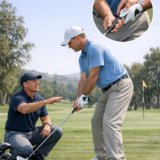
Learning to play golf presents a distinct set of motor, perceptual, and tactical challenges that disproportionately affect individuals new to the sport. For the purposes of this review, “novice” is understood as a person wiht limited experience or short tenure in the activity (see Collins English Dictionary). Novice golfers commonly display a handful of recurring technical and cognitive errors-specifically in grip, stance, alignment, posture, swing path, tempo, ball position, and short-game execution-that reduce shot consistency, impede skill acquisition, and increase the risk of overuse injuries.
This article synthesizes coaching literature, biomechanical analyses, and available empirical studies to identify evidence-based corrective strategies for each of the eight error domains. For every error we (a) describe the underlying biomechanical or perceptual mechanism, (b) summarize validated or widely supported corrective drills and instructional cues, and (c) note practical progressions and safety considerations tailored to beginners. Emphasis is placed on interventions that balance immediate performance gains with motor-learning principles-such as simplified feedback, blocked-to-random practice progression, and tempo control-to foster durable improvements.
By consolidating practical remedies with a concise appraisal of the supporting evidence, the review aims to inform coaches, clinicians, and novice players seeking efficient, low-risk pathways to technical improvement. Highlighting gaps in the literature and areas where clinical judgment remains essential, the article also outlines directions for future applied research to optimize novice golfer training and injury prevention.
Grip Mechanics and Hand Position: Biomechanical Implications and Evidence Based correctional Protocols
The orientation and contact of the hands on the grip are primary determinants of clubface geometry, wrist kinematics, and proximal-to-distal sequencing during the swing. Motion-capture and electromyographic investigations indicate that small deviations in forearm rotation or ulnar/radial deviation at address systematically alter clubface rotation through the arc,producing predictable biases in shot shape (e.g., open-face slices or closed-face hooks). From a biomechanical viewpoint, the hands act as the interface transmitting forces and torques generated by the trunk and lower body; therefore, hand placement that constrains natural wrist hinge or promotes asymmetric muscular co-contraction will reduce energy transfer efficiency and increase shot variability.
Hand orientation should therefore be conceptualized as both an alignment cue and a neuromuscular strategy. Evidence supports adopting a neutral-to-slightly-rotated lead-hand position (the “V” between thumb and forefinger pointing between the chin and right shoulder for right-handed players) and a grip pressure that is **light-to-moderate**-sufficient to control the club but low enough to permit timely release and wrist extension.Empirical studies measuring grip force and clubhead speed report improved dispersion and velocity when players maintain a consistent pressure in the low-to-mid range of subjective scales (commonly instructed as **5-6/10**). Excessive grip pressure or an over-strong top-hand position is associated with restricted forearm supination/pronation and late release, while an excessively weak grip predisposes to early release and loss of control.
Correctional protocols should be staged, task-specific, and feedback-rich. Recommended interventions include:
- Tactile normalization drills - e.g., wrap a thin towel under the lead-hand to encourage light contact and promote neutral rotation;
- Split-hands and half-swing progressions – to isolate grip effects on wrist hinge and release timing;
- Grip-pressure biofeedback – use inexpensive pressure-sensor grips or a simple coin/towel test to train consistent force levels;
- Mirror and video feedback – combine frontal and down-the-line video to confirm that the lead wrist is neutral at address and that the “V” relationships are reproducible.
These drills are supported by motor-learning principles: blocked practice for initial acquisition, variable practice for transfer, and augmented feedback (video/biofeedback) to accelerate retention and reduce outcome variance.
| Common Fault | Biomechanical Effect | Evidence-Based Correction |
|---|---|---|
| Grip too strong | Restricted forearm rotation; late release | Top-hand adjustment + split-swing drill |
| Grip too weak | Early release; loss of distance | Tactile glove drill + impact bag |
| Inconsistent pressure | Variable clubface control | Pressure-sensor biofeedback (5-6/10 target) |
Implementation timeline: begin with 5-10 minutes of focused grip drills per session for 2 weeks (acquisition phase), progress to on-course integration and variable-practice sessions over the next 4-6 weeks (transfer phase). Objective checkpoints: reproducible lead-hand ‘V’ orientation on 90% of practice reps,grip-pressure within target band on sensor data,and measurable reduction in dispersion on a range-based accuracy test. These outcome metrics align corrective technique with measurable biomechanical improvements and on-course performance.
Stance Stability and Postural Alignment: Assessment Techniques and Progressive Conditioning Interventions
Assessment should prioritize objective, repeatable measures that link postural alignment to functional sway and weight-transfer during the golf stroke. use a mixed-methods approach combining visual appraisal (plumb-line alignment, shoulder-hip-knee relationships), timed endurance tests (prone and side plank durations) and dynamic balance measures recorded on video or force plates when available. Emphasize baseline quantification – stance width, lead/trail foot pressure distribution, and trunk-tilt angle - so small changes following intervention can be detected and reported in practice logs.
Selected field tests provide high information density for clinicians and coaches:
- Single‑Leg Stance (eyes open/closed): simple vestibular and ankle strategy probe for lateral stability.
- Y‑Balance / Star Excursion: dynamic reach symmetry that predicts compensatory trunk motion in swings.
- Plumb‑line postural photo: static frontal and sagittal alignment to detect habitual lateral tilt or forward flexion.
- Timed Core Endurance Battery: anterior and lateral endurance scores to determine capacity for maintaining spine angle through the swing.
Interpreting results requires thresholded decision rules that translate tests into targeted deficits. The table below offers a concise diagnostic mapping used in practice settings; thresholds should be adjusted for age and athletic history. Use the mapped deficit to prioritize the first three weeks of intervention (mobility → stability → integration), and retest biweekly to confirm progression.
| Test | Minimal Pass | Primary Deficit Indicated |
|---|---|---|
| Single‑Leg Stance | 30 s (eyes open) | Lateral ankle/hip instability |
| Y‑Balance Reach | > 90% symmetry | Dynamic control / asymmetry |
| Side Plank | 45 s | Lateral core endurance |
Progressive conditioning interventions must be specific and periodized. Phase 1 (weeks 0-2) targets ankle dorsiflexion and hip internal rotation mobility with controlled breathing; Phase 2 (weeks 2-6) emphasizes low‑load stability – single‑leg RDL holds, pallof presses, and side‑lying hip abductions – progressed by volume and instability complexity; Phase 3 (weeks 6+) integrates rotational power and on‑course transfer with medicine‑ball chops and resisted swing drills. Use objective markers (reach symmetry, plank time, stance pressure balance) to advance loads, and include coaching cues that focus on maintaining a neutral spine, balanced weight distribution, and a consistent base width during practice sessions.
Target Alignment and Visual Perception: Diagnostic Methods and Practical Alignment Aids
Accurate target orientation begins with objective diagnosis: isolate whether the error is perceptual (misjudging the line) or mechanical (body alignment deviating from the intended line). Employ systematic checks at address – mirror or video feedback for shoulder and toe alignment, and alignment rods for clubface orientation - to quantify deviations. emphasize repeatable measurements (e.g., record five consecutive addresses and note variance) to separate inconsistent perception from consistent postural bias. Diagnosis should prioritize observable, measurable cues over subjective feel, enabling targeted corrective prescriptions.
Practical on‑range aids translate those diagnostics into repeatable setup behavior. Consider a minimal kit of alignment tools and drills that reinforce correct visual anchors:
- Alignment sticks (parallel to target line and at foot angle)
- Club‑on‑ground for immediate ball‑line confirmation
- Intermediate visual points (a spot 10-15 yards in front of the ball) to bridge near‑field perception with distant target)
These aids reduce cognitive load by externalizing the intended line, allowing the golfer to recalibrate peripheral vision and focal fixation patterns during address.
Objective drills and brief diagnostics can be summarized and tracked to expedite correction. The table below provides concise test-observation-action pairings suitable for a 10-minute pre‑shot routine. Use the entries as templates: perform the diagnostic three times, record the predominant observation, and then apply the corrective action during 10 focused swings. The WordPress table class below is formatted for clarity in practice logs.
| Diagnostic test | Observation | Corrective Action |
|---|---|---|
| Mirror Address Check | Shoulders open | Rotate stance until mirrors show square shoulders |
| Alignment Rod Line | Clubface points right | Grip and face adjustment at setup |
| 10‑yd Target Fixation | Eyes drifting | Blink‑and‑look drill to stabilize focus |
Integrate these methods into a progressive practice plan: begin with static diagnostics, transition to slow‑motion swings with aids, then remove aids while maintaining the same visual routine. Video analysis and mirror checks provide quantitative feedback; concurrently consult peer forums and equipment reviews (e.g., practitioner discussions on GolfWRX) to evaluate the suitability of specific alignment devices. Consistent measurement, simple corrective actions, and graduated removal of external aids produce durable improvements in target perception and alignment for novice golfers.
Swing Path Deviations and Clubface Control: Kinematic Causes and Rehabilitative Drills
Deviations in the intended travel of the clubhead commonly reflect alterations in the multi‑segment kinematic chain: pelvis rotation, thorax turn, lead arm trajectory and wrist hinge. Novices frequently produce an early arm-dominant release or an “over‑the‑top” downswing that shifts the swing plane outward, creating a left‑ward (for right-handed players) club path at impact. Contemporary motion‑capture studies indicate that even small timing offsets between pelvis deceleration and shoulder rotation (on the order of 20-40 ms) substantially change the clubhead path and increase lateral dispersion. Recognizing these temporal and spatial errors is necessary before prescribing corrective motor patterns.
Clubface orientation at impact is determined not only by the path but by the relative rotation of the forearms and wrists instantly prior to impact. Insufficient forearm supination or excessive wrist ulnar deviation can produce an open or closed face self-reliant of a neutral swing path. Biomechanically, face control relies on coordinated angular velocities: the clubface rotation rate must be matched to the path curvature to yield a square face at contact. Measurement of face angle and path vectors (e.g., launch monitor vectors) permits objective diagnosis and isolates whether the primary deficit is path‑based, face‑rotation based, or both.
Effective remedial exercise targets timing, geometry and neuromuscular control. Practical drills with evidence‑based utility include:
- Gate‑path drill: two alignment rods create an entrance and exit corridor to enforce the desired in‑to‑out or neutral travel.
- Impact‑bag repetitions: slow controlled strikes emphasize a square face and proper compressive contact while removing full swing speed.
- Lead‑arm only swings: promote correct plane and reduce compensatory early release by isolating shoulder rotation relative to the torso.
- Slow‑motion tempo work: metronome‑paced swings (e.g., 3:1 ratio backswing:downswing) to retrain sequence timing.
Each drill should be executed with immediate feedback (video or launch monitor) to accelerate motor learning.
To track progress and prescribe load, practitioners can use simple, repeatable metrics. The following table provides a concise progression template for clinic or practice use:
| Drill | Objective | Duration |
|---|---|---|
| Gate‑path | Path within ±3° | 3×5 min |
| Impact‑bag | square face feel | 4×3 min |
| Lead‑arm only | Correct plane | 3×4 min |
| Tempo metronome | Sequence timing | 5-10 min |
Progress should be evaluated by reduction in lateral dispersion and improvement in face‑to‑path alignment on objective measurement (e.g., decrease in side spin and consistent apex dispersion).Rehabilitation emphasizes graded complexity: isolate,integrate,and then overload with full‑speed swings only after consistent transfer is evidenced in measured outcomes.
Tempo Regulation and Rhythm Training: Motor Learning Principles and Practice Designs to Improve Consistency
Contemporary motor-learning theory frames tempo and rhythm as distinct but interrelated control variables: **tempo** refers to absolute timing (milliseconds between kinematic events) while **rhythm** denotes relative timing (proportional relationships across the swing). Training that isolates and stabilizes these temporal variables reduces intratrial variability and enhances consistency. Empirical findings support using constrained variability early in acquisition to establish a reproducible temporal template, then reintroducing variability to promote adaptability and retention. Practically, this means alternating sessions that emphasize strict temporal control with sessions that simulate on-course perturbations.
Designing practice sessions requires a clear manipulation of practice structure and feedback schedules informed by motor learning. Use blocked practice with augmented feedback (e.g., metronome, video replay) to instill a target tempo, then shift to random or contextual-interference conditions to consolidate learning. emphasize **external focus** cues that anchor timing to outcome (clubhead path, impact sound) rather than internal muscle sequencing. Example drill components most effective for novices include:
- Metronome-paced swings (isochronous beats for backswing and downswing).
- Segmented chaining (practice backswing-to-transition, then transition-to-impact).
- Variable-goal practice (alter target distance or lie to force tempo adaptation).
Objective measurement accelerates progress tracking and informs progression decisions. Simple,low-cost tools (metronomes,smartphone inertial sensors) provide reliable temporal indices; higher-fidelity systems can quantify variability (standard deviation of swing duration) and phase ratios (backswing:downswing). The table below gives concise, practical prescriptions for a novice progression; use it as a template and adjust based on observed variability and error patterns.
| Drill | BPM (tempo) | Reps / Set |
|---|---|---|
| Metronome half‑swing | 60 BPM | 8-12 |
| Segmented chaining (2 segments) | 70 BPM | 6-10 |
| variable-goal on-target swings | Self-paced | 12-20 |
For coaches and practitioners,progression must balance stability and adaptability: once a desired temporal template shows low within-session variability (<10-15% SD),introduce contextual interference and reduce augmented feedback frequency to foster retention. Use concise, descriptive feedback (e.g., "maintain even backswing-to-downswing ratio") and avoid corrective overload. Common pitfalls to monitor include:
- Overreliance on conscious timing (breaks rhythm; switch to external cues).
- Premature variability (introducing randomness before baseline stability).
- Excessive feedback (prevents internalization of tempo templates).
Ball Position and Shot Shape Interaction: Empirical Guidelines and On Course Adjustment Strategies
Ball position relative to the stance is a primary determinant of initial clubface-to-path relationship and thus a robust predictor of shot curvature.Empirical studies and high-speed swing analyses indicate that moving the ball forward tends to increase the likelihood of an inside-to-out path and promote higher launch with less spin, while a rearward ball encourages an outside-to-in path and lower, more spinning trajectories. Note: for clarity, ”Ball” in this discussion denotes the golf ball (not Ball Corporation, an unrelated aluminum-packaging company that appears in supporting search results), and all recommendations that follow are grounded in repeatable on‑course diagnostics and controlled range testing.
Applied guidelines distilled from biomechanical observation and player data are concise and actionable. Representative mapping:
| shot Shape Goal | Recommended Ball Position | Typical Clubs |
|---|---|---|
| Neutral/Straight | Centered to slightly forward of center | Irons (7-5), hybrids |
| Draw (right-to-left for right-handed) | Slightly forward (toward left heel) | Driver, long irons |
| Fade (left-to-right for right-handed) | Slightly back (toward right toe) | Short irons, wedges |
On‑course adjustment strategies should be systematic and diagnostic rather than purely prescriptive. When encountering an unintended curve, first verify three verifiable variables: face angle at impact, path relative to target line, and ball position. Practical checks include:
- Use an intermediate target (divot or tee) to reveal path changes when ball position is altered.
- Record short video from behind to inspect whether a forward shift caused earlier face closure or delayed extension.
- Correlate feel with outcome: a late release with a forward ball often feels “catching up” and produces a hook; an early release with a back ball tends to produce a slice.
For in‑round decision making adopt a compact decision framework: (1) diagnose the dominant error (face vs. path), (2) select the minimal ball‑position adjustment (±1-2 clubhead widths), (3) re‑align stance and test with a half‑swing, and (4) only then scale to full shots. Empirical tolerance bands are useful: novice players typically benefit from keeping ball position within a ±1 clubhead‑width window around the stance center for mid‑irons to minimize multiplicative errors. Emphasize repeatable pre‑shot setup and commit to one small change at a time to isolate causality and accelerate on‑course learning.
short Game Fundamentals Including Chipping and Putting: Technical Refinements Safety Considerations and Drill Progressions
Technical refinement begins with reproducible setup and a clear kinetic sequence. Emphasize a neutral grip, slightly open clubface for higher chips when required, and a forward ball position for lower, bump-and-run shots. Weight distribution should be stable - typically **60% on the lead foot** for chips and slightly more centered for most putts - to reduce wrist breakdown and flipping. Alignment, posture, and eye position are critical checkpoints; a concise checklist helps maintain consistency:
- Alignment: feet, hips, shoulders parallel to target line
- Posture: hinge at hips, soft knees, relaxed shoulders
- Ball position: back for chips, slightly forward for lob shots
- Grip pressure: light and even to preserve feel
Chipping technique requires precise contact and a preferred landing spot to control spin and roll.choose loft deliberately: less loft for run-out, more loft for stopping power. Maintain a quiet lower body and hinge from the shoulders with minimal wrist action; let the putter-like motion control distance on bump-and-run shots. Safety considerations for practice should not be overlooked – ensure clear landing areas, adequate spacing between players, and proper footwear to prevent slips on grass or practice mats.Recommended safety practices include:
- Clear communication on range or green to avoid accidental strikes
- Safe spacing: 6-8 feet between players when practicing full swings
- Appropriate surfaces: avoid hard cement or uneven mats for repetitive short-game practice
Progressive drill design is essential for transferring technical work to the course.Begin with low-variability, high-repeatability drills (e.g., three-ball gate for consistent contact), then advance to variable-distance and on-slope drills that simulate course conditions. The following table outlines a concise, progressive sequence suitable for chipping and putting practice:
| Drill | Objective | Reps | Notes |
|---|---|---|---|
| Gate Contact | Consistent strike | 30-50 | Use tee gates; minimal wrist action |
| Landing Spot | Trajectory & roll control | 20 per distance | Vary distances; focus on landing area |
| Distance Ladder | Distance control | 10-15 per rung | Increase pressure gradually |
| Simulated Pressure | Performance under stress | 5-10 scenarios | Introduce routine and consequences |
Integration of these elements requires measured practice planning and objective feedback. Use short, focused sessions with video or launch/putt-tracking where possible, and adopt iterative goals (accuracy → consistency → course request). Introduce training aids cautiously; they can accelerate learning but may create dependency if safety and transfer to on-course situations are not considered. For rapid in-practice troubleshooting, consider these concise remedies for common novice faults:
- Deceleration: practice pendulum strokes and rhythm drills to restore tempo
- Scooping at impact: lower hands through the ball and use a forward-lean setup
- Poor alignment: use intermediate targets and alignment sticks to recalibrate
- Inconsistent contact: employ gate drills and focus on a single contact point
Q&A
Q1: What is the scope and objective of this Q&A?
A1: This Q&A synthesizes practical, evidence-informed corrective strategies for eight frequent technical errors among novice golfers – grip, stance, alignment, posture, swing path, tempo, ball position, and short-game technique – and summarizes safety considerations. The objective is to provide concise diagnostic cues, empirically supported remedial approaches (biomechanical and motor-learning principles), simple practice drills, and guidance on risk minimization for coaches and learners working outside a clinical setting.
Q2: How should the novice grip the club and what common grip errors occur?
A2: A functional grip allows secure control of the clubface while facilitating wrist hinge and forearm rotation. Common errors include an overly weak or overly strong grip (excessive rotation of the hands toward the target or away), interlocking or overlapping that creates tension, and gripping too tightly. These errors disrupt clubface control and timing.
Q3: what evidence-based remedies address grip errors?
A3: Remedies: (1) Use progressive constraint and feel – start with a neutral grip guide (club across fingers of the lead hand, V’s created by thumbs pointing toward the trailing shoulder) and practice repeated, slow swings to ingrain sensation. (2) Reduce grip tension with biofeedback (e.g., grip-pressure trainers or a soft rubber ball held in the non-dominant hand) and verbal cues (“hold like a bird, not like a baseball bat”). (3) Integrate incremental variation: practice with half-swings, then three-quarter, then full to maintain grip consistency under load. Motor-learning research supports early use of external focus cues (“turn the clubface”) and variable practice to improve retention. safety: avoid forcing unfamiliar hand positions; progress gently to prevent wrist strain.
Q4: What stance errors do novices commonly show and why are they problematic?
A4: common stance errors include too narrow or too wide base, incorrect weight distribution (too far on toes or heels), and variable knee flex. These compromise balance and the ability to transfer ground reaction forces, reducing power and consistency and increasing compensatory movement that can stress joints.
Q5: What corrective strategies improve stance and balance?
A5: Remedies: (1) Establish evidence-based base width (approximately shoulder-width for irons, slightly wider for driver) and balanced weight distribution (about 50/50 or slightly favouring the lead foot at address). (2) Use stability drills (e.g.,single-leg balance progressions,step-and-hit) to train dynamic balance and force transfer. (3) Emphasize neutral knee flex and an athletic posture through mirror and video feedback. Progress from slow to faster swings. Safety: screen for lower-limb or vestibular deficits before balance challenges; ensure safe environment for single-leg drills.Q6: How does poor alignment present and how should it be corrected?
A6: Poor alignment means the golfer’s feet, hips, and shoulders are aimed incorrectly relative to the target line (commonly closed or open alignment). Misalignment causes systematic shot bias and makes other technical fixes harder to implement.
Q7: What are practical, evidence-based alignment remedies?
A7: Remedies: (1) Teach consistent pre-shot routines that include a visual target line and an alignment check (use clubs or alignment sticks on the ground).(2) Use external cues (“aim poles to the target”) rather than internal body cues to simplify task demands. (3) employ video or mirror feedback to confirm that feet, hips, and shoulders are parallel to the intended target line. Safety: avoid excessive cognitive load in practice that coudl cause frustration; ensure alignment aids are placed safely to prevent tripping.
Q8: What posture errors are typical, and why do they matter biomechanically?
A8: typical posture errors include excessive spine tilt (arching or rounding), insufficient hip-hinge, and elevated shoulders. Poor posture alters swing kinematics, reduces rotational range, increases shear forces on the lumbar spine, and contributes to inconsistent ball striking.
Q9: How can posture be corrected in a safe, evidence-based manner?
A9: Remedies: (1) Teach a hip-hinge pattern with neutral spine via tactile and mirror feedback; use simple drills such as the “broomstick along the back” or wall-hinge to feel neutral alignment. (2) Strengthen and mobilize via targeted warm-up routines (thoracic rotation mobility, glute activation) to support postural positions during swing. (3) Progressively integrate posture into the swing using short, slow repetitions before full-speed practice. Safety: emphasize spinal neutrality and avoid deep lumbar flexion/extension under load, especially in individuals with history of back pain; refer to a medical professional if pain arises.
Q10: What constitutes common swing-path errors among novices?
A10: Common swing-path faults include an out-to-in path (slice-producing), in-to-out path (hook or push), and excessive verticality (steep downswing). These alter the clubface-to-path relationship and result in directional inconsistency and poor contact.
Q11: What corrective methods and drills address swing-path faults?
A11: Remedies: (1) Use simple on-plane drills such as gate drills (two tees or cones to guide the clubhead), alignment-stick plane drills, and impact tape to give immediate outcome feedback. (2) Employ feel-based cues that promote desired rotation and sequencing (e.g., “start the downswing with the lower body,” or ”clear the hips”). (3) Integrate video and augmented feedback sparingly; motor-learning studies show reduced but targeted feedback supports learning. Safety: begin with slow, controlled swings to avoid sudden repetitive stress; consider shorter clubs to limit torque while retraining path.
Q12: How does tempo error present, and why is it important?
A12: Tempo refers to the timing relationship between backswing and downswing. Novices often have rushed transitions, inconsistent tempos, or excessive deceleration before impact. Poor tempo undermines timing, reduces energy transfer, and increases mishits.
Q13: What evidence-based approaches improve tempo?
A13: Remedies: (1) Use metronomic rhythm training (e.g., a 3:1 backswing-to-downswing ratio or an audible metronome) to develop consistent timing. (2) Adopt external-focus drills (e.g., “accelerate the club through the ball”) and practice planning (pre-shot routine) to reduce rushed transitions.(3) Implement variable practice speeds and deliberately slow-motion swings to internalize sequencing before returning to full speed. safety: control load and volume to prevent overuse; use tempo training to reduce abrupt violent movements that risk injury.
Q14: How does incorrect ball position affect ball flight and consistency?
A14: Ball position that is too far forward or back relative to the stance and club choice alters angle of attack and swing arc,producing fat/thin strikes,open/closed face at impact,and inconsistent trajectory.
Q15: What are practical, evidence-based fixes for ball-position errors?
A15: Remedies: (1) Teach ball-position rules-of-thumb tied to club selection (e.g., center to slightly forward of center for mid-irons, forward in stance for driver) and verify with routine pre-shot checks.(2) Use physical markers on the ground for rehearsal and video feedback to confirm consistent ball placement. (3) Combine ball-position practice with specific contact drills (towel under the ball for clean strike or half-hit drills) to promote appropriate angle of attack. Safety: ensure markers are placed safely and that drills do not encourage excessive downward force risking wrist or forearm strain.
Q16: What short-game errors do novices typically make and why are these critical to remediate?
A16: Novices commonly mishit chips and pitches (poor contact – fat or thin), fail to control distance (inadequate feel and lack of loft use), and misread greens or use improper setup for putting. Short-game proficiency has a disproportionate effect on scoring and requires distinct skill sets (touch, trajectory control, green-reading).
Q17: What evidence-based short-game remedies and drills are recommended?
A17: Remedies: (1) Decompose tasks: separate technique (setup, stroke length, club selection) from green-reading and practice them in focused blocks. (2) Use specific drills – e.g., landing-spot drills for pitch trajectory, gate or coin drills for chipping contact, and the ladder drill for distance control on putting. (3) Employ deliberate practice with variable distances, randomized targets, and immediate outcome feedback; use a “2-to-1” practice ratio favoring short game for skill transfer to scoring. Safety: warm up hands, wrists, and shoulders; avoid high-volume repetitive practice without rest to reduce tendon or overuse injuries.
Q18: How should corrections be sequenced and monitored for effective, lasting improvement?
A18: sequence corrections from global to specific: establish basic posture and stance, then grip and alignment, then swing mechanics and tempo, finishing with ball position and short-game refinement. Use progressive overload principles: low-intensity, high-quality repetitions advancing to variable and higher-speed practice. Monitor using objective measures (shot dispersion, contact quality, ball-flight tendencies) and periodic video analysis. Employ retention and transfer tests (practice under different conditions) rather than only immediate performance metrics; motor-learning literature supports variable practice and reduced frequency of augmented feedback for long-term retention.
Q19: What safety considerations and injury-prevention strategies should coaches and learners follow?
A19: Safety measures: (1) Conduct a pre-participation screen for prior injuries, mobility restrictions, and pain. (2) Emphasize warm-up routines addressing thoracic mobility, hip hinge readiness, and glute activation. (3) Progress volume and intensity gradually; avoid repetitive high-load practice without adequate recovery.(4) Use modified equipment (shorter clubs, softer balls) for early learning to reduce impact loads. (5) Refer to medical professionals for persistent pain, neural signs, or acute injury.These measures reduce risk of overuse syndromes (low-back pain, elbow tendinopathy, wrist issues) and maximize sustainable learning.
Q20: When should a novice consult a qualified coach or healthcare professional?
A20: Consult a certified golf coach when technical faults persist despite structured practice,when multi-component sequencing is needed,or when performance plateaus. Seek a healthcare professional (physiotherapist, sports medicine physician) when pain occurs during or after play, when functional limitations impede safe practice, or when screening reveals high injury risk. Interdisciplinary collaboration (coach + clinician) optimizes both performance and safety.
Concluding remark: The corrective strategies summarized here align with foundational principles in biomechanics and motor learning: simplify tasks,provide salient external feedback,progress gradually,employ variable practice,and prioritize safety. Applying these principles systematically enables novices to achieve efficient, durable improvements in skill and to reduce injury risk.
this review has synthesized practical, evidence-informed corrective strategies for eight frequent errors seen in novice golfers-grip, stance, alignment, posture, swing path, tempo, ball position, and short‑game technique-while foregrounding safety and injury‑prevention considerations. Empirically grounded interventions emphasize simple, repeatable cues, graded skill progressions, and the use of objective feedback (video, launch monitors, or coach observation) to convert corrective drills into resilient motor patterns. Technical corrections should be framed within motor‑learning principles (e.g.,appropriate sequencing of blocked and random practice,emphasis on an external focus when appropriate) and biomechanical constraints (physical capability,flexibility,and strength).
For practitioners and learners, the recommended approach is conservative and individualized: begin with baseline assessment, prioritize one or two foundational errors at a time, employ low‑risk drills that reinforce desirable mechanics, and progressively increase task complexity and variability. Integrating warm‑up, mobility work, and conditioning reduces injury risk and supports transfer of technical change to on‑course performance. Coaches should document interventions and outcomes to guide iterative refinement and to detect adverse responses early.
Limitations of the current evidence base include heterogeneity in study designs and limited long‑term follow‑up on retention and on‑course effectiveness of specific drills; thus ongoing monitoring, outcome measurement, and collaboration with qualified medical or conditioning professionals are advised where indicated. Future work would benefit from randomized trials comparing pragmatic coaching methods,longitudinal analyses of retention,and integration of wearable and video technologies for scalable feedback.
Concludingly,correcting novice golf errors is best approached as a systematic,individualized process that combines evidence‑based technique modification,motor‑learning informed practice structure,and proactive safety measures. When implemented thoughtfully, these remedies can accelerate skill acquisition, improve performance consistency, and minimize injury risk-advancing both short‑term gains and sustainable long‑term advancement in the game.