
Novice golfers commonly encounter a constrained set of technical and tactical errors that limit performance and increase injury risk. This article synthesizes current evidence from biomechanics, motor learning, and sports medicine to examine eight recurrent faults-grip, stance, alignment, posture, swing path, tempo, ball position, and short-game technique-and to propose empirically supported interventions. By focusing on mechanisms that underlie skill breakdowns and on validated training strategies, the analysis aims to move beyond anecdote toward practical, reproducible solutions.
Each error is characterized in terms of its typical manifestation, causal factors, and measurable effects on ball flight and musculoskeletal load. Remedies are appraised using criteria derived from experimental studies, randomized trials where available, and consensus guidelines from coaching and rehabilitation literature. Emphasis is placed on intervention fidelity, progression of practice (including variability and feedback schedules), and simple diagnostic checks that clinicians and coaches can implement in field settings.
The discussion highlights trade-offs between performance optimization and injury prevention, and identifies priority areas for individualized coaching-particularly for golfers transitioning from recreational to competitive play. Recommendations conclude with evidence-based drill selections, cueing strategies, and monitoring approaches designed to accelerate skill acquisition while minimizing overuse and acute injury risks.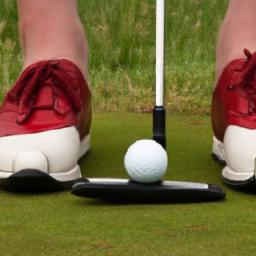
Diagnostic Assessment of grip Errors and Evidence Based Correction Strategies
Diagnostic work begins with a structured observational protocol that isolates static alignment from dynamic motion. Begin by assessing neutral hand placement, grip pressure, and interlocking/overlap configuration with the club held at address and in a simulated takeaway. use brief, repeatable tests: a visual frontal view to detect wrist pronation/supination, a top-down view for clubface orientation relative to the forearms, and a pressure-sensing or palpation check for excessive gripping force. Emphasize objective measures where possible (e.g., video at 120+ fps, handheld pressure sensors) to reduce reliance on subjective impressions and to provide baseline data for subsequent interventions.
Common fault signatures emerge when data are synthesized. Typical patterns include a “weak” grip (clubface tending to open through impact), a “strong” grip (over-rotation and hook tendency), and inconsistent pressure distribution (variable clubface control). Diagnostic indicators to look for include:
- Wrist angle at address: flattened or cupped wrists indicating potential face control issues
- forearm-club alignment: misalignment leading to skewed release mechanics
- Pressure asymmetry: dominant-hand overpressure correlating with early release
These indicators should be triangulated: observation,player self-report of “feel,” and instrumented data when available.
Correction strategies should adhere to motor-learning principles and be evidence-based. Use immediate, external-focus cues (“feel the back of your led wrist support the club”) combined with constrained practice tools (grip trainers, alignment rods) to create desirable movement patterns. Incorporate variable practice schedules and faded augmented feedback: begin with blocked practice and high-frequency feedback to establish patterning, then transition to randomized practice with reduced feedback to promote retention and transfer. Short, targeted drills-three to five minutes per session focused on grip pressure and hand placement-have greater cumulative effect than infrequent long sessions.
Operationalize assessment and progression with simple metrics and checkpoints. Track change using a brief table of error → diagnostic cue → drill,and re-evaluate on a biweekly cadence.Use video comparisons and, where feasible, simple pressure or gyroscopic sensors to quantify improvements in grip pressure and clubface angle at impact. Below is a concise reference table suitable for embedding in lesson notes or a WordPress lesson post:
| error | Diagnostic Cue | Immediate Drill |
|---|---|---|
| Weak grip / open face | Clubface points right at impact | Rotate hands slightly clockwise; tee drill-small swings |
| Strong grip / closed face | hooking or early release | Neutral hold with glove-off grip check; mirror swings |
| Excessive pressure | Stiff swing, loss of tempo | Pressure-meter or towel-under-grip drill |
Posture Stance and Alignment: Biomechanical Foundations and Practical Adjustment Protocols
Optimal trunk inclination and lower-limb positioning create the mechanical lever system necessary for consistent ball-striking. A neutral spinal alignment with a slight anterior pelvic tilt preserves lumbar lordosis and allows for free rotation through the thoracic segment; excessive flexion or extension constrains rotational range and shifts the center of mass outside the base of support. Anthropometric variability (limb length, torso length, hip anatomy) modifies the ideal stance width and shaft lean, so prescriptive cues must be individualized rather than applied as worldwide absolutes. Empirical observation and simple kinematic checks yield better outcomes than rote mimicry of a single model.
Practical adjustments should follow a concise, repeatable protocol that novices can apply on the practice tee. Use the following fast-check sequence before each session:
- Base width: moderate-approximately shoulder width for irons,slightly wider for woods.
- Hinge point: initiate from the hips, not the lumbar spine; visualise a 45° hip hinge for mid-iron setups.
- Vertical balance: weight distributed evenly across midfoot; avoid excessive heel or toe bias.
- Head position: neutral, not forced rigid-eyes over or slightly inside ball for targeted shot shapes.
These cues prioritize reproducibility and reduce compensatory patterns that produce slices, blocks, and fat strikes.
Translate postural corrections into progressive drills and objective feedback loops. Start with static holds (30-60 seconds) to ingrain hip-hinge and spine angle, progress to slow, half-swing repetitions focusing on maintaining the established angles, then reintroduce full-speed swings once consistency is observed.Incorporate external feedback such as mirror checks, slow-motion video, or a vertical alignment pole to confirm spine and shoulder plane. The following concise table summarises common setup errors and empirically supported remedies to guide practice selection:
| Common Error | Primary Biomechanical Cause | Practical fix |
|---|---|---|
| Too upright stance | Insufficient hip hinge | Hinge at hips using a broomstick drill |
| Ball-first/heel-heavy | Weight posterior to midfoot | Drop weight slightly forward; feel midfoot pressure |
| Closed shoulders / aim drift | Incorrect alignment of torso to target | Use alignment stick at feet and torso mirror checks |
Integration into on-course practice requires measurement of transfer and the avoidance of overcorrection. Track simple outcome metrics (launch direction, contact quality, and dispersion) across practice blocks and regress to earlier-phase drills whenever variance increases. Emphasise economy of cueing-novices benefit from one or two concise reminders (for example, “hip hinge” and “midfoot balance”) rather than an overload of technical instructions. monitor for common compensations-grip torque, lateral head movement, or excessive knee collapse-and address them with targeted mobility or strength interventions rather than additional setup complexity.
Swing Path and Clubface Control: Kinematic Analysis and Targeted Drills for Consistent Ball Flight
Objective kinematic analysis clarifies why novices struggle to produce repeatable ball flight: the interaction of clubhead path and clubface angle at impact determines lateral and vertical launch characteristics. Quantitative variables-clubhead trajectory (inside‑out vs. outside‑in), face‑to‑path differential, angle of attack, and clubhead speed-should be considered together rather than in isolation. Contemporary measurement tools (high‑speed video,launch monitors,and wearable inertial sensors) permit precise decomposition of these components,enabling evidence‑based prescription of corrective interventions that target the mechanical source of an errant flight rather than its symptom.
Novice movement patterns typically manifest as a small set of recurrent kinematic errors that produce characteristic ball flights. Examples include an outside‑in swing path combined with a relatively open face (commonly producing a pronounced slice), or an excessively inside‑out path with a closed face (producing a severe hook). Accurate diagnosis requires simultaneous assessment of both path and face: a neutral path with an open face can produce a similar trajectory to a slightly outside‑in path with a closed face, so relying on ball flight alone is insufficient. Instruments that report both launch direction and spin axis are thus essential for valid interpretation.
Targeted drills should be chosen to isolate and retrain the specific kinematic deficit identified by measurement. Recommended evidence‑aligned drills include:
- Gate Drill - place two tees to constrain the clubhead path and reinforce a square approach to the ball; perform 30-50 slow repetitions focusing on the desired path.
- Toe‑Up to Toe‑Down Drill – a tempoed half‑swing that trains proper clubface rotation through the downswing; execute 3 sets of 8 with video feedback.
- Alignment‑Rod Path Drill – a rod laid parallel to the target line provides a visual guide for an inside‑out or neutral path; 10-15 progressive swings per session emphasizing low‑amplitude acceleration.
Use immediate objective feedback (video or launch monitor numbers) to accelerate motor learning and reduce retention of counterproductive patterns.
The table below summarizes pragmatic pairings between common kinematic faults and concise drill prescriptions for field implementation. Progress should be quantified: record baseline launch direction, spin axis, and face‑to‑path differential, then reassess after weekly training blocks.Long‑term enhancement depends on structured overload (graduated speed and complexity) and persistent external feedback; coaches should prioritize drills that produce measurable reductions in face‑to‑path variance rather than those that only temporarily alter appearance.
| Drill | Targeted kinematic feature | Suggested volume |
|---|---|---|
| Gate Drill | Clubhead path consistency | 30-50 slow reps |
| Toe‑Up/toe‑Down | Face rotation timing | 3×8 with video |
| Alignment‑Rod path | Path visualisation (inside/out) | 10-15 progressive swings |
Tempo and Rhythm Optimization: Motor Learning Principles and Structured Practice Schedules
Optimal timing in the golf swing functions as a conserved variable of skilled action: it organizes intersegmental coordination and reduces degeneracy in outcome variability. Empirical motor learning frameworks indicate that stabilizing a performer’s internal tempo reduces cognitive load during execution, thereby freeing attentional resources for higher‑order tasks such as target selection and environmental adaptation. Emphasize **consistent cycle times** (backswing→transition→downswing) rather than forcing a single “speed,” because reproducible temporal patterns are more predictive of transfer and retention than instantaneous ball speed alone.
Design practice schedules that embody well‑established learning principles. Use an evidence‑based mix of:
- Blocked practice for initial acquisition of a desired tempo (high repetition of a single tempo pattern).
- Random and variable practice to promote robust retrieval and adaptability (vary club, lie, and target while preserving the intended tempo constraints).
- Distributed practice to optimize consolidation and reduce peripheral fatigue (shorter, more frequent sessions).
- Faded feedback where external tempo cues (metronome, coach timing) are gradually withdrawn to encourage internal timing control.
Operationalize tempo training with structured micro‑cycles. A typical session might begin with 8-12 slow‑tempo repetitions with a metronome to prime kinesthetic awareness, progress to 20-30 variable‑tempo swings under modified task constraints (different clubs/targets), and conclude with 10 performance trials under competitive pressure (limited time, outcome focus) to simulate transfer. Incorporate **chunking** (isolating transition phase) and **self‑paced rhythm routines** (pre‑shot breathing counts) so learners acquire both the temporal template and a reliable cueing mechanism.
Assess progress using simple, repeatable metrics-standard deviation of backswing duration, proportion of swings within target tempo window, and retention tests after 48-72 hours. Structure learning in mesocycles (e.g., 3-4 weeks per phase): acquisition (weeks 1-2), variability and robustness (weeks 3-4), and transfer (week 5 onward). emphasize incremental overload of tempo demands and document outcomes; this systematic,data‑driven approach aligns practice design with motor learning theory and increases the probability of durable improvement.
Ball Position and Setup Variations: Empirical Guidelines for Club Selection and Shot Type
Empirical practice-understood here as relying on observation and measured outcomes rather than untested theory (see dictionary.com)-should underpin decisions about where to place the ball and how to set up for a shot. By treating ball position and setup as testable variables,golfers convert anecdote into reproducible data: launch angle,strike location,and dispersion patterns become metrics that confirm or refute a setup hypothesis. This paragraph establishes that small,purposeful changes to stance and ball location provide the most reliable path to consistent contact and intended flight.
From an evidence-based perspective, general patterns emerge when clubs and intended shot shapes are mapped against ball location and stance. The following unnumbered list summarizes empirically supported starting points; these should be modified in controlled increments and re-tested:
- Driver & fairway woods: ball positioned forward (inside left heel for right-handed players) to promote upward strike and lower spin.
- Mid- to long-irons: ball near the center-left of stance to create a slightly descending blow with a shallow compression.
- Short irons & wedges: ball back of center to ensure crisp, steeper attack and more spin.
- Shot shape adjustments: move ball slightly forward for fades and slightly back for draws, then verify with track data or impact marks.
To make these guidelines actionable, use consistent markers (alignment sticks, tee height) and record outcomes.
Quantitative comparison accelerates learning. The table below offers a concise mapping of club family to a recommended starting ball position and a simple test metric to record; use a launch monitor or ball-roll/impact patch as your measurement tool.
| Club Family | Ball Position | Test Metric |
|---|---|---|
| Driver | Inside left heel | launch angle & carry |
| 3-5 Wood | Left-center | Spin & dispersion |
| 6-8 Iron | Center | Compression / turf mark |
| 9-Wedge | Back of stance | Backspin & descent |
Interpretation of results requires disciplined, empirical testing: change only one variable at a time, document environmental conditions, and repeat trials to assess consistency. Practical recommendations include:
- do use incremental adjustments (½-1 ball-width) and log launch/spin or flight patterns.
- Do prioritize repeatability over dramatic change-consistent ball-strike location beats aggressive repositioning.
- Don’t conflate poor fundamentals (grip, posture) with ball-position effects; isolate factors before drawing conclusions.
Adopt this evidence-based workflow and treat the bag as an experimental kit: hypothesize,test,measure,and refine until outcomes align reliably with intended shot type.
Short Game Fundamentals: Evidence Based Techniques for Chipping Pitching and Putting
Essential control variables for shots inside 60 yards center on managing dynamic loft, low-point consistency and clubface orientation at impact. Empirical studies of short-game consistency highlight that small changes in loft and contact location produce disproportionately large dispersion in launch angle and spin-so prioritize a repeatable impact position over aesthetic swing mechanics. Adopt a neutral grip pressure, maintain a slightly forward shaft lean for chip shots, and allow higher dynamic loft with an open face for higher, softer pitches; these adjustments systematically alter ball trajectory and spin in predictable ways.
Technique prescriptions differ by shot objective. For low-trajectory chips aim to strike slightly down with the hands ahead of the ball; for pitches increase swing length while keeping a stable lower body and hinge from the wrists earlier. For putting emphasize a pendulum-like stroke with minimal wrist action and consistent setup.Practice drills shown to reduce variability include:
- Impact tape drill: quick feedback on contact location and spin.
- Gate drill for stroke path: narrow corridor to promote on-plane motion.
- Distance ladder: sequential targets at varying distances to train feel and calibration.
| Element | Chipping / Pitching | Putting |
|---|---|---|
| Primary goal | Launch & spin control | Distance & line control |
| Setup cue | Weight forward, ball back of center | Neutral posture, eyes over ball |
| feedback | Impact marks / spin rates | Roll quality / distance control |
Design practice with evidence-based principles: incorporate variability (randomized distances and lies) to enhance transfer, use blocked repetitions selectively for early skill acquisition, and include immediate objective feedback (video, impact tape, launch monitor) to accelerate error correction. keep sessions short, focused on measurable outcomes (e.g., proximity to hole), and end with deliberately harder tasks to consolidate learning. Emphasize a consistent pre-shot routine and measurable benchmarks-these procedural elements reduce performance variability under pressure and improve both effectiveness and safety around the green.
Integrated Training Framework and Injury Prevention: Periodization Load Management and Progression Criteria
An effective approach synthesizes physiological conditioning,biomechanical fidelity,and motor-control training into a single,coordinated plan-consistent with lexical definitions of “integrated” that describe the bringing together of components into a unified system (Oxford,Cambridge,Merriam‑Webster). In golf, this means designing programs where mobility, strength, power and on-course technical work are not siloed but sequenced to mutually reinforce one another. Such integration reduces redundant loading, clarifies stimuli for adaptation, and aligns rehabilitation with performance goals so that therapeutic interventions also serve skill transfer.
Periodization must be evidence-driven and individualized: macrocycles should map to competitive demands, mesocycles should target dominant physiological qualities, and microcycles should balance stimulus and recovery.Key load-management metrics include **acute:chronic load ratios**, **session RPE**, and objective swing-load measures (e.g., clubhead speed exposures, ball-strike counts).Embedding short-cycle deloads and autoregulation within planned blocks minimizes overuse injury risk while preserving peak performance windows. Principles to apply include:
- Progressive overload with competency gating (movement quality before load escalation).
- Specificity-strength and power exercises chosen for transfer to the golf swing.
- Recovery modulation-systematic deloads and sleep/nutrition monitoring.
- Objective monitoring-combine subjective (RPE, pain) and objective (accelerometry, shot count) indicators).
Progression criteria should be explicit and testable. The following table provides a concise decision framework for advancing an athlete through training phases; thresholds are simple checkpoints rather than immutable rules and should be adapted to the novice golfer’s baseline and history.
| Phase | Key Competency | Progression Threshold |
|---|---|---|
| Foundation | Movement quality & pain-free ROM | ≥80% FMS/pass or symptom-free 4 weeks |
| Strength | Relative strength & trunk control | Consistent 2-3% weekly load increase, no pain |
| Power/Specific | Rotational power & swing repetition tolerance | Stable acute:chronic load ratio; speed gains |
Q&A
Q: What is the scope and purpose of this Q&A?
A: This Q&A addresses eight common technical and behavioural errors made by novice golfers – grip, stance, alignment, posture, swing path, tempo, ball position, and short-game technique – and provides concise, evidence-based corrective strategies targeted to improve performance, transfer of learning, and injury prevention. Answers synthesize applied coaching practice with general principles from motor learning, biomechanics, and injury-prevention literature.
Q: How should “evidence-based” be interpreted in the context of beginner golf instruction?
A: “Evidence-based” here means corrective strategies that (a) are grounded in biomechanical principles that explain why an error produces a predictable performance deficit or injury risk, (b) align with well-established motor-learning findings (e.g., benefits of external-focus instructions, variable practice, distributed practice, and augmented feedback), and (c) reflect consensus best practices from coaching and rehabilitation literature where randomized trials are scarce. Where high-quality sport-specific trials exist, those findings are emphasized; where thay do not, recommendations rely on transfer of validated principles from human movement science.
Q: How can a coach or player quickly diagnose a problematic grip?
A: Diagnostic signs: inconsistent ball flight (twists), loss of distance, frequent hooks or slices, and excessive hand tension. Visual checks: V’s formed by thumbs/forefingers pointing to the trailing shoulder (for most grips); knuckles of the lead hand partially visible. Pressure check: grip pressure should be firm enough to control the club but light enough to allow wrist hinge and clubhead feel.
Q: What are evidence-based corrective strategies for grip problems?
A: – Instructional focus: use concise external cues (e.g.,”let the club rest in your fingers,not the palms”) rather than lengthy internal finger-position commands. External instructions promote better automaticity.
– Progressive rehearsal: start with slow-motion repetitions, then hit half-swings before full swings to ingrain feel.
- Grip-pressure drill: squeeze a grip-pressure trainer or ball to find a 3-5/10 pressure; maintain during full swing.
– Feedback: video or mirror feedback for visual confirmation; tactile aids (rubber bands or glove) only temporarily to build proprioception.
- Transfer: practice with short sessions and variable targets to build robustness.
Q: how does stance affect balance and shot consistency, and how is a poor stance diagnosed?
A: Stance influences base of support, weight distribution, and ability to turn the torso. Poor stance indicators: instability during the swing, lateral sway, inconsistent contact (fat/thin shots), and inability to repeat setup. Stance width too narrow compromises rotation; too wide limits hip turn.
Q: Evidence-based fixes for stance errors?
A: – Principle: optimize base-to-height ratio for the club and shot (narrower for short irons, wider for long clubs).
– Drill: step-in setup – assume athletic posture, then step feet to target width to find natural stability.
- Progression: practice slow, controlled turns with a metronome to reduce sway.
– Motor-learning: vary stance width in practice sessions to build adaptable balance strategies.
– Safety: emphasize knee flex and hip-hinge to reduce lumbar compensations.
Q: What is the typical alignment error and its effect on ball flight?
A: Novices often aim their body (feet, hips, shoulders) slightly left or right of the target while attempting to aim the clubface at the target; this creates compensatory swing paths and inconsistent direction (pushes, pulls, slices). Misalignment is a leading cause of directional misses.
Q: How should alignment be corrected, evidence-based?
A: – Perceptual calibration: use an intermediate target (spot on ground) and alignment sticks to train eye-to-body alignment.
– External-focus instruction: “aim the clubface at the target” then ”align your feet parallel to that line.” External cues produce more reliable outcomes.
– Routine: establish a consistent pre-shot alignment routine to reduce variability.
– Feedback: immediate visual feedback (mirrors, alignment rods) and occasional video checks.Q: What postural mistakes increase performance variability and injury risk?
A: Common errors: rounded upper back, excessive lumbar flexion or extension, standing too erect, and collapsing at the knees or hips. These reduce rotational capacity and increase lumbar shear/compressive loads.
Q: evidence-based posture corrections and safety considerations?
A: – Neutral spine: teach a hip-hinge to create a neutral lumbar spine; avoid “slumping” into the swing.
- Mobility-first: assess thoracic rotation and hip mobility; include dynamic warm-up and targeted mobility exercises (thoracic rotations, hip flexor stretches) before technical work.
– Progressive loading: start with short-swing patterns and increase range only when posture is maintained.
– Injury prevention: incorporate core stabilization and posterior chain strengthening as part of training to support repeated rotational loads.
Q: How does an incorrect swing path manifest and what are the common root causes?
A: Incorrect swing path commonly appears as an outside-in path (producing a slice/pull) or an extreme inside-out path (producing a hook/push). Root causes include poor takeaway, overactive upper body, early extension, incorrect swing plane, and compensations from setup faults (grip, alignment, stance).
Q: What biomechanical and motor-learning interventions correct swing-path errors?
A: – Drill-based re-patterning: gate or rail drills (place two alignment rods to constrain the clubhead path) promote desired swing-path geometry.
– Kinematic cueing: emphasize lower-body initiation and proper sequence (weight shift, hip turn) rather than forcing the club with the arms.
– Gradual exposure: use half-swings and impact bags to develop correct clubhead delivery before full-speed practice.
– External feedback: video and launch monitor data to quantify path/face angle and guide iterative corrections.
- Practice structure: alternate blocked practice for early acquisition with random practice for retention and transfer.
Q: How important is tempo, and how can novices develop an effective tempo?
A: Tempo is critical for timing intersegmental coordination and consistent contact. Novices often rush the transition, creating inconsistent strikes. Research in motor control suggests consistent tempo aids kinematic sequencing and outcome consistency.
Q: Evidence-based methods to establish and maintain tempo?
A: – Metronome training: use a metronome to ingrain a consistent tempo; many coaches use a backswing-to-downswing ratio near 3:1 as a starting point while individual variation exists.
– Rhythm drills: count-based swings (e.g., “1-2” cadence) and slow-motion rehearsals.
– Transfer drills: hit shots to targets at varying distances while preserving the same tempo to build tempo-scaled control.
– Measure outcomes: use video or launch monitor to verify improvements in timing and contact.
Q: How does inappropriate ball position affect contact and trajectory?
A: Ball too far forward often causes thin strikes and higher trajectories; too far back causes heavy/grounded strikes and low trajectories. Incorrect position relative to stance and club length alters attack angle and dynamic loft at impact.Q: Evidence-based guidance for ball position?
A: – Rule-of-thumb: play the ball progressively forward as club length increases (e.g., centered/just forward of center for short irons, forward in stance for woods/driver).
– Verify with impact-pattern drills: use impact tape or spray to observe where club contacts the ball relative to sole and turf.- Use a line on the ball and mirror work to confirm consistent address position.
- Practice with variation: purposely alter ball position within small ranges to build robust adjustments for different lies and clubs.
Q: What are the typical short-game errors and why are they critical for scoring?
A: Novices typically (a) use too much wrist and inconsistent loft control in chips and pitches, (b) misread greens or use inappropriate speed on putts, and (c) lack distance control. Short-game performance is disproportionately influential on scoring.
Q: Evidence-based short-game prescriptions?
A: – Chipping/pitching: adopt a more pendulum-like motion with reduced wrist break; focus on landing zone control rather than excessive loft manipulation. Practice landing-spot drills to train trajectory and roll.
– Putting: emphasize distance control through stroke length drills, uphill/downhill drills, and use of an external focus (“get the ball to the hole” rather than “move your wrists less”).
– Practice design: emphasize blocked practice for initial feel acquisition, then random/distributed practice for transfer under realistic conditions.Include pressure simulations (varying stakes/time constraints) to build performance under stress.
– Augmented feedback: use tools (putting mirrors, launch monitor/roll-trackers) sparingly to avoid dependency; fade feedback as performance stabilizes.
Q: How should practice be structured across these eight areas to maximize learning?
A: – Distributed, short sessions: multiple short, focused sessions per week produce better retention than fewer, long sessions.
– Mix of blocked and random practice: use blocked practice for initial mechanics, switch to random practice to promote adaptability and transfer.
– External-focus instructions: prefer outcome-oriented cues (e.g., “send the ball to the target”) to internal biomechanics cues.
– Feedback scheduling: provide immediate feedback for early acquisition, then reduce frequency (faded feedback) to encourage self-evaluation.- Goal setting and measurement: set specific, measurable objectives (e.g., percent of strikes in a target zone) and track progress objectively (impact tape, launch monitor, video).
Q: What objective tools and metrics should coaches use to evaluate progress?
A: Use a combination of kinematic and outcome measures: ball flight (direction, spin, launch), contact quality (divot pattern, impact tape), swing path/face angle (video or launch monitor), tempo consistency (metronome/video), and short-game distance control (landing-zone consistency). Functional assessments (thoracic rotation, hip mobility) help target physical constraints.
Q: What safety and injury-prevention measures should novices adopt while correcting these errors?
A: – Warm-up: include a dynamic warm-up with specific rotational and hip mobility drills.
- Load progression: increase swing intensity and volume gradually; avoid repetitive maximum-effort practice in early stages.
– Physical conditioning: incorporate core, glute, and posterior-chain strengthening to tolerate rotational demands.
– Pain awareness: stop and seek professional assessment if developing persistent low-back, shoulder, or elbow pain.
Q: What are realistic expectations for improvement and how long will corrections take?
A: Time to improvement depends on the error, practice frequency, and individual motor learning capacity. with deliberate, structured practice (3-5 short sessions per week focused on one or two specific corrections), measurable improvements in setup and short swing mechanics are frequently enough apparent within 2-6 weeks; durable changes in full-swing sequencing and competitive transfer may require months. Monitor objective metrics to set realistic timelines.
Q: Final practical checklist for coaches and learners to implement these remedies
A: – Assess: record a baseline (video + outcome measures).
– Prioritize: pick 1-2 errors to address at a time.
– Apply principles: external-focus cues, progressive drills, variable practice, faded feedback.
– Use tools: alignment sticks, metronome, impact tape/video.
– Monitor: measure contact quality and ball flight regularly.
– Maintain safety: warm-up, mobility work, and gradual load increases.
– Iterate: re-assess every 2-6 weeks and update priorities.
If you would like, I can convert the above Q&A into a one-page coach handout, supply specific practice sessions for a 4-week remediation plan, or provide sample cueing language and drills for each error.
For the purposes of this review, “novice” is used in its conventional sense-an individual who is inexperienced or new to a task or activity (see Cambridge Dictionary)-and the findings presented here are thus targeted toward golfers at the early stages of skill acquisition. This synthesis has identified eight recurrent errors among beginners-grip, stance, alignment, posture, swing path, tempo, ball position, and short-game technique-and assessed evidence-based interventions that address each error while minimizing risk of musculoskeletal strain.Collectively, the evidence favors interventions that (1) prioritize simple, task-specific cues over complex instructions; (2) incorporate principles of motor learning such as distributed practice, variable practice schedules, and external focus of attention; (3) employ progressive, individualized motor-development plans guided by objective assessment (video analysis, launch monitor metrics, and functional movement screens); and (4) integrate deliberate short-game practice and injury-prevention strategies (mobility and stability training). Coaches and instructors should translate these principles into structured lesson plans that emphasize measurable goals, frequent formative feedback, and staged progression from gross motor patterns to refined shot-making.
From a practical and clinical perspective, implementing these remedies can improve on-course performance and reduce injury risk among beginners; though, practitioners should remain sensitive to individual variability in anatomy, prior movement experience, and learning preferences. Future research should aim to strengthen the evidence base with randomized controlled trials comparing specific coaching cues and practice regimens, longitudinal studies examining retention and transfer to on-course play, and investigations into the dose-response relationships between practice structure and both performance and injury outcomes.
an evidence-based approach to correcting the eight common novice errors promotes more efficient skill acquisition and safer participation in golf. By combining sound motor-learning principles, objective assessment, and individualized coaching, instructors can better support novices as they progress toward reproducible, resilient swings and effective short-game performance.

Eight Novice golf Mistakes and Evidence-Based Remedies
How to use this guide
This practical, evidence-informed guide targets the eight most common mistakes novice golfers make: grip, stance, alignment, posture, swing path, tempo, ball position and short game.each section explains the problem, why it matters (brief evidence summary), and gives clear, repeatable remedies and drills you can use on the range or practice green. Use the suggested practice progressions and session plans to accelerate learning and reduce risk of injury.
1. Grip – too Tense or Incorrect Clubface Control
Common faults: death grip (too tight), weak/strong hand placement, inconsistent pressure leading to open/closed clubface at impact and frequent slices or hooks.
Why it matters (evidence-based)
Biomechanics research shows grip pressure and hand position directly influence clubface orientation at impact and shot dispersion. Too much tension reduces wrist hinge and timing consistency,while poor hand placement creates consistent directional errors.
Remedies & drills
- Neutral grip check: Place the lead thumb slightly to the right of center (for right-handers) and two- or three-knuckles visible on the top hand. Aim for a neutral clubface through impact.
- Towel-under-arms drill: Hit 30 short swings with a small towel between your armpits to promote connection and reduce grip squeezing.
- Grip-pressure routine: Use a 1-5 pressure scale (1 = feather, 5 = death grip). Practice repeating a “2” feel for full swings – research in motor control shows consistent, repeatable cues improve performance.
- Impact tape or face-marking: Use face spray to confirm where the ball is striking the face; adjust grip to center strikes.
2.Stance – Too Narrow or Too Wide
Common faults: unstable base, weight too far forward/back, stance width that doesn’t match the shot or club used.
Why it matters
Kinetic chain and balance research indicates stance width influences rotational mechanics and ground reaction forces.An unstable stance reduces power and increases injury risk (especially lower back).
Remedies & drills
- Stance-width rules of thumb: Narrow for wedges (feet close), shoulder-width for irons, slightly wider for drivers to allow rotation.
- Balance-on-toes/toe-heel drill: practice half swings focusing on balanced finish with weight on lead foot to build a repeatable base.
- Single-foot stability drill: Stand on one foot and make small swings to train stabilization muscles used in the golf swing.
3. Alignment – Aiming Errors and Poor Targeting
Common faults: aiming body left or right of target, aligning clubface improperly, visual misperception of target line.
Why it matters
Alignment errors are the easiest source of persistent direction problems. Studies and coaching consensus show players frequently misinterpret their aim – even pros use alignment checks.
Remedies & drills
- Club-on-ground line: Lay a club on the ground pointing at the target. align feet and hips parallel to it every time.
- Three-club drill: One club points at the target (clubface), two clubs form a parallel foot line to train shoulder and hip alignment.
- Target-focus routine: Pick an intermediate target (a leaf, blade of grass) 10-20 yards in front of the ball to lock visual aim before addressing the ball.
4. Posture – Standing Too Tall or Hunched
Common faults: rounded shoulders, excessive bend at waist, limited knee flex, spine tilt inconsistent with swing plane.
Why it matters
Good posture creates an efficient swing plane and reduces back strain. Biomechanical analyses link neutral spine and hip hinge to better rotation and lower injury rates.
Remedies & drills
- Set-up checklist: Slight knee flex, hinge from the hips (not the lower back), chest over the ball, arms hanging comfortably.
- Wall-posture drill: Stand with your rear against a wall, hinge at the hips and practice keeping a long spine while holding a club – then replicate away from the wall.
- Mirror or phone video: Capture a setup from the down-the-line and face-on angles to compare posture to a neutral model.
5. Swing Path – Outside-to-In or Inside-to-Out Extremes
Common faults: steep slices (outside-in), hooks (inside-out with closed face), over-the-top moves, casting the club.
Why it matters
Swing path and clubface angle at impact primarily determine ball curvature. Motor learning research indicates that simple, task-focused drills with external focus cues help modify trajectory reliably.
Remedies & drills
- Gate drill: Place two tees or headcovers slightly wider than the clubhead just behind the ball to encourage a neutral-to-inside strike path.
- Baseball swing drill: Make slow, arcing swings with a short backswing and feel for a rounded inside path (helps eliminate over-the-top).
- Impact bag or slow-motion reps: Use an impact bag or slow-motion swings to ingrain proper downswing sequence and avoid casting.
6. Tempo – Rushed Backswings or Jerky Transitions
Common faults: fast backswing, slow transition, bumpy rhythm leading to timing inconsistency.
Why it matters
Tempo governs timing and coordination of the kinetic chain. Research on timing and rhythm in sport shows a consistent tempo improves movement reproducibility and performance under pressure.
Remedies & drills
- Metronome drill: Use a metronome (app) set to a agreeable beat (e.g., 60-80 bpm) and sync your takeaway to one beat, top of backswing to two beats, impact on three.
- Count-and-swing: Use a two-count rhythm: “one” backswing, “two” downswing. this external pacing helps novices avoid rushed moves.
- Slow-to-fast progression: Start with 10 slow swings focusing on rhythm, then 10 at 75% speed, then 10 at full speed to build timing.
7. Ball Position – Incorrect for the Club Being Used
Common faults: ball too far forward/back leading to thin or fat shots, inconsistent low-point relative to ball.
Why it matters
ball position affects angle of attack and low-point of the swing. Proper position relative to stance and club length produces cleaner turf interaction and better launch conditions.
Remedies & drills
- Position rules: Short irons – middle of stance; mid/long irons – slightly forward of center; driver – inside lead heel.
- Tee-height and target practice: Practice with a tee at consistent height and mark your swing low point using a line in the turf or an object to ensure consistent bottoming.
- Divot awareness: Observe where divots start; for irons you want the divot to start just after the ball (indicating a descending blow).
8.Short Game – Overputting and Poor Chipping Technique
Common faults: wristy putting stroke, scooping chips, inconsistent distance control around the green, poor green-reading habits.
Why it matters
Statistics show that strokes gained around the green separate skill levels. Motor-learning studies emphasize that practice structure and external-focus cues (e.g., aim point, landing spot) quickly improve short-game performance.
Remedies & drills
- Gate putting drill: Use tees to create a small gate just wider than the putter head to promote a straight-back,straight-through stroke.
- Landing-spot chipping: Pick a single landing spot for chips and practice getting the ball to that spot to improve trajectory and rollout control.
- Distance ladders: On the practice green, place tees at 5, 10, 15 feet and try to land chips within a 2-foot circle around each tee to build feel.
Quick Reference – drills & Goals
| Problem | quick Drill | session Goal |
|---|---|---|
| Grip | Towel-under-arms (30 reps) | Repeat neutral grip feel |
| Stance | Balance finish (20 reps) | Stable base for rotation |
| Alignment | Three-club line drill | Consistent aim |
| Posture | Wall hinge drill | Neutral spine |
| swing Path | Gate drill | Neutral-to-inside path |
| tempo | Metronome (60-80 bpm) | Repeatable rhythm |
| Ball Position | Tee and divot check | Correct low-point |
| Short Game | Landing-spot chipping | Control and rollout |
Practical Tips & Sample 60-Minute Practice Session
Structure your session to maximize learning and retention. Motor-learning research supports a mix of deliberate practice, variable practice, and external focus cues.
- Warm-up (10 minutes): Mobility for hips/shoulders, 10 slow swings, 5 half-swings focusing on tempo.
- Short game (15 minutes): Landing-spot chipping ladder + 10 practice putts with gate drill.
- Full swing (25 minutes): 3 blocks: 10 wedge swings focused on ball position + 10 mid-iron focusing on alignment + 10 driver swings focused on tempo using metronome.
- Finish (10 minutes): 10 pressure putts (make 5 in a row) to build confidence under stress.
Sample practice table
| Segment | Time | Focus |
|---|---|---|
| Warm-up | 10 min | Mobility & tempo |
| Short game | 15 min | Landing spot + putting gate |
| Full swing | 25 min | Grip, stance, swing path |
| Pressure putting | 10 min | Mental focus & routine |
injury Prevention & Physical Prep
- Maintain neutral spine posture to reduce low-back strain.
- Include rotational mobility and hip-strength exercises – stronger hips reduce compensations in the swing.
- Warm up gradually: dynamic mobility > short swing drills > full swings.
- Limit one-sided overload by mixing practice handedness lightly and performing balanced strength work.
Final Notes: Coaching Cues That Work
- Use external-focus cues (e.g., “think of the target line” or “send the clubhead to the landing spot”) – motor learning research consistently favors external over internal focus for performance and retention.
- Keep practice variable: change targets, clubs and lie to accelerate skill transfer to the course.
- Record video periodically to track progress; small, objective changes compound into lower scores.
- Book a lesson or two with a certified instructor to verify fundamentals and get tailored feedback.
Use these evidence-based remedies and structured drills to build reliable fundamentals. Repeat drills with a focus on feel, rhythm, and an external target; the combination of biomechanics-informed technique and motor-learning practice will translate into better golf and fewer injuries.