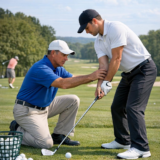
Introduction
Explaining why some golfers reach legendary status demands a holistic, interdisciplinary view that goes beyond single-factor accounts. At the highest level, golf is a goal-directed motor skill performed amid shifting environmental constraints and important psychological stress; therefore, elite performance arises from continuous interactions among cognitive, emotional, biomechanical, and tactical systems. This paper-“Elite Golf Legends: Psychological and Biomechanical Synthesis”-uses a multidisciplinary lens to integrate empirical findings and applied analytics, clarifying the constellation of factors that set historic performers apart from their contemporaries.
Psychologically,top-tier golfers display exceptional attentional control,resilient stress-coping strategies,situationally adaptive decision-making,and consistent pre-shot procedures that stabilize performance across varied tournament conditions. These mental frameworks shape physiological arousal and motor execution, influencing club selection, course strategy, and short-term recovery after mistakes. Biomechanically, efficiency-manifested in optimal sequencing of motion, coordinated force transmission through the kinetic chain, and reproducible swing mechanics-determines the capacity to produce both distance and precision. advances in motion capture, force measurement, wearable sensors, and musculoskeletal simulation have increasingly allowed these mechanical contributors to be quantified. Here we combine psychological theory, movement science, and modern measurement/analytics tools (e.g., field IMUs, high-speed 3-D capture, and interpretable machine learning) to describe the profile of elite golfers. We summarize foundational research, provide illustrative player exemplars, and propose translational actions for coaching and talent development. By detailing how cognitive strategies and movement patterns coalesce to generate sustained excellence, this synthesis targets both scientific progress and evidence-informed coaching practice.
Mental Resilience Models and Mental Skills in Elite Golfers
Mental resilience and mental toughness in elite golfers are best framed as integrated systems combining cognition, emotion, and behavior. Psychological science, in its study of mind and behavior, supplies conceptual tools for understanding how elite players manage pressure and maintain competitive output. In golf this resilience is not simply bouncing back from a bad hole; it encompasses a stable set of beliefs, rehearsed strategies, and neural habits that safeguard task-relevant attention when stakes are high.
At an operational level, three interacting systems support resilient performance: cognitive appraisal, attentional control, and emotion regulation. Appraisal frames a situation as challenge or threat; attentional control allocates limited perceptual resources to pertinent cues (such as, green slope or wind direction); and emotion regulation stabilizes arousal to preserve motor precision. Together these systems narrow the athlete’s effective performance window to conditions under which movement execution is least perturbed.
Elite golfers develop a compact toolkit of mental skills that enact resilience. Examples include:
- Shot-specific confidence - trust in executing designated shots across varying conditions.
- Standardized pre-shot rituals – routinized actions that reduce conscious load and regularize initiation.
- Stress-exposure training - graduated practice under simulated competitive strain.
- Rapid recovery tactics – brief cognitive reframing and breathing techniques to reset between holes.
- Directed attention practice – drills that strengthen the ability to shift and sustain focus appropriately.
Assessment combines validated psychometric instruments with ecologically valid field metrics. Standard questionnaires (e.g., mental toughness and anxiety inventories) build baseline profiles, while in-play measures-heart-rate variability, shot dispersion in pressure moments, and eye-tracking-capture real-world functioning.Interventions with convergent support include imagery synchronized to swing timing, HRV biofeedback to modulate autonomic state, and scenario-based rehearsal tying situational cues to desired motor responses. Integration of psychological and biomechanical coaching is essential so mental strategies align with movement constraints.
For monitoring and diagnostics, a concise mapping helps coaches track resilience over time:
| Component | Field Indicator |
|---|---|
| Shot confidence | Consistency of shot selection under pressure |
| Focus control | Pre-shot gaze stability and fixation duration |
| Emotional recovery | heart-rate return between holes |
| Routine adherence | Deviation index from practiced pre-shot sequence |
Embedding these measures in repeated assessments allows identification of resilience trajectories and targeted, data-driven interventions that connect psychological capacity to biomechanical performance.
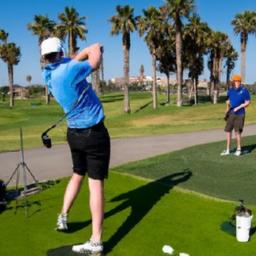
Attention and Arousal Management for Competitive Reliability
Top performers show superior selective attention: they quickly suppress irrelevant stimuli and remain concentrated on task-relevant information under pressure. This skill is supported by intentional cueing that emphasizes external,outcome-relevant features (as a notable example,target shape or landing area) rather than internal mechanics during execution.As pressure mounts, perceptual narrowing naturally occurs; the coaching objective is to channel that narrowing so it excludes irrelevant distractions while keeping necessary spatial and temporal information accessible. Attentional control theory suggests that strengthening top-down attention reduces worry and preserves working memory for motor planning.
Physiological readiness is individualized: each athlete has a personal Zone of Optimal Functioning mapped by arousal-performance relations. Regulation protocols focus on fast, dependable techniques that can be deployed between shots, such as:
- Controlled diaphragmatic breathing to activate parasympathetic tone and stabilize tempo;
- Progressive muscle relaxation to eliminate gross tension while preserving fine control;
- Targeted imagery to prime desired kinematics and perceptual templates;
- Concise cue-based self-talk to reorient attention and bolster confidence;
- HRV or wearable biofeedback for objective arousal monitoring and individualized training.
These strategies should be automated through rehearsal so they do not impose extra cognitive demands during competition.
Preshot routines operationalize attention and arousal control: they organise perception, enable regulation, and scaffold automatic execution. An effective routine is temporally consistent, functionally stable, and short enough to prevent rumination.Common elements include alignment checks, a single preparatory cue (e.g., breath count or word), a small waggle or takeaway to integrate kinematics, and a decisive pre-commitment cue that ends deliberation. Behavioral principles to enforce are sequence consistency (same steps each time), adaptive timing (minor pace adjustments), and cue economy (limit to 1-2 high-value cues).
| Metric | Competition Target | Why it matters |
|---|---|---|
| Heart rate | ~55-85 bpm (rest to moderate) | Supports calm arousal and stable timing |
| Grip tension | light to moderate (subjective 5-7/10) | Reduces excess stiffness while maintaining control |
| Swing tempo | Approximately 2:1 (backswing:downswing) | Rhythm supports repeatability |
| Pre-shot duration | 6-12 seconds | Balances deliberate choice with automatic execution |
Excess muscular tension (for example, an overly tight grip) changes clubhead dynamics and increases timing variability, frequently enough increasing dispersion despite greater force. therefore, psychophysiological targets should protect the temporal structure of the swing while allowing necessary power output.
Implementing this integrated model requires systematic measurement, carefully graded stress exposure in practice, and continuous feedback. recommended steps include:
- baseline profiling of attentional tendencies and autonomic responses (HR/HRV,self-report,simple behavioral tasks);
- Creation of a concise preshot protocol anchored to external cues and rehearsed under low pressure;
- Progressive exposure training adding incremental competitive stressors while practicing regulation techniques;
- Objective feedback loops (video kinematics,grip sensors,HRV) to link subjective states with swing outcomes;
- Regular re-evaluation of targets and routines across the season to accommodate adaptation and fatigue.
A coach-led, evidence-based approach ensures psychological training complements biomechanical development, improving repeatability under competition.
Skill Acquisition and motor Control Principles for High-Performance Golf
Modern explanations of elite motor skill synthesize ideas from several theoretical perspectives. The constraints-led approach views skill as emerging from interactions among performer, task, and environment; optimal feedback control and internal model theories explain adaptive trial-to-trial correction and predictive control. Complementary frameworks, including schema theory and dynamical systems thinking, highlight generalized motor patterns and self-organization.A synthetic outlook sees elite golf as driven by adaptive control strategies that balance stable sequencing with flexible adjustments to changing demands.
Research on elite golfers identifies several consistent motor-control signatures: low-frequency variability in whole-swing kinematics combined with functional, phase-specific adjustments; stable muscle synergy patterns that maintain shot intent when perturbed; and a characteristic attentional profile (for example, an extended quiet eye period) that supports outcome prediction. Longitudinal retention and transfer work indicates that skills trained under representative, constraint-manipulated practice generalize better to tournament settings than those learned in simplified labs, emphasizing the need for ecological validity in practice design.
Coaching informed by these evidence-based models emphasizes representative practice, variability, constrained exploration, and graded feedback.Practical tactics include:
- Representative learning design: mirror the perceptual and motor demands of competition;
- Variable practice: vary ball trajectories, lies, and wind to broaden movement options;
- Attentional focus cues: encourage external focus to boost automaticity under pressure;
- Implicit instruction: use analogies and minimal explicit rules to protect performance in stress;
- Feedback scheduling: fade and use bandwidth feedback to promote self-regulation.
Sequence these elements in microcycles that escalate complexity while tracking transfer metrics.
| Model | Core mechanism | Implication for coaching |
|---|---|---|
| Constraints-led | Skill emerges from constraints | Alter task or environment to shape solutions |
| Optimal feedback | Goal-directed control of useful variability | Practice under variable and perturbed conditions |
| Implicit learning | Lower declarative load under pressure | Use metaphors and reduce explicit breakdowns |
To operationalize these principles, use objective diagnostics and iterative analytics: measure kinematic sequencing, inter-segment timing, variability envelopes, quiet-eye duration, and shot outcome consistency. Alternate exploratory phases (high variability with lower external feedback) and consolidation phases (focused repetition with performance pressure) so players build both consistency and resilience to perturbation, maximizing transfer to competitive play.
Biomechanics of the Swing: Efficiency, Timing, and Injury Mitigation
Efficient golf swings depend on precise kinematic sequencing: measured pelvic rotation, appropriate thorax dissociation, and coordinated wrist dynamics that together produce high clubhead velocity. Quantitative markers-such as peak thorax angular velocity, maximal pelvis-to-shoulder separation (the common X‑factor), and the timing gap between pelvic and shoulder peaks-predict ball speed and directional repeatability. Elite profiles reveal a clear proximal-to-distal cascade with minimal lateral clubhead displacement at impact and stable swing planes across trials; greater variability in these markers typically parallels increased dispersion and lower mechanical efficiency.
Kinetic factors explain how these kinematic objectives are achieved: ground reaction forces (GRFs) create impulses that are converted into rotational and translational power via hip and trunk torques. High-performing swings show rapid weight transfer and measurable increases in medial-lateral and vertical GRFs during the downswing, coupled with larger net hip extensor and trunk rotational moments just before impact. Power is maximized when joint moments are phased to transfer energy sequentially from the lower limbs through pelvis and trunk to the upper limb and club-this proximal-to-distal transfer reduces joint overload while increasing clubhead speed.
Neuromuscular control supports both kinematic accuracy and kinetic economy. EMG and motor-control research indicate precise timing in activation of gluteus maximus, external obliques, and rotator cuff muscles reduces compensatory strategies and spinal shear at high velocity. Practical checkpoints include:
- Initiation timing – pelvis rotation typically begins before thorax rotation by roughly 20-40 ms;
- Sequencing repeatability – consistent peak angular velocity order: hips → trunk → lead arm → club;
- Force balance - controlled lateral GRF during downswing to limit knee stress;
- Impact control - minimal head and eye displacement to preserve alignment through impact.
Preventing injury requires coupling biomechanical targets with load management and conditioning.Key recommendations include protecting the lumbar spine by avoiding excessive axial rotation combined with hyperextension, progressively restoring hip rotation mobility to reduce compensatory lumbar torsion, and eccentric strengthening of forearm and shoulder stabilizers to prevent distal overuse. The table below provides concise biomechanical targets and protective strategies.
| Metric | Desired Range | Protective Approach |
|---|---|---|
| X‑factor (pelvis-thorax) | ~35-55° (player-dependent) | Hip mobility progressions; trunk motor-control work |
| Driver clubhead speed | ~85-120 mph (varies by athlete) | Phase-based power training; graded overload |
| Pelvis→Thorax lead time | ~20-50 ms | Coordination drills; tempo-based practice |
| Peak downswing GRF | Elevated vertical and lateral impulse | Lower-limb strength and landing-control training |
Wearables and Analytics for Objective Diagnostics and Intervention
Modern sensor platforms combine consumer wearables and laboratory-grade instruments to generate continuous, objective performance data.Smartwatches and fitness bands provide ubiquitous physiological streams (heart rate, HRV, basic accelerometry), while lab sensors-IMUs, pressure insoles, force plates, and surface EMG-capture detailed kinematic and kinetic signatures at high sampling rates. Merging these sources enables cross-validated insights: wearable telemetry supplies ecological, on-course data, and lab systems offer granular mechanistic detail. The resulting multimodal dataset is the empirical foundation for quantifying the motor and psychophysiological elements that support elite consistency.
Reliable analytics require a clear processing pipeline: raw capture → synchronized preprocessing → feature extraction → model building → coach-pleasant output. preprocessing (calibration, drift correction, filtering) addresses heterogenous sampling; extracted features then describe temporal and spatial structure (angular velocity peaks, pelvis-shoulder separation, ground-reaction impulse). Statistical and machine-learning techniques estimate central tendencies (mean tempo, average clubhead speed) and higher-order variability (within-session SD, autocorrelation, measures of system stability) that map to constructs such as adaptability and resilience. In this way, quantitative markers convert biomechanical fluctuation into actionable indicators of consistency, fatigue, and risk of performance breakdown.
Interventions informed by sensor analytics range from real-time biofeedback to bespoke, longitudinal training plans. Closed-loop systems can issue haptic or auditory cues when thresholds are exceeded (as an example, excessive lateral weight shift or early extension), while offline analyses guide periodized drills for identified weaknesses. importantly, integrating psychophysiological signals-HRV, galvanic skin response, pupil dilation-with mechanical metrics produces composite interventions targeting both arousal regulation and movement execution. This multimodal synthesis allows coaches to address the dynamic coupling between psychological resilience and biomechanical efficiency found in elite athletes.
| Sensor | Key Output | Applied Use |
|---|---|---|
| IMU (wrist/pelvis) | Angular velocity, phase timing | Tempo and sequencing normalization |
| Pressure insole | Center-of-pressure excursion | Weight-transfer retraining |
| HR/HRV smartwatch | Autonomic indices | Arousal-control protocols |
Adoption requires rigorous attention to validity, reliability, and ethical practice.Practical constraints include battery limits, wireless capacity, synchronization delays, and contextual noise (wind, terrain). From an ethical standpoint, secure data governance and explicit athlete consent are mandatory when physiological and performance streams are combined.Best practices include:
- standardized calibration procedures across instruments,
- regular test-retest reliability checks,
- coach-focused dashboards that present distilled, actionable indicators rather than raw data,
- and ongoing validation studies linking sensor-derived markers to on-course outcomes.
When technical and ethical standards are upheld,wearable-driven analytics offer objective diagnosis of the micro-mechanisms that produce the remarkable consistency of golf legends and provide precise,evidence-based intervention paths.
Periodized Coaching for Technical and psychological Integration
Modern coaching for elite golf combines mechanical refinement with deliberate psychological skill acquisition; this integrated approach treats coaching as a goal-oriented developmental process guiding players through structured learning. Interventions should scaffold technical change while embedding mental skills-attention strategies and arousal control-so motor adaptations remain durable under stress. Evidence supports alternating concentrated technical blocks with sessions that emphasize cognitive strategies to reduce interference and enhance consolidation.
periodization translates season-level aims into meso- and micro-level prescriptions that align mechanical targets with psychological milestones.An example 12-week mesocycle might be structured as follows:
| Phase | Technical Priority | Mental Priority | Performance Metric |
|---|---|---|---|
| Accumulation (Weeks 1-4) | Foundational mechanics; groove building | Establishing routines; self-monitoring | Reduced movement variability |
| Transformation (Weeks 5-8) | Tempo under simulated pressure | Emotional regulation; imagery practice | Improved stress resilience |
| Realization (Weeks 9-12) | Competition-style execution | Decision-making; confidence consolidation | Transfer to performance ↑ |
Session planning should be specific, measurable, and repeatable. Typical weekly elements include: technique blocks (20-30 minutes of focused reps with augmented feedback), integrative drills (short-game combined with cognitive load), and pressure simulations (scoring constraints, time limits). Cognitive tools to incorporate are:
- Pre-performance routines with cue words and breathing;
- Short goal-setting segments focused on process objectives;
- Concise reflective debriefs using video and athlete-led error logs.
These practices accelerate automaticity and reinforce adaptive coping.
Robust monitoring enables dynamic plan adjustments.merge biomechanical metrics (clubhead speed, sequencing indices, impact dispersion) with psychometric measures (confidence, perceived exertion, competitive anxiety). Use rolling performance dashboards to guide load decisions: such as, if mechanical variability and anxiety rise together, prioritize recovery-oriented technical work and focused mental skills training. Data-driven modulation preserves training stimulus while protecting psychomotor integration.
Effective coach-athlete interaction drives technical-psychological synergy. Embrace a learner-centered style that fosters autonomy through guided discovery, with prescriptive corrections when timely change is required. Promote reflective practice-structured self-assessment and iterative goal refinement-and program transfer tasks that mimic tournament constraints. Sustained integration of precise technical coaching and scheduled mental conditioning yields resilient performers who can translate biomechanical gains into reliable competitive outcomes.
From Practice to Play: Simulations, Feedback Systems and Pressure Training
High-fidelity rehearsal of competitive demands requires progressive design: start with isolated motor components, then scale to full-round simulations; compress decision windows; and introduce environmental variability (wind, uneven lies, varied green speeds). Effective practice manipulates three axes-task, environment, and stakes-so sessions approximate the probabilistic structure of tournament play. Establish objective fidelity markers (stroke rate, pre-shot routine timing, physiological arousal ranges) and only increase complexity when the athlete demonstrates stability under current demands. This preserves training validity while enhancing transfer.
Feedback must be tailored to promote self-regulation. Configure feedback to match the athlete’s learning stage and desired outcome: use concurrent cues for immediate correction, summary and bandwidth feedback for retention, and biofeedback for arousal learning. Best practices include:
- Fading frequency to avoid reliance (high → low frequency);
- External-focus cues paired with kinematic displays to foster automaticity;
- delayed summary feedback to strengthen internal error detection;
- multimodal feedback (video + launch monitor + verbal) used sparingly and strategically.
Systematically log feedback and outcomes to support data-informed adjustments.
Pressure training should be graded and ethically administered. Methods include staged financial or competitive incentives, accountability partners, simulated crowds or noise, and outcome-dependent penalties that recreate consequential stakes. Use psychophysiological markers (heart rate, HRV, subjective anxiety) as progression criteria: intensify pressure only after performance metrics remain within preset bounds. pair pressure exposure with cognitive strategies-implementation intentions, pre-shot rituals, and quiet-eye work-to build coping and reduce reinvestment under duress.
Bridging the mechanical and psychological requires synchronized metrics and matched interventions: combine kinematic feedback with attentional instruction to elicit measurable motor changes-external-focus cues plus launch-monitor KPIs can target launch-angle consistency; chunked swing segmentation can stabilize timing. A compact protocol→outcome mapping clarifies typical expectations:
| Protocol | Expected Outcome |
|---|---|
| Randomized variable practice | Greater adaptive shot selection |
| High-fidelity simulation | Improved anxiety tolerance |
| Bandwidth feedback | Better retention and repeatability |
| Dual-task training | Automaticity amid distraction |
These mappings help coaches prioritize interventions that align with observed deficits.
Assess transfer with multi-dimensional testing: delayed retention, transfer to novel challenges (new course features, altered wind), and competitive proxies (simulated leaderboards). Apply mixed-schedule testing to expose persistence under variability and use standardized effect sizes to benchmark learning.Report both group trends and individual response patterns; variability of transfer is normal and programming should adapt accordingly. Practitioners are advised to pre-register training aims, document session constraints and results, and treat practice-to-competition translation as an iterative experiment rather than a fixed recipe.
developmental Trajectories and Talent Identification for Sustained Elite Success
Long-term (longitudinal) study designs-tracking individuals or cohorts across years-are essential for separating fleeting signals from durable qualities. In golf, a temporal perspective shows how early motor experiences, maturation timing, and accrued high-stress exposures interact to produce later proficiency. Longitudinal assessment shifts talent systems away from one-off snapshots toward growth trajectories,enabling selection of athletes whose slopes predict lasting performance rather than transient peaks.
Development unfolds at different rates across athletes: some sample many sports early then specialize later, while others specialize sooner. Effective talent frameworks thus integrate biomechanical maturation, psychological robustness, and practice architecture over time. Modeling archetypal trajectories (for example, early-specializer vs late-developer) helps programs tailor load, technical instruction, and psychosocial support to an athlete’s stage and likely ceiling.
Key longitudinal markers that distinguish sustained high performers combine mechanical and psychological indices; tracking these over time improves predictive power.Important markers include:
- Technical stability: inter-session kinematic variance and phase timing consistency;
- Power-control balance: progressive clubhead speed gains without accuracy loss;
- Adaptive stress response: stable cortisol/HRV patterns and improved decision-making under repeated pressure;
- Deliberate practice volume: accumulated structured hours with quality feedback;
- injury and recovery profile: frequency and resolution of load-related setbacks.
Viewing these variables as trajectories rather than single measures reduces false positives in recruitment.
Simple trajectory-based metrics can be embedded in development systems. The example mapping below is illustrative and should be calibrated for specific academy resources and maturation stages:
| Age Range | primary Emphasis | Representative Indicator |
|---|---|---|
| 10-13 | Basic movement and varied play | Movement variability index |
| 14-17 | Technical consolidation and physical development | Normalized percent growth in clubhead speed |
| 18-22 | Specialization and psychological resilience | Error rate on pressure tasks |
For long-term success, talent systems must operationalize repeated multimodal profiling (biomechanics, psychometrics, load metrics), adopt trajectory-based thresholds that favor growth over raw early advantage, individualize periodization according to maturation and injury history, and ensure interoperable data governance so longitudinal records travel with athletes across clubs. Embedded in coaching culture and policy,these measures convert dispersed data into strategic foresight,increasing the likelihood that promising juniors develop into enduring golf legends.
Q&A
note on sources: the supplied web search results did not address golf, biomechanics, or sports psychology.The Q&A that follows is therefore produced from domain expertise in sport science, motor control, biomechanics, and applied sport psychology; it complements the article “Elite Golf Legends: Psychological and Biomechanical Synthesis.”
Q1. What is the core aim of combining psychological and biomechanical perspectives for elite golfers?
A1. The aim is to reveal how mental processes (attention, resilience, arousal control) and mechanical factors (kinematic sequencing, ground reaction forces) interact to produce dependable elite performance.Integration helps identify causal pathways linking mental states to motor outcomes, supports individualized interventions, and clarifies trade-offs between optimizing performance and managing injury risk.
Q2. Which psychological constructs most influence consistent elite golf performance?
A2. Central constructs include attentional control (sustained/selective), consistency of pre-shot routines, psychological resilience (rapid recovery from errors), arousal regulation, decision-making under uncertainty, and a deliberate-practice orientation. confidence and emotion regulation also influence execution and risk-taking in shot strategy.
Q3. How is psychological resilience defined and measured in golf studies?
A3. Resilience is operationalized through (a) behavioral recovery metrics (post-error performance), (b) sport-adapted self-report resilience scales, and (c) physiological indices (HRV, cortisol response to stress). Real-time assessment (ecological momentary sampling) and in-competition metrics (shot outcomes after high-pressure holes) provide context-rich measures.
Q4.which motor-control theories best explain swing consistency?
A4. Leading frameworks include (1) Optimal Feedback Control-task-relevant variability and purposeful correction, (2) Dynamical Systems-stability of attractor states and functional variability, and (3) Motor Program/Schema models-generalized movement patterns and parameterization.A hybrid perspective frequently enough best accounts for pre-planning (pre-shot routine) and online fine-tuning in putting and short game scenarios.
Q5. What mechanical traits characterize elite golf legends?
A5. distinguishing markers often include efficient proximal-to-distal sequencing, high clubhead speed with controlled joint loading, an optimized X‑factor and timed dissipation, effective weight shift and use of GRFs, minimal unnecessary head movement, and consistent impact centering.Top players typically use individualized movement solutions rather than a single global model.
Q6. How is the kinematic sequence quantified and why does it matter?
A6. The kinematic sequence is measured with high-speed motion capture or IMUs by determining the timing of peak angular velocities of pelvis, thorax, arm, and club. A correct proximal-to-distal timing maximizes clubhead speed while controlling joint loads; timing deviations frequently enough reduce performance or require compensatory adjustments.
Q7. What role does variability play in elite technique?
A7. Functional variability permits adaptation to changing constraints,while irrelevant variability should be minimized. Elite players exhibit structured variability-consistent outcome-relevant features (like impact location) along with adaptable peripheral adjustments. Training should aim to reduce harmful variability but preserve adaptive flexibility.
Q8. Which technologies are most valuable for combined psychological-biomechanical research?
A8.High-value tools include 3-D optical motion capture, high-speed video, IMUs for field capture, force plates and pressure insoles, launch monitors (ball speed, launch angle, spin), EMG for muscle activation, eye-tracking for gaze, and physiological sensors (HR/HRV, GSR). Synchronizing these systems is crucial for valid inference.
Q9. How can analytics and ML be applied to elite golf datasets?
A9. Applications span predictive shot-outcome models from multivariate inputs, clustering movement phenotypes, anomaly detection for injury or skill decline, longitudinal mixed-effects monitoring, and dimensionality reduction to uncover latent performance factors. Explainable ML approaches (e.g., SHAP) help translate results for coaches.
Q10. What study designs and statistical approaches give robust inference?
A10. Use longitudinal cohorts, repeated-measures interventions, N-of-1 designs for individualized effects, and randomized trials where feasible. Employ multilevel models for nested data structures (shots within rounds within players), time-series analyses for within-round dynamics, and Bayesian methods for small-sample inference. Power calculations should reflect intra-individual variability.
Q11. Which interventions best enhance psychological resilience and transfer to competition?
A11.Proven interventions include structured pre-shot routines, mental skills training (imagery, self-talk), graded pressure exposure, mindfulness-based attention work, and HRV biofeedback. Transfer improves when mental training is embedded within representative motor practice.
Q12. What biomechanical training reduces injury risk while improving efficiency?
A12. Key strategies: individual technical refinement focusing on sequencing and impact mechanics; S&C targeting rotational power and eccentric control (core,hips,scapular stabilizers); thoracic and hip mobility work; load monitoring to manage volume; and diagnostics (force plates,EMG) to detect asymmetries.Prioritize solutions that balance performance and tissue tolerance.
Q13. How should coaches turn analytics into practice?
A13. Emphasize actionable metrics (impact location, launch characteristics, timing consistency), set precise practice goals, limit immediate feedback to avoid dependency, and program variability to foster adaptability. Dashboards should display longitudinal trends and flag athlete-specific deviations.
Q14.What are common trade-offs between mechanics and psychology?
A14. Trade-offs include seeking maximal clubhead speed at the expense of lumbar load (injury risk), choosing aggressive strategies that raise variability under pressure, and overly rigid routines that reduce adaptive flexibility. Coaches must balance short-term gains against long-term health and consistency.
Q15. how can causal links between psychological states and mechanics be tested?
A15. Manipulate psychological states experimentally (e.g., induced pressure, attentional instructions) while recording biomechanics. Use within-subject crossover designs,mediation analyses,and time-resolved models to identify temporal precedence,and couple with mechanistic studies (muscle activation under stress) to strengthen causal claims.
Q16. What ethical issues arise in applied elite-golf research?
A16. Critically important concerns: informed consent, data confidentiality (sensitive performance and health metrics), conflicts of interest (coach-as-researcher), transparency about use of models in selection decisions, and avoidance of harm (overtraining). data sharing should protect athlete privacy and competitive advantage.
Q17. What limitations commonly constrain studies of elite golfers?
A17. Constraints include small sample sizes, heterogeneity of technique and equipment, difficulty reproducing competitive pressure in lab settings, measurement biases, and limited ecological validity of certain tasks. Replication across cohorts and mixed-methods approaches help address these issues.
Q18. Which future directions will most advance the field?
A18. Promising areas: multimodal longitudinal datasets that integrate kinematics, kinetics, flight data, psychophysiology, and context; individualized digital-twin models; validated field sensors capturing in-competition data; causal N-of-1 interventions; and translational platforms that deliver interpretable analytics to coaches.
Q19. Practical advice for coaches working with elite players?
A19. Combine stable pre-shot routines with variable practice to build adaptability; monitor impact and sequencing metrics; incorporate S&C for rotational power and spinal health; use psychophysiological monitoring to detect fatigue; individualize interventions; and prioritize athlete longevity alongside performance.
Q20. Practical guidance for researchers designing integrated studies?
A20. Define testable hypotheses linking psychological constructs to biomechanical outcomes; select synchronized measurement tools; employ multilevel statistics; collect repeated, ecologically valid measures (on-course where possible); pre-register analyses; and include translational elements that engage coaches and athletes.
If helpful, I can:
– Produce a detailed protocol (methods, measures, and sample-size guidance) for a longitudinal integrated study of elite golfers;
– Create a concise coach-facing checklist translating these recommendations into session-level actions;
– Draft example figures/tables that illustrate data flows between psychological indicators, biomechanical signals, and performance outcomes.
Conclusion
This review asserts that elite golf performance is a product of the dynamic interplay between psychological resilience, refined biomechanical patterns, strategic decision-making, and analytics-informed equipment and training choices. Considering these domains together yields a richer explanatory framework than any single domain alone: mental processes maintain consistent execution under pressure; biomechanical proficiency enables repeatable motor outcomes; strategic cognition governs risk-reward decisions across holes; and data-informed equipment choices convert physiological and mechanical capacity into on-course advantage.
Practically, this integrated approach implies that coaching, sport science, and equipment design should be multidisciplinary-combining mental skills training and situational decision drills with individualized biomechanical refinement and objective measurement. Talent-identification and long-term development programs will benefit from multimodal profiling, movement diagnostics, and longitudinal analytics rather than relying solely on short-term score metrics.
Limitations remain: much evidence is correlational, sample sizes are often small or selective, and measurement technologies evolve rapidly, producing methodological heterogeneity.Future work should emphasize longitudinal, multilevel designs, experimental causal inference (including N-of-1 approaches), and the responsible deployment of wearable and machine-learning tools to ensure generalizability and athlete welfare.Ultimately, understanding why golf legends become elite requires synthesis across disciplines. by bridging psychological science, biomechanics, strategic analysis, and applied analytics, practitioners can more effectively cultivate consistent excellence-advancing theory and practice to support higher, more sustainable performance.

Mastering the Swing: Motor Control, mindset & Mechanics
Choose a headline (pick one or ask me to tailor for tone/SEO)
- Mastering the Swing: Motor Control, Mindset & Mechanics (current)
- Mind, Motion, Mastery: The Secrets of Elite Golf Legends
- Inside the Champion’s Swing: Psychology, Biomechanics & Analytics
- The Science of the Perfect Swing: Mental Grit and Biomechanical Precision
- From Routine to Repeatability: Pathways to Consistent Elite Golf Performance
- Short SEO-kind option: Swing Mastery: Mindset, Mechanics & Consistency
H2 – The three pillars: Mind, Motion, Mastery
Every repeatable, high-performing golf swing rests on three interlinked pillars: mental strategy, motor control (neuroscience + practice), and biomechanics (body mechanics that generate power and accuracy). Improving any single pillar yields benefits, but elite performance comes from integrated advancement: better swing mechanics reinforced by neural patterns and a resilient mental routine.
H3 – Keywords you’ll see throughout this article
- golf swing
- swing mechanics
- golf biomechanics
- clubface control
- tempo and timing
- motor control
- mental game
- launch monitor
- consistency
H2 - Grip, setup, and alignment: Building the repeatable baseline
Start with the fundamentals. The best swing mechanics begin before the takeaway.Small inconsistencies at setup amplify through the swing and show up as poor clubface control, directional misses, or inconsistent ball speed.
H3 – Grip mechanics and clubface control
- Neutral vs. strong grip: A neutral grip helps square the clubface at impact for most players. A slightly strong grip can promote a draw but can close the face too quickly if timing is off.
- Pressure and feel: Light hand pressure (roughly 4-6/10) improves wrist hinge and clubhead feel. Overgripping restricts motion and reduces clubhead speed.
- Checkpoints: V’s formed by thumb/index fingers should point between your right shoulder and chin (for right-handers). Small adjustments to forearm rotation often fix common misses.
H3 – Stance,posture & alignment for power and accuracy
- Shoulder-width stance for irons,wider for drivers.
- Posture: Hinge at hips, straight spine, slight knee flex to allow rotation through the swing.
- Ball position: Move ball forward for longer clubs, central for mid-irons. correct ball position helps launch angle and spin control.
H2 – Biomechanics: The kinetic chain that creates speed and repeatability
Efficient golf biomechanics means transferring force from the ground up – ankles, knees, hips, torso, shoulders, arms, then club – with timing that creates a whipping action without breaking sequence.
H3 – kinematic sequence and sequencing drills
Pro golfers exhibit a consistent kinematic sequence: hips lead, torso follows, arms and club accelerate last. Faulty sequencing (arms leading the turn) kills efficiency and consistency.
- Drill: Slow-motion takeaway focusing on hip rotation first.
- Drill: Step-through drill to emphasize lower-body lead and ground reaction forces.
H3 – Ground reaction force and energy transfer
Maximizing distance without sacrificing accuracy comes from effective ground reaction forces (GRF). Better players use the ground as a springboard – pushing into the ground during transition to create rotational torque.
H2 – Motor control and training: How practice builds a reliable nervous system
Repetition alone isn’t enough. Intentional practice, variability training, and pressure training create adaptable motor programs that perform under stress.
H3 – Variability vs. blocked practice
- Blocked practice (same shot, repeated) improves immediate accuracy in practice but frequently enough fails under pressure.
- variable practice (different clubs, lie angles, targets) builds robust motor patterns that generalize on the course.
H3 – Chunking and motor learning
Break the swing into meaningful chunks (setup, takeaway, transition, downswing, impact, follow-through). Practice each chunk and then recombine. Use feedback (video, launch monitor) and focus on one change at a time.
H2 – The mental game: Routines, focus, and resilience
Shot-to-shot consistency requires a repeatable pre-shot routine and mental strategies that reduce anxiety while improving decision-making.
H3 – Pre-shot routine components
- Target visualisation: See the shot shape and landing spot.
- Breath and tempo: Two deep breaths and a set tempo (counted backswing) help timing.
- Commitment: Make a single conscious decision and commit to it – indecision triggers swing breakdowns.
H3 – pressure training for tournament resilience
- simulate pressure during practice: scorekeeping, small stakes, or crowd noise.
- Use routines to return to baseline under stress; shorter cues and deep breathing are effective.
H2 – Analytics, tech, and performance metrics
Modern golf instruction is data-driven. Using launch monitors and motion capture gives objective feedback on launch angle, spin, clubhead speed, face angle, and swing path. Those metrics accelerate progress when paired with a clear practice plan.
H3 – Key metrics to track
- Ball speed – primary driver of distance
- Launch angle and spin rate – controls carry and roll
- Clubhead speed – maximized through biomechanics and fitness
- Face angle and path – determine shot shape (slice/draw)
H3 - Using video and data together
Video shows kinematic sequence and posture; launch monitors quantify results. Use both: video to diagnose mechanical faults, data to measure outcome changes after mechanical work.
H2 – Practice plan: 8-week program for improved consistency and distance
Follow this progressive plan focusing on integration of technique, motor learning, mental resilience, and metrics.
- Weeks 1-2: Fundamentals – grip, stance, posture. Short sessions focusing on feel (20-30 minutes).
- Weeks 3-4: Kinematic sequencing and drills – slow-motion and tempo work with video feedback.
- Weeks 5-6: Variable practice – different targets, clubs, and lies. Add pressure elements.
- Weeks 7-8: integration – full rounds,performance tracking with launch monitor and routine refinement.
H3 – quick weekly template
- 2 technical sessions (range + video),45-60 mins
- 1 on-course or situational practice,60-90 mins
- 2 short-game sessions (chipping & putting),30-45 mins
- 2 strength/mobility sessions (30 mins)
H2 – Practical drills table
| Drill | Focus | Reps / Time |
|---|---|---|
| Step-through drill | Lower-body lead / sequencing | 10-15 reps |
| Pause at top | Transition control / tempo | 8-12 reps |
| Gate drill (short irons) | Clubface control / path | 20 swings |
| variable target practice | Adaptability / motor learning | 30-45 mins |
H2 - Training & fitness: Support biomechanics with the body
Strength,mobility,and stability improve swing mechanics and reduce injury risk. Focus areas for golfers:
- Rotational mobility: thoracic spine and hips to allow a full turn.
- Core stability: transfer force efficiently through the torso.
- Leg strength & balance: support ground reaction forces and a stable base.
H3 – Simple gym sequence (2×/week)
- Warm-up: dynamic hip swings, shoulder circles (5-7 mins)
- Rotational work: medicine ball throws (3×8 each side)
- Strength: single-leg Romanian deadlifts (3×8), split squats (3×10)
- Core: Pallof press (3×10 each side), anti-rotation holds
H2 – case studies & first-hand examples
Example A: A mid-handicap player who sliced consistently changed two things – grip pressure (from 8/10 to 5/10) and added a short daily variable practice session. Within 6 weeks, face angle at impact improved measured by a launch monitor and scoring average dropped by two strokes on local courses.
Example B: A club golfer with good strength but poor tempo benefited from a metronome tempo drill.Moving to a consistent 3:1 backswing-to-downswing ratio improved contact quality and reduced mis-hits under pressure.
H2 – Common faults,likely causes,and fixes
- slice - frequently enough weak grip,open face at impact,or out-to-in path. Fixes: slightly stronger grip, gate drill to square face, path drills.
- Hook – too strong grip, early release. Fixes: neutralize grip, delay release with impact bag drill.
- Fat shots – early weight shift or reverse spine angle. Fixes: maintain posture through impact, impact tape to check club interaction.
H2 – Tracking advancement: what progress looks like
Use a simple spreadsheet or app to track:
- Clubhead speed and ball speed (monthly)
- Launch angle and spin (for longer clubs)
- Fairways hit / greens in regulation
- Pre-shot routine consistency (self-rating)
H3 – Example monthly goals
- Increase average ball speed by 2-3 mph
- Reduce face angle standard deviation at impact
- Improve up-and-down percentage around greens
H2 – FAQs (quick answers)
H3 – How often should I use a launch monitor?
Use it periodically to measure key metrics (monthly or every major coaching block). Too much reliance on numbers can distract from feel and rhythm.
H3 – Should I change my swing to copy pros?
Use pro models for ideas, but tailor changes to your body type, mobility, and playing goals. The goal is effective,repeatable mechanics – not aesthetic imitation.
H3 – How long before I see results?
With focused,deliberate practice and feedback,noticeable changes can appear in 4-8 weeks; sustained consistency typically takes months of integrated work.
H2 – Title & SEO help (if you want me to optimize)
Want a shorter headline or one optimized for search? Tell me: (1) target audience (beginners, mid-handicap, elite), (2) tone (technical, friendly, authoritative), and I’ll craft 3 SEO titles and a 60-character meta title + 150-character meta description optimized for Google and social sharing.