
Introduction
Over the last twenty years, deliberately nontraditional golf maneuvers-hereafter called innovative golf tricks-have become more visible and technically refined.Thes intentional departures from textbook mechanics or standard tactics ofen generate crowd-pleasing results and occasionally short-term competitive advantage, yet their broader value, reproducibility, and long-term costs in tournament play are not well established. This article provides a structured, evidence-focused review of such techniques, examining their biomechanical plausibility, cognitive demands, and strategic consequences for performance and risk management.
To evaluate these behaviors we adopt a precise working meaning of “evaluate”: to judge or measure the effectiveness, value, or quality of an action or outcome. Framing evaluation this way forces an approach that moves beyond vivid anecdotes to measurable outcomes, analysis of underlying mechanisms, and attention to context and constraints.
The piece presents an integrated framework combining biomechanical assessment (to estimate consistency and physical risk), cognitive workload appraisal (to quantify decision and attentional costs), and strategic evaluation (to place tricks within competitive choice architectures and risk‑reward tradeoffs).Methods drawn upon include motion-analysis and launch-monitor data where available, cognitive testing paradigms to estimate mental load and decision latency, and probabilistic modeling to compare tricks against baseline tactics. Primary outcomes are performance benefit, injury and rule-risk profiles, and the extent to which techniques transfer across ability levels. By systematizing how innovative golf tricks are judged, the aim is to give coaches, players, and regulators an evidence-based foundation for deciding when-and whether-to adopt them. The remainder of the article outlines the conceptual framework, details practical methods, presents comparative case material, and closes with actionable recommendations for training, competition, and research.
A Practical Taxonomy for Innovative Golf Tricks: Scope and definitions
Working definition: For classification and assessment we define innovative golf tricks as purposeful departures from standard technique or strategy intended to produce a measurable advantage within specified conditions. This separates purposeful innovation from random variability by requiring repeatable effects on outcome, a clear decision rationale, and demonstrable linkage to competitive choices. The concept sits between descriptive play narratives and normative prescriptions: it is neither merely anecdotal nor inherently prescriptive, but requires empirical substantiation.
Key dimensions for classification: To capture the variety of innovations seen in practice, we organize techniques along several orthogonal axes:
- Technical: changes to swing kinematics or kinetics.
- Tactical: alternative shot selection and course-management tactics.
- Equipment-mediated: intentional use or modification of gear to produce atypical outcomes.
- Environmental exploitation: using wind, slope, or ground texture in unconventional ways.
- Psychological/communicative: tempo alterations, ritual changes, or signaling that affect opponents or the field.
What to include-and what to exclude: To preserve analytic clarity, candidate techniques must meet three minimal criteria to be considered true innovations: repeatability across multiple trials or practitioners, legality under applicable rules, and a measurable impact on scoring or shot outcome. Excluded are one‑off stunts that lack reproducibility, ephemeral showmanship without strategic value, and any methods that compromise player safety or break regulations.These inclusion rules facilitate consistent evaluation across coaching and research settings.
Theoretical lenses: Our classification draws on contemporary motor-control and decision-making frameworks-most notably constraints-led approaches, ecological dynamics, and dual-process models of choice. Each model highlights different aspects of how innovations arise and how stable or transferable they are in practice; the table below summarizes these connections.
| Model | Core insight | How it guides classification |
|---|---|---|
| Constraints-led | Movement patterns emerge from interacting constraints | Identify the dominant constraint (task, performer, habitat) |
| Ecological dynamics | Perception-action coupling drives affordance use | Differentiate affordance‑driven creativity from coached technique |
| Decision-making (dual-process) | Fast heuristics interact with deliberative planning | Separate spontaneous gambits from premeditated tactics |
boundary conditions and research implications: Practical classification requires specifying the limits under which an innovation remains meaningful: course traits (firm vs. soft turf), competitive pressure, performer attributes (strength, adaptability), and measurable thresholds (effect size, reliability). Empirical work should pair quantitative metrics with process tracing and remain sensitive to ethical and regulatory gray areas. Clear boundaries ensure the taxonomy is both analytically sound and useful for coaches, athletes, and policymakers.
Mechanical Foundations of Nonstandard Shots and Practical Training Implications
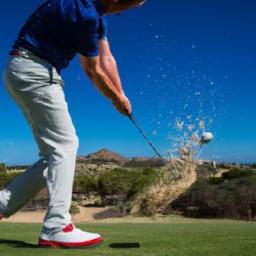
At a mechanistic level, unconventional strokes are explained by classic biomechanical constructs: proximal‑to‑distal sequencing (the kinetic chain), angular momentum management, and control of the system’s center of mass. These principles account for how timing between pelvis, torso, and arms creates peak clubhead speed, and how intentional timing shifts or wrist geometry changes produce atypical launch conditions. In practice, unfamiliar techniques frequently enough intentionally alter mass distribution or rotational inertia-through grip changes or shaft orientation-to influence ball speed, spin axis, and descent characteristics in ways that standard swing models do not predict.
Three recurring mechanical levers tend to drive altered outcomes in trick shots:
- Timing of segmental rotation: intentionally delaying hip turn or advancing shoulder rotation changes clubhead path and face angle at contact.
- Support base adjustments: narrowed or asymmetric stances change ground reaction vectors and facilitate lower‑trajectory punches or controlled spin.
- Effective moment‑arm changes: grip positioning and wrist flexion/extension modify the effective rotational inertia and spin generation.
These factors interact nonlinearly; small adjustments in one area can create outsized changes in launch behavior.
Translating these insights into practice demands targeted conditioning and motor‑learning strategies.Physical preparation should emphasize hip-shoulder separation,eccentric rotator control,and thoracic mobility specific to the required ranges (for example,greater thoracic rotation for exaggerated wrist-reset shots). Motor learning favors variable practice and constraint‑manipulation: drills that intentionally vary lie, club choice, and stance encourage flexible coordination while maintaining reproducibility.
Risk management is essential. Repeated exposure to nonoptimal kinematics (prolonged lumbar shear, extreme wrist deviation) can raise injury risk, so progressive loading and objective monitoring are necessary. From a performance view, novelty must be balanced against repeatability: a tactic that produces a stroke gain on one hole but cannot be reliably executed under pressure is frequently enough suboptimal. Coaches should build explicit decision rules that trade expected value against reliability using practice-derived metrics.
Practical coaching and equipment strategies can make unconventional shots safer and more repeatable. Examples include progressive constraint drills that isolate and re-integrate components, custom shafts or grips to adjust feel and moment arm, and load‑tracking to prevent tissue overload. When these interventions are paired with measurable criteria-impact dispersion, spin figures, perceived exertion-practitioners can make data-driven choices about whether a novel technique belongs in competition.
Weighing Risk and Reward: When to Use a Trick in Competition
Adopting nonstandard techniques in tournaments requires explicit evaluation of expected return versus downside volatility. Decision-makers should convert qualitative impressions into measurable inputs-expected strokes gained or lost, outcome variance, and frequency of catastrophic failures-and then align those with match objectives (e.g., save par vs. chase birdie). Using a probabilistic framing of risk (probability × outcome) enables consistent cross-technique comparisons and helps guard against overvaluing anecdotal wins.
Actionable decision criteria that teams can use in the field include:
- Expected stroke value: the mean strokes-gained against a baseline technique;
- Variance and tail risk: standard deviation and worst‑case outcomes;
- Reproducibility: success under pressure in practice drills;
- Context sensitivity: dependence on wind,course firmness,and hole layout;
- Penalty exposure: probability and cost of rule‑based or lie-related penalties.
These items form a decision rubric for moving a trick from experimental use to competitive deployment.
Simple quantitative rules help with in-round judgments. For instance, require a positive risk‑adjusted expected value after applying a player‑specific risk aversion parameter, and ensure the 95th percentile worst-case outcome does not exceed an acceptable penalty threshold for the hole. Players and coaches with conservative profiles will prioritize minimizing downside; those chasing large comebacks may accept higher variance plays. Tools such as mean‑variance optimization adapted for match play can formalize these choices.
| Criterion | Metric | Quick threshold |
|---|---|---|
| Expected gain | Average strokes gained | > +0.10 |
| Tail Risk | 5% worst-case strokes | <= +2.0 |
| Reproducibility | Success rate in pressure drills | >= 60% |
Integration should be staged: validate in controlled practice, trial in low‑stakes rounds, and deploy competitively only under pre-specified conditions with abort rules. Keep simple logs (attempts, outcomes, environmental notes) to support iterative tuning. Ethical and regulatory compliance-adhering to the Rules of Golf and obvious coaching practices-must be embedded in any decision framework to preserve integrity and protect athlete welfare.
Training Pathways to Make Innovative Tricks Reliable Under Pressure
To turn a creative stroke into a repeatable competitive tool requires an evidence‑based progression that blends motor learning, biomechanics, and practical on‑course constraints. Rather than isolating the trick as an exotic skill, embed it within staged learning cycles emphasizing transfer, robustness, and ecological validity. Good coaching treats creativity as a controllable variable: design practice conditions that preserve the trick’s informational cues while gradually increasing task difficulty and representative pressure.
Begin with a thorough baseline assessment: high‑speed video or motion capture, launch‑monitor metrics (spin, launch angle, ball speed), and psychometric measures of workload and confidence. Prioritize objective outcomes-dispersion, launch consistency, clubhead speed variance-and combine them with subjective indicators (perceived effort, decision comfort). These data determine whether a technique should progress toward integration or remain a tactical option.
Key components of an integrative training program include:
- Diagnostic testing to identify limiting constraints (balance, timing, visual pickup);
- Deliberate variable practice alternating blocks of focused repetition with randomized, context‑rich trials;
- Pressure simulation and dual‑task conditions to test resilience under cognitive load;
- Augmented feedback schedules (faded or bandwidth feedback) to avoid dependency on external cues;
- Self‑regulation drills (concise pre‑shot routines, imagery) to stabilize performance under stress.
Each element is tuned to measurable thresholds and adjusted through short iterative cycles.
Monitoring should be continuous with explicit decision rules: set upper and lower bounds for key metrics and specify triggers for remediation.A simple phase-to-metric mapping helps guide progression:
| Phase | primary goal | Key metric |
|---|---|---|
| Acquisition | Create reproducible mechanics | Within-session dispersion (%) |
| Consolidation | Grow robustness | Inter-condition CV of outcomes |
| Transfer | Demonstrate competitive utility | Strokes-gained or success rate |
Apply predefined thresholds (e.g., dispersion < X% and transfer success > Y%) before escalating to tournament use.
the social and organizational context matters. Establish clear coach-player agreements about when the trick is authorized, who cues it, and how it fits into overall strategy. regular case reviews-combining video, metrics, and athlete feedback-support adaptive refinement. Treating innovations as experimentable interventions within a documented pipeline allows teams to scale momentary creativity into reliable, performance-enhancing capability.
Cognitive Practices to Ensure Reliable Selection and Execution Under pressure
Adopting nonstandard shot-making requires managing limited cognitive resources so decisions remain swift and appropriate in tournament settings. Psychological science emphasizes working memory limits and attentional selection in real‑time performance; reducing online decision demand increases the odds that a new technique will be chosen and executed correctly when it matters. Framing adoption as a cognitive engineering problem-pairing each movement pattern with simple cues and a clear trigger-bridges the gap between practice proficiency and in‑round selection.
Practical cognitive supports include:
- Pre‑shot scripts: short verbal rules that define when to use the trick;
- Chunking: compressing multi-step procedures into single mental labels to lessen working-memory load;
- Implementation intentions: if‑then plans linking specific course states to tactic deployment to automate selection under stress.
To regulate arousal and preserve decision flexibility, pair attentional-control exercises with imagery and concise physiological routines. The table below summarizes brief interventions, cognitive targets, and recommended timing:
| Intervention | Cognitive target | When to use |
|---|---|---|
| Box breathing (3-4 cycles) | Arousal regulation | Pre‑shot / between holes |
| Cue‑word rehearsal | Retrieval strength | Practice & competition |
| Scenario imagery | Decision calibration | Pre‑round visualization |
Organizational culture also affects willingness to trial innovations. Coaches and teammates can create psychological safety that tolerates experimentation while using structured debriefs (context → choice → outcome → learning) to separate execution errors from suitability judgments. Rigorous micro‑experiments in practice-randomized comparisons of the trick versus standard technique-combined with in‑round usage metrics (decision latency, outcome differential) provide stronger evidence than isolated success stories. Innovations that pass stress tests, maintain decision speed, and scale across course conditions merit systematic adoption.
Equipment and Tactical Adjustments That Improve Reliability
Equipment precision is central to making nonstandard strokes dependable. Small changes in loft, bounce or lie alter launch behavior for unconventional trajectories; clubs intended for creative play should be held to tighter setup tolerances than standard distance clubs. shaft attributes-length, kick point, flex-must match the altered tempo of the trick, and grip diameter should stabilize hand release. Record equipment settings and repeat them across practice sessions to reduce gear‑related variance.
Targeted clubface and sole modifications can increase the usable envelope for inventive shapes while remaining within rules. examples include selective face roughening to influence spin transition, sole cambering to improve turf interaction on tight lies, and removable weights to bias launch or yaw. Test all changes thoroughly: capture before‑and‑after launch monitor data and turf‑interaction video to quantify tradeoffs in spin, launch angle and dispersion, and keep documentation to ensure regulatory compliance.
Ball selection also matters. Softer urethane covers often enhance spin and feel for high‑spin shots, while firmer, higher‑compression balls can better maintain velocity on punch shots. Align ball choice with the altered contact dynamics produced by the trick.
| shot objective | Suggested club change | Ball trait |
|---|---|---|
| Low‑skid punch | Slightly lower loft, firmer sole | Higher compression |
| High‑spin short flop | more bounce, increased face texture | Soft urethane cover |
| pronounced curve (controlled) | Heel/toe bias weights | Mid compression, stable core |
Course‑management adaptations must accompany equipment choices so practice gains transfer to competition. Adjust aim points, landing zones and aggressiveness of pin attacks to match the modified dispersion envelope.Practical steps include:
- revised alignment references and trajectory markers;
- alternate bailout plans based on the new dispersion pattern;
- pre‑shot rehearsals on turf that closely resembles tournament lies;
- club‑selection charts tied to ground firmness and wind.
Combining equipment iteration with on‑course simulations and launch‑monitor logging (carry, spin, lateral dispersion, success rate) enables a closed‑loop process that converts creative ideas into strategically justified options.
Data-Driven Metrics for Assessment and Continuous Improvement
Quantitative indicators are the backbone of objective evaluation. By operationalizing outcomes-shot dispersion, proximity to target (metres), spin rate, and execution time-coaches turn subjective impressions into reproducible measures. These metrics support fair comparison across players, shot types, and environmental conditions and form the evidence base for claims about effectiveness and transferability.
Good data practice requires a defined sampling and measurement protocol: specify sample size and trial counts, randomize conditions, and include control shots to isolate the trick’s effect. Maintain consistent launch‑monitor and turf conditions to reduce measurement error and strengthen statistical inference.
Define metrics and thresholds clearly: proximity in metres, dispersion as the standard deviation of landing points, execution time in seconds, and success rate as the percentage of attempts within a set target radius. Aggregate these into means, medians, and variability measures to estimate effect size and practical importance.
Analytical approaches that work well for iterative refinement include time‑series smoothing to detect trends, mixed‑effects models to handle repeated measures, and control‑chart methods to identify process drift. Recommended analytic components:
- Time‑series analyses (moving averages, trend decomposition)
- Mixed‑effects regression (player-level random effects)
- ANOVA and post‑hoc comparisons (shot variants)
- Control charts (stability and special‑cause detection)
- Effect sizes and confidence intervals (practical significance)
| Metric | Definition | Benchmark |
|---|---|---|
| Proximity | Mean distance to target (m) | ≤ 3.0 m |
| Dispersion | Std. dev. of landing points (m) | ≤ 5.0 m |
| Success rate | % within target radius | ≥ 70% |
Translate numbers into decisions using explicit rules and feedback loops.Predefined thresholds should trigger coaching changes,experimental adjustments,or more detailed biomechanical assessment. Combine quantitative findings with qualitative context-player comfort, perceived effort, and situational constraints-to keep refinement practical and athlete‑centered.
Ethics, Rules, and Sustainable Development: Broader Considerations
Ethical issues must accompany any push for technical innovation: fairness, player safety, and equitable access are central. Evaluate not only performance benefits but also distributive impacts across amateur,junior,and professional tiers. Protect athlete data and biometric privacy with clear consent procedures and transparent governance to avoid misuse of wearable or sensor information.
Regulatory alignment is necessary to reconcile rapid technical change with standards that preserve the sport’s integrity. Governing bodies should favor iterative rulemaking that uses empirical testing and stakeholder consultation. Rules should aim to balance a level playing field, allow productive innovation, and offer clear compliance pathways so manufacturers and coaches are not penalized retroactively.
Environmental sustainability should be built into the lifecycle of innovations-from manufacturing and material choices to course maintainance. Practical steps include water‑efficient turf practices, greater use of recycled or lower‑carbon materials in equipment, biodiversity‑sensitive course design, and event carbon accounting. Embedding environmental KPIs into product standards and facility certifications helps align innovation with long‑term ecological resilience.
Long‑term development demands investment in coach education, community programs, and affordable access to prevent a two‑tier system where only well‑funded players benefit from advances. The table below summarizes stakeholder responsibilities:
| Stakeholder | Primary duty |
|---|---|
| Equipment manufacturers | Design for durability and recyclability |
| Governing bodies | Adaptive, transparent rule processes |
| Clubs & venues | Resource‑efficient operations |
| Coaches & academies | Equitable skill development pathways |
Institutional monitoring-regular KPIs on fairness incidents, environmental impact, equipment lifespan, and access equity-supports adaptive governance. Recommended practices include autonomous ethical review, periodic horizon scanning, and multi‑stakeholder advisory groups to keep innovation responsible and enduring.
Q&A
Below is a concise, practitioner‑focused Q&A intended to accompany the article “Evaluating Innovative golf Tricks: A Strategic Analysis.” Answers draw on standard definitions of “evaluate” (to appraise or judge quality/value) and translate them into operational guidance spanning biomechanics, cognition, and strategy.
1. Q: What is the goal of evaluating innovative golf tricks in a strategic setting?
A: The goal is to systematically determine whether a nonstandard technique reliably improves outcomes, is safe and legal, and fits a player’s tactical needs. Evaluation establishes if an innovation improves accuracy,distance,or consistency,while also considering reproducibility,injury risk,and adaptability across different players and course conditions.
2. Q: How should “evaluate” be put into practice here?
A: Put simply,evaluation requires clear outcome measures (shot dispersion,carry,spin,etc.), standardized testing protocols, and decision thresholds that balance benefit versus risk.combine quantitative measures with expert appraisal and contextual variables (course, weather, rules) to reach defensible judgments.
3. Q: Which interdisciplinary frameworks are most useful?
A: Use a three‑part lens-biomechanics to estimate physical feasibility and injury risk, cognitive science to assess learning and decision demands, and strategic/game‑theory tools to model expected value and opponent responses.Together they provide a full picture.
4. Q: What biomechanical metrics matter most?
A: Key variables include kinematics (club and limb paths), kinetics (force/torque), launch conditions (spin, velocity, angle), sequencing timing, and physiological load. Capture these with high‑speed video,launch monitors,and force platforms when possible.
5. Q: How should cognitive factors be evaluated?
A: measure cognitive load,attentional requirements,susceptibility to error under stress,and retention/transfer. Methods include dual‑task tests,validated mental‑workload scales,physiological stress markers (e.g., HRV), and follow‑up retention checks.
6. Q: What does strategic evaluation cover?
A: Strategic checks include situational utility (when to use it), expected‑value and variance of outcomes, opponent/course interactions, and rule compliance. Tools such as decision trees and scenario simulations help quantify these elements.
7. Q: How is performance efficacy quantified?
A: Compare outcome distributions for the innovation versus standard techniques using statistics (mean differences,effect sizes,confidence intervals) and repeatability metrics (within‑player variance). Both immediate gains and long‑term stability are relevant.
8. Q: How do you formally include risk?
A: Treat risk probabilistically: model outcome distributions, compute downside metrics (variance, conditional value‑at‑risk), and combine with utility functions that reflect player objectives (risk-averse vs. risk‑seeking).
9. Q: What methodological safeguards are needed?
A: Use representative participants across skill levels,randomized or counterbalanced designs in practice,adequate sample sizes,and ecologically valid on‑course trials. Predefine outcomes and data pipelines, and replicate findings in multiple settings.
10. Q: How to test adaptability across skill levels?
A: Compare learning curves and transfer effects across novices,intermediates,and elite players. Look for interactions between skill level and outcomes to see where the innovation yields net benefits.
11. Q: How do rules and ethics factor in?
A: Ensure techniques conform to the Rules of Golf and that experiments protect player safety and data privacy. Consider fairness: techniques that confer exclusive advantages to those with special resources raise ethical concerns.
12. Q: how should coaches apply the findings?
A: Provide clear decision rules: who should use the trick, stepwise training protocols, performance thresholds for competition use, and contingency plans for failure. Emphasize phased practice, measurable readiness criteria, and scenario training.
13. Q: What are current limitations in evaluation methods?
A: Common limits include the tension between lab precision and on‑course realism, small elite samples, and measurement heterogeneity. Publication bias toward positive outcomes can also skew perceptions.
14. Q: What future research directions are most valuable?
A: Priorities include longitudinal retention studies, large‑scale strategy simulations for tournament adoption, integrating wearables for in situ monitoring, and cross‑disciplinary models linking biomechanics to decision science.
15. Q: What practical recommendations emerge?
A: (a) Use a multidimensional evaluation protocol combining biomechanical, cognitive, and strategic metrics; (b) require robust evidence of performance gain and acceptable risk before competition use; (c) standardize testing and reporting to enable synthesis; (d) ensure compliance with rules and protect athlete welfare.Closing note: The Q&A operationalizes “evaluate” as appraisal grounded in measurable evidence and provides a practical roadmap for translating novel ideas into well‑reasoned decisions for players, coaches, and researchers.
Conclusion
adopting innovative golf tricks should be guided by a structured, multi‑layered evaluation that blends biomechanical feasibility, cognitive cost, and strategic fit. Value is not synonymous with novelty; it requires consistent evidence of improved outcomes,acceptable injury and penalty risk,transfer across skill levels,and net contribution to competitive results. As the lexicon suggests,to evaluate is to judge worth-a judgement that should rest on measured evidence rather than isolated spectacle.
For practitioners, the implications are tangible: adopt standardized testing protocols, rely on objective biomechanical and performance metrics, and use scenario‑based decision rules to govern deployment. Follow a staged implementation path (practice → controlled competition → tournament play), set explicit risk thresholds, and individualize based on the athlete’s physical and cognitive profile.Key future work includes longitudinal field studies on competitive adoption, better ecological validity in experiments, and wider use of wearable and motion‑capture tools to reveal hidden costs and also benefits. With rigorous evaluation and strategic caution, the golf community can explore innovation safely while preserving consistent performance and athlete well‑being.

Game-Changing golf Tricks: Strategic & Technical Secrets from the Pros
Choosing an engaging headline
The word “engaging” literally means attractive, pleasant, and able to hold attention – exactly what you want your headline to be. (See common dictionary definitions of “engaging” for confirmation.) Pick a title that signals both strategic value and immediate utility to the reader: “Game-Changing Golf Tricks: Strategic & Technical Secrets from the Pros” is direct,compelling,and keyword-rich.
Why innovative golf tricks matter in competitive play
- Shot creativity expands scoring options: Knowing a few non-standard shots lets you recover from trouble and convert par or birdie opportunities other players won’t see.
- Strategic flexibility: creative shotmaking influences course management decisions and can force opponents into higher-risk lines.
- Psychological edge: Confident use of specialty shots can calm you in pressure moments and disrupt competitors’ expectations.
Core categories of innovative golf tricks
Below are high-impact shot categories with strategic contexts and technical keys.
1. The Knockdown / Punch shot
When wind or low clearance matters,a knockdown keeps the ball flight low and controlled.
- When to use: Into headwind, under low branches, near hazards where a high ball risks wind drift.
- Club selection: One-to-two clubs longer than normal for the distance because of reduced carry.
- Technique: Narrow stance, ball back in stance, shorter backswing, quiet hands, early wrist firming on impact, abbreviated follow-through.
- Strategic tip: aim slightly more left (for right-handers) to counter less spin and roll-out.
2. The Flop and High Lob
Used to clear steep lips or hold soft greens from short range.
- When to use: Tight pin tucked behind a slope or bunker with little run-up prospect.
- Club selection: High-loft wedges (56-64°) with higher bounce on soft turf; lower bounce works on firmer turf.
- Technique: Open clubface and stance, swing along the body line, accelerate through the ball, and allow a full wrist release. Commit - half-hearted attempts cause poor contact.
- Practice drill: Place two tees an inch apart,practice landing the ball between them at progressive distances to control trajectory and spin.
3. The Bump-and-Run
A lower-running chip that uses the ground to control spin and speed – essential when greens are firm.
- When to use: Fast greens or when you want predictable roll toward the hole.
- Club selection: 7- or 8-iron or lower-lofted wedges to promote rollout.
- Technique: Narrow stance, ball back, minimal wrist hinge, hands ahead at impact, brush the turf with a three-quarter swing.
4.The Reverse Bounce and Aggressive Run-Up
Using slope and aggressive spin to make the ball check up or use contours creatively.
- When to use: When contours favor a run that climbs to the pin or when a bounce away from trouble is needed.
- Technique: Intentionally hit the lower part of the sandwich to skid and use sidespin or take advantage of slope direction.
Technical breakdown: swing mechanics that enable trick shots
Every specialty shot is built on repeatable fundamentals. Below are technical checkpoints to practice until they become default behaviors.
Address & setup
- Adjust stance width relative to the shot: narrower for low punches, wider for stability on lob shots.
- Ball position varies: back for knockdowns, forward for flop shots.
- Open or closed stance to shape flight – rehearse alignment each session.
Grip & clubface control
- Slightly stronger grip for controlled fades; weaker for draws when needed.
- Open clubface for high soft shots; square or slightly delofted for run-up shots.
Swing path, tempo & release
- Shorter, controlled path for punch shots; full speed and commitment for lobs.
- Tempo consistency is king – trick shots are attempts to control variables, and tempo stabilizes them.
- Release timing adjusts spin and trajectory – train on tempo drills and metronome patterns.
Course management: when to play the trick and when to be conventional
- Evaluate the risk/reward: If a trick shot saves a stroke with moderate risk, it’s a match-play asset. If it creates high variance with little upside, opt for safe play.
- Consider tournament format: Match play vs stroke play alters acceptable risk thresholds.
- Account for wind, lie, and green firmness: These variables change shot outcomes dramatically – adjust club selection and trajectory accordingly.
Practice drills to build trick-shot reliability
- Impact bag drill: Improves low-point control for punch shots and stingers.
- Gate drill for lob control: Use tees to force a consistent swing path and face angle.
- Clock-face wedge routine: Practice landing spots at 8 positions around a hole to control distance and spin.
- Two-ball distance control: Place ball A and B at incremental distances – try hitting A then B with the same swing length to feel distance control.
Equipment and setup adjustments that enhance trick shots
- Wedge specs: Bounce selection should match turf conditions – more bounce in soft sand/long grass, less bounce on tight lies.
- Lofting and shaft choice: Strong loft clubs and low-spin shafts can improve run-up shots while soft-spin heads help flop shots.
- Grip pressure: Slightly lighter grip pressure on finesse shots improves feel and control.
Shot selection quick-reference table
| Shot | Best condition | Club | Difficulty |
|---|---|---|---|
| Knockdown / Punch | Windy / Low clearance | longer club than usual | Medium |
| Flop / High Lob | Soft green / Steep lip | 56-64° wedge | High |
| Bump-and-Run | Firm green / Close | 7-8 iron or low wedge | Low-Medium |
| Reverse bounce | Contours available | Various | Medium-High |
Psychology and competitive request
- Confidence through repetition: Don’t debut a trick shot in a final-round pressure moment unless it’s practiced under simulated pressure.
- Deception and tempo: Using the same pre-shot routine for standard and trick shots makes them less predictable to opponents and keeps your routine consistent.
- momentum swings: A well-timed creative play can shift momentum during match play – but be wary of hero shots that cost more than they gain.
Case studies and practice-to-performance transitions
Use intentional practice cycles to turn creative shots into competitive tools:
- Micro-goal sessions: Spend 15-20 minutes on one trick shot per practice day (e.g., only flops on Mondays) to build muscle memory without overcomplicating practice.
- Pressure simulation: Practice under small stakes (putting for points or using score thresholds) to replicate nerves and improve clutch performance.
- On-course rehearsal: Allocate one hole in practice rounds solely for trying different approaches and creative recoveries – evaluate outcomes and revise strategy.
Practical tips and habit checklist
- Warm up with a routine that includes both conventional shots and at least one trick shot you plan to use that day.
- Keep a “shot log” in your phone – note lies, winds, outcomes, and club choices for creative shots to refine decisions over time.
- Work with a coach or fellow player who can objectively evaluate your technique and risk calculus for each trick.
- Record practice sessions – slow-motion video reveals hidden swing flaws and helps replicate prosperous motion under pressure.
SEO-focused keyword strategy for this article
- Primary keywords used: innovative golf tricks, golf tricks, strategic golf, shotmaking
- Secondary keywords used naturally: short game, course management, practice drills, green reading, competitive edge
- content tip: Use these keywords in H-tags, image alt text, internal links to relevant lessons, and meta description for better search visibility.
First-hand practice template (6-week plan)
Follow this simple blueprint to integrate trick shots into your competitive game.
- Weeks 1-2: Fundamentals - dedicate 30 minutes to technique drills (impact bag, clock wedges) three times per week.
- Weeks 3-4: Controlled application – practice each trick shot from different lies and distances; record results and adjust club choices.
- Weeks 5-6: Pressure simulation - play practice rounds where two holes force use of a specific trick; add small competitive stakes to mimic tournament pressure.
Resources and next steps
- Schedule focused short-game sessions at least twice weekly.
- Use alignment sticks and landing targets to shorten feedback loops during practice.
- Review your shot log monthly to see which tricks provide consistent scoring gains and which need refinement or abandonment.
Meta reminder
Meta title: Game-Changing Golf Tricks: Strategic & Technical Secrets from the Pros – Meta description: Discover game-changing golf tricks with strategic analysis, technical breakdowns, practice drills, and on-course decision-making to build a competitive edge in shotmaking and course management.