
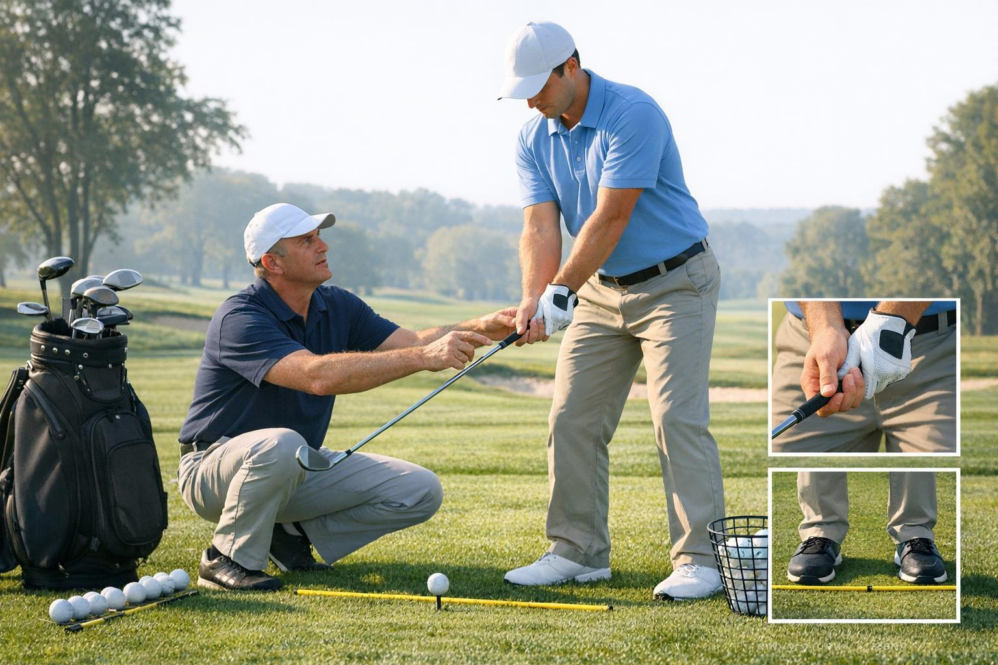
Understanding the Impact of Your Grip on Clubface control
Mastering grip impact on clubface control is essential to achieving consistent ball striking and accurate shot making. The grip dictates how the clubface interacts with the ball at impact, influencing both direction and spin. For most players,a neutral grip-with the “V” shapes formed by your thumbs and forefingers pointing between your right shoulder and chin if right-handed-provides the best balance of control and power. To check your grip, ensure the left hand’s thumb rests slightly right of center on the shaft and the right hand’s lifeline covers the left thumb, creating a firm but relaxed hold.This setup allows for square clubface exposure through impact, promoting straighter shots. Beginners should practice this repeatedly with slow, purposeful swings to build muscle memory, while advanced players might analyze video to detect subtle variations that increase shot precision.
When a player struggles with the clubface closing to quickly through impact-often resulting in hooks or pulls-a weaker grip adjustment may help. This means rotating both hands slightly counterclockwise (for right-handers) so less of the knuckles are visible at address, which naturally encourages a more open face during the downswing. However, this adjustment should be done incrementally and tested on the range to avoid creating a new issue with slices or fades. On the course, if windy conditions emphasize a hook tendency, employing this grip tweak can help keep shots straighter and reduce errant ball flight. For low handicappers and touring pros, fine-tuning grip pressure in conjunction with this weak grip often yields even greater clubface stability under pressure.
Developing grip consistency is equally important in the context of short game finesse and strategic course management. For chip and pitch shots, a slightly softer grip pressure combined with a neutral hand position helps maintain control over the clubhead without over-rotating the face. Practicing specific drills such as the “toe-up to toe-up” drill-where players swing the club back and through keeping the clubface aligned so the sole points upward midway-reinforces proper grip and face control at impact. Additionally, considering equipment such as grip size and texture plays a crucial role in comfort and repeatability, especially in varying weather conditions. By consciously linking grip mechanics to shot shape and trajectory decisions, players can better execute their game plan, attack pins confidently, and ultimately lower scores by avoiding the pitfalls of inconsistent clubface control.
Recognizing the Signs That Your Grip is Causing Face Closing
When your grip is causing the clubface to close too quickly,it often manifests in shots that hook or pull left for right-handed golfers. This issue usually stems from an overly strong grip position, where the hands are rotated too far to the right on the handle, promoting premature face closure through impact.To diagnose this, check your grip setup in the mirror or with a coach: the “V” shapes formed between your thumb and forefinger on both hands should point somewhere between your right shoulder and chin for a neutral grip. If these Vs angle sharply toward the right ear or shoulder, you’re likely encouraging the clubface to shut too early. Additionally, watch your ball flight patterns during practice-excessive hooking or inconsistent left misses can be clear indicators of a face-closing grip problem.
addressing this issue starts with modest adjustments rather than drastic changes. If your shots cut sharply right, a weak grip might help to square the face at impact; conversely, use a weaker grip only if your face closes too quickly, since over-weakening can lead to a slice. Begin by rotating your top hand slightly counterclockwise on the grip-roughly a 10-15 degree change-and reposition your bottom hand accordingly to maintain connection. This subtle shift retards the face from closing prematurely, encouraging a straighter ball flight. Incorporate drills like the “half swing drill,” where you practice swings with a focus on a square clubface through impact, using feedback from impact tape or alignment sticks on the ground.On the course, apply this by hitting controlled shots on shorter clubs first, monitoring the ball’s path, then gradually progress to full swings. This incremental approach helps build muscle memory and confidence in the adjusted grip position.
Beyond grip adjustments, consider how setup fundamentals integrate with grip mechanics. Check your stance, shoulder alignment, and ball position, as these can compound face-closing tendencies if misaligned. As an example, an open stance with a strong grip frequently enough exaggerates the inward club path, increasing the closing speed of the face. Use a mirror or video recording to ensure your shoulders and hips remain square to the target line, and the ball is positioned slightly forward of center when aiming for shots that require a controlled draw. Practice integrating grip changes with these setup fundamentals through targeted sessions, emphasizing tempo and rhythm to avoid forcing the shot. Remember, grip nuances have ripple effects on swing path and clubface control, so consistent, mindful practice is paramount for lowering scores and improving shot accuracy across all skill levels.
How a Weaker Grip Can Help You Keep the Clubface Square
One subtle yet effective adjustment you can make to improve your ball striking is adopting a weaker grip, especially if you notice the clubface closing too quickly during your downswing. A weaker grip means positioning your hands more to the left (for right-handed golfers), which helps promote a more neutral or even slightly open clubface at impact.This grip alteration reduces the tendency to over-rotate the forearms, thus keeping the clubface square through impact and minimizing hooks or pulls. To measure your grip, observe how many knuckles are visible on your lead hand – aiming for 1 to 1.5 knuckles visible often indicates a weaker grip position. This setup change can enhance directional control, especially on tight fairways or when navigating doglegs where accuracy is vital.
Implementing a weaker grip is most beneficial when paired with swing adjustments that encourage a natural release and smooth tempo. Start by practicing slow-motion swings focusing on maintaining the clubface angle without excessive rolling of the wrists. Incorporate drills such as the toe-up to toe-up drill, where the clubshaft aligns toe-up in the takeaway and decent, helping you feel the proper rotation through impact. This coordination supports a square clubface and reduces the risk of the ball curving uncontrollably. Additionally, during course play, take note of situations like windy conditions or narrow landing zones, where a controlled trajectory and straighter shots from keeping the face square via a weaker grip can directly lead to better positioning and lower scores.
Beginners should experiment with grip pressure – gripping too tightly often exacerbates face manipulation,whereas a lighter grip encourages fluidity and more consistent clubface control. Low handicap players can refine this technique further by integrating video swing analysis to fine-tune their grip position and wrist mechanics, ensuring the clubface stays stable through impact. remember that equipment also plays a role; clubs with midsize grips can definitely help players better accommodate a weaker grip without losing control.Ultimately, combining a weaker grip setup with deliberate practice and on-course strategy offers measurable improvement in shot consistency and course management, empowering golfers of all levels to face challenging lies and shot scenarios with increased confidence.
Step-by-Step Tips for Transitioning to a Weaker Grip Smoothly
Transitioning to a weaker grip involves a deliberate adjustment in how you hold the club, aiming to reduce excessive clubface closure through impact. Start by focusing on your lead hand (left hand for right-handed golfers). Rotate your hand slightly counterclockwise so that fewer knuckles are visible when looking down at your grip-ideally, you should see about one to two knuckles on the lead hand, compared to a stronger grip where three or more knuckles are visible. This subtle change affects the clubface angle during your swing, helping it stay more open through impact. As you make this adjustment, pay close attention to setting your thumb slightly more on the center of the grip’s back, ensuring the club remains stable in your hand. It’s important to implement this grip change gradually, testing it first during practice sessions before taking it onto the course to avoid disrupting muscle memory.
To solidify the weaker grip,incorporate targeted practice drills that reinforce proper wrist hinge and release mechanics. One effective drill is to place an alignment stick or shaft across your shoulders, helping maintain a consistent spine angle while you swing. Then,without hitting balls,practice slow-motion swings focusing on feeling the clubface’s position relative to your wrists at takeaway and through impact. Supplement this drill by hitting half shots with a mid-iron, concentrating on producing a ball flight that starts slightly right of the target and gently curves back left-an ideal fade pattern resulting from the weaker grip setup. This drill trains not only the physical grip feel but also ties muscle memory to desirable shot shapes, fostering greater shot control. For beginners, using a grip trainer or taper aids can visually and physically guide hand positioning during these practice routines.
On the course, apply your weaker grip with situational awareness to optimize shot selection and trajectory control, especially under challenging conditions such as wind or tight fairways. For example, when you notice your shots frequently hooking or pulling left (for right-handers), the weaker grip can help neutralize this tendency, allowing you to place the tee shot with greater accuracy and shape shots around hazards more confidently. However, be mindful that over-weakening your grip may lead to pushes or fades that miss right, so monitor ball flight patterns closely. Incorporate feedback tools such as launch monitors or video analysis to track progress quantitatively, aiming for a consistent face angle at impact within ±3 degrees of square. Remember, adjusting grip is as much a mental exercise as a physical one; embrace this gradual transition as part of your game’s cognitive refinement, and leverage it to enhance both confidence and scoring potential over time.




