Mastering the mental Game Behind the Perfect Swing and Putting Stroke
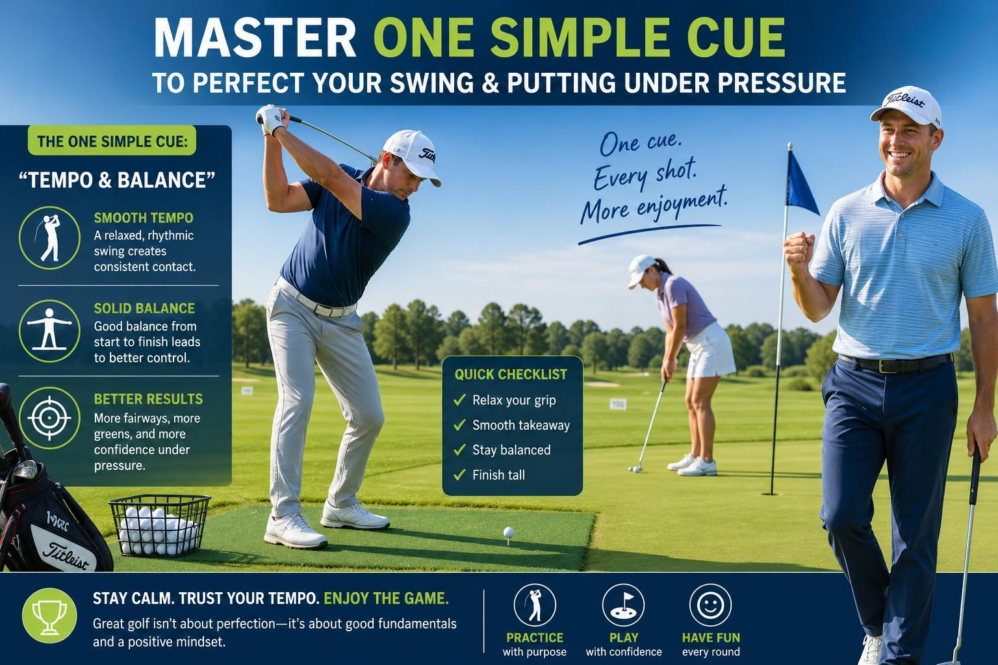
Success in golf hinges not only on physical mechanics but also on mental resilience, especially when executing the swing and putting stroke under pressure. Too foster a calm and focused mindset, pick one tiny cue-such as feeling the grip pressure or a smooth tempo count-and anchor your attention on it during each shot. This simple mental trigger steers you away from overthinking and disrupts negative thought cycles that commonly cause tension. When addressing the ball, maintain a consistent pre-shot routine that integrates deep, rhythmic breathing and visualizing a target line, reinforcing confidence and precision. Beginners often benefit from rehearsed rituals to build automaticity,while advanced players can refine this by incorporating situational visualization,imagining shot shape or green contour to better read breaks and slopes.
Technically, mastering the mental game requires integrating your cognitive focus with the fundamentals of swing and putting mechanics. For the swing, emphasize a square clubface at impact through controlled wrist hinge and synchronized hip rotation, aiming for a club path 3 to 5 degrees inside-out to promote a desirable draw ball flight. Practice drills like slow-motion swings with mirror feedback enhance proprioception while under mental scrutiny, reinforcing motor patterns. On the putting green, steady eye-hand coordination and smooth stroke tempo are essential; work on drills that cultivate a pendulum-like arm motion with minimal wrist breakdown. For example, perform a “clock drill” from 3, 6, and 9 feet, focusing on maintaining a pendulum stroke and consistent roll. This drill hones feel and distance control, crucial under course pressure where green speed and grain direction influence ball behavior.
Effective course management further complements technical and mental mastery by encouraging strategic shot-making decisions. learn to assess wind direction and speed, slope severity, and green firmness to select targets that maximize scoring opportunity while minimizing risk. When faced with challenging lies or hazards, adopting a conservative approach-such as aiming for the fat part of the green or employing the “safe side” target concept-reduces mental stress and preserves par opportunities. Additionally, equipment choices like using a higher-lofted wedge for delicate chips or a forgiving driver model for off-center hits support confidence in shot execution. Regular mental visualization exercises, combined with measurable practice goals (e.g., 80% fairway accuracy or lag putts inside 6 feet 75% of the time), foster incremental enhancement and reinforce a positive mindset that directly translates into lower scores and greater enjoyment on the course.
Unlocking the Power of One Simple Cue for consistent Performance
amid the myriad of technical adjustments and strategic decisions in golf, focusing on one simple cue can be a game-changer for achieving consistent performance, especially under pressure. This cue might be as essential as maintaining a steady head position throughout the swing or ensuring the clubface remains square at impact. By narrowing your mental focus to a single, reliable trigger, you minimize overthinking and tension, which often derail swing mechanics when stakes are high.For example, during a critical par putt, concentrating on a smooth stroke tempo, such as a 2:1 backswing-to-forward swing ratio, fosters rhythm and boosts confidence. Beginners might start by merely feeling that their weight shifts naturally from back to front foot, while advanced players refine this by monitoring subtle signs like the angle of their lead wrist-aiming to keep it flat through impact for better strike consistency.
To practically apply this approach across different shots, start by identifying a single, actionable element that resonates with your current technical focus. In full swing practice, this could be a checkpoint such as the shaft lean angle at address-commonly around 5 to 7 degrees forward-which helps ensure proper ball striking and launch conditions. Incorporate targeted drills that reinforce this cue in varied scenarios: hit 10 shots focusing solely on this angle, then simulate course pressure by timing your rest periods and maintaining pre-shot routines.On the course, when navigating tricky lies or windy conditions, revert mentally to your chosen cue-however small-to reset your swing mechanics and regain confidence. this connection fosters muscle memory, making technical execution more reliable when course management demands rapid, decisive action.
integrating a single simple cue also extends to your strategic gameplay.For instance, when selecting clubs on a narrow fairway or deciding whether to lay up on a par-5, anchor your decision-making to a consistent principle, such as targeting a comfortable yardage range where your dispersion is lowest. This focus helps avoid impulsive shots that increase risk unnecessarily. Combine this with your technical cue on swing mechanics to maintain control and precision. Practicing mental routines-like a brief visualization of the shot shape anchored by your cue-can improve alignment and shot execution under pressure. By harmonizing technical mastery with structured course strategy rooted in one simple cue, golfers of all levels foster repeatable performance, better scoring opportunities, and lowered anxiety during competitive play.
How to integrate This Cue Seamlessly into Your Practice Routine
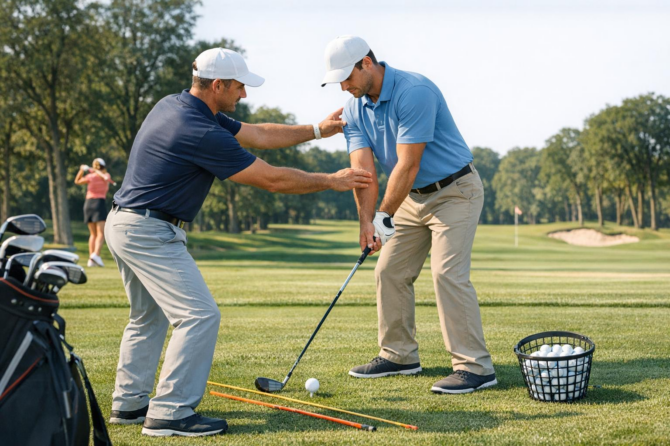
To effectively integrate the cue of focusing on “one tiny cue” during pressure situations, begin by identifying a singular, manageable element of your swing or setup to anchor your attention. This might be maintaining a consistent grip pressure at approximately 5 to 6 on a 10-point scale, stabilizing your head position throughout the backswing, or ensuring a square clubface at impact. By isolating one precise aspect, you reduce cognitive overload and allow your motor skills to execute fluidly under stress. during practice sessions, use drills such as the towel under the armpit drill to promote connection between your arms and body or employ a mirror to refine your posture at setup. These focused repetitions ingrained in muscle memory will translate more effectively when you’re on the course,facing high-stakes shots or tricky wind conditions.
Next, incorporate this cue seamlessly into your pre-shot routine to maximize its effect during rounds. Such as, before every tee or approach shot, consciously remind yourself to execute the tiny cue-like feeling the gentle pressure of your left heel pushing into the ground through impact or keeping your lead wrist flat to control loft and spin. This mental trigger acts as a calming anchor that stabilizes your swing tempo and shot execution, especially when confronted with challenging lies or strategic hazards. For golfers of all levels, this method fosters a reliable, repeatable routine aligning physical mechanics with mental steadiness. Low handicappers can refine this further by combining the cue with detailed course management decisions, such as factoring in wind angle or choosing a specific trajectory to avoid trouble, thus enhancing confidence and precision.
link this focused cue practice with targeted drills designed to build consistency and adaptability across the varied demands of course play. Utilize alignment rods or markers to practice precise tee shot placement, emphasizing your cue in the setup while adapting your stance to desired shot shapes-fade or draw-with slightly adjusted clubface angles between 2 to 5 degrees open or closed. Similarly, during putting sessions, concentrate on a single “tiny cue” like the pendulum motion of your shoulders or maintaining a consistent eye-to-ball distance of about 2 to 3 inches, which helps read greens more effectively. By honing these cues within context-specific drills, including uneven lies or windy conditions, you create a robust framework that not only enhances technical skills but also sharpens decision-making and resilience when under pressure, ultimately leading to lower scores and improved overall proficiency.
Using Focused Drills to Build Confidence and Control Under Pressure
Developing confidence and control under pressure hinges on integrating focused drills that simulate real-course stressors, enabling golfers to internalize mechanics and sharpen mental resilience.Begin with pre-shot routine drills that emphasize consistent setup and alignment. Use alignment sticks or clubs on the practice range to monitor proper shoulder-square positioning and stance width of approximately 1.5 to 2 shoulder widths. This establishes a repeatable foundation crucial for shot accuracy. Incorporate breathing exercises combined with visualization before each swing to mimic tournament intensity, fostering a calm yet alert mindset. For beginners, practicing with slow backswing and controlled tempo helps ingrain muscle memory, while low handicappers can focus on refining wrist hinge timing and impact compression. The key is to reinforce one tiny cue per session – for example, focusing solely on clubface alignment – allowing mastery under mounting pressure over time.
Short game precision is paramount when pressure mounts, notably within 100 yards of the green. Introduce pressure-putting drills that challenge stroke control and green reading skills together. Set up multiple three-foot putts around the hole with varying slopes and grain directions to practice top-to-bottom green reads and break adjustments. A helpful exercise involves placing tees along the intended line at measured intervals (e.g., 6, 12, and 18 inches) to promote consistent ball roll and speed control. Additionally, learn to adapt the speed and spin by consciously varying loft and wrist release on chips and pitches – a subtle cue for advanced players to manipulate trajectory effectively. For golfers of all levels, integrating situational practice, such as simulating a downhill lie or side-hill stance in bunker shots, builds versatility that translates directly to confidence during competition.
Strategic course management under pressure transforms technical skills into scoring advantage and mental fortitude. Employ scenario-based drills focusing on shot selection, club choice, and risk assessment in varying conditions like wind, rain, or tight fairways. As an example, practice tee shots targeting specific fairway segments rather than maximum distance to minimize penalties; this includes calculating the layup zone considering carry distance and roll-out, often sacrificing a few yards for accuracy.When approaching hazards, test multiple trajectories – a high fade to avoid water or a low draw to navigate tree lines – reinforcing the cognitive aspect of shot shaping. Use mental triggers such as “one tiny cue,” such as, “smooth rhythm” or “steady lower body,” to anchor focus amid pressure. Layering these drills into regular practice routines cultivates adaptability and decisiveness, essential qualities that help golfers lower stroke averages and elevate overall course performance.