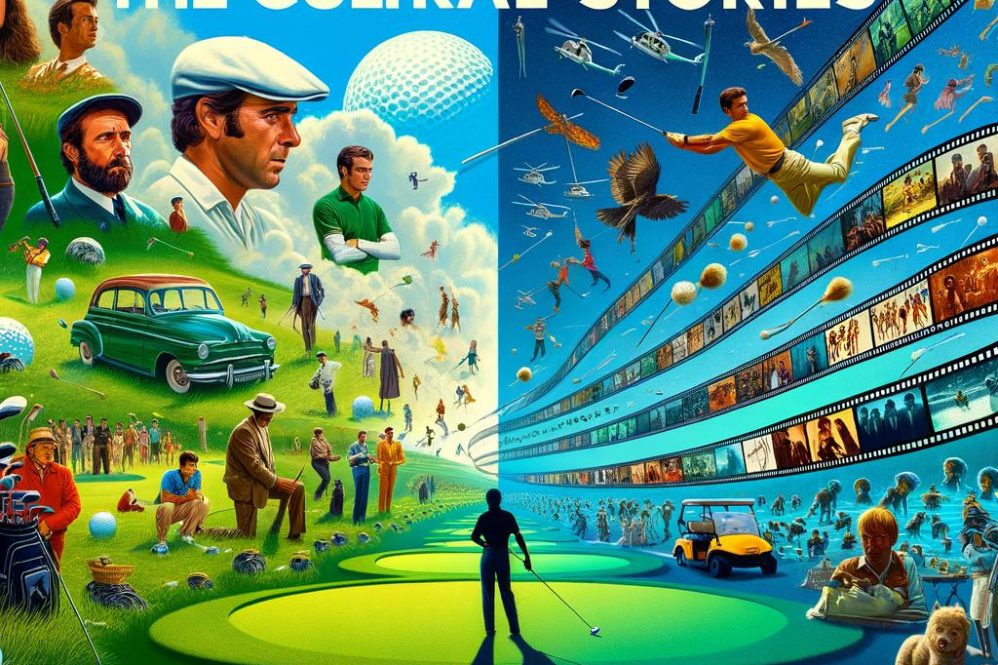
golf on film occupies a distinctive position at the intersection of sport, class, and cinematic representation. while scholars have thoroughly attended to the cultural history of football and baseball on screen, the mediated figure of golf-its sculpted fairways, ceremonial routines, and ties to aspiration and privilege-has received comparatively less focused analysis. Major sports and lifestyle outlets (for example, GOLF.com and ESPN) present golf as both elite competition and consumer leisure; cinema often mirrors this ambivalence while also challenging it. The prominence of particular course sites in popular writing and guides (for instance, municipal programs listed on CityofBostonGolf and destination facilities like Granite links) underscores how physical locations become meaningful cultural props in filmic storytelling.
This essay traces how filmmakers use golf as a narrative instrument and symbolic shorthand to probe desire,rivalry,identity,and social mobility. Combining close readings of representative screen texts with reception evidence-critical reviews,audience commentary,and trade coverage-this analysis interrogates how moving images of golf circulate assumptions about class,gender,and authenticity. it pays close attention to cinematic techniques (mise-en-scène, soundscapes, editing choices) that shape the sport’s emotional and ethical resonances, and to how diverse publics make sense of those cinematic constructions.
By embedding filmic golf within contemporary media ecosystems and cultural geographies, the piece contributes to interdisciplinary debates across film studies, sport sociology, and cultural analysis. It contends that golf-on-screen operates as a polyvalent cultural lens: a field for personal striving, a stage for social relations, and a diagnostic of shifting attitudes toward leisure and competition. The sections below map these dynamics through case studies and reception patterns to clarify the layered meanings that accrue to golf in cinema.
Historical evolution of golf Representation in Cinema and Its Socioeconomic Context
Images of golf first entered the cinematic creativity as the sport itself became codified and leisure culture modernized. Early screen portrayals framed golf as a visible marker of social standing: the manicured turf,private clubhouses,and sartorial rituals signalled access to capital and elite social networks. Filmmakers used extended landscape shots and composed tableaux of ritual play to make golf legible as both spectacle and boundary. Retrospective accounts-often shaped by coverage in outlets like GOLF.com and mainstream sports journalism-help situate those images within a media ecology that historically emphasized golf’s upper‑class associations prior to broader patterns of participation.
After World War II, cinematic uses of golf began to evolve as suburbanization and municipal investment in courses expanded access. Filmmakers repurposed the sport as a setting for stories about aspiration, competition, and masculinities in transition. the proliferation of public courses and local programs (visible in municipal resources such as CityofBostonGolf and reflected in course roundups in Golf Digest) supplied new social textures for narratives: the course was no longer only a token of privilege but also a dramatic arena where characters negotiated class mobility, midlife reckonings, and personal ambitions.
From the late 20th century into the present,on-screen golf has been refracted through processes of commodification and media spectacle. The growth of televised tournaments, branded tours, and international golf media turned competition into a corporate event, and filmmakers reacted by positioning golf as a space of individual striving, therapeutic retreat, or critique of marketization-often conveyed through intimate close-ups, internal voiceover, and montage. These cinematic choices mirror larger socioeconomic shifts: broader public participation, heightened professionalization, and the sport’s integration with global capital and sponsorship.
Viewers’ responses have shifted alongside these representational changes, producing multiple interpretive registers that vary by class background, regional exposure, and media literacy. Three common viewer positions recur:
- Identification: emotional alignment with protagonists who use the sport as a vehicle for upward movement;
- Critical reading: emphasis on exclusionary practices, privilege, or commercialization;
- Nostalgic response: affective attachment to pastoral, ritualized images of leisure.
Summarizing this historical arc in schematic form clarifies how cinematic tropes map onto socioeconomic realities:
| Era | Cinematic Trope | Socioeconomic Marker |
|---|---|---|
| Early cinema | Elite leisure and status symbols | Limited access; private clubs |
| Postwar | Aspiration, suburban play | Municipal courses; growing middle-class engagement |
| Contemporary | Commercialized spectacle | Media saturation; corporate branding |
symbolic Functions of Golf Imagery in narrative Film: Aspirations, Class Mobility, and Personal Identity
Close analysis of golf sequences shows that the sport often functions as a compact semiotic system: small, routine gestures-addressing the ball, taking the tee, checking a score-are loaded with social meaning. Filmmakers exploit golf’s ritual grammar to compress character backstory, hopes, and conflicts into emblematic moments. On many screens, the fairway becomes shorthand for ambition, with deep-focus compositions and receding horizons representing a character’s imagined future possibilities.
The sport’s built environments-clubhouses, membership rosters, and dress conventions-are commonly mobilized to dramatize social hierarchies and mobility. Directors juxtapose the manicured exclusivity of private clubs with peripheral spaces (municipal links, public ranges) to stage class encounters. Recurrent cinematic motifs include:
- The clubhouse as a repository of social capital and gatekeeping;
- The caddie as an intermediary who carries cultural knowledge across class lines;
- The swing as ritualized skill and an emblem of self-control;
- The scorecard as a ledger of moral success, setback, or redemption;
- The course landscape as terrain where aspiration meets constraint.
These images also allow filmmakers to explore internal identity work: golf scenes externalize private states,aligning technique with temperament. As the sport privileges repetition and refinement, it lends itself to plots about recovery, obsession, and aging; conversely, a well-executed stroke frequently enough functions as a symbolic resolution to narrative dilemmas. The table below pairs common images with their narrative roles and social signification.
| Image | Narrative Role | Broader Social Code |
|---|---|---|
| Clubhouse Threshold | entry to altered status | Inclusion versus exclusion |
| A Misread Putt | Exposed insecurity or failure | Limits of meritocratic narratives |
| Advice from a Caddie | Epistemic exchange; pivotal decision | Classed forms of knowledge |
Audiences decode these compressed signs through culturally specific frames, so the same image can validate aspiration in one setting and signal elitism in another.Directors modulate mise-en-scène-camera distance, lighting, sound design, editing tempo-to position golf alternately as spectacle or social constraint. The effect is what might be called symbolic condensation: a single shot can concurrently stage ambition, reveal class tensions, and mark shifts in an individual’s identity.
Directorial Strategies and Aesthetic Conventions: Framing, Sound, and Pacing to Convey Competitive Tension and Reflection
Filmmakers frequently alternate visual strategies to move between competitive immediacy and contemplative register. Tight close-ups on hands, clubfaces, or the ball emphasize bodily precision and invite spectators to inhabit the player’s focus; wide compositions set the individual against a social or environmental pressure that can feel antagonistic. Cinematographers use shallow or deep focus,parallax movement,and tracking shots to communicate momentum,isolation,or anxiety.These framing choices are interpretive acts that encode mastery, vulnerability, and ritual rhythm into the sport’s on-screen presence.
Sound design and temporal modulation work alongside visuals to shape psychological valence. Directors draw on a toolkit of sonic approaches to orchestrate tension and reflection, including:
- Diegetic amplification – magnified club impact, turf friction, and inhalations to generate tactile realism;
- Intentional silence – muting ambient noise before a stroke to highlight judgment and moral stakes;
- Non-diegetic scoring – spare musical motifs that punctuate turning points or inner reckoning;
- Rhythmic foley – edited repetitions that suggest ritual and habit.
When these audio choices align with measured visual pacing,they produce nuanced affective registers that guide viewers from immediate suspense toward reflective appraisal.
Directors frequently enough codify these techniques into visual taxonomies editors can deploy across a film’s diegesis. the table below pairs recurring formal devices with their narrative functions:
| Technique | Narrative Function |
|---|---|
| Close-up on hands/ball | Subjective concentration; technical mastery |
| Expansive, wind-blown wide | Environmental pressure; societal scale |
| Silence before stroke | Moral or psychological heightening |
| Slow-motion contact | Ritual importance; lingering memory |
Pacing at micro (shot length, cut cadence) and macro (act structure, scene tempo) levels mediates how viewers balance excitement and reflection. Rapid intercutting between rivals and scoreboard data builds tournament urgency and fosters comparative spectatorship; extended observational sequences create space for cultural meanings-tradition, honor, class-to emerge. In sum,formal orchestration of image,sound,and rhythm shapes whether audiences empathize with characters or critically appraise the social orders depicted.
Audience Reception and cultural Resonance: Demographic Patterns, Fan Communities, and Interpretive Responses
Demographic patterns influence how cinematic golf is received: age, socioeconomic status, and local proximity to golf infrastructure correlate with interpretive tendencies and attendance practices. Observations of regional course density-for example, clusters of public and private facilities around metropolitan hubs such as Boston-indicate that dense local networks foster specialized viewing literacies. Younger audiences often view golf narratives with ironic detachment or as novelty, while middle-aged and older viewers are more likely to read them through lenses of aspiration or nostalgia; socioeconomic position further shapes how exclusivity and leisure are perceived. These tendencies are probabilistic rather than deterministic.
Fans aggregate into communities that shape reception beyond theatrical contexts. Place-based gatherings (clubhouse screenings, municipal-course viewings) and online microcommunities (forums and social feeds) generate shared vocabularies for interpreting texts. Common modes of engagement include:
- Collective viewing rituals at clubs or tournaments that emphasize authenticity and technical detail;
- Analytic online communities that dissect cinematography, swing mechanics, and historical accuracy;
- Hybrid events-screenings followed by on-course conversations-that frame films as companions to lived play.
Interpretation tends to cluster around a few dominant frames-aspiration and mobility,competitive ethics,and solitude and reflection-yet these frames are inflected by local culture and viewers’ preexisting knowledge. The table below highlights typical interpretive frames and the audience cues that accompany them.
| Interpretive Frame | Characteristic Audience cues |
|---|---|
| Aspiration & Mobility | Close attention to costume, clubhouses, and socioeconomic markers |
| Competition & Ethics | Focus on rules, rivalry sequences, and mentor-player dynamics |
| Solitude & Reflection | Responses to pacing, landscape tableaux, and interior voiceover |
For filmmakers and critics, these reception patterns suggest practical approaches: tailor distribution to existing community infrastructures (festivals, club partnerships, streaming plus clubhouse showings), craft publicity that clarifies a film’s interpretive frame, and collaborate with fan groups through co-curation. Key recommendations include:
- Segment marketing to reflect varying viewer literacies instead of presuming a single “golf fan” demographic;
- Use local course networks and municipal programs to stage site-specific screenings and outreach;
- Host post-screening dialogues-panels and moderated forums-to surface multiple readings and prolong a film’s cultural life.
Methodological Frameworks for Analyzing Golf in Film: Combining Textual Analysis, Audience Studies, and Industry Research
Making methodology explicit is essential for interdisciplinary work on golf in film. Discussing method clarifies choices about analytical scale (a scene, single film, or corpus), epistemological stance (interpretive versus empirical), and the relations between textual meaning, spectator interpretation, and commercial infrastructures. This clarity limits analytic drift and helps locate claims about aspiration, competition, and reflection within reproducible research designs.
Textual analysis attends to cinematic form and rhetoric, pairing close reading with multimodal visual analysis to reveal how golf operates as symbol and spectacle. Principal techniques include:
- Formal close reading – analyzing shot composition, editing tempo, sound design, and mise‑en‑scène;
- Genre and intertextual mapping – situating golf films alongside sports melodramas, comedies, and art‑house works to chart audience expectations and deviations;
- Symbolic coding – tracing repeating motifs (clubs, greens, scorecards) as semiotic nodes that index class, gender, and aspiration.
Audience studies bring reception into view, emphasizing how meanings are co-produced. Mixed-method approaches-surveys, semi-structured interviews, ethnography at screenings, and social media discourse analysis-allow triangulation of emotional responses and interpretive repertoires. Careful sampling (golfers vs. non-golfers; regional versus national audiences) and attention to reception over time (initial release versus streaming rediscovery) reveal how viewers negotiate authenticity, nostalgia, and critique. Ethical protocols and reflexivity about researcher position are crucial when interpreting subjective accounts of identity and aspiration.
Industry research situates films and audiences within economic systems. Materials such as production notes, distribution agreements, box-office and streaming metrics, trade coverage, and archival publicity illuminate how commercial imperatives shape representation. The table below summarizes common sources and the outputs they enable when triangulated with textual and audience evidence:
| Source | Example | Analytic output |
|---|---|---|
| Film texts | Features, shorts, advertisements | Theme and formal mapping |
| Audience data | Surveys, focus groups, social media | Reception patterns and trajectories |
| Industry records | Box-office, trade reporting | Contextual drivers and distribution strategies |
Combined, textual, audience, and industry strands provide a methodologically robust triangulation that supports claims about cultural meaning while remaining attentive to historical contingency and power relations in the film field.
Recommendations for Filmmakers and Critics: Narrative Practices, Inclusive Representation, and Market Positioning
Adopt inclusive casting and consultative production practices to broaden the genre’s social relevance. Collaborative advancement that invites voices from local clubs, amateur leagues, and underrepresented golfing communities strengthens authenticity:
- Community consultation: partner with local clubs and grassroots groups (municipal programs listed on CityofBostonGolf or community-facing venues like Granite Links serve as models) during development and casting;
- Intersectional casting: portray diverse embodiments of players-across gender, race, class, age, and disability-without flattening identity into tokenism;
- Accessible production and distribution: ensure off-screen inclusion through diverse crew hiring, location accessibility, and distribution features such as audio description and captions.
Such measures increase representational fidelity and broaden audience identification while reducing the risk of superficial inclusion.
Market positioning should be intentional and research-informed. Treat distribution choices as part of a film’s rhetorical strategy: festival runs, targeted streaming windows, partnerships with golf industry stakeholders, and educational tie-ins each signal distinct interpretive frames. A concise decision grid can definitely help align creative aims with outreach goals:
| Platform | Strategic Advantage |
|---|---|
| Specialty festivals | Critical recognition; scholarly attention |
| Sports-focused streaming | Reach among enthusiasts; promotional synergy |
| Educational distribution | Curriculum integration; long-tail engagement |
Favor mixed-release plans that combine prestige positioning with community-facing activations (club screenings, partner events) to cultivate both critical and grassroots traction.
Critics play an critically important mediating role and should balance formal analysis with socio-cultural nuance. Rather than treating golf films only as sports entertainments, reviewers can place them within larger discourses of labor, aspiration, and leisure, examining how representational choices shape audience readings. Recommended critical practices include explicit methodological disclosure (the analytic lens being applied), attention to production contexts (funding, consultation, location choices), and dialogic engagement-soliciting perspectives from communities depicted on screen. Such practices shift criticism from gatekeeping toward generative conversation that strengthens the film ecosystem and encourages ethically attentive storytelling.
Practical Guidelines for Educators and Programmers: Curriculum Integration, festival Curation, and Community Engagement to Enhance Cultural Impact
- Critical viewing: close analyses of mise-en-scène, genre conventions, and representation in golf films;
- Cultural context: historical and socioeconomic perspectives on access and imagery;
- Practice lab: student micro-productions and oral-history projects in partnership with local golf communities.
Align each strand with measurable learning outcomes-media literacy, comparative cultural analysis, and participatory research skills-and assess via mixed methods (analytic essays, reflective portfolios, peer-reviewed screenings).
Curators should prioritize thematic coherence and audience accessibility. Sequence programs to lift underrepresented voices and pair classic titles with contemporary shorts or documentaries that complicate dominant narratives. For practical curation, use this checklist:
- Thematic clustering (e.g., class, race, gender);
- Cross-format programming (feature + short + director discussion);
- Community co-curation with golf clubs, museums, and local film groups;
- Accessibility measures – captioning, scheduling consideration, and sliding-scale or free admission.
these tactics increase relevance and diversify audiences while creating platforms for post-screening reflection.
Build long-term partnerships that extend beyond single events. Local institutions-schools, clubs, civic arts organizations-can supply archival materials, speakers, and research participants for outreach and study. A simple stakeholder map clarifies roles and incentives:
| Stakeholder | Role |
|---|---|
| Local schools | Curriculum sites; student research and evaluation |
| golf clubs | Venues, oral-history collaborators |
| Community cinemas | Screening hosts and audience development partners |
Co-created programming and shared publicity help distribute cultural benefits across partners and sustain engagement.
Operationalizing projects requires timelines, resource audits, and measurable evaluation. Key line items include rights clearance, honoraria for facilitators and community contributors, and accessibility accommodations; staffing for community liaisons; and documentation systems for archives and assessment. Suggested evaluation metrics:
- Participation breadth: number and diversity of attendees and partner institutions;
- Learning impact: pre/post measures of media-literacy and cultural-awareness gains;
- Legacy outputs: curricular materials, archived interviews, and public-facing events.
Embed iterative review points so programs can scale and adapt,generating published findings that feed back into scholarship on sport,media,and audience reception.
Q&A
1) What is the central research question of the article “Golf in Film: Cultural Meanings and Audience Reception”?
Answer:
The central inquiry asks how cinematic portrayals of golf encode cultural meanings-such as aspiration, competition, leisure, class, and identity-and how different audiences interpret and respond to those meanings. The study connects close readings of film texts with reception data to show how golf functions as a symbolic medium across genres,national cinemas,and historical moments.
2) Which theoretical frameworks inform the analysis?
Answer:
The analysis draws on cultural studies and film theory (representation and semiotics),reception theory (for example,encoding/decoding approaches),and social theories of sport (including Bourdieu’s ideas about cultural capital). It also incorporates gender and race studies to examine identity construction and leisure studies to situate golf as social practice. Methodologically, the study combines textual analysis with qualitative audience research.
3) What methods were used to study film texts and audience responses?
Answer:
A mixed-methods design was used. Textual work focused on mise‑en‑scène, narrative structure, sound, and cinematography across selected films.Audience reception was explored via semi-structured interviews, focus groups stratified by demographics and golf familiarity, review and trade-press analysis, and digital discourse analysis.Where applicable, distribution and box-office/streaming metrics contextualized circulation and popularity.
4) Which films are analyzed and why were they selected?
Answer:
The corpus includes mainstream and cult titles spanning decades and tonal registers-comedies that lampoon the sport,inspirational biopics,and intimate character dramas. Films were chosen for prominence, diversity of approach, and the distinctive cultural themes they highlight (for instance, satire of elite leisure, redemption arcs, or sport-as-quest). Selection favored texts that illustrate contrasting uses of golf as symbol and plot device.
5) What recurring cultural themes does golf in film tend to express?
Answer:
Recurring themes include:
– aspiration and social mobility (golf as a route to transformation);
– competition and ethical contestation (the sport as a moral arena);
– class and distinction (courses as sites of inclusion or exclusion);
– constructions of masculinity and identity (golf as a stage for gendered performance);
– nostalgia and pastoral aesthetics (the course as contemplative landscape);
– mentorship and redemption (coach/caddie dynamics that facilitate growth).
6) How do cinematic aesthetics (camera work, sound, editing) shape meanings about golf?
Answer:
Aesthetic choices either naturalize or problematize golf’s meanings: panoramic vistas emphasize leisure and landscape; tight swing close-ups fetishize technique; slow-motion and strategic scoring mythologize performances; comedic editing can undercut elite pretensions. The filmic gaze-what is shown and how-determines whether golf is framed as noble pursuit, absurd pastime, or a vehicle for character development.
7) What does analysis reveal about representations of class, race, and gender?
Answer:
Golf films commonly make class divisions visible-courses and clubhouses as markers of privilege-yet often reproduce reductive portrayals of race and gender. Race is frequently marginalized or presented through stereotypical tropes, while women and female players have historically been underrepresented or confined to secondary roles. The article calls for more intersectional storytelling to reflect changing demographics and participation patterns in the sport.
8) How do different audiences interpret golf films?
Answer:
Interpretation varies by familiarity with golf,cultural background,age,and expectations. Insiders emphasize technical realism and tonal authenticity; casual viewers rely on genre conventions (comedy vs. drama); younger audiences may foreground humor or character relatability; older viewers often respond to nostalgia. Encoding/decoding analyses show that hegemonic readings coexist with negotiated and oppositional responses (ironic distance or outright critique of elitism).
9) How do critical reception and popular reception differ?
Answer:
Critics typically assess films on formal, ethical, and narrative criteria and may foreground problematic tropes or formal shortcomings. Popular reception-measured through box-office performance, fan communities, and social media-can diverge: films dismissed by critics may attain cult status among audiences, while audience favorites may be criticized for formula. This divergence reflects differing evaluation criteria and institutional contexts.
10) Does the article discuss international or transnational representations of golf?
Answer:
yes.The study examines transnational variations, noting that golf’s cinematic meanings shift by cultural context. In some national cinemas golf evokes colonial legacies or class formations; elsewhere it becomes a route for transnational aspiration. Comparative analysis exposes both shared tropes (competition, masculinity) and localized inflections shaped by access, history, and leisure infrastructures.
11) What are the implications for golf as an industry, tourism, and public perception?
Answer:
Filmic portrayals influence public understandings of golf-either entrenching images of exclusivity or humanizing the sport through accessible narratives.Inclusive, community-focused films can promote participation and tourism; satirical treatments may deter or trivialize interest. the article recommends that stakeholders (courses, governing bodies, tourism agencies) engage with film production and media narratives to diversify representations and expand appeal, using trade outlets such as Golf.com and Golf Digest as mediating platforms.
12) What limitations did the study acknowledge?
Answer:
Limitations include a focus on English-language and Hollywood-adjacent texts, incomplete archival access for some historical materials, and constraints on generalizing audience findings beyond sampled demographics. The study also notes challenges in isolating cinematic effects from broader cultural trends affecting golf participation.13) what avenues for future research does the article propose?
Answer:
Future directions include:
– broader comparative studies in non-Western cinemas;
– longitudinal research correlating film cycles with participation and tourism data;
– quantitative audience work to assess filmic influence on behavior;
– richer intersectional analyses of race, gender, disability, and class;
– industry-focused research on collaborations between film producers and golf institutions.
14) How can scholars and practitioners apply the article’s findings?
Answer:
Scholars can incorporate the frameworks into sport- and film-related curricula; practitioners-golf clubs, marketers, and producers-can leverage insights to craft inclusive, authentic narratives.Film programmers and festival curators might highlight underrepresented golf stories to complicate dominant tropes and reach diverse audiences.
15) Where can readers find complementary resources and empirical data?
Answer:
Contemporary coverage of golf culture and industry trends is available from outlets such as Golf.com and Golf Digest. For situating cinematic analysis in material landscapes, consult course directories and municipal resources (such as, Granite Links and CityofBostonGolf) which provide information on venues, public programming, and community access-useful references when linking on-screen imagery to real-world sites.
16) What is the article’s principal contribution to film and sport studies?
Answer:
The article offers an integrated account linking film form, thematic content, and audience reception to show how golf cinema operates as a cultural prism. It demonstrates how films both mirror and shape public meanings attached to golf-about aspiration, identity, and social hierarchies-and foregrounds reception as central to understanding the sociocultural impact of sport on screen. By bridging film studies, sport sociology, and cultural history, the study opens pathways for further interdisciplinary inquiry.
the study of golf in film uncovers a dynamic interplay among narrative form,cultural symbolism,and audience interpretation.Whether framed as an arena for ambition, a stage for competitive drama, or a meditative space for self-reflection, cinematic depictions of golf act as cultural texts that reflect and shape broader attitudes about class, leisure, and gender. Reception research shows viewers interpret these texts through diverse lenses-personal experience with the sport, social location, and media literacy-yielding meanings that converge around recurring motifs of skill, failure, and belonging.
This approach highlights the value of combining close textual work with empirical audience methods to understand how moving images circulate and resonate. It also argues for grounding cinematic analysis in the material world of golf: institutions, courses, and community practices that inform spectators’ lived knowledge. Future scholarship could fruitfully link on-screen imagery to patterns of participation and the geography of play-for example,comparing how public versus private course infrastructures (from municipal links to destination venues) shape access,aspiration,and identification in ways that intersect with filmic narratives.
methodologically, longitudinal reception studies and mixed-method designs will help trace how meanings change across cultural moments and platforms (theatrical, streaming, social media). Attention to transnational differences is also essential given the uneven global spread and local inflections of golf. Interdisciplinary collaboration-across cultural studies, sport sociology, and film studies-will deepen our grasp of how golf in film functions both as mirror and maker of social imaginaries.
Taken together, these insights affirm that golf on screen is more than a recurring motif: it is a productive lens for examining how leisure, identity, and power are negotiated in contemporary culture. Sustained engagement with both text and context will enrich our understanding of the sport’s symbolic resonance and its capacity to generate varied audience meanings.

Swinging Stories: What Golf Movies Reveal About culture and Audiences
Why golf films matter: identity, aspiration, and audience
Golf movies and golf films function as more than niche entertainment for sports fans – they are cultural texts. On screen, the golf course becomes a stage for class dynamics, personal transformation, competition, and the construction of identity. Whether it’s the comic chaos of a clubhouse in Caddyshack or the mythic fairway landscapes in The Legend of Bagger Vance, filmmakers use golf imagery (the swing, the green, the putt) to dramatize inner conflicts and social values that resonate with wide audiences.
Core themes and cinematic tropes in golf cinema
- Identity and reinvention: Golf is often a metaphor for self-mastery – characters seek redemption or a fresh start through learning to swing better, concentrate more, or face personal demons on the green.
- class and exclusivity: Country clubs, membership gates, and private courses visually encode social status. Films use these settings to critique or celebrate privilege and social mobility.
- Competition and performance pressure: Tournament scenes amplify stakes, turning a single putt into a narrative climax that symbolizes life-or-death emotional stakes for characters.
- Mentorship and tradition: Mentor-protégé relationships (coach and rookie, caddie and player) appear frequently, conveying generational values and cultural continuity.
- Comic subversion: Comedies like happy Gilmore or Caddyshack use golf’s formality as a foil for slapstick or anti-establishment humor, widening audience appeal beyond customary golf fans.
- Gender and depiction: Golf cinema historically skewed male but contemporary films and documentaries increasingly portray women golfers, junior players, and diverse voices, expanding both narrative scope and audience.
Case studies: pivotal golf films and what they reveal
Below are case studies of representative films and documentaries that demonstrate how golf movies shape cultural meaning and audience response.
Caddyshack (1980) – Comedy,class,and cultural satire
Caddyshack uses the absurd and anarchic to poke fun at country-club hierarchy. Its exaggerated characters and memorable lines turned a movie about a golf club into a cult classic. The film speaks to audiences who enjoy seeing social elites lampooned while also celebrating the green as a communal space were rules are both enforced and subverted.
Tin Cup (1996) – Aspiration, romance, and real stakes
Tin Cup blends romantic subplot with a player’s struggle to earn respect. The film centers on ambition and the golfer’s personal code – it engages viewers emotionally by tying the protagonist’s love life to his performance on the course. The cinematic treatment of the swing and pressure shots creates empathy for both golfers and casual sports viewers.
The Legend of Bagger Vance (2000) – Mythic storytelling and race-conscious subtext
Using a mystical caddie figure, this film frames golf as a spiritual journey, mixing Americana and myth. It invites audiences to read the sport as a site of personal redemption, though modern critics also discuss its racialized narratives and the ways filmic adaptation handles historical nuance.
The Greatest Game Ever Played (2005) – Historical narrative and upward mobility
This biopic about amateur Francis Ouimet’s 1913 U.S. Open victory frames golf as a pathway for social mobility. Audiences connect to the underdog story; filmmakers use course landscapes and period detail to make the stakes palpable and to show how sport can reshape identity and class perception.
loopers: The Caddie’s Long Walk (2018) & The Short Game (2013) – Documentaries and audience intimacy
Documentaries give viewers close-up access to roles and dynamics rarely filmed in fiction – the caddie’s perspective and junior players’ early pressure.These films expand the golf audience by humanizing characters and emphasizing personal stories over tournament spectacle.
How golf films engage different audience segments
Different films target or attract varied audiences through tone, style, and marketing. Key audience engagement mechanisms include:
- Genre blending: Comedies attract a mainstream crowd, while biopics and documentaries draw history buffs and dedicated fans of the sport.
- Emotional beats: Putting scenes and final-round tension are cinematic tools that translate the sport’s subtle drama into global emotions like fear, hope, and triumph.
- Cross-promotion with golf media: Partnerships with golf outlets, PGA features, or channels such as ESPN enhance visibility for golf films among sports audiences.
- Authenticity and location: Shooting on real courses or recreating them faithfully (think scenic fairways, bunkers, and greens) reassures golf fans and adds aesthetic appeal for general viewers.
Practical tips: shooting and marketing golf scenes that connect
Filmmakers and content creators can follow practical steps to make golf sequences compelling and searchable online:
- Use slow-motion and close-ups to emphasize the swing, grip, and ball flight. These shots improve viewer engagement and make clips shareable on social platforms.
- Highlight the putt: a putt is a natural narrative climax. Build tension with sound design (heartbeat, crowds), reaction shots, and silence before the ball drops.
- Cast authenticity: hiring golf consultants or real caddies adds technical accuracy that golfers notice, boosting credibility.
- Leverage keywords in marketing: use terms like “golf movie,” “golf film,” “golf drama,” “golf comedy,” “golf course scenes,” and “golf swing” in titles, tags, and social copy to improve SEO.
- Cross-promote with golf media: pitch clips to golf websites,podcasts,and channels such as ESPN’s golf section to reach engaged fans.
How real-world golf places connect to cinema
Filmmakers frequently enough seek picturesque or iconic golfing locations to visually support storytelling. Real-world courses also benefit from cinematic exposure-films can drive tourism and membership interest. Such as, municipal and public golf offerings (like the George Wright Golf Course and the William J. Devine Golf Course listed on CityofBostonGolf.com) or entertainment-focused facilities such as Granite Links (granitelinks.com) provide visual backdrops and community access that mirror on-screen courses. Golf travel and listing sites such as Golf Digest help viewers find courses with cinematic appeal, which strengthens the loop between film and real-world golf engagement.
Audience research: what viewers say
Surveys and social listening reveal why audiences respond to golf films:
- Non-golfers cite story and character as the main draw – the sport is a setting rather than the focus.
- golfers value accuracy in swing mechanics and course design and are more likely to recommend films that “get golf right.”
- Casual viewers enjoy the aesthetic: sweeping fairway visuals, elegant costumes at country clubs, and the ritualistic calm of the game.
SEO-friendly content elements to include on film pages
When creating web pages or blog posts about a golf film, integrate these elements for discoverability:
- Title tags with target keywords (e.g., “Best Golf Movies: Golf Films That Capture Culture & Competition”)
- Meta description featuring a primary keyword and emotional hook
- Subheadings (H2/H3) that include secondary keywords: “golf movies,” “golf films,” “golf culture,” “golf course cinematography”
- Image alt text describing golf visuals: “golf swing slow motion,” “country club clubhouse exterior”
- Schema for video and movie where applicable (structured data to surface trailers and clips in search)
- Internal links to related content (review pages, interviews with golfers/consultants, behind-the-scenes features)
Short comparative table: film type, audience, and core appeal
| Film | Audience | Core Appeal |
|---|---|---|
| Caddyshack | Mainstream/comedy fans | Satire of club culture |
| Tin Cup | Rom-com + sport viewers | Ambition + romance |
| The Greatest Game Ever Played | History and sports fans | Underdog triumph |
| Loopers / The Short Game | Documentary viewers | Inside look at roles and youth |
Benefits and practical takeaways for golf brands and clubs
- Film exposure can raise a course’s profile: host screenings, offer guided tours, or publish ”film location” pages to capture search traffic.
- Use cinematic imagery on websites and social media – realtor-quality photos and short videos of fairways, greens, and clubhouses increase engagement.
- Collaborate with filmmakers and local film offices to attract shoots; highlight public courses (municipal options like those listed on CityofBostonGolf.com) as film-friendly locations.
- Promote human-interest stories (caddies, youth programs, club heritage) that resonate with documentary viewers and broaden community appeal.
First-hand practice: staging a cinematic golf scene (step-by-step)
- Scout a course with strong visual lines (water hazards, bunkers, tree framing) – Granite Links-style vistas work well for wide shots.
- Plan a shot list: wide landscape, swing close-up, ball-tracking, reaction cutaways, crowd/gate inserts.
- Use a golf pro or consultant on set to ensure realistic play and believable technique.
- Design sound: amplify the thud of a clean strike, the hush before a putt, and ambient course sounds for authenticity.
- Edit for rhythm: intercut practice montages with competition to build tension, and use slow-motion selectively for emotional beats.
Resources and further reading
- Course directories and cinematic location ideas: City of Boston Golf (CityofBostonGolf.com),Granite Links (granitelinks.com)
- Golf media outlets for cross-promotion: ESPN Golf section (espn.com/golf) and golf Digest
- Documentary examples for narrative inspiration: loopers: The Caddie’s Long Walk; The Short Game
Suggested SEO titles to test
- Swinging Stories: What Golf Movies Reveal About Culture and Audiences
- Fairways and Film: How Golf Movies Shape Identity and Aspiration
- Teeing Off on Screen: Golf, Competition and the Spectator’s Gaze
Use these titles in A/B tests for meta titles and social sharing to see which best drives clicks from searches related to “golf movies,” “golf films,” and “golf culture.”