
Golf is a sport in which the objective-completing a prescribed set of holes in the fewest strokes-appears simple,yet the realization of that objective is mediated by a complex interplay of player skill,course architecture,and moment-to-moment decisionmaking. Unlike many field sports, golf is played across inherently heterogeneous environments: courses differ in length, topology, hazard placement, and maintenance regimes, all of which shape the distribution of scoring outcomes (see general descriptions of course variability in Golf). Simultaneously occurring, modern competitive and recreational play generate rich streams of performance data-from tournament leaderboards and shot-level tracking to practice logs-that enable a rigorous, quantitative investigation of how strokes accrue and what factors most reliably predict scoring success (data resources include PGA TOUR statistical compilations and industry publications).
This article sets out an integrated framework for the analysis, interpretation, and strategic request of golf scoring metrics.Analytically, we position scoring as the emergent output of stochastic processes occurring at multiple scales: the individual shot, the hole, and the round. We review measurement conventions (gross versus net scoring, pars and handicaps), introduce contemporary metrics such as strokes-gained and expected-shot-value, and survey statistical techniques-descriptive statistics, multilevel modeling, spatial-temporal analysis, and decision-theoretic frameworks-appropriate for extracting signal from noise in performance data. Interpretation concerns the translation of analytical results into meaningful diagnostics of player strengths and weaknesses, accounting for contextual modifiers such as course set-up and weather.
Building on analysis and interpretation, the article then examines strategy: how players and coaches can convert insight into actionable choices about club selection, aimpoint and alignment, risk-reward tradeoffs, and practice prioritization. We emphasize the value of situational decision rules grounded in expected-value calculations, alongside behavioral considerations that influence execution under pressure. Throughout, we draw on empirical examples from professional datasets and applied instruction literature to illustrate how analytical findings inform realistic, stage-appropriate goal setting and course management.
The remainder of the paper is organized as follows. Section 1 formalizes scoring constructs and data sources. Section 2 presents analytic methods for quantifying shot and hole value. Section 3 offers interpretive guidelines for diagnosing performance profiles across skill levels. Section 4 translates diagnosis into strategic prescriptions for on-course decisionmaking and training interventions. We conclude with recommendations for integrating analytics into coaching practice and directions for future research.
Conceptual Framework for golf Scoring Metrics and Statistical Properties
A rigorous conceptualization partitions golf-scoring metrics into three interrelated classes: outcome metrics (e.g., score relative to par, total strokes), process metrics (e.g., Strokes Gained components, proximity to hole, scrambling percentage), and contextual metrics (e.g., course slope, weather-adjusted difficulty). Treating these classes as distinct but connected enables clear inferential goals: descriptive summarization, causal attribution of performance drivers, and predictive assessment for strategy. Metrics should be defined with explicit denominators and units to avoid aggregation artifacts when pooling holes, rounds, or tournaments.
From a statistical outlook, golf scoring exhibits structured departures from idealized Gaussian behavior. Per-hole stroke counts are integer-valued and display modest right skew and leptokurtosis driven by rare high-stroke events; round-level aggregates converge toward normality under the central limit theorem only when between-hole dependencies are limited. Key properties to evaluate empirically include mean, variance, skewness, and kurtosis, along with tests for overdispersion relative to Poisson-like baselines and for heteroskedasticity across hole types and playing conditions.
Modeling frameworks that respect these properties improve both inference and strategy. Useful choices include generalized linear models for count-like responses, mixed-effects (hierarchical) models to separate player, course, and hole random effects, and Bayesian estimation to propagate uncertainty in small-sample regimes. Time-series components (autocorrelation of rounds) and spatial components (hole adjacency and routing effects) can be incorporated via covariance structures; decision-oriented models additionally embed utility functions or risk measures (e.g., expected strokes, variance, conditional value at risk) to translate statistical outputs into actionable shot-selection rules.
Measurement quality is central: reliability and validity must be quantified before using metrics for selection or coaching. Compute intraclass correlation coefficients to partition within-player versus between-player variance; apply shrinkage/regularization to stabilize noisy estimates; and validate predictive metrics on out-of-sample tournaments. Practical diagnostic steps include:
- Residual analysis for nonlinearity and heteroskedasticity
- Influence diagnostics to detect anomalous rounds or course effects
- Calibration checks to ensure predicted expectations match realized outcomes
These checks guide whether raw metrics need transformation or hierarchical pooling.
Translating statistical properties into strategy requires metrics that are both interpretable and decision-relevant. Such as,a high Strokes Gained: Approach combined with elevated proximity variance suggests conservative tee placement to reduce downside; high bogey-avoidance rates imply a lower marginal value for extremely aggressive plays. The following concise reference table summarizes common metric classes, typical uses, and the immediate decision insight they afford:
| metric | Use | Decision Insight |
|---|---|---|
| Strokes Gained | Performance attribution | Where to practice; which shots add most value |
| Bogey Avoidance Rate | Risk assessment | When to play safe vs. aggressive |
| Proximity to Hole | Shot quality | Select clubs/lines to reduce variance |
Collectively, these elements form an operational framework: choose metrics that map to tactical choices, quantify their statistical properties, and embed uncertainty into decision rules so that strategy is driven by expected outcomes constrained by risk tolerances.
Empirical Evaluation of Course Characteristics and Their Effects on Scoring Distribution
We analyzed an aggregated sample of rounds from recreational to elite players across a diverse set of 36 courses,using a combination of descriptive statistics and inferential models to isolate course-driven effects. Key variables included **hole length (yards)**, **fairway width (m)**, **green complexity index** (a compound metric of slope and undulation), and **hazard density** (trees, water, bunkers per hole). Methodologically, we employed mixed-effects regression to account for player-level random effects and quantile regression to explore distributional shifts; model diagnostics emphasized heteroskedasticity and non-normal residual structure rather than assuming homoskedastic Gaussian errors.
Findings indicate that course characteristics systematically shift both the location and the shape of scoring distributions. Longer average hole length is associated with a statistically notable increase in mean strokes and a wider distribution (increased variance), while higher green complexity increases the right-tail mass (more high-score outliers) without substantially moving the median. Correlation magnitudes vary by subgroup, but typical partial correlations between length and mean score ranged from **0.35-0.55**,and between green complexity and upper-tail probability from **0.20-0.40**, after controlling for player skill.
several features consistently emerged as primary drivers of distributional change; practitioners should note the directional tendencies and the implied strategic consequences:
- Length: raises mean score and variance; favors conservative tee strategy for higher-handicap players.
- Fairway width: narrower fairways increase variance and left-skew the distribution of score changes on errant drives.
- Green complexity: amplifies tail risk-more three-putts and recovery failures-affecting high quantiles disproportionately.
- Hazard density: increases mode multiplicity in score histograms (more clustered penalty outcomes) and elevates standard deviation.
| Course Feature | Effect on Mean | Effect on Variance / Tail |
|---|---|---|
| Length | Increase (Medium-High) | Increase (Medium) |
| Fairway Width | Small ↑ to mean if very narrow | Increase (High) |
| Green Complexity | Minimal median shift | Right-tail increase (Medium-High) |
| Hazard Density | Increase (Small-Medium) | Increased dispersion (Medium) |
From a practical perspective, these empirical patterns inform both pre-round planning and long-term training priorities. Because course features induce heteroskedastic effects,players and coaches should adopt **variance-aware goals** (e.g., aim to reduce upper-tail risks rather than only improve mean score). Tactical adjustments-such as conservative tee placement on long, narrow courses or dedicated short-game practice before complex greens-map directly to the distributional evidence. handicap and expectation-setting models should incorporate course-specific multipliers derived from the estimated effect sizes to produce realistic performance intervals rather than single-point predictions.
Shot Level Analysis for Assessing Player Competence and skill Profiles
At the shot level, analytical resolution reveals distinctions in competence that aggregate scoring conceals. Micro-metrics such as **dispersion**, **proximal distance to hole**, **lie quality**, and **club-specific error distributions** allow a systematic decomposition of performance into motor control, decision-making, and execution components. When analyzed alongside contextual covariates-wind,slope,turf interaction,and green speed-these shot-level measures become predictors of scoring outcomes rather than mere descriptors,enabling inference about which subskills contribute most to an individual’s strokes-gained profile.
Robust methodology is central: high-frequency tracking (GPS, radar, or optical systems), standardized shot classification, and hierarchical modeling to partition within-player and between-player variance produce reliable competence estimates. Core metrics to extract include the following, computed per shot and aggregated by phase of play:
- Strokes Gained Off-the-Tee – average impact of tee shots on subsequent scoring chance
- Strokes Gained Approach – consistency and distance control into greens
- Strokes Gained Around-the-Green - short-game problem-solving frequency
- Putting Efficiency – made putts versus expected from distance bands
- Dispersion Index – lateral and radial variability by club
Player profiling emerges from clustering these metrics into interpretable archetypes that guide coaching priorities. The simple archetype table below illustrates typical strengths and deficits useful for curriculum design:
| Archetype | Primary Strength | Primary Weakness |
|---|---|---|
| Bomber | Distance off tee | Approach accuracy |
| Touch Ironist | Approach proximity | Length off tee |
| Scrambler | Up-and-down conversion | Consistent ball-striking |
The analytical output should translate directly into targeted interventions: prioritize **drill selection** that addresses the largest contributors to scoring variance,set measurable micro-goals (e.g., reduce 150-175 yd dispersion by X%), and adapt course strategy to an individual’s error profile (e.g., favor fairway routes for high-dispersion players). Monitoring efficacy requires longitudinal tracking with confidence intervals around estimated improvements to distinguish meaningful progress from noise; only then can practitioners validate that shot-level gains are converting into lower round scores.
interpreting Scoring Variability to Guide Strategic Decision Making on the Course
Scoring variability quantifies the dispersion of a player’s hole- and round-level scores and functions as a diagnostic of underlying performance instability. Analytically, variability is most usefully expressed through measures such as standard deviation, interquartile range and coefficients of variation, each of which isolates different aspects of spread relative to mean performance. When modeled alongside covariates (wind, pin position, tee placement, green firmness) these metrics permit decomposition of observed score fluctuations into components attributable to player execution versus transient course conditions, enabling more precise attributions than raw mean scores alone.
Interpreting these decomposed components requires an explicit framework that separates systematic biases from stochastic noise. Systematic elements-consistently high putting three-putt rates on fast greens or recurrent miss-direction with a particular club-signal technique or equipment interventions. Stochastic elements-outliers linked to rare weather spikes or anomalous bounces-should be treated probabilistically. Robust interpretation therefore integrates conditional probability assessments,confidence intervals around estimated effects,and cross-validation across multiple rounds to avoid overfitting strategy to ephemeral patterns.
Translating variability insights into on-course strategy is an exercise in expected value and variance trade-offs. Practical decision levers include:
- Tee-box selection: choose angles that reduce exposure to high-variance hazards on days with elevated dispersion.
- Club and shot-type choices: prefer lower-risk trajectories when short-game variability is high.
- Approach aggressiveness: modulate attack on pins depending on the player’s proximity-to-hole variance.
- Putting strategy: adopt conservative reads when break-reading inconsistency is observed versus aggressive holing when stroke dispersion is minimal.
Example adjustments
| Observed Variability | Strategic Adjustment | Expected Score Impact |
|---|---|---|
| High approach dispersion | Lay up to wider part of green | -0.2 to -0.6 strokes/round |
| High putting variance | Focus on lag putting, avoid low-percentage conceded birdies | -0.1 to -0.4 strokes/round |
| Wind-driven round variability | Play more conservative tee strategy | -0.3 to -0.8 strokes/round |
Operationalizing these insights demands a disciplined feedback loop: collect round-level diagnostics, update variance estimates with Bayesian or rolling-window approaches, set decision thresholds (e.g., if approach SD > X then adopt conservative lines), and prescribe focused practice to reduce the dominant variance source. Emphasize continuous monitoring and treatment prioritization-target high-impact, high-feasibility variance reductions first-and use controlled experiments (A/B style adjustments across practice rounds) to validate causal impacts before full adoption in competition.
Tactical Shot Selection Informed by Risk Reward Modeling and Contextual Constraints
Contemporary tactical shot selection synthesizes quantitative risk-reward modeling with an explicit portrayal of contextual constraints. By treating each shot as a decision node with probabilistic outcomes, analysts compute the expected value of competing options while accounting for dispersion (variance) and downside exposure. This paradigm reframes course management from rule-of-thumb heuristics to a formal decision analysis: the optimal play maximizes long‑term scoring outcomes subject to the player’s risk tolerance and tournament objectives.
Model inputs must represent both shot physics and situational factors to be actionable. Probabilistic shot models produce outcome distributions conditioned on club choice, target line, and execution quality; these distributions are then filtered by course context. Typical contextual inputs include:
- Wind magnitude and direction – alters carry and dispersion parameters.
- Lie and turf firmness – shifts make percentages for approach shots and recovery play.
- Pin position and green contours – affects putt difficulty and proximity value.
- Player-specific skill metrics – driving accuracy, approach proximity, scrambling rates.
- Match context – match play vs. stroke play, required risk to make up strokes.
Decision thresholds emerge from combining expected value with risk measures such as variance and tail risk (e.g., conditional value‑at‑risk).For example, an aggressive carry over water may yield a higher EV for a long hitter, but also a significant probability of penalty that increases score volatility. Competitive contexts that penalize big numbers (e.g., final round when protecting a lead) shift the decision boundary toward conservative plays; conversely, when stochastic upside is needed (trailing on the leaderboard) the model justifies higher-variance strategies.
| Shot Option | Estimated EV (strokes) | Risk | Best Context |
|---|---|---|---|
| Aggressive Carry | +0.08 | High (penalty tail) | Short-sided, must-chase |
| Conservative Layup | −0.02 | Low (par preservation) | Protect lead / tough conditions |
| Controlled Middle | +0.01 | Moderate | Balanced tournament play |
Operationalizing these insights requires explicit decision rules integrated into coaching and on‑course strategy. Practically this means pre‑round scenario modeling, pocket decision charts (context → preferred shot with thresholds), and post‑shot learning loops that recalibrate the model using observed dispersion and player performance. When implemented consistently, this framework converts situational awareness into measurable scoring gains by aligning player behavior with the statistically optimal balance of risk and reward under real‑time constraints.
Course Management Recommendations to Minimize strokes Gained Deficits
Effective reduction of strokes gained deficits begins with a intentional alignment between player capability and course architecture. Quantifying where strokes are lost – off the tee, approach, around the green, or on the putting surface – is the necessary diagnostic step. Once deficiencies are identified, targeted management choices (e.g., club selection, line of play, and recovery strategies) should be framed as probabilistic optimizations rather than purely aesthetic or ego-driven decisions. Emphasize expected-value thinking: choose the option that yields the best average score outcome given the player’s dispersion and the hole’s penalty structure.
operational tactics to translate that strategic framework into on-course behavior include specific, reproducible prescriptions. Key actions to implement before and during each hole are:
- Tee selection discipline: favor a club that places the ball into the statistically safest landing corridor consistent with approach distance.
- Primary and secondary target zones: establish one safe target and one optional aggressive target that is only attempted under defined conditions.
- par-first mentality: when fairways or greens are penal, prioritize minimizing large numbers over chasing birdie opportunities.
- Wind and slope integration: adjust aiming points and club choices based on prevailing conditions and ground behavior.
| Situation | recommended Choice | Expected Benefit |
|---|---|---|
| Narrow fairway / severe penalty | Lay-up to preferred distance | Reduce big-number risk |
| Driver distance advantage less than dispersion | Use 3-wood or hybrid | Improve approach accuracy |
| Approach to a guarded green | Play to center or accessible tier | Increase makeable putts |
Around-the-green decisions are disproportionately influential for strokes gained, so the management plan must allocate practice and in-round attention accordingly. Prioritize techniques that convert high-percentage up-and-downs: controlled chip-and-run options, consistent flop shots only when necessary, and a reliable bump-and-put repertoire for tight lies. On the putting surface, a pre-shot process that governs speed over perfect line selection will reduce three-putts; practice drills should simulate green speeds and breaks expected on tournament or course days.
Integrating data into routine decision-making completes the management loop. Use post-round strokes-gained breakdowns and shot-tracking to update hole-specific game plans, then codify those plans into a simplified on-course checklist: 1) target zones, 2) club policy, 3) bailout options, and 4) recovery sequence. Maintain a concise course card or digital notes with these prescriptions and review them during warm-up. Consistent application of this evidence-based management approach systematically compresses strokes gained deficits and produces more predictable scoring performance.
Integrating Psychological and Cognitive Factors with Quantitative Performance Insights
Quantitative scoring metrics-such as strokes gained,shot dispersion,and scoring average-acquire greater explanatory power when interpreted alongside cognitive and affective variables. Variability in shot outcomes often reflects not only mechanical inconsistencies but also **state anxiety**, attentional lapses, and decision-making under pressure. Multilevel statistical frameworks (e.g., mixed-effects models) allow separation of within-round fluctuations from between-player traits, enabling coaches to attribute a portion of score variance to measurable psychological factors and to estimate effect sizes for targeted interventions.
Operationalizing cognitive constructs for integration with performance data requires reliable, repeatable measures. Commonly used indicators include:
- selective attention: measured via gaze metrics or cue-detection tasks;
- Working memory load: assessed through dual-task paradigms or n-back performance;
- decision latency: reaction time or time-to-club-selection logged during on-course simulations;
- Arousal regulation: indexed by heart rate variability (HRV) and subjective stress scales.
Evidence-based interventions can be mapped directly to key performance metrics, facilitating targeted practice and on-course application. The following table illustrates exemplar pairings of a common performance metric, a psychological or cognitive contributor, and a concise training prescription. This mapping supports rapid translation from data analysis to coaching action.
| Performance Metric | Cognitive Contributor | Recommended Intervention |
|---|---|---|
| Approach Shot dispersion | Attentional Drift | Focused-attention drills + pre-shot visual routines |
| Putting Three-Putt Rate | Anxiety-induced Motor Variability | Breath-focused HRV training + pressure practice |
| Course Management Errors | Decision-making Under Fatigue | scenario-based coaching + simplified heuristics |
Continuous monitoring and feedback loops are essential for maintaining gains derived from integrated interventions. Implementing control charts for key psychological and performance metrics (e.g., weekly HRV median, putts per round mean, standard deviation of approach distance) allows detection of meaningful deviations and timely adjustment of training loads. **Biofeedback** technologies and automated logging systems make it feasible to establish individualized thresholds that trigger recovery protocols, cognitive refreshers, or modified practice emphases.
From a coaching-science perspective, the optimal approach is iterative and individualized: combine quantitative diagnostics with psychometric profiling to create a compact set of actionable targets. Use hypothesis-driven micro-experiments (e.g., altering pre-shot routine duration and measuring change in shot dispersion) to identify causal links, and adopt a decision-rule framework for goal progression (incremental thresholds, confidence intervals, and minimum detectable change). Embedding these procedures into periodized plans ensures that psychological training is not ancillary but integral to sustained scoring improvement.
Operational Roadmap for Implementing Data Driven Practice and In Round Strategy Optimization
The operational pathway to embed data-driven practice and optimize in-round tactics begins with a phased implementation plan that translates analytic insight into repeatable routines. Emphasis is placed on establishing clear objective functions (e.g., lowering scoring average, minimizing three-putts) and mapping them to measurable **key Performance Indicators (KPIs)**. each phase-data capture, validation, integration, practice application, and competitive deployment-is governed by milestones and acceptance criteria to ensure fidelity between analysis and on-course behavior.
Successful deployment requires a robust technical and human infrastructure. Core elements include:
- High-fidelity data capture (shot-tracking devices, launch monitors, GPS, scoring apps)
- data management (centralized database, standard schemas, ETL processes)
- Analytical toolkit (statistical models, shot-value frameworks, visualization dashboards)
- Operational roles (coach-analyst, data steward, player liaison)
Operational protocols must mandate data quality checks, version control for models, and scheduled synchronization between practice logs and competitive rounds.
Translating analytics into practice requires purposeful session design that aligns drills with identified performance deficits. Construct practice blocks around **specific KPIs**-for example, targeted proximity-to-hole ranges for approach shots or pressure-putting sequences to simulate late-round stress. Employ periodization at the micro (daily), meso (weekly), and macro (seasonal) levels so that technical adjustments do not conflict with peak performance windows. Feedback loops should combine quantitative metrics with qualitative coach observation for holistic interpretation.
Real-time strategy optimization on-course is enabled by pre-defined decision rules derived from past shot-value analyses. Implement simple decision matrices that are actionable under pressure,and embed them into caddie-player communication protocols. Example quick-reference guidance:
| Situation | Metric Threshold | Recommended Action |
|---|---|---|
| Approach from 150-175 yd | GIR probability < 40% | play conservative lay-up / prioritize wedge |
| Short par-4, 250-270 yd | Scrambling > 65% | Aggressive driver to attack pin |
| Risk-reward par-5 | Expected strokes gained > 0.3 | Go for green when conditions favorable |
These rules should be continuously recalibrated using rolling-window analytics to reflect form, weather, and course-specific factors.
Institutionalizing an iterative evaluation regime ensures the roadmap produces sustained gains. Establish a governance cadence with weekly practice reviews, monthly performance audits, and quarterly strategic resets. Track success with a compact set of metrics: **scoring average**, **strokes gained components**, **variance in round-to-round score**, and **conversion rates under pressure**. Complement quantitative evaluation with controlled experiments (A/B testing of practice protocols or in-round tactics) and apply lessons to scale successful interventions across the roster or player cohort.
Q&A
Below is a focused, academically styled Q&A intended to accompany an article titled “Golf Scoring: Analysis, Interpretation, and Strategy.” The questions anticipate readers’ conceptual and practical concerns; the answers summarize current analytic methods, interpretive frameworks, and strategic implications for players, coaches, and researchers.
1.What is the scope and purpose of quantitative analysis in golf scoring?
– Quantitative analysis in golf scoring aims to characterize how strokes are accumulated across holes and rounds, to identify causal contributors to performance variation, and to translate statistical findings into prescriptive actions (shot selection, practice priorities, course management). It integrates shot-level data, hole and course attributes, and player characteristics to move from description to interpretation and strategy.
2. What are the principal scoring metrics used in contemporary analysis?
– Core metrics include raw score relative to par, score distribution (mean, variance), frequency of scoring events (birdies, pars, bogeys), and derived measures such as Strokes Gained (SG) and Expected Strokes to Hole Out. Course-level metrics include Course Rating and Slope. Advanced metrics decompose performance by phase (tee-to-green vs. putting), shot type, and lie condition.
3. What is “Strokes Gained” and why is it vital?
– Strokes Gained measures a player’s performance on a given shot (or aggregated phase) relative to a benchmark (typically the field or elite baseline) by estimating expected strokes to hole out from the shot’s starting position. It is important because it provides a common currency to compare players and to isolate strengths/weaknesses (e.g., driving, approach, short game, putting).
4. What data sources and measurement technologies enable modern scoring analysis?
- ShotLink (PGA TOUR) and comparable shot-tracking systems, radar (TrackMan), GPS and laser rangefinders, tournament leaderboards, and tournament/stroke logs provide shot coordinates, distances, lie types, and outcomes. Public leaderboards (e.g., ESPN) supply aggregated tournament-level statistics. High-resolution data permit shot-level modeling and causal inference.
5. Which statistical methods are most useful for analyzing golf scoring?
– Descriptive statistics, generalized linear models (GLMs), mixed-effects models to account for repeated measures, survival analysis for hole-by-hole progression, Bayesian hierarchical models for shrinkage and uncertainty estimation, machine learning (random forests, gradient boosting) for prediction, and clustering for player typologies. nonparametric smoothing (e.g., LOESS) can visualize nonlinear relations.
6. How should analysts account for course characteristics in scoring models?
– Include fixed or random effects for course, hole, and tee; use hole-level covariates (length, par, hazard presence, green size/speed, rough height); incorporate weather and wind as time-varying covariates. Normalizing performance using Course Rating and Slope can isolate player skill from course difficulty.7. How can we separate skill from luck or noise in golf scores?
- Use large samples and hierarchical models to estimate true skill while shrinking extreme observed performances toward the mean. Decompose variance into between-player and within-player components. Analyse repeatable shot-level metrics (e.g., proximity to hole on approach) rather than single-round outcomes to reduce the influence of randomness.
8. What interpretive frameworks help translate statistical outputs into strategic decisions?
– Risk-reward optimization, expected value (EV) frameworks, decision-theory under uncertainty, and marginal value analysis (i.e., effect of incremental improvement in a skill on score). Combine these with player-specific utility functions that weight downside risk differently across players (e.g., aggressive vs. conservative).9. How do course architecture and hole design influence optimal strategy?
– Hole length, fairway width, hazard placement, green contours, and hole location variability change the payoff structure of aggressive versus conservative play.Narrow fairways or penal rough raise the cost of missing; small or fast greens increase the value of approach proximity and short-game competence. Strategy should be tailored to the structural risk profile of each hole.10. How should player competence and skill-profile shape in-round decision-making?
– Select strategies consistent with one’s comparative strengths. Example: players strong in approach proximity but weaker in putting may benefit from aggressive approaches to shorten putts, whereas strong putters and weaker ball-strikers might prioritize conservative miss positions that leave makeable putts. Use Strokes gained decomposition to set priorities.
11. What is the role of risk management (lay-up vs. attack) in scoring optimization?
- Risk management requires comparing expected strokes from risky versus conservative plays, conditional on probabilities of success and failure. Compute expected value and consider variance preferences: players with high variance in other skills or those needing to make up strokes may except more risk; leaders may prioritize downside protection.
12.How should tee selection and club choice be integrated into strategy?
– Tee and club selection are spatial control decisions: choose clubs that maximize probability of advantageous lies while balancing distance. When target landing area is limited, select a club to maximize average expected strokes (not necessarily distance). Consider correlations between tee shot outcome and subsequent approach options.
13. How can practice plans be derived from scoring analysis?
– Identify high-leverage skills (largest negative SG components) and prioritize them. Use marginal benefit analysis: target skills where incremental practice yields the largest expected reduction in strokes.Design practice to replicate competitive variability and decision-making conditions.
14. How do putting metrics alter strategic choices off the green?
– If putting from 10-15 feet contributes disproportionately to negative SG, strategies that shrink putt distance (e.g., attack pins to leave shorter putts) can be prioritized. Conversely, if putting is strong, players might accept longer approach distances. Integrate green contours and hole locations into approach planning.
15. What are typical pitfalls and biases in interpreting scoring analyses?
– Overfitting small samples, attributing causation to correlation, neglecting contextual factors (weather, pin placements), and selection bias from analyzing only tournament players.Additionally, using aggregate statistics without accounting for variance or player-specific risk preferences can mislead strategy.
16. How do tournament context and competitive state affect strategic choices?
– Tournament phase, relative position on leaderboard, and match-play versus stroke-play format change acceptable risk levels. For example,match-play incentivizes more aggressive plays depending on opponent and hole state; stroke-play leaders may adopt conservative strategies to protect par.
17. What are practical tools for coaches to communicate analytic findings to players?
– Use simple visualizations (shot maps, heatmaps of miss tendencies), clear metrics (e.g., “you lose 0.4 strokes per round on mid-range approaches”), decision trees for common hole scenarios, and simulated outcomes under alternative strategies to show expected strokes and downside risks.
18. How can analytics inform equipment and setup decisions?
– Quantify the trade-offs of equipment (e.g., a driver with lower dispersion but shorter mean distance) on expected strokes. Fit equipment by combining dispersion models with course demands-on narrow, hazard-laden courses, lower dispersion can be more valuable than raw distance.
19. What are methodological opportunities for future research?
– Integrate high-frequency physiological and cognitive data to capture fatigue and decision-making under stress; develop causal inference methods to estimate counterfactual outcomes of alternative strategies; improve spatial-temporal models that capture hole-sequence dependencies and psychological momentum.
20. What recommendations emerge for players, coaches, and analysts seeking performance gains?
– Players and coaches: prioritize high-leverage skills identified by strokes-gained decomposition, tailor strategy to course architecture and to player-specific strengths/weaknesses, and practice decision-making under representative conditions. Analysts: use hierarchical and causal models,account for course and weather,and communicate findings in decision-relevant terms.combine empirical analysis with on-course experiments when possible.
21. How should handicap systems and scoring indices be interpreted in light of advanced analytics?
– Traditional handicaps (index, Course Rating/Slope) provide broad leveling but lack shot-level diagnostic power. Advanced metrics (SG, proximity distributions) offer actionable diagnostics; handicaps remain useful for competition equity but should be complemented by analytics for growth.
22.What ethical or practical considerations accompany increased data use in golf?
– Data privacy for amateurs and juniors, equitable access to high-end tracking technology, and transparency about model assumptions. Avoid overreliance on analytics divorced from player psychology and interpersonal coaching dynamics.
23.How can researchers validate strategic prescriptions derived from models?
– Use randomized or quasi-experimental designs (e.g., alternating strategies across similar holes or rounds), measure pre/post changes in expected strokes via simulation, and validate against out-of-sample tournament performance where possible.
24. Summary: how does rigorous scoring analysis translate to better outcomes?
– Rigorous analysis identifies where strokes are lost or gained, quantifies the expected returns to strategic or technical changes, and supports individualized decision-making that aligns course management with player competence. When combined with disciplined practice and context-aware in-round decisions, analytics can produce measurable score improvements.
Suggested further reading and data sources:
– PGA TOUR ShotLink and statistical repositories for shot-level data (frequently enough accessible via tour partnerships).
– Tournament leaderboards and aggregated stats (e.g., ESPN).
– Foundational descriptions of golf as a sport and course metrics (e.g., encyclopedic overviews).
If you would like, I can:
– Convert this Q&A into a formatted FAQ for publication.
– Add short illustrative examples (numerical) showing expected value calculations for a typical risk-reward decision.
– Create a concise checklist for coaches based on the high-leverage recommendations.
Key Takeaways
this study of golf scoring as a nexus of quantitative analysis, interpretive framing, and strategic decision-making underscores the multifactorial character of on‑course performance.Scoring outcomes emerge from the interaction of measurable variables-shot dispersion, proximity to hole, putts per round, and hole‑by‑hole difficulty-and less readily quantified factors such as player risk tolerance, course management choices, and situational psychology. Integrating descriptive and inferential analytics with contextual interpretation enables more robust diagnostics of strengths and weaknesses and supports the derivation of individualized tactical prescriptions.
Practically, the findings advocate for a dual emphasis: (1) rigorous, data‑driven monitoring of key scoring metrics to identify persistent patterns and their causal drivers; and (2) translation of those diagnostic insights into adaptable course management plans that respect player competence, preferred risk profiles, and specific course architectures. Coaches and players can operationalize this approach by combining longitudinal performance tracking (including tournament datasets available from professional sources) with scenario‑based practice that replicates identified scoring pressures.
while quantitative methods afford powerful lenses for understanding scoring, their utility is bounded by data quality, sample representativeness, and the dynamic interaction of environmental and psychological variables. Future research should pursue larger, more diverse datasets, longitudinal intervention studies testing targeted strategy changes, and cross‑disciplinary approaches integrating biomechanics and decision science. By maintaining a cyclical research‑practice loop-where empirical evaluation informs strategic adaptation and on‑course outcomes, in turn, refine analytic models-practitioners and scholars can progressively enhance both explanatory power and competitive effectiveness in the game of golf.
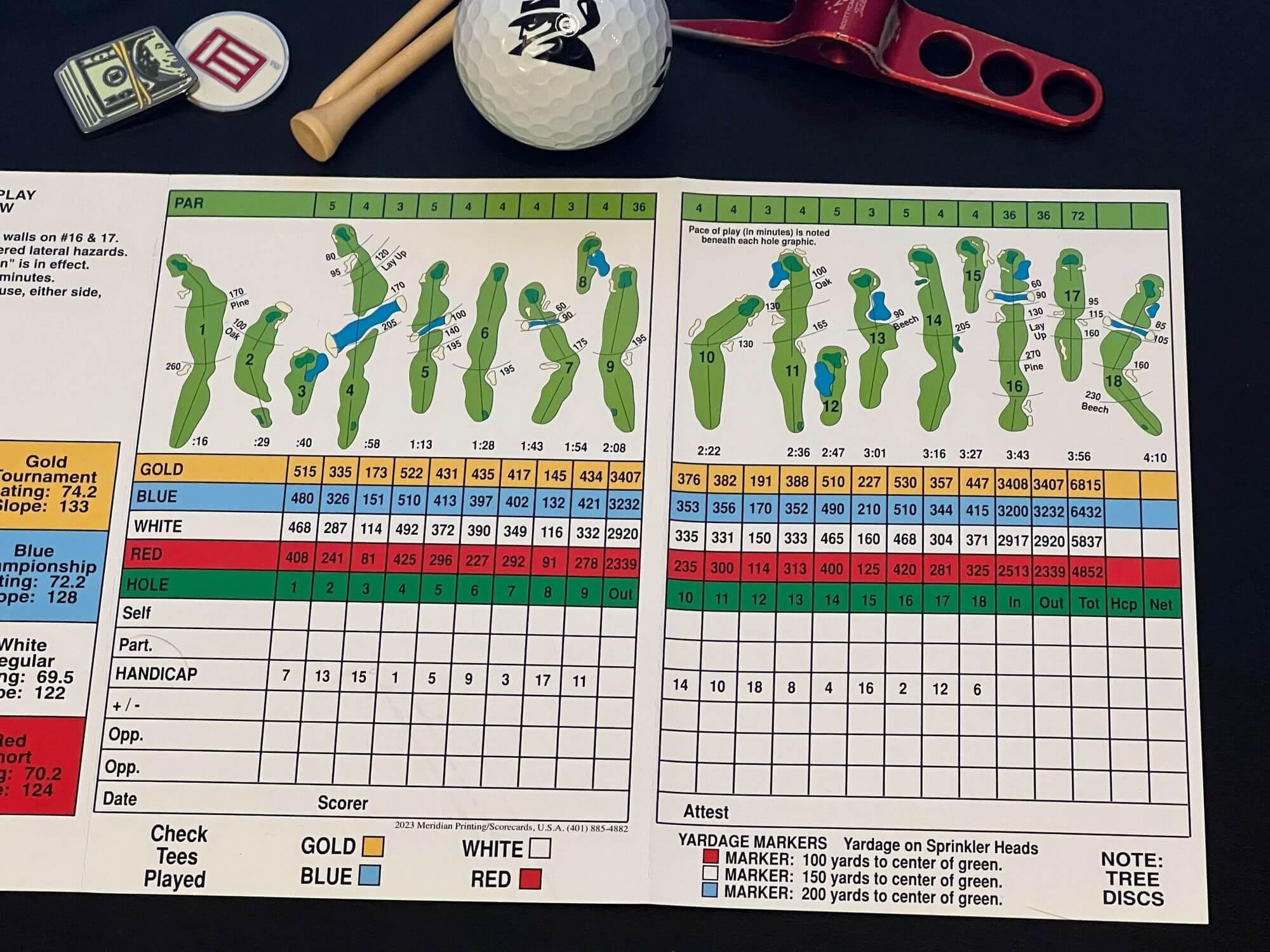
Golf Scoring: Analysis, Interpretation, and Strategy
Understanding the Basics of Golf Scoring
Before diving into analysis, make sure you and your coach or playing partners agree on the fundamentals of golf scoring. Clear understanding of these terms makes interpretation and strategy much easier.
- Par – The expected number of strokes for a hole.
- Birdie / Eagle / Bogey / Double Bogey – Score relative to par; key scoring outcomes to track.
- Scorecard – Your primary data source: hole-by-hole strokes, putts, penalties, fairways hit, and GIR (greens in regulation).
- Handicap – A numeric measure of playing ability used to level match play; often the long-term goal is to lower your handicap by improving scoring metrics.
Essential Scoring Metrics Every Golfer Should Track
Modern golf performance analysis blends simple scorecard tracking with advanced metrics. Track these consistently to get actionable insights.
- Strokes Gained – Compares your performance to a benchmark (tour or club average). Break this down into Strokes Gained: Off-the-Tee, approach, Around-the-Green, and Putting.
- Greens in Regulation (GIR) – Percentage of holes where you reach the green in par-minus-two strokes. Higher GIR typically equates to more birdie opportunities.
- Fairways Hit (FIR) – Off-the-tee accuracy; critically important for approach consistency on tight courses.
- Putts Per Round / Putts Per GIR – Reveals putting efficiency and short-game recovery needs.
- Scrambling / up-and-Down % – How well you save par when you miss a green.
- Penalty Strokes – Track penalty frequency to eliminate high-cost mistakes.
How to Analyze Your Scorecard
Turn raw numbers into a plan. Use the scorecard to identify where strokes are being gained or lost.
Hole-by-Hole Breakdown
- Mark number of strokes, putts, penalty strokes, and whether the green was reached in regulation.
- Flag holes where triple-bogey or worse occur and look for patterns (water hazards,blind tee shots,forcing tee shots).
Scoring Zones and Trends
- Compare front nine vs back nine trends-fatigue and course setup frequently enough reveal different weaknesses.
- Compare performance on par-3s, par-4s, and par-5s separately; each requires distinct strategy and practice emphasis.
Use a simple Table to Summarize
| Metric | What it Shows | Practical Target |
|---|---|---|
| GIR | Approach accuracy | 45-60% |
| Putts / round | Putting efficiency | 30-32 |
| Strokes gained: Putting | Putting relative to benchmark | 0 to +1.0 |
| scrambling % | Short-game recovery | 55-70% |
Interpreting the Numbers: What to Prioritize
Not all stats are equal. prioritize by expected strokes saved per hour of practice and the frequency at which mistakes happen during a round.
High-Impact Areas
- Penalty Elimination – Penalties often cost multiple strokes; fix recurring errors first (e.g., blind water, out-of-bounds tee shots).
- Short Game & scrambling – Improving up-and-down % yields swift returns as many missed GIRs still offer par-saving opportunities.
- Putting Inside 10-15 Feet – Get this dialed in; converting these reduces bogeys and turns pars into birdies.
Lower-Impact (but still important)
- Dialing driver distance beyond what’s necessary for the hole. Often, accuracy and course management beat raw distance.
- Fine-tuning long iron distances if your GIR and scrambling are already strong.
Shot Selection & Course Management Strategies
Smart shot selection reduces risk and maximizes scoring opportunities. Use your analysis to shape on-course decisions.
Tee Strategy
- Choose a tee shot target that reduces big-number holes. If a driver forces a hazard with little reward, consider a 3-wood or hybrid.
- Account for wind, hole location, and your miss tendencies when deciding how aggressive to play.
approach Play
- Play to your handicap: if your wedge game is strong, leave approach shots in comfort range.If not, aim for safer pin positions or center of green.
- Factor slopes and green speed.Missing short side of the green often makes up-and-down harder.
Putting & Short Game
- Two-putt goals: aim to reduce three-putts first.Lag putting practice helps more than 30-minute flat-putting drills if three-putts are common.
- practice bunker exits and high-chips to improve scrambling rates.
Practice Plan: Turn Analysis into Enhancement
Create weekly practice sessions targeted to the metrics you want to improve. Prioritize the highest-return areas first.
Sample 4-Week Practice Cycle (for a mid-handicapper)
- Week 1 – Short Game Focus: 60% practice on chips, pitches, and bunker shots; 40% putting drills (lag + short putts).
- Week 2 - Approach and wedge Control: 70% wedge yardage control; 30% iron accuracy and simulated course approaches.
- Week 3 – On-Course Management: Play 9 or 18 holes with a scoring goal; track metrics and practice specific on-course scenarios.
- Week 4 – Integration & Conditioning: Combine skills in full rounds; add flexibility and mobility exercises to reduce fatigue-based errors.
Case Studies: Real-World Scenarios and Solutions
Case Study A - From 95 to 85
- Problem: Repeated double bogeys from water hazards and poor scrambling.
- Solution: Adjust tee strategy to avoid hazard; two weeks of bunker and short-game work; focus on conservative approach to avoid big numbers. Result: reduction of penalty strokes and better up-and-down, saving ~10 strokes per round over time.
Case Study B – Breaking 80
- Problem: GIR is low, but putting is decent; misses are long of the green leading to tough up-and-downs.
- Solution: Wedge distance control practice and course management to leave approach shots below the hole. Improving GIR and approach proximity created more birdie chances and fewer long recovery shots.
practical Tips & Quick Wins on the course
- Read your scorecard immediately after each hole-record putts and penalties while details are fresh.
- If you’re trending poorly, simplify: aim for conservative targets and minimize risks for the rest of the round.
- Warm up with the exact clubs you’ll use on your first three holes to start scoring consistently.
- Keep a stats sheet or use a tracking app that records GIR, FIR, putts, penalties and strokes gained subcategories.
- Review your round within 24 hours and set one measurable goal for your next practice session.
Tracking Tools & Technology
Leverage technology for better analysis:
- GPS watch or rangefinder for precise yardages-removes guesswork on club selection.
- Shot-tracking apps and launch monitor sessions to measure Strokes gained and proximity to hole.
- Simple spreadsheets or golf stats apps to visualize trends over 10-20 rounds.
Checklist: Pre-Round Scoring Routine
- Check yardage book and hole placement; identify 2-3 safe targets per hole.
- set a scoring goal (e.g., “play smart, avoid three double-bogeys”).
- choose tee and club options aligned with your strengths (accuracy vs distance).
Helpful SEO Keywords Used naturally
This article naturally incorporates search-kind terms that golfers search for, including: golf scoring, scorecard analysis, strokes gained, course management, shot selection, greens in regulation, putting stats, handicap improvement, fairways hit, scrambling, up-and-down, and golf practice plan.
Further Reading & Next Steps
After implementing changes based on your scorecard analysis, measure progress over 10-20 rounds. Small, consistent gains in high-impact areas-penalty reduction, improved scrambling, and better putting inside 15 feet-compound quickly into lower scores and a smaller handicap.