
Putting woes? Here’s how to rewire your brain for golfing glory
Do you find yourself missing putts from distances you used to sink with ease? You’re not alone. Putting requires a combination of finesse, precision, and mental focus that can be difficult to maintain consistently. But what if there was a way to train your brain to make more putts?
– Practicing Mindfulness for Precise Putts
Practicing Mindfulness for Precise Putts
Mindfulness, the practice of intentionally directing attention to the present moment, offers a powerful tool for enhancing putting performance. By cultivating mindful awareness, golfers can train their brains to focus more effectively, eliminate distractions, and execute putts with greater precision.
One key aspect of mindful putting is focusing on the breath. By consciously observing the rise and fall of their breath, golfers can anchor themselves in the present moment and minimize distracting thoughts. This practice encourages a sense of calm and concentration that positively impacts putting accuracy.
Gollfers can also practice mindfulness by paying attention to their body sensations as they putt. By noticing the feel of the club in their hands, the posture of their body, and the subtle movements of their muscles, they gain a heightened awareness of their physicality. This can help them develop a more consistent and precise putting stroke.
Additionally, mindful golfers strive to embrace a non-judgmental attitude. Rather than dwelling on mistakes or feeling pressure to make the perfect putt, they focus on the process of putting itself. By accepting each shot as it unfolds without judgment, they reduce stress and create a more conducive environment for success on the greens.
– Developing Visualisation Techniques for Perfect Aim
Developing Visualisation Techniques for Perfect Aim
A difficult putt can be a daunting obstacle on the golf course, especially for beginners and even for seasoned pros. Your technique, including your alignment, stance, and swing are important to get right. But just as important, if not more so, is your mental approach.
The ability to visualise the perfect putt is a skill that can be learned and developed with practice. Visualisation is a technique that allows you to create a mental image of the putt you want to make. By repeatedly visualising the putt going in the hole, you can train your brain to recognise the correct line and speed.
Developing this better mental approach and practicing visualisation techniques is not difficult to do. It can be done anywhere, any time. So if you want to see a real improvement, aim for more visualisation!
Visualisation can be done in a number of ways. One common method is to close your eyes and imagine yourself standing over the putt. See the ball in your mind’s eye and watch it as it rolls towards the hole. Pay attention to the line of the putt and the speed of the ball. Feel the weight of the putter in your hands and the tension in your muscles. Take your time and really immerse yourself in the visualization, aim for the best angle and shot.
To summarize:
- Choose a calming image: Imagine a familiar or a place that inspires calmness and concentration.
- Picture the entire shot clearly: Mentally visualize your stance, grip, swing, and the ball’s trajectory.
- Add senses to the visualization: Hear the putter contacting the ball, feel the club in your hands, and watch the putt go in.
- Visualize the outcome repeatedly: Repeat the visualization several times, each time reinforcing your confidence in making the shot.

– Implementing Biofeedback for Mental Control
Biofeedback is a technique that uses sensors to measure your body’s responses to stress, such as heart rate, muscle tension, and breathing. By monitoring these responses, you can learn to control them, which can help you to reduce stress, improve focus, and sleep better.
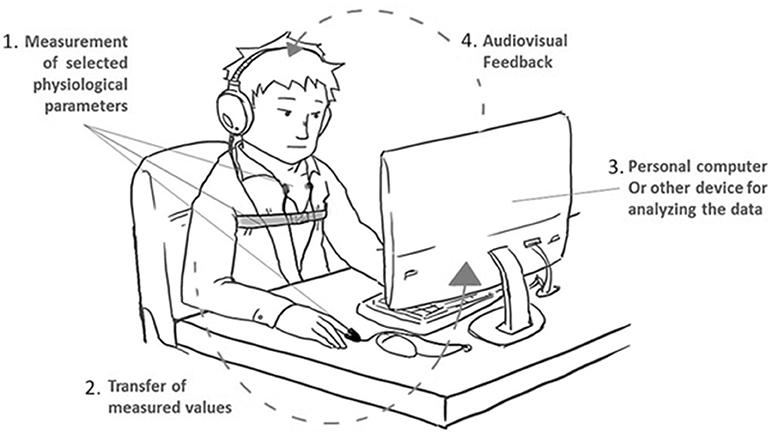
There are a number of different ways to use biofeedback to train your brain to make more putts. One popular method is called “heart rate variability training.” This technique involves using a heart rate monitor to track your heart rate while you practice putting. When your heart rate increases, it indicates that you are stressed. By learning to control your heart rate, you can reduce stress and improve your focus.
Another method of biofeedback training is called “muscle tension feedback.” This technique involves using sensors to measure the tension in your muscles. When your muscles are tense, it indicates that you are紧张的. By learning to relax your muscles, you can reduce tension and improve your putting stroke.
Biofeedback training can be a helpful tool for golfers of all levels. By learning to control your body’s responses to stress, you can improve your focus, sleep better, and make more putts.
| Biofeedback Technique | Benefits for Putting |
|---|---|
| Heart rate variability training | Reduce stress and improve focus |
| Muscle tension feedback | Reduce tension and improve putting stroke |
– Harnessing Pre-Shot Routines for Consistency
**Harnessing Pre-Shot Routines for Consistency**
Pre-shot routines are an essential aspect of putting that can significantly enhance consistency and accuracy. By establishing a structured and consistent process, golfers can create an automatic trigger that primes their brain for successful execution.
The Elements of a Pre-Shot Routine
An effective pre-shot routine typically consists of several key elements:
- Focus: Clear your mind of distractions and focus solely on the putt.
- Alignment: Take a few moments to ensure your feet, body, and clubface are aligned correctly.
- Stroke Tempo: Practice your desired stroke tempo a few times to establish a consistent rhythm.
- Visualization: Imagine the ball rolling smoothly towards the hole, helping you visualize a positive outcome.
Benefits of a Pre-Shot Routine
- Improved Focus: By eliminating distractions, a routine allows you to fully concentrate on the putt.
- Enhanced Confidence: Confidence stems from knowing what to do and executing it consistently. A well-defined routine instills confidence and reduces anxiety.
- Consistent Execution: A routine helps standardize the way you approach and execute a putt, leading to more consistent results.
Table: Key Elements of a Pre-Shot Routine
| Element | Purpose |
|---|---|
| Focus | Clears the mind |
| Alignment | Ensures accuracy |
| Stroke Tempo | Establishes consistency |
| Visualization | Enhances confidence |