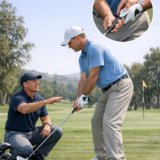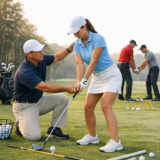
Integrated Biomechanics and Conditioning for Golf Performance addresses the intersection of movement science and physical preparation as a unified framework for optimizing skill execution and injury resilience in golf.Contemporary performance demands increasingly recognize that technical proficiency-expressed through kinematic sequencing, force production, and motor control-cannot be fully realized without concurrent attention to the physiological capacities that enable and sustain those movement patterns.Drawing on the standard sense of “integrate” as to combine or blend components into a functioning whole (see Britannica; Merriam‑Webster), this article treats biomechanics and conditioning not as parallel, discrete domains but as mutually informing elements of a coherent training system.
This introduction situates the integrated approach against prevailing practice. Much of the literature and many coaching models have historically examined swing mechanics, physical conditioning, and motor learning in isolation. Such compartmentalization can produce interventions that are technically sound yet poorly transferable to on‑course performance, or conditioning programs that enhance general attributes without specific relevance to golf‑specific movement demands. An integrated model explicitly aligns biomechanical objectives (e.g.,efficient energy transfer,optimal sequencing,joint loading) with conditioning targets (e.g., strength, power, mobility, tissue tolerance, and metabolic capacity), thereby facilitating training prescriptions that are both mechanically appropriate and physiologically lasting.
The article proceeds to articulate a conceptual framework for integration, encompassing assessment strategies, evidence‑based drills, periodization principles, and monitoring metrics that link biomechanical markers to conditioning outcomes. Emphasis is placed on practical pathways for translating laboratory measures into coaching cues and individualized programming, as well as on strategies to manage training load and reduce injury risk while promoting long‑term performance gains.By synthesizing current empirical findings from biomechanics, strength and conditioning, and motor control research, the article aims to provide practitioners and researchers with actionable guidelines for designing holistic, athlete‑centered interventions.
Ultimately, adopting an integrated outlook offers the potential to enhance technical consistency, increase robustness under pressure, and extend athletic longevity in golfers across performance levels. The ensuing sections review the theoretical underpinnings of the approach, summarize relevant empirical evidence, and present case examples and implementation strategies to support its request in both research and practice.
Foundational Principles of the Golf Swing Kinematic Chain and Practical Training Implications
The golf swing functions as a coordinated kinematic chain in which sequential activation of the lower limbs, pelvis, torso, shoulders, arms, and club produces an efficient transfer of mechanical energy to the ball. Contemporary biomechanical analyses emphasize the importance of proximal-to-distal sequencing: rotational and translational impulses generated by large proximal segments must be timed to accelerate distal segments, minimizing energy dissipation at joint interfaces. Disruptions in segmental coordination-excessive early wrist release, late hip rotation, or insufficient trunk dissociation-reduce effective clubhead velocity and increase injury risk through repetitive compensatory loads.
Mechanical outputs of the chain are modulated by two interacting physiological qualities: the ability to generate ground reaction forces (GRFs) and the capacity for controlled intersegmental stiffness and mobility. Optimizing GRFs requires appropriate foot-ground interaction and lower-extremity strength to create an initial impulse, while precise intersegmental stiffness (muscle-tendon co-contraction and passive joint constraints) maintains energy transfer and timing. From a conditioning perspective,interventions must therefore balance force production,rate of force progress,and segmental mobility to preserve both power and the required degrees of freedom for technique variability.
Quantifiable biomechanical markers guide targeted training. Examples include peak pelvis angular velocity, maximal shoulder rotation relative to the hips (commonly termed the X-factor), trunk angular velocity at impact, and temporal offsets between segmental peaks.These metrics correlate with performance outcomes such as clubhead speed and ball launch conditions and can be monitored with wearable inertial sensors or motion-capture systems. The table below summarizes sample markers and concise training foci.
| Metric | Representative Drill | Training Focus |
|---|---|---|
| pelvis peak velocity | Medicine-ball rotational throws | Rate of force development |
| X-factor (torso-pelvis separation) | Seated trunk rotation with resistance | Trunk dissociation & mobility |
| Ground impulse timing | Single-leg push-off sprints | lower-limb force sequencing |
Practical training implications translate biomechanical insights into progressive, task-specific interventions. Implement a layered approach: (1) restore or preserve joint ranges required for the desired segmental rotations; (2) develop general strength and rate of force development in prime movers (hips, trunk, glutes); (3) refine neuromuscular sequencing via sport-specific plyometrics and tempo-focused swing drills; and (4) integrate variability training to foster adaptable motor patterns under fatigue and environmental perturbations. Effective coaching cues emphasize timing and feel-e.g., “lead with the hips,” “feel coil around a stable lower body,” or “accelerate through impact”-which bridge objective metrics and subjective motor learning.
Program design should be evidence-informed and individualized: baseline biomechanical assessment, targeted remediation phases, and objective re-testing to quantify adaptation.Use periodization principles to sequence mobility, strength, speed, and technical integration blocks, and employ small-sided monitoring (sensor-derived timestamps, video kinematics, simple force-platform measures) to adjust load and technique cues. Ultimately, conditioning for golf performance is not a collection of isolated exercises but a structured process of aligning physiologic capacities with the kinematic chain to maximize efficient power transfer while mitigating injury risk.
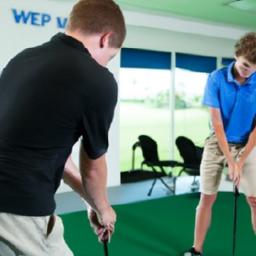
Assessment Protocols for Mobility, Stability, and Functional Strength in Golfers
A reproducible, evidence-based screening framework is fundamental to valid player assessment. Assessors should adopt a standardized screening battery executed in a controlled environment with calibrated instruments (goniometers, force plates, calibrated medicine balls) and consistent warm-up protocols.Reliability is maximized through repeated measures, clear operational definitions of each test, and documentation of tester training. Ethical considerations-informed consent,injury history triage,and contraindications-must precede any physical testing to ensure safety and data integrity.
Mobility evaluation should target the joints and segments most determinant of an efficient golf swing: hips, thoracic spine, shoulders, and ankles. Recommended tests include:
- Hip rotation (seated/PRONE): passive and active internal/external rotation with side-to-side comparison.
- Thoracic rotation: seated rotation test and rotary stability assessment (degrees and functional quality).
- Ankle dorsiflexion: weight-bearing lunge test for kinetic chain implications.
- Hamstring neural mobility: straight leg raise to detect posterior chain restrictions affecting posture.
Assessment of stability emphasizes both static control and reactive, sport-specific balance.Incorporate single-leg stance with perturbation, Y-Balance Test for reach asymmetries, and trunk endurance tests (prone plank, side bridge) to quantify core resilience. Emphasize dynamic stability under rotational loads-video-assisted observation of single-leg rotational reach or on-club perturbation drills provides ecological validity for swing-related control deficits.
Functional strength and power measures translate structural capacity into on-course performance potential. Use tests sensitive to rotational force and rate of force development: seated and standing medicine-ball rotational throw, isometric mid-thigh pull (peak force, RFD), and single-leg hop/strength tests. The table below offers a concise test-to-metric mapping for practical implementation.
| Test | Primary Metric | Practical Frequency |
|---|---|---|
| Med-ball rotational throw | Peak distance / normalized power | Every 6-8 weeks |
| Isometric mid-thigh pull | Peak force, RFD | Baseline + quarterly |
| Single-leg hop test | Hop distance, symmetry index | Every 6-12 weeks |
Synthesis of assessment data must guide individualized programming and progression decisions. Apply decision rules using reliability metrics (ICC, SEM, MDC) to distinguish true change from measurement error, and prioritize interventions where asymmetry or deficit exceeds clinically meaningful thresholds. Integrate findings into periodized plans with clear milestones (mobility remediation → stability integration → progressive strength and power), and schedule retesting at evidence-informed intervals (6-12 weeks) to monitor adaptation. Actionable reporting-concise executive summary, prioritized deficits, and prescriptive exercises-facilitates interaction between biomechanists, coaches, and athletes for targeted on-course translation.
Optimizing hip‑Spine Coordination and Pelvic Rotation for Efficient Energy Transfer
Efficient transfer of mechanical energy from the lower body to the clubhead is founded on precise, sequential motion of the pelvis and trunk.Contemporary biomechanical models describe a proximal‑to‑distal sequencing in which pelvic rotation initiates torso counter‑rotation,creating intersegmental separation that amplifies angular velocity at distal segments. This separation-often operationalized as a rotational offset between pelvis and thorax-facilitates stretch‑shortening of trunk musculature and the oblique complex, enabling rapid torque release. Proper timing, not maximal isolated ROM, is the primary determinant of effective power transmission.
Neuromuscular control underpins that timing: coordinated activation of the hip extensors, external rotators, and contralateral core stabilizers produces the ground reaction forces and reaction moments necessary for controlled pelvic acceleration and deceleration. Training should thus emphasize motor patterns that promote dissociation of hips and trunk while preserving lumbopelvic stability. Targeted neural strategies include augmented proprioceptive input,phased eccentric loading,and reactive control drills that mimic the temporal demands of rotational sport actions.
Exercise selection and progressive loading should follow a logical continuum from mobility and dissociation to strength and dynamic power. Clinically and empirically supported modalities include pelvic rotation drills with banded assistance,anti‑rotation plank variations,loaded split‑stance rotational rows,and ballistic medicine‑ball throws. Below is a concise progression matrix useful for programming across skill levels.
| Level | Primary Focus | Representative Drill |
|---|---|---|
| beginner | Dissociation & mobility | Seated pelvic rotations, thoracic windmills |
| Intermediate | Strength & timing | Split‑stance RDLs, cable chops |
| Advanced | Power transfer & resilience | Rotational med‑ball throws, band resisted swings |
Measurement and monitoring are essential to ensure adaptations align with performance and injury‑prevention objectives. simple kinematic markers-pelvic vs. thoracic peak angular velocity, intersegmental separation angle at transition, and lead hip internal rotation at impact-can be tracked via motion analysis or wearables. Practical thresholds and asymmetry indices allow clinicians to identify compensatory lumbar shear or excessive early trunk rotation, which are correlated with overuse injury risk. Integrating these metrics into periodized plans ensures training produces both greater clubhead speed and preserved spinal health.
Force Production and Rate of Force Development: Plyometric and Strength Conditioning Strategies
force production and the rate of force development (RFD) underpin the kinetic demands of an efficient golf swing: high peak forces oriented through sequential body segments delivered in sub-second time frames. From a biomechanical perspective, force is a vector quantity (magnitude and direction) and improvements in net torque generation about the hips and trunk translate directly to increased clubhead speed when coordinated with optimal sequencing. Targeted conditioning thus addresses both maximal force capacity (strength) and the neuromuscular ability to express that force rapidly (RFD), recognizing that gains in one domain do not automatically transfer to the other without specificity in training stimuli.
Contemporary conditioning programs balance complementary modalities to optimize both peak force and explosive output. Effective modalities include:
- Plyometric drills – rotational medicine ball throws, lateral bounds, and depth-to-rotate progressions that emphasize elastic recoil and short ground contact times;
- Power-strength work – contrast loading, trap-bar jumps, and Olympic derivative lifts (e.g.,power clean,hang clean) to develop intermuscular coordination at higher velocities;
- Maximal strength – heavy bilateral and unilateral squats,deadlifts,and loaded splits to raise the force ceiling upon which RFD improvements act.
These elements should be cascaded into sport-specific patterns that prioritize horizontal and rotational force vectors rather than exclusively vertical force tasks.
Program design must explicitly target the velocity spectrum: introduce high-load/low-velocity blocks to elevate maximal strength, then transition to moderate-load/high-velocity phases to convert strength into usable power and RFD.Key prescription variables include manipulated intent (maximal explosiveness), set-rep schemes (e.g., 3-6 sets of 2-6 reps for power work), and rest intervals sufficient for high-quality output (2-5 minutes for power; 3-6 minutes for maximal strength). Objective monitoring-force plates,linear position transducers,or IMU-based accelerometry-enables dose-response adjustments and quantifies changes in peak force and RFD for individualized progression.
| Modality | Primary Target | Typical Load | Session Focus |
|---|---|---|---|
| Plyometrics | RFD & elastic return | Bodyweight → light external | Short contact, high intent |
| Power-strength | Ballistic force at velocity | 30-70% 1RM | Explosive intent, reactive |
| Maximal strength | Force ceiling | >85% 1RM | Slow, high-tension builds |
Injury mitigation and long-term transfer depend on progressive overload, technical fidelity, and targeted tissue capacity. Emphasize eccentric control in rotational deceleration, scapulothoracic stability for shoulder health, and graded exposure to high-impact plyometrics to reduce load-related risk. use phased loading (microcycles to mesocycles), frequent movement screens, and sport-specific return-to-play criteria that quantify both capacity (maximal force) and quality (RFD and sequencing) so that increases in power are durable, safe, and directly applicable to on-course performance.
Neuromuscular Sequencing, Timing, and Motor Control Drills for Consistent Ball Striking
contemporary motor control science frames consistent ball striking as the expression of coordinated intersegmental dynamics rather than isolated joint motions. Emphasis is placed on a **proximal-to-distal sequencing** (pelvis → thorax → arms → club) augmented by the stretch‑shortening cycle and precise rate coding of agonist-antagonist pairs. Effective training targets the nervous system’s ability to generate timely force vectors and transfer energy through linked segments, reducing variability at the clubhead through improved temporal coupling and reduced intratrial noise.
Translating theory into practice requires targeted drills that bias the body toward optimal sequencing. High‑value exercises include:
- Pelvic Lead Drill – rhythmic pelvic rotation while the upper body remains passive to reinforce initiation from the core.
- Club‑Across‑Chest Rotation – promotes torso drive and decoupling of arm action.
- Step‑and‑Hit – integrates lower‑body weight transfer with on‑time arm release.
- One‑Knee Rotation – reduces degrees of freedom to sharpen segmental timing.
Each drill manipulates constraints to focus the learner’s attention on the correct spatiotemporal ordering of segments.
Timing precision is cultivated with rythm and impact‑focused interventions. Metronome‑paced swings (e.g., 60-80 bpm) create stable temporal windows for sequencing, while an impact bag or short‑shaft contact drills provide immediate haptic feedback about the moment of maximal force transfer. Progressive timing exercises might follow a schema of: slow tempo → metered tempo → randomized tempo, with **pause‑at‑transition** and **accelerate‑through‑impact** variants to train both anticipatory and reactive timing mechanisms.
Motor control robustness is developed through variability and feedback strategies that enhance adaptable rather than rigid movement solutions. A constraint‑led approach and differential learning (introducing small perturbations like altered stance width or varying ball position) improve transfer to on‑course conditions. The table below summarizes practical pairings of drill, primary focus, and a simple progression to guide programming:
| drill | Primary Focus | Progression |
|---|---|---|
| pelvic Lead | Sequencing | Static → Dynamic → With Step |
| Impact bag | Timing & Feel | Slow → Metronome → Randomized |
| Constraint Variations | Adaptability | single → Multiple Constraints |
Implementation requires specificity: dedicate short, high‑quality blocks (10-15 minutes) 2-3 times per week to these drills, integrated within warm‑ups or skill sessions. use objective KPIs-contact percent (centered strikes), dispersion (meters), and temporal markers from wearable sensors-to track adaptation. Progress by increasing speed,adding decision elements,or reducing augmented feedback; prioritize **transfer to full swings** and course variability over endless isolated repetitions to ensure neuromuscular gains manifest in reliable ball striking.
Integrated Strength, Power, and Endurance Programming with Specific Exercise Selection
Periodization must be conceived as a continuum that places neuromuscular qualities on a force-velocity continuum rather than as isolated blocks. Integrative programming emphasizes simultaneous development of maximal strength, rate of force development (RFD), and metabolic durability so that adaptations support the rapid, high-torque demands of the golf swing while maintaining resilience through 18 holes. Empirical evidence and applied practice indicate that coupling heavy, low-velocity strength work with high-velocity power sessions and targeted endurance conditioning produces greater transfer than unilateral emphasis on any single quality. In this model, **movement specificity**, loading magnitude, and velocity domains are manipulated concurrently to preserve technical integrity of the swing while eliciting physiological gains.
Exercise selection prioritizes patterns that replicate axial rotation, single‑leg stability, and multi‑segmental power transfer. Key exercises include the following, chosen for kinematic and kinetic similarity to the golf swing:
- Rotational med ball throws – develop transverse plane power and intersegmental sequencing.
- Single‑leg Romanian deadlifts – enhance posterior chain capacity and unilateral balance.
- Half‑squat and trap‑bar pull variations – build foundational maximal strength with low shear on the spine.
- Kettlebell swings and jump‑squat complexes – target ballistic hip extension and RFD.
- Anti‑rotation chops/planks – reinforce core bracing and deceleration control.
Practical programming requires concrete prescription of intensity, volume, and tempo to manage interference and promote specificity. A typical weekly microcycle distributes load by emphasis (e.g., 2 strength sessions, 2 power sessions, 1 conditioning session) with clear progression rules: +2-5% load or +1-2 reps per mesocycle for strength, velocity or height targets for power, and interval density increases for endurance. Monitoring internal load (RPE, HRV) and external load (bar velocity, jump height, med‑ball speed) allows objective progression. The following compact table illustrates an exemplar allocation for a mid‑season golfer balancing practice and conditioning:
| Day | Primary Emphasis | Representative Exercise |
|---|---|---|
| Mon | Max Strength | Trap‑bar deadlift 3×4 |
| Wed | Power/Speed | Med‑ball rotational throws 5×6 |
| Fri | Unilateral Stability | Single‑leg RDL 3×6 each |
| Sat | Conditioning | HIIT aerobic intervals 6×2min |
Measurement and ongoing adjustment are essential for transfer to on‑course performance. Use objective markers such as clubhead speed, counter‑movement jump, single‑leg balance time, and med‑ball peak velocity alongside subjective reports of fatigue and swing feel. Rehabilitation and prehabilitation are embedded into sessions via mobility and anti‑rotational work to mitigate injury risk associated with repeated asymmetrical loading.Ultimately, individualized thresholds for intensity and recovery, informed by regular testing and biomechanical observation, ensure that the integrated program reliably converts physiological gains into improved swing efficiency and consistent scoring outcomes.
Load Management, Injury Prevention, and Return-to-Play Guidelines for Common Golf Injuries
Effective management of workload in golf requires quantification and intentional modulation of both practice and play. Objective metrics-number of full swings, range-balls, minutes of practice, distance walked, and perceived exertion-should be logged consistently; when available, **wearable metrics** (clubhead velocity variance, trunk rotational velocity, step count) provide high-resolution insight into acute spikes that predict injury risk. A conservative practical rule is to limit acute increases to <10% weekly for high-velocity swing volume and to prioritize session quality over raw quantity when fatigue or pain is present. Integrating load data into coaching decisions closes the loop between biomechanics and conditioning.
Primary prevention is multifactorial: targeted strength and neuromuscular conditioning, progressive mobility, and technique refinement reduce cumulative tissue stress. Effective interventions include eccentric wrist/forearm programs for medial/lateral epicondylitis, rotator cuff and scapular stabilizer protocols for shoulder preservation, and posterior chain/hypopressive core work for lumbar resilience. Implement a structured pre-practice routine emphasizing dynamic warm-up, thoracic rotation, and gluteal activation: these components are associated with lower incidence of overuse complaints in cohort studies. Below are exemplar prevention elements commonly prescribed in clinical and performance settings:
- Dynamic warm-up: thoracic rotations, lunge with rotation, banded shoulder drills
- Prehab strength: single-leg RDLs, side-lying external rotation, eccentric wrist curls
- Neuromotor control: medicine-ball rotational catches, single-leg balance with perturbation
When injury occurs, adopt a criteria-driven rehabilitation model rather than fixed timelines. Progression phases should be explicit: protection and pain-modulation, restoration of range and basic strength, sport-specific loading, and monitored return to competition. decisions should meet objective benchmarks (pain ≤1/10 during task, ROM symmetrical within 10-15%, strength ≥90% contralateral on isometric/isokinetic testing) and be corroborated by functional tests. The table below summarizes a concise four-phase pathway used to guide return-to-play decisions in golf-related musculoskeletal conditions.
| Phase | Approx. Duration | Key Criteria |
|---|---|---|
| protection & Pain Control | 0-2 weeks | Pain reduction, protective strategies |
| Rehab & Strength | 2-6 weeks | ROM restored, basic strength 70-90% |
| Sport Reintegration | 6-10 weeks | Progressive swing load, sport tests passed |
| Return-to-Play | 10+ weeks (variable) | Functional >90%, pain-free full swing |
Objective functional testing reduces subjectivity at clearance: validated tasks include the single-leg squat (load tolerance and knee mechanics), timed trunk endurance tests (local spinal endurance), and rotational medicine-ball throw distance (power symmetry).Use a battery of at least three tests and require performance within normative or contralateral thresholds prior to higher-level return. Monitor ongoing risk with a small set of surveillance tools: sessional RPE, pain numerical rating, swing-count logs, and periodic strength/ROM retests-these form the minimal dataset for safe progression.
Practical return-to-play protocols emphasize graded re-exposure: begin with 25-50% of typical swing volume in a single session, progress to 75% within 3-7 days if symptom-free, and restore competitive load only after sustained tolerance for 2-3 weeks. Enforce scheduled rest days, asymmetry correction through targeted training, and structured communication between clinician, coach, and athlete. **Red flags**-progressive neurologic change, night pain, or persistent loss of swing velocity despite rehabilitation-should trigger re-evaluation and slower progression. Successful RTP is evidenced not just by absence of pain but by restored performance metrics and resiliency to normal training fluctuations.
Applying Biomechanical Analytics, Wearables, and Video Feedback to Individualize Training
Contemporary practice synthesizes high-resolution biomechanical analytics with wearable sensor streams and systematic video feedback to define individualized performance phenotypes. Quantitative metrics – including three-dimensional kinematics, ground reaction forces, and temporal sequencing – provide objective baselines to stratify players by mechanical efficiency, power transfer, and aberrant loading patterns. Framing assessment within an evidence-based taxonomy allows practitioners to translate raw signals into clinically meaningful constructs such as proximal-to-distal sequencing fidelity, lateral weight transfer consistency, and rotational mobility-stability balance.
Sensor fusion enhances ecological validity: inertial measurement units (IMUs) and magnetometers capture on-course motion signatures, force platforms quantify impulse and asymmetry, and high-speed video (marker-based or markerless) elucidates segmental coordination at sub-0.01 s resolution. Integration of these modalities supports multi-scale inference-linking joint-level angular velocity to clubhead speed and linking center-of-pressure trajectories to spinal loading. **Objective reproducibility** of these signals is essential for longitudinal monitoring and for isolating true physiological adaptation from measurement noise.
- IMUs: angular velocity, acceleration, segment orientation
- Force plates/pressure mats: vertical GRF, weight-shift timing
- Launch monitors: clubhead speed, launch angle, spin
- High-speed/video: kinematic sequence, segmental separation
Operationalizing analytics requires an interpretive framework that maps discrete metrics to targeted interventions. The following compact reference aligns representative metrics with primary training emphases; such matrices enable rapid prescription and consistent re-evaluation across the training cycle.
| Key Metric | Physiological Interpretation | Primary Intervention |
|---|---|---|
| Pelvis‑thorax separation | Stored elastic energy potential | Rotational mobility + eccentric core drills |
| Peak vertical GRF | Lower‑limb power generation | Short‑range power lifts, plyometrics |
| Sequencing lag (X ms) | Timing inefficiency | Tempo drills + augmented feedback |
Feedback design should adhere to motor learning principles: combine real-time augmented cues for immediate error correction with reduced-frequency summary feedback to promote retention. Video overlays, synchronized with inertial traces and force profiles, create multimodal cues that improve perceptual acuity and self-modeling. **Bandwidth feedback**, scheduled faded feedback, and constrained task practice are recommended to avoid dependency and to foster adaptable motor solutions under competitive variability.
individualized programs must embed continuous monitoring for progression and injury risk mitigation. Preset thresholds for metric drift (e.g., >10% unilateral GRF asymmetry or declining sequencing index) trigger clinical review and load modulation. Interdisciplinary communication-between coach, physiotherapist, and data analyst-ensures that adaptations to the plan preserve long‑term tissue health while optimizing performance trajectories through periodized conditioning informed by biomechanical evidence.
Q&A
Below is a professionally styled, academic Q&A suitable for an article on “Integrated Biomechanics and Conditioning for Golf Performance.” Where relevant, I note conceptual parallels to broader uses of the term “integrated” in the literature to situate the approach.
1. What does “integrated biomechanics and conditioning” mean in the context of golf performance?
Answer: Integrated biomechanics and conditioning refers to an interdisciplinary, coordinated approach that unites biomechanical analysis (kinematics, kinetics) with physiological conditioning (strength, power, endurance, mobility), motor learning, and load management to optimize golf performance and reduce injury risk. The descriptor “integrated” emphasizes purposeful synthesis of previously seperate elements into a cohesive program [see integrated definitions: collins; vocabulary.com] (e.g., uniting technique, physical preparation, and recovery) [1,3].
2. Why is an integrated approach preferable to treating biomechanics and conditioning separately?
Answer: Treating biomechanics and conditioning separately risks creating mismatches between movement demands and physical capacity. an integrated model aligns technical solutions with an athlete’s physical capabilities and training status, enabling transfer of laboratory or range improvements to on-course performance, while also facilitating coordinated load management and rehabilitation pathways-an approach conceptually analogous to integrated care models in health disciplines [4].
3. What are the primary biomechanical constructs relevant to an effective golf swing?
Answer: Key constructs include kinematic sequence (proximal-to-distal sequencing), pelvis and thorax rotational timing and range, clubhead velocity and path, wrist and shoulder mechanics, ground reaction force generation and transfer, and center-of-mass control. Quantifying these constructs informs targeted conditioning and technique interventions.
4. Which physiological qualities should conditioning target to support optimal biomechanics?
Answer: Conditioning should target: (a) rotational strength and power (torso, hips); (b) lower-extremity force production and reactive strength; (c) proximal stability and scapular control; (d) hip, thoracic, and ankle mobility; (e) neuromuscular coordination and sequencing; and (f) metabolic and recovery capacity appropriate for training and competition loads.
5. What assessment tools are recommended for an integrated evaluation?
Answer: A multimodal battery is advised: 3D motion capture or high-speed video for kinematics; force plates for ground reaction forces and weight transfer; inertial sensors for on-course monitoring; isometric/isokinetic dynamometry or force-velocity profiling for strength/power; range-of-motion and functional movement screens for mobility; and validated questionnaires for pain, workload, and psychological readiness.
6. How should data from biomechanical assessments inform conditioning plans?
Answer: Assessment data should yield specific, prioritized deficits (e.g., delayed pelvis rotation, insufficient force production, restricted thoracic rotation). Conditioning prescriptions then address these deficits with targeted interventions-e.g.,explosive hip-extension drills for low ground force,thoracic rotation mobility and core anti-rotation strength for sequencing-progressed with objective performance markers.
7. What objective performance metrics best reflect integrated improvements?
answer: Metrics include clubhead speed, ball speed, smash factor, launch angle consistency, kinematic-sequence timing measures, peak and rate-of-force development from the lower limbs, and on-course shot dispersion statistics. Improvements should be evaluated both in controlled settings and in representative, on-course contexts.
8. How should practitioners periodize integrated training for golfers?
Answer: Periodization should consider competition calendar and individual training age. Basic framework: preparatory phase emphasizing capacity (mobility, foundational strength), build phase emphasizing power and skill integration (speed-strength, sequencing drills), pre-competition phase emphasizing specificity (on-course simulation, load tapering), and maintenance during competition. Load progression must be individualized and informed by monitoring (objective and subjective).
9. what role does motor learning and deliberate practice play within integration?
Answer: Motor learning principles (variable practice, feedback timing, attentional focus, and deliberate slow-motion segmentation when appropriate) should be embedded within conditioning sessions to promote transfer. Technical drills should be graded from isolated slow, high-focus repetitions to integrated, high-speed, context-specific practice.
10. How should injury risk and rehabilitation be integrated into performance planning?
Answer: Screening for risk factors (previous injury,asymmetries,mobility deficits) should be routine. Rehabilitation and return-to-play protocols should restore the biomechanical sequencing and physical capacities required for the swing, progressively integrating technique and load with objective criteria (strength/power thresholds, movement quality metrics) rather than time-based milestones.
11. What are common implementation barriers and how can they be overcome?
Answer: Barriers include siloed coaching/medical roles,limited access to measurement technology,and athlete or coach resistance to changing routine. Solutions: multidisciplinary teams with shared protocols, pragmatic assessment tools (smartphone video, portable force sensors), education on rationale and outcomes, and phased implementation demonstrating measurable gains.
12. What monitoring strategies are practical for most coaching environments?
Answer: Practical strategies include scheduled video capture, weekly subjective wellness and workload logs, simple field-based tests (countermovement jump, medicine-ball rotational throws), and regular checks of swing speed and dispersion. These methods provide actionable trend data without requiring full laboratory setups.
13. How is “integration” in sports performance related to other integrated care concepts?
Answer: Integration in sports performance parallels integrated behavioral health and other integrated-care models that coordinate multiple disciplines to treat the whole person. In both domains, the goal is to align professionals and interventions around shared goals, improve communication, and create more effective, individualized care pathways [4].
14. What evidence supports the efficacy of an integrated approach for golf?
Answer: Evidence base includes biomechanical studies linking sequencing and force application to clubhead speed, intervention studies showing strength and power training increases ball speed, and motor learning literature demonstrating that specificity and deliberate practice enhance skill retention and transfer. However, more randomized controlled trials that combine detailed biomechanical monitoring with specific conditioning interventions in golf populations are needed.15. What are recommended next steps for researchers and practitioners?
answer: Researchers should pursue intervention studies with integrated outcome sets (biomechanics, physiology, on-course performance, and injury incidence). Practitioners should adopt interdisciplinary workflows, prioritize individualized assessment, employ pragmatic monitoring, and translate assessment findings into targeted, periodized conditioning that is integrated with technical coaching.
16. What ethical or safety considerations must be observed?
Answer: Ensure informed consent for data collection, protect athlete data privacy, use progressive loading and validated criteria for return-to-play, and avoid prescribing high-load technical changes without concomitant conditioning to mitigate injury risk.
References and further reading (selective):
– Definitions of “integrated” and the importance of uniting separate domains: Collins English Dictionary; Vocabulary.com [1,3].- Conceptual parallels in integrated care models (applicable to multidisciplinary sports teams): Integration Academy resources on integrated behavioral health [4].
– Primary literature on biomechanics,strength and conditioning,and motor learning (see sport-science and applied journals).
If you would like,I can:
– Convert this Q&A into a formatted FAQ for publication.
– Expand particular answers with citations to primary research.
– Produce a practitioner checklist (assessment battery, sample weekly program, monitoring templates).
Insights and conclusions
an integrated approach to biomechanics and conditioning reframes golf performance as the product of tightly coupled physiological, neuromuscular, and technical systems rather than isolated elements. Synthesizing objective biomechanical assessment with targeted strength, power, mobility, and motor‑learning strategies enables practitioners to design individualized interventions that both enhance efficiency of movement and reduce injury risk. This article has argued that such integration-bringing together kinematic/kinetic insight, physiological profiling, and evidence‑based conditioning-yields more robust and transferable performance outcomes than siloed practice alone.
For practitioners and coaches, the practical implication is clear: adopt multidisciplinary workflows that permit continuous data‑driven feedback, periodized conditioning aligned with technical goals, and iterative refinement of movement solutions in response to athlete‑specific constraints. Implementation benefits from standardized assessment protocols, shared language across disciplines, and technology that facilitates real‑time monitoring and long‑term tracking of adaptation.
From a research perspective, advancing this field requires longitudinal studies that test integrated interventions across levels of play, sex, and age; consensus on meaningful performance and injury‑risk metrics; and translational work that bridges laboratory findings with on‑course outcomes. Moreover,embracing principles of integrated thinking-where unified control and coordinated decision‑making replace fragmented practices-will accelerate adoption and maximize athlete benefit.
Ultimately, optimizing golf performance demands coordinated, evidence‑based collaboration between biomechanists, strength and conditioning professionals, coaches, and athletes. By committing to an integrated framework, the golf community can improve technical mastery, physical preparedness, and resilience under competitive conditions-advancing both performance and athlete wellbeing.

Integrated Biomechanics and Conditioning for Golf Performance
integrating biomechanical analysis with targeted golf conditioning is the fastest route to consistent distance, accuracy and injury-free play. Below you’ll find evidence-informed principles, practical assessments, golf-specific exercises, programming templates and monitoring strategies that link swing mechanics to strength, mobility and motor control. Use these tools to improve clubhead speed,rotational power,tempo and shot consistency.
why integrate biomechanics with golf conditioning?
- optimize swing mechanics by aligning movement patterns with strength and mobility capabilities.
- Increase clubhead speed and driving distance thru efficient force transfer and sequencing.
- Reduce injury risk by identifying and addressing compensations (e.g., poor hip rotation, limited thoracic mobility).
- Improve on-course consistency by training sport-specific neuromuscular patterns under varied loads and fatigue.
Core biomechanical principles for the golf swing
1. Kinetic chain and sequencing
The golf swing is a proximal-to-distal sequence where energy is generated primarily from the ground up: feet → legs → hips → trunk → arms → club. Efficient sequencing increases clubhead speed while minimizing stress on the spine and shoulders.
2. Ground reaction force (GRF) and balance
Effective use of GRF (a stable base and the ability to push into the ground) produces more horizontal and rotational force. Balance and single-leg stability are essential for maintaining posture during transition and impact.
3.Rotational power and separation
Separation or the “X-factor” (pelvis vs. thorax rotation difference) creates elastic recoil and rotational torque. This requires thoracic mobility, hip stability and a strong core to transfer energy safely.
4. Mobility vs. stability
Each joint has a role: hips and thoracic spine need mobility for rotation; lumbar spine needs stability to resist shear; shoulders require controlled mobility for a consistent swing plane.
Golf-specific assessments: what to test
- Movement screens: Overhead squat, single-leg squat, T-spine rotation test.
- Mobility: Hip internal/external rotation, ankle dorsiflexion, thoracic rotation range.
- Stability: Single-leg balance, plank variations, pallof press.
- Power and speed: Medicine ball rotational throw, seated/standing cable chops, launch monitor (clubhead speed, ball speed, smash factor).
- Endurance: Repeated-swing fatigue test (look for mechanics breakdown over 10-20 swings).
Translating assessment results into a training plan
Use a simple decision tree:
- Identify the limiting factor from assessments (mobility, stability, strength, power or endurance).
- Prioritize corrective mobility/stability drills for 6-8 weeks while maintaining golf-specific skill practice.
- Introduce progressive strength (posterior chain,hips,core) and power (rotational medicine ball,jump training) after mobility/stability improves.
- Blend on-course and simulated practice to integrate neuromuscular changes into swing mechanics.
Key exercises for golf conditioning
Below are high-impact, golf-specific movements that strengthen the kinetic chain, increase rotational power, and improve resilience.
- Deadlift variations – develop posterior chain strength and hip hinge.
- Anti-rotation Pallof press – core stability and resistance to unwanted rotation.
- Medicine ball rotational throw (standing & seated) – trains explosive rotational power specific to the swing.
- Single-leg Romanian deadlift – improves balance and unilateral posterior chain strength.
- Half-kneeling chop & lift – integrates anti-rotation stability with hip drive.
- Thoracic mobility drills – open books,foam roller reach-throughs to restore upper-spine rotation.
- glute bridges and hip thrusts – improve hip extension force for better drive through impact.
- Short-burst aerobic conditioning – improves recovery between shots and during walking rounds.
sample exercise table (WordPress-style)
| exercise | Target | Sets x Reps |
|---|---|---|
| Medicine ball rotational throw | Rotational power | 3 x 6 each side |
| pallof press | anti-rotation core | 3 x 10 each side |
| Single-leg Romanian deadlift | Balance & hip strength | 3 x 8 each leg |
| Thoracic rotation foam roll | Mobility | 2 x 10 each side |
Sample 8-week golf-specific program (overview)
structure: 2-3 strength sessions + 2 on-course or driving-range technical sessions per week. Start with mobility/stability focus (weeks 1-3), add strength (weeks 4-6), then emphasize power and speed (weeks 7-8).
| Weeks | Focus | Session Example |
|---|---|---|
| 1-3 | Mobility & stability | Mobility drills + light strength (3x/week) |
| 4-6 | Strength & control | Heavier lifts + rotational strength (3x/week) |
| 7-8 | Power & transfer | Explosive throws + speed work + on-course practice |
Programming details and rep schemes
- Mobility & stability phase: 2-3 sets of 8-15 reps focusing on control and technique.
- Strength phase: 3-5 sets of 4-8 reps for compound lifts (deadlift, squat variants) and 3 sets of 8-12 for accessory lifts.
- Power phase: 3-6 sets of 3-6 explosive reps (medicine ball, jump variations) with full recovery between sets.
- Tempo and swing speed drills: include 1-2 sessions per week with variable tempo swings (slow to fast) and measured clubhead speed practice.
Monitoring progress: objective metrics
- Clubhead speed and ball speed (launch monitor)
- Carry distance and dispersion patterns
- Medicine ball throw distance or speed
- Single-leg balance time and symmetry
- Subjective recovery and on-course fatigue
Injury prevention and common limitations
Many amateur golfers present with limited hip rotation, poor thoracic mobility, weak glutes and overactive local muscles (e.g.,lumbar erectors).Addressing these reduces low-back, shoulder and elbow stress.
- Low-back pain: focus on core anti-rotation, hip mobility and reducing lumbar extension under load.
- Shoulder discomfort: improve scapular control, thoracic rotation and rotator cuff endurance.
- Elbow irritation (golfer’s vs. tennis elbow): reduce repetitive poor mechanics, build forearm strength and modify practice volume.
Technology and tools that speed progress
- Launch monitors (TrackMan, Flightscope, Garmin) – track clubhead speed, ball speed, spin and smash factor.
- Slow-motion video and 3D motion capture – analyze sequencing, pelvis/thorax separation and swing plane.
- Force plates – measure ground reaction forces and weight shift dynamics.
- Wearables (imus) – track rotational velocity and tempo on the course.
Benefits and practical tips
- Benefit: Faster distance with less effort – improving sequencing and rotational power increases clubhead speed more efficiently than just swinging harder.
- Benefit: Consistency – conditioning that targets neuromuscular control reduces mechanical drift under fatigue.
- Tip: Start with a movement screen before changing your swing. Correct physical limitations first; technical changes are easier once the body can move properly.
- Tip: Integrate drills with real clubs. After a strength or power session, finish with 10-20 purposeful swings at targeted tempos to reinforce transfer.
- Tip: Prioritize sleep, hydration and nutrition – recovery is essential for tissue adaptation and power gains.
case study: amateur to lower handicap (short example)
Player: 45-year-old male, 18 handicap. Issues: inconsistent driver ball flight, low clubhead speed (92 mph), low-back stiffness.
- Assessment: limited thoracic rotation,weak glutes,poor single-leg stability.
- Intervention (12 weeks): mobility protocol (T-spine, hips), glute and posterior chain strengthening, medicine ball rotational throws, on-course tempo work.
- Outcome: clubhead speed +6 mph,carry distance +20 yards,reduced low-back soreness,scoring improved by 3-4 strokes.
First-hand coaching tips from golf fitness professionals
- “Measure before you train.” Use a simple battery of tests to personalize training.
- “Quality over quantity.” Two targeted strength sessions and three technical practice sessions per week often beat hitting hundreds of balls with poor mechanics.
- “Use the environment.” Park benches, resistance bands and medicine balls provide transferable training with minimal equipment.
Frequently used golf SEO keywords included
Throughout this article we’ve naturally integrated relevant terms golfers and coaches search for, such as: golf swing, golf fitness, swing mechanics, core stability, mobility for golfers, clubhead speed, golf conditioning, rotational power, golf strength training, injury prevention for golfers, and golf-specific exercises. Use these keywords in article headings and image alt text on your WordPress site to improve search visibility.
Implementation checklist (swift wins)
- Get a baseline: clubhead speed and a movement screen.
- Prioritize mobility/stability for 3-6 weeks.
- Add progressive strength for 6-8 weeks.
- Finish with power and transfer sessions before competitive play.
- Track progress with objective metrics and adjust volume based on recovery.
For best results, work with a golf coach and a certified strength and conditioning specialist who understand how to translate biomechanical findings into individualized golf conditioning programs. Integrating biomechanical insight with disciplined training produces measurable gains in power, consistency and long-term durability on the course.