the golf swing is a complex, coordinated multi‑segment motor action in which timed spatial movements (kinematics) interact wiht internal and external force production (kinetics) to determine clubhead speed and subsequent ball trajectory. Appreciating how these domains interrelate is vital to raise performance and limit injury: effective transmission of energy from the feet through the pelvis and trunk to the arms depends on accurate ordering of joint rotations, appropriately timed joint moments, and controlled application of ground reaction forces (GRFs). Therefore, a extensive biomechanical description that combines kinematic descriptors (for example, segment angular excursions, angular velocity profiles, X‑factor, and timing of peak segment speeds) with kinetic measures (such as net joint torques, segmental power transfer, joint reaction forces, and GRF time‑histories) underpins evidence‑driven technique coaching, equipment fitting, and rehabilitation planning.
Recent improvements in measurement hardware and analysis techniques enable far more detailed inquiry of the swing than previously possible. Three‑dimensional motion capture, force plates, instrumented clubs and handles, wearable IMUs, and inverse‑dynamics modeling each contribute a complementary viewpoint: kinematics outline movement patterns and coordination strategies, while kinetic assessment uncovers the forces and moments that produce and constrain those motions. Integrated, these tools quantify work and power flow between segments, identify key instants for performance (for example, transition and impact), and describe load exposures linked to both overuse and acute injury. Synchronized kinematic‑kinetic metrics also permit meaningful comparisons across skill levels, swing archetypes, and equipment setups.
Despite these advances, significant gaps persist. Studies differ substantially in subject demographics,testing protocols,sensors used,and analytical conventions,which limits direct comparison and meta‑synthesis. Much of the literature concentrates on peak clubhead speed and sequencing in highly skilled male players; sex,age,physical capacity,fatigue,and other participant factors remain comparatively under‑examined in how thay alter kinematic‑kinetic coupling. Translating biomechanical results into usable coaching cues and injury‑prevention programs requires standardized, field‑kind metrics and stronger causal evidence linking mechanical signatures to outcomes such as consistency of performance and musculoskeletal overload.
This manuscript brings together contemporary evidence on kinematic and kinetic drivers of the golf swing, critiques prevalent methodological practices, and outlines an integrated framework for biomechanical assessment. The emphasis is on metrics that are both conceptually informative and directly useful to coaches, clinicians, and investigators. The review closes by proposing priorities for future work: harmonizing methods, broadening participant diversity, and performing longitudinal and intervention studies that connect mechanical changes to measurable improvements in performance and reductions in injury incidence.
Conceptual Model Linking Motion and Force in Golf‑Swing Science
Treat the golf swing as a multi‑segment, nonlinear dynamical system were kinematic variables (segment orientations, angular velocities, and inter‑segment timing) are directly tied to kinetic outputs (joint moments, ground reaction forces, and club impulse). Framing the motion with Newton‑Euler mechanics and variational perspectives provides a direct mapping from observed motion to the internal and external forces that produce it. This causal viewpoint regards kinematic patterns as the outcome of neuromuscular force generation filtered through anatomical constraints and task boundary conditions (for example, club mass, turf interaction, and grip mechanics).
Making this model operational requires choosing the principal observable and latent variables. Core measurable domains are:
- Kinematic: segmental joint angles, timing of peak velocities, clubhead speed, and coordination indices (e.g., X‑factor, kinematic‑sequence metrics).
- Kinetic: net and reaction joint moments, three‑component ground reaction force vectors, center‑of‑pressure (CoP) pathways, and impact impulse metrics.
- Neuromuscular: surface EMG onset/offset timing,normalized activation amplitudes,and extracted muscle synergies or coordination modes.
Analytical toolsets link these measurements to hypotheses about control and performance: inverse dynamics, forward simulation, and system‑identification techniques are commonly combined. High‑fidelity motion capture synchronized with force plates produces segmental joint moments and intersegmental power; these outputs can be paired with optimization or predictive control models to infer likely muscle coordination strategies. The compact table below maps common measurement pairings to their primary interpretive uses:
| Measurement Pair | Interpretive Use | Typical Units |
|---|---|---|
| Motion capture + force plate | Estimate intersegmental kinetics (inverse dynamics) | °, m/s, N·m |
| EMG + kinematics | Muscle timing and coordination | µV, ms |
| Instrumented club + trajectory | Club‑hand interaction and energy transfer | J, m/s |
For empirical tests and applied translation, the model should make explicit predictions linking manipulations (such as, stance width, shaft flex, or specific training) to expected changes in kinetic generators and kinematic outputs.Analyses should use multilevel statistical models that respect trial‑level noise, between‑subject morphology, and within‑subject neuromuscular adaptation. In practice, this integrative approach helps identify which kinetic drivers (for example, hip extension moment or led‑arm torque) most strongly constrain desirable kinematic endpoints (such as clubhead speed or launch conditions) under real‑world constraints.
Practical Measurement Strategies: Motion Capture, Wearables, and Force Measurement
Instrument selection must be guided by the scientific question while balancing ecological validity and measurement precision. In laboratory research,high‑resolution optical,multi‑camera marker‑based systems provide the best spatial accuracy; in the field,wearable IMUs and markerless video allow more natural swings. Important methodological considerations include the capture volume, lighting, and reflective surfaces, all of which affect marker visibility and pose estimation. Predefine sampling targets (for example, ≥200 Hz for full‑swing kinematics; ≥1,000 hz for resolving transient club‑ball contact events), and report calibration procedures and spatial accuracy indicators (such as residuals and RMS error) to support reproducibility.
each capture modality brings specific error sources and processing demands.marker‑based optical systems offer excellent positional accuracy but are susceptible to soft‑tissue artifact and marker occlusion; modern markerless approaches reduce setup time but depend heavily on training data and require validation against a reference. IMU systems are highly portable but need magnetometer compensation and drift correction.Considerations include:
- Marker‑based optical: precision in position, elaborate setup, sensitivity to skin motion and occlusion.
- Markerless computer vision: rapid deployment, algorithmic biases, benefits from multi‑view checks.
- IMUs: field portability and continuity, demand robust sensor fusion and anatomical alignment.
Careful anatomical calibration (functional or static) and obvious description of segment definitions reduce inter‑study heterogeneity.
Force measurement must capture whole‑body GRFs and, where relevant, interface loads for inverse dynamics and tissue‑loading assessment. Laboratory force plates (commonly ≥1,000 Hz for impact events) provide high‑fidelity GRF and CoP data; pressure insoles and instrumented footwear permit on‑course monitoring though with reduced absolute accuracy. Instrumented grips and high‑speed load cells can measure club‑hand interaction and transient impact forces but must be integrated to avoid significantly altering club dynamics. The table below outlines typical sensors and trade‑offs:
| Sensor | Typical Sampling Rate | Primary Advantage |
|---|---|---|
| Force plate | ≈1,000 Hz | High‑precision ground reaction forces |
| Optical motion capture | 200-500 Hz | Detailed segment kinematics |
| IMU array | 100-1,000 Hz | Portability and continuous capture |
| Pressure insoles | 100-200 Hz | On‑course plantar pressure mapping |
Accurate synchronization across devices (hardware trigger or high‑precision timestamps) is essential to link kinetics and kinematics validly.
High‑quality processing workflows convert raw signals into physiologically interpretable kinetic and neuromuscular metrics. Use physiologically justified filtering (for example, low‑pass Butterworth with cut‑offs chosen by residual analysis) and correct for sensor‑specific artifacts before computing derivatives. Maintain consistent coordinate conventions, and adopt validated inverse‑dynamics formulations to derive joint moments and powers while acknowledging propagated errors from soft‑tissue motion and inertial parameter assumptions. Report reliability (e.g., ICC, SEM) and validity (comparison to gold standard) for primary outcomes. Recommended reporting practices include:
- Declare sensor models, calibration procedures, and synchronization methods.
- Provide raw and processed data descriptors (sampling rates, filters, event detection rules).
- Use cross‑validation or phantom testing to quantify measurement error.
- Share modeling code and parameter sets to enable replication.
Following these standards improves comparability across studies and strengthens biomechanical inferences for swing enhancement and injury risk reduction.
Segmental Sequencing and Timing: How Energy Moves Proximal‑to‑Distal and How to Cue It
Modern analyses view the golf swing as a serial transfer of energy from larger proximal segments to smaller distal segments. The proximal‑to‑distal pattern maximizes clubhead speed when peak joint torques and angular velocities are timed so each segment “unloads” into the next, minimizing intersegmental energy loss and eccentric braking.
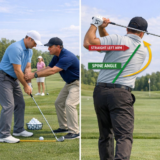
Temporal coordination is often more important than absolute force magnitude. Key timing events include pelvis rotation onset and peak, thorax acceleration, lead‑arm acceleration, and wrist release; efficient swings typically show a consistent cascade of peak angular velocities in the order pelvis → thorax → lead arm → club. Practitioners monitor these events to gauge coordination quality:
- Pelvis peak rotation – initiates the downswing.
- Thorax peak rotation – transmits power to the upper body.
- lead‑arm acceleration - controls swing vector and radius.
- Wrist unhinge/club release – final velocity amplification.
Millisecond intervals between peaks are frequently enough more diagnostic of inefficiency than single peak magnitudes.
Translating these biomechanical concepts into coaching cues favors externally focused, outcome‑based instructions that encourage the sequential unloading without provoking harmful co‑contraction. Practical cues and drills include:
- “Start the downswing with the hips” – promotes proximal initiation over early arm dominance.
- “Let the torso pull the arms” – fosters thorax‑led transfer.
- Towel‑under‑arm drill – helps maintain segment linkage and prevent separation.
- Tempo/metronome drills – enforce consistent interpeak timing and repeatable order.
Objective feedback (video, IMU traces, or motion‑capture overlays) validates that cues produce the intended timing shifts.
| Segment | Typical Peak Order | coaching Prompt |
|---|---|---|
| Pelvis | 1 | “Lead with the hips” |
| Thorax | 2 | “Torso pulls the arms” |
| lead arm | 3 | “Keep the arm connected” |
| Wrist/Club | 4 | “Release through impact” |
Prioritize maintaining a consistent peak‑order pattern across repetitions rather than maximizing a single metric. Wearable sensors or high‑speed capture can quantify interpeak intervals; training should aim to reduce the variability of those intervals progressively. Ultimately, performance gains emerge from structured practice that couples biomechanical principles with concise, externally focused cueing validated by objective measurement.
Joint Motion, Muscle Activity, and Loading: Balancing Power and Tissue Safety
High‑resolution kinematic studies commonly reveal the proximal‑to‑distal cascade in skilled swings: pelvis rotation initiates, followed by thorax rotation and shoulder separation, with peak wrist angular velocity near impact. These staggered velocity peaks exploit the stretch‑shortening cycle of axial and limb muscles; mistimed sequencing (as an example,early arm‑dominant motion) diminishes net kinetic output and increases compensatory loading on distal joints. Representative timing windows reported in applied studies indicate hip peaks often precede trunk peaks by ~20-40 ms, and precede upper‑extremity peaks by ~40-80 ms – a temporal envelope that favors effective power transfer while limiting acute torque spikes.
EMG investigations demonstrate preparatory eccentric activity and phasic bursts that store and rapidly release elastic energy: eccentric loading of the obliques and latissimus prepares the trunk for rapid concentric rotation, while gluteal and quadriceps activation produce the GRF platform. Desirable neuromuscular qualities include timed eccentric control, high‑rate concentric activation, and functional co‑contraction for joint stability. Useful assessment markers are:
- Latency of trunk muscle onset relative to pelvis rotation
- Eccentric braking magnitude in the lead hip and trunk
- Duration of peak wrist flexor activation through impact
These indicators correlate with efficient energy transfer and can flag maladaptive strategies linked to overuse.
Interpreting tissue loading requires attention to both peak instantaneous loads and cumulative microtrauma. The lumbar spine undergoes combined extension and shear late in the downswing and follow‑through; repeated high shear relative to tissue tolerance associates with spondylolysis and discogenic pain.The lead elbow and distal radioulnar joint are exposed to valgus and torsional stress when deceleration control is insufficient. The table below matches joint‑level kinematic peaks with common injury‑risk markers:
| Joint/Region | Representative Peak Kinematics | Primary Injury‑Risk Marker |
|---|---|---|
| Lumbar spine | Peak extension with shear (late downswing) | repetitive shear exceeding eccentric tolerance |
| Lead elbow | Elevated valgus torque at impact | Medial overload / UCL strain risk |
| Wrist/forearm | Rapid radial deviation with torsion | TFCC stress / tendinopathy risk |
Effective training that improves both performance and resilience targets force production, timing, and tissue capacity simultaneously. Interventions with empirical support include eccentric strengthening (to enhance SSC use), posterior‑chain progressive loading (to raise GRF potential), and motor‑control drills that restore pelvis‑thorax timing. Practical implementation examples are:
- Force‑plate guided drills to teach GRF‑to‑torque conversion.
- Segmental timing exercises such as medicine‑ball rotations with delayed upper‑body initiation.
- Load‑management protocols that limit swing counts, schedule rest, and integrate posterior‑chain conditioning.
Regular motion‑capture and EMG screening can establish individualized progression thresholds that balance power gains with cumulative tissue load.
From Feet to Face: Ground Reaction Forces, Lower‑Limb Function, and Clubhead output
Understanding how the golfer interacts with the ground reveals the primary conduit for force transmission into the club. Force‑plate studies show that surges in vertical and shear GRFs typically precede peak clubhead speed by a consistent temporal window, confirming their role as proximal drivers of distal velocity. patterns of GRF magnitude, rate of rise, and CoP excursion distinguish efficient from inefficient swings: efficient performers produce rapid medial‑to‑lateral shear during the downswing while using controlled vertical impulse to preserve club path. GRF time‑series therefore must be interpreted in relation to kinematic events (pelvic rotation, torso acceleration, wrist release), not merely as isolated peaks.
Lower‑limb mechanics form the structural and neuromuscular base shaping these GRFs. Critical elements include coordinated hip extension/internal rotation, controlled knee flexion‑extension cycles, and adjustable ankle stiffness. Targets derived from kinematic‑kinetic coupling include:
- rapid but controlled hip drive to convert vertical impulse into rotational torque;
- Appropriate knee flexion timing to store elastic energy in the posterior chain;
- Adaptive ankle stiffness to control CoP progression without dissipating energy.
Assess these features with synchronized motion capture and force platforms to reveal compensations and asymmetries.
Clubhead dynamics-speed, path, and face orientation-are the net outcome of coordinated GRF and lower‑limb action. Small adjustments in timing (for example, aligning peak GRF within ~20-40 ms of torso rotation) can produce measurable clubhead speed increases without greater maximal muscular effort. Likewise, consistent impulse delivery and a stable base reduce lateral face rotations and shot dispersion. Thus,coaching should emphasize temporal alignment drills that synchronize lower‑limb drive with torso acceleration and wrist release rather than simply increasing raw muscular force.
To convert kinetic insights into coachable metrics, adopt specific, measurable targets and progressive drills. example performance markers and training focuses are summarized here:
| Metric | Typical Target | Training Focus |
|---|---|---|
| Peak GRF rate of rise | High, occurring early in downswing (~200-300 ms window) | Plyometric lateral hops and rapid drive work |
| Pelvis‑to‑torso sequencing lag | Pelvis leads by ~25-40 ms | Sequencing drills with medicine‑ball throws |
| Driver clubhead speed | Individualized gains, e.g., progressive +3-5% | Tempo coordination and impact feedback |
- Ground‑focused drill: single‑leg perturbation swings to train reactive ankle stiffness.
- Sequencing drill: slow‑to‑fast segmental accelerations with video feedback to refine timing.
- Transfer drill: progressive short‑to‑long club sequences preserving GRF timing.
By targeting measurable kinetic markers and pairing them with repeatable drills that are tracked over time, practitioners can translate biomechanical findings into consistent on‑course improvements.
Data Workflows and Inverse‑Dynamics: Turning Signals into Coaching Actions
High‑quality outcomes depend on rigorous preprocessing: aligned multi‑sensor timestamps, informed gap‑filling of marker trajectories, and tailored noise attenuation are prerequisites for reliable inverse dynamics. Filter kinematic signals with phase‑preserving low‑pass filters (such as, zero‑lag Butterworth) and select cut‑offs via residual analysis or spectral inspection to avoid suppressing important rotational spikes. Document coordinate‑frame transformations and validate them against a global lab frame so that joint moments and intersegmental forces retain physical meaning. Quality control steps-such as marker reconstruction error logs and inverse‑dynamics residual checks-should determine dataset acceptance before model inversion.
Model construction requires anatomically plausible segment definitions and inertial parameter estimates that reflect participant demographics. Newton‑Euler rigid‑body formulations combined with GRF inputs yield net joint moments and intersegmental forces; in the absence of force plates, optimization approaches (for example, dynamic consistency fitting) and residual reduction techniques constrain solutions. Regularization (Tikhonov, spline smoothing) can mitigate sensitivity to noise without removing physiologically relevant peaks.Validate models using simulated reconstructions and sensitivity analyses to understand how uncertainties in mass distribution, joint center estimation, and kinematic noise affect torque outputs.
From validated models extract actionable metrics that link biomechanics to coaching. Representative metrics, concise definitions, and preferred directions for coaching are summarized below:
| Metric | Definition | Desired Direction |
|---|---|---|
| Peak pelvis angular velocity | Maximum transverse rotation speed of the pelvis (°/s) | Higher, within controllable limits |
| Proximal‑to‑distal latency | Time from pelvis peak to hand/club peak (ms) | Shorter (more efficient sequencing) |
| Peak shoulder moment | Maximum internal rotation torque at lead shoulder (N·m) | Moderate – avoid pathological overload |
| CoP transfer distance | Medio‑lateral shift of center‑of‑pressure during weight transfer (m) | Optimized for stability and transfer |
Convert these metrics into individualized training plans that address underlying mechanical causes. Practical, evidence‑informed interventions include:
- Neuromuscular drills to shorten sequencing latency (for example, medicine‑ball rotation throws emphasizing lead‑leg brace).
- Mobility and stability routines when limited range suppresses segmental angular velocities.
- Technique and load management when joint moments approach levels associated with injury.
- Feedback systems (visual, auditory, or wearable real‑time metrics) to reinforce desired motor patterns identified by inverse‑dynamics outputs.
Track adaptation with repeated biomechanical assessments to close the measurement‑training loop.
Applying Biomechanics: Coaching, Physical Planning, and Equipment Choices
evidence‑driven coaching reframes technique instruction as targeted manipulation of measurable kinematic and kinetic variables rather than adherence to aesthetic templates. Coaches should emphasize reproducible intersegmental sequencing (pelvis → thorax → arms → club), well‑timed GRF application, and controlled CoP migration. Real‑time feedback (inertial sensors, force plates, or derived angular velocity profiles) converts abstract cues into numeric targets - for example, increase thorax peak angular velocity by a defined amount or advance lateral GRF earlier in the downswing. Objective thresholds support bespoke progressions and reduce dependence on one‑size‑fits‑all swing archetypes.
interventions should be organized into short, medium, and long‑term strategies that address identified biomechanical deficits. Evidence‑aligned drills include:
- Sequencing ladder: segmented reps focusing sequentially on pelvis initiation, then thorax follow, using light clubs to reinforce timing.
- Force‑timing drills: split‑stance step and resisted rotational punches to cultivate early downswing GRF impulse.
- Velocity accentuation: overspeed training or lighter implements to raise peak clubhead rotational speed while preserving patterning.
Pair every drill with objective monitoring (for example, IMU‑derived peak angular velocities or force‑plate timing) and progress according to measurable change rather than fixed rep counts.
Strength and conditioning should reflect the neuromechanical demands revealed by kinetic and EMG profiles: prioritize rotational power, eccentric hip control, and rapid intermuscular coordination. Recommended screening and training elements include:
- Screening: single‑leg balance with GRF symmetry checks, rotational power tests (medicine‑ball throw velocity), and thoracic rotation ROM assessed alongside force‑timing.
- Strength/power: asymmetrical hip hinge variations, anti‑rotation Pallof progressions, and Olympic‑lift derivatives for triple‑extension speed.
- Mobility/stability: targeted thoracic extension and hip internal rotation work in warm‑ups to preserve swing kinematics under load.
Periodize power progress near competition phases and maintain eccentric resilience across training blocks, re‑testing objectively every 6-8 weeks.
Equipment selection is itself a biomechanical intervention: shaft stiffness, clubhead mass and MOI, grip size, and loft influence kinematic outputs and loading patterns. Use fitting data together with measured athlete characteristics (tempo, peak clubhead speed, wrist‑**** timing) to guide changes. The table below pairs common measured deficits with coaching and equipment recommendations.
| Measured Deficit | Coaching Adjustment | Equipment Proposal |
|---|---|---|
| Late hip rotation | Pelvis‑first sequencing drills | Consider a stiffer shaft to support lag stability |
| low peak clubhead speed | Overspeed training and targeted power lifts | lower swing‑weight or lighter grip to facilitate speed |
| Excessive lateral sway | Force‑plate balance and step drills | Driver with higher MOI for increased forgiveness |
Always validate fitted changes on‑course and continue biomechanical monitoring; even small adjustments to mass or flex can alter joint loading and performance, so iterative testing is essential for balancing gain and injury risk.
Q&A
Note: the provided web search results did not return relevant material for this domain. The following Q&A is written to provide a concise, professional reference on kinematic and kinetic analysis of the golf swing.Q1: What are the core aims of kinematic and kinetic study in golf?
A1: The goals are to quantify movement (kinematics) and the forces/torques and power (kinetics) during the swing to (1) identify biomechanical determinants of performance (clubhead and ball speed, accuracy), (2) describe normal and pathological patterns, (3) reveal mechanisms of injury, and (4) guide technique refinement and targeted training to boost performance while reducing injury risk.
Q2: How do kinematics and kinetics differ here?
A2: Kinematics details motion geometry without forces (segment/joint angles, angular velocities, sequencing, club path). Kinetics addresses what causes motion (GRFs,joint reaction forces,joint torques,segmental powers,and muscle forces). Both domains complement one another: kinematics shows what moves; kinetics explains why it moves.
Q3: Which systems measure kinematics for the golf swing?
A3: Typical systems are optical marker‑based motion capture, wearable IMUs, electromagnetic trackers, high‑speed video with markerless tracking, and multi‑sensor wearable arrays. Optical labs offer superior spatial accuracy but face soft‑tissue motion artifacts; IMUs are portable but need robust fusion and drift correction.
Q4: What devices capture kinetic data?
A4: Force plates measure GRFs and CoP dynamics; instrumented club grips and load cells quantify club‑hand interaction; pressure insoles map plantar pressures. Inverse dynamics combining motion capture and force data produces joint moments and power estimates.EMG‑driven models can estimate muscle forces.
Q5: What sampling rates and processing choices are advised?
A5: High temporal resolution is critical: optical capture commonly ≥200 Hz and force plates ≥1,000 Hz; impact events may require still higher rates. Filtering should respect Nyquist limits and avoid phase shifts (use zero‑lag filters when necessary). Report cutoff frequencies, marker sets, and model assumptions; perform sensitivity analyses for reproducibility.
Q6: Which kinematic variables most closely relate to performance?
A6: Pelvis and thorax angular velocities,pelvis‑thorax separation (X‑factor),timing of peak segmental velocities (kinematic sequence),maintained wrist lag,lead‑arm extension,clubhead linear velocity at impact,swing plane,and center‑of‑mass trajectory.
Q7: what is the kinematic sequence and it’s importance?
A7: The kinematic sequence is the temporal order of peak angular velocities (typically pelvis → thorax → arms → club). A proximal‑to‑distal order maximizes energy transfer and clubhead speed while mitigating harmful joint loads.Early arm acceleration typically reduces efficiency and raises injury risk.Q8: How is the X‑factor relevant?
A8: X‑factor is the transverse angular separation between pelvis and thorax near backswing top. Larger X‑factor or greater stretch release can enhance elastic energy and clubhead speed, but excessive X‑factor may increase lumbar loading and injury risk. Both magnitude and timing of release matter functionally.
Q9: Which kinetic features drive clubhead speed?
A9: Key kinetic contributors include GRF magnitudes and rates of rise (vertical, medial‑lateral, anterior‑posterior), net joint moments at hips, trunk and shoulders, proximal segment power generation and distal transfer, and downswing impulse. A stable base and timed torque production underpin high clubhead velocity.
Q10: How should GRFs be interpreted?
A10: GRFs show how the player uses the ground to generate and time momentum transfer. Weight‑shift patterns, vertical peaks, lateral force changes, and CoP progression indicate how and when force is applied. Rapidly rising GRFs coordinated with segmental rotation often link to higher performance, but must be balanced against stability and joint load.
Q11: What does EMG add to the analysis?
A11: EMG (surface or intramuscular) provides muscle activation timing, amplitude, and coordination patterns. It clarifies recruitment strategies, the role of eccentric‑to‑concentric transitions (SSC), co‑contraction for stability, and fatigue effects. Combined EMG and kinetic/kinematic data improve estimates of muscle contributions to moments and power.
Q12: Which muscles are most active in downswing and impact?
A12: Critical contributors include hip extensors/rotators (gluteals), trunk rotators/extensors (obliques, erector spinae), shoulder girdle stabilizers and rotators (deltoids, rotator cuff, latissimus), forearm/wrist flexors and extensors for face control, and lower‑limb knee extensors/hamstrings for ground force production. Patterns vary by swing style and club.
Q13: How do individual differences affect interpretation?
A13: Anthropometry, technique, adaptability, strength, and skill produce significant inter‑individual differences. Skilled players typically show consistent sequencing and lower within‑player timing variability. Normative datasets by level and club type plus single‑subject baselines help interpretation.
Q14: What biomechanical mechanisms underlie common golf injuries?
A14: Repetitive lumbar torsion/extension contributes to low‑back pain and disc issues; high valgus/shear at the elbow can cause medial overload or lateral epicondylitis; rotator cuff overload and wrist tendinopathy occur with poor control or excessive speeds. Contributing factors include asymmetrical loading, faulty sequencing, limited mobility, insufficient strength, and inadequate recovery.
Q15: How can biomechanical data inform injury prevention?
A15: Identify hazardous patterns (such as, excessive lumbar extension, abrupt weight shifts, high peak torsional accelerations) and intervene with technique modifications, trunk and hip conditioning, progressive loading protocols, sequencing optimization to lower joint moments, and systematic load/recovery management.
Q16: Which technique adjustments have empirical support?
A16: Evidence favors moderate X‑factor with controlled release timing, reinforcing a pelvis‑to‑trunk proximal‑to‑distal sequence, prioritizing hip rotation over compensatory lumbar motion, preserving wrist lag until late downswing, and synchronizing GRF application with segment rotations. Individualization based on strength, mobility, and prior injury is essential.
Q17: What are common limitations and error sources in swing biomechanics?
A17: Issues include soft‑tissue artifact, inverse‑dynamics modeling assumptions (segment inertial properties), IMU sensor drift, ecological differences between lab and course swings, small or homogeneous samples, and cross‑sectional designs limiting causal inference. Transparent methods and hybrid field‑lab approaches mitigate many limitations.
Q18: How do wearables integrate with lab analyses?
A18: Wearables (IMUs, pressure insoles, instrumented grips) enable large‑scale on‑course monitoring. Validate wearable outputs against lab gold standards to derive correction models. Hybrid protocols using lab calibration followed by field monitoring capture transfer, fatigue, and real‑world adaptation.
Q19: Which metrics should practitioners monitor?
A19: Performance metrics: clubhead and ball speed, carry distance, pelvis/thorax peak angular velocities, timing of segmental peaks, X‑factor magnitude and release rate.Injury/load metrics: peak lumbar extension/rotation moments, joint moments at shoulder/elbow/wrist, GRF peaks and rates, asymmetrical load patterns, and compensatory motions.Longitudinal tracking is recommended.
Q20: What are reporting best practices for biomechanics studies?
A20: Include participant characterization (skill,injury history,anthropometrics),full measurement descriptions and placements,sampling and filtering parameters,marker/segment definitions and inertial assumptions,normalization methods (e.g., to body mass), detailed statistics with effect sizes and CIs, and transparent limitations. Sharing data and protocols enhances reproducibility.
Q21: What are emerging research directions?
A21: Advances include EMG‑informed musculoskeletal simulations for muscle force estimates,machine learning for pattern recognition and injury forecasting,real‑time biofeedback from wearables,markerless capture for larger field studies,multimodal load integration (physiological + biomechanical),and individualized predictive models for technique and training optimization.
Q22: How should practitioners apply biomechanical findings in training?
A22: Start with individual biomechanical assessment, prioritize interventions for identified deficits (mobility, stability, power), use technique drills that reinforce correct sequencing, apply progressive, sport‑specific overload to raise clubhead speed safely, monitor objective metrics to measure progress, and integrate recovery strategies to reduce injury risk.
Q23: Are there proven drills to promote desired patterns?
A23: Yes - step‑drills and footwork exercises to refine weight transfer and GRF timing; medicine‑ball rotational throws and resisted rotations to develop trunk power and timing; slow‑motion sequencing drills to practice X‑factor timing safely; towel‑under‑arm or lag preservation drills; and single‑leg balance and plyometric progressions to improve force transfer. select drills to match the athlete’s deficits.Q24: How to assess golfers with pain or recent injury?
A24: Prioritize clinical screening for red flags. Use modified, lower‑loading tests (submaximal or slow‑motion swings), identify compensatory mechanics and deficits in mobility, stability, and strength, and coordinate with medical providers.Return‑to‑swing should be criterion‑based and progress via pain‑free mechanics, objective strength, and range benchmarks.
Q25: How can research remain relevant to coaches and players?
A25: Maintain translation by reporting actionable metrics,offering clear thresholds and field proxies for lab measures,validating interventions in practical settings,and providing concise guidelines that integrate technique,conditioning,and load management. Co‑design studies with coaches and players to improve uptake and real‑world validity.
If desired, this material can be converted into a concise FAQ for publication, a detailed measurement protocol (marker sets, force‑plate layouts, sampling and processing parameters), a clinician/coach checklist for swing and injury screening, or a curated bibliography of foundational and recent studies.
A biomechanical synthesis of the golf swing clarifies how coordinated sequencing, segmental angular velocities and appropriately timed external forces collectively determine both performance and injury risk. Integrating motion‑capture kinematics with kinetic descriptors such as joint moments and grfs illuminates the mechanical pathways that produce efficient energy transfer and identifies loading patterns most associated with elevated clubhead speed and tissue strain. Swing effectiveness thus emerges from coordinated spatiotemporal organization and appropriate distribution of loads across the musculoskeletal system – not from any single isolated variable.For practitioners this translates into targeted interventions: technique changes that preserve proximal‑to‑distal sequencing, conditioning that enhances eccentric control and rotational power, and on‑course load management informed by measurement. clinically, a biomechanics framework can improve screening, individualize rehabilitation, and reduce recurrence by addressing modifiable kinetic and neuromuscular deficits.
Looking ahead, the field needs longitudinal field studies, larger and more diverse cohorts, and integration of validated wearables and machine‑learning approaches to capture variability, fatigue, and real‑world adaptation. Sustained collaboration between researchers, coaches, and clinicians will be essential to convert biomechanical knowledge into safe, effective, and personalized improvements in golf performance.
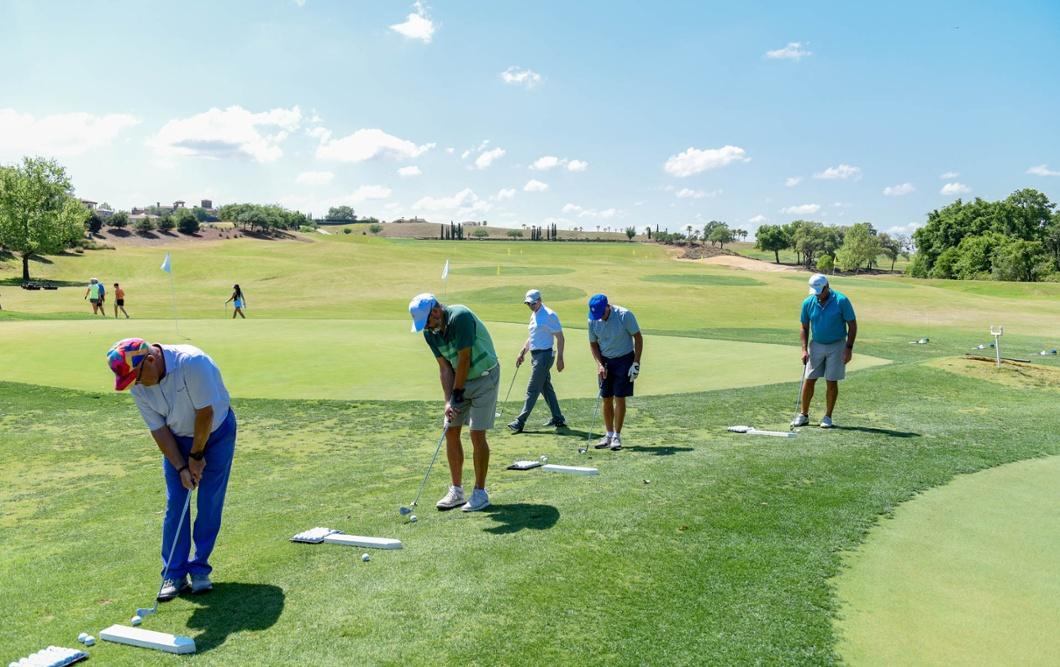
Optimize Your Swing: Kinematic & kinetic Strategies for Better Performance
Pick a style - title options you can use
Choose a style and I’ll tailor this article further – technical, coaching, SEO or catchy. Below are the title options; pick one and indicate target audience (coaches,beginners,or researchers) if you want a custom rewrite.
- Unlocking power and Precision: A Kinematic & Kinetic breakdown of the Golf Swing
- The Science Behind the Swing: Kinematic and Kinetic Insights to Boost Your Game
- Swing Mechanics Revealed: How Kinematics and Kinetics Improve Distance and Prevent Injury
- From Hip Rotation to Ground Forces: A Modern Analysis of the Golf Swing
- Swing Science: Biomechanical Secrets for More Power and Fewer Injuries
- Inside the Golf Swing: Joint Loads, Segment Motion, and Ground Reaction Forces Explained
- Optimize Your Swing: Kinematic & Kinetic Strategies for Better Performance
- Biomechanics of the Perfect swing: Turning Motion into Measurable Power
- Data-Driven Golf: Using Kinematic and Kinetic Analysis to transform Your Swing
- Mastering the Mechanics: A Practical kinematic and Kinetic Guide to the Golf Swing
Key concepts: kinematics vs kinetics (what coaches and players must know)
Understanding golf biomechanics starts with two core terms:
- Kinematics – describes motion: joint angles, segment velocities, rotational timing (e.g., pelvis rotation, shoulder turn, clubhead speed). Kinematic metrics tell you ”what moved where and when.”
- Kinetics – describes forces producing motion: ground reaction forces (GRF), joint loads, moments, and torques. Kinetic metrics explain “how the motion was generated.”
for consistent ball-striking and greater distance,blend kinematic precision (repeatable sequencing and angles) with optimized kinetics (efficient force transfer from the ground through the body into the club).
Phases of the swing: kinematic and kinetic targets
Setup & address
- Kinematic targets: neutral spine, balanced weight distribution (55/45 front/back for manny players), slightly flexed knees, correct posture to enable rotation.
- Kinetic targets: pre-load via ground contact – feel a stable base to allow force transfer during the turn.
- Coaching cue: “Build a stable tripod with feet, keep soft knees and feel the ground under the ball of the rear foot.”
Takeaway and backswing
- Kinematic: maintain a one-piece takeaway initially; set the wrist angles gradually; track shoulder turn vs pelvis turn (X-factor develops as shoulders rotate more than hips).
- Kinetic: store elastic energy in the legs and torso through controlled weight shift (slight move to rear foot) and ankle/tibial loading.
- Drill: slow,connected takeaways with a resistance band anchored to the lead hip to feel proper coil.
Transition
- Kinematic: transition timing is critical – lead hip begins the downswing while upper body unwinds. efficient sequencing is pelvis → torso → arm → club (proximal-to-distal transfer).
- Kinetic: rapid change in GRF profile – push into the ground to generate ground reaction forces that accelerate the pelvis and torso.
- Coaching cue: “Start with the hips – initiate the downswing from the ground up.”
Downswing & impact
- Kinematic: maintain lag (angle between club and lead forearm) to maximize clubhead speed; square clubface via forearms and torso alignment at impact.
- Kinetic: peak vertical and shear GRFs often occur during late downswing and impact, delivering power into the ball. Correct sequencing reduces peak joint loads at the wrists and lower back.
- Drill: step-and-hit drill to emphasize ground force timing and hip rotation.
Follow-through
- Kinematic: full rotation and balance after impact indicate good energy transfer and controlled deceleration.
- Kinetic: deceleration forces should be absorbed by lower body and core; proper deceleration reduces injury risk.
Significant metrics to track (what devices measure and why they matter)
| Metric | What it shows | Typical target / note |
|---|---|---|
| Clubhead speed | Outcome of kinematics + kinetics | Amateur 80-95 mph, stronger players 100+ mph |
| X-factor (shoulder vs hip turn) | Potential elastic torque in torso | tour players often 40°-50°; to large may stress lumbar |
| Peak GRF (vertical) | Ground force used to accelerate body/club | Often 1.1-1.6× body weight at peak (approximate) |
| Pelvis/angular velocity | Sequencing and power generation | fast pelvis rotation, then torso; timing matters |
devices to consider: launch monitors (track clubhead speed, ball speed, spin), wearable IMUs (inertial measurement units for segment rotation and sequencing), motion capture systems (3D kinematics), and force plates (GRF and weight transfer). Combining systems yields the richest insight.
Biomechanics and injury prevention: joint loads and sequencing
poor sequencing or extreme kinematic positions (excessive X-factor, abrupt unloading) increases joint loads – especially in the lumbar spine, hips, and lead wrist. Key prevention strategies:
- Maintain controlled separation (X-factor shouldn’t be forced beyond mobility limits).
- Promote proximal-to-distal sequencing to avoid overloading smaller joints.
- Strengthen the posterior chain, core, and hip rotators to resist high torques.
- Use mobility and movement screens to identify asymmetries that alter force transfer.
Practical drills & coaching cues (implementable on the range)
- Step-and-hit – step toward the target during transition to feel earlier weight shift and ground force timing.
- Med ball rotational throws – build rotational power and train proximal-to-distal sequencing.
- Resistance-band hip turn – anchor band to lead hip; feel the hips start the downswing.
- Impact bag or towel drill – place an impact bag or folded towel a few inches in front of the ball to learn compressing the ball with forward shaft lean and proper clubface control.
- Tempo metronome – use a metronome app to train consistent timing (2:1 backswing to downswing rhythm commonly recommended).
Sample practice plan (60-minute session focused on kinematics & kinetics)
| Segment | Time | Focus |
|---|---|---|
| Warm-up & mobility | 10 min | Hip rotation, thoracic mobility |
| Tempo drills (metronome) | 10 min | Timing and rhythm |
| Step-and-hit + med ball | 15 min | Ground force timing, sequencing |
| Impact-focused reps | 15 min | Compress the ball, clubface control |
| Cool down & reflection | 10 min | Record key metrics, notes |
How coaches and players can use data effectively
- Start with one or two metrics (e.g., clubhead speed + pelvis rotation) and add complexity gradually.
- Use video + frame-by-frame analysis to assess kinematics; pair with a launch monitor for outcome data.
- Force plates are valuable for understanding timing of GRF – use them to train earlier or stronger drive into the ground.
- Compare baseline vs post-intervention; small consistent changes in timing often produce larger gains in distance and accuracy than chasing maximal rotation.
Case studies & real-world examples
Case study A – recreational player with low clubhead speed
Problem: 85 mph driver speed, inconsistent impact. intervention: 8-week plan emphasizing med ball throws, step-and-hit drill, and tempo training. Outcome: increased clubhead speed by measurable amount,improved sequencing (pelvis lead torso),and better strike consistency. Data-supported changes included earlier peak GRF and more pronounced proximal-to-distal timing.
Case study B – Player with low back discomfort during follow-through
Problem: Excessive X-factor and abrupt unloading increased lumbar shear forces. Intervention: reduced extreme shoulder turn at the top,improved thoracic mobility,strengthened core and hip abductors,and coached smoother transition. Outcome: pain decreased, and swing remained powerful through improved sequencing rather than forced rotation.
SEO best practices & keyword use (for coaches publishing content)
- Use primary keywords in H1 and meta title (e.g., “golf swing”, “kinematic”, “kinetic”, “biomechanics”).
- Include secondary keywords naturally: ground reaction forces, hip rotation, clubhead speed, swing mechanics, torque, X-factor.
- Structure content with H2/H3 headings, short paragraphs, bullet lists and relevant tables for readability and featured snippet potential.
- Use alt text for images with keywords (e.g., “golfer initiating hip rotation demonstrating ground reaction forces”).
- provide downloadable assets (checklists, practice plans) to increase dwell time and conversions.
Swift reference: top coaching cues (short and memorable)
- “Hips start the downswing.”
- “turn, don’t throw - sequence before speed.”
- “Feel the ground – drive into the turf at transition.”
- “Maintain lag until the last possible moment.”
- “Soft knees,strong core,balanced finish.”
Further reading and measurement tools
For deeper analysis consider the following tool types:
- 3D motion capture labs (gold standard for kinematics)
- portable IMU systems for on-course kinematics
- Force plates for kinetics and GRF timing
- Launch monitors for ball and club outcomes
- Strength and conditioning assessments for assessing capacity to handle load
If you’d like this article adapted to a specific audience (coaches, beginners, or researchers) or rewritten using one of the other title styles (technical, coaching, SEO, or catchy), tell me which title and audience and I’ll customize the tone, depth and examples.