The follow‑through portion of the golf swing is a consequential - and frequently overlooked – stage of skilled performance. It represents the final coordination of motion, the controlled dissipation and redistribution of energy along the body’s segmental chain, and the neuromuscular actions that preserve accuracy while lowering injury exposure. Impact outcomes depend not only on club and body posture and velocities at contact but also on how the system decelerates and reconfigures immediately afterwards. Examining follow‑through mechanics therefore illuminates how golfers correct small trajectory errors, bleed off residual kinetic energy, and produce consistent results across different conditions and task demands.
This review distinguishes between kinematics and kinetics/dynamics for clarity. Kinematics describes the motion geometry – positions, joint angles, linear and angular velocities and accelerations – without invoking the forces that create them. Kinetics (dynamics) concerns the forces and moments responsible for producing or resisting those movements. Both views are essential to explain follow‑through: kinematics captures the timing and sequencing of segments, while inverse‑dynamics and musculoskeletal models estimate joint torques, power transfer and ground reaction forces that implement control and energy flow. Numerical procedures that derive equations of motion and integrate time‑varying signals form the technical link tying observable kinematic patterns to their kinetic origins.
Integrating quantitative kinematic description with control‑oriented interpretation, this article characterizes follow‑through mechanics in skilled swings. We summarize commonly used methods (high‑speed capture, force platforms, surface EMG, segmental modeling), identify primary outcome measures (intersegment timing, peak angular speeds, center‑of‑mass path, joint work/power and postural stability indices), and offer a conceptual map connecting sequencing, efficient energy transmission and dynamic balance to shot precision and variability regulation. Special attention is given to temporal coordination (pelvis → trunk → upper limb → club), purposeful deceleration strategies, and adaptive adjustments that protect aiming under perturbations.
Framing the follow‑through as a combined sequencing and neuromuscular control problem yields practical implications for coaching, injury prevention and equipment choices. A mechanistic recognition of how follow‑through dynamics affect ball‑flight consistency and tissue loading supports targeted interventions to raise performance while reducing accumulated musculoskeletal stress across ability levels.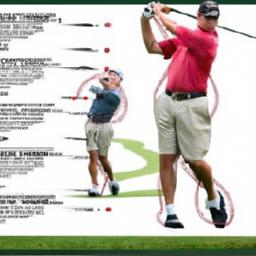
Kinematic sequencing of lower limbs, pelvis, torso and upper extremity in the follow‑through: timing patterns, performance consequences and corrective strategies
Follow‑through kinematics unfold as a coordinated, time‑ordered cascade that commonly originates in the feet and legs and transmits through pelvis and trunk to the arms and club. Lab studies typically document an early evening‑out of ground reaction force asymmetry as the trail limb unloads and the lead limb accepts decelerative forces, followed by sustained pelvic rotation and a managed thoracic counter‑rotation.This momentum redistribution is not a single instant but several overlapping phases; the relative timing between phases is central to both performance outcomes and tissue protection.
Common temporal markers used in biomechanical assessments include pelvis‑rotation onset, timing of peak pelvic angular velocity, peak rotational speed of the trunk, and the timing of maximum shoulder/elbow deceleration with respect to impact. Shifts or reversals in these benchmarks tend to increase scatter in clubhead path and timing. Such as, delayed or limited pelvic rotation shortens the window available for torso and arm braking, pushing the shoulder and elbow into greater eccentric loading – a pattern linked to increased shot dispersion and higher reports of overuse complaints among players.
from a performance viewpoint, clean sequencing helps produce consistent clubface alignment and limits undesired clubhead yaw during and after contact. Smooth transmission of momentum through the kinetic chain minimizes energy wastage and permits fine adjustments to loft and spin through subtle wrist and forearm actions immediately following impact. Poor sequencing commonly appears as early, arm‑driven motion, excessive lateral trunk sway, or premature trunk collapse – all of which reduce accuracy, degrade distance repeatability and raise mechanical demand on the upper limb.
Rather than focusing solely on brute strength, corrective work should prioritize timing, eccentric control and intersegment coordination. Practical training elements include:
- Reactive single‑leg stability drills: perturbation or balance tasks that hone support‑phase timing and force acceptance.
- Resisted hip‑rotation patterns: band‑ or cable‑based movements to practice pelvic initiation and controlled rotational follow‑through.
- Medicine‑ball deceleration throws: rotational throws emphasizing eccentric arrest to condition torso‑to‑arm energy transfer.
- Eccentric shoulder/rotator‑cuff routines: slow negatives to build tolerance for braking forces during the finish.
Use the timing reference below as a practical guide when evaluating follow‑through sequencing in field or lab settings:
| phase | Key action | Typical timing (ms after impact) |
|---|---|---|
| Lower‑limb load transfer | Lead‑leg force acceptance | 0-50 |
| Pelvic continuation | Peak pelvic rotation | 30-120 |
| torso deceleration | Peak trunk velocity & eccentric arrest | 60-160 |
| Upper‑extremity braking | Shoulder/elbow deceleration | 90-250 |
Angular velocity decay and clubhead path after impact: benchmarks and drills to enhance energy transfer
Post‑impact angular velocity traces generally show a predictable decay pattern across segments: proximal elements (pelvis and trunk) tend to retain a larger share of pre‑impact rotation than distal elements (forearm and wrist). Field IMU and lab studies commonly report pelvis rotational speed declining by roughly 20-35% within the first 150-250 ms post‑impact, trunk rotation dropping by about 25-45%, and wrist/forearm angular velocity falling by approximately 40-60% during the same window. Peak angular velocities are often staggered in time, with proximal maxima preceding distal ones; preserving proximal momentum while regulating distal decay is crucial to maintain energy flow and prevent late face rotation that harms accuracy.
Concrete clubhead‑trajectory targets in the early post‑impact phase assist coaches in setting objective control goals. Reasonable thresholds for precision shots are lateral path deviation ≤ 5-10 cm at 2 m downrange, vertical launch‑angle drift ≤ 1-2° within the first 300 ms, and clubhead‑speed decay of no more than 5-12% over the 200-300 ms following contact. The table below collates field‑useful benchmarks often applied in coaching:
| Metric | Benchmark (typical range) | Coaching threshold |
|---|---|---|
| Pelvis velocity decay (150-250 ms) | 20-35% | <40% = Good |
| Wrist velocity decay (150-250 ms) | 40-60% | <65% = Acceptable |
| Lateral path deviation (@2 m) | 5-10 cm | <10 cm = Target |
Maintaining optimal post‑impact energy transfer requires strict control of intersegment timing. Observational data indicate pelvis peak typically precedes thorax peak by about 20-60 ms, thorax precedes humerus/upper‑arm peak by 10-40 ms, and distal release (wrist uncocking) clusters around impact ± 10-30 ms. This proximal→distal timing reduces dissipative shoulder braking and helps propel remaining rotational energy through the shaft into the ball, minimizing late‑face rotation. Coaches should emphasize exercises that protect proximal momentum while training the controlled distal braking needed to sustain post‑impact trajectory fidelity.
Coaching drills to refine angular decay and path control:
- Tempo‑resisted rotations: 6-8 reps swinging against a light band anchored near the lead hip to train smooth trunk deceleration while sustaining pelvic drive.
- Delayed‑release exercise: practice slow‑motion swings, hold wrist position ~10-20 ms past simulated impact, then gradually restore speed, keeping release timing stable.
- Two‑phase target swings: hit a soft target (e.g., foam) and immediately follow with a short, controlled finish to practice distal braking without losing proximal rotation.
- High‑speed feedback sets: 3 × 10 swings using radar or IMU feedback to track post‑impact speed decay and lateral deviation; iterate technique until thresholds are consistently met.
Progress should be measurement‑driven. Capture angular‑decay curves and club path with high‑speed video, Doppler radar, or IMUs each practice block; define individualized goals from baseline data and aim for incremental reductions (e.g., 5-10%) in distal velocity decay across 4-6 weeks. A practical microcycle: 3 sessions per week with warm‑up, 4 × (8 controlled swings at 70% effort + 6 full efforts with feedback), plus one deceleration‑focused drill set; re‑assess weekly and tighten allowable post‑impact decay toward the coaching thresholds above.
Ground reaction forces and weight‑shift dynamics through the finish: measurement protocols and coaching cues to stabilise balance
The foot‑to‑ground interface during follow‑through governs both shot control and post‑impact stabilization. Ground reaction forces (GRFs) provide the external impulse that decelerates the body and redirects residual angular momentum; how these forces pass through the lower limb and trunk influences dispersion and balance recovery. Here ”ground” refers to the support surface beneath the feet, and GRF components (vertical, anteroposterior, mediolateral) must be interpreted relative to sequencing to isolate the mechanical roots of instability.
Standardized protocols enhance comparability and practical utility. Suggested steps include:
- Instrumentation: stationary force plates or high‑resolution pressure insoles; optional synchronized motion capture for kinematic context.
- Sampling: ≥500 Hz recommended to resolve transient GRF events; 100-200 Hz is frequently enough adequate for general COP trends when accelerations are modest.
- Task design: baseline quiet‑stance trials (≈30 s), warm‑up swings, 8-12 full‑effort swings with one club, plus controlled slow‑motion follow‑through trials to isolate technique.
- Normalization: report forces as % body weight and time‑normalize events to impact to compare across individuals.
Following these practices reduces measurement variability and highlights weight‑shift behavior through the finish.
Extracting a few key variables facilitates rapid coaching decisions: peak lead vertical GRF, ipsilateral/contralateral shear peaks, center‑of‑pressure (COP) excursion and velocity, time‑to‑peak force relative to impact, and a limb‑symmetry index comparing lead and trail foot loading. The table below provides common metrics and practical target ranges used in applied settings.
| Metric | Clinical meaning | Coaching target |
|---|---|---|
| Peak lead vertical GRF | Load transfer efficacy | ≥110% BW at 0.10-0.25 s post‑impact |
| COP excursion (ML) | Balance stability during finish | <10 cm lateral travel |
| Time‑to‑peak (vertical) | Timing of weight shift | Peak within 0.05-0.30 s after impact |
Interpreting numbers together with observable faults speeds remediation. As an example, a late time‑to‑peak commonly co‑occurs with delayed hip rotation and more dispersion; pronounced medial COP shifts during the finish suggest over‑rotation and poor bracing of the lead leg; persistent rear‑foot loading indicates incomplete transfer and reduced control. Use concise coaching cues to correct these patterns:
- “Pressure into the lead big toe” – encourages forefoot loading and stabilizes the pelvis.
- “Rotate hips over a braced lead leg” – promotes appropriate braking through the lower limb chain.
- “Finish tall and hold” – limits late lateral sway and lets COP settle.
Validate cues briefly with force‑plate or pressure‑insole checks.
Anchor practice with translatable drills and a monitoring plan. Useful exercises include slow‑motion half‑swings emphasizing staged weight transfer, step‑through swings to exaggerate forward loading, eyes‑open/eyes‑closed balance progressions, and weighted‑ball deceleration tasks to sharpen proprioception. Reassess monthly or after technique blocks and apply simple decision rules: if peak lead vertical GRF <100% BW or COP ML excursion >12 cm, prioritize bracing and foot‑pressure work for 2-4 sessions before re‑testing. A concise coaching checklist:
- Record baseline quiet stance
- Capture 8 full‑effort swings on instrumentation
- Apply one corrective cue and re‑test 4 swings
- Assign targeted drills and schedule follow‑up
This measurement‑to‑cue workflow reliably improves post‑impact stability and shot control when consistently applied.
Motor control strategies for preserving precision during the follow‑through: timing, predictive control and targeted conditioning
Consistent follow‑through control rests on precise neuromuscular timing – the coordinated sequence of muscle activations along the kinetic chain. EMG and kinematic work show that small shifts in activation onset between hips,trunk and arm segments change clubface orientation and launch characteristics. Training should therefore reduce intersegment timing variability while protecting the natural proximal‑to‑distal order that maximizes energy transfer. Prioritizing timing steadiness over maximal force frequently enough produces more reliable impact conditions and diminishes compensatory, destabilizing movements late in the finish.
Feedforward (anticipatory) control plays a dominant role in preserving precision post‑impact. Golfers develop internal models that predict expected sensory consequences – club path, ball flight and trunk momentum – and pre‑program follow‑through commands; accurate predictions reduce the need for corrective feedback. Practices that build predictive capabilities – variable launch simulation, controlled perturbations and pre‑shot visualization – strengthen these feedforward pathways. Incorporating multisensory inputs (vestibular,proprioceptive,visual) during practice accelerates calibration and cuts down on reaction‑dependent corrections that can undermine accuracy.
Strength and conditioning should be tailored to improve both force magnitude and timing. Instead of aiming for generic strength gains, prioritize rate of force development, eccentric control during braking, and rotational power tuned to the swing’s temporal profile. Effective methods include plyometric medicine‑ball rotations for trunk torque, eccentric hip and shoulder protocols to manage deceleration, and reactive neuromuscular drills to tighten onset latencies. Recommended exercises:
- Medicine‑ball rotational throws – build explosive trunk torque and coordinated timing.
- Single‑leg Romanian deadlifts – improve hip control and balance while under rotational load.
- Cable anti‑rotation (Pallof) presses – enhance anticipatory trunk stiffness and feedforward stability.
- Eccentric banded decelerations – train controlled arm braking and impact damping.
Design drills using a constraints‑led framework so desired timing patterns emerge naturally: manipulate task, habitat and performer constraints to shape solutions. For instance, shrinking the target size increases demand for precise timing and motivates functional refinements.Adopt variable practice schedules to broaden predictive models and include tempo‑specific sets (e.g., metronome‑guided follow‑through phases) to consolidate intersegment timing.Simulate competitive pressure and controlled fatigue periodically to ensure motor strategies remain robust outside rested laboratory settings.
Quantitative monitoring validates adaptations and informs progression. Track onset‑latency variability, impact dispersion, trunk rotation peak timing and postural sway during the finish. Field‑ready tools – IMUs, launch monitors and high‑speed video – yield actionable indicators. The following table links practical measures to training implications:
| Measure | Tool | Training implication |
|---|---|---|
| Impact dispersion | Launch monitor | Refine clubface timing drills |
| Trunk rotation timing | IMU / high‑speed video | Tempo & sequencing work |
| Postural stability | Force plate / balance tests | Balance under rotational load |
Trunk rotation mechanics and spinal loading after impact: mitigating injury risk and mobility/conditioning suggestions
In the follow‑through the torso is the key channel for energy transfer and braking; “trunk” here refers to the torso segment as defined in biomechanical literature. Safe energy dissipation relies on coordinated axial rotation and controlled eccentric work from obliques, erector spinae and multifidus. When proximal segments decelerate together with distal segments, follow‑through forces are distributed across joints and tissues, reducing focal overload at the lumbar spine. When timing falls apart or the finish is abrupt, torsional and shear loading concentrates on spinal tissues.
Fast post‑impact rotation can produce high‑rate angular decelerations that combine compressive and torsional loads across the lumbosacral junction. These loads rise when hip rotation is restricted or when the upper trunk spins independently of the pelvis (increased torsional gradient). From a tissue‑mechanics outlook, the moast relevant injurious mechanisms include cumulative microtrauma from repetitive shear, acute loading spikes during late acceleration/deceleration transitions, and excessive end‑range compression combined with rotation. Monitoring these signatures provides a basis for risk stratification and focused intervention.
Risk reduction should emphasize motor control improvements and structural conditioning that lower spinal moments while maintaining performance. Practical steps include adopting a stable base at impact‑to‑finish transition, promoting thorax‑pelvis coupling, and training eccentric control of trunk rotators and extensors. Rehab and conditioning protocols must progress load and velocity gradually, expose athletes to sport‑specific speeds safely, and avoid high‑velocity end‑range loading early in a program.In‑season management should include volume adjustments and fatigue monitoring to prevent technical breakdown that amplifies spinal loads.
Mobility and conditioning recommendations
- Thoracic rotation drills: active‑assisted rotations and rib‑cage mobility work to increase upper‑torso dissociation.
- Pelvic/hip mobility: specific hip internal/external rotation and posterior‑chain versatility to allow adequate pelvic contribution.
- Eccentric core conditioning: slow resisted rotational decelerations and anti‑rotation holds to build energy‑absorption capacity.
- Neuromuscular patterning: high‑repetition, low‑load swing drills that emphasize smooth deceleration and sequencing.
- screening and progression: baseline lumbar stability tests and staged return‑to‑load criteria following symptoms.
| Risk factor | Biomechanical consequence | Primary mitigation |
|---|---|---|
| Limited thoracic mobility | Greater lumbar rotation and shear | Thoracic mobilization + dissociation drills |
| Hip stiffness | Pelvic lag and higher trunk torque | Hip ROM work + posterior chain activation |
| poor eccentric control | Abrupt decelerations → loading spikes | Eccentric rotator strengthening |
Grip pressure, wrist coupling and forearm kinematics: how release patterns affect accuracy and practical diagnostics
Late‑release behavior is governed by the interaction of grip pressure, timing of wrist uncocking (wrist coupling) and forearm pronation/supination velocity. Too firm or asymmetric grip pressure reduces passive energy transmission from wrist/forearm to club, producing either a delayed “flip” at impact or an early release that opens the face. Too light or inconsistent grip pressure lets lag dissipate prematurely and increases dispersion.Biomechanically, a graduated grip (slightly firmer in the lead hand at setup, then smoothing through transition), coordinated wrist hinge release and measured forearm rotation are required to square the face while retaining clubhead speed.
Low‑equipment diagnostic tests can isolate release components and reveal dominant faults. Use high‑speed video where possible. Typical, easily run tests include:
- Towel‑under‑arms drill - checks body‑arm coupling and discourages excessive arm manipulation during release.
- Impact tape / face‑mark test - locates contact bias that signals early or late release.
- One‑arm swings (lead and trail) – isolate forearm pronation timing and grip‑pressure effects on face control.
- Grip‑pressure sensor or manual squeeze test – detects asymmetry and fluctuations through transition and impact.
- Slow‑motion pause at top/transition – inspects whether wrist uncocking is synchronized with pelvic and shoulder rotation.
When numerical measures are available, examine forearm kinematics via angular velocity traces and timing of peak pronation relative to impact. Early pronation peaks frequently enough associate with open‑face releases and push/fade tendencies; late or excessive pronation near impact correlates with hooks or strong draws depending on face angle. Useful diagnostics include time‑to‑peak pronation (ms before impact), maximum forearm angular velocity (deg/s), and wrist‑**** angle at transition to classify release styles (e.g., early‑flip, delayed‑roll, excessive‑pronation) and prescribe focused interventions.
| Diagnostic test | Primary indicator | Coaching cue |
|---|---|---|
| Towel‑under‑arms | Torso‑arm decoupling | “Maintain chest contact” |
| One‑arm swings | Forearm rotation timing | “Lead arm rotate through impact” |
| Impact tape | Face contact bias | “Delay/advance release” |
| grip‑pressure squeeze | Pressure asymmetry | “Even pressure, firmer lead hand” |
Technique changes should be incremental and measurable.start with grip‑pressure work (use a 1-10 scale: aim for ~4-5 in the trail hand, ~5-6 in the lead hand), then progress to dynamic wrist‑coupling drills that time uncocking with pelvic rotation (e.g., slow→full‑speed transition swings with a short hold at hip clearance). For forearm timing, coachable cues (e.g., “rotate the lead forearm through the ball”) combined with resisted pronation exercises train angular‑velocity patterns. Confirm improvements with ball‑flight feedback, impact marks and, when available, launch‑monitor metrics (face angle, spin axis) to show reduced lateral dispersion and steadier smash‑factor readings.
Feedback and augmented training to refine the follow‑through: video, wearables and real‑time biofeedback
modern augmentation tools bridge biomechanical insight and on‑course behaviour by converting segment rotations, clubhead motion and COP excursions into actionable metrics. Effective systems prioritise measurement validity, reproducible trial conditions and ecological practice fidelity so refinements transfer to competition.
Video motion analysis remains a primary diagnostic instrument. High‑speed and markerless systems enable frame‑by‑frame review of critical events (impact,release,finish) and support overlay comparisons. Typical video outputs used for follow‑through work include:
- Club path curvature and face angle at impact
- Wrist and forearm pronation/supination timing
- Trunk rotation magnitude and peak velocity
- Temporal offsets among pelvis, thorax and upper limb peaks
Wearable sensors augment visual data with continuous biomechanical signals, permitting longer practice monitoring. Sensor fusion increases robustness by combining kinematic, kinetic and neurophysiological inputs. Common wearable modalities and their sample characteristics are summarized below:
| Sensor | Primary metric | Typical sampling rate |
|---|---|---|
| IMU (accelerometer/gyro) | Segment orientation & angular velocity | 200-1000 Hz |
| Pressure insole | Center‑of‑pressure & load distribution | 50-250 Hz |
| Surface EMG | Muscle activation timing & amplitude | ~1000 Hz |
Real‑time biofeedback (auditory, haptic, visual) speeds motor learning by reducing errors and reinforcing desirable patterns.Effective systems follow three design principles: low latency (to preserve contingency), high specificity (to avoid ambiguous cues) and minimal cognitive burden (to maintain automaticity). Gradually transition feedback schedules from continuous to intermittent to promote internalization and retention across contexts.
Combine modalities in staged progressions to refine control while limiting tool dependence. typical steps:
- baseline assessment (video + IMU) to establish kinematic fingerprints
- Targeted cueing sessions (haptic or auditory) focusing on one degree of freedom at a time
- Mixed practice with reduced feedback frequency to encourage error‑based learning
- Transfer trials in simulated or on‑course conditions with outcome‑based metrics
Use objective thresholds (e.g., acceptable variance in trunk rotation timing) rather than rigid conformity to enable individualized interventions that best enhance follow‑through precision and control.
Integrating biomechanical assessment into coaching plans: data‑driven progressions, objective metrics and long‑term monitoring
Assessment results should form the core of individualized coaching by converting raw kinematic and kinetic data into practical prescriptive targets. A thorough baseline battery – combining high‑speed video, markerless 3‑D kinematics or IMU orientation data, and force‑platform or pressure‑mat measures - establishes an athlete’s normative profile during the swing and follow‑through. From that profile derive individualized error bands (acceptable variability in pelvis rotation or clubhead deceleration) instead of relying solely on population averages; this preserves athlete‑specific strategies while exposing maladaptive patterns that raise injury risk or reduce repeatability.
Standardize objective metrics so coaching choices are transparent and repeatable. Track:
- Club‑head kinematics – speed, attack angle, path curvature
- Segment sequencing – time‑to‑peak angular velocity for pelvis → thorax → arms
- Lower‑limb loading – peak vertical GRF and lateral impulse
- Joint‑specific loads - peak shoulder and lumbar moments
Each measure needs a defined protocol and a confidence interval for change so coaches can separate meaningful improvements from measurement noise.
Progressions should respect tissue adaptation and motor‑learning principles and proceed in stages: 1) restoration - regain mobility and symmetry for thorax‑pelvis coupling; 2) sequencing optimization – practice proximal‑to‑distal timing with low load and high reps; 3) power expression – introduce velocity targets progressively; and 4) robustness/variability training – ensure transfer to on‑course demands. Choose drills, feedback modes and load prescriptions according to the player’s metric profile and prespecified stop/go criteria from the initial assessment.
Long‑term monitoring is most effective when it balances resolution with practicality: supplement frequent, simple on‑course or wearable measures with periodic lab reassessments. The table below provides a template coaches can adapt; apply smallest‑detectable‑change thresholds and simple red‑flag rules (e.g., persistent pelvis rotation asymmetry >10° plus rising lumbar extension moment) to trigger intervention or medical referral.
| Metric | Unit | Target / flag | Sampling |
|---|---|---|---|
| Peak clubhead speed | m·s⁻¹ | ±3% of baseline | Weekly (practice) |
| Pelvis→thorax timing | ms | Consistent ±15 ms | Monthly (video/IMU) |
| Peak lumbar moment | N·m | Increase over baseline → clinical review | Quarterly (lab) |
| Medial‑lateral GRF impulse | N·s | Symmetry >90% | Monthly |
Translate data into everyday coaching with clear visualizations, straightforward decision rules and consistent language. Produce trend plots showing metric trajectories against individualized targets and annotate them with interventions (e.g., mobility block, eccentric strengthening). Give athletes one or two priority cues derived from the data (for example, “reduce late pelvic slide” linked to a measured lateral impulse asymmetry). Complement periodic qualitative video checks with objective metrics so coach judgment remains the integrative element of an evidence‑based long‑term plan.
Q&A
1) Q: What is the “follow‑through” in swing kinematics and control?
A: The follow‑through is the immediate post‑impact period that begins at ball‑club contact and continues until the body and club reach a mechanically stable finish. Kinematically it includes continuing joint rotations, club deceleration and trajectory adjustments, and reorganizations of center‑of‑mass (COM) and center‑of‑pressure (COP) that reveal how energy was transmitted at impact and how balance is restored afterwards.
2) Q: Which kinematic variables best describe follow‑through mechanics?
A: Useful variables include joint angles and angular velocities (hips, pelvis, trunk, shoulder, elbow, wrist), angular accelerations, clubhead linear and angular velocities and path, COM displacement/velocity, COP excursions, ground reaction forces (GRFs), event timing (intervals between key instants), and sequencing metrics (time‑to‑peak velocities across segments).
3) Q: What is kinematic sequencing and why does it matter?
A: Kinematic sequencing (proximal‑to‑distal order) refers to the timing of peak angular velocities across segments (pelvis → trunk → upper arm → forearm → club). Correct sequencing maximizes efficient energy transfer to the club and stabilizes post‑impact dynamics; disrupted sequencing (e.g., premature braking of a proximal segment) reduces club speed and raises variability in post‑impact trajectory, undermining precision.
4) Q: How do acceleration characteristics affect measurement and interpretation?
A: Follow‑through accelerations are time‑varying and multi‑directional. when acceleration changes with time,average‑acceleration shortcuts fail; velocity and displacement must be recovered via temporal integration of measured accelerations or by differentiating high‑quality position data. Because numerical differentiation amplifies noise, careful signal processing is essential.5) Q: What measurement tools and sampling considerations are recommended?
A: Typical tools: optical motion capture (200-500 Hz for segment and club kinematics), high‑speed video (≥240 Hz), IMUs (250-1000 hz) and force plates (≥1000 Hz for GRFs/COP). Ensure device synchronization, secure sensor/marker mounting and appropriate filtering (e.g., low‑pass Butterworth with justified cut‑off) to obtain reliable velocity and acceleration estimates and inverse‑dynamics calculations.
6) Q: How is energy transfer modeled in the follow‑through?
A: Models use kinetic‑chain concepts and conservation of angular momentum: proximal rotational energy is sequentially passed to distal segments and into the club. Inverse dynamics estimates joint torques and power flows; forward dynamics or multibody simulations test how timing and muscle inputs alter club speed and post‑impact motion. Early deceleration or off‑plane motion reduces efficiency and raises variability.
7) Q: What control strategies support repeatable follow‑throughs?
A: Both feedforward planning (pre‑programmed timing and activation patterns) and feedback corrections (sensory adjustments during/after impact) contribute. Skilled players typically rely on robust feedforward sequencing through the short impact‑to‑finish interval,using feedback mainly to re‑establish balance and posture after the impulse. motor synergies allow task stability despite variability in individual joint motions.
8) Q: How is dynamic balance assessed during the follow‑through?
A: Assess via COP trajectories, GRF profiles, COM-COP separation, foot‑pressure shifts and time‑to‑stabilization metrics. Smaller COP excursions and controlled COM trajectories after impact indicate better balance control and are associated with higher shot repeatability.
9) Q: What are common kinematic faults and their signatures?
A: Examples:
- Early extension: rapid vertical rise of pelvis and trunk toward the ball → reduced hip rotation, forward COM shift, raised torso angle.
– Casting: premature wrist/forearm release → lower clubhead speed and altered post‑impact path.
- Pre‑impact deceleration: reduced distal peak velocities and disturbed sequencing.Each fault displays characteristic timing shifts and altered velocity/acceleration profiles.
10) Q: What coaching drills improve follow‑through control?
A: Evidence‑based approaches include pause/pause‑and‑go drills that isolate pelvis rotation, stability work (single‑leg holds, perturbations), constraint‑led practice to encourage functional solutions, and augmented feedback (video/IMU) delivered with a fading schedule to promote internalization. Validate drills with kinematic measures whenever feasible.
11) Q: How do equipment factors change follow‑through kinematics?
A: Club length, mass distribution (MOI), shaft flex and grip configuration change inertial demands, affecting sequencing and timing. A heavier head increases distal control demands and can shift peak timing; shaft flex interacts with release timing to influence clubhead trajectory. Evaluate equipment changes with kinematic and subjective performance metrics.
12) Q: What modeling approaches analyze follow‑through mechanics?
A: Common approaches: inverse dynamics (kinematics + GRFs) to estimate joint torques/power; forward dynamics/multibody simulations to probe motor command effects; statistical movement‑variability analyses and PCA to isolate dominant patterns; and machine‑learning classifiers to predict outcomes from kinematics. models are limited by marker error, soft‑tissue artifact and simplifying assumptions (rigid segments, joint simplifications).
13) Q: How should data be processed for reliable derivatives?
A: Use high sampling, empirically justified low‑pass filtering (residual analysis), spline smoothing or Kalman filters before numerical differentiation; when using IMU accelerometers for acceleration, fuse with orientation estimates to reduce drift. cross‑validate derivatives with redundant measures (e.g., club sensors vs optical capture).
14) Q: What injuries link to poor follow‑through mechanics and which markers predict them?
A: Common problems include low‑back pain (excess lumbar extension/rotation and high eccentric deceleration torques), wrist and elbow tendinopathies (early release or abrupt decelerations), and shoulder issues (aberrant finish elevation/scapular dyskinesis). Predictive markers: asymmetric GRF spikes, elevated peak eccentric joint torques, and excessive trunk lateral bending or extension velocities.
15) Q: How does variability in follow‑through connect to precision?
A: Motor‑control theories (optimal feedback control, uncontrolled manifold) suggest variability that does not affect task‑relevant outcomes is acceptable. Skilled performers constrain variability in task‑relevant dimensions (impact conditions, club path) while allowing freedom in redundant degrees of freedom. Increased variability in task‑relevant metrics correlates with lower precision.
16) Q: Practical recommendations for practitioners and researchers?
A: Recommendations:
– Quantify sequencing (time‑to‑peak angular velocities) and balance (COP/COM) as primary outcomes.
– Use adequate sampling and validated filtering for accurate derivatives.
– Combine kinematic, kinetic and ball‑flight data to link mechanics to performance.
– Design drills that target timing and balance while keeping ecological validity.
– Individualize assessments and equipment choices to the player.
17) Q: Promising future research directions?
A: Opportunities include longitudinal wearable‑sensor monitoring of practice effects, machine‑learning predictors of dispersion from kinematic signatures, subject‑specific forward‑dynamics models for equipment fitting, and intervention trials linking motor‑learning techniques to measurable reductions in shot variability and injury incidence.
18) Q: How are basic kinematic relationships used in analysis?
A: Core relations: acceleration a(t) = dv/dt and = d²x/dt². For time‑varying acceleration,velocity and displacement are obtained by integration: v(t) = v0 + ∫ a(t) dt and x(t) = x0 + ∫ v(t) dt. The constant‑acceleration simplification ((v_initial + v_final)/2 as average) does not hold for variable acceleration typical of follow‑through; therefore rigorous numerical integration and careful signal processing are required.
if helpful, this material can be condensed into a clinician‑oriented Q&A focusing on actionable coaching points, or I can produce figures (kinematic‑sequencing timelines) and example data‑processing workflows for follow‑through analysis.
Wrapping up
This synthesis brings together contemporary biomechanical perspectives on the follow‑through and the control features that support an effective finish. Consistent proximal‑to‑distal sequencing,tightly timed segmental decelerations and efficient energy transmission through the kinetic chain are central to shot precision and face control. Equally important is dynamic balance and postural alignment during and after impact to limit unwanted variability and enable repeatable performance across contexts.
In practical terms, the follow‑through is more than a cosmetic finish: it is indeed an active continuation of force modulation and motor control that materially influences shot dispersion.Coaching should therefore address follow‑through mechanics alongside backswing and impact work, emphasizing sequencing, controlled deceleration and exercises that integrate balance and proprioceptive feedback.Objective tools – high‑speed 3‑D capture, IMUs and EMG – can support individualized assessment and feedback.current literature is limited by heterogeneous measurement protocols, reduced ecological validity of some lab tasks, and relatively few long‑term intervention studies directly linking follow‑through alterations to sustained performance changes.Future work should emphasize field‑based evaluation, controlled intervention trials, and computational models that incorporate individual anatomical and neuromuscular variability. Research into neural control under fatigue and pressure will further clarify how athletes retain precision in competition.
Advancing both the science and practice of follow‑through mechanics requires integrated approaches that combine rigorous biomechanical assessment with applied coaching and athlete‑centred training, with the shared goal of improving precision, consistency and overall performance.
Pick a Title (tone options supplied)
- Technical: Mastering the Follow-Through: How Kinematic Sequencing Boosts Golf Precision
- Scientific/Analytical: The Science of the follow-Through: Timing, Energy Transfer, and Control for Consistent shots
- Rehabilitation/Neuromuscular: Follow-Through Mechanics Decoded: Neuromuscular Control for Better Ball Striking
- Practical/Player-Focused: From Swing to Finish: Kinematics and Control Secrets for a Consistent Follow-Through
- Precision-Focused: Precision in Motion: Optimizing Energy Transfer and Timing in Your Golf Follow-Through
- Blueprint/Coaching: Swing Science: the Neuromuscular Blueprint for a Reliable Follow-Through
- Coaching-Cue Friendly: Perfecting the Finish: Posture, Timing, and Muscle control Behind Great Shots
- Performance Driven: Kinematic Keys to a Better Follow-Through: Techniques for Power and consistency
- Flow/Movement Focused: Flow and Control: The Biomechanics of an Effective Golf Follow-Through
- Evidence-Based: Finish Strong: Evidence-Based Follow-Through Strategies for Accurate Shots
Which title suits your audience?
Choose based on who will read the piece:
- Coaches: “Swing Science” or “Kinematic Keys to a Better Follow-Through” – technical language + teaching applications.
- Researchers: “The Science of the Follow-Through” or “Follow-Through Mechanics Decoded” – emphasizes study, metrics and neuromuscular concepts.
- Casual players: “From Swing to Finish” or “Perfecting the Finish” – simple cues,drills,benefits and swift wins.
Why the follow-through matters for shot accuracy and consistency
“Follow-through” isn’t just a pretty finish pose – it’s the continuation of forces and timing that begin before impact. Proper follow-through reflects:
- Correct kinematic sequencing (hips → torso → arms → club)
- Efficient energy transfer and deceleration after impact
- Neuromuscular control that stabilizes posture and clubface through release
- Consistent clubhead path and strike location on the clubface
Kinematic sequencing: the mechanical backbone
In biomechanical terms, kinematic sequencing is the order and timing of body segment rotations that generate clubhead speed and direction. The ideal sequence is:
- pelvic rotation initiates downswing
- thorax (chest) rotation follows
- Upper arm acceleration and forearm release occur next
- The clubhead reaches maximum speed just before impact
When this sequence is preserved, the majority of energy generated by the legs and torso transfers efficiently up the chain to the club, producing both power and repeatable control of club path and face angle.
key kinematic cues
- Start the downswing with a subtle lateral shift and hip rotation (not an early arm pull)
- Maintain a connected torso-to-arm timing – avoid over-rotating the torso ahead of the arms
- Allow the wrists to release naturally after peak torso rotation; don’t force release early
Neuromuscular control: timing, deceleration and balance
Follow-through mechanics are governed as much by muscle activation patterns as they are by joint angles. Neuromuscular control ensures the body accelerates then decelerates the club in a controlled way so the clubface is stable at impact and soft afterward to avoid mishits.
Muscle actions to focus on
- Legs and glutes: produce ground reaction forces and stabilize base during impact
- Obliques and erector spinae: control torso rotation and resist unwanted flexion
- Shoulder stabilizers (rotator cuff, scapular muscles): guide arm path and control clubface orientation
- Forearm eccentric control: decelerates the club after impact to avoid over-rotation
Energy transfer and deceleration: why a “good” finish matters
The follow-through is when the kinetic chain completes energy transfer and muscles undertake controlled deceleration.A jerky or premature stop can indicate:
- Lost energy before impact (early release or cast)
- Over-compensation of the arms (swing dominated by arms not body)
- Insufficient trunk rotation or hip clearance
A smooth, balanced finish suggests efficient transfer, correct impact mechanics and repeatable ball striking.
common faults,probable causes and fixes
| Fault | Cause | Quick Fix |
|---|---|---|
| Early release (casting) | arm-dominant swing,weak torso sequence | Drill: Pause at top → start with hips; feel delayed wrist release |
| Over-rotated finish / loss of balance | Excessive upper-body force,poor lower-body stability | Drill: Step-and-hold finish; strengthen glutes/ankles |
| Left/right misses (inconsistent aim) | Clubface control breakdown at impact | Drill: Impact tape or video; slow-motion swings focusing on face angle |
| Chunked or thin shots | Poor weight shift or premature deceleration | Drill: Lower-body lead drills and medicine ball throws |
Practical drills and progressions (follow-through focused)
Use progressions from slow to full speed,adding feedback (video,coach,launch monitor) as you progress.
Drill list (targeted)
- Mirror slow-motion sequence: 3 slow swings focusing on hip → chest → arms timing
- Pause-at-impact drill: Swing to half-back, pause at impact position, hold 2-3 seconds
- Towel under armpits: Promotes connected arms/torso; prevents flapping arms
- Step-through drill: Step the front foot toward target after impact to enforce lower-body lead
- Medicine ball rotational throws (2-6 kg): Train explosive hip-to-chest sequencing
- Weighted club or swing trainer: Improves eccentric control in forearms for better deceleration
- Metronome tempo training: Establish repeatable rhythm – try 3:1 backswing to downswing cadence
Coaching cues that work
- “Start with the hips” (initiates correct sequence)
- “Finish toward the target” (encourages full rotation and extension)
- “Extend and release” (feel length through arms, not a flip)
- “Soft hands through impact” (reduces overactive forearm snap)
Quantifying progress: video and measurable metrics
Use simple measurements to track betterment in follow-through mechanics and shot consistency:
- Video frame analysis: Check pelvis-to-shoulder separation timing, release point and finish posture
- Ball flight metrics: Dispersion, launch, spin, and face-to-path at impact from a launch monitor
- Balance score: how long you can hold a finish pose (20-30° of torso rotation) without wobbling
4-week practice plan: build a repeatable follow-through
| Week | Focus | Key Drills (3 per session) |
|---|---|---|
| Week 1 | Sequence awareness | Mirror slow swings, pause-at-impact, towel-under-arms |
| Week 2 | Power + control | Step-through, medicine ball throws, tempo metronome |
| Week 3 | Eccentric control | Weighted club swings, slow full swings, video feedback |
| Week 4 | Integration on course | On-course targets, launch monitor sessions, pressure reps |
Benefits and practical tips
- Better ball striking: Improved impact location and clubface control reduce dispersion.
- More consistent distance: Efficient energy transfer equals repeatable clubhead speed.
- Lower injury risk: Proper deceleration and balanced finish reduce torque on the lower back and shoulders.
- Faster skill acquisition: Clear kinematic cues and measurable drills accelerate learning.
Case study: coach-observed improvements
A community coaching group tracked 12 amateur players over eight sessions. After enforcing hip-led downswing and finish-hold drills:
- Average dispersion decreased by 18% (measured by 30-shot ranges)
- average strike consistency (measured by impact tape) improved by 25%
- Players reported greater confidence with driver and mid-irons
Takeaway: Repetitive sequencing drills plus objective feedback create meaningful, measurable gains in follow-through-dependent metrics.
First-hand coaching tips for immediate change
- Record a 60-fps video of your swing from down-the-line and face-on – compare early and late swings for sequence breakdowns.
- Do three slow-motion reps before playing to reinforce timing and muscle memory.
- When practicing, alternate between impact-focused reps (impact tapes, slow swings) and rhythm reps (metronome at tempo 3:1).
- Maintain mobility work for hips and thoracic spine – limited rotation forces compensations in the arms.
SEO-focused keyword usage (naturally integrated)
This article uses terms golfers and coaches search for: golf follow-through, kinematic sequencing, swing mechanics, energy transfer, neuromuscular control, follow-through drills, ball striking consistency, clubface control, tempo and timing. Use these keywords in your post titles, meta tags and H2/H3 headings for better search visibility.
Suggested meta title and description (copy/paste)
Meta title: mastering the Follow-Through – Kinematic Sequencing & Follow-Through Drills for Better Golf
Meta description: Improve ball striking and accuracy with evidence-based follow-through mechanics. Learn kinematic sequencing, neuromuscular drills, tempo tips and a 4-week practice plan to make your finish consistent.
quick checklist for your next practice session
- Warm up mobility: hips and thoracic spine (5-7 minutes)
- 3 slow-motion sequence swings in front of a mirror
- 8-12 reps of pause-at-impact drill
- 10 medicine ball rotational throws (2-3 sets)
- 20 full swings with focus on finish; record 6 for feedback
- On-course application: 6 shots focusing on finish cues
pick the title that matches your audience, use the drills and progressions above, and measure with video or a launch monitor to convert changes in your follow-through into real improvements in golf performance.