
The follow-through phase of the golf swing represents a critical, yet often underemphasized, component of shot execution: it is the kinematic and neuromuscular continuation of the intention established earlier in the swing and a key determinant of ball trajectory, accuracy, and inter-shot consistency. Whereas much biomechanical research has concentrated on the generation of clubhead speed during the backswing and downswing, the follow-through encodes the terminal sequencing of segmental rotations, the dissipation and redistribution of kinetic energy, and the neuromotor strategies that underpin repeatable motor output.Understanding the follow-through thus offers both mechanistic insight into how effective force transfer is achieved and practical targets for improving precision and repeatability in performance.
From a theoretical standpoint, analysis of the follow-through requires a clear distinction between kinematics-the geometric description of motion-and dynamics-the force-based explanation for that motion. Kinematics provides the primary descriptors used in this work (segment angles, angular velocities, trajectories, curvature), while dynamics and neuromuscular control explain how those kinematic patterns are produced and regulated (muscle activation, joint moments, and intersegmental forces). Quantitative treatment frequently enough invokes standard methods from classical mechanics, including the derivation and integration of equations of motion to relate time-varying kinematic variables to underlying inertial and muscle-generated moments. Measures such as trajectory curvature and radius of curvature, widely used in the analysis of projectile and articulated motion, are likewise informative for characterizing clubhead paths and center-of-mass excursions during the follow-through.
This article synthesizes contemporary kinematic approaches and control-theoretic perspectives to characterize the follow-through as a coordinated, goal-directed motor action. We review prevailing models of proximal-to-distal sequencing and energy transfer,present kinematic metrics and methodological best practices for their measurement (motion capture,inertial sensors,inverse dynamics),and examine how neuromuscular control strategies-feedforward planning,sensory feedback integration,and variability regulation-support shot precision and repeatability. we outline implications for coaching and training, highlighting how objective kinematic targets and control-focused interventions can be integrated into practice to enhance performance while reducing injury risk.
By situating follow-through analysis within a rigorous kinematic and control framework, this work aims to bridge biomechanical theory and applied instruction, providing researchers and practitioners with a coherent set of concepts, measurements, and interventions to optimize golf performance.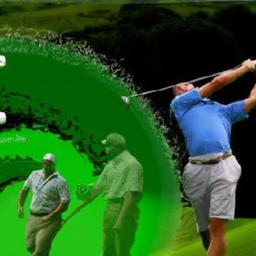
Kinematic Sequencing of the Golf Swing Follow Through and Its Influence on Ball Trajectory
The swing’s completion is governed by a characteristic proximal-to-distal cascade in which energy and angular velocity are transferred sequentially from the lower body through the torso and into the upper limbs and club. This sequential association maximizes clubhead speed while stabilizing clubface orientation at impact, thereby constraining the primary launch conditions: ball speed, launch angle and initial spin axis. From a biomechanical perspective, the integrity of this cascade during the terminal phase determines whether kinetic energy is delivered coherently (resulting in low dispersion) or dissipated prematurely (resulting in variable trajectories).
temporal alignment of key segments is critical for predictable ball flight. Empirical analyses highlight consistent timing relationships between the pelvis, trunk and lead arm during the completion phase; deviations from these timing ratios correlate with lateral dispersion and inconsistent spin. Typical temporal markers clinicians and researchers monitor include:
- Onset of pelvis deceleration relative to peak rotation
- Peak trunk angular velocity timing
- Lead wrist ulnar deviation and release timing
These markers provide a compact framework for diagnosing whether the motion sequence preserves the expected energy transfer pattern.
Mechanical coupling between segments shapes both launch direction and spin characteristics.When proximal segments decelerate in the expected order they create a controlled release at the wrists that stabilizes clubface orientation; conversely, early or late releases alter effective loft and face angle at impact and thus change trajectory. The table below summarizes representative stage-to-outcome relationships observed in motion-capture studies:
| Stage | Primary kinematic Event | typical Trajectory Effect |
|---|---|---|
| Lower-body deceleration | Pelvis braking | Directional stability |
| Torso rotation peak | Peak trunk velocity | Launch angle modulation |
| Distal release | Wrist uncocking timing | Spin rate and curvature |
Neuromuscular control underpins the repeatability of the cascade: skilled performers demonstrate reduced trial-to-trial variability in intersegmental timing and smaller corrective adjustments during the completion phase. Training strategies that explicitly target sensorimotor coordination can therefore reduce trajectory variability without necessarily increasing maximal velocities. Effective interventions typically emphasize rate-of-force advancement in proximal muscles, proprioceptive acuity in the lead arm, and temporal gating of wrist release. Example practice emphases include:
- Tempo drills to preserve pelvis-to-trunk timing
- Segmental isolation to refine trunk-arm coordination
- Impact-targeted repetitions to stabilize release timing
For coaching and scientific assessment, objective metrics enable targeted feedback and progress monitoring. Practical measurement modalities include high-speed video, inertial measurement units and markerless motion capture. Key variables to quantify during the completion phase are:
- Pelvis-to-trunk separation angle at peak rotation
- Time-to-peak angular velocity for trunk and lead arm
- Wrist release latency relative to impact
- Clubface-to-path angle at impact
Combining these kinematic metrics with ballistic output (ball speed, launch angle, spin) facilitates a mechanistic interpretation of trajectory deviations and directs cueing or conditioning interventions that restore efficient segmental sequencing.
Quantitative Analysis of Joint Angular Velocities During the Follow Through with Practical Coaching Interventions
Quantitative kinematic analysis of the follow-through leverages high‑resolution 3D motion capture and inertial sensors to transform raw joint angles into time‑series angular velocities and accelerations.Peak angular velocity, time to peak (relative to ball impact), and the order of maxima across joints provide objective biomarkers of mechanical efficiency and control. Computational differentiation of joint angle trajectories must be regularized (e.g., low‑pass filtering, Savitzky-Golay smoothing) to avoid amplification of noise; subsequently, velocity profiles are normalized to impact time and to each athlete’s anthropometry for inter‑subject comparison. These procedures allow the extraction of repeatable metrics for coaching feedback and longitudinal monitoring.
Follow‑through kinematics adhere to a proximal‑to‑distal transfer where the pelvis and thorax rotations precede peak velocities at the shoulder, elbow, and wrist. Here the anatomical concept of a joint-the locus where two bones meet and articulate-frames interpretation: changes in relative segment orientation at these joints produce the observed velocity pulses. Quantitatively, robust follow‑throughs exhibit a distinct sequence of peak angular velocities (pelvis → thorax → lead shoulder → lead elbow → lead wrist) with inter‑peak delays on the order of 20-80 ms depending on club and athlete, supporting optimal energy transfer and shot repeatability.
Practical coaching interventions target both kinematic sequencing and neuromuscular timing to reduce variability and accentuate desirable velocity profiles:
- Augmented feedback: Real‑time auditory or haptic cues keyed to pelvis and torso peak times to enforce proximal initiation.
- Segmental timing drills: Lead‑arm extension progressions with delayed wrist release to internalize proximal‑to‑distal phasing.
- Tempo modulation: Metronome‑guided swings to stabilize inter‑peak intervals and reduce excessive wrist snap variability.
- Strength‑speed conditioning: Rotational medicine‑ball throws and eccentric shoulder work to raise lasting peak angular velocities.
- Wearable monitoring: IMU‑based thresholds for each joint to automate detection of out‑of‑range velocity events.
Empirical targets can be condensed into simple coaching tables for field use; the table below offers exemplar peak angular velocity bands and timing windows for a generic full‑swing follow‑through (values are illustrative starting points that should be individualized).
| Joint | Peak ω (deg/s) | Time to peak (ms pre/post impact) |
|---|---|---|
| Pelvis | 150-300 | −40 to −10 |
| Thorax | 200-380 | −20 to +10 |
| Lead shoulder | 250-450 | 0 to +30 |
| Lead elbow | 300-600 | +10 to +50 |
| Lead wrist | 800-1400 | +20 to +80 |
From a neuromotor control perspective,reducing intra‑individual variability in these angular velocity metrics is as notable as raising peak values-excessive increases without stable timing degrade accuracy. Progressive coaching prescribes: (1) stabilize sequencing with low‑load, high‑repetition drills and augmented feedback; (2) add sport‑specific strength‑speed work to raise safe peak outputs; and (3) implement wearable monitoring to enforce individualized thresholds. Ultimately, measurable improvements in shot precision and repeatability arise when kinematic prescriptions (velocity magnitudes and timing windows) are integrated with task‑specific motor learning strategies and objective progress tracking.
Momentum Transfer and Energy Dissipation Between Club and Body: optimizing Release Timing for Accuracy
The exchange of momentum between the club and the golfer’s body at the end of the downswing constitutes a controlled redistribution of linear and angular momentum that determines post-impact club trajectory and face stability. From a biomechanical standpoint, **angular momentum conservation** applied to the trunk-arm-club system explains how proximal segments (pelvis and thorax) generate and then cede rotational momentum to distal segments (forearm, wrists, clubhead). The instantaneous impulse delivered through the hands at the moment of release both modulates clubhead velocity and influences the effective mass interacting with the ball; thus, optimizing timing of this impulse is essential to reduce unwanted variability in launch direction and spin. Accurate modeling thus requires simultaneous consideration of segmental inertias, joint torques, and boundary conditions imposed by grip mechanics.
Neuromuscular coordination underpins the precision of the release window. A repeatable,proximal-to-distal activation sequence-characterized by coordinated trunk deceleration followed by controlled forearm and wrist dynamics-minimizes unnecessary energy bleed and stabilizes clubface orientation. Key control features include:
- Preprogrammed timing: feedforward motor commands that set release phase duration;
- Reactive damping: short-latency muscle responses that absorb perturbations at impact;
- Selective co-contraction: transient forearm stiffness to preserve face angle while permitting distal speed.
These elements together form a neuromechanical strategy that balances power production with impact precision.
Energy dissipation mechanisms determine how much of the generated mechanical energy translates to ball speed versus being lost to non-productive sinks. Sources of dissipation include viscoelastic absorption in soft tissues, micro‑compliance at the grip interface, intentional wrist release (velocity-to-deceleration conversion), and inelastic deformation of the club head-ball interaction. The magnitude and timing of these losses critically affect repeatability: early or inconsistent dissipation increases variability in effective coefficient of restitution and launch conditions. Therefore, minimizing uncontrolled dissipation-while allowing purposeful, timed energy release-is a central objective for accuracy-focused interventions.
Optimizing the release timing involves explicit manipulation of phase duration and controlled deceleration patterns to constrain post-impact club kinematics. Practical objectives include aligning peak clubhead speed closely with the moment of minimal face rotation and ensuring a brief, predictable deceleration impulse immediately after contact. the table below summarizes concise, trainable targets that link phase checkpoints to their expected accuracy outcomes.
| Phase Checkpoint | Training Target | Expected Effect on Accuracy |
|---|---|---|
| peak trunk rotation end | ~10-20 ms before impact | Reduced lateral dispersion |
| Hand deceleration onset | ~0-5 ms post-impact | Stabilized face angle |
| Wrist release duration | Consistent 30-50 ms window | Controlled spin rate |
From a measurement and training perspective, prioritize reproducible metrics that reflect momentum transfer fidelity: synchronized clubhead speed profile, hand acceleration/deceleration curves, face-angle variance at impact, and segmental angular momentum time-series. Use high-speed kinematics and inertial measurement unit (IMU) systems to quantify timing errors and train with augmented feedback (auditory metronomes, vibrotactile cues) that reduce temporal drift. adopt progressive overload of timing complexity-start with isolated release drills, progress to full-speed repetitions under perturbation, and emphasize **consistency of the release epoch** as the principal determinant of accuracy rather than maximal single-shot power.
Controlled Deceleration Strategies: Eccentric Muscle Roles, Injury Risk Reduction, and prescriptive Exercises
high-demand eccentric braking underpins accurate energy dissipation after ball impact. During the follow-through phase, posterior and rotator-stabilizing musculature act as dynamic brakes: latissimus dorsi and posterior deltoid attenuate arm deceleration, the rotator cuff resists humeral head translation, and trunk muscles (notably the external obliques and erector spinae) dissipate residual axial and rotational energy. These eccentric actions convert kinetic energy into controlled lengthening work, protecting passive structures while preserving segmental alignment for consistent ball flight.
Effective neural control requires precise timing and graded force production across segments. Practitioners should emphasize proximal stabilization with distal dissipation-an intentional modulation sometimes described as restrained or regulated action (the term “controlled” denotes this quality; Cambridge Dictionary). Key motor strategies include anticipatory activation of antagonists, graded co-contraction to adjust joint stiffness, and phase-locked eccentric loading that mirrors the prior concentric impulse to minimize abrupt decelerations that perturb clubface orientation.
Reducing injury risk centers on increasing eccentric capacity and managing tissue load through progressive exposure and technique refinement. Mechanical and physiological risk-mitigation tactics include:
- Progressive eccentric overload to improve tendon resilience and muscle-tendon stiffness matching.
- Movement variability training to avoid repetitive high-strain patterns under fatigue.
- Fatigue monitoring and limiting high-intensity swing volume when neuromuscular control is degraded.
- Technique coaching to ensure deceleration forces are distributed across larger, more robust segments rather than concentrated at small joints.
Prescriptive exercise selection should target eccentric strength, rate-of-force-decay control, and segmental sequencing. Recommended modalities (with practical cues) include:
- Slow single-arm cable decelerations – 3-5 s eccentric; cue: “slow the arm while keeping the shoulder blade anchored.”
- Eccentric Nordic hamstring progressions – controlled lowering; cue: “let the hips hinge, resist the drop.”
- Rotational flywheel/iso-inertial negatives – emphasis on braking the return phase; cue: “absorb torque through the core, not the arm.”
- Loaded carry variations with eccentric stop – build scapular and core control under horizontal shear; cue: “brace early, lengthen slowly.”
Below is a concise reference table linking primary eccentric contributors to simple, prescriptive drills suitable for integration into periodized golf conditioning programs.
| Muscle Group | Eccentric Function | Example Drill |
|---|---|---|
| Rotator cuff | Control humeral deceleration, stabilize GH joint | Slow cable external rotation (4s) |
| Latissimus dorsi | Brake arm extension and adduction | Single-arm eccentric rows (3-5s) |
| Obliques & trunk | Absorb rotational energy, dissipate torque | Flywheel anti-rotation negatives |
| Hamstrings | Control hip flexion, decelerate lower limb | Nordic eccentric lowerings |
Motor Control, Variability, and Consistency: Strategies to Reduce Shot Dispersion Through Follow Through Modulation
Precise termination of the swing is not merely an aesthetic endpoint but a critical component of the motor control solution that governs shot dispersion.The terminal kinematic sequence-characterized by trunk rotation deceleration,distal segment release,and clubhead arrest-serves as the final error-correction stage that shapes launch direction and spin. Empirical and theoretical perspectives indicate that controlled modulation of the follow‑through alters the distribution of residual velocities at impact, thereby influencing lateral and vertical dispersion. Emphasizing the follow‑through as an actuated control phase reframes it from passive consequence to an exploitable variable for consistency enhancement.
Variability in follow‑through arises from both stochastic noise and structured, task‑relevant adjustments. From a neuromuscular standpoint, athletes organize multiple degrees of freedom into functional synergies, trading off segmental stiffness and timing to stabilize task‑critical variables (e.g.,clubface angle and path). Not all variability is detrimental; **task‑redundant variability** can absorb perturbations while preserving key invariants. Assessing the structure of variability-through measures such as trial‑to‑trial standard deviations of clubface angle, lateral launch, and spin axis-permits differentiation between harmful dispersion and adaptive adaptability.
Reducing dispersion through follow‑through modulation requires targeted control strategies that act on both kinematics and kinetics. Intervention foci include: maintaining proximal timing to stabilize distal outputs, controlling deceleration rates to reduce late‑phase clubhead yaw, and preserving consistent wrist hinge release to limit face angle variability. Practical strategies include:
- Tempo and deceleration drills – practice progressive deceleration patterns that sculpt consistent end‑of‑swing inertial states.
- Proximal fixation exercises – stabilize pelvis and thorax rotation to produce repeatable distal trajectories.
- Augmented‑feedback microcycles – short epochs of high‑frequency feedback on face angle followed by decreased feedback to encourage internal error correction.
Designing practice to transfer reduced variability into performance hinges on appropriate constraints and feedback schedules.A constraint‑led approach manipulates informational and mechanical constraints to bias the system toward desired attractor states: for example,altering ball position or targeting narrower corridors to encourage controlled follow‑through paths. Graduated sensory perturbations (light taps to the shaft, balance perturbations) train robustness of synergies, while randomized practice blocks foster adaptable control rather than brittle repetition. emphasize an external focus during follow‑through modulation (e.g., perceived target line) to promote automaticity and stability of outcome variables.
| Intervention | Target Variable | Expected Effect |
|---|---|---|
| Deceleration tempo drills | Late‑phase clubhead velocity | Reduced late yaw, narrower lateral dispersion |
| Proximal fixation | Pelvis/thorax timing | Stable release timing, improved repeatability |
| Perturbation training | Synergy robustness | Resilience to environmental variability |
Monitor progress with launch‑monitor metrics (dispersion ellipse, face angle SD) and high‑speed kinematic snapshots to verify that reduced variability in the follow‑through corresponds to decreased shot dispersion rather than undesired loss of adaptiveness.
Sensor Based Assessment and feedback Protocols for Real Time Follow through Correction
Contemporary implementations leverage wearable and environmental sensing to quantify the kinematic and kinetic signatures of the golf follow-through, enabling closed‑loop corrective strategies that preserve shot precision and repeatability. By converting physical phenomena into digital signals, these systems translate joint orientations, club trajectory, ground reaction forces and muscle activation patterns into objective performance metrics. The primary aim is to detect deviations from a trained template of an optimal sequence-pelvis rotation, thorax dissociation, arm extension, and club deceleration-and to trigger time‑critical corrective cues without disrupting natural motor programs.
Sensor selection and fusion are central to an effective protocol. Typical modalities include:
- inertial Measurement Units (IMUs) – measure angular velocity and linear acceleration of segments (pelvis, thorax, forearm, club shaft).
- Force/Pressure sensors – capture weight transfer and ground reaction timing under the feet.
- Optical motion capture / depth cameras – provide high‑fidelity trajectory and orientation data in laboratory or range settings.
- Surface EMG – indexes onset and magnitude of key muscle activations for neuromuscular sequencing.
- Club‑mounted sensors – directly quantify clubhead speed, face angle and shaft load.
hybridizing these streams permits robust estimation of the intersegmental timing that underpins an ideal follow‑through.
Protocol design must prioritize temporal fidelity and sensor ergonomics. Calibration routines should include static alignment and dynamic functional trials to map sensor frames to anatomical axes. Recommended real‑time performance targets are sampling rates ≥200 Hz for IMUs and club sensors,latency ≤30-50 ms end‑to‑end for perceptible real‑time cues,and synchronized timestamps across modalities. The table below summarizes practical guidelines for common devices:
| Sensor | Key Metric | Target Sampling / Latency |
|---|---|---|
| IMU (segment) | Angular velocity,orientation | 200-1000 Hz / ≤30 ms |
| Force/Pressure | Weight transfer,timing | 100-500 Hz / ≤50 ms |
| Club sensor | Clubhead speed,face angle | 500-2000 hz / ≤20 ms |
Feedback strategy should respect motor learning principles: provide concise,salient cues that emphasize critical error dimensions and allow for faded guidance. Effective modalities include haptic pulses indicating premature wrist release, short auditory tones mapping to phase timing errors (e.g., late pelvis rotation), and visual overlays that display the desired vs. actual segment trajectories post‑shot.Designers should implement adaptive thresholds and variable feedback schedules (high frequency during acquisition, reduced during retention) to promote internalization of correct sequencing rather than external dependency.
Validation and performance monitoring require both quantitative and ecological metrics. Use intra‑subject repeatability (coefficient of variation), task‑relevant kinematic error (mean absolute temporal offset between segments), and outcome correlates (dispersion of launch conditions) to evaluate protocol efficacy. When deploying machine learning classifiers for automatic error detection, report cross‑validated sensitivity/specificity and latency distributions.attend to practical constraints-battery life,sensor comfort,and data governance-to ensure translation from laboratory prototypes to usable coaching tools in the field.
Individual Differences and Adaptive Training: Tailoring Follow Through Mechanics to Physical Constraints and Skill Level
Human variability in anthropometrics, joint mobility, and sensorimotor control mandates that a single mechanical model of the follow-through is insufficient for reliable performance prescription. Differences in torso-to-hip ratios, shoulder range of motion, and dominant limb neuromuscular timing produce distinct kinematic solutions to the same task goal. Consequently, effective coaching must prioritize **functional outcomes** (consistent clubface orientation, appropriate energy dissipation, and repeatable release timing) over rigid position cues, using biomechanical principles to map individual constraints onto attainable motor strategies.
Comprehensive profiling provides the foundation for individualized programming. Assessment should combine objective kinematic measures, strength and flexibility metrics, and task-specific motor control tests. Key evaluation domains include:
- Range-of-motion (thoracic rotation, lead hip extension, shoulder external rotation)
- Force-generating capacity (rotational power, eccentric deceleration)
- Timing and sequencing (pelvis-to-torso lead, wrist uncocking, release phase)
- Perceptual-motor integration (visual tracking, proprioceptive acuity)
These components inform a constraint-led approach that identifies which elements of the follow-through require technical modification, compensation, or preservation.
Interventions should be explicitly **adaptive** (serving or able to adapt; capable of being modified to fit individual needs) in both design and progression. For players with limited shoulder mobility, training emphasizes alternative kinematic pathways-e.g., increased torso rotation coupled with adjusted hand path-to maintain clubface control while reducing tissue strain. For novices, interventions prioritize simplified motor schemas and increased external focus to accelerate implicit learning. Advanced players benefit from high-fidelity perturbation drills that reinforce robust control under variability.
| Constraint | Biomechanical Effect | Adaptive Strategy |
|---|---|---|
| Limited thoracic rotation | Reduced follow‑through arc | Increase hip drive + open stance |
| Low eccentric wrist strength | Early clubhead release | Progressive eccentric loading drills |
| Beginner timing variability | inconsistent ball contact | Rhythm cues + simplified tempo |
Progress monitoring should employ both quantitative and qualitative indicators: launch and dispersion metrics, kinematic phase durations, and athlete-reported comfort. Training programs must embed systematic variability and graded challenge so that adaptive solutions generalize across conditions. Use of wearable inertial sensors and simple video-based feedback accelerates detection of maladaptive compensations and allows real-time tuning of drills. Ultimately, individualized, data-informed progression optimizes repeatability and minimizes injury risk while respecting each player’s unique morphological and skill constraints.
Implementation Framework for Integrating Kinematic Metrics Into Practice Drills: Progressions, Objective Targets, and Monitoring
The proposed framework translates kinematic descriptors of the follow-through into an actionable training architecture that preserves motor learning principles while prioritizing shot precision. Core measurable variables-pelvis rotation velocity, trunk-pelvis separation, clubhead speed at impact, follow‑through orientation, and a deceleration index-are selected for their mechanistic relevance to energy transfer and terminal control. Each variable is mapped to a staged progression (acquisition → variability → resilience) so that early technical corrections give way to constraint‑based practice and finally to performance under perturbation, maintaining an explicit link between kinematic change and shot repeatability.
Progressions are structured to scaffold neuromuscular control: begin with isolated segmental drills and biofeedback, progress to integrated movement under reduced constraints, and culminate in variable‑context simulations that demand adaptive control. Typical sequencing is: technical re‑education (slow, high‑feedback) → integrated timing (moderate speed, faded feedback) → contextual variability (full speed, low/no feedback). Embedded in each phase are discrete objective targets and pass/fail criteria so that advancement is evidence‑based rather than time‑based.
- Phase 1 – Segmental Recalibration: 20-40% of practice; emphasis on pelvis-thorax dissociation and deceleration control with real‑time kinematic feedback.
- Phase 2 – Timing Integration: 30-50% of practice; restore intersegmental sequencing at near‑game speeds, introduce variability in stance and lie.
- Phase 3 – Robustness & Transfer: 20-30% of practice; perturbations, competition simulations, and retention checks to consolidate repeatability.
Objective targets are concise, instrument‑ready thresholds that guide coaching decisions. The table below provides exemplar targets for intermediate and advanced players; these should be individualized with baseline testing, and adjusted by confidence intervals derived from the athlete’s own variability rather than population averages.
| Metric | intermediate Target | Advanced Target |
|---|---|---|
| Pelvis rotation velocity | ~500 deg/s | ~650 deg/s |
| Trunk-pelvis separation | 20° ± 5° | 30° ± 4° |
| Clubhead speed (impact) | ≈95 mph | ≈110 mph |
| Follow‑through orientation | ≤10° off line | ≤6° off line |
Monitoring combines objective instrumentation and structured observational checks to ensure fidelity of adaptation. Recommended tools include wearable IMUs for rotational velocities, high‑speed video for segmental sequencing, and periodic force‑plate sessions for ground reaction timing. Define a monitoring cadence (e.g., baseline, weekly during acquisition, biweekly in integration, monthly in maintenance) and pre‑specify reliability thresholds (e.g., intraclass correlation >0.80) before using small changes to alter progression. Alerts should be threshold‑based: exceeding intra‑session variability or failing objective targets on two consecutive monitoring points triggers reversion to the previous phase for retraining.
operationalize coach feedback and decision rules so the framework is reproducible across practitioners. Use concise, metric‑linked cues (“increase pelvis lead to raise separation by 5°”) and combine kinematic feedback with ecological constraints (vary lie, wind, and time pressure). Implement simple retention tests and transfer tasks as gatekeepers for progression,and document all changes in a shared log to enable longitudinal analysis. Emphasize that the aim is not maximal values but consistent kinematic patterns that support precision and repeatability under representative conditions.
Q&A
Q1: What is the scope and objective of a study on the kinematics and control of the golf swing follow-through?
A1: The objective is to characterize the motion (kinematics) and the neuromuscular control strategies that govern the deceleration and continuation of the body-club system after ball impact. A comprehensive study examines joint angle trajectories, segmental angular velocities and accelerations, intersegmental timing (sequencing), momentum transfer, and controlled eccentric activity that limits harmful loads. Outcomes include relationships between follow-through control and shot accuracy/consistency, mechanisms of energy dissipation, and implications for injury prevention and coaching.
Q2: How are “kinematics” and “control” differentiated in this context?
A2: Kinematics describes purely geometric and temporal aspects of motion – joint angles, angular velocities, accelerations, and the spatial trajectory of the clubhead – without reference to forces and torques. “Control” refers to the neuromuscular strategies (timing of muscle activation, agonist/antagonist coordination, and reflexive responses) and the kinetic quantities (joint torques, muscle forces) that produce and regulate those kinematic patterns. The distinction between kinematics and kinetics is standard in biomechanics and mechanics; kinetics introduces force and torque as explanatory variables for motion (see source [3] for an accessible discussion).
Q3: Which kinematic variables are most informative for analyzing follow-through control?
A3: Key variables include:
– Time-series of joint angles (spine,pelvis,shoulder,elbow,wrist) and their derivatives (angular velocities and accelerations).
– Clubhead linear velocity and acceleration, and the clubshaft angular velocity near impact.
– Relative timing of peak angular velocities across segments (proximal-to-distal sequencing).
– Path and orientation of the clubhead and hands during early, mid, and late follow-through.
– Magnitudes of deceleration (peak and average) of distal segments, often summarized by acceleration magnitudes (see source [1] for interpretation of acceleration magnitude).
Q4: How does segmental sequencing influence follow-through and shot outcomes?
A4: Effective swings typically exhibit a proximal-to-distal sequence where peak angular velocities proceed from pelvis → trunk → arms → club. This sequencing maximizes transfer of angular momentum to the club prior to impact and establishes a controlled energy dissipation pattern in the follow-through. Deviations (e.g., early arm peak or “choking” of the trunk) reduce clubhead speed or alter launch conditions and can increase variability in shot direction and distance.
Q5: What mechanisms govern momentum transfer and dissipative control after impact?
A5: Momentum transfer prior to impact is largely conserved within the body-club system modulo external reactions. After impact, controlled dissipation occurs via:
– Intersegmental transfer of angular momentum from distal segments to proximal structures.
– Active eccentric muscle contractions (e.g., wrist and elbow extensors, shoulder muscles) that apply torque opposite to segment motion to reduce angular velocity safely.
– Structural reactions (joint constraints, soft tissues) that absorb residual energy.Together these modulate post-impact club trajectory and limit peak joint loads.
Q6: Which measurement systems are appropriate for studying follow-through kinematics and control?
A6: Typical instrumentation includes:
– 3D optical motion capture (high-speed cameras,passive/active markers) for joint kinematics and club trajectory.
– Inertial measurement units (IMUs) on segments and the club for field-based data.
– Force plates to record ground reaction forces and center-of-pressure shifts that relate to pelvis/trunk dynamics.
– Electromyography (EMG) to record timing and amplitude of muscle activation (control).
– Instrumented clubs (shaft accelerometers/strain gauges) for clubhead acceleration and shaft bending. Sampling rates should be sufficient to capture fast transients (e.g., >200-1000 Hz for club dynamics).
Q7: How is inverse dynamics used in this research and what are its limitations?
A7: Inverse dynamics combines measured kinematics with segmental inertial properties to compute net joint moments and powers, providing insight into torques that generate and control motion. Limitations include sensitivity to measurement noise (amplified by differentiation), assumptions of rigid segments, and uncertainties in anthropometric parameters. Interpretation of net moments requires caution as they represent the net effect of multiple muscles, passive tissues, and intersegmental forces.
Q8: what modeling approaches are commonly used to describe swing mechanics?
A8: Approaches include:
– Rigid-body multisegment models solved with inverse dynamics to estimate joint torques and powers.
– Forward dynamics simulations (musculoskeletal or simplified) to test hypotheses about control strategies and muscle coordination.
– Optimization-based control models (e.g.,minimizing effort,joint loading,or movement variability) to predict plausible control laws.
– Simplified planar or multi-planar chain models for theoretical insight into sequencing and energy transfer. Choice of method depends on research questions; Newton-Euler and Lagrangian formulations are both employed in biomechanics, with trade-offs in implementation (see source [3]).
Q9: Which quantitative metrics link follow-through control to shot accuracy and consistency?
A9: Useful metrics include:
– Variability (standard deviation) of clubhead path and face orientation at impact.- Relative timing (temporal differences) of peak segmental angular velocities.- Deceleration magnitude/area (integrated angular deceleration) of distal segments post-impact.
– Post-impact hand and wrist trajectories that reflect residual torques and may predict lateral dispersion.
– EMG timing variability of key stabilizing muscles. Correlations among these metrics and outcome measures (carry distance, dispersion) quantify the relationship.
Q10: How does follow-through control relate to injury risk and prevention?
A10: Poorly controlled deceleration produces excessive eccentric loading at the wrist, elbow, and shoulder-contributing to conditions such as tendinopathy or joint overload. Abrupt or asymmetric follow-throughs can impose high torsional stresses on the lumbar spine and lead to low-back pain. Injury prevention focuses on:
– Strengthening eccentric capacity of forearm, elbow, and shoulder muscles.
– improving trunk rotational control and hip mobility to distribute loads.
– Technique adjustments to avoid abrupt abrupt stopping patterns post-impact.
– Gradual progression in practice volume and intentional conditioning.
Q11: What coaching interventions or training drills are evidence-informed for improving follow-through control?
A11: Effective interventions include:
– Drills emphasizing smooth continuation of rotation (e.g., slow purposeful swings focusing on full extension through the follow-through).
– Tempo and rhythm training to stabilize timing between segments.
– Eccentric strength training for wrist,forearm,and shoulder muscles.
– Segmental isolation drills (e.g., pelvis-to-trunk rotations at controlled speeds) to reinforce proximal stability and distal mobility.- Biofeedback using wearable sensors or video to make subtle timing errors perceptible to the trainee.
Q12: How should researchers treat variability in skill level and equipment when designing studies?
A12: Control or account for confounds by:
– Recruiting participants stratified by skill (novice, intermediate, elite) to examine skill-related differences in sequencing and control.
– Standardizing equipment (same club length, shaft flex) or including equipment as a covariate.- Using repeated-measures designs to separate within-subject changes from between-subject variability.
– Reporting demographic and anthropometric data to aid reproducibility.
Q13: What signal-processing considerations are important when analyzing high-speed swing data?
A13: Key considerations:
– Use anti-aliasing filters and adequate sampling rates; club dynamics may require higher rates than whole-body kinematics.
– Apply appropriate smoothing (low-pass filtering) for kinematics but avoid oversmoothing that removes meaningful transients (e.g., rapid accelerations at impact).
– Use robust differentiation techniques (e.g., spline differentiation) to compute velocities/accelerations with reduced noise amplification.- Quantify error propagation in inverse dynamics analyses.
Q14: What are typical limitations and pitfalls in biomechanical studies of follow-through?
A14: Common limitations:
– Laboratory conditions (marker sets, club instrumentation) may alter natural swing behavior.
– Small sample sizes and limited skill-range reduce generalizability.
– Cross-sectional designs limit causal inference about training effects.
– Simplifying model assumptions (rigid segments, joint centers) introduce systematic errors.
Acknowledge and address these limitations in study design and interpretation.
Q15: What are promising future directions for research in this area?
A15: Promising directions include:
– Integration of high-fidelity musculoskeletal models with EMG-driven control to link neural commands to joint loading and kinematics.
– field-deployable IMU and instrumented-club systems for large-scale ecological studies.
– Machine-learning approaches to identify latent control strategies predictive of performance and injury.
– Longitudinal intervention studies combining technical coaching and targeted neuromuscular training to establish causal effects on follow-through control and injury outcomes.
References and resources
– practical discussions of kinematic concepts and acceleration magnitude: Physics StackExchange (see item [1]).
– Methods for deriving equations of motion and integrating force-position relations: Physics StackExchange (item [2]).- Overview and clarification of the difference between kinetics and kinematics; relevant to computational approaches (item [3]).- Recommendations for foundational mechanics and kinematics texts (item [4]).
– For applied biomechanics of golf, see peer-reviewed literature on segmental sequencing, inverse dynamics, and instrumented-club analyses in sport-science journals.
If you would like, I can:
– Draft a shorter FAQ tailored for coaching audiences.
– Convert selected Q&As into slide-ready text.- Provide a suggested experimental protocol (instrumentation, sampling rates, metrics) for an empirical study of follow-through control.
To Wrap It up
the kinematic and neuromuscular characteristics of the golf swing follow-through are integral to both performance consistency and injury risk management. This review has highlighted how precise temporal-spatial sequencing (notably proximal‑to‑distal activation and segmental angular velocity peaks), efficient force transfer through ground reaction and intersegmental dynamics, and adaptive sensorimotor control collectively underpin shot precision and repeatability. Variability in any of these elements-whether arising from altered joint coordination, suboptimal force application, or maladaptive neuromuscular patterns-can degrade outcome accuracy and increase mechanical stress on vulnerable tissues.
translating these biomechanical insights into practice requires systematic measurement and individualized intervention. High‑resolution motion capture, synchronized force and EMG assessment, and emerging wearable technologies can quantify key determinants of follow‑through and track adaptation to coaching or training. Interventions should target coordinated kinematic sequencing and neuromuscular control through evidence‑based motor learning protocols, strength and mobility conditioning, and feedback modalities that foster robust feedforward and feedback control strategies.
Future research priorities include large‑scale, longitudinal studies that link quantified follow‑through mechanics to on‑course performance and injury incidence, mechanistic investigations using computational musculoskeletal models, and controlled trials testing targeted training prescriptions. multidisciplinary collaboration among biomechanists, motor control scientists, coaches, and clinicians will be essential to develop scalable, sport‑specific solutions that respect individual variability in anatomy and motor strategy.
Ultimately,optimizing the follow‑through is not an aesthetic afterthought but a biomechanically principled component of the swing that consolidates prior energy transfer,stabilizes shot outcome,and supports athlete longevity. rigorous measurement, individualized coaching, and continued translational research will be the critical levers for converting biomechanical theory into measurable improvements in accuracy, consistency, and safety.

Kinematics and Control of Golf Swing Follow-Through
Why the Follow-Through Matters for Shot Precision and consistency
The follow-through is not an optional flourish – it is the kinematic signature of everything that happened before and at impact. Proper follow-through reflects coordinated sequencing,efficient force transfer,and stable neuromuscular control. When you analyse follow-through mechanics, you gain immediate feedback about clubhead speed, impact path, rotation control, weight shift, and balance. Use the follow-through to diagnose problems and to reinforce good motor patterns for consistent golf performance.
Core Kinematics: What Happens During a Good Follow-Through
Kinematics describes motion without directly referencing forces. In the golf follow-through we track positions, velocities, accelerations, angles, and angular velocities of body segments (hips, torso, shoulders, arms) and the club. Key kinematic elements include:
- Angular sequencing – hips lead, torso follows, then shoulders, arms, and finally the club.
- Rotation angles – degree of pelvic and thoracic rotation through and after impact.
- club path and face angle – continuation of pre-impact geometry; a stable follow-through reveals consistent path/face relationship at impact.
- Center-of-mass (COM) motion – how weight shifts from back to front foot and stabilizes after impact.
- Clubhead speed decay – the velocity profile of the club after impact is indicative of energy transfer efficiency.
Sequencing and the Kinematic Chain
The golf swing is an open kinematic chain where motion is transferred from proximal segments (hips, torso) to distal segments (arms, club). Efficient sequencing – sometimes called “proximal-to-distal” sequencing – maximizes clubhead speed while maintaining control:
- Initiate downswing with a controlled hip rotation and weight shift.
- Allow the torso to rotate and accelerate after the hips (creates torque and stretch reflexes).
- Arms and hands release the stored energy, producing high clubhead speed at impact and a balanced follow-through.
When sequencing is correct, the follow-through appears smooth and extended, not abrupt or decelerated.
Kinetics: Ground Reaction Forces and Force Transfer
Although kinematics looks at motion, kinetics deals with forces that produce that motion. In the follow-through the most crucial kinetic elements are:
- ground reaction forces (GRF) – push-off and stabilization from the lead foot during and after impact.
- Torque and angular momentum – created by pelvis rotation and transferred through the torso to the arms and club.
- Impact impulse – the instantaneous exchange that changes club and ball velocities; follow-through reflects how cleanly that impulse was applied.
Efficient force transfer reduces unnecessary deceleration before impact and produces a follow-through that is extended and balanced rather than abrupt or collapsing.
Neuromuscular control: timing, Motor Programs, and Feedback
Successful follow-through depends on motor control – the nervous system’s ability to sequence muscle activations with precise timing:
- Feedforward control – pre-programmed motor sequences produce the planned downswing and follow-through.
- Feedback corrections – proprioception and vestibular inputs refine balance and rotation during the follow-through.
- muscle co-contraction – appropriate stiffness in trunk and shoulders stabilizes the club through impact and into follow-through.
Training neuromuscular control improves repeatability: drills that emphasize rhythm, tempo, and balance strengthen the motor pattern responsible for a reliable follow-through.
Key Kinematic Markers to Watch on the range
- Finish Position – chest facing the target, weight on lead foot, back heel up, club over the lead shoulder. If you can hold this for 2-3 seconds you likely had a balanced swing.
- Club Path Continuity – club should continue along the impact arc without obvious deceleration or “flipping.”
- Shoulder-to-hip separation – indicates whether energy transfer occurred (too little separation often means lack of power).
- Head stability – excessive forward or lateral head movement during follow-through suggests early extension or loss of posture.
- Foot pressure – weight should shift to the lead foot and remain controlled, not bounce or fall forward.
Common Follow-Through Faults and Fixes
- Early release / casting – causes low clubhead speed at impact and a weak follow-through.Fix: practice lag drills and wrist-cocking drills to delay release.
- Over-rotation / spinning out – loss of control and inconsistent face position. Fix: tempo work and balance drills to stabilize pelvis rotation.
- Collapsing forward (early extension) – loss of posture through impact and a short follow-through. Fix: posture hold drills, impact bag, and core strength exercises.
- Deceleration before impact – the follow-through looks choppy and the ball flight is weak. Fix: accelerate through the ball; mirror drills and “accelerate-through” practice swings help.
Practical Drills to Train Follow-Through Kinematics and Control
use these drills to ingrain the correct kinematic sequencing and neuromuscular control.
1. Pause-at-Top to Full-Finish Drill
- Make a full swing but pause 1 second at the top to reset tempo and sequencing.
- Accelerate through impact and hold the finish for 3 seconds; focus on weight on the lead foot and chest facing target.
- Benefits: improves feedforward timing and balance in the follow-through.
2. Impact-Bag/Pad Drill
- Strike an impact bag with a slow, controlled swing emphasizing extension through impact and into follow-through.
- Focus on transferring weight and allowing the arms to extend without flipping wrists.
- Benefits: develops a solid impact feel and stable follow-through mechanics.
3. Lead-Foot Balance Drill
- Take half swings and hold your lead foot balance for 3-5 seconds after the swing. Avoid touching the back foot down quickly.
- Benefits: trains GRF control and ensures the weight shift is completed for a stable follow-through.
4.Speed-Contrast Swings
- Alternate slow-motion swings with 75% and 100% swings. Focus on preserving the same sequencing and finishing position across speeds.
- Benefits: improves neuromuscular adaptability and consistency of the follow-through under different forces.
Simple Table: Follow-Through Phase Checklist
| Phase | Primary Motion | quick Check |
|---|---|---|
| Impact → Early follow-Through | Weight transfer & torso rotation | Lead hip rotating, chest clearing |
| Mid Follow-Through | Arm extension & club deceleration | Arms extended, club path smooth |
| Finish | Stabilization & balance | Weight on lead foot, hold 2-3s |
Programming Practice: Weekly Plan to Improve Follow-Through
Structure practice to combine technical work, strength, and motor learning:
- Day 1 (Technique) – 30 minutes of drill work (pause-at-top, impact bag, balance drill), 30 minutes of targeted ball-striking focusing on finish.
- day 2 (Speed & Power) – speed-contrast swings and medicine ball rotational throws to build rotational power that carries to the follow-through.
- Day 3 (Stability & Strength) – core and single-leg strength; proprioception exercises to enhance GRF control.
- Day 4 (On-Course) – apply technical changes in play; focus on a repeatable finish and recovery between shots.
case Study: Translating Kinematics Into Lower Scores (Example)
Example: A mid-handicap player struggled with a weak ball flight and leftward misses. Analysis of the follow-through revealed early head movement and lack of weight transfer. intervention included:
- 2-week drill block (impact bag & lead-foot balance).
- Tempo work and pause-at-top sequencing drills.
- Single-leg stability and rotational medicine ball work.
Results after 6 weeks: improved carry distance (avg +12 yards),tighter dispersion,and a follow-through hold increased from 0.5s to 3s. Score trend: 3-5 strokes better on average per round due to better contact quality and shot control.
Monitoring Progress: Simple Metrics to Track
- Hold time of finish (seconds) – target 2-3 seconds without falling forward.
- Shot dispersion (m) or fairways/greens hit percentage – follow-through improvements often reduce dispersion.
- Clubhead speed consistency (radar data) – less variability in speed across swings.
- Subjective feel – easier to reproduce good swings and better confidence going into each shot.
First-Hand Tips from Coaches and Players
- “Think finish, not hit.” Focusing on a controlled finish reduces the tendency to decelerate into impact.
- Use slow-motion video to compare your follow-through to a reference; frame-by-frame analysis makes sequencing errors obvious.
- Don’t chase power with arms alone – proper hip-torso sequencing produces more speed and a cleaner follow-through.
- Consistency beats maximum effort – smoother acceleration through the ball leads to more predictable follow-throughs and shot shapes.
SEO-Amiable Keywords Embedded Naturally
Throughout training and practice, keep attention to golf swing follow-through, swing mechanics, kinematics, biomechanics of rotation, ground reaction forces, clubhead speed, weight shift, sequence drills, and neuromuscular control. Using these keywords during content creation and tagging will help the article connect with golfers searching for “golf follow-through drills,” “fix my follow-through,” “swing mechanics coaching,” and “biomechanics of golf swing.”
Quick Checklist Before You Leave the Range
- Can you hold the finish for 2-3 seconds?
- Did your lead hip lead and chest follow through the shot?
- Was the club’s path smooth after impact (no flip or deceleration)?
- Did you feel balanced on your lead foot at the finish?
Adopt a structured practice plan,use the drills above,and track simple metrics. Over weeks, improved kinematic sequencing, efficient force transfer, and better neuromuscular control will show directly in a more reliable follow-through, greater shot precision, and lower scores.