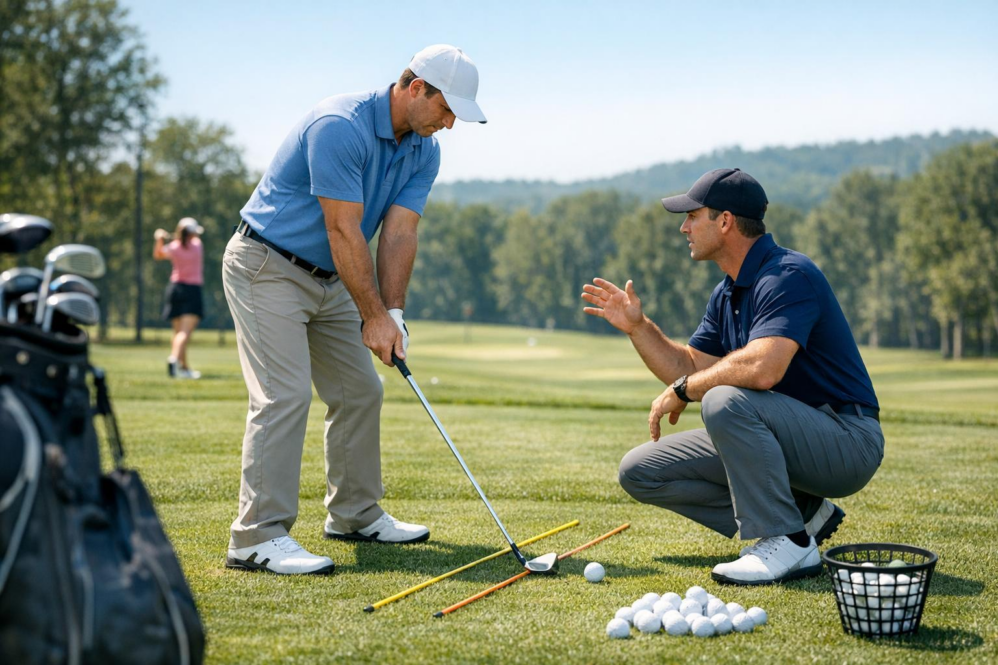
Mastering the Fundamentals of Accurate Aiming for a Consistent Swing
Accurate aiming sets the foundation for a consistent swing and ultimately improves shot precision across all clubs. Start by establishing a proper alignment setup: position your feet, hips, and shoulders parallel to the target line, with the clubface directly aimed at your intended target. Use intermediate targets in practice-such as a spot a few feet ahead-to help visually confirm your alignment. This technique enforces muscle memory for correct aim and reduces compensations during the swing, such as over-rotating or casting the club.Additionally, pay close attention to your stance width and ball position; typically, a stance approximately shoulder-width ensures stability while ball placement varies slightly by club-centered for irons and forward in the stance for drivers to encourage an ascending strike. Integrating alignment sticks into your setup routine can offer immediate visual feedback,making it easier to develop consistent habits across practice sessions and on the course.
To refine your short game aiming-especially in putting and chipping-focus on controlling the face angle at impact and reading green breaks accurately. Set up with a slightly open stance if needed to promote a square or slightly closed clubface through impact,especially when hitting delicate chips or pitches around the green. Learning to read subtle slopes and grain direction helps align your putts accurately; apply the “Aim for safe targets” principle by choosing larger, more forgiving aiming zones rather than pin-point targets on challenging greens.A practical drill to improve this is placing alignment tees along your intended putt line and practicing a smooth stroke that maintains the putter face square through impact. Repeatedly analyzing missed putts and adjusting aim based on break reading creates a reliable putting routine that lowers three-putt frequency and stabilizes scoring.
Course strategy intertwines closely with accurate aiming by encouraging smarter risk management and shot selection. Before each shot, evaluate environmental factors such as wind direction, sun glare, and uneven lies that may require aim adjustments; for example, aim 3 to 5 degrees left or right of the flag in windy conditions to allow for ball flight drift. For longer drives, select safe targets-such as the widest part of the fairway or a favorite tee marker-to reduce pressure and increase shot confidence. Regularly practicing target-focused routines that simulate course play, including aiming small goals like landing in specific fairway zones or avoiding hazards, boosts mental focus and swing consistency. Over time, these techniques unite to enhance precision, lower scores, and foster a confident approach to every shot, nonetheless of your skill level.
Unlocking Precision Putting Techniques to Lower Your Scores
Mastering precision putting begins with establishing a solid and repeatable setup, which directly influences stroke consistency. Start by positioning the ball slightly forward of center in your stance-about one to two inches ahead-allowing the putter head to naturally swing along a slight arc. Emphasize a relaxed grip pressure, roughly a firmness rating of 4 out of 10, to ensure fluid motion without excessive tension. Align your eyes directly over or just inside the ball to improve depth perception of breaks and green contours. From this foundation, practice maintaining a square putter face throughout the stroke by focusing on gentle, pendulum-like shoulders rotation rather than wrist manipulation. Employing these setup fundamentals will help golfers of any level create a more reliable putting stroke and reduce unintended face rotations that cause directional errors.
Reading greens accurately is the cornerstone of lowering scores through better putting. Begin by observing the slope direction and grain flow from multiple vantage points around the hole, then use aiming techniques such as the clock method or gate drills to visualize the optimal target line. In real-course scenarios, golfers should select safe targets by aiming just left or right of the hole according to the slope, allowing gravity to guide the ball inward-especially when faced with subtle breaks under 3 degrees.Such as, when facing a downhill right-to-left putt, set your aim point about 12 to 18 inches outside the hole’s edge to account for speed and slope interaction. Incorporate an effective drill routine alternating pace control exercises-such as distance ladder drills-with directional accuracy drills like putting through alignment gates to sharpen both speed and line judgment. This helps golfers avoid the common mistake of under-reading breaks or misjudging green speed during different weather conditions, such as after rainfall when greens tend to slow down.
To further enhance precision, shot shaping through varying stroke length and tempo is key, especially on longer putts that require nuanced touch. Developing a consistent pendulum rhythm allows for adjustments in stroke length that correspond to distance without sacrificing control, often categorized into short, medium, and long putting ranges.As an example, a short putt within 6 feet demands a controlled stroke of about 6-8 inches with a shorter takeaway, while a medium putt up to 15 feet benefits from a slightly longer backswing of 12-15 inches with a smooth acceleration through impact. Advanced players might experiment with subtle releases or “hinge and hold” techniques to better manage pace on breaking putts. Regular practice using target-based drills-such as trying to lag balls within a 3-foot circle from 20 feet out-not only improves speed control but builds confidence to commit fully to each read and stroke. By combining mechanical precision with keen course awareness and mentally committing to a target line, golfers reduce three-putts and transform their approach to putting from guesswork into a calculated, repeatable skill.
Driving with Confidence how to Align Your Shots for Maximum Distance and Accuracy
Establishing a solid alignment foundation is essential for driving both distance and accuracy off the tee. Start with your stance by positioning your feet shoulder-width apart and ensuring that your shoulders, hips, and feet are parallel to the target line. Using an alignment stick or clubs laid on the ground during practice can definitely help you visualize this setup. Aim your body slightly left of your target (for right-handed golfers) when shaping a fade or draw shot, but always maintain the clubface aiming where you want the ball to start. Remember, the path of your swing will influence the ball’s initial direction, so practicing a square clubface at impact combined with consistent swing path promotes straighter drives. Adjust your ball position so it is just inside your lead heel; this position allows you to hit the ball on the upswing, maximizing launch angle and reducing spin for optimal carry and roll.
Once your setup is dialed in, focusing on swing mechanics will amplify consistency and power.A smooth, controlled takeaway starting low and wide sets the tone for a powerful release through the ball.Keep your wrists hinged during the backswing to store energy, and rotate your hips fully, which creates torque essential for distance. As you transition to downswing, lead with your lower body to encourage an inside-to-out swing path, promoting a desirable draw shape if that fits your shot strategy. For accuracy,practice hitting spot targets on the range rather than merely swinging hard.incorporate drills such as the “gate drill” using tees to ensure your clubhead travels on your intended path through impact. For beginners, an emphasis on tempo rather than speed helps develop muscle memory without sacrificing control. Advanced players can experiment with launch monitors to analyze launch angle, spin rate, and clubhead speed, making precise adjustments to equipment or technique to optimize performance.
Course management plays a pivotal role in maximizing driving distance without sacrificing accuracy. evaluate the hole layout,wind direction,and fairway hazards to determine your best landing zones rather than simply aiming for maximum carry. Aim for safe targets such as the widest parts of the fairway, allowing room for slight misses and reducing penalty risks. On tight holes, favor accuracy with a controlled 3-wood or hybrid rather than forcing driver distance. Visualize the shot shape needed to avoid trouble,whether that means a gentle fade around trees or a controlled draw to roll toward the green. Additionally, adapt your alignment and shot selection to prevailing conditions-such as cutting across the wind or playing lower trajectory shots in windy weather-to maintain shot control. Incorporate routine pre-shot visualization and breathing exercises to steady nerves and maintain focus, linking mental strategy directly to execution. With consistent practice and thoughtful course navigation, you’ll build confidence that translates into more precise, powerful drives and lower scores.