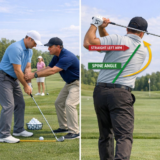
Optimizing driver distance continues to be a principal focus for coaches and equipment engineers alike. Of teh adjustable variables that shape ball flight-clubhead speed, impact location, loft, and spin-the shaft’s stiffness occupies a pivotal role: it governs energy transfer from player to ball and interacts with a golfer’s sequence of motion. Despite abundant consumer advice and marketing claims, a clear, evidence-based synthesis of how shaft stiffness affects launch characteristics, swing mechanics, and shot consistency across different ability groups remains limited. This article fills that void by merging biomechanical concepts, ball-flight physics, and field-fitting practices to deliver actionable guidance for players and fitters at all levels.
Here, “shaft flex” refers to the distribution of axial and bending stiffness along the shaft and its time-dependent behavior during the downswing and at impact.Changes in stiffness modify when and how much the shaft bends and recovers, which in turn shifts effective loft at contact, face orientation, and the velocity vector of the clubhead. those shifts show up as measurable differences in launch angle, spin rate, ball speed, and lateral dispersion-all factors that determine carry distance and accuracy.
Importantly, shaft influence is conditional: its effect depends on swing tempo, release sequencing, attack angle, and strike location-variables that systematically vary with skill level and individual physique.
This introduction sets three primary objectives for the article: (1) trace the mechanical routes through which shaft stiffness modifies launch and swing behavior; (2) compare expected outcomes and trade-offs for recreational, developing, and expert players; and (3) propose repeatable fitting procedures that combine motion-capture metrics, inertial club sensors, and launch-monitor outputs. By pairing theoretical insight with practical measurement, the goal is to move shaft-selection conversations from opinion to data-driven practice, giving coaches and fitters concrete criteria to increase driver distance without sacrificing control.
What follows is a concise review of relevant biomechanics and ball-flight relationships, supplemented with empirical and simulation-based examples showing how particular stiffness profiles interact with representative swing archetypes. The article closes with a pragmatic fitting framework-detailing metrics,thresholds,and decision rules-designed for implementation in coaching and retail settings,plus recommendations for research needed to address remaining evidence gaps.
Mechanical Basis: How Shaft Characteristics Shape Ball Flight
Seeing the shaft as an active, time-sensitive element of the golf system is essential for predicting and improving driver performance. The shaft does more than connect the grip to the head; it behaves like a spring whose flex profile (relative stiffness at the tip and butt, and the bend locus or kick point), torque, and natural frequency affect clubhead timing, the instantaneous loft presented at contact, and face rotation. Practically speaking, an overly limp shaft for a player’s tempo tends to promote a late release, increased dynamic loft, and elevated backspin; on the other hand, a shaft that is too rigid can encourage an early unhinging of the wrists or a closed face at impact, producing lower launch and, in some players, more fades or slices. Use the following provisional speed-to-flex bands as starting guidelines: <85 mph: senior/ladies flex; 85-95 mph: regular flex; 95-105 mph: stiff flex; >105 mph: extra-stiff. These are initial checkpoints-final selection should be validated with launch-monitor data and on-course testing.
Moving from shaft attributes to ball flight, the primary determinants remain face angle, club path, and attack angle-and shaft flex alters those by changing the timing relationship between the hands and the clubhead. Because flex modifies dynamic loft at impact and the effective face presentation, it directly affects launch angle and spin. Reasonable driver targets for many players are a launch angle of roughly 10°-14° with spin in the range of 1,800-3,000 rpm, though lower spin is preferred in windy conditions or when roll is desirable, and moderate spin frequently enough produces optimal carry and stopping power.To evaluate shaft impact, follow a staged approach: record baseline metrics (swing speed, ball speed, launch, spin, smash factor), trial a structured set of shafts varying in flex and kick point, and compare outcomes under consistent conditions. When testing, use a launch monitor and gather no fewer than 10 quality strikes per shaft to form a defensible comparison before altering equipment or technique.
From a swing-coaching standpoint, players must connect shaft behavior to reliable movement patterns. novices should prioritize a consistent setup and tempo so shaft loading becomes predictable; more skilled players can tune release timing and sequencing to exploit a chosen shaft’s response. Essential setup fundamentals and corrective checkpoints include:
- Neutral spine and even weight balance at address to avoid compensatory hand actions that obscure shaft feedback.
- Driver ball position slightly forward (near the inside of the left heel for right-handers) to encourage a positive attack angle.
- Moderate grip pressure (~4-6/10) to allow the shaft to flex and rebound without excessive flicking of the wrists.
Practice progressions that develop timing and sensitivity to shaft behavior:
- Weighted-swing drill: use a heavier training shaft or light medicine-ball swing to feel shaft loading and delayed release.
- Metronome-tempo drill: adopt a 3:1 backswing-to-downswing rhythm to stabilize transitions and shaft response.
- Incremental swing-length work: half-to-full-swing sequences to monitor how different flexes alter trajectory and landing patterns.
Typical faults-early casting,excessive hand manipulation,or inconsistent ball position-are corrected by isolating the takeaway and maintaining a stable lower-body sequence so shaft dynamics can express themselves predictably.
On-course application ties shaft selection to tactical decisions. When roll is valuable (firm fairways or tailwind), favor combinations that produce lower launch and reduced spin, often achieved with a stiffer tip or a lower-loft head paired with a penetrating shaft profile. When carry is critical-over water or into rough-choose a shaft/profile that modestly increases launch while keeping spin controlled. Translate these principles into concrete tactics: select a stiffer shaft on narrow, tree-lined tees to improve directional control; opt for a more flexible, higher-launch pairing on long par‑5s where carry into the landing zone matters. Set measurable on-course goals-such as, aim to carry 240-260 yards into a particular landing area with sufficient side control to leave a 150‑yard approach-and iterate shaft and loft choices during practice rounds until those targets are met.
Blend fitting, technique work, and mental routines into a single progression plan. A professional fitting should be iterative: start with static profiling and speed bands, move to dynamic launch-monitor testing, and finish with on-course validation across multiple conditions. For training progression, prescribe:
- Weekly block: two range sessions (one data-focused with a launch monitor, one focused on tempo/feel) plus one on-course application day.
- Short-term targets: strive to raise smash factor by 0.02-0.05 over six weeks, lower driver spin by 200-400 rpm if excessive, or add 10-20 yards of carry through optimized shaft/loft and attack-angle work.
- individualized progressions: slow-repetition, confidence-building drills for beginners; micro-adjustments (grip, tip treatments) for low-handicap players.
Include mental rehearsal and a steady pre-shot routine to consolidate the swing adjustments driven by shaft selection; repeated exposure to pressure situations is often required to transfer gains from the range to tournament play. By uniting equipment science, measured practice, and pragmatic strategy, players can convert an understanding of shaft flex into consistent scoring improvements.
Kinematics and Shaft Response: How Motion Timing Affects Outcomes
Modeling the interaction between a golfer’s movement sequence and shaft characteristics starts with the proximal-to-distal energy transfer: pelvis → torso → lead arm → hands → club. When the sequence is timed correctly, the shaft loads and releases energy through bending and recoil, shaping clubhead orientation at impact. For instructional clarity, use a measurable tempo framework: many amateurs exhibit a backswing near 1.2-1.4 seconds, a transition of approximately 0.12-0.20 seconds, and an accelerated downswing. Novices should establish a smooth rhythm and maintain wrist hinge (commonly ~70-90° at the top for many players) to let the shaft load consistently. Advanced players should refine sequencing so that the shaft’s maximum deflection occurs late enough in the downswing to create a reliable release window aligned with their natural release point, thereby reducing dispersion.
Next,relate swing speed and tempo to appropriate flex and kick point choices. Practical benchmarks for driver speed are: <85 mph: Ladies/Senior (L), 85-95 mph: Regular (R), 95-105 mph: Stiff (S), >105 mph: X-Stiff (X). A shaft that is too supple for an aggressive transition typically raises dynamic loft and spin-producing higher, shorter shots vulnerable to wind-whereas an excessively stiff shaft can depress trajectory and introduce directional misses if the player cannot square the face at impact. Coaches should rely on launch-monitor numbers (ball speed,launch,spin,smash factor) to quantify fit: aim for a smash factor around 1.45-1.50 for drivers and spin windows near 2,000-3,000 rpm, adjusted to the player’s speed and trajectory goals. These objective targets guide both shaft choice and swing adjustments.
From a teaching standpoint, connecting release timing to shaft deflection is crucial.If a player “casts” (releases wrists too early), the shaft unloads before impact, reducing ball speed and frequently enough increasing spin; remediate this with a progression: start with half swings to feel lag, progress to 3/4 swings, and then full swings while holding wrist hinge until the hands pass the hips. A practical checklist for training this sequence-useful for all skill levels-includes:
- Towel drill: tuck a towel under the trailing forearm to reinforce connection and prevent casting.
- Pause-at-top: hold a one-second pause at the top to refine transition timing and shaft loading.
- Impact-bag/short-arcs: hit into an impact bag or use short, punchy swings to cultivate solid contact and a controlled release.
These interventions can lead to measurable improvements-target a 5-10% rise in ball speed and a 200-500 rpm drop in problematic spin with consistent work and an appropriate shaft match.
Equipment and setup details must be incorporated into technical instruction and course planning. Consider shaft length, swing weight, and lie angle in pre-round checks: standard driver lengths typically range from 43.5-45.5 inches; adding an inch can increase distance but commonly reduces accuracy as of higher torque and timing sensitivity. Kick point matters: a low kick point tends to raise launch, while a high kick point lowers it-so choose kick point to match attack angle and desired trajectory. In firm, windy links-like conditions, a slightly stiffer shaft or a higher kick point usually keeps the ball penetrating; in softer conditions where carry is paramount, modestly more flex or a lower kick point can aid launch and carry. Always verify such changes on a launch monitor and in wind-simulated practice to ensure transfer to the course.
Translate these biomechanical and fitting insights into long-term strategy and practice planning.Set measurable season-long goals such as reducing lateral dispersion to within 15 yards of the intended line or increasing fairways hit by 10 percentage points. Weekly routines might include:
- One technical session (30-45 minutes) focused on sequencing and shaft interaction using slow-motion video and launch-monitor feedback.
- One situational nine-hole practice round testing trajectory control and shaft/loft permutations under real conditions.
- Short-game and mental rehearsal (30 minutes) to sustain scoring ability while refining long-game changes.
Avoid two common pitfalls: relying solely on subjective feel without objective data, and switching shafts too frequently enough without adequate adaptation time-target a minimum of 500-1,000 swings with a new shaft before final judgment. Integrating kinematic training,equipment selection,and tactical planning enables golfers to create repeatable ball flights and lower scores.
Measured Effects: How Flex Changes Launch, Spin and Speed
Controlled testing shows that shaft stiffness produces direct, measurable effects on launch angle, spin rate, and ball speed by altering timing, dynamic loft and face rotation at contact. Generally, a shaft that’s too soft for a player’s tempo and clubhead speed will elevate dynamic loft and spin because of a later release and greater tip deflection; conversely, a shaft that is too stiff can lower launch and spin but may also reduce ball speed if the player cannot properly load and release the shaft. Use these practical speed-to-flex groupings as a working map: 70-85 mph = Ladies/Soft (L/A), 85-96 mph = Regular (R), 96-110 mph = Stiff (S), and 110+ mph = Extra Stiff (X). These should be refined through launch-monitor measurement of clubhead speed, attack angle, and smash factor.
Linking shaft behavior to swing mechanics, consider tip stiffness and kick point. A mid/high kick point with lower torque resists tip rotation and helps players with speedy hands or an early release keep face rotation under control-reducing sidespin and curvature. Players with slower transitions who rely on shaft bend to generate clubhead speed may prefer a softer tip to increase launch and ball speed. Coaching cues to align mechanics and equipment include: position the ball slightly forward (about 2-3 ball diameters inside the left heel for right-handers), aim for an attack angle near +2° to +4° with the driver for favorable launch/spin trade-offs, and use tempo drills to synchronize wrist hinge and release timing.
Fitting requires seeking an optimal window, not a single magic number. As a notable example, a player swinging at 95 mph might aim for a launch ≈ 11-13° and spin ≈ 2,000-2,600 rpm with a smash factor close to 1.45-1.48; a player at 105 mph should generally target launch ≈ 9-12° and spin ≈ 1,800-2,400 rpm. When testing shafts,vary flex,tip stiffness,and length methodically and track how those changes move launch,spin,and ball speed. Troubleshooting heuristics:
- If spin exceeds 3,000 rpm and launch is high, try a stiffer tip or a lower-lofted head.
- If ball speed is low while launch looks acceptable, test a softer mid-section to improve energy transfer and smash factor.
- If shots curve excessively, evaluate torque and face-rotation metrics-consider lower-torque shafts or mechanical adjustments to grip and rotation.
Applying fitting gains to course play yields scoring benefits. In windy conditions, choose shaft/head combinations that reduce spin and flatten trajectory-frequently enough a stiffer shaft and a lower-launch head-to make approach distances more predictable. When shaping shots is required, remember that tip softness can magnify fades/draws for players with a late release, while a stiffer tip tends to stabilize the face for straighter flights. Use shaft selection strategically: prefer stiffer setups for narrow, risk-prone holes and more forgiving, higher-launch options on wide teeing grounds where carry matters less.
Embed the correct shaft-swing relationship through a structured practice plan and clear metrics.Weekly benchmarks might include raising smash factor by +0.02-0.05, cutting average driver spin by ~500 rpm, or consistently achieving a positive attack angle near +2°. Recommended routines:
- Tempo/release sequence: three-step build to a controlled one-count transition to stabilize shaft loading and release.
- Impact-awareness: half-swings with alignment rods and variable tee heights to feel changes in dynamic loft and low-point control.
- Launch-monitor experiment: test three candidate shafts with 20 shots each and compare averages for launch, spin, ball speed, and dispersion before deciding.
Correct recurring errors-misplaced ball position, casting (fix via short backswing drills), or excessive grip tension (use relaxed-hold practice). Couple objective fitting data with on-course validation and mental rehearsal-visualize intended flight paths and backup plans-so equipment and technique changes produce reliable scoring benefits.
Diagnostic Protocols: Measuring Tempo, Feel and Flex Needs
Sound diagnostic testing starts with a standardized data-collection routine that separates tempo and feel from pure speed so that recommendations are evidence-based. Use a calibrated launch monitor (radar or optical), inertial club sensors or high-speed video, and a metronome for tempo control. Record metrics for each trial: backswing time, transition duration, downswing time (expressed as a ratio; aim for a 3:1 backswing:downswing cadence), plus clubhead speed, ball speed, smash factor, attack angle, launch angle, and spin rate. For drivers, expect attack angles from about -3° to +5° and launch generally within 10°-14° depending on speed; use these as baselines when assessing how shaft flex influences flight and timing. Also log setup variables (ball position,stance width,spine tilt) because small setup shifts can systematically change measured tempo and dynamic loft.
then follow a stepwise testing sequence for full-swing sessions to quantify flex requirements. first, set tempo baselines with a metronome at three discrete cadences (slow, baseline, fast) and record five swings per tempo. Next, perform identical swings across a matrix of shaft flexes and kick points (e.g., L/A/R/S/X variants). Use the launch monitor to compare average smash factor, carry, apex height, and lateral dispersion for each shaft/tempo pairing. An efficient practical routine:
- Setup check: ball just inside front heel for the driver, shoulder-width stance, neutral grip pressure (~4-5/10).
- Tempo trial: 10-12 quality swings per shaft at controlled BPM; remove outliers caused by mishits.
- Data synthesis: choose the shaft that consistently delivers the highest smash factor and acceptable dispersion at the player’s natural tempo.
This regimen isolates whether a player’s tempo and feel-not speed alone-drive the need for a softer or stiffer shaft.
Short-game and putting diagnostics use different sensors and tempo targets but remain quantifiable. For chipping and pitching, track backswing length, transition pause, and stroke-through length while using a pendulum metronome (common ratios: 2.5:1-3:1 for putts, 3:1 for chips).Useful drills include:
- Gate with impact tape: confirm consistent contact point and leading-edge behavior.
- Metronome distance ladder: practice 5, 10 and 20-yard targets with consistent tempo and record deviation.
- Feel-to-data alternation: mix blind-feel strokes with open-eye verification via launch monitor or phone video to link sensation to metrics.
These exercises yield repeatable measures (yardage dispersion, contact consistency, roll-out) that guide technique changes for players of all levels.
Interpreting test results requires clear diagnostic rules and progressive corrections. If a player with a soft tempo shows high launch and spin, consider moving one flex stiffer or choosing a lower kick point to tighten dispersion; if launch is too low and smash factor is subpar despite adequate speed, a more flexible shaft or slightly higher torque may restore energy transfer. Typical mechanical faults revealed by diagnostics include casting (early wrist release → low launch, high spin), overactive hands (erratic face angle), and inconsistent transition timing (variable attack angle). Corrective drills and measurable targets:
- Delay-release (impact bag/short swings) to increase compression and lift smash factor by ~0.02-0.05 on average.
- Tempo ladder using metronome increments to stabilize backswing:downswing ratio within ±0.1 s.
- Weighted-shaft swings to refine sequencing and feel; retest to document changes in spin and launch.
Treat diagnostics as a feedback loop: retest after two to four weeks of focused practice and compare metrics to the initial baseline.
Use diagnostic outcomes to shape course strategy, practice planning, and mental preparation. If tests show a shaft/tempo combo that produces a higher, spinnier ball in windy conditions, plan for lower-flight tactics (stronger loft, slightly forward ball position, or option tee club).If a stiffer shaft tightens dispersion at high tempo, prioritize accuracy off the tee on narrow holes. Set clear practice goals-e.g., keep carry consistency within ±7 yards for a given tempo or raise smash factor by 0.03-and schedule weekly sessions accordingly: two technical sessions, two simulation/on-course sessions, and one short-game/putting tempo session. Support different learning styles with mixed modes: visual (video comparisons),auditory (metronome/count),and kinesthetic (weighted implements,impact feedback). Account for weather and turf in testing-conditions alter roll and launch expectations-and ensure all fitted equipment complies with the Rules of Golf before finalizing specs.
Shaft Selection Matrix: Guidance for Novice, Intermediate and Advanced Players
Choosing the right shaft begins with objective measurement of the player’s biomechanics and ball flight, then translating those data into concrete equipment choices. Start by quantifying swing speed, attack angle, and initial launch metrics with a launch monitor. Common driver speed bands used in fitting are <85 mph (novice/senior),85-105 mph (intermediate),and >105 mph (advanced). Next, assess tempo and release style: a smooth, slower tempo with a late release typically benefits from a more flexible shaft and higher torque, whereas a quick tempo with an early release usually requires a stiffer, lower-torque profile to manage dynamic loft and spin. Incorporate setup fundamentals-shaft length (standard driver ~45″; shorten by 0.5-1.0″ for added control if needed), flex designation (L/A/R/S/X), and kick point (low/mid/high)-so the shaft promotes repeatable contact rather than masking mechanical flaws. This analytical progression aligns equipment with technique and course strategy rather than treating shaft choice as an isolated fix.
For beginners, the main aim is consistency and confidence: choose equipment that simplifies the swing.Select shafts with forgiving torque and comfortable feel (higher torque values can help square the face and promote launch at low speeds). Practical drills and checkpoints to test a novice shaft:
- Tempo metronome drill: 3:1 rhythm to reveal whether a shaft unloads prematurely.
- Contact-window drill: use impact tape over 50-100 shots to track center-face strikes and dispersion.
- Basic launch-monitor session: monitor carry,launch (target ~12°-14° for slow swing speeds),and spin to confirm usable launch conditions.
Short-term goals: raise fairway hit percentage to ~60%+ and narrow lateral dispersion to 15-20 yards. If the shaft produces excessive spin or poor control, consider shortening or stepping up one flex to restore confidence.
Intermediate players need finer matching of flex, torque and bend profile to their developing mechanics. Because many intermediates swing with variable attack angles and transitions, measure the average driver attack angle (often between -3° and +3°) and relate it to launch and spin patterns. Players with positive attack angles frequently enough benefit from a stiffer tip section to control dynamic loft and reduce spin; those swinging down into the ball may gain launch from a lower-kick-point, slightly more flexible shaft.Refine selection with:
- Progressive flex testing: hit 10-15 balls per shaft when comparing flexes one step apart, holding loft and length constant; observe carry, apex and spin (aim for a spin window of roughly 1,800-3,000 rpm based on speed and trajectory goals).
- On-course simulation: play a couple of holes with each candidate shaft to evaluate dispersion and shot-shaping in real wind and lies.
Through iterative tests, strive to reduce side spin and trim overall dispersion by ~5-10 yards. use shaft choice strategically-on windy days favor a stiffer, lower-launch profile for penetration.
Advanced and low-handicap players require precision fitting: small adjustments in frequency, tip stiffness and torque produce measurable changes in dispersion and shot shape. Consider frequency/tipping techniques and the heuristic that trimming about ½” from the butt or tip approximates moving one flex step stiffer-useful for fine-tuning feel without switching models. typical preferences for higher-level players include lower torque (~3-4°), mid-to-high kick point for a penetrating flight, and tip stiffness tuned to release timing so the face squares predictably at impact. High-level practice should include:
- Frequency/cadence testing: use a shaft-frequency analyzer and launch-monitor data to match cyclical response and repeatability.
- Shot-shaping protocol: practice controlled fades and draws while noting how shaft bend profile alters curvature and gear-effect tendencies.
Avoid chasing marginal distance gains at the expense of increased dispersion; prioritize reductions in standard deviation of carry and lateral error, which improve scoring under competitive pressure.
To combine equipment choices with long-term improvement, follow a staged fitting-and-practice roadmap linking shaft to swing mechanics, short-game reliability, and strategic play. Start with a professional fitting (launch monitor + on-course validation), then implement a focused practice plan: range sessions for impact repeatability, short-game work to protect scoring when long shots are imperfect, and situational play that simulates tournament stress. Checkpoints and troubleshooting:
- Setup checks: ball position, spine angle, and shaft lean at address to ensure the chosen shaft yields correct dynamic loft at impact.
- Troubleshooting: if shots are high and hooking, increase tip stiffness or reduce torque; if shots are low and fading, try a slightly softer tip or fuller feel.
Integrate pre-shot routines and mental shot-acceptance thresholds so that shaft choice supports confident decisions under variable weather and course states. Combining quantified fittings, disciplined drills, and on-course checks enables measurable gains in accuracy, consistency, and scoring for golfers of every level.
Practical Fitting steps: From Launch-Monitor Numbers to On-Course Results
Begin any fitting by mapping launch-monitor readings to real-world expectations. Record baseline values with a consistent setup: clubhead speed,ball speed,launch angle,spin rate,smash factor,and attack angle. Many club golfers will produce driver clubhead speeds in the 60-105 mph range (beginners to mid-handicaps), while lower-handicap players commonly exceed 105-120+ mph, with ideal smash factors near 1.45-1.50. Use USGA-conforming balls and conforming heads/shafts during testing so fitted specs remain competition-legal. Identify the loft/face-angle/dynamic-loft combination that yields optimal carry for the player’s speed-often a driver launch of 10-14° with spin between 1,800-3,000 rpm, depending on attack angle and speed. Establish target metrics before iterating equipment and technique.
When moving from metrics to hardware, shaft flex and profile are central to controlling timing, effective loft and lateral dispersion. A shaft that’s too soft for a player’s release/tempo tends to raise spin, open/close the face unpredictably, and increase dispersion; conversely, a shaft that’s too stiff can reduce clubhead speed or diminish feel.Run comparative trials on the monitor with shafts differing in flex, torque, and kick point while holding head and loft constant. Practical checks: if a stiffer flex raises ball speed and cuts spin without dropping smash factor by more than 0.02, prefer the stiffer option; if spin climbs above target by > 500 rpm, consider a stiffer tip or lower loft. For players seeking repeatable feel, consider shaft frequency matching (Hz) as an additional criterion. track face-angle tendencies and link them to bend profile: a late-release swinger may gain from increased tip stiffness to avoid excessive hooking on the course.
After lab or indoor fitting, validate results on the course with structured tests and drills mimicking play. A short on-course checklist:
- Use the same tee height and ball model as in play.
- Record three-shot groups from the same tee to measure real dispersion.
- Test into different wind directions and turf firmness to see how launch/spin interact with roll.
Useful practice drills for on-course verification:
- Upward-attack drill: shift ball one ball-width forward and practice a sweeping driver strike to seek a positive attack angle of +2-4° and increase carry.
- Compression drill: ten half-to-three-quarter swings into an impact bag or towel to build consistent contact and move smash factor toward 1.48-1.50.
Compare launch-monitor predictions to on-course outcomes-acceptable agreement is often within ±5-10 yards for carry and ±10-15 yards total dispersion, depending on conditions.
Calibrate short-game distances using a launch monitor to create an accurate wedge yardage chart and then validate those distances in play. For each wedge, log full-swing carry and test 75%, 50% and bump-and-run variations to produce reliable scoring options. Targets: maintain 5-10 yard gaps between lofts and reproduce partial-swing distances within ±5 yards. Typical short-game errors-wrong ball position, excessive hand action, or misreading turf-are corrected with setup rules:
- neutral/slightly open face at address for controlled trajectories;
- Hip hinge to keep a stable low point and crisp contact;
- Fixed-wrist drill to reduce flipping on short shots.
Then apply these calibrated distances to on-course decisions: use lower-trajectory partial shots into firm greens and high-lofted approaches into soft targets to stop the ball quickly.
Integrate technical, physical and mental elements into a repeatable fitting-and-validation program suitable for all abilities. For beginners, emphasize tempo and consistent contact with realistic targets (e.g., raise smash factor by 0.05-0.10); for advanced players, fine-tune shaft flex, launch/spin windows and shot-shaping to shrink the 95% dispersion ellipse. Session structure suggestion: 10-15 minute warm-up,30-45 minute launch-monitor testing with systematic swaps,20-30 minute on-course verification on holes with varying conditions,and a short reflection to log results and define next steps.Address cognitive factors with a consistent pre-shot routine and simple decision trees for risk-reward choices (e.g., layup distance vs. carry requirement). If on-course results deviate from fitted predictions, follow this troubleshooting order:
- Recheck ball position and stance;
- Confirm shaft flex/tip aligns with swing tempo;
- Repeat launch-monitor session with your preferred competition ball;
- Validate over 9-18 holes in differing conditions.
A disciplined,data-informed process transforms launch-monitor readings into dependable on-course improvements and clarifies how shaft flex and other gear interact with technique and strategy.
Training and Swing Tweaks to Get the Most from a Shaft
Optimizing shaft performance starts with a repeatable setup and matching shaft attributes to the player’s physical outputs. First check fundamentals: ball position just inside the left heel for the driver, spine angle tilted slightly away from the target (roughly 10-15° shoulder tilt), and neutral grip pressure to allow wrist hinge. Then align shaft flex with measured clubhead speed-general guide: L/Senior: <80 mph, Regular: 80-95 mph, stiff: 95-105 mph, X‑Stiff: >105 mph. Check kick point and torque relative to the desired flight-a higher kick point favors a lower launch, a lower kick point raises it; lower torque reduces face twist and improves face control. Use this checklist for setup and equipment selection:
- Setup checkpoints: ball position, spine tilt, grip force, stance width (about shoulder width), and weight distribution (~60% on the trail leg for driver).
- Equipment checkpoints: clubhead speed, desired shot height, and acceptable dispersion to determine flex, length and torque.
- Measurement tools: launch-monitor metrics (ball speed, launch angle, spin) and a frequency analyzer when available.
Shift focus to loading and unloading the shaft so it complements the player’s release and face control.Teach sequencing that emphasizes a steady lower body, smooth weight transfer, and controlled wrist hinge so the shaft stores energy in the backswing and releases through impact. For most golfers an effective driver attack angle is slightly positive; aim for +1° to +4° to reduce spin and increase carry when paired with the right shaft. Key drills for shaft loading and timing include:
- Step-and-hit: begin feet together,step into the stance at transition to prompt lower-body initiation and consistent shaft load.
- Pause-at-top: add a 0.5-1.0 second hold to improve sequencing and feel of shaft flex during transition.
- Towel-under-armpit: promote connection between lead arm and torso to prevent casting and maintain shaft load into the downswing.
Course strategy should reflect shaft behavior in club selection and shot planning. Downwind, when ball flight tends to balloon, pick a stiffer or lower-launch shaft profile to keep the trajectory penetrating; into the wind or when maximum carry is required, a slightly softer or lower-kick shaft that raises launch and spin might potentially be preferable. For narrow targets, choose shafts that reduce torque-induced face rotation to tighten dispersion. Practical responses include:
- For a tight fairway with crosswind, select a shaft with lower torque and a heavier tip section to stabilize face orientation.
- On firm, links-style courses where roll is desired, use a setup promoting lower launch (8-10°) and moderate spin (1,800-2,500 rpm).
- To clear hazards requiring aerial carry, choose softer kick-point options or add loft while watching spin to avoid ballooning.
To make changes measurable, run progressive practice routines and objectively test results. use a launch monitor to log baseline metrics and set specific targets-e.g., raise smash factor by 0.02-0.05 or reduce side dispersion by 10-20 yards. Periodize drills by skill level:
- Beginners: tempo and contact drills, tee-height progressions, consistent ball position.
- Intermediates: responsible speed training, alternating shaft-flex sessions to evaluate feel and response.
- Low handicappers: micro-adjust loft, kick point and tip stiffness while practicing controlled shot-shaping.
Adopt a holistic fitting and coaching pathway that accounts for physical capacity, learning style and mindset. Begin with a physical screen (rotational mobility, hip stability, grip strength) because these affect shaft-loading capability. Then conduct controlled A/B shaft tests and log outcomes across varying turf and wind conditions. For different learners: give explicit numeric targets to analytical types; emphasize feel and immediate feedback to kinesthetic learners. Pair mental strategies-pre-shot routines and decision trees that match shaft traits-with mechanical work to ensure changes stick on the course. A simple monitoring plan:
- Weekly: 30-45 minutes focused range work aligned with launch-monitor targets.
- Monthly: equipment check/fitting to confirm shaft behavior meets performance goals.
- on-course: scenario rehearsals to translate practice gains into scoring.
Evidence and Examples: Distance Versus Accuracy Trade-offs
Case examples and fitting studies repeatedly show that raw increases in carry and ball speed frequently enough come with larger dispersion unless technique and equipment are refined together. Typical outcome metrics tracked in these tests are carry dispersion, total dispersion, carry, spin, and launch. Such as,players who raise driver clubhead speed from roughly 95 to 105 mph without adjusting face control or shaft properties commonly see average lateral dispersion widen by 10-20 yards,whereas a properly fitted shaft and loft can reduce that penalty to 3-8 yards. The lesson: pursue distance improvements alongside targeted interventions to control face-to-path, AoA and equipment variables that influence spin and launch.This integrated approach converts raw distance into repeatable scoring possibility rather than inconsistent risk.
Reducing the distance-accuracy trade-off begins with reproducible setup and swing mechanics. Emphasize a handful of setup checkpoints: ball at the leading edge of the left heel for driver, torso tilt away from the target (~5-8°), and a slightly upward AoA (+1° to +3°) to encourage positive launch. Suggested progression drills:
- impact-tape sessions to move mean strike toward the center (goal: within ±0.5 inch of sweet-spot).
- Face-control ladder: 10 balls to a metronome cadence focused on returning the clubface square (aim to reduce face-to-path variance to ±3°).
- AoA alternation: use a low-profile launch monitor to alternate 10 swings at +3° and 10 swings at +1° to balance carry vs. spin.
Structure sessions from slow-motion groove work to half-swings with alignment rods, finishing with full swings under simulated pressure for transfer to play.
Shaft tuning is central to balancing distance and accuracy and should be part of a formal fitting rather than a guess. Practical flex bands used in many fittings: L <75 mph, A/Senior 75-85 mph, R 85-95 mph, S 95-105 mph, and X >105 mph. Stiffer shafts often reduce dynamic loft and spin for players with late-closing hands-improving roll and curvature control-while an overly stiff shaft can suppress launch and shorten carry. during a fitting:
- Compare two shafts (one softer,one stiffer) for 10 swings each and record carry,total,spin and dispersion; aim for the shaft that minimizes dispersion while keeping carry within ±5 yards of baseline.
- Loft tuning: test increments of +1° and −1° to find the loft that produces desired launch (mid-handicaps often target 12°-14°) and spin (2,200-3,000 rpm depending on conditions).
- Grip and length checks: ensure grip size permits proper wrist hinge; shorten shaft in 0.5-1.0 inch steps if dispersion rises at higher speeds.
These empirical approaches,measured with a launch monitor,help coaches and players quantify trade-offs and choose equipment that complements biomechanics and strategy.
On-course tactics meld technical and equipment choices into smarter play that lowers scoring risk. For instance, case studies show that choosing a 3-wood or hybrid off the tee on a 420-450 yard par‑4 with a crosswind can reduce expected lateral dispersion by up to ~15 yards and raise fairway percentage by 10-20%, improving approach angles and birdie opportunities. Practical on-course steps:
- Aim-point selection: with a left-to-right wind,aim 2-4 yards left of the visual center to bias shots toward the fairway.
- Risk-reward analysis: if the protected pin sits behind water at 170 yards, prefer a layup to the widest landing area rather than an aggressive attack.
- Pre-shot routine under pressure: use two calming breaths and pick a single visual target to preserve tempo and reduce rushed mechanics that increase dispersion.
Practice club-choice under realistic conditions to internalize the statistical advantage of accuracy over raw distance.
combine short-game sharpening and mental routines to turn better distance management into lower scores. Data-driven practice shows that reducing three-putts by 0.5 per round or boosting up-and-down percentage by 10% offsets small distance sacrifices from conservative tee choices. Actionable drills:
- Wedge distance ladder: five target distances (e.g., 30, 50, 70, 90, 110 yards), 10 shots each, finish within ±3 yards of each target.
- Putting pressure game: simulate match-play penalties on the practice green to reinforce routine and cut three-putts.
- Recovery repertoire: practice bump-and-run and flop shots to raise up-and-down from ~20% to 30-40% over 6-8 weeks.
Address common flaws-over-rotation on long shots, wind misreads, equipment mismatches-using video, launch-monitor data and targeted drills. In sum, measurable scoring gains require aligned improvements in mechanics, shaft and loft selection, strategy, and a resilient mental approach that makes the distance-accuracy balance work for each golfer.
Q&A
Section A – Primary topic: Master driver Distance: Shaft Flex Effects on Swing (Practical Q&A)
1) Q: What does “shaft flex” mean and which properties matter most for driving?
A: Shaft flex describes how the shaft bends and responds under dynamic load during the swing. Key properties include the bending-stiffness profile from butt to tip, natural frequency (Hz), torque (resistance to twist), mass and mass distribution, and kickpoint (the region of maximal bend). These features control the timing of deflection, face rotation, and the efficiency of energy transfer to the ball, thereby shaping launch and flight.
2) Q: By what mechanisms does shaft flex change launch angle, spin and ball speed?
A: Shaft flex changes when and how much the shaft bends and recoils. A relatively soft tip or lower stiffness typically raises dynamic loft at impact, increasing launch and frequently enough spin due to greater effective loft; a stiffer shaft tends to reduce dynamic loft and spin and can improve face stability for aggressive swings, possibly boosting ball speed if the player can still load the shaft efficiently. Tip stiffness and torque also affect face rotation and thus spin axis and lateral dispersion.
3) Q: How does flex interact with clubhead speed and player skill?
A: The interaction is multi-dimensional. Faster clubhead speeds (common among better players) often benefit from firmer shafts to avoid excessive tip deflection and to protect face control, while slower speeds generally gain from softer shafts that facilitate loading and recoil. Yet tempo and release timing matter: a smooth, lower-speed swinger might prefer a different flex than an aggressive low-speed swinger. Good fitting blends speed and temporal characteristics.
4) Q: What objective metrics are essential in a fitting or experiment on flex effects?
A: Core metrics include clubhead and ball speed, smash factor, launch angle, backspin and sidespin, spin axis, carry and total distance, lateral dispersion, dynamic loft at impact, face angle at impact, attack angle, and shot-to-shot variability (standard deviation, 95% ellipse). For shaft characterization: frequency (Hz), stiffness profile, torque and mass. High-quality launch monitors and motion-capture or sensor data capture are recommended.
5) Q: What standardized protocol should be used to quantify shaft flex effects?
A: recommended protocol highlights:
– Equipment control: same driver head, loft, shaft length and grip; vary shaft stiffness/profile onyl.
– Warm-up: 10-15 minutes standardized.
– Test design: randomized block of at least three flexes; include tip-stiffness variations if possible.
– Repetitions: ≥20 quality drives per shaft per player; discard mishits by set thresholds.- Data capture: launch monitor (and optional motion-capture) for kinematics.
– Outcomes: mean and SD for ball speed, carry, total, launch, spin and dispersion.
– Analysis: repeated-measures ANOVA or mixed-effects models; report effect sizes and 95% CIs; p < 0.05 for significance.
- On-course validation: supplement range tests with real-play shots to assess ecological validity.
6) Q: How should different skill groups be guided in choosing flex?
A: General but testable recommendations:
- Beginners/high-handicap (<80 mph): softer shafts (A/L) to help load and increase launch.
- Intermediates (~80-95 mph): Regular (R) to Stiff-regular hybrids depending on tempo.- advanced (~95-105 mph): Stiff (S) commonly optimal for face control and smash.
- Elite (>105 mph): Extra Stiff (X) or low-torque, high-stability profiles.
Always consider tempo: smooth swingers may prefer slightly softer flex for feel; aggressive swingers may need stiffer shafts. Validate choices on-range and in play.
7) Q: How do kickpoint and tip stiffness affect spin and carry?
A: Lower or mid kickpoints and softer tip sections elevate dynamic loft and spin, frequently enough increasing carry for players who need height. Higher kickpoints and stiffer tips reduce dynamic loft and spin for a flatter, more penetrating flight and perhaps more roll. Tip stiffness is a primary influence on spin modulation; kickpoint alterations shift launch angle for similar flex distributions.
8) Q: What misinterpretations arise from relying solely on manufacturer flex labels?
A: Flex labels vary across brands and do not capture stiffness distribution or tip-specific behavior. Two “stiff” shafts may differ significantly in tip stiffness, torque or frequency. Using only labels and clubhead speed ignores tempo and release timing. Objective frequency matching and performance testing beat label-only fitting.
9) Q: Can changing flex alter dispersion and directional control?
A: Yes. Excessive tip softness can increase face rotation variability and lateral dispersion especially with faster swingers; excessive stiffness may reduce energy transfer or change shot shape if the player cannot load the shaft.The right flex aligns shaft dynamics with the golfer’s timing and can reduce shot-to-shot variance.
10) Q: What statistical rules should fitters apply to choose the “best” shaft?
A: Use criteria that combine statistical and practical significance: mean increases in carry/total (p < 0.05) with meaningful effect sizes (>2-3 yards), improved smash factor, and reduced dispersion. Include subjective feel and on-course results. Mixed-effects models help seperate shaft effects from within-player variability.
11) Q: How should tempo and transition be measured and used in shaft selection?
A: Quantify tempo via backswing-to-downswing time ratio and peak angular velocities of torso/wrists. classify tempo as smooth or aggressive and match to shaft: smooth tempos can pair with shafts that permit more load (softer mid/butt); aggressive tempos often need stiffer profiles to prevent late excessive deflection. Add tempo as a covariate in statistical models.
12) Q: Are universal flex prescriptions that reliably increase distance available?
A: No universal rule exists. Although higher speed often correlates with firmer flex, individual timing, release and coordination create large variability. Individualized fitting with objective metrics and on-course validation remains the most reliable approach.
13) Q: Evidence-based steps for a fitter maximizing driver distance?
A: Steps:
– Measure baseline speed, tempo and kinematics.
– Select candidate flexes via frequency analysis and empirical speed bands.
– Test ≥3 shafts with distinct tip profiles in randomized order.
– Collect ≥20 good shots per shaft; record objective metrics.
– Compare carry, total, smash, spin and dispersion using paired tests.
– Include subjective feel and limited on-course checks before final selection.
– Document results and retest periodically.
14) Q: Recommended avenues for future research?
A: Suggested directions: longitudinal adaptation studies to new shafts; models combining full-body biomechanics with shaft deflection (finite-element methods); larger randomized trials across broad skill cohorts; examination of head-shaft coupling and face dynamics; and predictive machine-learning models mapping kinematic signatures to optimal shaft properties.
15) Q: What limitations should readers heed about shaft-flex research?
A: Limitations include inconsistent manufacturer labeling, limited transfer from range to course, placebo/psychological effects, small sample sizes, and difficulty isolating shaft effects from head and ball interactions. Always confirm fitted choices empirically.
Section B – Other uses of “Shaft” (brief notes)
1) Q: What other topics use the term “Shaft”?
A: Search results may point to unrelated uses of “Shaft,” such as the 1971 and 2000 films featuring the John Shaft character, or dictionary senses describing a rod or narrow passage-these are distinct from the golf-equipment meaning.
2) Q: Are those other results relevant to golf-shaft fitting?
A: No. They are homonyms; the Q&A above focuses solely on golf-relevant technical and fitting matters.
Concluding note: Effective fitting combines objective measurement (launch monitor, shaft-frequency testing), statistically robust testing, and on-course validation. Individual biomechanics and tempo matter as much as nominal flex labels when optimizing driver distance and consistency.
Final Summary: Matching Shaft Flex to Swing to Maximize driver Distance
Golf-focused outro – “Master Driver Distance: Shaft Flex Effects on swing – All Levels”
The biomechanical and empirical material summarized here shows that shaft flex is a key, adjustable factor affecting driver launch, clubhead dynamics, and tee-shot accuracy across player cohorts. When stiffness is tuned to a player’s tempo, swing speed and release timing it yields favorable combinations of launch angle, spin and ball speed; when misaligned it amplifies variability and reduces repeatability. We therefore recommend a standardized, measurement-led fitting protocol integrating calibrated launch-monitor metrics (clubhead speed, ball speed, launch angle, spin rate, smash factor), temporal and kinematic descriptors (swing tempo, transition timing, wrist and torso sequencing), and direct shaft quantification (frequency/stiffness testing and, where feasible, strain/deflection analysis). In practice, fitters should stratify players by objective speed/tempo bands, trial two to three flex options under simulated or on-course conditions, and favor consistent carry dispersion over marginal peak distance gains. Future research should prioritize larger-scale, longitudinal field studies, cross-validating lab kinematics with on-course outcomes and building predictive models that incorporate inter-individual variability and equipment interactions. With rigorous measurement, individualized fitting, and ongoing validation, practitioners can reliably improve driver distance and consistency across player levels.
Outro for other meanings of “Shaft” (film and lexical)
If the subject instead concerns non-golf topics sharing the term “Shaft” (film or lexical studies), a comparable concluding approach applies: synthesize key claims, contextualize findings, note limits, and outline next steps-archive and reception research for film studies or corpus-based semantic change work for lexical inquiries. in each case, close by reaffirming central insights, acknowledging methodological constraints, and proposing concrete research directions.

Unlock Explosive Driver Distance: How Shaft Flex Transforms Your Swing at Every Level
Why shaft flex matters for driver distance and accuracy
Most golfers obsess over clubhead technology and ball models, but shaft flex is often the silent performance multiplier. The flex (stiffness) of the driver shaft influences how the clubhead returns to the ball,which directly affects launch angle,spin rate,face angle at impact,timing,and ultimately carry and dispersion. Getting shaft flex right can unlock extra yards, tighten shot groups, and make your ball flight more repeatable without changing your swing mechanics.
Key golf keywords to know (and what they mean)
- Shaft flex / shaft stiffness – how much the shaft bends during the swing (typical labels: L, A, R, S, X).
- Swing speed – clubhead speed at impact (mph), a primary driver for flex selection.
- Launch angle – the initial upward angle of the ball after impact.
- Spin rate – how many revolutions per minute (RPM) the ball spins; affects carry and roll.
- Smash factor – ball speed divided by clubhead speed, indicator of energy transfer.
- Kickpoint (bend point) – region of the shaft where it bends most; affects launch.
- torque – degree of twist in the shaft, affects feel and face control.
How shaft flex affects launch angle,spin rates and biomechanics
Launch angle and trajectory
Shaft flex interacts with the timing of the clubhead release. A softer shaft (more bend) tends to increase dynamic loft at impact for many golfers, producing a higher launch angle. A stiffer shaft reduces the amount of forward bend,often lowering launch. However, this depends on tempo and attack angle – a slow swinger using a stiff shaft might actually de-loft the face prematurely and lose height.
Spin rate
Spin is a product of impact conditions. Softer shafts typically create slightly higher spin due to increased dynamic loft and perhaps glancing contact. Stiffer shafts can reduce spin by promoting a more penetrating, lower-launch impact-but only if the shaft matches the golfer’s swing speed and tempo. Too stiff and you might thin or hook shots, increasing sidespin and dispersion.
Swing biomechanics and timing
Shaft flex changes the “feel” and timing of the release. Faster players with aggressive transitions generally need stiffer shafts to prevent excessive lag or face opening at impact. Slower players often benefit from softer shafts that load and unlock, helping square the face and produce better launch and distance.
General shaft-flex guidelines (benchmarks – not rules)
These ranges are starting points. Always validate with a launch monitor and fitting session.
| Swing Speed (driver) | typical Flex | Common Launch/Spin tendency |
|---|---|---|
| < 75 mph | L / Ladies or A (Senior) | Higher launch, higher spin – soft flex helps energy transfer |
| 75-90 mph | A / R (Regular) | Balanced launch; regular flex frequently enough maximizes distance |
| 90-105 mph | S (Stiff) | Lower spin, penetrating flight – stiffer flex for control |
| >105 mph | X (Extra Stiff) | Very low spin potential; tight dispersion for high-speed swings |
Quantifiable fitting protocol: step-by-step for maximum driver distance
Use a launch monitor (TrackMan, Flightscope, GCQuad, etc.), a consistent tee, and a set of shafts that vary in flex, weight and kickpoint. Run each step deliberately and record all data.
1. Baseline assessment
- Measure natural clubhead speed, ball speed, smash factor, attack angle, dynamic loft, launch angle, spin rate, carry and dispersion.
- Note swing tempo (smooth vs quick) and transition characteristics.
2. Static shaft checks
- Record shaft frequency (Hz) on a frequency machine – this gives a measurable stiffness value across samples.
- Note torque and advertised kickpoint from manufacturers.
3. Dynamic testing with incremental changes
Test 6-10 shots per shaft variant (same head) and average the best 3-5 shots for consistency. Variables to change one at a time:
- Flex (R, S, X)
- weight (40g-80g ranges)
- kickpoint (low/medium/high)
- Shaft length (standard vs ±0.5″)
4. Evaluate by these primary metrics (in priority order)
- Carry distance and total distance (higher is better, but keep dispersion in check).
- Consistency – tightest shot dispersion group at similar carry.
- Smash factor and ball speed (maximize without sacrificing dispersion).
- Launch angle versus spin trade-off (optimize spin for your launch for ideal carry).
5. Final validation
- Play several holes or hit 20-30 more balls with the selected setup to confirm comfort and real-world performance.
- Ensure the chosen shaft gives repeatable results under fatigue and different wind conditions.
Target launch and spin guidelines (data-driven)
These are target windows that maximize carry for many golfers:
- Driver launch: typically 10°-16° depending on swing speed and attack angle.
- Spin rate: general target 1800-3000 rpm – faster swings usually need lower spin; slower swings benefit from more spin to increase carry.
- Smash factor: aim for 1.45-1.50 (elite ball striking often reaches ~1.50).
Common fitting mistakes and how to avoid them
- Over-relying on swing-speed rules: two golfers with the same speed can require different flexes due to tempo and transition.
- Neglecting shaft weight: Heavier shafts can lower spin and slow tempo; lighter shafts can improve swing speed but may increase spin.
- Skipping real-world testing: Lab gains that don’t translate on-course are worthless – always validate in play.
- Ignoring shaft profile: Tip-stiff vs butt-stiff changes feel and launch independently of overall flex label.
Practical drills and on-course checks to confirm your shaft choice
Balloon drill (feel release)
Hit 10 balls focusing on a smooth transition and even tempo. If the club feels like “it flips” late and shots balloon left (for right-handed players), the shaft might potentially be too soft. If shots consistently come out low and you feel the head “pull” through, the shaft could be too stiff.
Consistency rounds
Play three holes with your new shaft and record driver distances and dispersion. Compare with previous equipment across different lies and wind conditions.
Tempo test
use a metronome app to replicate the tempo you used in fitting. If distance drops noticeably with a different tempo,re-test with that tempo to ensure the shaft tolerates your natural swing rhythms.
Case studies: how flex unlocked yardage
Case A – The senior player
Profile: 68 years old, 78 mph driver speed, smooth tempo. Baseline: low smash factor (1.35), launch 8°, spin 3500 rpm.
- Change: moved from S to A/L flex, lighter weight (from 60g to 45g), lower kickpoint.
- Result: launch rose to 12°, spin dropped to 3000 rpm, smash factor improved to 1.45. carry increased by 25 yards and dispersion tightened.
Case B – The aggressive swinger
Profile: 28 years old, 112 mph clubhead speed, aggressive transition. Baseline: high ball speed but inconsistent face control, launch 11°, spin 2200 rpm.
- Change: moved from S to X flex, slight increase in shaft weight and lower torque.
- Result: spin remained low but dispersion shrank,average carry improved by 12 yards due to better face control and higher smash factor.
When to see a certified club fitter
- You’re gaining speed from technical improvements or fitness training.
- Your launch monitor shows ideal ball speed but poor dispersion (face control problem).
- Your carry or total distance plateaus despite swing improvements.
- You want a data-driven one-time investment that pays off across the bag.
Quick-reference checklist for your next driver fitting
- Bring a consistent ball and your typical swing tempo.
- Start with a baseline on your current driver using a launch monitor.
- Test multiple flexes, weights and kickpoints – change one variable at a time.
- Use averages of multiple good shots (not one-off bombs) to make decisions.
- Prioritize carry and consistency over a single longest shot.
- Validate the final setup on course before committing.
Additional resources and next steps
Work with a certified fitter who uses a quality launch monitor. If you can, ask for shaft frequency (hz) readings and a copy of the fitting data so you can compare across sessions. Keep experimenting – small shaft changes can create big performance shifts without changing your swing mechanics.