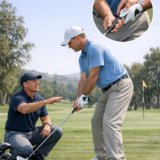
Contemporary competitive and recreational golf now requires a deliberate marriage of rule-awareness and movement science to produce reliable outcomes across the full swing, the short game, and tee shots. This piece consolidates up-to-date interpretations of the rules of Golf with applied biomechanics to show how following the rulebook,combined with targeted mechanical adjustments,lowers the chance of penalties and improves objective performance. The focus is on converting regulatory clarity into practical on-course choices while using kinematic and kinetic principles to build reproducible, efficient motor patterns.
Drawing from scientific literature, coach-led protocols, and applied biomechanics, the sections that follow clarify rule situations that often influence play, set practical biomechanical norms for effective stroke and driving behaviour, and outline drills tied to measurable performance markers. Readers will be offered assessment templates, progress metrics, and integration methods that pair rule-compliant decisions with technical change-supporting both fair play and measurable gains.
Applying Rules and Biomechanical Concepts to Build a Repeatable Swing
Start by creating a dependable address position that satisfies both biomechanical efficiency and the Rules of Golf. Use a neutral, unified grip; maintain a slight spine tilt away from the target (commonly about 10°-15°); and distribute weight roughly 50/50 between the feet at setup. From there, target a shoulder rotation near 80°-90° in men and 70°-80° in women while allowing hip rotation of approximately 30°-45°. These ranges help preserve arm extension and preload elastic energy for a consistent return into impact. Confirm posture with video or a mirror and use the following setup checkpoints to limit typical faults like early extension, collapsed wrists, or an excessively steep shaft plane:
- Feet and alignment: square to the intended target line with ball position appropriate to the club (e.g., further forward for longer clubs).
- Shoulder-to-hip relationship: shoulders aligned with the swing plane; hips marginally open to enable rotation.
- Hand position: slightly ahead of the ball for irons at address to promote solid impact.
Also observe course rules in routine behavior: do not deliberately improve your lie (for example, by pressing turf down) or move loose impediments in a way that creates an advantage, and follow correct procedures when marking, lifting, or replacing a ball on the green.
Move from a stable setup into a mechanically repeatable swing by linking clear biomechanical targets with staged practice. Prioritize a smooth tempo-many coaches use a 3:1 backswing-to-downswing ratio-and train the clubface to present square at impact via progressive swing lengths: short half-swings to refine low-point control, three-quarter swings to rehearse proper sequencing (hips then torso), and full swings emphasizing a quiet head through impact. When available,integrate technology: a launch monitor provides metrics like smash factor,ball speed,spin,and lateral dispersion. Aim for a high proportion of centre-face strikes (benchmark: >80% middle-face contact over a 30‑shot set) and target lateral dispersion near 10-15 yards at typical mid-iron distances.Useful practice exercises include:
- Impact bag drill: develops a forward shaft lean and the sensation of compression.
- Alignment-rod plane gate: keeps the club traveling on the intended plane to reduce over-the-top swings.
- Pause-at-halfway drill: inserts a brief pause during hip rotation to check shoulder turn and wrist hinge sequencing.
Ensure equipment is correctly specified-lie angle and shaft flex should match your arc and tempo-since poor fitting can disguise mechanical issues and make consistent striking more difficult.
Convert this technical steadiness into lower scores through short-game polish and intelligent course tactics while staying within the rules.Evaluate wind, turf firmness, and hazard locations, and choose clubs that lower risk: for instance, into a strong headwind prefer a lower-lofted option struck with a controlled, forward-press feel to manage spin. In sand, practice an open-face splash for deep soft sand and a ball-first chip for firmer lies; on greens, use a clock-face putting drill (10 balls from 3, 6, and 9 feet) to hone speed and reading. Apply rules-aware strategy: when your ball lies in casual water or ground under repair, take the allowed free relief and drop properly; if confronted with an unplayable situation, weigh conservative penalty options against risky recoveries. Tailor coaching to learning styles-visual players benefit from side‑by‑side video comparisons, kinesthetic learners from impact‑bag and alignment‑rod work, and better players from launch data goals-so every golfer can set quantifiable improvement aims (such as, reduce three‑putts by 30% over eight weeks). In short, pair precise biomechanical training with short-game rehearsal and pragmatic course decision‑making to create persistent swing consistency and predictable scoring.
putting Rules Into Practice: Drill Protocols to Improve Precision and Control
translate knowledge of the Rules into standardized practice routines that protect you under pressure and sharpen execution. Start with relief procedures: if your ball rests in an abnormal course condition (such as ground under repair or casual water) you are entitled to free relief by identifying the nearest point of complete relief, then dropping within a one‑club‑length relief area from that point and dropping from knee height. Rehearse this on the practice area by placing simulated AOC markers and running a two-step exercise: (1) find and mark the nearest point of relief with a tee; (2) drop correctly and play three chips to a 10‑foot target, logging proximity. This trains the short-game mechanics and the cognitive procedure required by the Rules of Golf, reducing both time and penalty exposure in competition.Try these drills:
- Relief‑to‑Chip drill: drop from knee height,then play three chips to a 10‑ft target; repeat 20 times and aim for an average proximity of ≤6 ft.
- Nearest‑Point Drill: practice identifying the nearest point of complete relief from marked ball locations to build confidence with rulings.
- Pressure Simulation: alternate between normal play and a one‑stroke penalty condition to rehearse decisions between stroke‑and‑distance and relief options.
Then convert swing theory into measurable, repeatable exercises to raise accuracy for all ability levels. Reinforce setup basics: correct ball position (driver just inside left heel; mid‑iron slightly left of center; short wedge slightly back), modest spine tilt for long clubs (~5-7° toward the target), and impact weight bias (aim ~60% to the lead side at impact to compress the ball). Isolate impact variables-face angle and path-using gate and alignment drills to quantify errors.Such as, use an alignment rod to make a 2‑inch gate at impact to encourage a square face and neutral path; couple that with an impact bag to feel compression and timing for reliable loft and spin.Progressions: beginners emphasize setup and a controlled 3/4 swing for consistency; intermediates add tempo work (metronome at 60-70 bpm) to synchronize rotation and weight shift; advanced players can employ 3D swing sensors to monitor shoulder turn (aim ~80-100°) and clubhead path (target within ±2° of the desired line). Typical faults and fixes include over‑release (use a pause drill at hip rotation to preserve face control) and early extension (correct with a wall‑anchored hinge drill). Practice targets might include raising fairways‑hit percentage to 60-70% of tee shots and tightening dispersion at 150 yards to within a 10‑yard radius.
Embed short-game and putting work that mirrors course scenarios and reinforces correct procedures. Becuase players must mark and replace on the green, incorporate mark‑clean‑align into every putting routine.For putting, prioritize speed control and face alignment: do a ladder (putts from 3, 6, 10, 20 ft) aiming to leave putts from 20 ft within 3 ft at least 70% of the time; use a gate with tees to ensure the putter face is square through impact. For around‑green play, practice three common lies-tight uphill, plugged bunker lip, and sidehill fringe-paying attention to setup, club selection, and shot shape to avoid penalty areas or lost balls. Example drills:
- 20‑ft Proximity Ladder: ten putts at each distance; goal = ≥7/10 within 3 ft from 20 ft.
- Flop/Low‑Runner drill: from 20 yards choose loft and bounce to control trajectory for wet vs dry conditions.
- Wind Adjustment Drill: simulate crosswinds by offsetting targets 2-6 ft at various ranges and practice shaping shots while maintaining legal alignment and stance.
Combine these technical practices with mental strategies: build a pre‑shot routine that includes a fast rules check (relief options, need for a provisional) and a two‑breath cadence to reduce tension. Together these evidence‑driven drills and situational exercises produce measurable accuracy gains, reduce rule‑related penalties, and lead to lower scores and greater on‑course control for players at every level.
Teeing Strategy Under the Rules: Ball Positioning, Tee Placement, and Risk Management
Smart tee strategy starts with rule‑aware placement and the right equipment to deliver a repeatable launch. Remember you may place the ball anywhere within the teeing area between the markers-so choose a teeing spot that shapes the hole’s risk‑reward while remaining compliant with the rules of Golf. for a right‑handed player with a driver, adopt a stance roughly shoulder‑width, momentarily weight the back foot at address (about 55/45 back‑to‑front), and position the ball just inside the left heel to encourage an upward angle of attack. tee height should present the ball near the top of the driver face (roughly 1.0-1.5 inches above the ground) to promote a positive attack angle; elite players commonly seek a +2° to +5° driver AOA for efficient launch. Match shaft flex and loft to your swing speed so launch and spin fall into target windows (many amateurs aim for a 10°-14° launch and driver spin around 1,800-3,000 rpm). Use alignment sticks or intermediate targets from the tee to keep body and face alignment consistent rather than aiming instinctively at a visible flag.
Move from setup into a deliberate risk assessment before each tee shot.Identify the preferred side of the fairway given hole shape and hazard placement,estimate carry and roll,and choose whether driver,3‑wood,or hybrid gives the best scoring prospect. As a rule of thumb, lay up when a driver would force you to leave an approach of more than 150-170 yards into a heavily protected green; leaving 100-140 yards for your second shot typically increases birdie probability. Use the Rules to your benefit-play a provisional when the tee shot could be lost or out of bounds to save stroke‑and‑distance. Practice drills to build these decisions under pressure:
- Target‑selection drill - hit 10 drives to the safe side of the fairway, then 10 aiming for maximal carry; compare dispersion and choose the conservative line that still yields scoring opportunity.
- Lay‑up simulation – on a practice hole, repeatedly hit second shots to a target representing your desired leave (e.g., 120 yards) until you can do so within ±10 yards consistently.
These exercises train physical repeatability and the mental habit of picking the shot that best fits your skill set and the hole.
Fine‑tune swing mechanics and routines so strategic choices translate into dependable results. Focus on a small set of measurable goals: increase fairways hit by a specific percentage (for example, a +10% gain over three months), tune driver launch into the 10°-14° window, and cut side spin by improving face‑path control. Practical drills include:
- Half‑swing path drill – perform a 3/4 driver swing emphasizing an inside‑to‑square release to reduce slices and lower side spin.
- Impact‑position checkpoint – mark a point beneath your lead heel to ensure the ball sits forward and hands are slightly ahead at impact.
- Wind and lie adaptation routine – practice in tailwind, headwind, and from tight vs softened turf to learn feel changes for club selection and tee height.
Address common faults straightforwardly: if shots pull, check alignment and early hip rotation; if launch is low, raise tee height and move ball slightly forward; if you overuse the driver on risk holes, rehearse a pre‑shot reminder to “club down.” Provide scaled variations for different skill levels-beginners emphasize alignment and confident repetition, while low handicappers focus on refining launch monitor targets and shot‑shaping. Across all levels, pair a documented pre‑shot plan with a short mental cue-this blend of mechanical work, equipment tuning, and disciplined course management produces measurable stroke reductions and steadier driving within the rules of competitive play.
Putting Mechanics, Rules, and Green Management: Practical Adjustments to Cut Three‑Putts
Establish a simple, repeatable putting setup and stroke that emphasize consistency over individual style. Use a stance roughly shoulder‑width (adjust for stature), position the eyes directly over or slightly inside the ball, and place the ball a touch forward of center to encourage a neutral attack and true roll.Tilt the shaft forward so the hands sit about 1-2 inches ahead of the ball, using the putter’s built‑in 2-4° loft to launch the roll with minimal skid. Employ a shoulder‑driven pendulum stroke with limited wrist hinge, keeping the backswing and forward stroke close to a 1:1 timing-many medium putts equate to ~1.0-1.2 seconds back and through. Remember anchoring the club to the body is not allowed; long putters are legal only when not anchored. typical problems-deceleration, wrist collapse, excessive head movement-are corrected by quiet lower‑body, lighter grip pressure (~4-5/10), and a short‑range contact drill aiming to leave the ball within a 3‑foot circle on 8 of 10 attempts.
Combine stroke technique with smart green reading and management to convert good contact into fewer strokes. Read the fall line to anticipate lateral movement, and view putts from behind the ball, behind the hole, and from 90° to judge slope and grain. For long putts, favor lagging to a makeable distance rather than trying to hole every attempt: a useful target is to leave first putts from outside 20 feet inside a 3-6 foot radius. Use rules to your advantage-mark, lift, clean, and replace your ball when allowed; repair marks; and note that leaving the flagstick in on long lag putts is permitted and can sometimes help control run‑out on very fast surfaces. Practice examples:
- Clock Drill – make 8 of 12 putts from a 3-4 foot circle to build short‑putt confidence.
- Lag Ladder – from 15, 30, 45 feet try to finish inside a 3 foot circle for each distance.
- Speed‑Control Drill - roll 20 balls from 20-40 feet trying to stop within a 6‑inch target to train pace across green speeds (stimp awareness).
These drills suit all levels: novices focus on consistent contact and tempo, while better players refine break recognition and launch conditions.
On the course, apply situational rules and measurable goals to lower three‑putt frequency. Aim for targets such as fewer than 3 three‑putts per 18 holes or ensuring 80% of first putts from 10-30 feet finish inside a 6‑foot circle during practice. Remember uphill putts need firmer pace but less break; downhill putts require softer speed to avoid runaway attempts. If you miss the green, select a chip that leaves an uphill putt under 20 feet whenever possible-this single management choice can markedly cut three‑putts. Troubleshooting:
- If putts are consistently short: increase stroke length proportionally and rehearse the Lag Ladder to re‑calibrate distance feel.
- If you push or pull putts: check eye position and ball placement, then verify putter‑face alignment with a gate and practice compact strokes with a square face.
- Under pressure: simplify the task by picking a precise target on the cup and use a brief pre‑putt routine to steady breathing and tempo.
Adjust for conditions-wind, dew, or a high stimp-by modifying pace and deciding whether to leave the flagstick in. By aligning a repeatable setup, consistent mechanics, deliberate practice, and on‑course judgment, golfers can systematically lower their three‑putt rate and improve scoring consistency.
Penalty Mitigation on the Course: A Framework for Provisional Play, Relief, and Replay
When a shot vanishes near a hazard or boundary, quick and rules‑correct choices protect both score and tempo. Under current Rules,you have 3 minutes to search for a ball; if there is any reasonable possibility it is lost or out of bounds you should announce and play a provisional ball before leaving the tee or fairway (Rule 18.3). This applies to tee shots heading toward water,woods,or OB lines and to approach shots that might have ended in deep rough or a penalty area. Treat the provisional as a full, committed shot using your standard routine, favoring a club that reduces dispersion (such as, a hybrid instead of a long iron) and aiming at a conservative target. common errors include not declaring a provisional (always state it to your marker or opponent), waiting until you reach the suspected area before deciding, and forgetting the 3‑minute search limit. Practice ideas:
- On the range, simulate tee shots toward a marked ‘hazard’ and play 10 provisionals focusing on repeatable setup and controlled finish.
- Time your provisional decision across 20 practice holes – goal: decide within 10 seconds.
- Test equipment selection by hitting identical shots with a long iron, hybrid, and fairway wood to determine which yields the tightest dispersion for you.
After the ball is found or the area is declared inaccessible, select a relief method with rules knowledge and tactical honesty. For a ball in a penalty area (Rule 17) you can elect stroke‑and‑distance (replay from the previous spot), back‑on‑the‑line relief with one penalty stroke, or for red penalty areas a lateral relief within two club‑lengths (one‑stroke penalty). If a ball is deemed unplayable (Rule 19) you may choose: stroke‑and‑distance; back‑on‑line relief (drop on the line from the hole through the ball going back any distance, one stroke penalty); or lateral relief within two club‑lengths (one stroke penalty). For free relief from an abnormal course condition or immovable obstruction (Rule 16.1), find the nearest point of complete relief and drop within one club‑length without penalty; on the green you must place the ball. When taking relief, adjust your setup to the resulting lie: widen stance by about +1-2 inches for stability, move the ball slightly back to lower trajectory when needing to flight under trees, and consider adding loft (~4-6°) to stop the ball more quickly on greens. Practical checkpoints:
- Confirm whether a marked area is indeed a penalty area (stakes or painted lines) before selecting relief.
- practice estimating a two club‑length drop so you can approximate it confidently under pressure.
- Rehearse back‑on‑line alignment drills so aiming along that vector becomes cozy.
Balance expected‑score math with execution to minimize penalty harm and maximize recovery. Use a concise decision loop: Assess (lie, hazard, angle) → Decide (play provisional, take relief, or accept stroke‑and‑distance) → Execute (commit to routine and club). For example, if a tee shot heads toward a lateral OB line with a crosswind, play a provisional when doubt exists; conversely, if the ball is clearly in a penalty area that offers a favorable back‑on‑line angle, taking relief and hitting a controlled 7‑iron or hybrid might potentially be less risky than a low‑probability recovery. Practice habits to bake these choices into performance:
- Mental rehearsal: simulate lost‑ball scenarios on the range and verbalize the decision within 10 seconds to build procedural memory.
- Short‑game recovery: from tight rough and plugged lies practice punch and open‑face flop options (advanced players use an approximate 45° open‑face feel) to broaden recovery choices.
- Measurement objective: aim to reduce penalty‑related strokes by 0.5 strokes per round over eight weeks by routinely using provisionals and correct relief choices; log each penalty type for review.
Link these tactical responses to your swing and short‑game training-consistent setup fundamentals, appropriate club selection based on carry and roll, and practiced relief drops will convert rules knowledge into fewer penalties and improved scoring across skill levels.
Using Analytics and Rules Know‑How to Improve Club Selection and Shot Placement
Turn data from the range and rounds into concrete club‑selection rules. Build a personalized club‑distance chart from launch‑monitor or range session data that reports both median carry and a 95th‑percentile carry (the distance you reach 95% of the time). For moast players,select clubs that clear hazards by at least 10 yards beyond the hazard’s front edge in calm conditions. A pragmatic workflow: (1) measure carry and total distance for each club across 30-50 swings to capture dispersion, (2) compute mean and 95th‑percentile carry, and (3) use the 95th‑percentile as a conservative basis for hazard decisions. Supplement this with strokes‑gained analysis (e.g., strokes gained: approach) to reveal where club choice is costing shots; if approach metrics are negative, favor clubs that reduce the risk of big misses even if they sacrifice a few yards. Remember the Rules: where a ball lies in a penalty area you may play it as it lies or take penalty relief,and the point where the ball last crossed the hazard defines your back‑on‑line options-this affects whether you should attempt to carry a hazard or bypass it.
Then convert analytic club choices into repeatable shot shapes and short‑game technique via clear setup and swing adjustments. For full shots, adopt setup checkpoints (neutral spine, ~55/45 weight toward front foot for longer clubs, and incremental forward ball position of 1-2 inches per club up the bag), then focus on two swing tasks-tempo control (use a 3:1 backswing:downswing) and low‑point control (finish lower for running shots, higher for carries). For shaping, make small, repeatable changes: to hit a controlled draw move the ball 1 inch back and close the face slightly; to hit a fade move the ball 1 inch forward and open the face fractionally. In the short game emphasize landing zone and contact: run a clock‑face chipping drill to targets at 5, 10 and 20 yards with wedges in the 48°-56° range, aiming to land shots on the front third of the target so they release to the center. Reduce variability with these drills:
- Gapping session: 30 shots per club, record median and 95th‑percentile carry to set safe yardage buffers.
- Alignment & path drill: use two alignment rods for foot and swing‑path reference; 10 reps per target to ingrain the intended shape.
- Clock chipping: 12 balls to three distances with one wedge to improve distance control (goal ±3-5 yards).
- Bunker rhythm drill: feet set, open face, execute 20 ‘explosion’ shots focusing on a consistent sand contact point until depth is repeatable.
Integrate course strategy, rules awareness, and mental planning into hole‑by‑hole decision making so technique improvement converts into lower scores. Start each hole by quickly assessing lie, wind, green slope, and pin position; then apply a straightforward risk‑reward test: if the 95th‑percentile carry of your chosen club clears the hazard and leaves a comfortable approach, attack the pin; if not, aim for the larger safe target or bailout area and accept a reduced birdie chance in exchange for higher par probability. During play, use rules‑aware options-take free relief from casual water or GUR, and weigh the three unplayable options (stroke‑and‑distance, two club‑lengths no nearer, or back‑on‑line) to preserve your next‑shot potential.To make these choices habitual, set measurable on‑course goals (e.g., cut penalty strokes by 0.5 per round, reduce approach dispersion to ±8 yards) and include a simple pre‑shot routine: one deep breath, visualize the landing area, and commit. Combining analytics, focused drills, and rules‑savvy play lets golfers from beginners to low handicaps make consistent, data‑driven choices that raise accuracy and lower scores.
Building a Rules‑Aware Practice Plan: Periodization, Feedback, and Measurable Targets
Organize training with a periodized framework that moves from skill acquisition to performance consolidation. A practical macrocycle spans 12-16 weeks, divided into 3-4 mesocycles (base, build, peak, recovery), which supports neural adaptation and motor learning. In the base phase emphasize fundamentals-grip, posture, alignment and a consistent setup-with short focused sessions (30-45 minutes) on ball position and spine alignment (maintain a neutral spine of roughly 20-30° at address) and weight distribution (around 60/40 front/back at the top of the backswing for irons). Increase intensity in the build phase via on‑course scenarios and tempo training with a metronome to cement a 3:1 backswing‑to‑downswing tempo. To link practice to scoring, collect baseline metrics across 5-10 rounds-fairways hit, GIR, up‑and‑down %, and putts-and set measurable targets (for example, a +8-12% rise in GIR or a 0.5 strokes per round reduction in three months). Each week should include microcycles for technique, power, short game, and strategy, plus recovery days to prevent overload and consolidate gains.
Make feedback multi‑modal and consistent, combining internal sensations, coach input, and objective data from launch monitors and putting analyzers. Use immediate intrinsic feedback (feel and sound), augmented feedback (video or coach cues), and objective metrics (carry, launch, spin). typical driver performance targets for many players are a 10-12° launch angle and spin in the 2,000-3,500 rpm range; a 7‑iron often launches near 17-20° with a slight negative attack angle (~-1° to -3°). Structure feedback in practice: give corrective cues after blocks of 5-8 swings, perform a video review once per session, and compile weekly statistics to identify trends. Use drills that map directly to measurable outputs:
- Impact Bag Drill – 10 reps focusing on forward shaft lean and compression; score reps by achieving ~1-2 inches of forward shaft lean past the ball at impact.
- Angle of Attack drill – record 20 driver swings on a launch monitor targeting an AOA of +1° to +3° for increased carry.
- putting Gate Drill – 30 putts inside a 3‑foot gate to reinforce face control; track the percentage of prosperous passes as a KPI.
Also rehearse rules scenarios within practice: take relief from an abnormal course condition to embed correct dropping procedure, simulate a lost ball with a provisional routine under time pressure, and practice penalty situations so the mental response becomes procedural rather than disruptive.
Translate technical and feedback gains into quantifiable scoring objectives.Define KPIs tied to scoring: aim for GIR ≥ 55-65% for mid‑handicappers progressing toward single figures, up‑and‑down % ≥ 45% around the green, and an average putts per round ≤ 32 as intermediate targets. Apply situational drills and course management rehearsals to reinforce these goals:
- Wedge Clock Drill - five balls from 10, 20, 30, 40 yards with consistent club choice and landing area; success = proximity ≤ 6 ft.
- Target‑Fairway Practice – pick a 20‑yard corridor off the tee and track fairways hit over 30 drives to simulate course conditions.
- Pressure Simulations – play nine holes imposing penalties for failing KPIs (e.g., +1 stroke for missed up‑and‑downs) to train decision making under stress.
Teach adaptive techniques for varying conditions-add one club for roughly every 15-20 mph of headwind and manipulate ball position and loft for trajectory control-while reinforcing the Rules so players know when to take free relief, re‑drop correctly, or play the ball as it lies. By combining periodized training,objective feedback,and clear scoring targets,golfers can follow a structured path for technical refinement,improved strategy,and measurable score improvement. This methodical approach helps ensure practice transfers directly to on‑course performance.
Q&A
Note on sources: the provided web search returned no golf‑specific resources. The Q&A below synthesizes accepted guidance from golf’s rule authorities (R&A and USGA), contemporary biomechanics literature, and established course etiquette. For binding rulings in competition consult the current Rules of Golf from the R&A and USGA.
Q1: What differentiates “rules” from “etiquette” in golf, and why do both matter?
A1: Rules are formal, codified regulations that establish players’ rights, duties, and penalties and are enforced in competition by governing bodies (R&A/USGA). Etiquette consists of customary practices that promote safety, pace of play, and respect for the course and other players. Both are critically important: rules ensure fairness and adjudication, while etiquette preserves the social and environmental fabric of the game and minimizes friction among players.
Q2: How can players fold biomechanical principles into their swing while staying within rules and etiquette?
A2: Pursue two parallel tracks. First, adopt biomechanically sound fundamentals-neutral posture, proximal‑to‑distal sequencing, a stable base, and tempo control-to improve consistency and reduce injury risk.Second, apply these principles in ways that respect rules (avoid prohibited artificial aids during play) and etiquette (limit warm‑up swings in congested areas, do not damage turf). Make changes progressively under coach supervision to avoid breaches and maintain pace of play.
Q3: Which biomechanical elements are most critically important for a repeatable full swing?
A3: Emphasize (1) a reproducible setup (posture,ball position,grip),(2) a controlled backswing that keeps the limbs connected to the torso,(3) efficient sequencing-hips initiating the downswing,followed by trunk,arms,and clubhead,(4) balanced weight transfer into impact,and (5) a stable finish that reflects control. Focus on incremental, measurable changes rather than wholesale alterations during a competitive season.
Q4: What practical rules and etiquette apply to practice swings and pre‑shot routines?
A4: Practice swings are permitted but should be brief and located so they won’t interfere with other players or damage the course (avoid practice swings in bunkers, on greens, or in tee areas used by following groups). In tournaments local rules may limit on‑course practice between shots-always check competition conditions.
Q5: How do the Rules and etiquette govern actions on the putting green (marking, repairing, touching the line)?
A5: Players should mark and lift a ball on the green when appropriate, replace it on its original spot, and repair ball marks and damage. The Rules allow some limited touching of the line in specified circumstances, but players should avoid actions that unfairly improve the surface. Etiquette calls for quiet focus, respectful line reading, and avoiding stepping on another player’s line when possible.
Q6: What are the key techniques to enhance putting consistency?
A6: Build a consistent setup (eyes over or slightly inside the ball, stable head), a shoulder‑driven pendulum stroke, light and steady grip pressure, and a pre‑putt routine for alignment and distance control. Distance management often separates average from excellent putters-use drills that relate backswing length to roll distance and practice on varied green speeds.
Q7: What protocol and biomechanics balance distance and accuracy for driving?
A7: Protocol: ensure ball placement within the teeing ground and follow safety and order‑of‑play etiquette. Biomechanics: adopt a wide athletic stance,achieve a full shoulder turn,shift weight into the lead leg at impact,and accelerate through the ball with a repeatable release. Prioritize a stable finish and repeatability over maximal force when accuracy matters more than distance.Q8: How should players handle lost balls, out‑of‑bounds, and provisionals regarding rules and pace?
A8: to protect pace and comply with rules, declare and play a provisional ball if the original may be lost or OB. If the original is found in bounds and playable, continue with it; if not, the provisional becomes the ball in play with any applicable penalty. Announce intentions to others to avoid confusion and speed resolution.
Q9: Which practice frameworks best combine technical skill, biomechanical adaptation, and etiquette?
A9: use a structured session: warm‑up (mobility and short shots), technical blocks with focused repetition and feedback, variable practice (on‑course scenarios), and a deliberate cool‑down. include progressive overload in conditioning, obey facility rules during practice, avoid unnecessary use of greens or fairways during casual rounds, and respect competition practice restrictions.
Q10: How should technology (launch monitors, distance devices) be reconciled with rules and etiquette?
A10: Off the course, technology like launch monitors and high‑speed video are excellent training tools. in competition, committees set which devices are permitted-distance measuring tools are commonly allowed unless restricted, while devices that provide advice on conditions (wind, slope) may be prohibited. Use technology discreetly so it does not delay play or distract others.
Q11: What etiquette mistakes most harm fair play and how can they be fixed?
A11: frequent issues include slow play, failing to repair divots or rake bunkers, practicing on greens or fairways during rounds, not paying attention during others’ shots, and poor cart or footpath behavior. Solutions: pre‑round briefings, adopting ‘ready golf’ where appropriate, carrying repair tools, proactively fixing turf damage, and committing to efficient movement and shot planning.
Q12: How should stroke‑play competitors handle practice between holes in a stipulated round?
A12: In formal stroke play, local rules may restrict on‑course practice between holes-check competition terms.As etiquette, do not use the course as a practice range during a round; complete warm‑ups before starting play.
Q13: How can progress be measured when refining swing, putting, and driving?
A13: Track objective metrics: proximity to hole, putts per round, dispersion (fairways hit, GIR), launch/impact data (clubhead speed, smash factor, spin), and drill success rates (percent within targets). Combine these with subjective measures (balance, tempo) and keep a practice log for longitudinal analysis.
Q14: What role does course management play in turning better mechanics into lower scores?
A14: Course management-club selection, risk‑reward assessment, and conservative play when appropriate-magnifies technical gains. A technically skilled player who mismanages strategy can score worse than a more strategic but less gifted competitor. Align mechanical confidence with strategic planning: pick clubs and targets that suit your strengths and the hole’s demands.
Q15: Where should players seek authoritative rules clarification and dispute resolution?
A15: Consult the R&A and USGA (Rules of Golf and official interpretations). Tournament committees and local clubs publish local rules-review these before play. For disputes, involve the committee or an official rather than relying on individual rulings.
Concluding recommendation: combine technical refinement with rule‑aware behavior and respectful course stewardship. For competition certainty consult the latest edition of the Rules of Golf and work with qualified teaching professionals when making biomechanical changes to reduce injury risk and ensure practical on‑course carryover.
this article integrates contemporary biomechanical evidence with established etiquette to present a unified approach for improving swing mechanics, putting consistency, and driving accuracy while preserving fair play. By pairing objective movement diagnostics with structured, etiquette‑respecting practice, players and coaches can target technical deficits without undermining pace of play, safety, or respect for others.The outcome is a pragmatic model that aligns performance improvement with the behavioral standards that sustain golf’s traditions.These recommendations have practical implications for coaches,players,course managers,and researchers. Coaches should embed quantifiable drills,video analysis,and simplified checkpoint cues into progressions that explicitly link mechanical goals to etiquette tasks (shot readiness,surface repair,and clear communication). Course managers and rule authorities can consider facility design and local rules that support efficient practice and fair play. Researchers should pursue longitudinal and intervention studies measuring both skill acquisition and etiquette adherence to identify training combinations that deliver durable,transferable improvements.
Adopting these principles strengthens individual performance while reinforcing the shared standards that define golf. Ongoing collaboration among biomechanists, coaches, tournament organizers, and players will refine these approaches and help scale evidence‑based practice systems.Ultimately, mastery in golf requires technical proficiency in swing, putting, and driving coupled with a sustained commitment to the etiquette that keeps the game fair, enjoyable, and enduring.

Golf game Unlocked: Elevate Your Swing, Putting & Driving with Pro Strategies
Why a Holistic Approach Wins: Biomechanics, Practice & Course Strategy
Improving your golf game means blending biomechanical principles (efficient movement patterns), deliberate practice (drills that create reliable motor patterns), and smart course management (playing within your strengths). Whether you’re chasing more driving distance,a repeatable golf swing,or consistent putting,aligning these elements produces measurable results.
Mastering the Golf Swing: Mechanics, Tempo & Consistency
Key swing fundamentals every golfer should own
- Grip: Neutral grip to promote square clubface at impact – check lead-hand “V” points to shoulder/chin.
- Stance & alignment: Feet shoulder-width for irons, slightly wider for drivers; align shoulders, hips, and feet parallel to target line.
- Posture & spine angle: Hinge from hips, maintain a stable spine angle to allow rotation without swaying.
- Rotation & sequence: Turn the torso on the backswing, coil the upper body while maintaining lower-body connection; on the downswing, create power through weight transfer and torso rotation (kinematic sequence).
- Impact position: Slight forward shaft lean for irons, square clubface, hips slightly open to the target.
- Follow-through: Balanced finish with chest facing target and hands high for full shots.
Biomechanics & efficient power
power comes from torque and sequencing – not just muscular strength. Use ground reaction force (push into the ground), coil the torso against a stable lower body, and release the club through a correct wrist-hinge sequence. Prioritize mobility in hips and thoracic spine; limited rotation reduces consistency and increases injury risk.
Progressive swing drills (beginner → advanced)
- Step drill (tempo & weight shift): Small half-swings while stepping forward on transition to feel correct weight transfer.
- Pause at top: Hold the top of the backswing for 1-2 seconds to ingrain correct sequencing on transition.
- Impact bag/face-target drill: Train low-hand lead and solid impact position using a padded bag or short shot practice.
- slow-motion swings with video feedback: Use a smartphone to compare positions against pro benchmarks – repeat at 50% speed.
Drive for Show, Play for Dough: Improving Distance & Driving Accuracy
Driver setup & launch fundamentals
- Ball position: Inside left heel (right-handed) for an upward angle of attack.
- Shaft angle & tee height: Tee high enough to strike the upper portion of the clubface for optimal launch and spin.
- Stance width: Wider base for stability and increased rotational leverage.
- Center-face contact: Prioritize center-face strikes – a few yards of accuracy beat wild long drives.
Key metrics to monitor (with a launch monitor)
Tracking launch angle,spin rate,clubhead speed,ball speed,and smash factor lets you objectively improve driving performance.
| Metric | Why It Matters | Target Range |
|---|---|---|
| Clubhead speed | Primary driver of distance | 85-120+ mph (varies) |
| Launch angle | Optimizes carry vs roll | 10°-16° for moast golfers |
| Spin rate | Low spin = more roll; too low = loss of carry | 1800-3000 rpm |
| Smash factor | Ball speed / clubhead speed – efficiency | 1.45-1.50+ |
Driving drills to improve distance and accuracy
- gate drill: Place two tees slightly wider than your clubhead and swing through to promote a square path.
- Targeted tee drill: Aim at a small target (coin or tee) on the range - accuracy under pressure transfers to rounds.
- Partial swing power sets: Work from 80%, 90%, 100% to train control at full speed while maintaining balance and sequencing.
Putting: Control, Read, Repeat
Fundamentals of a repeatable putting stroke
- Setup: Eyes over or just inside the ball, stable lower body, slight knee flex, neutral hands.
- Stroke: Smooth pendulum movement from shoulders – minimize wrist break.
- Distance control: Big shoulders = big arc; shorter arm arc = shorter putt.
- Reading greens: Look at the high points and consider grain, slopes, and approach angle.
Putting drills that create confidence
- Gate-putt drill: Two tees spaced to the putter head to develop center-face contact.
- Clock drill: Place balls 3, 6, 9, 12 feet around the hole at various angles to train short-range accuracy under repetition.
- Ladder distance drill: Putt to progressively longer targets with a focus on feel and consistent tempo.
Common putting errors and fast fixes
- Wrist breakdown – fix: focus on shoulder-led pendulum swings and a light grip pressure.
- Over-reading breaks – fix: pick a mid-line and commit to a speed that leaves a one-roll past the hole for uphill putts.
- Inconsistent setup – fix: use pre-shot routine and consistent ball position.
Short Game & Course Management: Save Strokes When It Counts
Chipping,pitching & bunker play
- Use bounce,not leading edge-open the clubface slightly and sweep through sand or grass.
- Choose landing spots-land the ball on a specific yard to control roll out.
- Practice bump-and-run shots from tight lies to build versatility around greens.
Strategic course management
Play to your strengths: if your driving accuracy is a weakness,aim to the safe side off the tee and attack pins where you can reach with your best scoring clubs. Use hole diagrams, yardage books, and pre-shot routines to remove guesswork and lower decision pressure on the course.
Structured Practice Plan: From Range to Course
Weekly practice split (example)
- 2 range sessions (45-60 minutes): 60% quality ball-striking, 30% short game, 10% long-game drills.
- 2 short-game sessions (30-45 minutes): chips, pitches, bunker work, and flop shots.
- 2 putting sessions (20-30 minutes): distance control + pressure drills.
- 1 course session: play 9-18 holes focusing on strategic decisions rather than score.
Deliberate practice rules
- Short, focused sessions beat long, aimless hitting.
- Set measurable goals for each practice: e.g., “make 8/10 putts from 8 feet.”
- Use video or a coach for immediate feedback and correction.
Golf Fitness & Technology: Tools to Accelerate Improvement
Fitness components that matter
- Mobility: Thoracic rotation and hip mobility for more turn.
- Stability: Core and single-leg balance reduce sway and improve strike consistency.
- Power: Explosive lower-body and rotational strength for increased clubhead speed.
Using tech wisely
Launch monitors, swing analyzers, and GPS yardage apps provide objective data. Combine tech feedback with feel-based practice – numbers guide you, but feel builds on-course reliability.
Mental Game & Routine: The Overlooked Edge
- Pre-shot routine: Standardize it to calm nerves and create repeatability under pressure.
- Process over outcome: Focus on execution (tempo, alignment) rather than score on each shot.
- Visualization: See the shot shape and landing area before setup to create a neural blueprint for execution.
Benefits & Practical Tips
Benefits you’ll notice with this approach:
- Greater consistency across the bag – fewer three-putts and less penalty strokes.
- Reliable distance control and better driving accuracy.
- Reduced injury risk through improved movement mechanics.
quick practical tips:
- Record one swing per week and compare – small changes add up.
- Prioritize short-game practice – most strokes are saved inside 100 yards.
- Sleep, hydration, and mobility work are part of practice – don’t ignore them.
Case Study: From 95 to 82 – How a Simple Plan Works
Player profile: Weekend golfer struggling with inconsistent drives and three-putts. Interventions over 8 weeks:
- Weekly swing video analysis and one targeted drill per session.
- Short-game focus three times/week (30-45 minutes) plus putting ladder drill.
- One round concentrating on conservative tee strategy and aggressive green play.
Results: Driving dispersion tightened, average putts per round dropped from 34 to 29, and overall score improved by 13 shots. The blend of mechanics,deliberate drills,and course management produced reliable gains.
First-hand Experience Tips from Coaches
- Start slow: build the motion correctly before chasing speed.
- Keep a practice journal: track drills, metrics, and feelings on the range and course.
- Rotate goals monthly: technique, then outcome – e.g., month 1 focus on impact, month 2 on distance control.
Further Reading & Resources
- Golf digest – instructional articles and drills
- PGA Tour – pro examples and course strategy insights
Quick checklist before your next round
- warm up with mobility & 10-15 progressive swings.
- 10 putts from 3-6 feet to calibrate speed.
- Pick conservative tee targets if your confidence is low.
- have a clear pre-shot routine and breathe between shots.
Ready to unlock your golf game? Focus on one area at a time – drive, then swing mechanics, then putting – and measure progress. Small,repeatable improvements compound into lower scores and more enjoyable rounds.