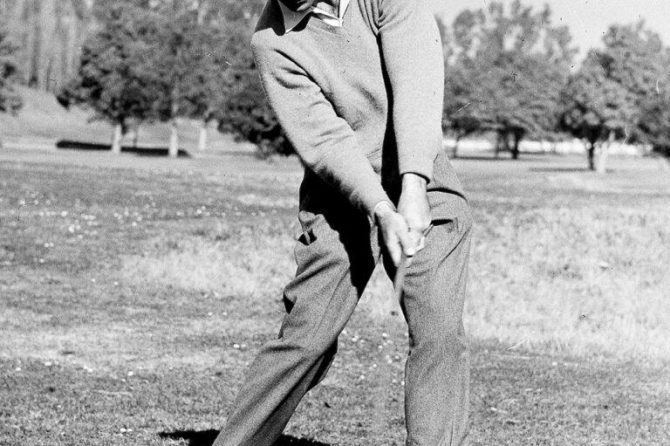
Abstract-This paper outlines a structured, evidence-informed approach to refining teh golf swing with the explicit aim of producing quantifiable gains in driving, putting, and overall scoring.Integrating principles from biomechanics, motor learning, and performance analytics, it converts kinematic and kinetic knowledge into coachable protocols and tiered drill progressions. The framework prioritizes objective indicators (for example, clubhead speed, launch angle, spin rates, stroke tempo, and dispersion statistics) to identify deficiencies, prescribe corrective work, and measure improvement.
Introduction-Repeatable, dependable swing mechanics are the immediate determinant of consistent shot outcomes across all game phases. Changes intended to enhance distance or accuracy in the long game typically influence short-game touch and on-green results, while dialing in putting mechanics often uncovers true improvements in full-swing consistency by reducing score noise. Consequently,this article treats the golfer as a system: it links the biomechanical drivers of the full swing to concrete launch-condition targets for driving and converts motor-control theory into putting protocols centered on speed control and line execution.
Scope and contribution-We deliver: (1) a practical diagnostic framework to evaluate swing function and prioritize high-impact faults; (2) empirically grounded drills and staged progressions for recreational, elite-amateur, and professional development; (3) reproducible performance metrics and test batteries to monitor transfer to driving and putting; and (4) integration of course strategy to convert technical gains into lower scoring. The material targets sport scientists, coaches, and committed players seeking a methodical, measurable pathway to refine swing mechanics and improve putting, driving, and competitive performance.
Biomechanical Foundations of an Efficient Golf Swing: Key Metrics and Corrective strategies
Creating a consistent and Rules-compliant setup is the foundational biomechanical priority for reliable contact. Start with a balanced athletic posture: a spine inclination near 20-30° from vertical, knee flex around 10-15°, and a neutral head that allows rotation without early lifting. Ball placement should change by club-central for short irons and gradually forward toward the lead heel for long irons and driver-so the club’s low point and attack angle match the intended turf interaction (for example, driver attack angle +1° to +5°, long irons negative). maintain light-to-moderate grip tension (approximately 4-6/10) to enable wrist hinge and forearm rotation; remember that anchored strokes are not permitted,so establish a connected,free-moving setup. Use a short pre-round checklist to verify legality and consistency:
- feet, hips, shoulders parallel to the target;
- clubface square to the intended line;
- ball position suited to the club and wind;
- no anchored contact during the stroke.
These setup principles create the mechanical foundation for an efficient kinetic chain and reduce compensatory movements on the golf course.
Move next to the kinematic sequencing and measurable indicators that produce efficient energy transfer: a proximal‑to‑distal activation (hips → torso → shoulders → arms → club) with minimal energy dissipation. Primary metrics to track include clubhead speed (mph), ball speed (mph), and smash factor (ball speed ÷ clubhead speed; target driver ≈ 1.48-1.50), together with dynamic loft and face‑to‑path at impact. High‑level movement patterns commonly show roughly 80-100° shoulder rotation on the backswing, 40-50° hip rotation, and an X‑factor (shoulder minus hip separation) in the order of ~40-60° that stores elastic recoil for the downswing. Aim for approximately 60% weight on the lead foot at impact for full swings and a backswing-to-downswing rhythm close to 3:1. Employ launch‑monitor feedback to set explicit targets (as an example, a 2-4 mph clubhead speed increase frequently enough yields ~8-12 yards) and to objectively monitor session‑to‑session progress.
When addressing frequent swing faults, use focused, measurable interventions that re-establish proper sequence and angles. An over‑the‑top delivery commonly arises from premature lateral weight transfer and limited hip turn; correct it with sequencing drills such as feet‑together swings or step‑through repetitions that force the hips to initiate before the arms. for early extension-where the hips move toward the ball and spine angle collapses-practice a wall‑contact posture drill (light contact with a towel or wall behind the rear) to preserve spine tilt through transition. Useful diagnostic checkpoints include:
- At the top: sufficient lead‑arm extension and wrist hinge (~20-45°);
- Transition: maintain X‑factor and start the downswing with the hips;
- Impact: hands marginally ahead of the ball for irons, appropriate shaft lean.
Sample coaching drills: the half‑swing acceleration sequence (50 half‑swings with intentional acceleration), repeated hits on an impact bag to train compression and forward shaft lean, and the alignment‑rod plane drill to engrain a desired plane.Assign measurable milestones (for example,shrinking face‑to‑path variability to ±3° on the monitor) and retest biweekly.
Short‑game mechanics demand different,equally quantifiable adjustments: chips and pitches rely on predictable low‑point control,correct use of loft and bounce,while bunker and lob shots require altered attack arcs and face openings. For chips, employ a narrow stance, limit wrist hinge, and position the ball slightly forward to create a shallow, negative attack angle and crisp contact. For pitches, manipulate shaft lean and swing amplitude to manage spin and trajectory-use clock‑face distance references (as a notable example, 3 o’clock ≈ 10 yards, 6 o’clock ≈ 20 yards) and record proximity‑to‑hole metrics to quantify improvement.In bunkers, open the face, enter a touch behind the ball, and accelerate through the sand; remember not to improve sand condition before the stroke. Practice examples:
- 50 chips from 10-30 yards aiming for 60% landing within 10 ft;
- 30 bunker escapes from varied lies targeting an 80% success rate;
- 100 short‑putt reps at 3, 6, and 12 ft with a goal of 85-90% holing.
Modify drills to match physical capabilities by changing stance width, club selection, or using abbreviated swings to reduce load while preserving motor learning benefits.
fold biomechanical gains into pragmatic on‑course choices to convert technique into lower scores. Base club selection on measured carry and roll rather than intuition-for example, if your 7‑iron reliably carries 150 yards, allow wind and firm turf to systematically alter club choices. Simulate situational practices such as tee shots into a narrow fairway in a crosswind or approaches from 120-160 yards with predetermined miss zones to emphasize position play. Track on‑course KPIs like GIR, FIR, and scrambling% to prioritize practice time (e.g.,if scrambling <40%,increase short‑game focus).Integrate mental rehearsal, committed club selection, and recovery routines by practicing decision‑making under constraint (for instance, an 18‑shot simulation with predefined penalties). In short, leverage biomechanical metrics and corrective methods not only to refine swing mechanics but to produce tangible scoring gains through structured practice and smarter strategy.

Integrating Kinematic Sequencing and Ground Reaction Forces to Enhance Driving Distance and Accuracy
Efficient distance starts with proper sequencing: the pelvis should initiate the downswing, followed in rapid succession by torso rotation, upper arms, forearms, and finally the clubhead-this proximal‑to‑distal cascade is kinematic sequencing. Practical targets for many full‑power drivers are approximately 45° hip rotation and 90° shoulder turn in the backswing, yielding an X‑factor near 45°. Maintain a consistent spine tilt in the 15-25° range at address to preserve plane and permit efficient energy transfer. For drivers, stance width between shoulder and 1.5× shoulder width and the ball placed just inside the lead heel support desirable launch and prevent excessive loft at impact-this setup is reproducible for beginners through low handicaps.
Translate sequencing into force by emphasizing timed ground reaction forces (GRF). During the downswing, cue a swift shift of pressure from the trail foot at the top (approximately 60-70% on trail) to the lead foot near impact (about 70-80% on lead). skilled players frequently generate vertical GRF peaks exceeding body weight-commonly 1.2-1.6× body weight-so drills that train a decisive lead‑leg push without excessive lateral slide are valuable. Use exercises such as the step‑and‑hit drill (stepping toward the target at transition) and single‑leg balance swings on a mirror or pressure mat to improve timing and ground‑to‑club energy transfer while maintaining face control.
Pair sequencing and GRF work with equipment tuning and launch optimization. Match driver loft and shaft flex to swing speed and attack angle: players under about 95 mph clubhead speed often benefit from higher lofts (10-12°) and more flexible shafts to increase launch and improve smash factor (~1.45-1.50), while high‑speed players with powerful GRF production may prefer lower lofts and stiffer shafts to control spin (target driver spin ≈ 1800-3000 rpm, depending on launch). On course, adjust strategy for wind and fairway width-against a crosswind shallow the attack and slightly close the face to limit side spin; when the fairway is narrow, choose a controlled swing that preserves sequencing timing rather than maximal GRF to keep ball flight consistent. These combined adjustments-technique, GRF timing, and equipment-produce repeatable distance and accuracy.
Structure practice with progressive,measurable routines addressing both timing and force: start with mobility and activation (hip hinges,glute bridges,thoracic rotations),then advance to:
- Tempo/sequence drill: enforce a 3:1 backswing‑to‑downswing rhythm with a metronome;
- Step drill: lift or step with the trail foot at transition to encourage lead‑leg loading;
- Medicine‑ball rotational throws: quantify rotational power and correlate gains to clubhead speed across 6-8 weeks;
- Impact‑bag or short‑shaft hits: train the desired low‑to‑high release and forward shaft lean to optimize launch and lower spin.
Set explicit objectives-e.g.,increase driver clubhead speed by 5-8 mph over 8-12 weeks or cut average spin by 300-500 rpm-and validate changes with a launch monitor. For beginners,simplify sequencing to a three‑cue progression (hips → chest → arms) and stress consistency; for accomplished players,focus on timing finesse,shaft selection,and practicing variable conditions to ensure transfer to scoring scenarios.
anticipate typical faults and apply linked technical and tactical fixes. Common issues include early extension (loss of spine tilt producing scooped contact), casting (premature release reducing speed), and excessive lateral slide (diminishing GRF).Troubleshoot with these checkpoints:
- Address: confirm correct spine tilt and ball position;
- Transition: feel a brief, forceful lateral push into the lead side rather than a slide;
- Release: preserve forearm lag until just before impact to protect clubhead speed and smash factor.
Also incorporate mental readiness-consistent pre‑shot commitments and a short technical checklist (alignment,takeaway,tempo)-to preserve execution under pressure. By combining sequencing and GRF training with equipment tuning and course‑specific thinking, players at all levels can generate measurable improvements in driving distance and accuracy that convert to lower scores and greater on‑course confidence.
precision Putting Mechanics and Green Reading Techniques with reproducible Prestroke Routines
Start with putter and setup fundamentals that produce a repeatable contact posture. Confirm the putter loft (modern designs typically 2°-4°) and choose a shaft length that places the eyes directly over or just inside the target line. A typical ball position is 0.5-1.0 inch forward of center. Adopt a compact, stable stance about shoulder width or slightly narrower and create 5°-10° forward shaft lean at address to de‑loft the face and encourage a true roll. Verify routine checks each putt:
- Grip pressure: light and consistent (~3-4/10);
- Eye alignment: over or slightly inside the line;
- Ball/face alignment: ball forward of center and face square.
These repeatable setup elements reduce variability and improve the likelihood of a consistent roll.
Refine the stroke toward a shoulder‑driven pendulum to minimize wrist motion and maximize face control. Let the shoulders drive the arc while the hands and wrists stabilize-elbows slightly bent and the shoulders rotating the putter back and through in a smooth path. For distance consistency use the backswing‑length heuristic: backswing in inches ≈ distance in feet (e.g., a 10‑ft putt ≈ 10‑inch backswing), and match the forward and backward tempos. Train to keep the putter face square to within ±1° at impact using slow‑motion reps and alignment tools (mirrors, rails). Typical errors and fixes:
- Wrist flip: stabilize with forearm‑anchoring grips or a slightly longer shaft to promote shoulder rotation;
- Deceleration: use metronome drills and exaggerated follow‑throughs to sustain forward speed.
Add a compact, reproducible prestroke routine that links the read to execution. A 4-6 second sequence can include: (1) a read from behind and the low side, (2) selecting a pinpoint aim (a tuft, seam, or visual marker), (3) two rehearsal strokes matching intended tempo, and (4) a breath and full commitment. when evaluating greens,consider slope,grain,and speed-read low to high and cross‑check from behind the ball and 6-10 ft alongside the line. In competitive play use the Rules‑permitted maintenance (marking, repairing ball marks) to ensure consistent footing and a clean line (see Rules 14.1 and 13.1d).
Turn technique into repeatable practice with targeted drills and measurable targets appropriate to handicap. Useful routines include:
- Gate drill: two tees slightly wider than the putter to enforce a straight stroke;
- Clock drill: balls at 3, 6, 9, 12 ft aiming for an 80%+ holing benchmark at short range;
- Lag drill: markers at 10, 20, 30 ft and an aim to leave putts inside a 3‑ft circle with recorded proximity.
Set weekly targets (for example, cut three‑putts by 30% in six weeks) and use video or face‑angle devices to quantify reductions in face rotation and impact dispersion. Advanced players should practice slope‑matching-repeating the same line at varying speeds-to refine pace on greens with inconsistent stimp readings.
Integrate these mechanical and practice principles into strategy and mental routines to lower scores. Choose between aggressive holing or conservative lagging based on hole geometry and green severity-for example, when the hole is fronted by a steep slope, prefer a lag to an uphill tap‑in rather than risking a long breaking attempt. Adjust for weather and daily green speed: on blustery or faster days (stimpmeter +1-2 ft), reduce backswing length by 10-20% and soften contact; on slow greens increase stroke length slightly. Troubleshooting:
- Consistent left/right misses: recheck face alignment and aim with a short‑range straight drill;
- Erratic speed control: perform matched‑speed blocks (10 consecutive reps) with a metronome to stabilize rhythm.
Pair these technical fixes with a short mental anchor (visualize a smooth roll) in your prestroke to reduce anxiety and produce the steadiness that converts mechanics into fewer strokes under pressure.
Level Specific Drill Progressions and Measurable Performance Metrics for Consistency
Start with a comprehensive baseline assessment to translate subjective feeling into objective performance metrics. Administer standardized tests such as a 10‑ball driver dispersion protocol (record clubhead speed, ball speed, carry, lateral deviation), a 10‑ball 7‑iron impact/divot pattern check (low‑point and center‑face contact), and a 20‑putt reliability test. Use available launch monitor benchmarks-e.g., driver launch ≈ 10-14°, iron attack angle ≈ −4° to −6°-and combine these with on‑course KPIs (fairways hit, GIR, up‑and‑down rate, three‑putts).Before any drill verify repeatable setup positions:
- Neutral grip (V’s to the right shoulder for right‑handers);
- Stable spine angle with slight forward tilt for longer clubs;
- Appropriate ball position (forward for driver, center for mid‑irons);
- Weight distribution roughly 55/45 forward for short irons at address;
- Shaft lean at address (positive for irons to promote a descending strike).
These checks standardize the starting point so subsequent progress can be quantified.
Advance drills progressively from large motor patterns to refined impact control, adjusting for ability level.Beginners focus on rhythm and body connection (feet‑together swings,half‑swings),intermediates on axis tilt and rotation (alignment sticks,towel under the armpits),and advanced players on precision of contact (impact tape,face stickers) and punch drills to control launch and spin. representative drills:
- Tempo drill: metronome to embed a 3:1 backswing:downswing ratio;
- Plane drill: alignment stick at shoulder tilt to reinforce inside‑out paths;
- Low‑point drill: tee 2-3 inches ahead of the ball for irons to promote consistent divot initiation.
Set measurable objectives such as reducing lateral dispersion by 20-30% over an 8‑week block or raising center‑face contact above 80%; reassess with 20-30 ball sets every 4 weeks to document change.
Convert full‑swing gains into short‑game dominance through level‑specific progressions for chipping, pitching, bunkers, and putting. Novices should learn the fundamentals of contact (bounce vs leading edge) and a clock‑face chipping routine to understand carry versus roll. Intermediates use the 3‑yard landing zone drill-landing the ball on a narrow strip to control spin and rollout-while advanced players practice low‑trajectory recoveries and trajectory shaping under timed constraints. Putting progressions emphasize path and distance: gate drills for face alignment, ladder drills for distance control (consecutive putts at 3, 6, 9, 12 ft), and proximity targets for pitch returns (aim to average 6 ft from 50‑yard chips within 8 weeks). Typical corrections:
- For scooped chips: shorten backswing, reduce wrist hinge, and keep forward shaft lean;
- For fat bunker shots: widen stance, open the face, and strike sand 1-2 inches behind the ball;
- For pulled putts: confirm grip pressure (~4-5/10) and use a mirror to ensure a square face at impact.
Embed course management and probabilistic thinking so practice improvements deliver lower scores. On firm,windy links-style days choose lower‑lofted,lower‑spin options and plan sensible bailouts (20-30 yd) when hazards offer disproportionate downside. Use expected value thinking: if a safe layup leaves a wedge you hit 70% of the time, that may outperform a low‑odds aggressive play. Adjust for slope and wind (aim off the high side to use slope feed; add 10-15% distance for strong headwinds) and apply Rules scenarios (e.g., one club‑length free relief from ground under repair). Train decision routines with on‑course rehearsals-alternate‑shot from tough lies or 3‑hole pressure blocks-to strengthen pre‑shot checks and strategic habits.
Implement a quantified practice and feedback system that unites technique, short game, strategy, and the mental approach. Combine technology (launch monitors, strokes‑gained analytics, high‑speed video) with subjective scales (RPE, confidence ratings) to populate a KPI dashboard: center‑face contact %, average proximity by distance, dispersion radius by club, and three‑putt rate. Organise microcycles (for example,3 technical sessions,2 short‑game days,1 on‑course strategy day per week) and retest every 4-6 weeks. Cater to learning preferences: visual learners receive side‑by‑side video, kinesthetic players use weighted or tempo implements, and analytic learners receive numeric goals and trend charts. Reinforce mental routines-breath control,a fixed visual cue,a one‑sentence process trigger-to stabilize performance under pressure. Iterating with measurable targets, phased drills, and real‑world simulations enables golfers across the spectrum to achieve consistent, repeatable gains and lower scores.
Data Driven Practice Plans and Feedback Modalities Including video Analysis and Launch Monitor Reportings
Establish a reproducible baseline by combining launch‑monitor metrics with synchronized multi‑angle video capture. Record at least 10 shots per club in controlled conditions and film down‑the‑line plus face‑on at 120-240 fps for swing‑phase dissection. From the launch monitor prioritize clubhead speed, ball speed, launch angle, spin rate, attack angle, smash factor, carry, and club path/face angle at impact; compute mean and standard deviation to quantify consistency. Produce a concise report that highlights: (a) clubs with >20% dispersion relative to the mean, (b) systematic face or path biases, and (c) large launch‑angle variability (>±2°). Use this baseline to set targets such as reducing iron carry dispersion to ±5 yards within eight weeks or achieving a consistent driver launch of 10-14° with spin tuned to the player’s profile (~1500-3000 rpm as relevant).
translate baseline data into prioritized swing interventions via synchronized video overlays and launch‑monitor numbers. Start with address consistency-ball position by club (center to left‑of‑center for mid‑irons; just inside left heel for driver), spine angle, and weight distribution (~55/45 back‑to‑front at address for longer clubs when applicable). Progress through staged cues: (1) takeaway and plane consistency using a rod to monitor shaft path, (2) transition sequencing emphasizing a clear hip lead with torso rotation (~45°) and hips rotating ~25-30° to create separation, and (3) impact template-slight forward shaft lean (~2-5°) for irons and a square to mildly closed face for controlled shots. Reinforce these elements with:
- alignment‑rod plane drill;
- impact‑bag repetitions;
- tempo‑metronome practice (3:1 backswing:downswing).
Reassess with the launch monitor to confirm reductions in undesirable metrics (e.g., face‑angle variance) and refine cues using quantitative feedback.
Advance short‑game work where launch and video data are particularly actionable for spin, descent angle, and stopping power. For wedges, establish target windows for landing angle and spin by loft and turf: a 56° wedge often produces landing angles ≈45-55° and spin ranges that vary with grind and surface-commonly 6,000-10,000 rpm in full shots on receptive greens. Use distance‑ladder protocols (10, 20, 30‑yard pitch targets) and clock‑chipping to dial in contact and bounce use. Log carry, descent angle, and spin for each rep and set goals like ±2‑yard carry variance for short pitches and stable spin windows for full wedge shots. On the course, match strategy to green firmness-play bump‑and‑run on firm surfaces but higher, spinning pitches into soft greens-and adjust dynamic loft and ball position accordingly. Fix common faults (too‑tight grip, hands behind the ball) with low‑pressure, high‑repetition feel drills.
apply data insights to on‑course shot selection and management. Map mean carry and dispersion for each club against typical hole templates to define reliable “go/no‑go” distances where hazards demand conservative play. As an example, if a fairway wood averages 240 yd carry with a 15‑yd left bias, target the right side or use a 3‑wood short to produce a safer layup. In high‑penalty risk‑reward scenarios (OB or severe hazards), prefer conservative choices aligned with the Rules of Golf-opting for a safer club rather than a marginal hero shot. Use a decision checklist:
- needed carry vs. club mean ± dispersion;
- wind impact (± carry yards per 10 mph cross/headwind);
- green firmness and pin influence on landing zone.
This analytic approach turns practice gains into lower scores by reducing catastrophic errors and exploiting strength zones.
Design feedback systems and periodization that follow learning science while leveraging tech. Combine immediate augmented feedback (launch‑monitor readouts, shot‑tracer visuals) with delayed reflective feedback (annotated video and coach voiceover) to build both knowledge of performance and knowledge of results. A sample weekly plan: two focused technical sessions (30-45 minutes each) addressing one measurable objective (e.g., cut driver face‑angle variance by 50%) and one simulated course session (60-90 minutes) to integrate decision making under pressure. Use progressive load and recovery: begin with blocked repetitions to instill feel, then shift to random practice and pressure tasks to enhance transfer.Troubleshooting examples:
- Right‑curving flights with square face readings → check path bias and lower‑body sway;
- Excessive spin → inspect dynamic loft and ball‑first contact;
- Dispersion rise under fatigue → shorten sessions and reinforce prestroke routines.
Add mental skills-pre‑shot routine, target visualization, and commitment to the chosen play-into every session. Iterating between precise metrics and quality coaching cues allows players to achieve measurable improvements in technique, short‑game control, and strategy that translate to fewer strokes.
Course Management and Strategic Decision Making to Translate Swing and putting Gains into Lower Scores
Turning technical improvements into better on‑course scoring begins with a short pre‑shot assessment that aligns biomechanics to strategy. Evaluate lie, true distance, wind, and green contours and choose the lowest‑risk option consistent with your recent practice metrics (mean carry, dispersion, putting speed control). For instance, if driver carry averages 250 yd ±15 yd, avoid forced carries beyond that window and instead play a layup to a specific yardage (e.g., 140-160 yd) that leaves a preferred approach club. Apply swing‑derived expectations-intended attack angle (drivers: +2° to +4° for higher launch/lower spin; mid‑irons: −4° to −2°) and typical spin rates-to anticipate ball flight and bounce. Keep a concise decision rule (for example: “if carry to green < confidence threshold, play front edge and two‑putt”) so that practice gains reliably guide on‑hole choices and reduce penalty strokes.
From tee to green, favor aiming points and strategies that reduce forced misses. With the driver, choose aiming points that accommodate your preferred miss-if a draw is your safer miss, adopt a slightly closed face and an outside‑in target line aligned with the expected curvature. Into greens,select clubs that maximize the chance of holding the green (a 60-70% hold probability is often preferable to an all‑out approach). Equipment choices matter-match loft and shaft flex to swing speed and select balls that aid spin control on approaches. Before each approach check:
- stance width: shoulder width for irons, slightly wider for longer clubs;
- ball position: center for mid‑irons, inside left heel for driver;
- weight distribution: aim for about 55/45 forward at impact for crisp iron strikes.
These simple checkpoints reduce variability and help convert swing improvements into lower scores.
Short game and putting link technical competence to actual scoring; use explicit selection and drill protocols to maximize proximity to the hole. Choose chip and pitch trajectories based on green receptivity and fringe length-a 9‑iron bump‑and‑run suits firm surfaces (forward shaft lean,minimal wrist hinge),while a sand wedge pitch into a soft green needs an open face and steeper entry to produce spin. For putting, aim to leave 80% of lag putts within 3 ft from 20-40 ft to significantly increase saved pars. Practice formats:
- Lag ladder: putts from 8, 20, 35 ft recording leaves inside 3 ft;
- Approach‑to‑up‑and‑down: 10 approaches from 60-80 yd tracking up‑and‑down %;
- Short‑chip zones: 10 attempts from 8-20 yd aiming to stop within 5 ft.
Fix persistent faults-deceleration on pitches or inconsistent putter face angle-using video and alignment aids to create reliable contact and launch.
Allocate practice time to maximize on‑course transfer: around 40% short game, 30% putting, and 30% full‑swing/driving. Define measurable, testable goals such as increasing GIR by 10 percentage points, improving fairways hit to 60% for mid‑handicappers, or lowering putts per round to 32. Progress drills from stable to variable contexts-add pressure, wind, and uneven lies gradually. Common corrective drills include:
- Early extension: wall‑posture drill to preserve hip hinge;
- Over‑the‑top: inside‑target gate to encourage an in‑to‑out path;
- Strike inconsistency: impact bag or half‑swings to feel compression and forward shaft lean.
Combine these routines with statistical tracking (shot‑tracer apps,range logs) to verify that technical changes are improving on‑course scoring.
cultivate mental and situational skills to convert technical gains into reliable scoring under pressure. Adopt a concise pre‑shot routine that includes visualization, alignment confirmation, and a tempo reset-this reduces indecision and preserves mechanics. Adjust for conditions with practical rules of thumb: add a club for each 10-15 mph headwind, and expect 10-20% extra roll on firm fairways. Respect the Rules-play the ball as it lies unless relief is obtained-and use relief options strategically to mitigate compounding mistakes. Conduct post‑round KPI reviews (GIR, up‑and‑down %, fairways hit, putts per hole) and set short‑cycle aims for the next practice block.By integrating biomechanical consistency, measured practice plans, and sound course management, golfers can systematically convert technical gains into lower scores.
longitudinal Assessment and Periodization Frameworks for Sustainable Improvement and Injury Prevention
Begin with a structured baseline that quantifies both golf‑specific performance and physical capacity to enable valid longitudinal tracking. Use a launch monitor to log swing speed, ball speed, carry distance, smash factor, and dispersion (shot‑pattern radius) from a fixed tee; collect short‑game data as proximity to hole across 20-100 yards and record putts per round. Pair these with physical screens-hip internal/external rotation (degrees), torso rotation targets (~45° for many backswing needs), single‑leg balance duration, and a basic core strength assessment (e.g., timed plank). Track subjective recovery indicators (RPE, soreness, sleep) to inform load management. With clear baselines (for example, driver carry ±5 yd, 3‑putts ≤1 for low handicaps), coaches and players can set measurable, season‑long goals.
Apply periodization that sequences technical training, conditioning, and recovery into micro, meso, and macrocycles to foster durable gains and reduce overuse injury risk. An annual macrocycle commonly comprises an off‑season preparation phase (8-12 weeks), a pre‑competition phase (8-12 weeks), and an in‑season maintenance/peaking phase. Mesocycles (8-12 weeks) can follow block phases: accumulation (skill volume and general strength), intensification (speed, power, targeted technique), and realization/peaking (on‑course simulation and taper). A weekly microcycle example: 2 golf skill sessions, 2 strength/mobility sessions, 1 on‑course strategy session, and 1 recovery day. Use deload weeks (reduce volume by ~40-60%) every 4-8 weeks depending on load to prevent chronic fatigue and lumbar strain. these structured transitions create coherence from assessment through periodized planning.
Technique work should be explicit, measurable, and scaled to skill level. Reiterate setup basics-ball position, stance width (shoulder for irons, wider for driver), and spine angle (~20° forward tilt)-then progress to drills that quantify movement: mirror or video checks for shoulder turn (~45°-90° depending on player), hip rotation target of ~45° on the backswing with a controlled lead‑side shift to move weight effectively, and measured wrist hinge for power. Operational drills include:
- Tempo metronome: count to embed a 3:1 backswing:downswing rhythm;
- Impact bag: train compressive impact and appropriate attack angles;
- Alignment rod routine: confirm clubface and stance alignment;
- Slow‑motion video: frame‑by‑frame comparison to ideal paths.
Beginners emphasize posture and balance; low handicappers refine minute kinematic tweaks and equipment personalization (shaft flex,loft/lie settings,wedge bounce) to shrink dispersion and enhance control.
Embed short‑game and course strategy into the long plan as they typically deliver the largest strokes‑gained dividends. Teach green reading (slope estimation, grain evaluation, pace control) alongside stable putting mechanics: keep the head still, use a low‑hand arc, and a pendulum stroke with ~50-70 cm backswing for 3-6 m putts. For chips and pitches, alter loft and swing length to adjust trajectory rather than dramatically changing technique; set measurable targets (e.g.,80% of 30‑yd shots finishing within 3-6 ft). Use course scenarios-such as a 240‑yard par‑4 dogleg- to practice safe layups and approach planning that minimize hazard exposure per the Rules of Golf. Short‑game drills: ladder chipping, clock‑putting around the hole, and bunker rhythm where entry point is 1-2 inches behind the ball.
Prioritize injury prevention through targeted conditioning, load tracking, and recovery measures aligned with technical aims. Implement a daily 10-15 minute mobility sequence (thoracic rotation, hip internal/external mobility) and schedule strength sessions 2-3 times weekly focused on glute activation, core stability, and shoulder integrity-exercises such as dead bugs, bird‑dogs, glute bridges, and external rotation band work are appropriate. Monitor weekly load with session RPE × duration and reduce intensity when weekly load rises >10% to mitigate overuse. Prescribe corrective interventions: a short hip‑turn mobility routine before the range for limited hip rotation, single‑leg balance and step‑and‑hit work to curb lateral sway. Combine physical preparation with mental skills-goal setting, imagery, and pre‑shot routines-to solidify motor learning. With objective measurement, progressive overload, planned deloads, and rehab‑informed exercises, coaches can secure sustainable technical gains while minimizing injury risk over seasons.
Q&A
Note: the supplied web search results are unrelated to this subject. The Q&A below focuses on the article “Master Golf Swing: Transform Putting, Driving & Scoring.”
1. Q: What underpins the approach to mastering the golf swing in relation to putting, driving, and scoring?
A: The approach treats mastery as an integrative pathway connecting biomechanical efficiency, motor‑learning strategies, and task‑specific practice. Enhancing the full swing and driving improves tee‑to‑green outcomes; refining putting and the short game reduces strokes around the hole. The core assumption is that measurable technique and practice changes yield predictable improvements in consistency and scoring.
2. Q: Which biomechanical measures best predict effective full‑swing and driving outcomes?
A: Predictive variables include coordinated kinematic sequencing (pelvis → torso → arms → club), ground reaction force patterns and weight transfer, clubhead speed, face orientation at impact, attack and launch angles, and spin rate. reliable energy transfer and repeatable face control are primary determinants of distance and dispersion.
3. Q: How should putting mechanics be evaluated technically?
A: Examine stroke path, face‑to‑path alignment at impact, impact location on the putter face, tempo (backswing:downswing ratio), and vertical motion. Evaluate green reading and speed control via standardized drills and metrics such as 3‑putt rate and proximity to hole from typical distances.
4. Q: What practice principles are evidence‑based for skill acquisition?
A: Key principles include purposeful practice (focused, feedback‑rich, goal‑directed), variable practice to support transfer, distributed practice for retention, contextual interference to build adaptability, and external‑focus cues. Apply progressive overload and regular measurement as with physical training.
5. Q: How should objective metrics be chosen and used?
A: Select metrics linked to performance: clubhead speed, smash factor, carry, dispersion, launch/spin parameters, strokes‑gained components, and proximity metrics for approaches and putting. Use baseline testing, set concrete targets, and monitor changes under consistent conditions.
6. Q: Which measurement tools are recommended?
A: Launch monitors (radar or photometric), high‑speed cameras, force plates for GRF analysis, inertial motion sensors, and putting analyzers for face impact and path. Combine objective data with coach interpretation to prioritize interventions.
7. Q: Level‑specific drills to improve swing and driving?
A: Beginners: short, slow groove drills (metronome rhythm), alignment and posture work, half‑swings for coordination. Intermediates: impact‑focused practice (impact bag, alignment rods), progressive speed training, target shaping. advanced: sequence‑specific drills (separation, timed release), reactive and pressure simulation. All levels should set measurable targets (e.g., reduce dispersion by X yards).
8. Q: most effective putting drills by level?
A: Beginners: gate drill and short‑putt repetition. Intermediates: distance ladder (3-30 ft), broken‑putt simulations, uphill/downhill practice.Advanced: pressure scoring drills,randomized reps,and first‑putt‑speed targets (e.g., leave within 3-4 ft). Track proximity and 3‑putt frequency.
9.Q: How to structure driving practice for on‑course transfer?
A: Combine technical range sessions (mechanics, launch optimization) with target practice (fairway shaping) and on‑course simulations for decision making. Emphasize reducing dispersion and optimizing launch conditions for maximum expected distance. Log fairways hit, carry, and directionality under varied conditions.
10. Q: How to integrate course strategy into technical training?
A: Use yardage‑specific practice, scenario drills (rough recovery, layup decisions), and hole analytics to prescribe club selection and aiming patterns. Teach risk‑reward evaluation and link pre‑shot routines to tactical choices.
11. Q: Relative importance of short game versus full swing for scoring?
A: Strokes‑gained analyses often show short‑game and putting improvements can yield larger marginal scoring benefits than comparable long‑game gains. Improving up‑and‑down rates, one‑putt frequency, and proximity on approaches are high‑leverage areas.
12. Q: Managing load and injury risk when intensifying swing work?
A: Use progressive loading, adequate warm‑up, mobility and stability programs (thoracic rotation, hip mobility, shoulder work), and objective load monitoring. Include cross‑training and recovery to mitigate torsional and shear stress to the lumbar spine.
13.Q: Motor‑learning strategies to accelerate retention and transfer?
A: Favor external‑focus cues, variable and randomized practice schedules, and representative tasks that mimic on‑course demands. Use augmented feedback early, then taper feedback to encourage self‑evaluation.
14. Q: Short‑ and medium‑term benchmarks to measure progress?
A: Short (4-8 weeks): reduced dispersion by X yards, stabilized tempo, lower 3‑putt rate by Y%, improved first‑putt proximity by Z ft.Medium (3-6 months): measurable strokes‑gained gains, increased average carry, and improved scoring average.
15. Q: Balancing technology with coaching judgment?
A: Use technology for objective measurement and coaching judgment to interpret context and prioritize interventions. Triangulate across kinematics, outcomes, and feel-avoid overreliance on any single metric.
16. Q: Practical steps for coaches implementing this model?
A: Run a comprehensive baseline (biomechanics, launch data, putting metrics, fitness), set measurable goals linked to scoring, build periodized plans with technical/tactical/pressure elements, and iterate with periodic reassessment to ensure transfer.
17. Q: Expected timeline for meaningful scoring improvement?
A: Timeframes vary. Beginners can make rapid gains over months; intermediates and advanced players often require 3-12 months of focused, measurable work to achieve consistent, scoreboard‑level shifts. The decisive factor is sustained, deliberate practice with regular reassessment.if desired, this Q&A can be reformatted into an FAQ, converted into level‑specific drill sheets, or expanded into a 12‑week periodized plan tied to the metrics above.
Key takeaways
note: external web search results provided with the original request were unrelated to golf. The summary below focuses on the article’s subject.
mastering the golf swing is best achieved through a unified approach that marries biomechanical assessment, evidence‑based training methods, and situational course strategy. By applying stage‑appropriate drills, objective performance measures, and structured practice progressions, players and coaches can systematically enhance swing mechanics, improve putting precision, and increase driving consistency-changes that translate into measurable reductions in score. Prioritize individualized baselines, iterative feedback cycles, and transfer‑focused practice to ensure gains carry over to competitive play. Continued research should refine metric‑driven prescriptions and long‑term outcomes across ability levels. Adopting these principles enables golfers to reliably convert technical work into sustained on‑course improvement.

Unlock Your Best golf: Elevate Swing, Putting & Driving Performance
Core SEO keywords included
- golf swing
- putting
- driving
- golf drills
- short game
- course management
- golf biomechanics
- distance control
- alignment
- tempo
Biomechanics of a Powerful, Repeatable Golf Swing (Golf Swing fundamentals)
Understanding biomechanics gives you predictable ball flight and fewer mishits. The ideal kinematic sequence flows from the ground up: legs & feet → hips → torso → shoulders → arms → club. That sequence produces efficient energy transfer and consistent impact.
Key mechanical principles
- Stable base: Balanced, athletic stance allows rotation without swaying.
- Weight transfer: Controlled shift to the trail leg on the backswing, to the lead leg thru impact.
- Separation (X-factor): Slight rotation difference between hips and shoulders stores elastic energy.
- Lag and release: Maintain wrist hinge early, then release through impact to maximize clubhead speed.
- Clubface control: Square clubface at impact determines launch direction and spin.
Common swing faults and fixes
- Over-swaying: Keep head stable; practice with a towel under each armpit to maintain connection.
- early extension: Work on hip hinge and posture; do slow-motion swings in front of a mirror.
- Slice: Check grip and clubface path; rotate forearms through impact and promote an in-to-out path with a gate drill.
Progressive Swing drills (Practice Plan)
Structure practice into mobility/warm-up, technical drills, speed work, and on-course simulation.
| Week | Goal | Drill | Time |
|---|---|---|---|
| 1 | Balance & posture | Mirror posture, wall hip hinge (10 min) | 30 min |
| 2 | Rotation & tempo | metronome half-swings, 3:1 tempo | 30-40 min |
| 3 | Impact & face control | Impact bag, gate drill | 40 min |
| 4 | Speed & power | Speed sticks, 5-effort swings | 40-50 min |
Putting: Consistency Through Stroke Mechanics & Green Reading
Putting is 40-50% of your strokes in a typical round. Prioritize alignment, consistent stroke path, and speed control.
Setup & fundamentals
- Grip: Light and consistent-match the pressure used for short-game shots.
- Eyes over the ball: Helps with alignment and stroke arc visualization.
- Shoulder rock: Use the shoulders to move the putter; keep wrists quiet.
- Ball position: Slightly forward of center for a descending strike on short putts; center for longer putts.
Putting drills for repeatable distance control
- Gate drill: Place two tees just wider than your putter head and stroke through to train a square face at impact.
- clock drill: Putts from 3, 6, 9, 12 feet around the hole to build feel and confidence.
- Ladder drill: Putt from 6→8→10→12 feet, trying to leave the ball inside a 3-foot circle each time.
- Speed drill (3-2-1): Putt 3 balls from 20 ft aiming to leave each within 3 feet, then 2 balls from 15 ft, then 1 from 10 ft.
Driving: launch, Distance & Accuracy
Driving well means balancing distance with accuracy. modern driver performance relies on launch angle, spin rate and consistent clubface control.
Driver setup & swing tips
- Wider stance & ball forward: Promote shallow angle of attack and upward strike.
- Tee height: Half the driver head above the crown for optimal launch and low spin.
- Turn, don’t cast: Use shoulder and hip rotation to create lag rather than flicking the wrists early.
- Square face at impact: Face angle matters more than speed for direction-practice face awareness with impact tape or spray.
Driver drills to improve accuracy and distance
- Headcover target drill: Place a headcover 10 yards in front of the ball; swing to avoid hitting it-encourages sweeping impact and shallow attack.
- Alignment rod path drill: Place rods on the ground to guide the club path to an in-to-out or square path as required.
- Step-through drill: Make a controlled drive and step through on the follow-through to feel full hip rotation and weight shift.
Course Management: Play Smart, Lower Scores
Strategy beats brute force. Good course management pairs your shot distribution with risk assessment to protect pars and capitalize on birdie chances.
Smart on-course habits
- Play to your misses: If your miss is a fade, aim to a spot that makes the miss safer.
- Club selection discipline: Pick the club you hit the most consistent distance with, not the one that would be ideal if executed perfectly.
- Think two shots ahead: visualize the next shot and plan safe landing areas.
- Manage hazards: Take conservative lines when hazards provide low ROI for aggressive shots.
Warm-up Routine (Pre-round & Practice)
- 5-8 minutes mobility: hip circles,thoracic rotations,ankle mobilization
- 5 minutes short game (30-60 yards) – wedge feel and tempo
- 10-15 minutes full swing progression: short irons → mid irons → hybrids → woods → driver
- 5-10 minutes putting: short putts to 15-20 foot lag putts
Performance Tracking & use of Technology
Leverage launch monitors,video analysis,and wearable sensors to measure metrics and guide practice.
Useful metrics to track
- Clubhead speed (driver)
- Ball speed & smash factor
- Launch angle & spin rate
- carry distance and dispersion (accuracy)
- Putting stats: putts per round, 3-putt avoidance, proximity to hole
Sample 8-Week Practice Plan (Drills & Goals)
| Week | Focus | Primary Drill | Outcome |
|---|---|---|---|
| 1-2 | Fundamentals | Posture & mirror drills | Solid setup, balance |
| 3-4 | Contact & impact | Impact bag & hitting knock-down shots | Clean ball strike |
| 5-6 | Short game mastery | Chipping ladder & bunker basics | Lower GIR misses |
| 7-8 | Putting & course play | Clock drill & playing practice holes | fewer 3-putts, smarter shots |
benefits & Practical Tips
- Consistency: Fewer big misses means lower scores even without massive distance gains.
- Confidence: Systematic practice builds self-trust-carry that confidence into the round.
- Time-efficiency: Short, focused sessions (30-45 minutes) with purposeful drills frequently enough beat long unfocused ranges.
- Periodization: Cycle practice intensity-technique weeks followed by on-course request weeks.
Case Study: From 95 to 84 in 12 Weeks (Illustrative)
Player profile: Weekend golfer, moderate flexibility, average driver distance 235 yards, putting average 1.95 putts per hole.
- Intervention: 8-week focused plan (see table above) emphasizing impact, tempo, and putting ladder drills.
- Metrics improved: ball speed increased 3-4 mph, smash factor up 0.03, putts per round decreased by 3.
- Result: Handicap dropped by ~10% and average round improved from 95 to 84 with more pars and fewer penalty strokes.
First-hand Practice Tips (What Coaches Say)
- Always warm up like you intend to play-never rush to the first tee cold.
- Record short video of your swing weekly; compare and mark one fix at a time.
- Use an alignment rod on the ground to check feet/shoulder/clubface alignment before every shot during practice.
- Make practice measurable: set targets (e.g., leave 70% of long-iron shots inside 30 feet of target).
SEO & content Notes for Website Publishing
- Use the meta title and meta description above; keep title under ~60 characters and description ~150-160 characters for search results.
- Structure content with H1 onc, H2 for main sections, H3 for subtopics-this helps search engines and readability.
- Use keyword-rich, natural sentences: “golf swing,” “driving accuracy,” “putting consistency,” “golf drills.”
- Include internal links to related posts (e.g., “short game tips”, “driver fitting guide”) and authoritative external links (equipment studies, PGA or biomechanical research) when publishing.
Quick Checklist: On-Course Pre-Shot Routine
- Pick a target (aim small).
- Visualize the shot shape and landing area.
- Align feet and shoulders; pick a reference point behind the ball.
- Practice swing(s) focusing on tempo and finish.
- Commit and execute-avoid last-minute adjustments.
Use these evidence-based principles, progressive drills, and course-management habits consistently and you’ll unlock measurable improvement in your golf swing, putting and driving. practice with purpose, track your metrics, and apply changes gradually-small, repeatable gains add up quickly on the course.