
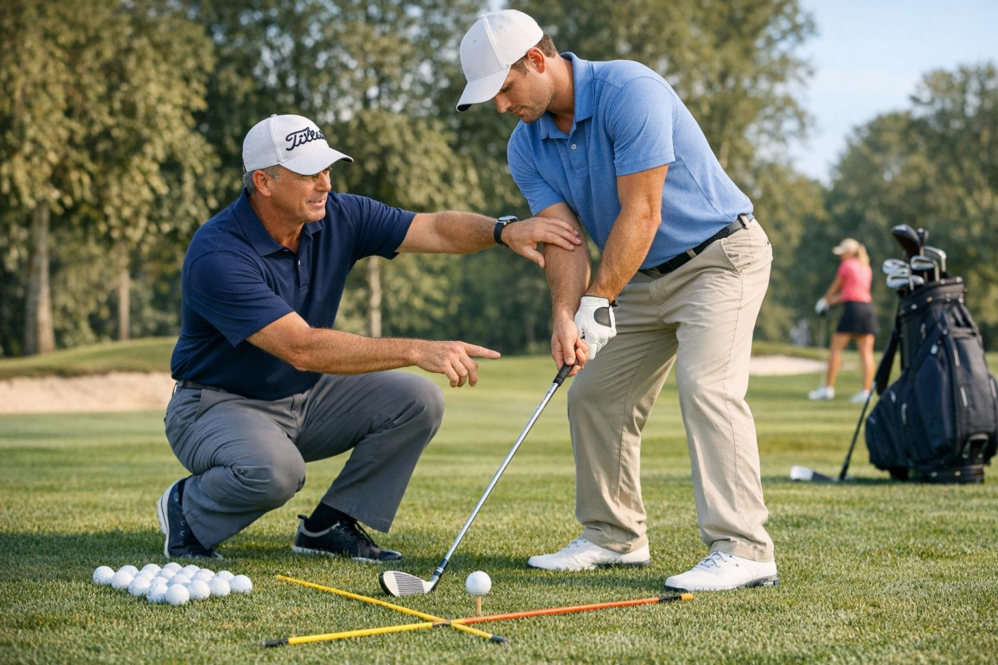
Master Your Mental Game to Stay Calm and Focused on the Course
Developing supreme mental resilience on the golf course begins with cultivating a reliable pre-shot routine that anchors focus and calms nerves. Consistency in your setup-including alignment, grip pressure, and stance width-creates physical cues that cue your mind to enter a state of concentration. Before each shot, take a moment to visualize the intended ball flight and landing zone, integrating factors like wind speed, lie angle, and green slope. This mental rehearsal primes your neural pathways, reducing performance anxiety and preventing distraction. Incorporate controlled breathing exercises-such as slow, deep inhales lasting four seconds followed by gradual exhales-to physiologically reduce tension. For golfers at any skill level, practicing this sequence under pressure during practice rounds or simulated scenarios (like playing a challenging par-3 hole repeatedly) trains the nerves to stay calm when it counts, improving shot execution in real competitive settings.
Successfully managing pressure also involves adapting your shot selection and strategy through intelligent course management. Rather of always attempting aggressive, low-percentage shots, learn to evaluate risk versus reward by reading the score context and course conditions. such as, on a windy day at a links-style course, intentionally shaping a lower fade with a 20-degree hybrid rather than a driver can reduce error margins and maintain control. Engage in drills that simulate decision-making under pressure, such as playing practice holes with imposed shot restrictions to enhance creativity and confidence in varied situations. Furthermore, intentional practice with various lies-fairway, rough, bunker-equips golfers with technical versatility, enabling calm selection of the best shot rather than panicking when conditions change.By coupling technical skills like controlled ball flight with strategic thinking, golfers can master mental flexibility and make smarter, more confident choices on the course.
integrating mindfulness and positive self-talk into your routine can transform your mental game from reactive to proactive. Recognizing negative thoght patterns instantly after a suboptimal shot-like self-doubt or frustration-and consciously replacing them with constructive affirmations fosters emotional regulation.“Stay present with each shot,” remind yourself, focusing only on what can be controlled: your setup and swing mechanics. Encourage deliberate practice of short game precision with drills such as the “clock drill” around the green, where you chip balls landing at various distances and slopes, training touch and concentration simultaneously. These drills build measurable improvements in stroke count by reducing three-putts and up-and-down failures. By reinforcing mental calmness through focused routines, golfers enhance muscle memory and swing repeatability, which are essential to scoring consistency. Ultimately, mastering the mental game unlocks the full potential of your physical skills, allowing you to maintain composure, adaptability, and precision irrespective of pressure or course challenges.
Unlock the Secrets to Consistent putting When the Pressure Is On
developing a reliable putting stroke under pressure begins with mastering your setup fundamentals.Position your feet shoulder-width apart, ensuring your eyes are directly over the ball or slightly inside the target line to promote a clean, straight stroke. Maintain a slight knee flex of about 15 degrees and keep your weight evenly distributed, leaning slightly toward the balls of your feet. Using a putter with the correct lie angle aligned to your stance can considerably reduce wrist breakdown and encourage a pendulum-like motion. It’s important to keep your hands soft on the grip, approximately 10-14 inches from the putter head, allowing for a natural hinge. To build consistency, practice a slow takeaway and follow-through while focusing on keeping your lower body stable, which minimizes excessive movement that often leads to mis-hits on crucial putts.
Once your setup is dialed in, integrating progressive drills will enhance your putting precision. start with short-distance putts of 3 to 5 feet to train muscle memory and confidence. Use a gate drill-a pair of tees slightly wider than your putter head-to ensure your stroke stays on-plane.Gradually increase the distance and vary the slope, practicing putts on breaks and uphill or downhill lies to simulate real course conditions. Developing touch and distance control can be improved by counting your pendulum rhythms during practice, aiming for smooth acceleration through impact. Under pressure, your first putt should be aimed at landing within a 6-inch circle around the hole to avoid three-putting scenarios, a key to scoring well. Incorporating simulated pressure-such as requiring you to complete a set number of consecutive makes before ending your practice session-helps train nerves and builds clutch confidence.
Strategic course management rounds out your approach to consistent putting.Before stepping up to the ball, take time to read the green’s grain, slope, and firmness; these factors can alter ball roll by several degrees and affect speed. Walk around your putt line, or use a ball marker behind the ball to visualize the break effectively. When conditions are windy or the green is slower due to moisture, adjust your pace accordingly, focusing more on stroke acceleration rather than force. Additionally, familiarize yourself with your putter’s feel, including any face milling or insert technology, to optimize feedback and control. For players of all levels, blending technical prowess with mental composure-using breathing techniques or visualization before each stroke-can transform inconsistent putting into a dependable weapon, ultimately lowering scores and enhancing overall enjoyment of the game.
Drive with Confidence by Building Rhythm and Controlling Your Breath
Developing a smooth, repeatable rhythm during the drive is essential for consistent distance and accuracy off the tee. Start by focusing on tempo through slow, deliberate practice swings, emphasizing a balanced transition from backswing to downswing. A good benchmark is the classic 3:1 ratio of backswing to downswing time, which promotes control and prevents rushing the shot. Incorporate a metronome or count “one-two-three, swing” during practice to internalize this tempo. Proper setup plays a crucial role: ensure feet are shoulder-width apart with a slight knee flex and the ball positioned just inside the lead heel to optimize launch angle and strike quality. Maintaining a steady head position and limiting lateral sway allows for an efficient transfer of power while protecting timing. This meticulous attention to rhythm supports smoother sequencing of the hips, torso, and arms, yielding more consistent, powerful drives regardless of course conditions or wind.
Controlling your breath is an often-overlooked yet vital element in managing tension and maintaining focus under pressure.Implementing breath control techniques such as diaphragmatic breathing helps calm nerves and steady the heart rate before and during the swing.Practice inhaling deeply through the nose for a count of four, pausing briefly, then exhaling slowly through the mouth for six to eight counts. this extended exhale activates the parasympathetic nervous system, reducing anxiety and encouraging a more fluid swing rhythm. On the course, especially during challenging holes or tight tee shots, using this breathing pattern can refocus concentration and mitigate the effects of adrenaline spikes. Additionally, coordinating breath with movement-such as inhaling during the takeaway and exhaling during acceleration-provides a natural timing cue that enhances consistency and muscle relaxation.
To build confidence and translate these skills into real play, integrate pressure simulations into your practice sessions. Such as,set up a drill where you must complete a series of drives with a predefined target percentage of fairways hit before ending practice,simulating on-course stakes and training nerves for clutch performance. Use visual markers and imagine specific course scenarios including wind direction, hazards, and narrow landing zones to reinforce strategic shotmaking. Equipment choices, such as selecting a driver with adjustable loft or shaft flex, can be optimized alongside technique adjustments to improve control based on course layout. Emphasize feedback by recording swing tempo and ball flight, enabling measurable progress and subtle refinements. This holistic approach-combining rhythm, breath control, and situational practice-empowers golfers across all skill levels to drive with greater consistency, accuracy, and confidence, ultimately lowering scores and enhancing enjoyment of the game.




