Understanding the Role of Follow-Through in Building a Consistent Swing
Developing a consistent follow-through is essential for creating a reliable and repeatable golf swing that translates directly to better ball striking and improved scoring. At it’s core, the follow-through reflects the quality of your swing mechanics from setup to impact. Achieving a balanced finish-where your belt buckle points toward the target and your club wraps naturally around your shoulder with your weight shifted over the front foot-indicates that you’ve maintained proper sequencing and acceleration through the ball. For beginners,focusing on a controlled,smooth extension through impact helps build the muscle memory necessary for consistency.More advanced players can fine-tune this by using video analysis to measure release angles and shoulder rotation, aiming for approximately 90 degrees of torso rotation toward the target on full swings.Practicing drills such as the “finish hold” encourages stability and helps feel the correct weight transfer, which is critical when managing course conditions like firm fairways or windy situations where precise contact affects trajectory and roll. Additionally, incorporating alignment rods or using impact tape can visually confirm where the clubface strikes, fostering a deeper connection between follow-through mechanics and ball flight.
Understanding the follow-through’s role also enhances short game performance and course management decisions by promoting confidence and repeatability under pressure. For instance, in driving, a full and balanced follow-through ensures you’re not decelerating prematurely-common in attempts to control distance-which can lead to slices or hooks.conversely, during putting, a controlled and consistent follow-through length is key for distance control and accuracy, especially on fast greens or undulating terrain. Players at all levels benefit from adopting specific metrics: maintaining a pendulum-like motion with minimal wrist breakdown for putting, and achieving a predictable hip rotation cadence for full swings. Practical drills like the “tee drill” for drivers or “stroke length control” for putting can be tailored to skill level, reinforcing technical improvements with measurable outcomes such as increased fairways hit or reduced three-putts. Furthermore, integrating mental focus techniques-such as visualizing a smooth finish or breathing rhythmically during the follow-through-helps manage course pressure and promotes a resilient mindset.By combining biomechanical precision with strategic practice, golfers enhance both swing consistency and scoring potential, making the follow-through an indispensable component of comprehensive golf improvement.
How to Fine-Tune Your Driving Follow-Through for Maximum Distance and Accuracy
to maximize distance and accuracy through your driving follow-through, start by emphasizing a complete and balanced finish.After impact, allow your body to naturally rotate fully toward the target, with your hips and shoulders opening up to approximately 90 degrees from the ball-target line. this ensures proper weight transfer onto your front foot and maximizes clubhead speed, which is critical for generating consistent driving distance. Beginners should focus on maintaining a steady head position and avoiding early deceleration, which frequently enough leads to fat or thin shots. Practicing the “pause and hold” drill-where you stop in your finish position for 3-5 seconds-can build muscle memory and enhance post-impact stability. For more advanced players,fine-tuning involves small adjustments like increasing wrist hinge through the transition to maintain lag and compress the ball effectively. Regular use of video analysis can definitely help identify if your clubface remains square during follow-through, which directly correlates to shot accuracy and reduced dispersion on the course.
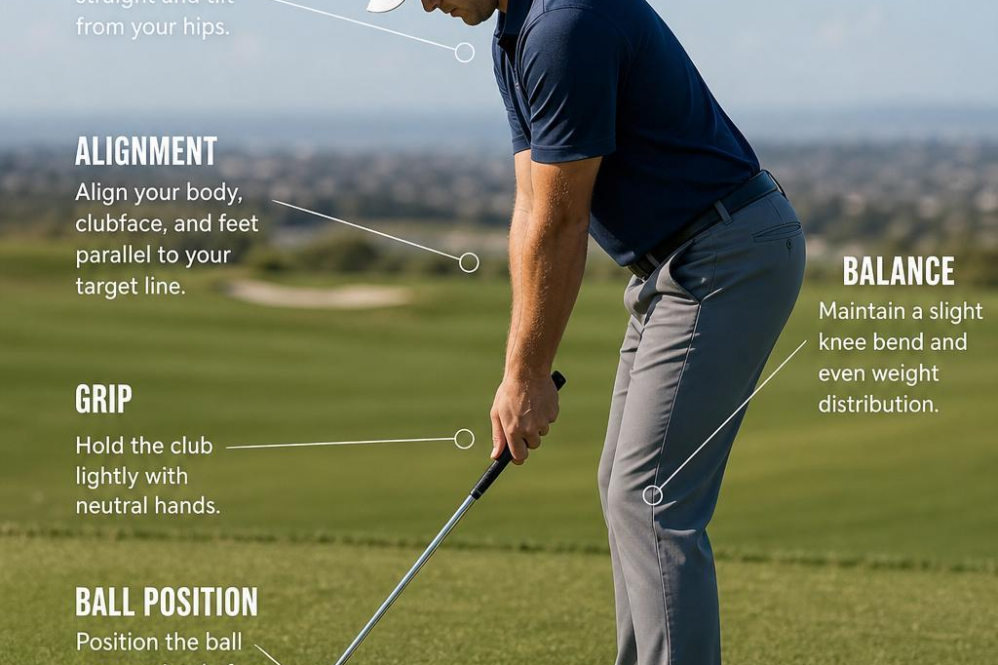
Integrating follow-through proficiency into your course strategy means considering environmental factors such as wind and slope that influence ball flight post-impact. Such as, when confronted with a strong crosswind, extending your follow-through along a somewhat lower and more controlled arc helps keep the trajectory penetrating and reduces side spin. drills like swinging with impact tape on the clubface can provide immediate feedback on strike quality, reinforcing the importance of a consistent release and smooth acceleration through the ball. Additionally, setup fundamentals such as aligning the feet parallel to the target line and positioning the ball just inside the lead heel optimize launch conditions that your follow-through can capitalize on. Weather you’re a high-handicapper aiming to stabilize your results or a low-handicap player chasing incremental gains, mastering the interplay between biomechanics and situational play during the follow-through will yield improved precision, more predictable shot shapes, and ultimately, better scoring outcomes.
Putting with Confidence Using Precise Follow-Through Techniques
To develop a precise follow-through in your putting stroke, begin by focusing on a smooth, pendulum-like motion that maintains consistent speed through impact. Set up with your eyes directly over the ball to promote proper alignment and ensure your shoulders control the stroke, minimizing wrist action to avoid unintended loft or spin. A critical technical element is maintaining a putter face angle of 90 degrees at impact, which helps the ball roll on its intended line. Practice drills such as the “gate drill” – placing tee markers just wider than the putter head to encourage a straight path – reinforce this. Additionally, emphasizing a follow-through length equal to or slightly longer than the backswing helps cultivate distance control and rhythm, which are essential for lag putting on undulating greens. Incorporating mirrors or video analysis provides immediate feedback on your stroke’s arc and extension, guiding you to eliminate common mistakes like deceleration or early release that lead to inconsistent distance and direction.
Course strategy plays a pivotal role in applying follow-through techniques effectively under varying conditions. When reading greens, adjust stroke length and tempo based on slope and grain, consciously modulating your follow-through to enhance control on faster or downhill putts. For instance, a firmer follow-through with a steady finish aids in maintaining ball speed when putting into the wind, reducing the risk of coming up short. Intermediate and advanced players benefit from integrating weighted practice putters to develop muscle memory and feel, which accelerates mastering distance judgment. Meanwhile, beginners should focus on fundamental setup checkpoints like ball position-generally slightly forward of center-and a balanced stance to establish a repeatable stroke. Regularly practicing drills such as the “ladder drill,” which involves putting to targets at incrementally increasing distances, builds reliable pace management and reinforce confidence in the follow-through. By harmonizing these biomechanical and strategic elements, you transform putting into a controlled, confident aspect of your game that can considerably lower scores across all levels of play.
Drills and Practice Tips to Make Your Follow-Through Second Nature
To embed a consistent follow-through in your golf swing, start by focusing on balance and extension through impact. One effective drill for all skill levels is the “pause and hold” practice: after completing your swing, hold your finish position for at least 3-5 seconds to develop muscle memory and check your alignment.Ensure that your weight has fully transferred to your lead foot, your hips are rotated toward the target, and your club shaft points down the target line or slightly left (for right-handers). This drill reinforces the ideal follow-through posture, which not only promotes solid contact but also enhances directional control off the tee and from the fairway. Beginners benefit by ingraining the concept of proper weight shift, while low handicappers can use this pause as a diagnostic tool to spot subtle swing flaws like premature deceleration or a collapsing wrist. complement this with mirror work focused on the release angle-aim for a natural extension of the arms past waist height and a relaxed grip pressure, which supports a smooth, rhythmical swing tempo and optimal ball flight trajectory.
Integrating follow-through mastery into your putting stroke and chipping technique demands drills that emphasize soft hands and consistent tempo.Try the “gate drill” for putting: set two tees slightly wider than your putter head just in front of the ball to encourage a square clubface through the stroke and a fluid follow-through that finishes low and along the intended line. This helps develop a smooth acceleration through the ball, crucial on fast greens or tricky downhill putts where stopping abruptly can cause mishits. For chips and pitches,use a towel under your trail armpit while practicing your swing to ensure your arms stay connected and your follow-through remains balanced and controlled,preventing common errors like swinging too hard or decelerating too soon near the hole. On-course,employing these mechanical habits enables better distance control and enhances your ability to read breaks,ultimately lowering your short game score. Remember, mastery of follow-through mechanics adapts to course conditions-wind, green speed, and lie-inviting thoughtful club selection and shot shape adjustments, which are essential factors in competitive play and smart course management.