Mastering the Foundation Understanding the Importance of a Square Clubface for Consistent Contact
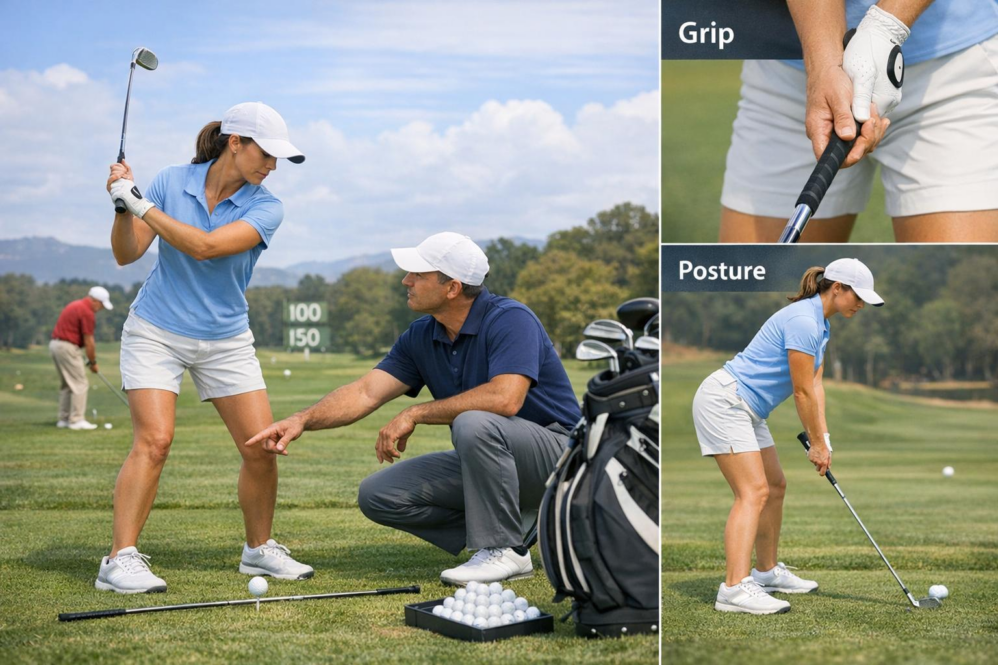
Achieving consistent contact in golf begins fundamentally with the understanding and mastery of a square clubface at impact.When the clubface is perfectly perpendicular to the path of the swing, it promotes straighter ball flight and predictable ball behavior, critical to lowering scores. For beginners, emphasizing a neutral grip and a proper address position helps establish this foundation. The grip should neither be too strong nor too weak, allowing the clubface to return to square naturally through the swing arc. Setup checkpoints include aligning the clubface directly behind the ball and ensuring your wrists are in a neutral position without cupping or bowing. This setup prepares your muscles and mind to consistently reproduce the correct impact position and feel,which is essential even before spearheading into more advanced techniques like shaping shots or manipulating trajectory.
To deepen the understanding of maintaining a square clubface, golfers should incorporate targeted practice drills that reinforce impact awareness and feedback. One effective drill involves hitting chip shots with a shortened backswing, focusing solely on crisp, square strikes. Placing alignment sticks on the ground parallel to the target line can visually aid in verifying face and swing path alignment. Additionally, recording your swing from down-the-line angles allows you to observe clubface orientation at impact and make necessary corrections. Low handicappers frequently enough refine this skill by experimenting with subtle wrist hinge mechanics and lower hand pressures to enhance control without sacrificing square impact. Incorporating tactile feedback tools such as impact tape on clubfaces can also reveal striking patterns, helping golfers adjust their contact points to stay centered and square consistently. By routinely practicing with intent,golfers develop muscle memory that transcends practice sessions into on-course confidence,particularly in challenging chipping and pitching situations.
Beyond technique, mastering a square clubface connects deeply to course strategy and mental focus.Understanding how a consistent square face influences ball spin and roll-out aids in strategic decisions around the greens, such as when to play aggressive chip shots versus controlled bump-and-runs. For instance, on firm, fast greens or uneven lies, maintaining the face square through impact helps minimize unwanted sidespin and maximizes distance control.It’s also important to adjust your setup and swing to accommodate whether factors like wind-where a slightly open or closed face might be needed but returning to square at impact remains the target. Golfers should cultivate a pre-shot routine emphasizing visualization of a square clubface contact point, calming the mind, and focusing on smooth tempo rather than force. This mental reset supports technical execution under pressure and helps translate practice improvement into competitive rounds. Ultimately, a square clubface is not just a mechanical concept but a cornerstone skill that integrates swing mechanics, setup precision, and strategic decision-making to drive measurable improvement across all levels of golf.
Finding your Perfect Setup How to Align Your Stance and Grip for Greater Control
Achieving a reliable and repeatable golf setup begins with mastering your stance and grip, foundational elements that directly influence control and shot consistency. Start by positioning your feet shoulder-width apart for a balanced base,allowing natural hip rotation during the swing. For shorter shots, such as chips with a square-face technique, move your front foot slightly forward-about 1 to 2 inches-to promote a downward strike and crisp contact. Align your body parallel to the target line, ensuring your shoulders, hips, and feet form a straight line. Pay attention to ball placement: position the ball just back of center in your stance to facilitate striking the ball before turf,leading to cleaner,more accurate chips. This setup encourages better control over trajectory and spin, crucial in maneuvering the ball around varying green conditions.
Next, refine your grip to enhance control and tactile feedback, especially when executing delicate short game shots. Utilize the neutral grip-where the V’s formed between your thumbs and forefingers point toward your right shoulder (for right-handed players)-to promote a square clubface through impact. A common mistake is gripping too tightly, which restricts wrist hinge and reduces feel; rather, apply a pressure level of about 5 out of 10, enough to maintain club security but allowing fluid wrist movement. For players seeking even more finesse, a slightly lighter grip can improve sensitivity to turf interaction, a critical factor when practicing square-face chipping near the greens. Consider practicing with a variety of grip pressures during your drills to identify the sweet spot that offers both control and responsiveness under pressure.
Integrating these setup fundamentals with course management enhances your strategic options. Approaching a tricky chip from a tight lie or uneven slope frequently enough requires subtle stance adjustments, such as widening your base for stability or narrowing it to promote controlled wrist hinge. Implement drills like the “gate drill,” where two tees form a narrow path for the clubhead to pass squarely under, reinforcing proper alignment and grip pressure. Additionally, embrace situational practice by varying green speeds and wind conditions; for example, on firm, fast greens, a more open stance can help produce a softer landing angle while controlling roll. Remember, consistent measurement and adjustment lead to improvement: aim to reduce three-putts by 25% within a month by focusing on these setup techniques, ultimately lowering scores through smarter, more deliberate short game execution.
Unlocking the Ideal Stroke Focusing on Smooth, Compact Movements for Accurate Chips
Mastering a smooth, compact stroke is essential for producing accurate chips that consistently land and roll predictably toward the hole. begin your setup by positioning the ball slightly back of center in your stance,which helps encourage clean contact with a downward strike. Adopt a narrow stance with feet about 4 to 6 inches apart, and place most of your weight on the lead foot-around 60-70%-to promote stability and control. Keep your hands ahead of the ball at address, ensuring the clubface is square to the target line. A common mistake is overextending your wrist or taking a large backswing; instead, focus on a short, confident takeaway that keeps the clubhead low to the ground. This compact movement minimizes variables and improves shot consistency, especially on firm or fast greens where precise contact governs the result.
From a technical standpoint, the square-face chipping technique is invaluable for players aiming to develop reliable distance control and directional accuracy. The key is to hinge the wrists minimally through impact, relying primarily on a pendulum-like motion generated from the shoulders and forearms.This creates a controlled swing arc with a stroke length roughly equal to the distance to your target,allowing you to judge pace intuitively.To practice this,try the “clock drill,” where you chip balls to targets placed at 3,6,and 9 feet,simulating diffrent stroke lengths and speeds. Pay attention to consistent low-point control and avoid flipping or scooping the club, which commonly causes thin or fat shots. utilizing a club with a square leading edge helps you maintain clean contact and reduces the chance of closing the face unintentionally, which can produce unwanted hooks or pulls around the greens.
integrating this smooth, compact chipping stroke into your course management strategy results in smarter shot selection and lower scores. Assess each chip shot based on lie, green slope, and pin position to decide whether to focus on carry, rollout, or trajectory. For example, on tight lies or closely mowed fairways, a square-face chip with a minimal wrist hinge will enhance precision and reduce skidding. Incorporate a systematic pre-shot routine that includes visualizing the shot’s landing spot and rollout, aligning your feet and shoulders to a spot just short of the target. Use practice drills like chipping gates (two tees set just wider than your clubhead) to reinforce groove path and face alignment under pressure. By consistently applying these principles, golfers of all levels-from beginners seeking reliable contact to low handicappers refining touch-can unlock a dependable short game that complements their overall scoring strategy and boosts confidence during competitive play.
Integrating Touch and Feel Translating Practice into Real-Game Confidence and Precision
Mastering touch and feel on the golf course begins with a deep understanding of how the club interacts with the turf, especially when employing the square-face chipping technique. To build this connection, start by focusing on your setup: position the ball slightly back in your stance, keep your hands ahead of the ball, and maintain a narrow stance to promote stability. This encourages crisp contact and minimizes skidding.Incorporate practice routines that emphasize controlled tempo and minimal wrist hinge, such as executing 20 chips with a consistent stroke length and noting the landing spot. Over time, this drill helps golfers internalize the sensation of clean contact and the subtle variations in roll-out, which is critical when transitioning from practice mats to real grass. Paying attention to clubface alignment within ±3 degrees of square at impact and ensuring the leading edge stays low are essential to avoid fat or thin shots on varying turf conditions.
Translating practice proficiency into on-course confidence requires integrating touch with sound course management strategies. When faced with a challenging chip shot-say, from tight rough or a tight lie near the green-adjust your technique to maintain the square-face position while modifying your stroke length to control trajectory and roll. Incorporate situational drills such as chipping from different lies and distances within a 15-yard radius, simulating conditions encountered during rounds. This approach not only improves adaptability but also sharpens decision-making under pressure. For example, recognizing when to rely on a bump-and-run versus a higher shot that delicately lands near the pin can drastically lower scores. Additionally, understanding the green’s slope and grain direction facilitates better shot selection and execution, helping golfers predict ball release and speed with greater precision.
refining touch and feel connects closely to mental resilience and feedback mechanisms during play. Encourage golfers to develop a routine that incorporates visualization of the shot’s flight and landing spot, paired with focused breath control to maintain composure. Utilize feedback tools such as video analysis or launch monitors to quantify improvements in launch angle-aiming for a consistent 12° to 15° launch height with chips-and spin rates, which influence stopping power on the green. Emphasize the importance of patience and deliberate practice over mechanized repetition, fostering an intuitive understanding rather than robotic movement. Whether working with beginners mastering chipped shots or low handicappers fine-tuning nuanced shot shapes,this multifaceted approach fortifies precision,promotes confidence,and ultimately translates technical improvements into tangible scoring benefits.