
Mastering the Fundamentals of Walter Hagen’s Effortless Swing Technique
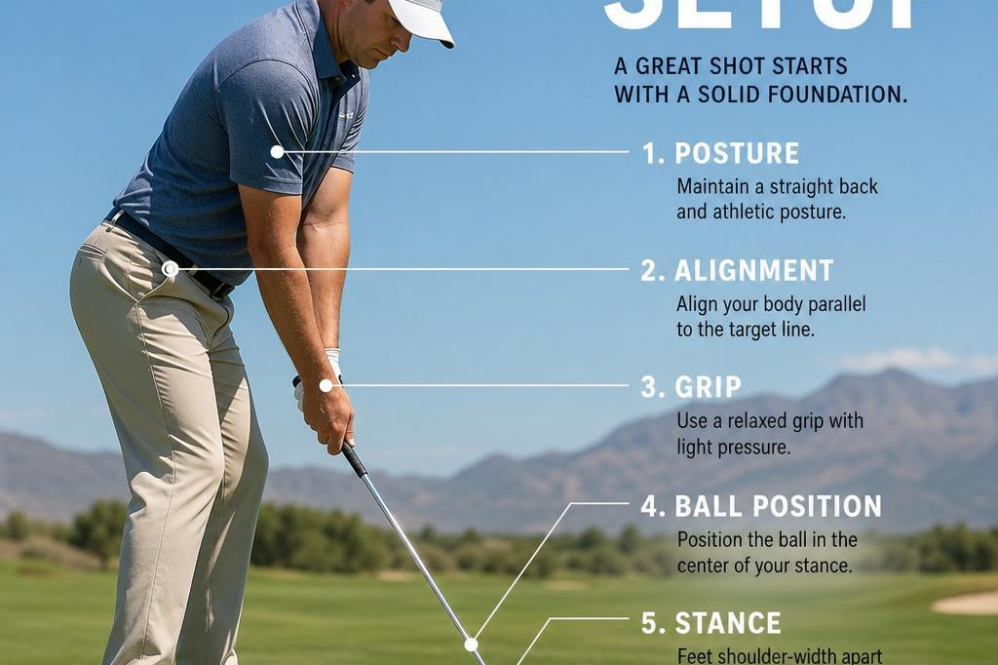
Central to mastering Walter Hagen’s effortless swing is understanding the harmony between body rotation and clubhead lag,which creates both power and control without strain. Start with a balanced setup where your feet are shoulder-width apart and knees slightly flexed. Align your spine at a subtle 15-degree tilt away from the target to encourage a natural shoulder turn.Hagen’s instruction emphasizes a smooth takeaway-initiated by the shoulders rather than the hands-to maintain the club’s lie angle and avoid flipping the wrists early. As you initiate the backswing, focus on creating a wide swing arc by extending the lead arm fully while keeping the trailing arm relaxed, fostering that characteristic effortless flow. At the apex, the lead wrist should be flat or slightly bowed to store elastic energy, which then releases in the downswing, generating clubhead speed while preserving accuracy. To practice, incorporate drills like the “towel under arms” exercise to promote connectedness between your torso and arms, reducing disjointed movements that often lead to inconsistent ball striking.
Building on thes mechanics, course strategy and course conditions play a significant role in how you implement Hagen’s swing technique for scoring improvements. For example, on windy days, Hagen recommended abbreviated swings (“three-quarter shots”) that maintain the same rhythm and body sequencing but reduce clubface area exposed to the elements, enhancing shot predictability.When addressing uneven lies or tight fairways, prioritize the setup fundamentals: center your weight slightly forward, grip pressure should be firm but not tenseand adjust your stance narrow enough to maintain balance without restricting rotation. Additionally, short game finesse, a hallmark of Hagen’s play, calls for practicing precision chipping and lag putting drills that emphasize feel and distance control. Incorporate the “clock drill” around the green to develop consistent contact and trajectory control under pressure. With repeated practice, these habits build the mental resilience and strategic versatility hagen advocated, helping golfers of all levels confidently select the right shot, manage risks judiciouslyand ultimately lower scores by executing smooth, efficient swings tailored to real-world course challenges.
Unlocking the Secrets Behind Hagen’s Precise and Confident Putting Style
to develop a precise and confident putting style inspired by walter hagen, start by mastering a foundational setup that promotes consistency and alignment. Position the ball slightly forward of center in your stance-about one ball width ahead-to help produce a smooth, forward-rolling stroke.Maintain a relaxed grip pressure (around 4 to 5 out of 10) to allow fluid wrist hinge and avoid tension that disrupts tempo. Hagen emphasized the importance of keeping the eyes directly over the ball or just inside the target line; this over-the-ball-eye-line view enhances depth perception and helps read subtle breaks. Additionally, ensure your shoulders, hipsand feet are square to the intended line-this alignment reduces unwanted sidespin and supports a true roll.Practicing with an alignment rod or a chalk line on the practice green can reinforce these fundamentals, helping golfers from beginners to low handicappers build a repeatable stroke that adapts well to varying green speeds and grain directions.
Beyond mechanics,walter Hagen urged golfers to cultivate strong mental focus and strategic course management when putting,especially under pressure. Before each putt, visualize the ball’s path including the break, grain influence, and speed adjustments necessary for diffrent green conditions. Incorporate these detailed reads by assessing the slope angle and distance-aiming to start the ball on a line that accounts for at least one inch of lateral movement per every three feet of putt length on moderate breaks. Hagen’s method also involves developing a pre-putt routine that settles nerves and enforces confidence, such as taking a deep breath, rehearsing the stroke without the balland committing fully to the line and pace. To translate this into practice, use drills like the clock drill around the hole to improve distance control and the gate drill to sharpen stroke path consistency. Remember, every stroke on the green is an opportunity to save strokes – linking technical precision with mental resilience leads to lower scores and elevated course strategy mastery.
How to Incorporate Hagen’s Mental Approach for Consistent Performance
to harness Walter Hagen’s signature mental approach for consistent performance, start by cultivating a calm yet focused mindset before every shot. Hagen emphasized the power of visualization and confident decision-making, teaching players to “see” the intended shot shape and flight path before execution.Establish a pre-shot routine that includes deep breaths to regulate nerves and a concise mental checklist focusing on stance, alignmentand target identification. Such as, aligning your feet parallel to the target line within 1-2 degrees of accuracy helps ensure a square clubface at impact, which is crucial for producing predictable ball flight. Incorporate deliberate practice of this routine on the driving range by alternating between high-pressure simulated scenarios-such as imagining a tight fairway lie-and relaxed shots. This trains your brain to maintain steady composure under tournament-style pressure, a cornerstone of Hagen’s philosophy. additionally, learning to accept minor setbacks without frustration is vital; channeling emotions positively enhances focus and prevents performance lapses during competition.
Building on mental resilience, integrate strategic course management principles championed by Hagen to complement technical skills and reduce unforced errors. Before each round, study the scorecard and visualize ideal landing zones that avoid hazards, aiming to keep approach shots within 100 yards of the pin whenever possible to maximize scoring opportunities. For instance, opting for a 3-wood off the tee instead of driver on narrow or heavily bunkered holes exemplifies smart shot selection that prioritizes accuracy over distance. Practice drills such as “target golf,” where you choose precise spots in the range to hit while varying clubs, enhance your ability to control distance and trajectory under different course conditions. Moreover, commit to routinely sharpening your short game-the area where Hagen excelled-by dedicating 30 minutes of practice to chipping and putting from 15-30 feet. this focused training reduces three-putts and up-and-down failures, directly correlating with lower scores. By fusing Hagen’s mental discipline with deliberate course strategy and technical refinement, golfers at all levels can develop dependable routines that yield consistent, confidence-based performance on the course.
Practical drills Inspired by Walter Hagen to Elevate Your Game Today
Start by mastering the fundamentals of setup and swing mechanics through Walter Hagen’s focus on controlled precision and rhythm. Begin with a balanced stance roughly shoulder-width apart, ensuring your weight is evenly distributed along the balls of your feet to maximize stability throughout the swing. Practice a drill where you place a headcover just outside your trail foot during your takeaway to promote a clean, inside path-this emulates Hagen’s fluid swing plane philosophy. Incorporate a slow, measured tempo during practice swings, counting a steady beat of “one-two” to ingrain consistent timing, which enhances shot accuracy. As you transition through the backswing, aim for a 90-degree shoulder turn while maintaining a firm left arm to optimize coil and power generation without sacrificing control. For beginners, using alignment sticks or clubs on the ground can definitely help maintain square clubface positioning and correct aim-a critical factor to reduce slices or hooks and produce straighter ball flights. By drilling these setup and takeaway fundamentals regularly, golfers develop the muscle memory required to execute shots with repeatable precision under course pressure.
Building on swing mechanics, sharpen your short game and course strategy with drills that emulate Walter Hagen’s famed mental resilience and tactical shot selection. One efficient drill is the “up and down” challenge: place a ball within 20 yards of the green in various lies (tight fairway, roughand fringe)and practice chipping or pitching it to land softly near the hole, then putting out. This simulates real-course scenarios, improving touch and distance control, while reinforcing Hagen’s emphasis on course management-knowing when to lay up or attack pins based on risk assessment. Combine this with a “pre-shot routine” drill where you visualize the shot shape and trajectory, incorporating environmental factors like wind direction and slope, to cultivate emotional resilience and strategic decision-making. Advanced players can add pressure by setting score goals for up-and-down conversions, enhancing focus under competitive stress.Additionally, adopting equipment with varying lofts and bounce angles-like a sand wedge with a 56-degree loft and 10-degree bounce-allows for versatility in different turf conditions, a key takeaway from Hagen’s adaptability on diverse courses. Integrating these drills regularly will not only improve your short game touch but also strengthen your mental game, leading to smarter play and lower scores across all skill levels.




