Unlocking the Secrets of Your Swing with the Right Golf Clubs
Choosing the right golf clubs is foundational to unlocking your swing’s full potential. Your setup begins with a consistent stance and grip, ensuring the clubface aligns squarely with the target line at address.Pay close attention to the club length and shaft flex based on your height and swing speed-using clubs too long or too stiff can hinder proper swing mechanics and reduce accuracy. As a notable example, a driver with a loft between 9° and 12° typically suits most players aiming for a balance of distance and control. Incorporating adjustable drivers allows fine-tuning of loft, lieand face angle, which is especially beneficial when adapting your swing to varying course conditions such as wind or firm fairways. Practicing with a launch monitor can offer measurable feedback on ball flight, spin rate, and attack angle, helping you refine your club selection and swing path for optimized results.
Improving your short game, particularly putting and chipping, also depends heavily on using the right wedges and putter. Experiment with wedges featuring different bounce angles-from around 8° to 14°-to match turf interaction and shot types, such as bunker play versus tight lies. Setup fundamentals like stance width,ball position (generally just ahead of center for chips),and hand placement profoundly affect consistency. To enhance touch and feel, integrate drills such as the “Gate Drill” for putting alignment or the “Clock Drill” for chipping accuracy around the green.These exercises increase muscle memory and confidence under pressure. additionally, selecting a putter with a face insert or milling pattern that suits your stroke type-whether arc or straight-can substantially improve distance control and alignment, critical for lowering scores in real course scenarios where green speed often varies.
Strategically managing your equipment on the course goes hand-in-hand with technique refinement. Knowing when to deploy a hybrid rather of a long iron or opting for a higher-lofted club to escape rough can lead to smarter shot selection and better scoring opportunities. Incorporate a pre-shot routine that assesses elements like wind direction, slopeand hazards, adjusting your club choice and swing intent accordingly. Such as, when facing a downhill lie, setting up with a slightly narrower stance and shifting weight forward helps maintain balance and solid contact. To support continuous improvement,set measurable goals such as reducing three-putts by 20% over six weeks or increasing fairways hit by 15%. Tracking performance using GPS devices or golf apps provides actionable data to fine-tune both equipment usage and tactical decisions. Ultimately, mastering these interrelated aspects elevates your game holistically, allowing you to lower scores through precision, consistencyand intelligent course management.
Choosing the Perfect Driver to Boost Your distance and Accuracy
Selecting the ideal driver involves more than just picking the most expensive or visually appealing club; it requires a deep understanding of how equipment specifications align with your swing mechanics and course strategy. Loft angle is a crucial specification, generally ranging from 8° to 13°, and considerably impacts launch trajectory and spin rate.Beginners frequently enough benefit from a higher loft (10.5° or more) to help achieve a higher launch and more forgiveness, while low handicappers might opt for a lower loft to maximize roll and control in windy conditions. Additionally, shaft versatility must match your swing speed: slower swings require more flexible shafts to optimize energy transfer, whereas faster swingers need stiffer shafts for stability. When testing drivers, pay close attention to the club’s center of gravity (CG), as a lower CG can help produce a higher flight with less spin, enhancing distance and accuracy. Incorporating insights from the Top 8 Essential Gear and equipment for First Time Golfers list, make sure your driver complements your other clubs in terms of shaft length and grip type, ensuring consistency across your bag.
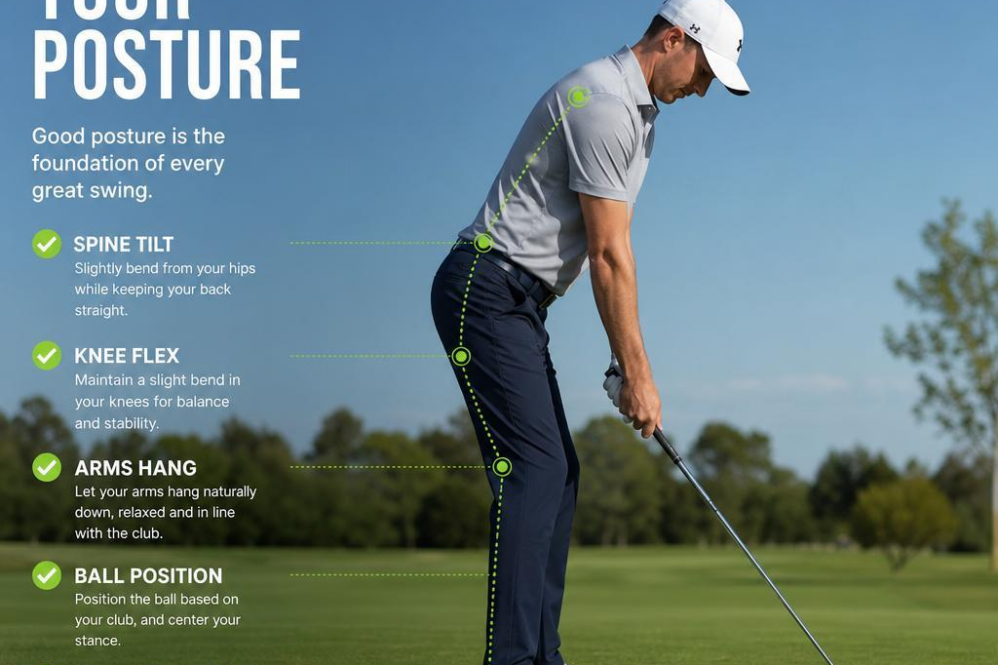
In terms of setup fundamentals, maintaining a consistent posture and ball position is key to unleashing the full potential of your driver.Position the golf ball just inside your front heel to encourage an upward strike angle, which is vital for maximizing carry distance and minimizing sidespin that causes hooks or slices. Align your feet, hips, and shoulders parallel to the target line to promote a square clubface at impact, a common trouble spot where many recreational golfers lose accuracy. Use practise drills like placing alignment sticks on the ground during your pre-shot routine to reinforce correct setup. Additionally, experiment with tee height; a good rule of thumb is to have the ball sit so that roughly half of it is above the driver’s clubface at address. This adjustment can create a sweet spot contact bias, preventing mis-hits low on the face that kill distance. These techniques aid not only beginner golfers learning essential positioning but also experienced players fine-tuning their driver shots for challenging course conditions, such as thick rough or uneven tees.
Course management with your driver plays a pivotal role in lowering scores and shaping your overall strategy. While maximizing distance is tempting, strategically placing your tee shots for safer approaches frequently enough produces better results. As a notable example, on narrow fairways or doglegs, consider dialing down your swing speed to prioritize accuracy and avoid hazards. Using directional control techniques such as adjusting your clubface angle and swing path can help you execute shot shapes like draws or fades intentionally, tailoring your trajectory to the hole layout. Incorporate mental visualization between shots to picture your target line and trajectory, reinforcing confidence and reducing tension.Consistent driver practice routines might include interval training focusing on tempo maintainance and clubface square impact drills using impact tape feedback. By mastering these strategies, players from novices to low handicappers can customize driver play to fit various course challenges, ultimately improving fairway hit percentage and setting up easier approaches, which decisively contribute to lowering their scores.
Putting essentials Every Beginner Needs to Improve Their Short Game
Mastering the short game begins with a solid foundation in putting fundamentals, which hinges on a consistent setup and stroke. start by positioning your eyes directly over the ball, or just slightly inside the target line, to ensure accurate alignment-a critical factor often missed by beginners. Your grip should be relaxed yet secure, using either a traditional or claw grip to minimize wrist breakdown during the stroke. Additionally,keep your putter face square through impact,focusing on a pendulum-like motion driven from the shoulders rather than the wrists. Using quality equipment tailored for beginners, such as a mallet-style putter with alignment aids, can definitely help develop a reliable tempo and line. Practice routines incorporating short putts inside 5 feet and lag putts up to 30 feet reinforce feel and distance control, essential for lowering scores and boosting confidence on the greens.
Distance control is paramount in putting and requires a mix of technique refinement and course savvy. To build this skill, incorporate drills that emphasize feel and rhythm, such as the gate drill-placing two tees slightly wider than your putter head to promote a straight stroke path without face rotation. Focus on the length of your backswing and follow-through, which should mirror each other to maintain consistent tempo. Understanding green speeds and grain-affected by moisture, mowing patternsand weather conditions-also influences your pace adjustments. such as, on faster greens, a shorter stroke with accelerated acceleration through impact tends to offer better control. First-time golfers equipped with a decent rangefinder or laser device included in their top essential gear can effectively judge distances, allowing for smarter decisions when faced with varying green sizes and slopes. Developing the ability to judge breaks and speed in live play reduces three-putt occurrences substantially.
Course management and mental resilience integrate directly with putting success, especially under pressure during tournament play or tight scoring situations.Before each putt, visualize the intended line and speed, factoring in the terrain’s undulations and external variables like wind or pin placement. Employ the “routine repetition” technique: same practice swings, consistent breathingand a firm pre-putt stance, all of which help quiet the mind and sharpen focus. Using alignment tools like a laser rangefinder or personalized putting mats from beginner gear sets during practice enhances accuracy and confidence transfer to the course. Additionally, recognizing when to aggressively attack the hole versus lagging close to avoid short-sided misses represents smart strategic play. Keep a mental note of your putting statistics over rounds to track progress and identify recurring errors, such as deceleration at impact or misreading breaks. By combining precise mechanics, tailored practice drillsand strategic course tactics, golfers of all skill levels can truly elevate their putting game and approach each green with confidence and competence.