Master the Fundamentals with Davis Love III’s Approach to a Consistent Swing
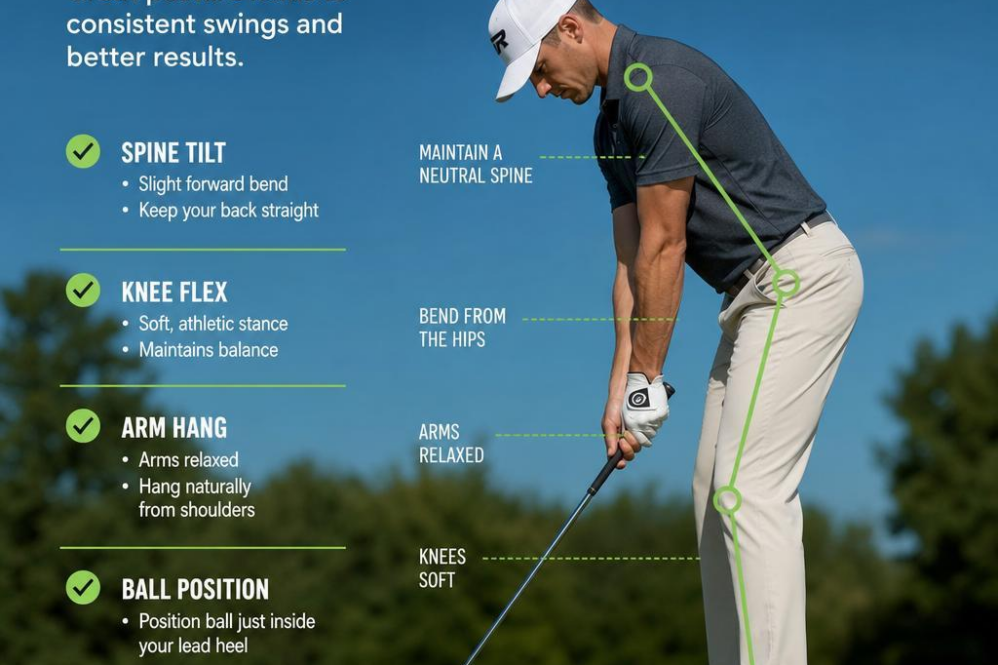
Achieving a consistent swing begins with mastering the setup fundamentals that Davis Love III emphasizes as the cornerstone of reliable shot-making. A golfer should first ensure a balanced stance with feet shoulder-width apart and weight distributed evenly to foster stability throughout the swing. Love’s approach advocates for a slight knee flex-roughly 20 degrees-which aids in maintaining posture while allowing dynamic movement. Attention to grip pressure is equally vital; Love suggests a firm but relaxed grip, promoting clubface control without restricting wrist hinge, typically applying about 5-7 pounds of pressure measured with a grip trainer. From this foundation, the takeaway should be smooth and on-plane, encouraging a gradual wrist **** at around 90 degrees to build stored energy for the downswing. Practicing with alignment rods placed parallel to the target line can help golfers internalize correct body and club positioning, diminishing common faults such as an open clubface or an overly steep backswing.
Transitioning from setup to execution, understanding Love’s swing dynamics offers valuable insight into sustaining consistent contact and distance control under varying course conditions. He emphasizes a connected swing sequence-where the arms and torso move synchronously-facilitated by initiating the downswing with a subtle hip rotation of roughly 15 degrees toward the target before the hands release the club. This biomechanical nuance encourages square clubface impact and efficient energy transfer, critical for controlling launch angle and spin, especially with mid-irons and wedges. For short game improvement, Love advocates intentional practice of the “bounce and release” technique on chips and pitches, leveraging club sole angles to minimize fat shots and enhance feel around the greens.Additionally, his course management ideology advises precision club selection tailored to lie, wind, and hazard proximity; for example, opting for a lower-lofted club with reduced spin to combat windy conditions.To internalize these principles, golfers can implement drills such as swinging with a metronome to improve tempo or using impact tape to monitor clubface contact consistency. Integrating setup discipline with love’s swing sequencing and strategic shot management can dramatically elevate scoring potential across all skill levels.
Unlock the Secrets to Powerful Driving That Stays on target
Mastering powerful driving that consistently finds its target begins with establishing a reliable setup and swing foundation.start by positioning the ball just inside your left heel (for right-handed golfers) to optimize the attack angle, allowing the club to strike the ball on an ascending path. This aids in generating higher launch with reduced spin,a key to maximizing distance and accuracy. Davis Love III frequently enough emphasizes the importance of a balanced stance-shoulder-width apart with slight knee flex-and maintaining a stable lower body through impact.As you transition through the swing, focus on initiating the downswing with your hips rotating toward the target. this sequence ensures maximum clubhead speed without losing control.To develop this, incorporate practice drills such as the “slow-motion swing,” which helps ingrain proper sequencing, and the “gate drill” to promote a consistent club path. By integrating these fundamentals, golfers of all levels create a repeatable swing that unlocks both power and precision off the tee.
Beyond mechanics, strategic course management dramatically enhances driving effectiveness. Recognizing when to prioritize accuracy over sheer distance can shave strokes, especially on tight or hazard-laden holes. Adapt your club selection and target line to prevailing conditions-for instance, adjusting aim to compensate for wind or utilizing a three-quarter swing to maintain control under pressure. Davis Love III’s insight on shot shaping is invaluable here: practice intentional fades and draws to navigate doglegs or position your ball favorably for the next shot. Incorporate drills that encourage trajectory control, such as limiting wrist movement during takeaway or experimenting with grip pressure to influence shot shape. Consistent practice combined with on-course request helps golfers read the landscape better, turning powerful drives into scoring opportunities rather than mere distance gains.Ultimately,blending technical swing improvements with smart course strategy yields measurable progress and more enjoyable rounds.
Discover How Precision Putting Can Lower Your Scores Dramatically
Mastering the subtleties of putting begins with a keen understanding of green reading and surface texture, skills Davis Love III highlights as fundamental to scoring improvement. Effective putting requires golfers to assess not only the break but also the grain of the grass, slope angles commonly ranging between 1 to 3 degrees, and environmental factors like wind or moisture. A practical approach is to position your eyes directly over the ball during alignment, allowing accurate visualization of the intended line. Incorporate consistent setup routines focusing on square shoulders, a stable lower body, and a putter face aligned perfectly perpendicular to the target line. To develop a reliable stroke, practice drills such as the “gate drill” – placing tees just wider than your putter head to promote a straight-back and straight-through stroke – help eliminate common errors like an open face or decelerated finishes. By blending these setup fundamentals and reading techniques,golfers can build confidence to attack pressure putts and minimize strokes around the green.
Refining your stroke mechanics further involves embracing deliberate feedback and incremental adjustments to tempo and distance control, especially when navigating variable green speeds. Davis Love III champions the use of targeted drills such as the “ladder drill,” in which putts of 3, 6, 9, and 12 feet are repeatedly practiced to elevate touch and pace perception. Additionally, consider equipment factors such as putter head design - a mallet-style with perimeter weighting may offer enhanced stability for mid- to high-handicappers, while blade-style putters provide increased feedback preferred by lower handicappers. On the course, recognize when to adapt strategy; rather than aggressive single-putting attempts on challenging uphill breaks, focus on leaving the ball within a 6-inch tap-in range to secure par. Golfers should integrate mental routines that calm nerves and maintain focus during each stroke. Over time, this extensive combination of technique, equipment awareness, and smart course management will consistently reduce missed opportunities, lowering scores dramatically and elevating overall performance.
Bring It All Together with Drills That Build Confidence on Every Shot
Building confidence in every shot begins with consistent swing fundamentals that can be applied under varied course conditions. Drawing on Davis Love III’s emphasis on alignment and tempo, start by adopting a solid setup: ensure your feet are shoulder-width apart with a slight knee flex and that the clubface is square to your intended target line. To reinforce this, incorporate drills such as the Gate Drill, where two tees are placed just outside each side of the clubhead to promote a straighter, more repeatable swing path. For short game technicians,practicing distance control by varying the length of your backswing in chips and pitches can enhance touch and precision on the greens. Taking this a step further, integrate course management strategies-assessing wind direction, slope angles (notably those around 2 to 4 degrees impacting putt break), and hazards-to choose safer shot shapes that reduce risk and keep your ball in play. Remember, mastery comes from targeted repetition: schedule focused sessions where you alternate between full swings, controlled wedges, and putting to simulate real-round decisions and build muscle memory alongside mental resilience.
Transitioning from practice green to actual play, harness drills that align with situational awareness-another cornerstone of Davis Love III’s teaching. For example, execute simulated pressure drills by setting challenging targets at varying distances and elevations, than dictate your shot selection based on lie, wind, and pin position. Use alignment rods or visual markers to practice shaping shots through draws and fades, paying attention to the clubface angle at impact-ideally 2 to 4 degrees open or closed relative to path to impart the correct spin. Beginners benefit from simplifying shot choices by focusing on solid contact and target focus, while low handicappers can experiment with trajectory control and shot trajectory adjustments for maximum scoring advantage. To integrate mental toughness, routinely practice pre-shot routines focusing on breath control and positive visualization, helping alleviate pressure during competitive play. Ultimately, combining refined mechanics with strategic execution cultivates a versatile game capable of tackling all course variables, fostering confident, lower-scoring rounds across all skill levels.