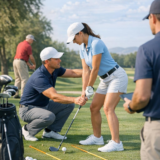
Follow-through is a critical, yet often underappreciated, determinant of swing precision across ball sports and striking actions. Far from being a mere aesthetic finish, the follow-through encapsulates the terminal segment of the kinematic chain, reflecting the efficacy of energy transfer, the integrity of segmental sequencing, and the robustness of postural control mechanisms that together determine the final trajectory and consistency of the implement. A biomechanical viewpoint on follow-through thus provides a principled framework for linking motor control strategies to performance outcomes, enabling coaches and practitioners to translate movement science into actionable technique and training interventions.
This article synthesizes current evidence on the biomechanical components that underpin effective follow-through: temporal and spatial kinematic sequencing, intersegmental energy transfer, joint kinetics, and neuromuscular activation patterns. It examines how deviations in thes components-whether due to technical flaws, fatigue, or compensatory motor programs-manifest in variability of launch conditions and reduced shot precision. Measurement modalities such as three-dimensional motion analysis, force plates, and wearable inertial sensors are evaluated for their capacity to quantify follow-through dynamics and to inform individualized feedback.
Building on this foundation, the discussion integrates motor learning principles and evidence-based coaching strategies that promote reproducible follow-through patterns, including cueing, constraint-led practice, and progressive overload of stability and strength demands. Practical implications for injury risk management are addressed, highlighting how optimized follow-through mechanics can mitigate excessive joint loading while preserving performance. gaps in the literature are identified and directions for future research proposed, with an emphasis on longitudinal interventions, ecological validity, and the translation of laboratory findings into field-based coaching practice.
The Role of the Follow-Through in Shot Accuracy and Precision
In high-level biomechanical terms, the follow-through functions as the terminal expression of the kinematic sequence that begins at the feet and propagates through the hips, torso, arms and club.As such, it both reflects and influences pre-impact dynamics: the orientation of the clubface at release, the timing of peak angular velocities, and the distribution of linear and angular momentum.A reproducible follow-through minimizes late-stage perturbations to the club-path and face-angle trajectory, thereby reducing shot-to-shot variability. In practice, therefore, the finished position is not merely aesthetic-**it is a measurable outcome that encodes the quality of energy transfer and neuromuscular coordination** during the entire swing.
Key biomechanical determinants observable in the post-impact sequence include changes in center-of-mass location, rotational deceleration rates, and wrist/forearm kinematics. Coaches and researchers commonly monitor a short set of diagnostic markers to infer mechanical fidelity:
- Weight on lead foot: indicates effective ground reaction force transfer.
- Full hip rotation: implies proper sequencing and torque delivery.
- Extended lead arm and relaxed trail elbow: correlate with stable clubface control.
- Smooth deceleration of the shaft: reflects consistent release timing.
These markers simplify complex dynamics into actionable observations for both assessment and intervention.
Consistent execution of these end-of-swing variables constrains the degrees of freedom that drive ball flight dispersion. The relationship can be summarized succinctly in the following matrix, which links a concise biomechanical marker to its primary influence on shot outcome:
| Biomechanical Marker | primary Shot Effect |
|---|---|
| Lead-side weight balance | Reduced lateral dispersion |
| Complete hip rotation | Consistent clubhead speed |
| Neutral release of the wrist | Stable spin axis / less curvature |
From a training and measurement standpoint, the follow-through serves as a rapid diagnostic-**a reproducible endpoint that helps distinguish between transient errors and systematic flaws**. Practical applications include cueing (e.g., “finish tall, weight left”), targeted drills (three-checkpoint finishes, slow-motion decelerations), and objective feedback using inertial sensors or motion-capture. Importantly, while a polished finish often correlates with high-quality impact mechanics, it is not a guarantee of shot success; rather, it should be used alongside impact-phase metrics (face angle, path, smash factor) as part of an integrated assessment protocol to improve both accuracy and precision.
Kinematic Sequence and Kinetic Chain Efficiency During the follow-Through
Efficient transfer of mechanical energy through the golf swing is governed by a proximal‑to‑distal kinematic progression: the pelvis initiates high‑magnitude rotation, followed by sequential activation of the thorax, upper arm, forearm and, the club. Empirical analyses characterize this as a cascade of peak angular velocities that must occur with precise temporal offsets; when the timing is preserved into the follow‑through, angular momentum is dissipated predictably and shot dispersion is reduced. Disruption of this sequence-commonly through premature arm acceleration or delayed trunk rotation-produces intersegmental energy losses that manifest as lateral and longitudinal inaccuracy.In short, the follow‑through is not a passive outcome of impact but a continuation of the kinematic chain that reflects the quality of energy transfer upstream.
kinetic chain efficiency during the post‑impact phase depends on coordinated force production and active deceleration across multiple structures. Key contributors include ground reaction forces, intersegmental torque transmission, and eccentric muscle actions that control club release. Primary elements to evaluate and train include:
- Ground‑to‑hip coupling – capacity to maintain force transfer through the lower kinetic links;
- Trunk rotational sequencing – timely torque application and controlled follow‑through rotation;
- Distal segment control – elbow extension and wrist supination/pronation coordination;
- Eccentric deceleration – shoulder and scapular musculature absorbing residual energy to stabilize the swing arc.
Quantifying these components provides actionable markers for improving repeatability.
| Phase | Primary joint(s) | Representative metric |
|---|---|---|
| late downswing | Hips, pelvis | Onset of peak angular velocity |
| Impact | Thorax, shoulders | Relative timing vs. pelvis (ms) |
| Early follow‑through | Elbow, forearm | Wrist release rate (rad/s) |
| Terminal follow‑through | Shoulder girdle | Eccentric deceleration impulse |
From a coaching and applied research perspective, interventions that restore or enhance kinematic sequencing yield the greatest improvements in shot precision. Measurement tools such as IMUs and high‑speed motion capture can detect temporal deviations (tens of milliseconds) that escape visual observation, guiding targeted drills that emphasize proximal initiation and distal relaxation. Conditioning should prioritize rotational power and eccentric capacity-notably in the posterior shoulder and rotator cuff-while mobility work preserves the required intersegmental ranges. Ultimately, fostering a resilient and repeatable kinetic chain during the follow‑through integrates mechanical efficiency with neuromuscular control, producing both greater accuracy and reduced injury risk.
Ground Reaction Forces and Lower Limb Strategies for a stable Finish
Ground reaction forces (GRF) provide the mechanical foundation for the swing’s terminal sequence; the vector sum of vertical, anterior-posterior and medial-lateral forces transmitted through the feet determines net impulse to the pelvis and torso during follow-through. Conceptually, “ground” is the surface under the athlete’s feet, and small changes in contact mechanics alter the direction and magnitude of GRF with measurable effects on clubhead trajectory and post-impact orientation.Quantifying GRF time-series and impulse allows researchers and coaches to link specific force signatures to deviations in ball flight and finish position.
Lower-limb strategies for a controlled finish emphasize coordinated stiffness modulation and selective muscle activation. Effective stabilization relies on eccentric braking of the trail limb and quasi-isometric bracing of the lead limb: the trail hip and hamstrings dissipate residual rotational momentum while the lead quadriceps and gluteus medius create a stable platform. EMG and kinematic studies consistently report increased activity in gluteus maximus, vastus lateralis, and soleus during the terminal phase, reflecting a shift from force production to force acceptance and balance maintenance.
Postural control during the finish can be characterized by center-of-pressure (COP) trajectories and base-of-support geometry. A compact, anteriorly biased COP under the lead foot with limited medial-lateral excursions correlates with greater reproducibility of swing plane and face angle at impact. Training that reduces COP variability-through tempo normalization and proprioceptive challenges-tends to reduce lateral dispersion and improve repeatability of finish posture in both novice and expert golfers.
Application-oriented interventions should target both force production patterns and sensory-motor integration. Progressive overload of single-leg stabilization, augmented feedback from force platforms, and constraint-led drills that exaggerate required lead-leg stiffness produce measurable improvements in finish stability. Prioritizing drills that simulate realistic GRF demands during the last 20-30% of swing time fosters task-specific adaptations in neuromuscular control.
- Single-leg stand with club reach – improves unilateral bracing and COP control.
- Medicine ball deceleration throws – trains eccentric capacity of the trail limb.
- Force-plate tempo sets – provides objective GRF feedback for finish consistency.
| Phase | Primary GRF vector | Lower-limb Action |
|---|---|---|
| Impact → 50 ms after | High vertical + rearward AP | lead leg acceptance; trail deceleration |
| Mid-follow-through | Med vertical; lateral shift | Hip rotation control; ankle stiffening |
| Finish (stable) | Lower overall magnitude; centered COP | Isometric bracing of lead limb |
Torso Rotation and Shoulder Mechanics for Consistent Clubface Control
Control of clubface orientation through impact and into the follow-through is fundamentally a function of coordinated rotation between the pelvis and the upper torso and the kinematics of the shoulder complex. Biomechanical analyses demonstrate that the **upper-torso angular velocity** exhibits a larger range than pelvic rotational velocity, implying that modulation of the torso (rather than the pelvis alone) is critical for fine-tuning face angle at impact. Effective clubface control therefore depends on controlled torso-pelvis separation (the “X‑factor”) and precise timing of shoulder rotation relative to lower‑body drive, producing a predictable plane and rate of shaft delivery through the impact window.
From a mechanical standpoint, the shoulder girdle transmits rotational energy from the trunk to the arms and club while concurrently regulating clubface orientation. Key kinematic goals that enhance consistency include:
- Stable shoulder plane: maintain shoulder rotation that complements,not overrides,pelvic rotation to avoid late face closures or openings.
- Controlled rotational tempo: moderate peak upper‑torso velocity so the release timing becomes repeatable across swings.
- Preserved proximal‑to‑distal sequence: use lower‑body initiation to create predictable lag and a reproducible shoulder‑to‑wrist energy transfer.
Objective metrics can clarify deviations and guide intervention. Simple biomechanical measures-peak angular velocities and the maximal torso-pelvis separation angle-differentiate skilled from less skilled performers and provide targets for practice (see examples below). Practically, clinicians and coaches can monitor these metrics using 3D motion capture or wearable inertial sensors and apply cueing strategies (e.g., “lead with the hips,” “wrap the shoulders through”) to restore optimal sequencing and face control.
| Metric | Professionals (typical) | amateurs (typical) |
|---|---|---|
| Peak upper‑torso angular velocity (°/s) | ~900 | ~700 |
| Peak pelvic angular velocity (°/s) | ~600 | ~500 |
| Max torso-pelvis separation (°) | ~40-50 | ~25-35 |
Maintaining shoulder girdle stability while allowing controlled torso rotation reduces variability of clubface kinematics and lowers injury risk to the shoulder and spine. Emphasize **smooth deceleration** of the torso after impact, scapular control through follow‑through, and drills that reinforce proximal stability with distal mobility; for example, slow‑motion swings focusing on lead‑hip initiation, and resisted trunk rotations to improve eccentric control. Collectively, these strategies produce a repeatable delivery system that enhances precision and consistency under varying course demands.
Wrist Release Timing and Clubhead Path Optimization in the Final Phase
The distal articulation of the forearm and hand functions as a dynamic pivot in the terminal phase of the swing: the carpus (eight carpal bones) and the radiocarpal joint allow controlled combinations of flexion/extension, radial/ulnar deviation, and limited rotation that directly affect the clubhead’s orientation. Anatomical descriptions emphasize that the wrist is not a single hinge but a composite structure whose passive geometry and active musculature determine the timing and smoothness of release. From a biomechanical perspective, coordinated distal release must be integrated with proximal rotation (torso and hips) so that wrist kinematics translate proximal angular momentum into controlled clubhead trajectory rather than dissipating it through premature decoupling.
Timing of wrist unhinging governs the clubhead path and face attitude at impact. A maintained lag through the downswing allows the club to approach the ball on a more inside-to-square path, increasing potential for compression and consistent launch; conversely, premature wrist release (early extension or radial deviation) tends to open the effective face and can produce an out-to-in path or loss of energy transfer. Kinematic chains show that subtle changes-degrees of extension or milliseconds of release-alter the resultant clubhead angular velocity vector and therefore the direction and spin characteristics of the struck ball. Thus, temporal coordination is as critical as spatial alignment for precision outcomes.
Practical cues and training interventions focus on reinstating desirable wrist sequencing while respecting anatomical constraints. Clinically informed drills emphasize gradual rehearse-to-velocity progressions and proprioceptive feedback:
- Pause-and-release at the top to rehearse lag maintenance and timed unhinging;
- Impact-bag strikes to feel correct compression with late release;
- Gate/path drills using alignment rods to reinforce an inside-to-square takeaway and finish;
- High-frame-rate video with frame-by-frame wrist-angle assessment to quantify release moment relative to hip rotation.
These exercises should be implemented with objective metrics where possible (e.g., wrist-extension angle, clubhead-path deviation) and incrementally loaded to avoid compensatory strategies that may increase injury risk to the wrist complex.
Below is a concise reference mapping release timing to typical path and coaching focus (short,clinical summary):
| Release Timing | Typical Clubhead Path | Coaching Focus |
|---|---|---|
| Delayed/Late | Inside-to-square | Maintain lag,tempo control |
| Early/Preemptive | Out-to-in / Open face | Stabilize wrist,sequence drills |
| Neutral/Coordinated | Square / Consistent | Integrate torso-wrist timing |
When applied clinically,monitoring wrist extension degrees,radial/ulnar deviation,and clubface angle in synchrony with torso rotation yields the highest fidelity interventions for optimizing final-phase clubhead path and repeatable precision.
Common Biomechanical Faults in the Follow-Through and Targeted Corrective drills
Common faults in the follow-through are widespread across skill levels and, when analysed biomechanically, reveal consistent patterns that degrade accuracy and precision. Typical consequences include altered clubface orientation at and after impact, inappropriate swing-plane elevation, and suboptimal center-of-mass transfer; each of these increases variability in launch direction and spin. From a kinetic chain perspective, errors late in the swing disproportionately affect outcome because small deviations in wrist release or torso rotation are amplified by the lever length of the clubhead. Quantifying these errors-through high-speed video, launch monitors, or motion-capture-clarifies whether the primary driver is kinematic sequencing, joint stiffness/instability, or inadequate ground reaction force usage.
Key biomechanical faults can be categorised succinctly and targeted with specific interventions. Common examples include:
- Early release: premature wrist uncocking caused by insufficient lag and distal-to-proximal sequencing;
- Collapsed finish (arm across chest): loss of extension due to poor shoulder external rotation and weak posterior chain engagement;
- Over-rotation or under-rotation: excessive or insufficient pelvic-torso separation leading to inconsistent clubpath;
- Insufficient weight transfer: retained weight on trail foot producing an open face and weak contact.
Each fault has distinct kinematic signatures that inform corrective selection.
Corrective drills should emphasise motor learning principles: external focus, progressive overload, and augmented feedback.Effective, evidence-informed drills include:
- Finish-hold drill: perform half- to full-swings and hold a balanced, extended finish for 3-5 seconds to cultivate proprioception of proper extension (3 sets × 8 reps);
- Lag-tape drill: use impact tape or a felt marker to promote late wrist release-practice short swings with feedback until impact marks concentrate centrally (2-3 minutes per session);
- Step-through drill: step the lead foot toward target during follow-through to reinforce weight transfer and ground-reaction sequencing (10 slow repetitions);
- Wall-finish mirror drill: swing with the lead shoulder lightly touching a soft wall or mirror frame to prevent collapsing across the chest and to encourage correct torso rotation (4 × 10).
Progression should move from slow, feedback-rich practice to full-speed, contextual reps on-course.
To aid quick reference, the table below summarises fault-to-drill mappings and primary biomechanical targets. Use this as a diagnostic checklist during practice sessions and coaching exchanges.
| Fault | Biomechanical target | Recommended drill |
|---|---|---|
| Early release | Maintain wrist lag / sequencing | Lag-tape drill |
| collapsed finish | Shoulder external rotation / extension | Wall-finish drill |
| Poor weight transfer | Center-of-mass shift / GRF | Step-through drill |
| Over/under rotation | Pelvic-torso separation timing | medicine-ball rotational throws |
Integrating Biofeedback and Progressive Practice to Sustain Long Term Precision
Contemporary practice paradigms for the golf swing increasingly rely on **real-time biofeedback** to shorten the perceptual-motor learning loop. Wearable inertial and optical systems provide continuous streams of kinematic and temporal data-trunk rotation,pelvis dissociation,clubhead lag,and follow‑through vector-allowing practitioners to quantify deviations from target trajectories with millimetric precision. When integrated into a structured training plan,these devices shift error detection from delayed,subjective coach impressions to objective,immediate signals,improving the fidelity of motor corrections and accelerating the consolidation of desirable follow‑through mechanics.
Progressive practice should be staged to align sensor-driven feedback with cognitive and motor demands. effective phases include:
- Acquisition – High-frequency, high-concurrency feedback emphasizing gross movement patterns and safe ranges of motion.
- refinement – Gradual reduction of concurrent cues; focus on specific kinematic metrics (e.g., wrist release timing, pelvis‑thorax separation).
- Contextualization – Variable practice with altered lies, targets, and pressure to promote transfer and resilience of the follow‑through pattern.
- Maintenance – Low-frequency checks and periodic recalibration of individualized thresholds to preserve long‑term precision.
This scaffolded approach aligns feedback salience with the learner’s stage, preventing dependency while preserving the diagnostic utility of instrumentation.
Retention and long‑term precision are supported by combining progressive overload of variability with scheduled feedback withdrawal and objective monitoring.The table below offers a concise training template linking common biofeedback metrics to recommended session cadence and immediate targets-useful for program planning and research-informed practice management.
| Metric | immediate Target | Session Cadence |
|---|---|---|
| Thorax‑pelvis separation | 30-45° peak | 3×/week (2-4 weeks) |
| Clubhead path at impact | Target corridor ±3° | 2×/week (with variability) |
| Release timing (lag) | Consistent within ±40 ms | Weekly maintenance checks |
Operationalizing this model requires calibrated thresholds, coach‑mediated cueing, and longitudinal data review. Use **auditory cues** for immediate motor adjustment and **visual replay** for cognitive reconsolidation; then systematically fade cues as consistency improves. Routinely analyze trend lines rather than isolated trials to detect subtle regressions and to adapt practice prescriptions. mitigate device dependency by embedding periodic unassisted sessions and stress‑testing under competitive conditions-this preserves autonomy of control and ensures the follow‑through remains robust across the full spectrum of play.
Q&A
Note on search results: the provided web search results relate to Pearson “Mastering” educational products and do not return material relevant to the article topic. The Q&A below is therefore prepared from contemporary biomechanical and motor-control principles applicable to follow-through and swing precision rather than the unrelated search results.Q&A: Mastering Follow-Through: Biomechanics for Swing Precision
1. What is “follow-through” in the context of a swing and why is it important for precision?
Answer: Follow-through refers to the motion and body configuration after the instant of ball contact until the swing comes to a controlled stop or stabilized finish. Biomechanically, it reflects how efficiently energy was transferred during the downswing and impact phase and whether the intended kinematic sequence and balance were preserved. A controlled, biomechanically sound follow-through correlates with consistent clubhead path and face orientation at impact, reduced variability in ball flight, and improved repeatability of technique.
2. How does follow-through relate to kinematic sequencing and proximal-to-distal energy transfer?
Answer: Effective follow-through is the observable outcome of correct kinematic sequencing – typically a proximal-to-distal activation pattern (pelvis → trunk → upper arm/shoulder → forearm/club). Sequential generation of angular velocities and torques transfers energy efficiently to the distal segments. If proximal segments decelerate prematurely or distal segments are activated out of order,energy transfer is disrupted,which often manifests as an abrupt or truncated follow-through and decreased precision.3. Which biomechanical variables during follow-through most strongly predict shot precision?
Answer: Variables that predict precision include: preservation of the intended clubhead path and face angle through impact, magnitude and timing of peak angular velocities in the sequential segments, continuity of center-of-mass and center-of-pressure trajectories (indicating balance), and reduction in post-impact variability of trunk rotation and arm extension. Temporal consistency (timing of peak velocities and impact) is also critical.
4. What common follow-through faults degrade swing precision and what are their biomechanical causes?
answer: Common faults:
– Early truncation (abrupt stop after impact): frequently enough due to premature deceleration of proximal segments, fear of over-rotation, or insufficient lower-body stability.
– Over-rotation/extension collapse: excessive lateral movement or sway due to weak stance or mis-timed weight transfer.
– Incomplete arm extension: inefficient distal sequencing or compensation for poor impact conditions.
Each fault typically arises from disrupted proximal-to-distal sequencing, inadequate ground reaction force generation or timing, or compromised postural control.
5. How can a coach assess follow-through quality in an evidence-informed way?
Answer: Use a combination of observational and instrumented assessment:
– High-speed video (sagittal and face-on) to examine club path, face angle, trunk rotation, arm position, and finish posture.
– Inertial measurement units (imus) on pelvis, thorax, and club to quantify angular velocities and timing.
– Force plates to assess ground reaction force patterns and center-of-pressure shifts during weight transfer.
– Simple field tests: hold-the-finish duration and symmetry, balance during and after the finish, and consistency across repeated swings.
Collect repeated trials and evaluate both mean values and trial-to-trial variability.
6. What coaching interventions improve follow-through biomechanics for precision?
Answer: Interventions grounded in motor-control principles:
– Sequence-focused drills: slow, exaggerated swings emphasizing pelvis-to-trunk-to-arm timing to ingrain proximal-to-distal sequencing.
– stability and balance drills: single-leg balance progressions and stance-width modifications to improve center-of-pressure control.- Impact-to-finish drills: hit short shots or use impact tapes then hold the finish to reinforce continuation through impact.
– Tempo and rhythm training: metronome-guided swings to stabilize timing.
– Constraint-based feedback: auditory or tactile constraints that encourage desired sequencing (e.g.,resistance bands that resist early arm deceleration).
Progress from reduced-speed, high-feedback practice to full-speed, low-feedback practice to encourage implicit skill consolidation.
7.Which drills specifically target postural control and energy transfer through follow-through?
Answer:
– Pelvis-first rotation drill: start swings from a pelvis rotation,keeping shoulders passive to feel torque transfer.
– Slow-motion proximal-to-distal drill: perform exaggerated slow swings emphasizing sequential peak velocities.
– Finish-hold drill: hit shots with the requirement to hold the balanced finish for 3-5 seconds.
– Force-transfer drill: perform swings on force plates or use medicine ball throws that mimic rotational force transfer to reinforce lower-body drive into upper-body follow-through.
8. How does variability in follow-through relate to motor learning and performance under pressure?
Answer: Some controlled variability in practice supports motor learning (exploration).Though, reduced variability and increased consistency of critical timing and spatial variables (e.g., clubface angle at impact, timing of segmental peaks) are associated with skilled performance and resilience under pressure. Under stress, athletes often exhibit increased co-contraction and altered sequencing; training that emphasizes automaticity (implicitly learned patterns, consistent tempo) tends to preserve follow-through quality in pressure situations.
9. What measurement metrics are most useful for research and applied practice?
Answer: Key metrics:
– Temporal metrics: time-to-peak angular velocity for pelvis, thorax, arm, and club; inter-segmental lag times.
– Kinematic metrics: peak angular velocities, peak rotation angles, clubhead path and face angle at impact, extension/ flexion angles at finish.
– Kinetic metrics: peak ground reaction forces, impulse during weight transfer, center-of-pressure displacement.
– Variability metrics: trial-to-trial standard deviations or coefficients of variation for the above.
these metrics can be obtained via motion capture, IMUs, and force platforms.
10. Are there sport- or context-specific considerations when applying follow-through principles?
Answer: Yes. Different implements and stroke demands (e.g., golf driver vs. iron; tennis forehand vs.serve) require adjusted sequencing magnitudes and finish postures. Environmental constraints (surface,footwear),implement length,and intended ball flight influence stance,tempo,and acceptable follow-through configurations. Coaches should tailor cues and drills to sport-specific biomechanics and performance goals.
11. how should practitioners integrate technology (IMUs, video, force plates) in routine coaching without overburdening athletes?
Answer: Use a tiered approach:
– Tier 1 (field-friendly): high-speed video and simple consistency metrics (finish hold, balance).
– Tier 2: IMUs to monitor segment timing and angular velocities for regular feedback.
– tier 3 (research/periodic): force plates and full motion capture for in-depth diagnostics.
Apply technology intermittently for diagnostics and progress checks rather than continuous monitoring; prioritize actionable feedback.
12.What are common misconceptions about follow-through that coaches should avoid?
Answer:
– “Follow-through fixes a poor impact.” Follow-through often reflects prior mechanics; it is rarely a corrective tool for significant impact errors.
– “Aesthetic finish equals good mechanics.” Attractive finishes can mask early sequencing faults; objective measures are necessary.
– “Slower follow-through is safer.” Excessive deceleration often indicates loss of energy transfer and reduced precision.
13. What injury considerations are associated with follow-through mechanics?
Answer: Poor follow-through that results from compensatory or abrupt deceleration can increase stress on the lumbar spine, shoulders, and elbows. Repeated improper sequencing and excessive lateral sway may produce cumulative overload. Injury prevention includes progressive load management, strengthening of core and hip musculature, mobility work for thoracic rotation and shoulder function, and technique adjustments to reduce harmful compensations.
14. How can follow-through training be periodized within a season or skill-acquisition program?
Answer: Early phases: focus on technique, slow-speed sequencing drills, mobility, and strength foundations. Mid-phases: increase velocity, implement sport-specific tempo training, and integrate feedback reduction to encourage automaticity. Pre-competition and in-season: prioritize maintenance of sequencing under fatigue and pressure, situational practice, and brief diagnostic sessions with objective measures. Allow recovery and monitoring to avoid overload.
15.What research gaps remain concerning follow-through biomechanics and precision?
Answer: Gaps include: causal links between specific follow-through kinematic patterns and long-term performance outcomes across populations; optimal variability levels in training for different skill levels; sport-specific normative data for sequencing metrics; and interactions between cognitive load, anxiety, and follow-through mechanics. More longitudinal and intervention studies are needed.
16. Practical takeaways for coaches and practitioners
Answer:
– Treat follow-through as an outcome indicator of sequencing and balance rather than a cosmetic finish.
– Emphasize proximal-to-distal sequencing, stable lower-body drive, and controlled continuation through impact.
– Use simple observational tests first (finish-hold, balance), and add IMU/video diagnostics as needed.
– Progress drills from slow and high-feedback to full-speed and low-feedback to develop robust, automatic follow-through under pressure.
If you would like, I can convert these Q&A items into a printable handout for coaches, produce sample drills with set progressions and session plans, or recommend validated measurement protocols for IMU/force-plate assessments.
a deliberate and biomechanically informed approach to the follow-through constitutes a critical, but often underappreciated, determinant of swing precision. The follow-through is not merely the aftermath of impact but an integral phase reflecting the quality of kinematic sequencing, energy transfer, and neuromuscular control established earlier in the swing. Empirical emphasis on trunk-pelvis dissociation, timed lower-limb force application, controlled deceleration of the distal segments, and maintenance of clubface orientation through impact provides a coherent framework for understanding how technique influences repeatability and shot outcome.
For practitioners and researchers alike, translating these biomechanical insights into practice requires both individualized assessment and objective measurement. Practical coaching interventions should prioritize drills that reinforce correct sequencing and safe deceleration patterns, incorporate proprioceptive and stability training to support consistent posture and balance in the finish, and use quantitative feedback-motion capture, wearable inertial sensors, and ball‑flight metrics-to monitor progress and diagnose persistent errors. At the research level, longitudinal and ecologically valid studies are needed to examine how follow-through interventions affect performance under competitive pressure, how movement variability interacts with robustness of outcomes, and how individual anatomical and motor-control differences mediate response to training.
Ultimately, mastery of the follow-through is achieved through an iterative cycle of theory-informed practice, objective assessment, and adaptive coaching. By integrating biomechanical principles with athlete-specific constraints and evidence-based training methods, golfers and coaches can enhance precision, reduce variability, and translate technical improvements into on‑course performance gains.

Mastering Follow-Through: Biomechanics for Swing Precision
Why the follow-through matters for golf swing precision
The follow-through is not a cosmetic finish – it is the biomechanical result of everything that happened from takeaway to impact. A repeatable, balanced follow-through:
– reflects consistent swing mechanics,
– stabilizes clubface control at impact,
– helps transfer energy efficiently from body to club,
– and provides clear sensory feedback for motor learning.
Kinematics of an effective follow-through
Understanding kinematics-how the body and club move in space-helps you design drills and cues that produce precision. Key kinematic principles for the follow-through include:
- Proximal-to-distal sequencing: rotation starts in the hips, drives the torso, then the arms and finally the clubhead. Proper sequencing produces higher clubhead speed and cleaner impact.
- Angular momentum and rotation: efficient hip and thorax rotation through the ball ensures the hands and club can extend toward the target rather than flipping or decelerating early.
- Clubhead arc and extension: the club shoudl continue on a shallow-to-steeper arc (depending on the club) with lead arm extension to control clubface orientation.
- Wrist mechanics and release: a controlled release (not a violent flip) keeps the clubface square longer through impact; wrist angles are governed by forearm rotation and timing.
- Center of mass and balance: the mass should shift toward the lead foot during the downswing, allowing a stable, well-balanced finish position.
Follow-through checkpoints
Coaches often use three visual checkpoints to assess kinematic correctness:
- hands extend toward the target after impact (no collapsed lead arm)
- Chest and belt buckle face the target at the finish (thorax rotation)
- Weight is mostly on the lead foot with the trail foot balanced on the toe
Muscle coordination and motor control behind a precise finish
Muscle coordination is what turns kinematic plans into reliable motion. Key elements:
- Legs and hips: glutes, hamstrings and quads generate ground reaction forces and initiate rotation. Strong, coordinated lower-body action stabilizes the axis and protects the spine.
- core musculature: obliques and transverse abdominis moderate rotational speed and transfer power from lower to upper body.
- forearms and wrists: control the release and clubface; eccentric control of wrist extensors at impact prevents early release and “flipping.”
- Neuromuscular feedback: proprioception (joint/muscle sense), visual tracking, and haptic feedback from the grip allow the brain to correct and reinforce good mechanics.
Motor learning and the feedback loop
Precision emerges when practice includes consistent feedback. Use:
- intrinsic feedback (feel of balanced finish)
- Extrinsic feedback (video, coach cues, launch monitor numbers)
- Augmented feedback devices (wrist sensors, club sensors) for immediate correction
Common follow-through faults and their biomechanical causes
Identifying the biomechanical root makes fixes efficient:
- Early release / flip: caused by lack of hip rotation and poor sequencing; the hands try to create speed instead of the body.
- Chicken wing (lead elbow bending out): weak shoulder rotation or trying to “hold on” to the club too long leading to a late arm collapse.
- Loss of balance / reverse pivot: poor weight shift, too much upper-body dominant rotation.
- Open clubface at impact / slice: insufficient forearm rotation or over-rotation of upper body before the hands release.
Practical drills to train a biomechanically sound follow-through
below are high-impact drills used by coaches and players to ingrain follow-through mechanics. Perform these after a dynamic warm-up and with a target in mind.
- Three Checkpoints drill: Pause at three positions (impact, mid follow-through, finish) to establish consistent spacing and extension. Use slow-motion video to verify positions.
- Towel-Under-Arm drill: Slip a towel under your trail arm during the swing to promote connected rotation and prevent the chicken wing.
- Hold Your Finish drill: Make 10 swings and hold the finish position for 3 seconds to train balance and postural control.
- Impact-to-Extension drill: Hit half shots focusing on keeping hands extended toward the target immediately after impact.
- Step-Through drill: Step forward with lead foot during the follow-through to feel proper weight transfer and rotation.
- Sensor-assisted wrist drill: Use a wrist sensor (like a HackMotion-type device) to ensure lead wrist position and prevent excessive flexion through impact.
Simple practice plan: 4-week progression for follow-through precision
Structure matters: warm-up, focused drill work, on-course integration.
- Weeks 1-2: 3 sessions/week.Emphasize motor control drills (Towel, Three Checkpoints). 15-20 minutes per session.
- Weeks 3-4: 3-4 sessions/week. Add impact-to-extension shots and sensor feedback. Begin integrating full-speed swings on the range and 9-hole on-course practice once per week.
- Ongoing: Weekly video reviews and one session with a coach or launch monitor for objective feedback.
Coaching cues that improve biomechanical outcomes
Short, effective cues to anchor motor patterns:
- “Extend to the target” – emphasizes lead arm and club extension.
- “Rotate through the ball” – prioritizes hip/torso rotation over arm speed.
- “Hold and feel” – reminds players to stabilize finish for feedback.
- “Low point first” – helps control strike and prevents scooping which ruins follow-through.
WordPress-styled quick-reference table: Drills vs. benefits
| Drill | Main focus | Ideal reps |
|---|---|---|
| Three Checkpoints | Sequencing & balance | 3 x 10 pauses |
| Towel-Under-Arm | Connected rotation | 3 x 15 swings |
| Hold Your Finish | Stability & feedback | 10 holds x 3 sec |
| Impact-to-Extension | Clubface control | 4 x 12 half shots |
Case study: Translating biomechanics into tighter dispersion
A mid-handicap player spent six weeks focusing on extension and sequencing drills. Measured changes:
- Range session baseline (Week 0): average shot dispersion 28 yards off the tee.
- After 6 weeks: dispersion reduced to 16 yards; ball flight was more penetrating with a more consistent fade-to-draw window.
- Key changes observed on video: later hand release, fuller torso rotation at finish, and improved weight transfer to the lead leg.
While individual results vary, this demonstrates how coaching drills tied directly to biomechanical principles can create measurable improvement in accuracy and consistency.
Warm-up, mobility and injury prevention
Before drilling the follow-through, prepare the body:
- Dynamic hip and thoracic mobility drills (rotational lunges, thoracic rotations)
- Glute activation (banded side steps, bridges)
- Wrist and shoulder dynamic mobility
- Gradual progression from half swings to full swings to avoid overloading tissues
Proper conditioning reduces compensations (like early arm collapse) that undermine precision.
Using technology to accelerate learning
Smartphones, launch monitors and wearable sensors make feedback immediate and objective:
- video: frame-by-frame review of finish positions and sequencing.
- Launch monitors: dispersion,spin and clubface data to confirm follow-through influence on ball flight.
- Wearables: wrist and shaft sensors report angles and tempo metrics so you can train wrist position and extension precisely. Devices similar to HackMotion are frequently used by coaches to ensure the lead wrist is in the proper position at impact and through follow-through.
On-course integration: applying follow-through mechanics under pressure
Transfer range gains to the course by simulating pressure and variability:
- Practice tight lies and different wind angles to force adaptive follow-through adjustments.
- Use routine that includes visual target, pre-shot routine, and a single cue (e.g., “extend”) to keep mechanics consistent under stress.
- play shorter formats (9 holes or match play) to practice decision-making while maintaining biomechanical integrity.
SEO-focused tips for publishing this content
- Target keywords: golf swing follow-through, follow-through drills, swing biomechanics, clubface control, swing precision, golf follow-through tips.
- Use keyword-rich H2/H3 tags and include target phrases in meta title and description (already set above).
- Include images and video analysis clips with descriptive alt text (e.g., “lead arm extension follow-through golf swing”).
- Interlink to related content: impact position, hip rotation drills, and launch monitor guides to improve dwell time on your site.
Try one new drill each week, use video or a sensor to measure change, and prioritize balance and extension over raw speed. A biomechanically sound follow-through will deliver more consistent, accurate golf shots-and give you reliable feedback to keep improving.