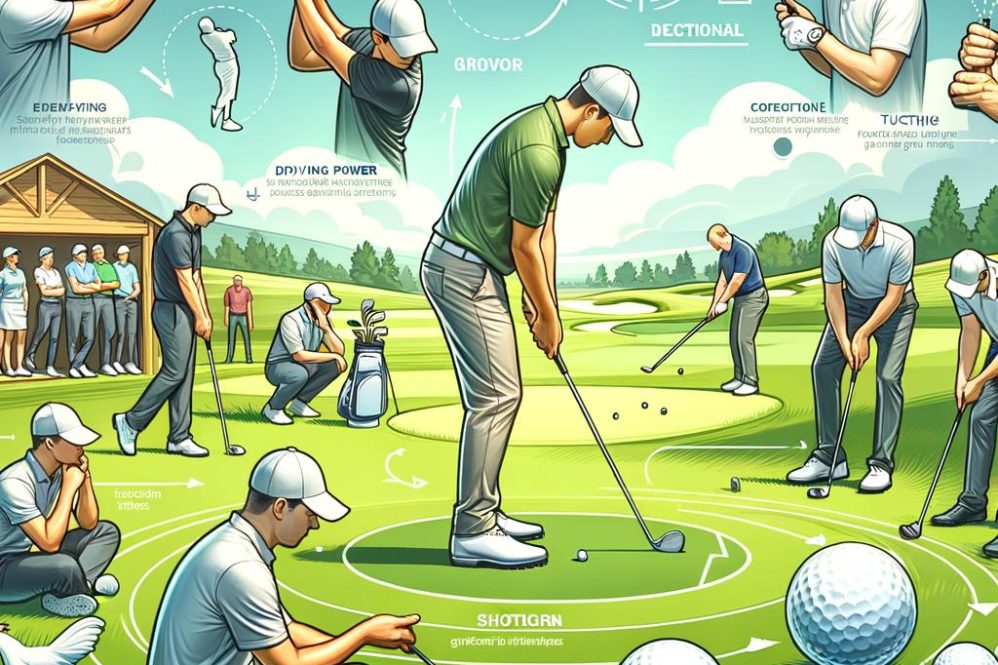
Short‑game mastery – adn chipping in particular - is disproportionately influential on scoring: while tee and long shots set up opportunities, the capacity to play controlled, repeatable chip shots often turns those chances into pars and birdie opportunities. Chipping sits between full swings and putting both technically and tactically, requiring a careful blend of club selection, stance, and stroke mechanics to control launch, spin and subsequent roll. Variations in turf, lie and proximity to hazards amplify both the physical demands and the decision‑making required, so chipping is as much a perceptual‑motor challenge as it is a game‑management skill.
This piece brings together modern biomechanical findings and practical strategy to outline an evidence‑informed chipping framework that links driving outcomes to putting results. It highlights objective principles - sequencing of motion, center‑of‑mass management, impact conditions, and club face behavior – and offers concrete guidance on club choice, setup, and practice plans designed to improve reliability under pressure. By coupling theory with easy‑to‑apply drills and measurable checkpoints, the article aims to give players, coaches and researchers a unified roadmap to reduce short‑game variance and boost conversion rates around the green.
harmonizing Driving Trajectory with Short‑Game Strategy for Better Score Conversion
Linking long‑game trajectory choices to short‑game strategy starts at the tee: plan tee shots with the second‑shot and the likely greenside lies in mind. Set up the driver so the ball sits just inside the left heel (for right‑handed players) with the face aligned to your intended line to create a wide, controllable launch window when combined with a sweeping motion. Target a driver angle of attack between +2° and +4° to maximize carry while keeping spin in roughly the 1,800-3,000 rpm window – lower spin encourages roll on firm approaches; higher spin helps hold receptive greens. In course management terms, shape trajectories to leave favorable short‑game options: a gentler draw or a controlled fade can place the ball in safer landing areas, while a higher carry is preferable on elevated fairways or when hazards guard the landing zone. On tight holes prioritize position over raw distance; on reachable par‑5s plan a trajectory that leaves a predictable wedge or short iron for the next shot.
As you move from tee to green, choose short‑game techniques that match the airborne profile you’ve created.Following concepts from Mastering the Fundamentals of Golf Chipping, pick and commit to a precise landing spot and resolve your carry‑to‑roll calculation before stepping to the ball. For instance, on firm turf opt for a lower‑lofted option (7‑ or 8‑iron bump‑and‑run) with an expected carry‑to‑roll near 1:3; for a 56° lob into a soft receptive green expect closer to 2:1.At the address for chipping keep a compact stance, with hands slightly ahead of the ball (roughly 5° shaft lean) and weight biased to the front foot to promote a clean, descending strike. Avoid common errors such as picking too much loft on firm conditions – which can over‑spin or leave shots short - and decelerating through impact; instead rehearse visualizing the landing zone and execute a steady pendulum‑like stroke through contact.
Structured practice with measurable targets accelerates the link between trajectory control and scoring. Build weekly practice blocks with objective metrics: a) driver work to stabilise launch and spin (monitor goals: launch 10°-13°,spin 1,800-3,000 rpm); b) 30-45 minutes of short‑game practice focused on up‑and‑down percentages – 50% for novices,60-70% for mid‑handicappers and 75-85% for low‑handicaps. Use the following drills and checkpoints to structure reps and troubleshooting:
- Landing‑Spot ladder: place tees or markers at 3, 6 and 9 metres from the edge of the green and play 10 chips to each zone with three different clubs to internalize carry/roll relationships.
- Gate‑and‑Tape impact Drill: employ alignment rods and impact tape to train center‑face strikes and a descending blow for your wedge work.
- Driver Sweep Drill: practice tee height (ball roughly half‑above the crown) and a sweeping takeaway until you consistently record an upward attack angle of about +2° to +4° on a launch monitor.
Those exercises create measurable feedback and clear corrections: fat chip shots generally respond to a slightly more forward weight bias and a shorter swing; excessive driver spin can often be reduced by moving the ball slightly back in the stance,lowering loft or adjusting tee height.
Adapt tactical decision‑making so driving trajectories intentionally create short‑game advantages in different weather and course scenarios. Into a stiff headwind, keep the ball low and penetrating to avoid ballooning approach shots and to leave bump‑and‑run options; when greens are soft, opt for higher carries to increase wedge bite and stopping power. Equipment matters too: pick a ball that offers lower driver spin but higher wedge spin if you want roll on drives and control around the green, and select wedge grinds with more bounce for soft turf versus lower bounce for firm tight lies. Maintain a compact pre‑shot routine that includes a quick visualization of the chosen landing spot and predicted roll,then commit – decisive execution reduces the indecision that commonly causes poor contact. By combining measurable long‑game launch targets, repeatable chipping mechanics drawn from Mastering the Fundamentals of Golf Chipping, and situational course strategy, golfers of all abilities can convert more opportunities and lower scores through consistent decision making.
Biomechanical foundations of the Chipping Stroke: Motion Patterns and Muscle Coordination
Dependable chipping starts with an anatomically efficient setup that biases the body toward repeatable kinematics.adopt a lead‑foot bias of about 60-70%,set the ball slightly back of center for lower chips and nearer center for higher pitches,and apply a shaft lean of roughly 10-20° with the hands ahead of the ball to encourage a descending contact. Kinematically, the motion should read like a compact pendulum driven from the shoulders and torso with minimal wrist activity: a limited shoulder rotation (roughly 15-25°) and proportionate follow‑through produce controlled arc and consistent low‑point location. Keep a steady spine angle through transition and allow the trail elbow to hinge naturally – excessive wrist motion or lateral head movement breaks the sequence and degrades contact quality. This controlled setup and motion encourage a center‑of‑face, low‑flight strike ideal for tight turf and greenside lies.
Muscle activation for effective chipping emphasises stabilization first, then fine distal control. Before the backswing the core and gluteal muscles engage to stabilize the pelvis and preserve posture; throughout the backswing and downswing the deltoids and scapular stabilizers steer the pendulum path while the forearm muscles make micro corrections to face angle and effective loft. At impact skilled players show brief co‑contraction of wrist flexors and extensors, producing a stable clubhead and a crisp descending strike. To refine neuromuscular timing practise slow‑motion strokes that focus on a controlled deceleration through impact: feel the core engage early, the lead knee brace at contact, and the forearms resist over‑rotation.Advanced players can quantify these patterns with high‑speed video (240+ fps) to verify wrist hinge at the top stays small (<15°) for low chips and increases only modestly for higher lob shots.
Equipment selection should be matched to the biomechanical plan. For a true bump‑and‑run choose a lower‑lofted iron or gap wedge with modest bounce to encourage turf contact and roll; for shots requiring float and soft landings select sand or lob wedges with greater effective bounce. On medium‑speed greens as a rule of thumb expect a low‑lofted chip to carry 1-3 yards and roll 6-15 yards, while a higher‑lofted pitch typically carries 4-8 yards and rolls 2-6 yards – adjust for firmness, wind and slope.Use these drills to build feel and distance control:
- Landing‑Spot Drill: place a towel 6-10 yards from a chipping mat and attempt 30 chips targeting that landing zone; record hit percentage.
- Gate‑and‑Impact Tape Drill: set a narrow gate to encourage centered contact and use impact tape to check strike location.
- Clock‑Face Trajectory Drill: chip to targets at 4, 8 and 12 o’clock positions to practice different arcs and roll‑outs.
Set measurable performance goals from these drills – for example, aim for ≥80% within 5 feet from 15 yards for mid‑handicappers and stricter tolerances for more skilled players.
Correct systematic errors through targeted practice: common faults include “scooping” (early wrist uncock), “hanging back” (inadequate weight transfer), and ”body over‑hands” (excessive wrist activity). Try these fixes:
- To stop scooping, use a towel‑under‑armpit drill to keep the body‑arm connection and feel a downward strike.
- To remedy hanging back,practice half‑swings that emphasise a forward weight shift and a forward‑weight checkpoint at address.
- To reduce excessive wrist action, perform slow‑motion swings to a metronome and restrict wrist hinge to the prescribed angle for the shot.
Also add variability to practice - simulate uphill/downhill lies, plugged or tight lies close to the green and windy conditions – to build robust motor programs and strategic adaptability. Set progressive benchmarks (such as, 30‑minute focused sessions three times per week and a target like reducing average miss distance by 20% in six weeks) and combine physical reps with mental rehearsal: imagine the landing zone and rollout before each chip to reinforce the motor plan. Aligning setup, motion sequencing and muscle coordination with appropriate club and situational tactics helps golfers at every level turn more chips into pars and improve overall short‑game consistency.
Club Selection, Loft Choices and Landing‑Zone Planning
Good short‑game judgement starts with objective club choice rather than intuition alone. evaluate the lie, green firmness, wind and desired trajectory: for low running bump‑and‑runs select a gap wedge (≈50°) or pitching wedge (≈44-48°); use a sand wedge (≈54-56°) for typical chip and bunker exits; and reserve a lob wedge (≈58-62°) when you need high launch and minimal roll. On firm surfaces or into wind, prefer less loft to promote rollout; on soft, receptive greens increase loft or open the face to get the ball to stop. Account for bounce too: higher bounce (≥10°) is better in soft sand and lush turf,while lower bounce (≤8°) suits tight,firm conditions. remember that shaft length and lie angle influence launch and spin – choose the club that reliably produces your intended carry‑to‑roll ratio in practice and on course.
Loft selection must be married to a repeatable setup and impact routine as taught in Mastering the fundamentals of Golf Chipping. Start with consistent setup: weight forward (~60-70% on the lead foot), ball position according to shot (for a bump‑and‑run place the ball 1-2 inches back of center; for a flop place it 1-2 inches forward), and hands slightly ahead at impact with 5-10° of shaft lean. Use a compact, pendulum‑style stroke with limited wrist hinge so you control spin and contact; move the stroke from the chest and maintain acceleration through impact for solid compression. Use the following checkpoints to standardize performance across clubs and situations:
- Setup checkpoints: ball position, weight distribution, hand position and stance width (shoulder‑width for normal chips, slightly narrower for flops).
- impact cues: firm leading wrist,sustained shaft lean and contact preceding body rotation.
- Loft management: open the face in roughly 10-15° increments when more height is necessary; close the face slightly to lower trajectory and spin.
After picking the club and verifying setup, treat landing‑zone selection as a deliberate tactical choice. Determine carry versus roll percentages and pick a touchdown that accounts for speed, slope and pin position: on a standard 30‑yard pitch on medium‑stopping turf aim to land the ball about 6-12 yards short of the hole (roughly 20-40% carry / 60-80% roll depending on loft); for a low runner target a landing area that is 10-20% of total distance so roll does most of the work; for a flop plan for 80-95% carry and minimal roll. In practice,when a pin sits on a 2:1 slope choose a slightly higher‑lofted club and land the ball upslope to let the slope check the ball; into a steady headwind reduce loft and pick a closer rolling landing to minimize wind disruption.Always identify the primary slope controlling rollout and pick a landing spot that neutralises it.
Create measurable practice routines and troubleshooting protocols to turn these planning principles into better scoring.Set concrete goals (as a notable example, 10 of 12 landings inside a 3‑yard radius across three lofts) and train with targeted exercises:
- Ladder Landing Drill: lay towels at 5‑yard increments and hit 20 shots, recording how frequently enough you reach the intended towel to develop predictable landing distances.
- Gate‑to‑Impact Drill: set a small gate or coin to eliminate wrist breakdown and ensure forward shaft lean at contact.
- Wind Simulation Series: practice the same landing zone while varying simulated wind (or by opening/closing the face) to learn club/loft adjustments.
Troubleshoot common faults: if shots “pop” and spin too much, reduce loft and limit wrist hinge; if shots skid or are thinned, move the ball a touch forward and increase shaft lean. Add a mental routine - visualize the landing spot and commit to the planned roll - and track metrics like proximity to hole and up‑and‑down percentage. With systematic club selection, loft control and intentional landing‑zone choices, players at all levels can improve short‑game dependability, reduce scores and make smarter on‑course decisions.
Stance, Weight distribution and Setup Protocols to Maximise Reproducibility
Create a reproducible platform by standardising measurable elements of setup: keep stance width around shoulder‑width for full shots and 0.5-1 shoulder‑width (narrower) for chipping and pitching, and place the ball between center and back‑of‑center for chips (slightly forward for low punch shots). Adopt an athletic posture with about 15°-25° knee flex and a spine tilt that positions the eyes just left of the ball (for right‑handers) to promote a consistent swing arc and repeatable low point. Use simple alignment aids – one rod parallel to the target and a second perpendicular to gauge ball position - so your address routine looks identical from range to course. These measurable checks cut down address variability,which is the largest contributor to inconsistency in both full and short‑game strokes.
Adjust weight distribution deliberately for the shot goal: for standard chipping and bump‑and‑runs apply the principles from Mastering the Fundamentals of Golf Chipping by loading ~60-70% of weight on the lead foot, with a visible hands‑ahead shaft lean of 1-2 inches to deloft the club and encourage ball‑first contact on tight lies. For softer, higher pitches reduce forward bias to about 50-55% to allow more wrist hinge and smoother forward acceleration.For low punch shots increase forward bias to 70%+ and narrow the stance to limit wrist action. when conditions change (wind, wet turf, sloped lies) consciously feel these shifts in practice until they become automatic under stress.
Turn setup protocols into a compact pre‑shot routine and practice checks. use a short checklist before every chip: maintain grip pressure ~3-5/10 (secure but relaxed), verify ball position relative to your trail foot, place alignment aids and take one focused practice stroke to lock tempo. Helpful drills include:
- Three‑Point Check Drill: confirm foot placement, ball position and shaft lean before each chip; repeat 50 times with a metronome at 60-70 bpm to stabilise tempo.
- Landing‑Zone Drill: set three targets at incremental distances and hit 30 chips to each, concentrating on setup and weight bias; aim for 70% landings inside the intended zone within two weeks.
- Video Feedback Drill: film 10 setups and compare spine angle and knee flex; correct one variable at a time until you match a coach‑referenced standard.
These exercises make setup errors visible and correctable for players from beginners to low handicappers.
Bring setup choices onto the course by tying them to lie, green speed and wind: choose the stance and weight bias that best produce the desired trajectory and roll. For example, on a firm fast green with a downhill chip adopt a narrow stance, forward weight and minimal wrist hinge to keep the ball low and decrease spin; for a soft backstop open the face and centre weight to add loft. Fix common mistakes with simple corrections: (a) if you stand too upright increase knee flex and check in a mirror; (b) if grip tension is excessive practice finger‑only swings to relearn 3-5/10 pressure; (c) if ball position varies use a pre‑shot marker until it becomes habitual. Add a short mental checklist – align, set weight, breathe, commit - so technical setup choices hold up under pressure and directly contribute to lower scores and smarter course management.
Swing Path, Wrist Behavior and Tempo Control: Practical Technical Guidance for Consistency
A repeatable swing path depends on a stable plane and a consistent spatial relationship between hands, clubhead and body. For most players aim for a slightly inside‑to‑square‑to‑inside path through impact; out‑to‑in paths cause pulls and slices, while extreme inside‑to‑out lines risk pushes and hooks. Use a mirror or alignment sticks to check that the clubshaft at address and at the top roughly share the same plane - commonly around 45°-50° relative to the ground for drivers and long irons and a touch steeper for short irons. Start with a compact, balanced takeaway keeping the club low for the first foot of motion, then rotate the torso to create a shoulder turn of about 80°-100° (men) or 70°-90° (women) while keeping the lower body stable. Correct early casting and lateral sliding by practising short, controlled swings that keep the hands on plane and the lead elbow slightly bent on the downswing to promote a square face at impact.
Wrist behaviour is central to controlling loft, face angle and spin. For full swings aim for larger wrist angles (roughly 70°-90° at the top) so stored energy releases into the ball; for short‑game strokes reduce wrist hinge to around 10°-30° depending on the required trajectory. Train the appropriate wrist pattern with these drills:
- Impact‑Bag Drill: make short swings into a soft bag to feel a forward shaft lean and hands ahead at contact.
- Half‑Swing wrist Set: swing to waist height and pause to check wrist set; the shaft should be near parallel when the lead wrist is flat.
- Trail‑Wrist Hinge Drill: hinge the trail wrist early in small swings and hold it until transition to avoid early release.
When fixing poor wrist mechanics focus on sensation, not force: encourage controlled hinge and a delayed release so the clubface squares naturally through impact instead of being forcibly rotated by the hands.
Tempo ties swing path and wrist control together into predictable strikes. Use a tempo ratio to guide practice: for full swings a 3:1 backswing‑to‑downswing ratio is a reliable benchmark (for example, a 1.5s backswing and 0.5s downswing), while short‑game strokes typically sit between 1:1 and 2:1 depending on the shot. Work with a metronome or audible count – e.g., say “one‑two‑three” on the backswing and “one” on the downswing for a 3:1 feeling. Measurable practice targets include getting 90% of strikes inside a prescribed radius over 30 attempts and keeping pre‑shot movement under 0.5 seconds. Remedy rushing or decelerating into impact with rhythm drills like the towel‑under‑armpit for connection and the “pause at the top” swing to remove anticipatory acceleration.
Apply these technical measures to on‑course choices using principles from Mastering the Fundamentals of Golf Chipping. On a firm fairway and quick green use a low bump‑and‑run with minimal wrist hinge (10°-15°), a slight forward shaft lean and 60%-70% weight on the lead foot; when you need to stop the ball quickly or avoid a hazard pick a higher‑lofted wedge and allow more wrist release to get spin and carry. Equip your game appropriately - for softer turf a wedge with 8°-12° bounce helps prevent digging when you increase wrist release. Practice under varied simulated conditions (wind, slope, tight lies) and rehearse a concise pre‑shot routine with breath control and a visualised landing spot to avoid tempo breakdowns from anxiety. In short, use explicit, measurable targets (wrist angles, tempo ratios, shaft lean) then reinforce them with progressive drills, suitable equipment and real‑world practice to convert technical consistency into lower scores and better course management.
Advanced Green Reading and Slope management for Accurate Execution
Accurate green reading begins with a structured assessment of speed, slope and grain – the three main factors that determine line and pace.Start by noting the green’s Stimp (or local speed reference): tournament surfaces commonly run Stimp 10-12 ft while everyday club greens are often Stimp 7-9 ft; faster surfaces require less force but show more lateral break. visually and physically check slope by reading from behind the hole and behind the ball, then walk laterally to confirm high and low points – an inclinometer app can help, since a difference of 1°-2° can materially affect break on longer putts. Factor in grain and weather: grain running toward the hole usually yields faster roll and less uphill effect, while wet or into‑grain conditions slow the ball and demand firmer strikes. Use a stepwise read - “first, next, finally” – so your routine is repeatable under pressure.
After reading the surface, convert that data into a consistent setup and stroke matched to the intended pace. For short chips and bump‑and‑runs (per Mastering the Fundamentals of Golf Chipping) adopt a narrow stance with about 60% weight on the lead foot, place the ball slightly back of center for low runners and at or forward of center for lofted chips, and keep 1-2 inches of forward shaft lean for crisp contact. for putting align the eyes over or just inside the ball line,keep the putter face square,and use a stroke with minimal wrist hinge and a stable lower body. Advanced players can refine arc vs straight‑back‑straight‑through patterns by measuring putter path during practice. Fix frequent faults – excessive wrist action,shifting ball positions,pace errors – via a pre‑shot routine that includes a rehearsal stroke and a 10-15 ft test putt to confirm pace.
On course, pair slope management with shot selection: decide before each chip or putt whether to attack the hole or play to a safer side based on contours, pin location and your comfort level. Such as, when the flag is on a subtle 2-3% slope near the lip, a conservative strategy is to leave the ball below the hole (the “low side”) and take a controlled two‑putt rather than gamble on a downhill four‑footer. If the green runs away from the pin choose a higher softer chip with a wedge that has 8-12° of bounce for firm turf, or more bounce on softer turf. Remember local protocols for the flagstick: under modern USGA rules you may keep the flag in if it helps the putt, but always verify tournament or club rules. Moving from read to on‑course plan reduces hesitation and scoring volatility.
Build deliberate practice that turns slope reads into consistent execution for all skill levels with measurable checkpoints and corrective drills:
- Distance Ladder Drill: place markers at 5, 10, 15 and 20 ft on a slope and attempt 20 putts per distance; track make percentages and work toward a 70% make rate at 10 ft within six weeks.
- Chip Trajectory Drill: practise three landing heights (bump, standard, high) to a 10‑ft target and note which loft and bounce combinations deliver consistent roll‑outs; aim for 80% finishing within 3 ft in short‑range practice.
- Green‑Reading Simulation: set mock pin locations and read from both behind the ball and behind the hole, then roll balls to validate reads; use an inclinometer to match visual impressions to measured degrees of slope.
Include mental rehearsal – visualise pace and break – and use multisensory cues (feel for forward shaft lean, visual grain assessment, listen to ball roll) to support different learning styles. Combining objective drills, smart equipment choices and situational strategy helps players convert advanced green‑reading into repeatable, score‑reducing execution.
Structured Practice Drills and Quantitative Progression Metrics for Skill Transfer
Design practice sessions with a clear structure to maximise transfer: warm‑up, focused technical block, variable practice block, then pressure simulation.Warm up dynamically with wrist and forearm mobility and 10 short chipping swings to prime the system; next isolate a single mechanical variable (for example shaft lean or attack angle) and perform 10-15 focused reps with immediate feedback. Then progress to variable practice, changing distance, lie and target green speed every 6-8 shots to foster adaptability. Track every shot with objective metrics: proximity to hole (ft), percent inside 6 ft, and stroke outcome (up‑and‑down, single putt, two putts). Set progressive targets such as improving percent inside 6 ft by 5-10% per week or reducing average proximity by 0.5-1.0 ft per session, and shift from blocked to random practice once consistency reaches the target threshold.
Technique‑centred drills should emphasise contact, controlled loft and predictable roll while remaining accessible to all levels.Start with an L‑to‑L alignment exercise: place two towels so the intended landing area lies between them, play 30 chips with the aim of a low flight and rolling finish, and vary wedge lofts (50°-60°) to feel differences in launch and roll. Move to angled‑stance drills to reinforce weight distribution and shaft lean: adopt a 60:40 front‑foot bias, place the ball 2-3 cm back of center for bump‑and‑runs or closer to center for higher pitches, and keep a slight hands‑ahead shaft lean of 10-20° at address to assure a descending strike. Useful practice drills include:
- Target Ladder: place markers at 2, 4, 6, 8 ft and hit 30 shots aiming each marker sequentially;
- Club Contrast Drill: from 15 yards alternate a 9‑iron, 56° and sand wedge to learn rollout differentials;
- One‑Handed Feel Drill: 15 shots with the trail hand only to enhance forearm release and contact sensation.
These exercises stress quality contact, sole‑interaction and the relationship between loft and roll for realistic green scenarios.
Use a stepwise progression to move range competence onto the course by tracking and adjusting quantitative benchmarks. For beginners aim for a baseline of 50% shots inside 6 ft from 10-15 yards within four weeks; intermediates should target 65-75%; low handicappers can work toward 80%+. Structure sessions in sets of 30-50 strokes with micro‑goals (for instance, 10/15 inside 6 ft per set) and rest breaks to avoid fatigue errors. Introduce fidelity drills to mimic course pressure: impose penalties for missed targets, use shot clocks (20-30 seconds pre‑shot) and rotate through lie types (tight, plugged, uphill, downhill) to check transfer. Keep a practice log noting environmental factors (green firmness, wind), equipment (wedge loft and bounce) and shot type (bump‑and‑run vs high pitch) – these contextual variables affect rollout and should inform club selection in play.
tackle frequent faults with clear corrective steps while accounting for course conditions, gear and psychology. Typical problems include excessive heel or toe digs from an improperly delivered face, too upright or flat shaft lean, and tempo inconsistency. Reset these with straightforward checkpoints:
- Setup checkpoints: narrow stance (shoulder‑width or less), ball position 1-3 cm behind center for low runners, weight 60% on the lead foot, and hands ahead of the ball.
- Troubleshooting steps: if shots fatten, shorten backswing and increase forward shaft lean; if turf is thin, open the face slightly and use a higher‑bounce wedge; if problems persist reduce grip pressure to 3-4/10.
Combine technical fixes with mental aids: a concise pre‑shot routine, a clear visualised landing spot and tempo cues (count “one‑two”) stabilise rhythm. For different learners provide multisensory inputs – video for visual learners, tactile drills for kinesthetics and short verbal cues for auditory learners. With structured drills, measurable progression and contextual decision‑making, golfers at every level can transfer practice gains into fewer strokes on the course.
Q&A
Note on search results: the links supplied with the original request do not contain material on chipping technique specifically; the answers below are drawn from applied biomechanics, motor‑learning principles and contemporary golf coaching practice rather than those sources.
Q1: What is the aim of “Mastering Golf Chipping: unlock precision from Driving to Putting”?
A1: The piece integrates biomechanical and tactical perspectives on chipping – including club selection, stance and stroke mechanics – to offer evidence‑based recommendations that boost short‑game consistency and link driving decisions to putting outcomes.
Q2: How does chipping differ, biomechanically, from full swings and putting?
A2: Chipping sits between full swings and putting in motor demands:
– A shorter, pendulum‑like stroke with reduced torso rotation compared with full shots.- A forward‑weighted posture and steeper attack than putting to achieve controlled contact.
– Greater reliance on wrist and forearm stiffness for loft and spin control than with full‑speed swings.
– Fine motor control and low‑velocity kinematics similar to putting but with added vertical clubhead velocity to produce loft and spin.
Q3: Which objective variables should be recorded when evaluating chipping?
A3: Significant measurable variables include:
– proximity to the hole (mean and spread),
– launch angle and spin (with launch monitors),
– clubhead speed and attack angle,
– low‑point/turf interaction consistency,
– shot dispersion (lateral and distance), and
– Strokes Gained: Around‑the‑Green where applicable.
Q4: What evidence‑based setup recommendations apply to stance, ball position and weight?
A4: Recommended setup parameters:
– Stance: narrower than a full swing (around shoulder‑width or slightly narrower) to enhance control.
- Ball position: back‑of‑center to slightly back for many chips to promote a descending strike.
– Weight distribution: roughly 55-70% on the lead foot to encourage forward shaft lean and ball‑first contact.
– Posture: slight knee flex, hip hinge and stable spine with minimal lateral movement.
– Hands: slightly ahead of the ball at address and through impact to de‑loft the club and control spin.
Q5: How should club selection be matched to chip demands?
A5: Choose clubs tactically based on carry vs roll needs:
– Lower‑lofted clubs (7-PW) for bump‑and‑runs with more rollout.
– Higher‑lofted wedges (gap,sand,lob) for carry and soft landings.
– Adjust for green firmness,slope,lie and wind-firmer surfaces and downhill slopes typically favour less loft; soft greens and uphill shots favour more loft and spin.
Q6: Which stroke mechanics produce reliable contact?
A6: Key mechanics include:
– Compact, controlled takeaway and limited early wrist cupping.
– Minimal wrist hinge when appropriate to stabilise loft.
– Little lateral sway and a single pivot driven by shoulders around the spine.
– Forward shaft lean at impact with a descending blow and a stable lower body.Q7: What common errors hurt chipping accuracy and how to fix them?
A7: Typical faults and fixes:
– Flipping/scooping: train forward shaft lean and descending contact using impact tape and drills.
– Excessive wrist action: practise limited‑wrist drills and one‑hand chipping for feel.
– Weight too far back: adopt a forward weight bias and perform landing‑spot reps.
– Over‑rotation: stabilise lower body and shorten the stroke with shoulder‑led rotation.
Q8: Which drills best accelerate chipping learning?
A8: Effective modalities include:
– Progressing from blocked to random practice to encourage transfer.- Landing‑spot drills that focus on carry and rollout.- Gate drills to enforce path and contact.
– One‑hand feel work for forearm control.
- Tempo training (metronome) and objective feedback (video, impact tape, launch data).
Q9: How should practice be structured for on‑course transfer?
A9: Follow deliberate practice principles:
– Frequent, short sessions with varied lies and speeds.
– Replicate on‑course scenarios rather than only mechanistic reps.
– Gradually increase task difficulty and introduce pressure elements.
– Use immediate feedback and periodic reflection.
– Plan periodisation across the season linking chipping with other short‑game work.
Q10: What is the role of equipment factors (loft, bounce, grind)?
A10: Equipment impacts turf interaction and launch:
- Loft sets launch and spin; finer loft increments enable precise control.
– Bounce prevents digging on soft turf; low bounce helps on tight lies.
– Grind tailors sole interaction for different swings and attack angles.
– shaft length and flex affect feel and timing; shorter shafts generally improve control on wedges.
Q11: How to integrate chipping choices into overall course strategy?
A11: Integration steps:
– Play to strengths: if you excel around the green, play more aggressively into greens; if not, aim for conservative targets.
– Map risk vs reward: choose carry vs roll based on landing‑zone characteristics and green speed.
– Use driving and approach decisions to create preferred short‑game scenarios.
– Focus on minimizing strokes around the green (Strokes Gained: ATG) rather than solely maximizing distance.
Q12: Which mental and perceptual skills support steady chipping under pressure?
A12: Essential skills:
– A concise, consistent pre‑shot routine to control arousal.
– Picking a precise landing spot rather than vaguely aiming at the hole.
– Anticipatory control: predict roll‑out based on feel and prior results.
– Anxiety regulation (breath control, pressure simulation) and steadily building confidence through progressive challenges.
Q13: How should coaches assess progress and adapt instruction for different levels?
A13: Coaching and assessment guidelines:
– Gather objective metrics (proximity, dispersion, impact quality) and observe tempo and balance.
– Beginners: emphasise setup, forward shaft lean and consistent weight; use blocked repetition.
– Intermediates: introduce variable practice, trajectory shaping and club choice strategies.
– Advanced players: refine subtleties like bounce exploitation, complex lies and pressure routines.
– Use data‑driven targets (e.g., reduce mean proximity by a defined percent over a period) and adapt the plan iteratively.
Q14: Are there injury risks tied to chipping and how to reduce them?
A14: Injury risks are modest but present:
– Repetitive wrist, elbow or lower‑back strain from poor mechanics or excessive volume.- Mitigation includes proper warm‑up, neutral spine, correct weight transfer, controlled practice volume, and general rotational strength and wrist/forearm conditioning.
Q15: Which research directions would improve evidence‑based chipping instruction?
A15: Useful future studies include:
– Quantitative biomechanical work linking kinematics to outcome measures (spin, launch, proximity) across skill levels.
– Randomised trials comparing practice schedules (blocked vs variable) for competition transfer.
– Investigations of equipment-biomechanics interactions (bounce/grind effects on low‑point and turf engagement).
- Perceptual‑motor research into club selection and landing‑spot estimation under varying green states.
If you want, these Q&as can be reformatted as a printable FAQ, expanded with citations from recent literature, or tailored to beginner, intermediate or elite audiences. the ability to translate driving power into reliable short‑game precision depends on aligning biomechanics, tactical club choice and repeatable stroke mechanics. This article has synthesized current best practice to show that deliberate manipulation of stance, weight bias, club selection and low‑effort swing mechanics, combined with context‑sensitive decision making, produces measurable improvements in proximity and pressure resilience. For coaches and players the application is straightforward: assess individuals, use objective measurement where possible (video, launch data, stroke metrics), and structure practice with constrained progressive drills that replicate course variability.
Future efforts should continue to clarify neuromuscular and perceptual contributors to chipping, test long‑term outcomes of specific training regimens, and evaluate how wearable sensors and augmented feedback can be integrated ethically and effectively into instruction. Until more definitive evidence accumulates, the most reliable route to mastery is systematic, evidence‑informed practice guided by explicit performance criteria and iterative feedback. Treat chipping as both a biomechanical and a tactical decision problem and you will reduce short‑game variance and convert positional advantage into tangible scoring gains.

pinpoint Chipping: Turn Driving Power into Putting Precision
Why linking your drive to your putt matters
Great scoring starts with great distance control. The best golfers convert their long-game advantage into one- and two-putts by intentionally shaping chipping technique to be an extension of their driving and putting – using consistent tempo, clear contact, and repeatable landing spots. This article breaks down the biomechanics, club selection, setup, and drills you need to chip with surgical precision and translate power from the tee into touch on the green.
Key golf chipping keywords to know (for SEO and practice)
- Golf chipping
- short game
- Chip shot
- Greenside technique
- Wedge selection (lob, sand, gap)
- Ball position and shaft lean
- Turf interaction and bounce
- Putting stroke
- Distance control
Biomechanics of a precision chip
Understanding the body’s mechanical role clarifies why certain cues work. A precise chip is not about brute force - it’s about controlled energy transfer along the kinetic chain.
Primary biomechanical principles
- Stable base: Feet shoulder-width or slightly narrower, light flex in knees, ground reaction forces provide a solid platform.
- Center of mass forward: Slight weight bias (about 55-70% on the lead foot) to promote clean contact and lower launch.
- Minimal lower-body rotation: Unlike a drive, the lower body should be quiet – chips rely on a compact shoulder-rock or wrist hinge rather than big hip rotation.
- Controlled hinge: Small, repeatable wrist hinge stores energy and returns it through impact; avoid excessive wrist breakdown after impact.
- Face control: Maintain the intended clubface angle through impact – small adjustments of open/closed face change launch and spin dramatically.
Club selection: translate loft into roll and spin
Choosing the right club is the single biggest factor in controlling how much the ball rolls onc it lands. Learn the typical use cases:
| Club | When to use | Result at landing |
|---|---|---|
| Putter | Little or no air, tight fringe, fast greens | Rolls immediatly, highest predictability |
| 7-9 iron (bump-and-run) | Long fringe or firm green, need rollout | Low trajectory, long roll |
| PW / GW (pitch) | Medium-distance chips with some carry | Moderate carry, controlled roll |
| SW / LW (greenside) | Short shots over lip or soft landing area | High carry, minimal roll |
Loft, bounce and turf interaction
- Loft: More loft = more carry and less roll. Use loft to clear obstacles or to place the ball on a specific landing spot.
- bounce: Bounce prevents digging in soft turf. Use a higher-bounce wedge in soft turf or bad lies; low bounce in tight turf.
- Leading-edge contact: For bump-and-run, de-loft by sharpening shaft lean and use the leading edge to clip the turf cleanly.
Setup: stance, ball position and grip
Small changes at setup produce predictable differences in launch, spin and roll.
Step-by-step setup
- Stance: Feet narrow to shoulders-width; weight slightly on lead foot (55-70%).
- Ball position: Back of stance for lower trajectory; mid-stance for moderate loft; forward for more carry (but be careful with forward ball in soft turf).
- Hands and shaft lean: Hands slightly forward of the ball at address to de-loft the club and promote crisp contact.
- Grip pressure: Keep it light – 5-6 out of 10.Too tight kills feel and reduces wrist hinge.
- Eye line: Eyes slightly inside the ball line to promote naturally descending strike.
Common setup mistakes
- Too much wrist breakdown after impact – leads to thin or fat shots.
- Weight on back foot - promotes scooping and inconsistent contact.
- Too wide a stance – removes necessary stability for subtle control.
Stroke mechanics: tempo, shaft lean, and impact
The short-game stroke is about tempo and precise contact. Think of chipping as controlled acceleration through the ball with consistent rhythm.
Tempo and rhythm
- Use a 3:1 backswing-to-follow-through tempo for many chips; shorter backswings and slightly longer follow-throughs help distance control.
- Match putting tempo: Practicing a putting-like rhythm on bump-and-runs improves rollout predictability.
Swing types and when to use them
- Putting stroke / bump-and-run: Low flight, immediate roll. use with putter or low-lofted iron when you want the ball to run.
- Pitching motion: Greater hinge, higher trajectory. Use when you need to stop the ball near the pin.
- Explosion / flop shots: High-loft, open-face swing with meaningful bounce in soft conditions – reserved for delicate pitches around the green.
Practice drills that develop precision
Drills build repeatable mechanics faster than random practice. Here are targeted short-game drills to sharpen your chipping and connect the feel from the tee to the green.
1. Landing-Spot Ladder Drill
- Place towels or hoops at 5, 10, and 15 feet from your ball.
- Use three clubs (e.g., 9-iron, PW, SW) and hit 10 balls trying to land them on each target sequentially.
- Goal: learn how diffrent lofts and swing lengths change the landing spot and rollout.
2. 50-Ball Tempo Challenge
- Choose a single chip shot and commit to one tempo (e.g., slow backswing, brisk follow-through).
- hit 50 balls focusing onyl on tempo and landing consistency, not making every shot perfect.
- Tracks: percentage of balls inside a 10-foot circle; gradually reduce circle size as consistency improves.
3. One-Hand and Towel Drill
- Play chips with your lead hand only for 10 balls to build forearm control and smooth release.
- Then place a towel under both armpits and chip 20 shots – this promotes body connection and prevents excessive arm separation.
Bridging your long game to the short game
To truly link driving power to putting precision, transfer thes concepts:
- tempo consistency: Use the same metronome whether you’re hitting a drive or a chip. The PGA pros often speak about an identical tempo between short and long game.
- Distance control mindset: Drivers teach you energy management – apply the same feel to chip swings by dialing back your power while keeping tempo constant.
- Visualization: On a long drive you visualize target and carry; visualize landing spot and rollout for every chip.
Practical tips for course play
- Always pick a precise landing spot – not just “near the green.”
- Read the green slope from the landing area to the hole – the ball will pick up slope effects on rollout.
- When in doubt, choose a lower-lofted option for predictable rollout unless you have to stop the ball quickly.
- Adjust for wind – even small gusts change the carry and roll of a delicate chip.
- Pre-shot routine: visual, practice swing for tempo, commit.A consistent routine reduces indecision and helps repeatable contact.
Case study: Turning a weekend hacker into a reliable short-game scorer
Player A averaged 3.2 putts per green with inconsistent chips and frequent greenside fat shots. After four focused sessions incorporating stance adjustment (55% lead-foot weight), landing-spot ladder drill, and introducing a consistent 3:1 tempo, Player A saw measurable gains:
- Missed greens reduced by 18% due to better club selection around hazards.
- Up-and-down conversion improved from 32% to 54% in casual rounds.
- Average short-game strokes per round dropped by 1.7 strokes.
Key takeaway: targeted drills and a single repeatable setup reduced variability in turf contact and distance control.
Common chipping mistakes and fast fixes
- Scooping: Fix – move weight forward and feel like you’re brushing the grass from front to back.
- Over-hinging: Fix – reduce wrist break, use torso and shoulders for a more controlled swing.
- Fear of putting it too close: Fix – pick a landing spot and practice landing there; trusting the roll reduces flinching.
- Wrong club: Fix – test clubs on the practice green to understand roll distance for each wedge.
Short practice plan: 30 minutes to better chips
- 5 minutes: Warm-up - light wedges,easy swings,feel the bounce and turf interaction.
- 10 minutes: ladder Drill – 3 landing targets, 10 balls each with three different clubs.
- 5 minutes: One-hand lead-hand only – 10 balls to improve release and forearm control.
- 10 minutes: On-target challenge – pick a hole on the practice green and chip until 8 of 10 land within a 6-foot circle.
FAQ – Quick answers to common chipping questions
Should I ever open the clubface for a chip?
Yes – opening the face increases loft and can be useful for short, soft landings, especially in soft turf. when you open the face, increase bounce awareness and use a slightly steeper stroke to prevent the club from digging.
When is a putter a better option for a chip?
Use a putter when the fringe is tight, there’s minimal slope, or you need predictable roll with minimal air time (bump-and-run).If turf is thick, a low-lofted iron may be better.
how much should I lean the shaft at address?
Slight shaft lean toward the target (hands ahead of the ball) promotes crisp contact and de-lofting for a lower trajectory. Too much lean causes thin shots; find a moderate, repeatable position.
Quick equipment checklist
- Wedges: Ensure you have distinct loft gaps (e.g., 4-6°) between wedges to control distance.
- Shaft feel: Shorter, stiffer wedge shafts offer better control for chipping.
- Grooves condition: Clean grooves give more spin and predictability around the green.
Next steps and how to measure progress
- Track up-and-down percentage over 10 rounds.
- Log landing-spot accuracy per club in practice to build a personal rollout chart.
- Record short-game sessions to see body movement and improve setup consistency.
Pick a title and tone (technical, catchy, or kind) and this article can be refined into a landing-page version, drill booklet, or checklist you can print for the practice green.