

Optimizing Golf Course Layouts: Strategy and Sustainability
Introduction
Golf course design occupies a unique intersection of sport, landscape architecture, and environmental stewardship. The arrangement of tees, fairways, hazards, and greens not only frames the tactical choices available to players but also determines the ecological footprint, maintenance demands, and long‑term resilience of a facility. As climate variability, water scarcity, and biodiversity concerns increasingly inform land‑use decisions, contemporary architects must reconcile classical strategic principles wiht sustainability imperatives to produce courses that are both compelling to play and responsible to manage.
For the purposes of this study, “optimize” is understood in its conventional usage as to make as perfect, effective, or functional as possible (Merriam‑Webster). Within the context of course design, optimization thus entails systematic adjustments to physical layout, agronomic practices, and operational regimes to maximize strategic richness, playability across skill levels, and environmental performance concurrently. Achieving such balance requires explicit metrics for player experience (e.g., risk-reward choices, shot variability) alongside ecological indicators (e.g., water use efficiency, habitat connectivity, chemical inputs), and methods for reconciling tradeoffs when objectives conflict.
This article develops an integrative framework for optimizing golf course layouts that synthesizes design theory, game‑play analysis, and sustainability assessment. drawing on case studies of iconic and retrofit projects, the framework examines how hole geometry, bunker placement, green complexes, and routing can be calibrated to promote diverse strategic responses while minimizing resource intensity. Attention is given to contemporary tools – including digital terrain modeling, playability simulation, and life‑cycle environmental appraisal – that enable evidence‑based decisions during both initial design and adaptive renovation.
By articulating clear design objectives and demonstrating practical approaches to implement them, the article aims to assist architects, superintendents, and policy makers in creating courses that sustain memorable play experiences without compromising ecological integrity. The subsequent sections first review the theoretical foundations of strategic design, then present sustainability criteria and assessment methods, and conclude with applied examples and recommendations for future research and practice.
comprehensive Site Analysis and Climatic Assessment for Sustainable Course Layouts
A rigorous pre-design inventory establishes the factual basis for all layout decisions. Field surveys, soil borings, LIDAR-derived terrain models and vegetation inventories are synthesized into a geospatial site model that quantifies constraints and opportunities.Emphasis is placed on **topography**, **soil texture and structure**, **hydrologic flow paths**, and existing habitat networks; each parameter is evaluated for its influence on routing, green complex siting, and long‑term maintenance intensity. Objective metrics (slope class, infiltration rate, rootable depth) translate directly into design rules that reduce retrofit costs and conserve on‑site resources.
Climatic analysis converts meteorological records into actionable inputs for plant selection, irrigation planning and hazard mitigation. Key climate diagnostics include seasonal precipitation distribution, potential **evapotranspiration**, prevailing wind regimes, diurnal temperature ranges and extreme‑event frequency.Designers use these diagnostics to calibrate playability windows and infrastructure resilience; for example, wind roses inform tee and green orientations, while ET and rainfall patterns determine irrigation zoning. Typical climate variables and their design implications are summarized below in an operational checklist:
- Precipitation seasonality – drainage capacity, soil media selection
- Wind speed/direction – hole routing, shelterbelt placement
- Temperature extremes – turfgrass species and rooting depth
- Frost/ice risk – green micrositing and drainage redundancy
| Climatic Variable | Primary Impact | Typical Design Response |
|---|---|---|
| Precipitation pattern | water logging vs. drought | Zoned drainage, rain gardens |
| Prevailing wind | Shot trajectory variability | Orientation, windbreaks |
| Thermal range | turf stress, play season | Species palette, shading |
| Extreme events | Erosion, infrastructure damage | Resilient bunds, redundant outlets |
Sustainability is operationalized thru integrated strategies that align ecological function with playability.Micro‑topographic adjustments create frost‑free pockets and enhance drainage without heavy engineering; native riparian corridors reduce mowing needs while improving biodiversity and water quality; and soil amelioration targets rootzone health to lower irrigation and fertilizer inputs. Emphasizing **resilience** and resource efficiency, specification choices (grasses, substrates, irrigation technology) are driven by lifecycle assessments and by anticipated maintenance capacity rather than aesthetic convention alone.
Translating analysis into a robust master plan requires iterative testing and stakeholder engagement so that tactical routing decisions reflect long‑term stewardship goals. Deliverables from this phase typically include a calibrated hydrologic water budget, wind‑rose visualizations, soil suitability maps and a phased irrigation plan. The planning team also establishes a monitoring framework and thresholds for intervention, enabling **adaptive management**: when monitored parameters deviate from modeled expectations, prioritized remedial actions are triggered to preserve playability and ecological performance. This evidence‑based loop ensures layouts remain both strategically engaging and environmentally sustainable over decades.
Routing Principles to Optimize playability Pace and Visual Cohesion
Routing acts as the structural spine of a course, determining how holes relate to one another functionally and aesthetically. By sequencing holes to produce purposeful contrasts-length, angle of attack, and risk/reward choices-designers can foster **strategic diversity** without sacrificing clarity. Thoughtful routing anticipates player circulation, maintenance access, and playoff contingencies so that operational efficiency and championship potential coexist within the same framework.
Core objectives for effective routing can be summarized as a compact set of priorities that inform every alignment decision:
- Playability: ensure fairness across skill levels through clear target lines and multiple recovery options.
- Pace of play: minimize bottlenecks with logical tee-to-green flows and proximate hole adjacencies.
- Visual cohesion: use consistent sightline treatment, framing, and vegetation palettes to read the course as a unified landscape.
- Sustainability: protect hydrology and habitats by routing holes to avoid sensitive areas and by concentrating infrastructure.
Tactical techniques translate objectives into measurable design choices. Alternation of hole lengths and pars prevents repetitive demand and regulates group throughput; orientation of tees and greens reduces blind tee shots and clarifies lines of play; and placement of hazards can be calibrated to produce a spectrum of strategic options rather than a single penal corridor. Collectively these measures support both **player engagement** and predictable round duration, two metrics that define modern course success.
The following succinct matrix aligns common routing elements with their principal outcomes and can be used as a checklist during schematic and detailed design phases:
| Routing Element | Intended Outcome |
|---|---|
| Hole sequence (long/short alternation) | Varied physical demand; steady pace |
| Buffer corridors & service lanes | Safety; maintenance efficiency; wildlife connectivity |
| Green approach orientation | Visual cohesion; multiple strategic approaches |
Operationalizing routing demands an iterative process: preliminary aerial routing, on-the-ground stake-outs, simulated playtesting, and stakeholder review (maintenance staff, players, ecologists). Emphasize **data-driven adjustments**-round-time modeling, erosion risk mapping, and vegetation growth projections-so that routing decisions remain robust under both play and environmental dynamics. By embedding adaptability into the routing strategy, architects can deliver courses that balance memorable strategic complexity with sustainable, efficient day-to-day operation.
Strategic Hole Sequencing and risk Reward Balancing to Enhance Decision Making
Thoughtful ordering of holes structures the player’s cognitive journey across a round: designers can modulate tension by alternating demanding, risk-laden holes with easier or more restorative holes to manage fatigue and reinforce **decision-making** variety. A well-considered sequence leverages cumulative knowledge-players learn course contours, prevailing winds, and strategic tendencies-so early choices inform later ones. This orchestration transforms isolated shot choices into a coherent strategic narrative that rewards course management and long‑term planning rather than single-stroke heroics.
| Hole Type | Primary Risk | Strategic Reward |
|---|---|---|
| Short Par‑4 | forced carry | Aggressive line to reach green |
| Long Par‑5 | Water/bunker corridors | Risk for eagle prospect |
| Punchy Par‑3 | wind exposure | Precision access to tiered green |
Designers deploy a controlled palette of risk and safety features to elicit meaningful choices rather than arbitrary penalties. Key levers include:
- Tee placement variability to alter carry distances and angles;
- guarded versus bailout corridors that provide discrete tactical options;
- Green complexity and surround design to reward approach placement over brute force;
- Environmental cues (wind funnels, vegetation lines) that communicate strategic intent.
when risk and reward are calibrated, strategic options broaden the field of viable plays and preserve fairness across skill levels: conservative lines remain productive for mid‑handicaps while bold routes offer high ceilings for skilled players. This tiered approach sustains competitive integrity and enhances player agency-each hole becomes an exercise in weighing probabilistic outcomes and resource allocation, with **shot values** and expected returns clear from the design language itself.
Implementation requires iterative testing and measurable metrics: post‑construction play data, shot dispersion analysis, and maintenance cost modeling should guide fine tuning. Prioritizing **sustainability**-for example, using graded risk areas that reduce permanent irrigation or replacing extensive water hazards with strategic native-grass corridors-aligns tactical richness with long‑term stewardship. The convergent aim is a layout that fosters deliberate choices,ecological responsibility,and durable enjoyment across casual play and championship contexts.
Bunkering and Hazard Placement Design Guidelines to Influence Shot Selection
Placement ideology must begin with the intended decision-making moment: what choice do we want the player to face and at what yardage? Strategic bunkering leverages angles, sightlines and green approach corridors to present genuine options-risk/reward, conservative layup or aggressive carry-while integrating with natural contours to make the choice readable from the fairway and tee. (note: the term “bunkering” also denotes maritime fuel operations in other domains; that usage is outside the scope of these design guidelines.) By defining the decision node first, designers can align hazard geometry with expected shot shapes and prevailing wind patterns to reliably influence club selection and shot trajectory.
Quantifiable design variables should be established and controlled so that bunkers function predictably across skill levels. Key variables include depth, lip profile, orientation, distance to target, and lateral offset. The following list outlines primary variables to specify during the design phase:
- Depth and face angle – shallow lip for strategic avoidance; deep face to penalize mis-hits.
- Distance bands – correspond bunkers to common landing zones (e.g., 230-260 yd driver carry).
- Orientation – skew bunkers to invite shaping shots (fade/draw).
- Visual framing – use grass lines and mounding to emphasize the intended target line.
Expected behavioral responses are the primary metric of success: bunkers should generate measurable shifts in club choice, shot shape and ground play. The table below summarizes typical design interventions and the decision each is intended to provoke.
| Design element | Intended player decision |
|---|---|
| Fairway bunker at preferred tee distance | Commit to layup or attempt carry |
| Guard bunkers flanking green | Favor high-trajectory approach or run-up |
| Shallow frontal bunker with soft lip | Encourage creative recovery shots over strict penalization |
Sustainability and maintenance integration must inform placement choices: locate high-exertion hazards where maintenance access is efficient and where turf species tolerant of compaction and salt (if coastal) can be established. Use native grasses and swales to reduce irrigation demands; position bunkers to collect or divert runoff rather than becoming erosion focal points. Designing for staged maintenance-allowing some bunkers to be reduced or reshaped seasonally-preserves strategic intent while adapting long-term to environmental realities.
Validation through iterative testing transforms theoretical intent into practical outcome. Recommended implementation steps include:
- Line-of-play modeling with aerial overlays and shot-mapping software to verify angles and landing zones.
- On-site mock-ups using temporary spoil to evaluate visibility, wind effects and playability.
- Playtesting protocol with a representative cross-section of golfers to capture empirical data on club selection and strategy shifts.
- Performance review after six months of operation to adjust lip heights, edging and vegetation for intended influence.
Green Complex Configuration and Putting Surface Management for Competitive Variety
The configuration of greens and their immediate complexes exerts a determinative influence on strategic choices across every scorecard hole. Thoughtful manipulation of contour, tiering and edge definition creates distinct shot templates that reward creativity and penalize predictable play. Designers should strive to integrate multiple play-lines-front/center/back,left/right-so that **pin placement** and approach angles materially alter risk-reward calculations.In high-level competition, subtle slope reversals and micro-contours often generate more meaningful variance in scoring than large-scale earthworks, because they amplify decision-making on the green while preserving observable fairness.
Maintenance regimes are as instrumental as geometric form in producing competitive variety; turf vigor, surface firmness and green speed together define the player’s margin for error. Key cultural practices that grounds teams can modulate include:
- Mowing height and frequency – primary determinants of putt pace and ball trueness.
- irrigation scheduling and soil moisture control – controls receptivity and roll-out.
- Rolling and topdressing – used to elevate Stimp levels without excessively stressing turf.
- Aeration and surface drainage – preserve firmness and root health while enabling aggressive tournament setups.
Green surround design-collars, collection areas and bunkers-provides the tactical context that converts geometry into scoring problems. Where greens are flanked by shallow collection zones,shots that miss will still present competitive up-and-downs; where runs off into long rough or hazards,precision is heavily emphasized. The table below summarizes typical green-edge treatments and their competitive effects in concise form:
| Feature | Competitive Effect |
|---|---|
| Soft collar with collection | Increases short-game options; rewards recovery creativity |
| Steep run-off with hazards | Raises penalty for miss-hits; favors accuracy |
| Strategic bunker placement | Shapes approach corridors and alters club selection |
Balancing competitive variety with environmental stewardship demands that superintendents and architects employ resilient turf species and adaptive cultural practices. using **drought-tolerant cultivars**, variable mowing decks to reduce fuel use, and targeted irrigation zones preserves playing characteristics while lowering resource input. Thoughtful routing of greens to take advantage of natural drainage and microclimates reduces the need for intensive engineering and chemical inputs, enabling diverse pin placements across the season without compromising plant health.
For tournament preparation, a systematic framework for green setup ensures both variability and turf longevity. Establish explicit objectives-target Stimp range, acceptable firmness, rotation of pin quadrants-and document a rotation plan that limits wear on critical turf areas. Practical management trade-offs include:
- Speed versus plant stress – higher Stimp readings increase spectacle but demand more recovery time.
- Tactical pin placement versus equitable play – extreme pins create drama but should be rotated to avoid cumulative stress.
- Aggressive rolling versus mowing frequency – combined strategies can achieve fast surfaces with less abrupt cultural change.
Vegetation Water and Soil Management Practices for Long Term Environmental Resilience
Effective course vegetation strategies prioritize ecological function alongside playability. Selecting
Water stewardship must balance golfer expectations with long‑term resilience. Implementing ET‑based irrigation scheduling, soil moisture sensors and variable‑rate systems optimizes delivery to targeted rootzones and reduces run‑off. Where feasible, integrate alternative supplies such as reclaimed water and captured stormwater, and design conveyance systems (bioswales, retention basins) to attenuate peak flows and recharge aquifers, thereby aligning hydrologic function with operational savings and regulatory compliance.
Soil health is the foundation of resilient turf and landscape performance: structure, organic matter and biological activity determine water infiltration, nutrient cycling and root development. Core cultural practices should include regular soil testing, tailored amendment programs and mechanical strategies to address compaction.Best practices include:
- regular soil testing (pH, CEC, organic matter, bulk density)
- Targeted amendments (compost, gypsum, mineral blends) based on test results
- Compaction management (scheduled aeration, traffic routing)
- Biostimulants and microbial inoculants to enhance nutrient availability
These measures preserve rootzone function and reduce long‑term inputs.
Resilience emerges when vegetation, water and soil strategies are integrated across the site. The following table summarizes concise linkages between components and typical practices that support ecological and operational outcomes.
| Component | short Goal | Typical practice |
|---|---|---|
| Vegetation | Lower irrigation demand | Native buffers, drought‑tolerant mixes |
| Water | Optimize supply & capture | ET controllers, stormwater reuse |
| Soil | Improve infiltration & rooting | Organic amendments, aeration |
Long‑term resilience requires monitoring, adaptive management and clear metrics. Establish KPIs such as seasonal water use per hectare, infiltration rates, turf health indices and species diversity, and review these annually to inform adjustments. Investing in staff training, stakeholder engagement and periodic audits ensures that ecological gains translate into persistent operational and fiscal benefits, while preserving the strategic and aesthetic qualities integral to remarkable course design.
Maintenance Protocols and Adaptive Management to Preserve Playability and Reduce Costs
Effective maintenance protocols are founded on systematic, evidence-based routines that preserve strategic intent while minimizing life-cycle costs. Emphasizing continuous **monitoring** and **data-driven** decision-making enables superintendents to align agronomic interventions with playability objectives. Key performance indicators-such as green speed variance,fairway firmness,and pest incidence-should be quantified to translate subjective playing quality into actionable thresholds for intervention.
Integrated turf management must prioritize resilience and precision. Adopted practices should include:
- Site-specific mowing regimes that vary height and frequency by hole and season;
- Precision irrigation scheduling driven by soil moisture sensors and evapotranspiration models;
- Species selection and cultural practices that favor low-input, wear-tolerant cultivars;
- Targeted pest and disease control using threshold-based treatments and biological agents.
Adaptive management functions as a closed-loop process: assess, implement, monitor, and adjust. The following compact table illustrates typical metrics, decision thresholds and corresponding management actions that translate monitoring signals into cost-effective responses.
| Metric | Threshold | Action |
|---|---|---|
| Soil moisture | < 20% volumetric | Initiate spot irrigation; suspend nonessential applications |
| Green speed | ±1.0 stimp from target | Adjust mowing height or rolling schedule |
| Pest incidence | Local outbreak >5% turf area | Deploy localized biological control; monitor adjacent areas |
Cost-mitigation is achieved not by indiscriminate cuts but through targeted efficiencies: **energy-efficient equipment**, optimized chemical inputs, and labor scheduling based on peak demand windows.Investment in higher-efficiency assets often yields rapid payback through reduced fuel, fertilizer, and overtime expenditures, while preserving or improving playing conditions.
Successful implementation requires institutionalizing adaptive governance: routine data reviews, cross-disciplinary staff training, and stakeholder engagement (clubs, agronomists, players). Complementary technologies-such as GIS overlays, wireless sensor networks and localized whether stations-support stratified maintenance plans that protect playability and adapt budgets in real time. Ultimately, a disciplined, evidence-led protocol links agronomy to strategy, yielding courses that remain playable, sustainable and fiscally resilient.
performance Metrics stakeholder Engagement and Policy Recommendations for Sustainable Course Development
Robust evaluation frameworks are essential to translate design intent into measurable outcomes.Prioritize a combination of ecological, operational and experiential indicators-such as water use per round, native species richness, course carrying capacity (players/hour), and maintenance cost per hectare-to capture the multidimensional performance of a course. These indicators should be normalized for climate and seasonal variation so comparisons across sites and time are meaningful; normalization also enables benchmarking against regional best practices and supports evidence-based design iterations.
Data collection must be systematic, verifiable and cost-effective. Employ a mixed-methods approach that integrates remote sensing, on-site sensors and structured human observation to reduce bias and increase resolution. Recommended core metrics include:
- Water consumption intensity – real-time metering and cumulative seasonal totals
- Energy footprint – fuel and electricity used for maintenance per hole
- Turf health index – NDVI/visual assessments tied to playability
- Biodiversity score – presence of indicator species and habitat connectivity
- Social acceptance – stakeholder satisfaction and equitable access measures
Standardized protocols and open data formats will facilitate third-party audits and comparative research.
Meaningful stakeholder engagement is not ancillary but central to sustainable course development. convene cross-sectoral advisory groups-representing players, maintenance staff, local residents, conservation scientists and municipal authorities-to co‑define acceptable trade-offs between challenge and environmental stewardship. Use participatory mapping, design charrettes and iterative feedback loops to align strategic objectives; this process should culminate in a clear governance charter that specifies decision rights, conflict-resolution pathways and timelines for review.
Policy instruments can catalyze and institutionalize sustainable design practices. Below is a concise typology linking policy levers to expected outcomes:
| Policy Instrument | Primary Outcome |
|---|---|
| Water-use permits & tiered pricing | Reduced irrigation intensity |
| Incentive grants for native landscaping | Higher biodiversity and habitat value |
| Mandatory sustainability reporting | Openness and performance benchmarking |
| Community access and equity clauses | Improved social licence to operate |
Design guidelines should be embedded into local planning codes and linked to financing mechanisms to ensure uptake and compliance.
adopt an adaptive management paradigm that ties performance metrics to decision thresholds and iterative interventions. Establish clear monitoring intervals, predefined trigger points for operational change (e.g., modify irrigation schedule when soil moisture index crosses threshold) and obvious reporting dashboards accessible to stakeholders. prioritize pilot-scale implementations where novel practices are tested and cost-effectiveness is evaluated before full-scale roll-out; this staged approach reduces risk, builds stakeholder confidence and accelerates the diffusion of proven sustainable innovations across the sector.
Q&A
Q1. What does “optimizing” mean in the context of golf course layout, and how does that definition inform design objectives?
A1. In general usage, to “optimize” is to make something as effective, perfect, or useful as possible (Dictionary.com) – equivalently, to make as good as possible or to enhance performance (Cambridge English Dictionary) [1,3]. Applied to golf course layout, optimization therefore denotes the deliberate shaping of physical, ecological, and operational features to maximize defined objectives (e.g.,strategic playability,ecological performance,economic viability,and aesthetic quality). Optimization is multidimensional: it involves improving or enhancing trade-offs among competing goals (synonymous with “optimizing” as improving, maximizing, or enhancing) [2].Designers must make explicit wich objectives are prioritized, select appropriate metrics, and employ iterative design and management to approach an optimal balance.
Q2. What are the principal design objectives when optimizing a golf course layout for strategy and sustainability?
A2. Principal objectives typically include:
– Strategic playability: creating a variety of shot options, risk-reward scenarios, and decision-making moments across skill levels.
– accessibility and equity: ensuring courses are welcoming to a range of players while retaining challenge for advanced golfers.
– Environmental sustainability: minimizing water use, protecting biodiversity, reducing chemical inputs, and conserving soil and native vegetation.
– Economic and operational efficiency: managing construction and lifecycle maintenance costs,and aligning with revenue/usage models.
– Aesthetic and cultural value: integrating site character, views, and heritage.
Optimization requires defining target metrics for these dimensions (e.g., average round duration, turf input per hectare, biodiversity indices, net present value) and explicitly addressing trade-offs among them.
Q3.How do hole layout, bunkering, and green complexes function as levers for strategic optimization?
A3. these features are primary instruments for shaping challenge and choice:
– Hole layout: orientation, length, routing and sequence create strategic variety (risk-reward holes, forced carries, recovery opportunities), control wind exposure, and influence pace-of-play.
– Bunkering: placement and depth direct shot selection and penalize poor execution; varied bunker styles (strategic vs. penal) create tactical diversity.
– Green complexes: size, contouring, entry points, run-off areas, and approach angles govern approach shot strategy and putting complexity.
Optimizing strategy entails calibrating these elements to encourage multiple play lines, reward creativity, and maintain fairness across handicap ranges while considering maintenance implications.Q4. What sustainability strategies can be integrated into layout optimization?
A4. Effective strategies include:
– water-sensitive design: routing holes to reduce irrigation needs, using drought-tolerant species, zoned irrigation, and reclaimed or stormwater for non-potable use.- Habitat integration: preserving and restoring native vegetation corridors, wetlands, and buffer zones to support biodiversity and ecosystem services.
– Reduced inputs: precision turf management, integrated pest management (IPM), and selecting lower-input turf species in low-play areas.
– Soil and topography retention: minimizing earthworks, using natural contours, and protecting soil structure to limit erosion and carbon release.
– Lifecycle planning: designing for lower maintenance intensity and incorporating features that reduce long-term operational carbon and monetary costs.
These measures should be embedded in early-stage routing and reinforced through materials, construction methods, and maintenance planning.
Q5. How should designers balance difficulty with accessibility when optimizing layouts?
A5. balance is achieved through layered design and scalable risk:
– Provide multiple tees and pin positions to alter hole length and angles for diverse abilities.- Use fairway width, bailout areas, and varied green approaches to allow safer play options without eliminating strategic challenge.
– Create “ambiguity” of optimal lines so that players of different skill levels can make meaningful choices (e.g., shorter tee shots reward precision, safer lines reward management).
– Employ modular hazards and short-game areas where learning and practice opportunities exist.Quantitative playtesting (simulated and on-site) and iterative stakeholder feedback are critical to calibrating perceived and measured difficulty.
Q6.What metrics and methods can be used to evaluate whether a layout is optimized?
A6. useful quantitative and qualitative metrics include:
– Playability metrics: scoring dispersion, average score vs. par by handicap, shot distributions, pace-of-play statistics.
– Environmental metrics: water use per hectare, chemical request rates, biodiversity indices, habitat connectivity, carbon footprint.
– Economic metrics: construction and maintenance cost per hole, revenue per round, lifecycle cost analyses.
Methods include GIS mapping, hydrological and ecological modeling, computational routing and line-of-play simulations, player behavior analytics, and multi-criteria decision analysis (MCDA). Optimization is iterative: baseline measurement, simulation-based testing, and post-construction monitoring and adaptation.Q7. what role do modeling and digital tools play in layout optimization?
A7. Modeling and digital tools enhance precision and scenario testing:
– GIS and LiDAR enable accurate topographic analysis,sun/shade modeling,and hydrology assessment.- Computational routing and visibility analysis help generate efficient, strategic hole layouts with minimized earthworks.
– Shot-simulation tools and stochastic models allow assessment of playability and scoring variance across skill cohorts.
– Life-cycle and cost models integrate maintenance scenarios and carbon accounting.
These tools facilitate evidence-based trade-off analysis and reduce uncertainty before construction.
Q8. How can designers reconcile aesthetic and strategic aims with environmental regulations and community concerns?
A8. Reconciliation requires inclusive, transparent processes:
– Early stakeholder engagement (regulators, local communities, environmental NGOs) to identify constraints and aspirations.
– Environmental impact assessments and mitigation plans aligned with local regulations and best practice.
– Routing choices that avoid ecologically sensitive areas, respect cultural heritage, and maintain public access to non-course green space where appropriate.
– Communicating demonstrable sustainability benefits and adaptive management commitments to build social license.Such engagement often yields design innovations that strengthen both ecological and recreational outcomes.
Q9. What are common trade-offs and conflicts encountered during optimization, and how can they be managed?
A9. Common trade-offs include:
– Strategic challenge vs. maintenance burden: deep bunkers and undulating greens increase maintenance costs.- Aesthetic water features vs. water scarcity: high-visibility ponds may demand scarce resources.
– Turf uniformity vs. biodiversity: monoculture turf can provide consistent playing surfaces but reduces habitat value.
Management strategies: quantify trade-offs with scenario modeling, prioritize objectives through stakeholder-driven weighting, adopt phased implementation to spread costs and allow learning, and design multi-functional features (e.g., stormwater detention that also serves as habitat).
Q10. Are there exemplar courses or design precedents that illustrate optimization principles?
A10. Classic and contemporary courses provide instructive precedents:
– Links courses (e.g., St Andrews) emphasize natural routing and wind-driven strategic choices with minimal earthworks.- Strategic architecture exemplified by architects like alister MacKenzie and Charles Blair Macdonald shows use of natural contours and visual strategy to maximize decision-making opportunities.
– Modern sustainable retrofits demonstrate water-sensitive landscape management, habitat integration, and reduced inputs.
Rather than prescribing a single model, optimization draws lessons from diverse precedents to inform context-appropriate solutions.
Q11. How should post-construction monitoring and adaptive management be organized to ensure sustained optimization?
A11. A structured monitoring framework should include:
– Baseline data collection prior to construction.
– Defined indicators across playability, environmental, and economic domains.
– Scheduled monitoring intervals (seasonal for ecological metrics; annual for economic metrics).
– Adaptive management protocols that specify thresholds for corrective action (e.g., alterations in irrigation scheduling, turf species replacements, bunker reshaping).
– Feedback loops with users and maintenance staff to capture experiential data.
Continuous learning supports long-term optimization amid changing climate, use patterns, and community expectations.
Q12. What are priority research gaps for advancing optimization of golf course layouts?
A12. Priority gaps include:
– Integrative models that couple ecological, hydrological, and playability simulations with socio-economic metrics.
– Robust empirical studies quantifying how specific layout elements influence player behavior across skill levels.
– Lifecycle carbon and biodiversity accounting methods tailored to golf landscapes.
– cost-benefit frameworks for retrofit interventions that improve sustainability without degrading play experience.
Addressing these gaps will improve evidence-based decision-making for designers and managers.
Q13. What practical recommendations should architects and managers adopt immediately to begin optimizing a layout for strategy and sustainability?
A13. Immediate recommendations:
– Define and document prioritized objectives and measurable indicators at project outset.
– Use site-appropriate routing to leverage natural topography and minimize earthworks.
– Integrate water-sensitive design and native or lower-input vegetation in non-playing areas.
– Provide scalable challenge (multiple tees, pin placements) and modular hazard design to accommodate different users and maintenance levels.
– Implement digital mapping and scenario testing early to evaluate trade-offs.
– Establish baseline monitoring and an adaptive management plan before construction concludes.
References and further reading
– Definitions of “optimize” and “optimizing” (general usage): Dictionary.com [1]; Cambridge English Dictionary [3]; Merriam-Webster synonyms [2].
– Recommended methodological approaches: GIS/LiDAR analysis,hydrological and ecological modeling,play-simulation tools,and multi-criteria decision analysis as described above.
If you would like, I can convert this Q&A into an annotated FAQ for publication, provide suggested figures or diagrams to illustrate routing and risk-reward concepts, or create a short checklist for designers and course superintendents based on these points.
To Wrap it Up
optimizing golf course layouts requires a deliberate synthesis of strategic design principles and long-term environmental stewardship. Thoughtful manipulation of routing, hole variety, hazard placement, and green complex architecture can cultivate a range of shot-making options and strategic decision points, while simultaneously shaping pace of play and player satisfaction. At the same time, integrating principles of sustainability-native vegetation, water-efficient irrigation, habitat preservation, and minimized turf footprints-ensures that courses remain resilient, cost-effective, and ecologically responsible.For practitioners and planners, the practical implications are clear: design decisions should be guided by explicit performance objectives and measurable sustainability targets. Utilization of landscape-scale analysis,ecological assessment,and predictive modelling enables architects to evaluate trade-offs and to optimize layouts that reconcile competitive challenge with environmental limits. Equally critically important is stakeholder engagement-collaboration among designers, agronomists, local communities, and governing bodies fosters context-sensitive solutions and operational practices that sustain both playability and ecosystem services over time.
ongoing research and adaptive management are essential to refine optimization methods and to respond to evolving climatic, economic, and social pressures. Future studies should pursue robust evaluation frameworks that quantify the interplay between strategic playability and ecological outcomes, and should test novel design interventions in diverse bioregions. By committing to evidence-based design and stewardship, the golf industry can realize course layouts that are not only compelling to golfers but also sustainable and resilient for generations to come.
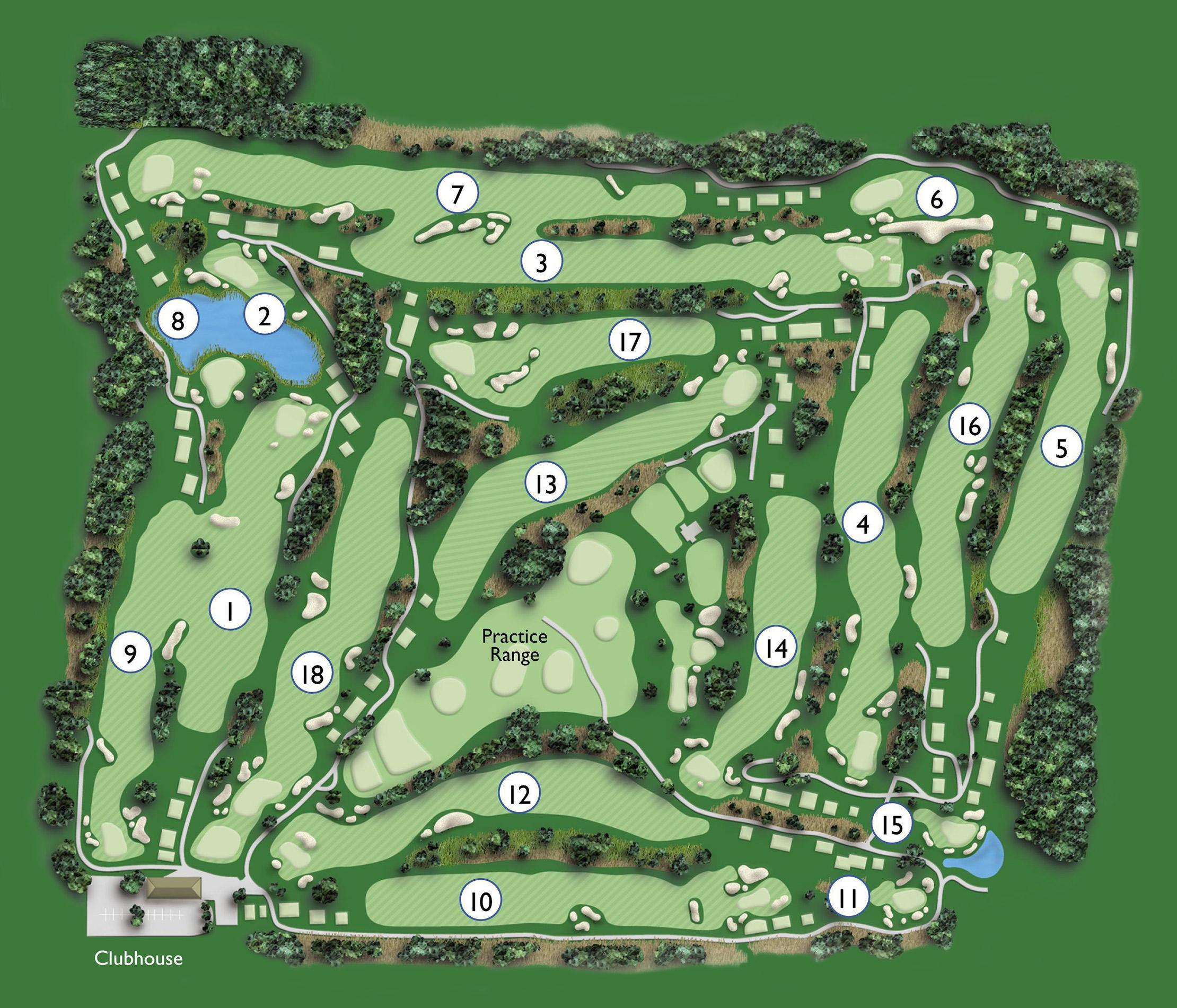
Optimizing Golf Course Layouts: Strategy and Sustainability
What “optimize” means for golf course design
To optimize is to make something as effective, functional, or perfect as possible (Merriam‑Webster; Dictionary.com).
In golf course design that means shaping routing, holes, and maintenance systems so they maximize playability, strategy, aesthetics, and long‑term sustainability while minimizing environmental impact and operating costs.
Core principles for optimizing golf course layout
The best golf course designs unite strategic challenge and ecological obligation. Core principles include:
- Routing and flow: Efficient movement between tees, greens, and club facilities reduces cart traffic, limits maintenance demands, and improves player experience.
- Strategic variability: Design holes that allow multiple viable strategies-risk‑reward options, different lines of play, and distinct tee placements.
- Playability and accessibility: Multiple tee boxes, clear sightlines, and fairway corridors let a course welcome all skill levels while remaining challenging for scratch golfers.
- Environmental optimization: Use native plants, water‑efficient irrigation, and integrated pest management to reduce inputs and protect habitats.
- Maintainability: Build with maintenance realities in mind-soil profiles, turf selection, drainage, and mowing patterns affect long‑term costs and playing quality.
Hole routing and sequencing
Good routing maximizes natural features, balances walkable distances, and alternates hole directions to minimize wind disadvantage for players and reduce turf stress from constant sun or shade on the same areas. Consider:
- Routing to minimize heavy traffic across vulnerable wetlands or steep slopes.
- Alternating par‑3/4/5 lengths to maintain variety and pace of play.
- Using natural contours to create strategic shot values rather than relying on artificial mounding.
Strategic bunkering and hazards
Strategic bunkering informs shot selection and risk‑reward decisions. When optimizing bunkers, consider:
- Placement to defend the best angles to approach the green rather than punishing errant shots alone.
- Maintaining fewer, better‑positioned hazards to reduce maintenance costs and still deliver strategic options.
- Using native sand and indigenous slopes to limit erosion and promote habitat continuity.
Green complexes and shot values
Green shaping drives strategic choices. An optimized green complex offers multiple pin locations and rewards creativity:
- Contours that create three‑dimensional approach shots and short‑game variety.
- Size and contouring balanced with maintenance capacity-larger greens require more inputs; targeted complexity can be achieved with modest footprints.
- Use of run‑offs and collection areas to reward skilled recovery shots while protecting fragile turf around the hole.
Sustainability measures that improve gameplay and cut costs
Environmental sustainability and enhanced playability often go hand in hand. Practical sustainable choices include:
- Water conservation: Low‑flow irrigation heads, soil moisture sensors, and drought tolerant turfgrass can reduce water use dramatically.
- Native plant buffers: Planting native grasses and wildflowers along roughs and property edges reduces mowing,supports pollinators,and improves aesthetics.
- Irrigation zoning: Separate high‑use playing surfaces from low‑use landscape areas to optimize water application.
- Reclaimed water systems: Treat and reuse effluent where permitted to lower potable water demand.
- Soil health: Improving soil structure via organic amendments and appropriate aeration reduces disease pressure and irrigation needs.
Irrigation and drainage optimization
Irrigation and drainage are engineering cornerstones of an optimized layout:
- Design drainage channels and tiles to protect fairways and greens while preserving wetland function.
- Place irrigation heads for matched precipitation rate and uniform cover; use sensors and smart controls to avoid overwatering.
- Specify greens built with layered profiles (rootzone, gravel, drain) to balance playability and water movement.
Tip: Optimize irrigation by combining weather data, soil moisture probes, and GPS‑based valve control. This reduces water use and creates more consistent playing surfaces.
Balancing strategy, difficulty, and accessibility
Optimized golf course layouts provide a spectrum of challenge so all players experience enjoyable risk‑reward choices.Key strategies:
- Provide at least three tee boxes to accommodate juniors, high handicaps, and advanced players.
- Design holes with alternate lines of play-e.g., a safe line and a more aggressive line that shortens the hole but introduces hazards.
- Introduce a measured difficulty curve across the routing-don’t stack every tough hole in a row; balance keeps pace of play and reduces frustration.
playability features that don’t dilute strategy
- wide initial landing zones on par‑4s that narrow into strategic approach options.
- Peak‑and‑valley green contours that reward approach precision but allow accessible pin placements.
- Clearly marked hazards and angles so golfers can identify strategic options quickly-improves pace of play.
Maintenance and lifecycle planning
Long‑term optimization must account for maintenance budgets, equipment, and staff. Consider:
- Standardizing mowing widths and patterns to reduce labour complexity.
- Planting turf varieties suited to the microclimate to reduce pesticide and fertilizer needs.
- Investing early in drainage and soil betterment to avoid costly retrofits later.
- Tracking agronomic data to guide aeration, overseeding, and fertilization schedules for consistent playability.
Case studies: Practical examples of optimized layouts
Coastal links retrofit (hypothetical)
Situation: A 1960s links property with eroded bunkers and inefficient irrigation.
- Actions: Rebuilt bunkers using native sand, installed moisture sensors, introduced drought‑tolerant fescues in roughs, and re‑routed cart paths away from sensitive dunes.
- Results: Lower water use, improved bunker playability, and restored coastal habitat while maintaining strategic options for players.
Inland parkland redesign (hypothetical)
Situation: Flat inland layout with monotony and poor drainage.
- Actions: Introduced sculpted mounds to create sightlines and strategic angles, installed permeable drainage channels, and replaced high‑maintenance turf around out‑of‑play areas with native meadow.
- Results: Better variety of shot choices, improved pace of play, and reduced mowing and irrigation costs.
Benefits and practical tips for architects and superintendents
Benefits of optimization
- Lower operating costs through reduced water and chemical inputs.
- Enhanced player experience with strategically interesting holes and better pace of play.
- Stronger community support and regulatory compliance by protecting habitats and reducing runoff.
Practical tips
- start with a site audit: soil tests, hydrology mapping, and existing vegetation inventory.
- Prioritize improvements with the highest ROI-drainage and irrigation frist,then aesthetics.
- Engage players early: host design workshops with members to align expectations and identify playable tweaks.
- Use GIS and drone mapping to evaluate sunlight, wind patterns, and turf stress zones for smarter routing.
- Document maintenance routines and costs-data drives smarter design decisions and justifies capital projects.
Quick reference: design elements, player impact, and sustainable options
| Design Element | Player Impact | Sustainable Option |
|---|---|---|
| Fairway width | Shot forgiveness vs challenge | Native rough to reduce mowing |
| Bunkering | Strategic risk/reward | Fewer, targeted bunkers |
| Green size | Pin variety | Smart irrigation zoning |
| Irrigation | Consistency of turf | Moisture sensors & reclaimed water |
| Routing | Pace of play & experience | Minimize habitat fragmentation |
First‑hand experience: common pitfalls and how to avoid them
From field experience and industry best practices, thes pitfalls are common-and avoidable:
- Over‑designing: Excessive bunkers, overly large greens, or complex features that demand high maintenance can reduce ROI. Keep strategic intent clear and limit features that add cost without strategic value.
- Ignoring microclimates: Putting the same grass species everywhere invites problems. Map shade, wind, and drainage zones and match turfgrasses accordingly.
- Poor routing decisions: Long cart loops and backtracking frustrate players and wear turf. Walk the routing with players and staff to validate flow.
- No long‑term plan: Failing to integrate capital planning and maintenance realities leads to unsustainable systems. Create a 10‑year maintenance and capital plan tied to design decisions.
SEO tips for publishing your course design content
When posting a golf course design article or project page, follow these SEO best practices to reach golfers, members, and industry professionals:
- Use long‑tail keywords naturally: “sustainable golf course design,” “golf course layout optimization,” “strategic bunkering examples.”
- Include descriptive alt text for images (e.g.,”aerial routing of golf course showing strategic bunkers and water hazards”).
- Use structured headings (H1, H2, H3) and short paragraphs for readability.
- Publish case studies and before/after photos to increase dwell time and backlinks.
- Link to authoritative resources-definitions like “optimize” from Merriam‑Webster or industry standards-to build trust.
Final notes on optimization (no conclusion section)
Optimizing a golf course layout is both an art and a science: it blends strategy that excites golfers with sustainability that preserves the landscape and reduces costs.By emphasizing routing,strategic hazards,smart irrigation,native plantings,and maintainable green complexes,architects and superintendents can create memorable rounds that stand the test of time.




