
From the standpoint of psychology-the scientific study of mind and behavior-the acquisition and refinement of complex motor skills in sport are fundamentally cognitive processes shaped by attention, memory, perception, and motivation. Slow-motion golf swing practice offers a controlled context in which these cognitive mechanisms can be engaged deliberately: by reducing movement speed, practitioners increase perceptual clarity of kinematic cues, expand the time available for error detection and correction, and create conditions favourable to the formation of accurate motor representations. Framed within contemporary motor‑learning theory, slow practice can accelerate the transition from conscious, effortful control to efficient, automatized performance by supporting focused, high-quality repetition and enhanced feedback processing.
Cognitively, slow-motion practice facilitates a number of interrelated processes that underpin skill improvement. Prolonged sensory input during slow swings improves proprioceptive discrimination and the internal models used to predict the outcomes of motor commands, strengthening sensorimotor mapping. The extended temporal window eases attentional demands, permitting learners to isolate and rehearse discrete components of the swing without overwhelming working memory capacity; this supports effective chunking of submovements and the consolidation of procedural memories. Moreover,deliberate,slow rehearsal fosters more precise error detection and corrective strategy formation,which-when coupled with distributed practice and appropriate feedback-promotes durable learning and transfer to full‑speed performance.
Beyond motor control, slow-motion swing practice offers psychological benefits that influence performance under pressure.The method can reduce cognitive and physiological arousal by promoting a measured tempo, thereby lowering anxiety-driven interference with fine motor control and attentional focus. Repeated triumphant slow practice builds task-specific self‑efficacy and metacognitive awareness, enabling golfers to better regulate attention and execute pre-shot routines. For coaches and practitioners, integrating slow-motion drills within a periodized practice plan provides a theoretically grounded means to enhance precision, efficiency, and resilience in swing execution while aligning practice structure with established principles of cognitive and motor learning.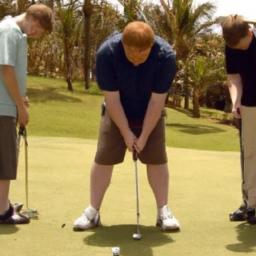
theoretical Foundations of slow Motion Practice in Motor Learning and skill Acquisition
Contemporary models of motor learning converge on the idea that skill acquisition depends on repeated coupling of perception and action to refine internal models and control policies. Classical frameworks-such as **Fitts and Posner’s stages**, **Adams’ closed‑loop theory**, and **Schmidt’s schema theory**-predict that slowing movement magnifies sensory consequences and error signals, permitting more precise updating of feedforward commands and corrective loops. From an ecological dynamics outlook,slowed execution increases time for information pick‑up and affords richer affordance perception,thereby enhancing the performer’s ability to attune to task‑relevant constraints.
at the cognitive level, slowed practice systematically alters how attention and memory resources are allocated.By extending the temporal window of a single swing, the practitioner can:
- Enhance proprioceptive discrimination and kinesthetic awareness;
- Increase opportunities for explicit error detection and hypothesis testing;
- facilitate chunking of multi‑segment actions into stable subunits;
- Reduce speed-accuracy tradeoffs, permitting precision sampling that supports proceduralization.
These processes together accelerate the transition from declarative descriptions of movement toward robust procedural representations.
The neural foundations align with these behavioral mechanisms: slowed, repetitive practice promotes more consistent spike timing and synaptic reinforcement, supporting durable plastic changes in sensorimotor networks. The deliberate emphasis on temporal decomposition aids consolidation of motor engrams and reduces neural noise associated with high‑velocity execution. The table below summarizes key theoretical mechanisms and their expected neurocognitive outcomes under slowed practice.
| Theoretical Mechanism | Predicted Effect of Slow‑Motion Practice |
|---|---|
| Error‑based internal model updating | Greater calibration of feedforward commands |
| Attentional allocation / working memory | Improved detection and correction of segmental timing |
| Ecological attunement | Richer perceptual information for adaptive behavior |
These theoretical insights carry immediate implications for practice design: emphasize **progressive tempo modulation**, schedule **faded feedback** to encourage internal error detection, and embed variability to promote transfer. Coaches and researchers should treat slow‑motion work as an information‑rich phase-used purposefully to refine sensorimotor mappings-rather than as a mere reduction of physical intensity. When integrated with higher‑speed practice and appropriate feedback schedules, slow‑motion training becomes a theoretically grounded method for accelerating skill acquisition and stabilizing performance under game conditions.
Enhancing Kinesthetic Awareness and Proprioceptive Calibration Through Deliberate Slow Swinging
Deliberate slow swinging systematically increases the salience of somatosensory signals, allowing the golfer to consciously register subtle changes in joint angles, muscle tension and club-face orientation. This process serves to enhance internal models of the swing-here used in the sense of heightening or improving sensory precision (see Merriam‑Webster definition of “enhance”)-so that feedforward commands and feedback corrections converge. From a psychological standpoint, the slowed execution reduces cognitive load associated with rapid error correction and permits deeper encoding of sensorimotor contingencies that underlie skilled performance.
At the mechanistic level, extended temporal windows provided by slow practice improve the nervous system’s ability to integrate afferent inputs and recalibrate proprioceptive estimates. Observable markers of this recalibration include:
- Greater joint-position accuracy when returning to a reference posture.
- Reduced trial-to-trial variability in segmental timing and club path.
- Smoother intersegmental sequencing that reflects improved feedforward planning.
Translating these mechanisms into practice requires structured manipulation of tempo, attention and feedback. A concise training matrix can guide application in the range from deliberate to ballistic practice:
| Variable | Slow‑Swing Prescription | Target Outcome |
|---|---|---|
| Tempo | 20-40% of full speed | Amplified somatosensory detail |
| Repetitions | 8-12 focused reps × 3 sets | Consolidation of proprioceptive map |
| feedback | Verbal cues + proprioceptive focus | Improved internal error detection |
deliberate slow swinging produces measurable psychological and performance gains that transfer to full‑speed execution: increased confidence in body-state estimation, better allocation of attention between global geometry and local sensations, and more robust retention under pressure. Objective assessment (e.g., joint-position error tests, intra-session variability metrics) can validate that proprioceptive calibration has improved, while subjective reports of heightened bodily awareness corroborate the sensorimotor data. Together, these changes explain how a slow, deliberate approach can systematically enhance both the perceptual fidelity and the reliability of the golf swing.
Cognitive Load Management and Enhanced Error Detection During Slow Motion Rehearsal
Slow, deliberate rehearsal of the swing reconfigures processing demands so that the performer can manage cognitive load more effectively. By stretching the temporal window for perception-action coupling, athletes transfer portions of task processing from rapid online correction to slower, more analytical encoding within working memory. This aligns with basic principles of cognitive psychology,in which the brain actively processes and organizes incoming information rather than passively responding to stimuli. The outcome is a measurable reduction in concurrent processing requirements during practice, enabling more precise encoding of spatiotemporal parameters of the movement.
The extended timeframe inherent to deliberate-tempo practice magnifies the golfer’s ability to detect deviations from an intended motor pattern. Enhanced sensory sampling-visual, vestibular and proprioceptive-yields clearer error signals and supports successive refinement through rehearsal. Mechanisms that contribute to improved error detection include:
- Focused attentional allocation: more cognitive resources directed at critical phases of the swing.
- Increased sensory sampling: prolonged kinesthetic feedback improves noise-to-signal ratio.
- Explicit error visualization: clearer mental representation of deviations facilitates corrective planning.
- Iterative corrective rehearsal: immediate, conscious adjustments reinforce accurate motor patterns.
these cognitive changes translate into durable performance benefits. As error detection becomes more reliable and internal representations more precise, the system can offload routine coordination to procedural memory, freeing attentional capacity for strategic decision-making under competitive pressure. The table below summarizes key cognitive processes and the typical benefits observed with slow-tempo rehearsal.
| Cognitive Process | Slow-Tempo Benefit |
|---|---|
| Working memory encoding | Richer, chunked motor representations |
| Perceptual discrimination | Higher fidelity error signals |
| attentional control | Better allocation during pressure |
for practitioners and coaches, the implication is pragmatic: structure drills to temporally expand critical subcomponents of the swing, pair slow-motion rehearsal with explicit attentional cues, and progressively reaccelerate only after error signatures are minimized. Such staged practice preserves cognitive resources during skill acquisition, accelerates the transition from declarative to procedural control, and enhances the golfer’s capacity to detect and correct errors autonomously.
Neural Plasticity, Memory Consolidation, and Long Term Retention Benefits of Gradual Swing Training
Slow, deliberate rehearsal of the golf swing engages neurophysiological mechanisms that govern experience-dependent change in the motor system. Repeated low-velocity repetition accentuates error detection and correction processes in the cerebellum while promoting representational refinement in primary motor cortex; collectively these processes facilitate **long-term potentiation (LTP)** and reorganization of sensorimotor maps. Because each micro-movement is accessible to conscious monitoring during slow practice, learners can link sensory consequences to specific motor commands-strengthening the synaptic associations that underpin fluent, automatic execution at full speed.
Gradual progression from slow to moderate tempos optimizes memory consolidation by reducing interference between competing motor programs and by enhancing encoding specificity. Slower practice increases attentional resources allocated to kinematic variables and feedback processing, which supports the transition from explicit, declarative descriptions of technique to implicit, procedural representations. Off-line consolidation (including sleep-dependent processes) is more effective when initial encoding is accurate and low-noise, so deliberate slow practice often yields superior overnight stabilization and reduction of performance variability.
The structure of slow-motion training also favors retention and transfer.By deliberately segmenting the swing into discrete chunks and rehearsing them slowly, learners facilitate chunking and hierarchical organization in the basal ganglia-cortical circuitry; this promotes resistant, context-independent motor memories. In addition, slow practice allows for controlled variability and error augmentation strategies that increase robustness: learners who train slowly with task-relevant variability typically show better retention and improved adaptability under pressure, indicating stronger implicit control and reduced reliance on conscious monitoring during competition.
Practical implications for training design are straightforward and evidence-aligned.key elements that maximize neural plasticity and long-term retention include:
- Distributed practice: short, spaced sessions rather than massed repetition.
- Slow-to-fast progression: begin with reduced tempo, then incrementally increase.
- Focused attention: minimize distractions to enhance encoding quality.
- Variable contexts: introduce minor contextual changes to improve transfer.
| Neural Mechanism | Behavioral Outcome |
|---|---|
| Synaptic strengthening (LTP) in motor cortex | Improved movement precision and retention |
| Cerebellar error-based adaptation | Faster error correction and stability |
| basal ganglia chunking | Automatization and transfer under pressure |
Attentional Control, Mindfulness, and Their Role in Performance Consistency
Contemporary models of motor performance position selective attention as a primary determinant of movement quality. Slow-motion practice creates conditions for sustained, volitional allocation of cognitive resources to the kinematic features of the swing, strengthening **attentional focus** and **executive control** processes. Neurocognitive frameworks predict that repeated deliberate practice at reduced speed enhances top‑down modulation from prefrontal networks, thereby diminishing the influence of task‑irrelevant stimuli and habitual lapses of attention that typically degrade performance under pressure.
Mindfulness processes operate synergistically with attentional training by cultivating present‑moment awareness of internal and external cues.When golfers execute the swing in slow motion they systematically amplify proprioceptive and interoceptive feedback, enabling precise metacognitive monitoring of segmental timing and force production. This heightened awareness supports nonjudgmental error detection and facilitates incremental motor adjustments without triggering maladaptive self‑criticism-mechanisms known to preserve performance integrity during competitive stressors.
The practical result for consistency is twofold: refinement of the control policy for the swing and improved resilience of that policy under variable conditions. Slow, attentive rehearsal promotes error‑based learning and the formation of robust sensorimotor mappings while avoiding the pitfalls of conscious interference at full speed. observable benefits include:
- improved error detection: earlier and more accurate recognition of mechanical deviations.
- Reduced shot variability: tighter dispersion through stabilized preparatory routines and timing.
- Enhanced recovery under pressure: quicker cognitive recalibration following a disrupted trial.
Empirical practice guidelines derived from attentional and mindfulness research suggest measurable gains over modest training intervals. The table below summarizes representative outcome domains and typical directional changes associated with an integrated slow‑motion practice regimen (two to three sessions per week, 10-15 minutes per session):
| Outcome | typical change (6-8 weeks) |
|---|---|
| Attentional stability | +15-25% |
| Proprioceptive acuity | +18-30% |
| Shot‑to‑shot variability | −10-20% |
these shifts reflect aggregated cognitive and somatic adaptations that together support more consistent on‑course performance when slow‑motion rehearsal is systematically integrated into a broader training program.
Transfer Mechanisms to Full Speed Performance and Progressive Acceleration Strategies
Slow, deliberately paced repetitions create a high-fidelity internal model of the swing by allowing the nervous system to encode precise spatiotemporal relationships between joints and club. Through repeated slow practice the performer refines **motor engrams**, improves proprioceptive acuity and reduces noisy feedforward commands; when tempo is increased these refined engrams can be temporally scaled rather than reconfigured, supporting near-seamless transfer to full-speed execution. This temporal-scaling hypothesis is complemented by principles of **transfer-appropriate processing**: when perceptual and control demands of slow practice overlap with those required at speed (e.g., sequencing, weight shift timing), the probability of effective transfer rises. Neurologically, slow practice promotes clearer error signals and stronger sensory prediction errors, which accelerate consolidation and reduce maladaptive co-contractions that often emerge when accelerating prematurely.
The following progressive acceleration strategies align practice structure with underlying cognitive mechanisms to maximize transfer and minimize negative transfer:
- Tempo Ladder: incrementally increase swing speed in small fixed percentages (e.g., 40% → 60% → 80% → 100%) to preserve temporal mapping.
- segmented Acceleration: accelerate proximal segments (hips/torso) first,then distal segments (arms/club) to maintain intersegmental coordination.
- Alternating Variability: alternate slow-focus blocks with mixed-speed blocks to combine error reduction (slow) and adaptability (variable speeds).
- Intentional Attentional Shifts: move from explicit kinesthetic cues during slow practice to external outcome cues (ball flight or target) as speed increases to foster automatization.
- Faded Augmented Feedback: provide precise feedback early, then reduce frequency to encourage internal error detection and robust retention.
| Phase | Tempo (% of full) | Primary Cognitive focus | suggested Duration |
|---|---|---|---|
| Encoding | 30-50% | kinesthetic mapping | 1-2 sessions |
| Integration | 50-75% | sequencing & rhythm | 2-4 sessions |
| Calibration | 75-90% | timing under load | 2-3 sessions |
| Performance | 100% | external focus & automatization | ongoing |
To safeguard transfer, practitioners should attend to attentional control and practice scheduling: shift from **internal focus** (body mechanics) during early slow learning to an **external focus** (target, clubhead pathway) as velocity rises, because external focus consistently improves movement economy and accuracy. Introduce **contextual interference**-varying targets, lies and club selection-to enhance adaptability and prevent brittle performance that collapses under pressure. Monitor inter-trial variability and use objective metrics (video kinematics, launch data) to detect premature increases in co-contraction or timing breakdowns; when such signs appear, regress tempo and re-establish the encoded timing. combine mental imagery of full-speed swings with the tempo ladder: imagery primes neural circuits for velocity without inducing disruptive motor noise, thereby smoothing the cognitive transition from practiced slowness to robust, high-speed performance.
Practical Recommendations for Designing Evidence Based Slow Motion Practice Sessions
Design sessions around explicit learning principles: prioritize deliberate, focused repetitions over mindless volume; use task specificity to align slow-motion drills with the target swing kinematics; and distribute practice to exploit consolidation benefits. Structure each block so that cognitive demands are controlled-begin with low-complexity segmentation (e.g., grip-to-top, top-to-impact) and only combine elements once stable motor patterns emerge. Empirical work in motor learning suggests that pairing small, accurate movements with spaced rest intervals increases retention and reduces detrimental fatigue-related variability.
Adopt a modular session template that enforces progression and objective assessment. A practical checklist for a 30-45 minute session might include:
- Calibration: 5-8 slow uncontrolled swings to re-acquaint sensorimotor mapping.
- Segmented practice: 10-12 focused slow reps on one sub-phase with external attentional cueing.
- Integration: 8-10 medium-slow full swings emphasizing temporal coordination.
- Transfer probe: 5 near-normal paced swings and a retention probe on a subsequent day.
Each item should have an explicit performance metric (e.g., trunk rotation range, club-face alignment at impact) and a stop rule tied to error thresholds.
Quantify and record outcomes to facilitate evidence-based adjustments. Use simple objective metrics alongside subjective cognitive load ratings: perceived effort (0-10), attentional focus (external vs internal), and a short retention test after 24-72 hours. Below is a compact session template suitable for coach-player documentation:
| Phase | Duration | Primary Objective |
|---|---|---|
| Calibration | 5-8 min | Sensorimotor mapping |
| Segmentation | 10-15 min | Precision of subcomponents |
| Integration | 8-10 min | Temporal coordination |
| Probe & Retention | 5-10 min | Transfer and consolidation |
Record brief notes in each row to track progression and identify when to increase tempo or add variability.
Manage dosage and progression conservatively to protect cognitive resources and promote efficient learning. Favor multiple short sessions per week rather than a single prolonged block, and systematically introduce variability (e.g., different lie, stance, or mild dual-task demands) only after stable performance.Coaches should emphasize external focus cues and error-detection strategies over prescriptive kinematic instructions; when introducing speed, follow a graded rule (increase tempo by ~10-20% only when 80-90% of reps meet the criterion). incorporate periodic objective retention tests and adjust the training plan using simple statistical or graphical feedback to ensure that slow-motion gains generalize to on-course performance.
Q&A
Introduction: The following Q&A is designed to accompany an academic article on the psychological advantages of slow‑motion golf swing practice. Answers synthesize core principles from psychology (e.g., motor learning, attention, perception) and translate them into applied implications for golf instruction and practice design. For general definitions of psychology and its remit, see standard references (e.g., Britannica; American Psychological Association summaries) cited below.
1) What is meant by “slow‑motion swing practice” in the context of golf?
Answer: Slow‑motion swing practice refers to deliberately executing the golf swing at a reduced velocity-often substantially below playing speed-while preserving the intended kinematic sequence and biomechanics. The goal is to emphasize movement quality, proprioceptive awareness, timing, and error detection rather than ball flight or power.
2) Why examine this practice from a psychological perspective?
Answer: Psychology studies mental processes and behavior, including perception, attention, learning, memory, and motor control. Slow‑motion practice interfaces directly with these processes: it alters sensory feedback, attentional demands, cognitive load, and the opportunities for explicit and implicit motor learning. Understanding these mechanisms helps optimize practice for skill acquisition and transfer to competitive performance (see general definitions of psychology in Britannica and APA resources).
3) What cognitive processes are primarily engaged during slow‑motion practice?
Answer: Key processes include: enhanced proprioceptive and kinesthetic perception; focused selective attention (to sequence,timing,or sensation); working memory for action rules; error detection/correction; mental imagery and motor planning; and consolidation processes during offline periods (rest or sleep).
4) How does slow motion enhance motor learning compared with full‑speed repetition?
Answer: Slowing movement increases time for sensory sampling and error detection, facilitating corrective adjustments. It promotes explicit understanding of movement components and sequencing,encourages deliberate practice (high‑quality repetitions),and can strengthen neural representations (through repeated,accurate activation of relevant motor patterns). It also allows coupling of sensory consequences with discrete motor commands, aiding the development of stable internal models.
5) Is slow‑motion practice more effective for beginners or experienced players?
Answer: Both groups can benefit, but in different ways. Beginners gain from clearer mapping of cause-effect relationships (reducing exploration noise), while experienced players can use slow practice to refine timing, restore mechanics, or reconfigure maladaptive habits. For advanced players, slow practice should be targeted (e.g., specific transition phases) to avoid over‑emphasis on explicit control that might disrupt automaticity.
6) How does attentional focus during slow practice influence learning?
Answer: Attentional focus moderates learning outcomes. An internal focus (attention to body parts or mechanics) is useful during early slow practice to build awareness and correct gross errors. Over time, transitioning toward an external focus (attention on effects or outcomes) supports more automatic, robust performance under pressure. Carefully timed shifts between internal and external foci can combine the benefits of conceptual understanding with durable motor performance.
7) Does slow‑motion practice promote implicit or explicit learning processes?
Answer: Slow practice initially supports explicit learning-conscious analysis and rule formation-because it makes movement components salient. However,if repeated with emphasis on sensory consequences and minimal verbalization,slow practice can also scaffold implicit learning by stabilizing movement patterns that later become automated. Instructional framing determines whether learning remains explicit or moves toward implicitity.
8) How does slow practice effect retention and transfer to full‑speed swings?
Answer: When designed properly, slow practice improves retention of movement patterns by strengthening sensorimotor mappings. Transfer to full speed depends on (a) progressive overload-gradually increasing velocity, (b) including scaled‑up practice that incorporates speed, and (c) preserving relative timing and coordination patterns during acceleration. Without progressive reintroduction of speed, transfer might potentially be limited as temporal dynamics at high velocity differ from those at very slow speeds.
9) what role does mental imagery play alongside slow‑motion practice?
Answer: Mental imagery complements slow practice by rehearsing the movement’s temporal and sensory characteristics when not physically practicing. imagery can reinforce the neural substrates of the swing, maintain sequence fidelity, and facilitate consolidation. Combining slow physical repetitions with guided imagery enhances both cognitive representation and motor memory.
10) Can slow‑motion practice reduce performance anxiety or improve attentional control?
Answer: Yes. Slow practice fosters greater self‑efficacy through successful, controllable repetitions, which can reduce anxiety. It also trains attentional control by requiring sustained focus on sequence and sensation. Over time,this can enhance the golfer’s ability to regulate attention under pressure and to execute pre‑shot routines that stabilize performance.
11) Are there cognitive risks or downsides to over‑reliance on slow practice?
Answer: Potential downsides include over‑reliance on explicit control (paralysis by analysis) and failure to adapt to the temporal demands of full‑speed play. excessive segmentation of the swing can disrupt automatic coordination. To mitigate these risks, integrate slow practice with variable drills, speed progression, and contextualized practice that includes typical course demands.
12) How should a coach structure slow‑motion practice sessions for optimal psychological benefit?
Answer: Recommended structure:
– Define a clear learning objective (mechanics, timing, transition).
– Begin with slow, deliberate repetitions emphasizing proprioception and outcome mapping.
- Use short blocks (e.g., sets of 6-12 quality reps) with feedback (video, verbal cues) and deliberate rest.- Progressively increase tempo and reintroduce full‑speed swings within the same session or across sessions.
– Alternate internal and external focus cues as skill consolidates.
– Include imagery and variability to support transfer and resilience.13) What measurement or assessment methods can evaluate cognitive gains from slow practice?
Answer: Use a combination of objective and subjective measures: kinematic analysis (to assess sequencing and timing),movement variability metrics,dual‑task paradigms (to assess automaticity),retention/transfer tests at later intervals,self‑efficacy and anxiety scales,and cognitive load measures (e.g., subjective workload questionnaires).
14) What are promising directions for future research on this topic?
Answer: Future research should: quantify the dose‑response relationship between slow practice and retention/transfer; compare outcomes across skill levels; examine neural correlates of slow practice using neuroimaging or electrophysiology; test combinations of slow practice with variability and contextual interference schedules; and assess effects on performance under pressure.
15) Practical takeaways for golfers and coaches
answer: Use slow‑motion practice as a diagnostic and corrective tool-particularly for sequencing and timing issues. Keep repetitions deliberate and limited in number, pair slow practice with speed progression, alternate attentional focus as learning advances, and incorporate imagery and contextual variability to ensure transfer. Monitor for signs of over‑analysis and reintroduce game‑like speed and decision demands regularly.
References and further reading
– General definitions of psychology and its remit: Britannica; American Psychological Association summaries; introductory texts in motor learning and sport psychology. (See Britannica and APA resources for foundational context.)
If you would like, I can convert these Q&A items into a short accompanying bibliography, sample practice protocols for different skill levels, or an instructor’s checklist for implementing slow‑motion swing drills.
In sum, slow‑motion swing practice constitutes a cognitively informed training modality that extends beyond mere mechanical repetition. By decelerating movement, golfers and coaches create conditions that enhance attentional allocation, facilitate detailed error detection and correction, strengthen sensorimotor representations, and promote consolidation of motor plans-processes that collectively support greater precision, retention, and eventual automaticity of the full‑speed swing. Psychologically, these effects are manifested in improved focus, reduced performance anxiety through mastery experiences, and more efficient use of working memory during skill acquisition.
For practitioners, the evidence reviewed implies concrete implementation strategies: integrate slow‑motion practice into early learning and rehabilitation phases, combine it with variable and distributed practice schedules to promote transfer, employ targeted augmented feedback to guide corrective adjustments, and progress systematically toward increasing tempo to preserve ecological validity. Caution is warranted against exclusive reliance on explicit, conscious control during late stages of learning; practitioners should blend slow‑motion drills with practice conditions that encourage implicit motor learning and contextual interference to foster robust performance under pressure.
Future research should quantify the longitudinal benefits of slow‑motion training across skill levels, delineate its neural correlates using neurophysiological methods, and identify individual differences that moderate responsiveness to this approach. Nonetheless, framed within current psychological and motor‑learning theory, slow‑motion swing practice emerges as a theoretically grounded, practical tool for optimizing the mind-body integration essential to high‑performance golf.

Psychological Advantages of Slow Motion golf Swing Practice
Slow motion golf swing practice is more than a mechanics drill – it’s a high-value psychological training tool that deepens the mind-body connection, refines motor control, and improves consistency on the course. Grounded in principles from psychology – the scientific study of mind and behavior – slow, purposeful practice accelerates learning, strengthens muscle memory, and reduces performance anxiety, making it a powerful addition to any golfer’s practice routine.(See psychology definition: Wikipedia.)
How Slow Motion Practice Changes the Mental Game
Switching to slow-motion swings forces the brain to notice and encode details that are or else missed during full-speed strikes. that deeper encoding helps with:
- Improved proprioception: Awareness of body position and movement throughout the backswing, transition, and follow-through.
- Clearer kinesthetic feedback: The nervous system records subtle timing and sequencing cues that create repeatable swings.
- Reduced cognitive overload: Slowing the swing reduces chaotic variables so the brain can focus on one correct pattern at a time.
- better attention control: The deliberate pace promotes sustained concentration and present-moment focus – key parts of the mental game.
Key Psychological Benefits Explained
1. Accelerated Motor Learning and Muscle Memory
Motor learning requires accurate sensory feedback and repetition. Slow-motion swing practice increases the quality of each repetition:
- More precise feedback → stronger neural encoding of the correct movement pattern.
- Chunking of complex actions into smaller,learnable units (e.g., wrist set, hip rotation, weight shift).
- Reduced error amplification: mistakes become obvious and fixable before they become ingrained.
2. Enhanced Focus, Attention, and mindfulness
Slow practice trains attentional control – the ability to narrow focus on a key variable (tempo, position, or clubface angle) and maintain that focus under pressure.Mindful practice also reduces mind-wandering and improves on-course decision-making.
3. Lowered Arousal and Improved Anxiety Management
High arousal disrupts fine-motor skills. practicing slowly helps golfers learn to execute with calm intent. Over time you can replicate that low-arousal execution under pressure, improving performance on crucial shots.
4. Better Imagery and mental Rehearsal
Slow swings provide a natural tempo for combining physical practice with mental rehearsal. imagining perfect contact or a smooth transition while performing a slow swing strengthens the same neural circuits used during full-speed execution.
5. Greater Confidence and Self-Efficacy
Repeated slow, accomplished reps build confidence in the mechanics and the outcome. When players know they can control the swing sequence, they experience higher self-efficacy – a major predictor of performance consistency.
Practical Slow-Motion Drills for Psychological Gains
Use these drills at the driving range or at home. Each drill emphasizes cognitive engagement in addition to movement quality.
Drill 1: 4-Second Backswing / 4-Second Downswing
- Set a metronome (or count) to 4 seconds up and 4 seconds down.
- Focus on sequencing: hip rotation begins the downswing, hands follow, club accelerates through impact.
- Goal: notice any rush or jerk and slow it further until the sequence flows smoothly.
Drill 2: Pause at the Top (Mindful Transition)
- Take a slow backswing, pause at the top for 2-3 seconds, than slowly complete the downswing.
- Use the pause to visualize the ideal transition and sense the loading of the trail leg.
Drill 3: mirror/Kinematic awareness
- Slow swings in front of a mirror or on video. Observe trunk tilt, shoulder turn, and wrist set.
- Make a single small adjustment per set to avoid overwhelming your motor system.
Drill 4: Mental Imagery Integration
- Combine a guided imagery script with slow swings: imagine the sound and feel of pure impact.
- Alternate physical slow reps with purely mental rehearsals to deepen neural encoding.
Sample 60-Minute Slow-Motion Practice Plan
| Segment | Time | Focus |
|---|---|---|
| Warm-up & Mobility | 10 min | Hip & thoracic rotation |
| 4-4 Tempo Swings | 15 min | Sequencing & tempo |
| Pause at Top | 10 min | Transition awareness |
| Mirror/Video Feedback | 10 min | Kinesthetic cues |
| Mental Imagery Sets | 10 min | Visualization + slow reps |
| Reflection & Notes | 5 min | Practice journal |
How to Track Psychological Progress
Measuring mental changes can be subtle. Use these practical markers:
- Consistency of tempo (use a metronome app or wearable to log timing).
- Perceived concentration level on a 1-10 scale after each set.
- Number of quality slow reps before mental drift occurs.
- Self-reported anxiety or arousal on competitive shots over several rounds.
- Video comparisons showing improved sequencing and reduced compensations.
Common Mistakes and How to Avoid Them
mistake: Overthinking Every Rep
Why it happens: Slowness invites analysis, and golfers can get trapped in paralysis by analysis.
Fix: Limit feedback to one or two cues per set (e.g., “hip lead” and “steady head”). Use a practice journal to collect notes rather than chasing immediate perfection.
Mistake: Practicing Slow Without Progressing
Why it happens: Repeating slow reps without integrating speed transfer fails to build full-pace performance.
Fix: use a speed ladder: slow → medium → full speed. After 6-12 slow-quality reps, perform 2-3 medium-speed swings, then 1-2 full swings to test transfer.
Mistake: Ignoring the mental Content
Why it happens: Practicing physically but not mentally wastes neurological opportunity.
Fix: Add deliberate cues and visualization to each slow repetition. Ask: ”What does perfect feel like?” and anchor that feeling to a short mantra or breath pattern.
Case Study: From Chunky swing to Confident Play (Hypothetical)
Player A struggled with inconsistent contact and rushed downswing. After a 4-week plan that prioritized three 20-minute slow-motion sessions per week focused on transition sequencing and visualization, Player A reported:
- Reduced swing speed variability and smoother sequencing.
- Improved confidence on approach shots (self-efficacy score +20%).
- Less pre-shot anxiety and better routine consistency under pressure.
Video comparisons showed a cleaner hip-to-shoulder separation and a more stable head motion through impact – classic signs of effective motor learning and psychological control.
Integrating Slow Motion Practice Into Your routine
- Start small: 10-20 minutes, 2-3 times per week, then increase based on fatigue and enhancement.
- Use slow practice as a diagnostic tool: if you find a fault, slow it down until you can reproduce the correct feel consistently.
- Alternate mental and physical reps: 1 slow physical swing → 2 imagined swings → repeat.
- Record short video clips and take notes. Reflection cements psychological gains.
Words on Transfer: From Practice Green to Tournament Tee
Transfer happens when slow practice is used intentionally and then graduated to full-speed contexts. Key steps to ensure transfer:
- Identify the critical element to transfer (e.g., tempo, transition, clubface control).
- Establish a reliable slow pattern with high-quality reps.
- Progressively increase swing speed while preserving the critical element.
- Use pressure simulations (countdowns, small stakes) to practice maintaining the pattern under arousal.
Rapid Reference: Mental Cues for Slow-Motion Practice
- “Lead with hips” – promotes proper sequencing.
- “Smooth tempo” – keeps rhythm and prevents rushing.
- “Breathe in-swing out” – couples breath to action to lower arousal.
- “see the shot” – combines visualization with physical motion.
Slow motion golf swing practice is a powerful psychological tool that strengthens motor learning, focus, and confidence. When used deliberately – with clear cues, progressive speed integration, and mental rehearsal – it can deliver lasting improvements to your golf swing and on-course performance. Add slow practice to your training plan and watch the mental game translate into better swings and lower scores.