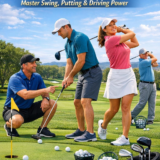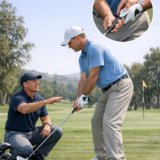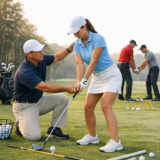
Slow-motion swing practice in golf is a purposeful slowing of movement tempo to separate mechanical execution from ingrained timing. By stretching the time available for each phase of the swing, players and coaches create a controlled learning habitat that sharpens sensorimotor feedback, clarifies perceptual cues, and strengthens cognitive control. Within a psychological framework – the scientific study of mind and behavior – decelerated rehearsal highlights how movement speed alters attention, sensitivity to proprioceptive signals, detection of errors, and the way motor programs are encoded and consolidated. Giving the nervous system extra milliseconds to sample sensations and evaluate actions makes it easier to isolate swing elements, deepen bodily awareness, and make specific corrections that are often missed during full-speed practice.
This piece integrates ideas from motor-learning research,cognitive neuroscience,and applied sport psychology to show how slow-motion drills improve swing accuracy and efficiency. Topics covered include sharper kinesthetic perception and feedback use, attentional strategies and working-memory contributions to technique refinement, how explicit instruction and implicit learning interact, and effects on arousal control and confidence. Practical recommendations and applied examples are woven in to indicate how to structure slow-motion protocols so they aid skill progress,support error correction,and transfer to the faster,more variable demands of competitive play.
The cognitive drivers behind slow-motion swing work
Repetition at reduced speed magnifies the mental operations that produce skilled movement. slowing down expands the time available for targeted attentional focus, allowing clearer perception of club orientation, wrist set, and how weight shifts through the swing. Cognitive accounts of skill learning view these processes as structured representations rather than random sensations; thus, deliberate slow practice helps build richer internal models that link specific body configurations with ball outcomes. Slower execution also lowers sensory “background noise,” sharpening the signal the brain uses to tune sensorimotor mappings.
At the level of planning and motor control, decelerated swings encourage more accurate prediction and stronger error-correction cycles. In practical terms this leads to finer internal model updates and cleaner feedforward commands when speed is reintroduced. Slow rehearsal enables coaches and players to break the swing into discrete components for inspection and correction. Core cognitive processes engaged include:
- Directed attention – sustained focus on the most relevant kinematic cues;
- Temporal mapping – building time-stamped representations of the swing sequence;
- Proprioceptive detail – increased sensitivity to joint angles and transitions;
- Error-driven updating – clearer detection of deviations and targeted adjustments.
| Mechanism | Cognitive role | Typical training effect |
|---|---|---|
| Attentional narrowing | Selective processing of movement-relevant facts | Reduced irrelevant errors in pressured situations |
| Temporal segmentation | Chunking sequential motor states | More repeatable transitions between phases |
| error-feedback tuning | Sharper internal-model corrections | Faster adaptation when errors occur |
Working slowly accelerates the shift from conscious control to fluent execution by reducing needless cognitive load and opening space for metacognitive inspection. As internal representations become more exact, cognitive resources that used to be spent on low-level mechanics can be reallocated to tactical choices like club selection and risk management. Pairing slow swings with vivid mental rehearsal strengthens neural rehearsal pathways and improves the likelihood that the practiced template will survive the jump back to full speed. In short: slow practice can deliver a more efficient mind-body connection-better accuracy, steadier performance under pressure, and faster skill acquisition.
how slowed rehearsal promotes motor learning and neural change
Deliberate slow-motion work reshapes the sensorimotor feedback loop by lengthening the period available for sensory input to influence corrective action. When the swing is decelerated, subtle misalignments become more noticeable, which improves error detection and helps create more accurate internal representations of the desired movement. From a neurophysiological standpoint, these clearer sensory signatures favour temporally precise neural firing patterns and synaptic strengthening in motor networks, supporting better retention than unguided, high-speed repetition.
Reduced execution speed also alters how attention is allocated: it lowers overall task complexity and allows focused processing of individual swing components. This concentrated attention encourages deliberate mapping between intention and outcome and supports the grouping of movement elements into reliable motor primitives. In applied sessions, effective slow work typically targets a small number of priorities such as rhythm, alignment, and weight transfer. Useful focal points include:
- Consistent tempo – preserve the same cadence across repetitions
- Spatial landmarks – monitor club-path and body reference points
- Incremental corrections – favour small adjustments over wholesale changes
- Breath-body coordination – link breathing to phase changes to boost bodily awareness
The neural changes that support these gains occur on different schedules: immediate sensory filtering happens in milliseconds to seconds, short-term potentiation and motor memory consolidation unfold over minutes to hours, and structural rewiring (such as, synaptic growth and corticospinal refinement) develops across days and weeks. The table below links timescale to likely neural events and practical coaching implications.
| Timescale | Neural process | Practical takeaway |
|---|---|---|
| Immediate | Enhanced sensory filtering | Sharpen kinesthetic cues |
| Short-term | synaptic strengthening | Consolidate specific movement patterns |
| Long-term | Structural network adaptation | Enable lasting transfer to play |
For coaches, the practical implication is clear: thoughtful, attentive repetitions performed slowly create a solid foundation for durable skill. The most effective programs combine slow-motion encoding with graded speed increases and contextually varied practice to exploit neural plasticity while avoiding reinforcement of poor habits. In real-world planning, insert controlled slow intervals into periodized sessions, track objective consistency markers, and focus on the quality of repetitions rather than raw volume to steer learning trajectories.
Sharpening proprioception and movement awareness to stabilise the swing
Extending the duration of each swing phase gives the nervous system more chance to sample afferent information, which improves spatial and temporal resolution for limb position and velocity. With extra time to sense joint angles, muscle length, and the path of the centre of mass, players refine the forward model that predicts sensory outcomes of their actions. This richer feedback loop supports the creation of stable sensorimotor mappings in cortical and cerebellar circuits and leads to more reliable feedforward commands once speed is restored.
From a cognitive-motor viewpoint, slowing reduces signal-dependent noise and highlights minor deviations, making error detection and corrective micro-adjustments easier. Prioritising proprioceptive acuity and the processing of sensory prediction errors during these trials directs attention inward and accelerates the shift from conscious descriptions of movement to automatic execution.repeated slow work tends to reduce variability in critical events such as wrist set, initiation of hip rotation, and impact alignment.
To maximise transfer, structure slow-motion sessions so that perceptual goals are explicit and difficulty is graduated. A practical session can include:
- Directed attention to joint sensations (interoceptive cueing).
- Isolation drills that magnify local proprioceptive feedback.
- Repetitions begun from varied starting positions to build generalized programs.
| Drill | Suggested reps | Primary focus |
|---|---|---|
| Half-speed takeaway to impact | 8-10 | Sequencing feel |
| segmented torso-arms sync | 6-8 | Timing between segments |
| Eyes-closed balance swings | 4-6 | Reliance on proprioception |
Objective assessment speeds learning: measure reductions in kinematic variability, record players’ confidence in their proprioceptive judgments, and run retention tests to confirm consolidation.Reintroduce speed progressively while keeping the spatial-temporal templates intact; this staged approach prevents backsliding and supports repeatable shot-to-shot behaviour. Adding reflective verbal labels for sensations and occasional blind (eyes-closed) trials helps cement sensorimotor control and long-term swing consistency.
Using tempo control to reduce anxiety and choking
Practising the swing slowly and deliberately separates motor execution from automatic stress reactions by embedding a modular, repeatable sequence that can be retrieved under pressure.Motor-control models imply that rehearsing at a measured pace improves the fidelity of internal representations and makes a controlled tempo an accessible regulatory tool; this can lower sympathetic arousal and reduce the chance that anxiety-triggered, excessive motor gains will disrupt execution. In effect, a rehearsed slow routine is a cognitive scaffold that reduces uncertainty and the physiological cascade associated with choking.
The cognitive pathways behind this effect include improved attentional regulation, steadier working-memory demands, and stronger pre-performance routines. Training with explicit timing constraints shifts appraisal from threat-focused rumination to action-oriented monitoring, freeing cognitive capacity for essential task processing. Conceptually, tempo training resembles exposure therapy: repeatedly performing under constrained tempo habituates the performer to the sensations of execution and reduces catastrophic interpretations, supporting attentional control under high stakes.
These psychophysiological advantages can be translated into measurable practice goals:
| Mechanism | Observable outcome |
|---|---|
| Autonomic down-regulation via paced movement | Lower pre-shot tension and steadier breath |
| improved sensorimotor prediction | Reduced performance variability |
| Entrained pre-shot sequence | Faster recovery after mistakes |
To translate these ideas into practice and competition routines, use concise, repeatable procedures such as:
- breath-counting linked to the backswing and transition,
- short cue phrases to fix tempo,
- gradually shortening the allowed time between shots to simulate pressure,
- practice blocks that evaluate only the routine sequence rather than immediate outcomes.
These techniques reshape anxiety-driven variability into controllable, task-specific behaviour, reducing episodes of choking and improving dependability when it matters most.
Combining attention, imagery and mental rehearsal with slow-motion drills
Focused attention combined with controlled, slow movement makes relevant sensory detail more prominent, helping golfers tell apart subtle timing and positional differences.By cutting extraneous input, decelerated execution helps encode movement patterns more deeply. When imagery and mental rehearsal are added to this slowed tempo, neural representations of the intended sequence become more vivid and specific, increasing the chance that subsequent faster swings will follow the practiced template rather than being driven by noise or distraction.
Three interacting mechanisms explain why this mix works:
- Selective gating – dampening irrelevant sensory inputs while amplifying proprioceptive signals;
- Sensorimotor mapping – linking felt positions and forces precisely to desired club path and face orientation;
- Predictive simulation – using anticipatory imagery to fine-tune timing and expected outcomes before higher-speed attempts.
Coaches can operationalise these processes by alternating blocks of slow-motion execution with short, targeted imagery intervals. The table below pairs cognitive targets with practical cues and expected benefits-handy for practice plans or coaching notes.
| Cognitive target | Example cue | Anticipated benefit |
|---|---|---|
| Selective attention | “Feel wrist set” (2-3 sec hold) | Less kinematic variability |
| Kinesthetic imagery | “Sense club path” before move | More consistent trajectories |
| Predictive rehearsal | Visualise the flight and landing | Quicker transfer to normal speed |
To enhance transfer from slow to full-speed performance adopt a staged routine: open with 8-12 deliberate, slow reps with vivid imagery, alternate in a few normal-speed attempts to check fidelity, then slowly raise velocity while keeping the same attentional anchors. Progression decisions should be guided by objective markers (such as, number of “true” feels or success rate on short-speed trials) instead of arbitrary time. Short mental rehearsal breaks between blocks help consolidate the neural representation and limit attentional drift. That disciplined coupling of focus, imagery and movement underpins efficient learning and durable improvement.
Designing practical slow-motion training plans: frequency, session length and progressions
Build programs around deliberate, distributed practice principles to maximise cognitive consolidation and motor learning.Use short, intense intervals that lower cognitive load and encourage error detection: slow-motion sets should prioritise high-quality repetitions over high volume to foster proprioceptive sensitivity, attentional control and clear movement maps. Consistency and recovery matter as much as repetition: spacing practice supports neural consolidation between sessions.
Prescriptions should be adapted to ability and training phase. The scheme below provides a conservative baseline that coaches can tailor based on individual response and observational feedback.
| Skill level | Sessions / week | Minutes / session | Progression aim |
|---|---|---|---|
| Beginner | 2-3 | 10-15 | Build body awareness → simple tempo |
| Intermediate | 3-4 | 15-25 | Reduce variability → link rhythm |
| Advanced | 2-3 | 20-30 | Refine precision → transfer to speed |
Follow an explicit progression plan.Start with reduced task demands and a strict slow tempo, then reintroduce speed or external constraints in controlled steps. A typical progression sequence might be:
- Phase 1: isolated joint control and sequencing at a very slow pace (roughly half or less of normal speed).
- Phase 2: integrate multi-joint coordination with target-focused repetitions while staying slow.
- Phase 3: graded increases in velocity and situational variability (different lies, small added cognitive load).
- Phase 4: full-speed transfer trials preceded by a short slow-motion primer and mental rehearsal.
Close the learning loop with objective monitoring and timely feedback. Track simple metrics such as impact location accuracy, movement smoothness (qualitative), subjective confidence and mental workload; if improvement stalls or fatigue emerges, adjust session frequency or length.Combine internal feedback (kinaesthetic noticing) with brief external inputs (video clips, coach cues) and follow each block with reflective notes. Over time, reduce the share of slow-motion work as normal-speed automaticity improves-keeping slow practice as a scaffold rather than the final goal.
Linking slow-motion work to on-course outcomes: measurement and implementation
To move from controlled slow-motion practice to real-world performance you need explicit, measurable targets. Translate cognitive gains-better focus, stronger motor chunking and lower cognitive load-into observable metrics such as shot dispersion, impact-location variability on the clubface, and the steadiness of pre-shot routines under time constraints. These outcomes can be monitored with launch monitors,impact tape and structured checklists during both range sessions and practice rounds.
Implementation should emphasise incremental progression and experimental control. Start with prescribed slow-motion sets that isolate key swing segments (takeaway, transition, impact follow-through), then slowly re-integrate speed while preserving learned timing patterns. Useful operational elements include:
- Micro-dosing: brief slow-motion blocks (3-5 minutes) spread across sessions to support consolidation without excess fatigue.
- Context variation: alternate mechanic-focused slow work with full-speed simulation shots to build adaptability.
- Objective feedback: video and simple metrics (such as, contact consistency) recorded after blocks to quantify change.
To make transfer measurable, use a concise monitoring grid linking on-course outcomes to slow-motion targets and assessment methods. The sample framework below offers a practical approach for coaches and players testing whether slow practice produces behavioural change.
| On-course metric | Slow-motion focus | Assessment method |
|---|---|---|
| Shot dispersion | Consistent mid-swing alignment | Range session + launch-monitor spread |
| Impact consistency | Repeatable wrist/hand timing in slow reps | Impact tape + high-speed capture |
| Pre-shot routine steadiness | Fixed tempo cues rehearsed slowly | Timing logs during pressured drills |
| pressure resilience | Maintain tempo under induced stress | Performance in simulated pressure tasks |
Good translation requires systematic monitoring and adaptive progression. Use a mix of objective markers (performance spread, impact location) and subjective indicators (confidence ratings, perceived ease) to detect plateaus. Integrate slow-motion work into warm-ups and learning phases rather than treating it as a fix-all; randomise tasks progressively to build robust motor schemas. Track changes over micro-cycles (2-4 weeks) and apply small, evidence-informed adjustments-alter tempo emphasis, shift segmental focus or increase contextual variability-to keep improvements transferring to course play.
Q&A
Q1. What exactly is “slow‑motion swing practice” and why is it meaningful from a psychological standpoint?
A1.Slow‑motion swing practice means performing the golf swing at a deliberately reduced speed so that sequencing, timing and bodily sensations are easier to perceive while the basic mechanics remain intact. From a psychological viewpoint it is a motor-learning technique that targets cognitive functions such as attention, perception, memory and sensorimotor integration, providing a controlled setting to study and improve mind-body coordination.
Q2. Why analyse slow‑motion practice through psychology?
A2. A psychological lens clarifies which mental processes are involved in learning-attention allocation, error detection, working-memory use and motor planning-and shows how practice design can shape neural plasticity and long-term retention. This insight helps coaches select methods that produce durable performance gains.
Q3. What cognitive gains are typically associated with slow‑motion swing work?
A3. Reported cognitive benefits include stronger attentional control on key cues, improved proprioceptive sensitivity, clearer temporal and spatial sequencing, faster error recognition and targeted correction strategies, more robust motor memories and enhanced effectiveness of imagery-driven rehearsal. Together these effects lead to more consistent, adaptable performance.
Q4. How does slowing the movement change attention?
A4.Reducing speed eases temporal pressure and lowers task complexity, which lets performers deliberately attend to specific elements (e.g., wrist set, hip timing). That focused processing improves encoding of correct patterns, reduces dependence on maladaptive habits and supports metacognitive monitoring-key elements of deliberate practice.
Q5. How does slow practice affect motor learning and memory consolidation?
A5. By increasing the salience of sensory feedback and clarifying the link between motor commands and sensory consequences, slow practice supports more precise internal models. Those clearer mappings facilitate error-driven learning and improve retention, especially when slow work is later combined with varied and context-rich practice.
Q6. Does slow practice favour explicit or implicit learning?
A6. Initially, slow practice often engages explicit, conscious processes-players think and verbalise mechanics. With proper progression and reduced cognitive load, these explicit rules can be proceduralised into implicit control. Coaches should mix direct instruction with guided revelation to avoid overdependency on conscious control that could impair performance under pressure.
Q7. What role does proprioception play in slowed rehearsal?
A7.Lowering speed magnifies proprioceptive and tactile signals,making small joint angles,tensions and timing relationships more noticeable. This heightened kinesthetic feedback raises the fidelity of motor representations and helps golfers reproduce efficient movements at full speed.Q8. Can slow‑motion practice improve error detection and correction?
A8. Yes. Slower repetitions make pattern deviations easier for both player and coach to see or feel, allowing targeted corrections. The clearer cause-effect mapping speeds problem solving and refines practice focus.
Q9. Will slow practice transfer to normal‑speed swings and course play?
A9. Transfer hinges on maintaining relative timing, sequencing and perceptual cues while varying speed.When slow work is followed by graded tempo increases and context variation (different lies, targets, cognitive loads), motor programs become more generalisable. Slow practice alone,without speed reintegration and variability,limits transfer.
Q10.What practice designs best use slow‑motion swings for cognitive benefit?
A10. Effective designs include short focused blocks aimed at one or two cues, immediate augmented feedback (video or coach notes), progressive tempo increases once consistency is achieved, interleaving slow and normal-speed drills for transfer, and routine mental imagery to consolidate representations. Keep sessions purposeful, modest in volume, and part of a periodised plan.
Q11. Are there psychological downsides to overusing slow practice?
A11. Potential risks include fostering over‑explicit control (which can lead to choking), failing to restore automaticity if speed practice is neglected, and mismatching training context with competition demands. Excessive mechanical focus can add cognitive burden and disrupt flow.Use slow practice as one component in a balanced training mix.
Q12. How does slow‑motion training affect confidence and motivation?
A12. Mastering slowed components often boosts perceived competence and self‑efficacy,which support motivation and persistence. Observable improvements in consistency and clear technique cues provide reinforcing feedback. Coaches should present slow work as deliberate refinement to sustain intrinsic motivation.
Q13. Which objective and subjective measures can evaluate cognitive gains?
A13. Objective metrics: reduced kinematic variability, improved timing measures, shot accuracy and dispersion under different speeds, retention tests and transfer performance under pressure. Subjective metrics: reports of focus,proprioceptive clarity,confidence,mental workload and perceived automaticity. Combining behavioural, psychometric and-where feasible-neurophysiological measures gives the most informative picture.
Q14. Where should future research on slow‑motion swing practice focus?
A14. Productive directions include head‑to‑head comparisons of slow‑motion protocols versus othre practice schedules (e.g., blocked vs random) for retention and transfer, mapping neural correlates of slowed rehearsal with imaging or electrophysiology, identifying moderators such as skill level and age, and optimising dosing, cueing and combinations with imagery or biofeedback for maximal long-term gain.
References and further reading
– For broad definitions of psychology and cognitive concepts see general overviews on psychology and cognition.
– For applied coaching and motor-learning guidance, integrate slow-motion practice with established sport‑psychology and motor-control frameworks and evaluate outcomes empirically.
If helpful, this material can be turned into a concise coaching FAQ, a week-by-week practice plan for different ability levels, or a brief annotated summary of empirical studies that support each practical proposal.
In closing, slow‑motion swing practice is more than a technical drill: it is a psychologically informed method that amplifies the cognitive processes crucial to motor skill learning. By deliberately decelerating movement, golfers make proprioceptive feedback clearer, sharpen attention to key kinematic and temporal features, and establish conditions that enable precise error detection and targeted correction. Those mechanisms work together to strengthen encoding, rehearsal and consolidation of motor programs-outcomes essential for reliable transfer to full‑speed performance.In practice, including structured slow‑motion training within a broader regimen improves precision and consistency while reducing the cognitive and performance variability common with repetitive high‑speed practice. Coaches should therefore adopt periodised prescriptions that blend slow‑motion drills with variable‑speed work,contextual interference and real‑time feedback to maximise both cognitive and biomechanical gains. Careful attention to dosage, task relevance and progressive reintroduction of tempo constraints will help ensure slow‑motion benefits carry over to competitive performance. Continued empirical work will sharpen optimal protocols,reveal individual differences in responsiveness,and clarify the neural routes that support transfer; until then,slowed rehearsal remains a practical,theory‑informed tool for golfers aiming to refine technique through a mind‑centred approach to training.

Slow It Down, Swing Smarter: The Mental Edge of Slow-Motion Practice
Slow-motion practice and swing deconstruction are powerful tools for golfers who want to improve swing mechanics, consistency, and the mental game. This article explains the cognitive science behind purposeful slow practice, then offers actionable drills, a sample weekly plan, troubleshooting tips, and a short case study to help you apply these concepts on the driving range, the practice green, and under pressure on the course.
Why slow-motion practice matters for your golf swing
- Improves motor control: Slowing the swing gives your brain time to process proprioceptive feedback, refine sequencing, and encode the desired kinematic pattern.
- Builds reliable muscle memory: Repeating a deliberately paced motion strengthens neural pathways more accurately then rushed, inconsistent reps.
- Enhances attention and decision-making: Focused, slow reps train selective attention and reduce performance errors when tempo returns to full speed.
- Reduces compensations: Deconstruction exposes hidden faults like early extension, overactive hands, or poor weight shift so you can correct them consciously.
- Improves proprioception and kinesthetic awareness: Slow practice amplifies the feel of joint positions, clubface alignment, and balance.
The neuroscience and psychology behind slow swings
Slow-motion practice isn’t magic; it’s grounded in motor learning science. Here are the key cognitive mechanisms that make it effective:
1.Focused attention and error detection
slowing down increases attentional resources available for each segment of the swing. When attention is focused deliberately on one element (e.g., hip rotation or clubface control), the golfer can better detect small errors-error detection is the first step in correction.
2. Chunking and decomposition
Breaking the swing into chunks (address → takeaway → transition → impact → follow-through) helps the brain learn complex sequences by mastering subcomponents first, then recombining them into a fluent whole.
3. Proprioceptive amplification
At slow speeds, sensory signals from muscles, tendons, and joints are clearer. That enhanced proprioceptive feedback accelerates internal mapping of where your limbs and club are in space-crucial for consistent ball striking and feel.
4. Explicit to implicit learning transition
Slow, analytic practice helps you build explicit knowledge (what to do). With repetition and variable practice, that explicit knowledge becomes implicit-automatic execution under pressure.
5. Reinforcement and neuroplasticity
Repetition of precise movement at low speed strengthens the neural circuits that control that movement (Hebbian learning).Over time, improved neural representation translates into better timing and coordination at normal swing speeds.
Benefits of swing deconstruction (fast list)
- Better timing and rhythm
- Improved clubface control and alignment
- More consistent contact and tighter dispersion
- Reduced compensatory movements (less slicing/pulling)
- Stronger mental routines and focus
- Faster skill retention from shorter, intentional reps
practical slow-motion drills for every golfer
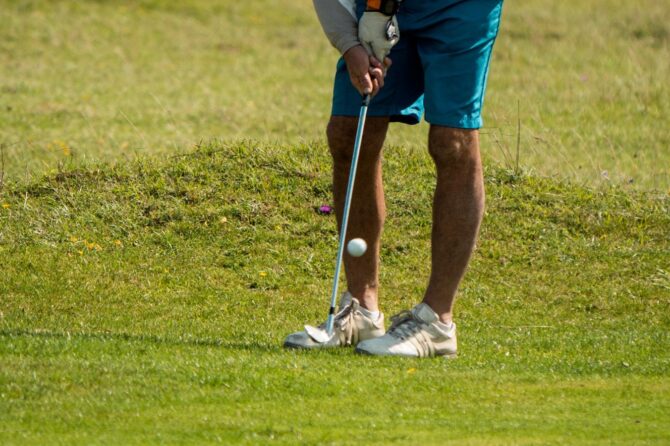
Each drill below can be done on the range or in a practice area. Start slow-30-50% of normal speed-then gradually increase tempo while preserving the feel and positions you’ve trained.
Drill 1: 3-Phase Takeaway and Transition
- Stage 1: Takeaway only. Slow the first 30% of the backswing, pause for 2 seconds at half-backswing, feel the club shaft and chest rotation.
- Stage 2: Transition feel. Slowly move from half-backswing into the top, focusing on sequencing hips before arms.
- Stage 3: Combine. Slowly swing through and finish while maintaining the same sequencing.
Drill 2: Half-Swing Impact check
- Use a 7-iron. Make a slow half-swing,pause at impact position (no ball),check clubface square,hands ahead of ball,weight slightly left (for right-handed golfers).
- Repeat 10-20 times, then hit full shots while trying to preserve that impact feeling.
Drill 3: Slow Putting Stroke with Metronome
- Set a metronome to 60-80 bpm. Make two-beat backstroke and two-beat forward stroke in slow motion. Focus on keeping the putter face square and the stroke pendulum-like.
- Gradually shorten pause between back and forward strokes to mimic game tempo while preserving feel.
Drill 4: Vision-feel Drill
- Slow swing while keeping eyes on a fixed reference: ball, mark on clubhead, or horizon. The visual anchor reduces anticipatory head movement and improves balance.
Progression model: From slow to full-speed swings
- Deconstruction & isolation: 50-70 slow,intentional reps per session,focusing on one element.
- Integration: Combine chunks into 20-40 slightly faster reps,keeping the learned positions.
- Speed bridging: 10-20 controlled swings at 75-90% speed, assessing consistency.
- Full-speed application: Hit normal shots on the range and track metrics (ball flight, dispersion, impact location).
- Transfer to course: Use the learned tempo for select shots on the course under pressure.
Sample weekly practice plan (simple)
| Day | Focus | Duration | Key Drill |
|---|---|---|---|
| Monday | Takeaway & Transition | 45 min | 3-Phase Takeaway |
| Wednesday | Impact & Contact | 60 min | Half-Swing Impact Check |
| Friday | Putting Tempo | 30 min | Metronome Putting |
| Saturday | On-course Application | 9 holes | Speed Bridging Shots |
Tip: record slow-motion video from face-on and down-the-line angles to compare positions and accelerate learning with visual feedback.
Metrics and how to measure progress
Track objective and subjective metrics:
- Objective: Impact location on clubface, dispersion (left-right, distance), clubhead speed, ball speed, launch angle (use launch monitor if available).
- Subjective: Perceived ease of movement, consistency of rhythm, confidence in swing feel.
Use short practice logs: date, drill, tempo (%), reps, notes on feeling and results. Small repeated wins in the log predict long-term improvement.
Common mistakes and how to avoid them
- Overthinking during competition: Slow practice trains awareness,not paralysis. Before a shot, use a 1-2 word cue (e.g., “smooth” or “impact”) instead of detailed mechanics.
- Too slow, not functional: Practice needs to be gradually scaled up to playing speed so neural patterns transfer. Include speed-bridging reps.
- Narrow practice variability: Practice only at one speed or one club hinders adaptability. Vary clubs, lies, and tempos to promote robust motor learning.
- Ignoring feedback: Slow reps are most effective when paired with immediate feedback-video, coach, or feel-based cues.
Case study: A mid-handicap golfer’s 8-week conversion
Background: A 12-handicap amateur struggled with inconsistent contact and a recurring slice. The player implemented an 8-week slow-motion practice program, 3 sessions per week, focused on swing deconstruction and impact drills.
- Weeks 1-2: Focus on takeaway and half-swing impact. Daily 40-50 slow reps. Video review twice a week.
- Weeks 3-5: Integration and speed bridging. Added more full shots while preserving slow-feel impact. Fewer errors, more centered contact.
- Weeks 6-8: On-course application and pressure shots. Continued metronome putting practice.
Results: Centered impact increased by 30% (measured on impact tape), dispersion reduced by 18 yards, and handicap dropped to 9. The player reported greater confidence and a reliable pre-shot routine learned during slow practice.
First-hand tips from coaches and sport psychologists
- “Use slow practice to teach your body the ‘shape’ of the swing-then let it go.” – Golf coach
- “Pair slow reps with variable practice to avoid overfitting a movement to a single situation.” – Sport psychologist
- “Short, focused slow sessions beat long unfocused hours on the range.” – High-performance trainer
Quick-reference drill table (targets & cues)
| drill | Primary Target | Simple Cue |
|---|---|---|
| 3-Phase Takeaway | Sequencing | “Hips then arms” |
| Half-Swing Impact check | Impact position | “Hands ahead, face square” |
| Metronome Putting | Tempo | “Tick-back tick-forward” |
| Vision-Feel | Balance & head stability | “Hold the horizon” |
Putting slow-motion practice into your mental game
Slow practice isn’t just physical. It builds a mental routine-a predictable anchor you can use under pressure. short mental drills, such as a 10-second breathing pattern before each slow rep, help consolidate the calm, focused mindset you need on the course.
Final actionable checklist (use before your next practice)
- Choose one swing component to deconstruct (takeaway, transition, impact).
- Record baseline slow-motion video from two angles.
- Do 50 deliberate slow reps focusing on a single cue.
- Integrate the chunk into gradually faster swings (speed bridging).
- Track objective results (impact tape or launch monitor) and subjective feel.
- Transfer to on-course practice with two pressure shots incorporating the learned tempo.
Embrace slow-motion practice as a smart investment: better timing, cleaner contacts, and a stronger mental routine. Slow it down, swing smarter, and watch the gains translate into lower scores and more enjoyable golf.
You might be interested in …

Golf Game Unlocked: Proven Tactics to Elevate Your Swing, Putting & Driving on Every Course
Packed with biomechanical insights and evidence-backed protocols, this article offers tailored drills, clear performance metrics, and smart course tactics to sharpen your swing, refine your putting, and boost driving consistency on any layout

**Kaley Cuoco and Zosia Mamet’s Heartfelt Best Friend Challenge: A Journey of Laughter and Bonding!**
In a delightful showcase of friendship, Kaley Cuoco and Zosia Mamet dive into the Best Friend Challenge, highlighting their inseparable connection. Get ready for a journey filled with genuine camaraderie and plenty of laughs! #KaleyCuoco #ZosiaMamet #BestFriendChallenge #TrueStoryLaid
Golf Handicap Systems: A Comprehensive Analysis of Their Development and Application
Golf handicap systems have undergone significant evolution, aiming to enhance equity and fairness in the sport. This article provides a comprehensive analysis of the historical development and practical application of these systems, examining their various methodologies and implementations. It explores the underlying principles of handicap calculation, including course rating, slope rating, playing handicaps, and the revision process. Furthermore, the article evaluates the impact of handicap systems on competitive play, highlighting their role in leveling the playing field and promoting inclusivity. The analysis also considers the challenges and limitations associated with golf handicaps, emphasizing the importance of understanding and appropriately applying them to ensure fair and enjoyable golfing experiences for players of all skill levels.