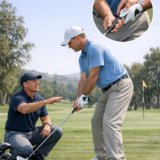
Putting represents a disproportionately large share of scoring in stroke‑play golf – yet teaching approaches and training regimens vary widely and often lack consistent empirical backing. This piece, “putting Methodology: Evidence‑Based Protocols,” fills that void by merging current results from biomechanics, motor‑control science, and applied coaching to produce repeatable, testable procedures for evaluating and raising putting performance. We center grip, stance, and alignment as the principal kinematic and postural drivers of stroke inconsistency, and tie those setup and motion features to measurable outcomes such as lateral clubface deviation, tempo stability, launch characteristics, distance control, and make‑rates.
Our translational strategy blends objective measurement tools (high‑speed video, IMUs, and performance outcomes) with motor‑learning interventions (e.g., practice variability, focus of attention) and biomechanical tuning. The document defines operational metrics for stroke variability, outlines a multi‑stage assessment to reveal each player’s characteristic error profile, and prescribes data‑driven corrective plans matched to common error clusters. Practical concerns – reproducibility and ecological validity – guide recommendations for minimal instrumentation, standardized test conditions, and progress monitoring so coaches, clinicians, and researchers can adopt the protocols reliably.
by specifying testable hypotheses, clear outcomes, and stepwise procedures, this methodology moves putting instruction away from anecdote and toward empirical selection of interventions that reduce variability and improve scoring. The sections that follow present the theoretical rationale, describe measurement and coaching protocols, summarize validation examples, and offer implementation advice and research priorities.
Foundations for Consistent Putting: A Synthesis of Grip, stance and Alignment research
Modern motor‑control frameworks recast putting variability as an informative signal rather than pure error. Using ideas from dynamical systems and the optimal variability viewpoint,repeatable putting is achieved by constraining variability in task‑critical degrees of freedom (clubface orientation,stroke path,timing) while permitting harmless variability elsewhere. Measuring this requires multivariate kinematic descriptors (e.g., SD of face angle, path deviations, stroke duration) and statistical techniques that separate systematic bias from random noise. From this viewpoint, coaching shifts: suppress error in critical control dimensions while allowing adaptive variation that helps the golfer negotiate subtle green features.
Grip research demonstrates that modest changes in hand placement and force alter putter‑face kinematics and the mechanical coupling between the hands and clubhead. Two complementary mechanisms are emphasized: (1) mechanical effects - how grip force changes rotational inertia and damping – and (2) sensorimotor effects – how tactile inputs stabilize face orientation at impact. Accordingly, effective practice protocols track grip pressure and consistent hand placement, converting those observations into practical thresholds that preserve sensory input without provoking excessive co‑contraction that impairs smooth motion.
Studies on stance show base‑of‑support geometry stabilizes the torso and constrains the stroke plane.Increasing stance width and slight knee flex reduce trunk sway but, if overdone, can rigidify the stroke. Optimal stance balances support with freedom for shoulder rotation; objective proxies include center‑of‑pressure excursion and trunk angular variance. Coaches should emphasize repeatable foot‑placement cues and check postural sway in the pre‑putt routine so stance stabilizes – rather than dominates – the fine motor demands of putting.
Alignment research links perceptual aiming (visual alignment) with biomechanical alignment (shoulders, eyes, putter face). Persistent misalignment creates directional bias and interacts with stroke path variability to elevate miss rates. Models suggest consistent alignment arises from stable egocentric reference frames and reducing degrees of freedom that produce rotational error at impact. Interventions that couple visual checks with immediate kinematic feedback (e.g., repeated alignment verification) reduce systematic bias and tighten the dispersion of launch directions, underscoring the value of integrated visual-motor training.
Turning theory into practice produces a concise set of measurable targets and protocol elements for evidence‑based coaching: measurement (high‑speed video,inertial sensors),thresholds (acceptable variance bands), and drills (stabilization, alignment checks, tempo training). Practical monitoring metrics are summarized below to guide implementation.
| Metric | Target Range | Rationale |
|---|---|---|
| Face‑angle SD (deg) | < 1.5° | Key determinant of consistent launch direction |
| Path deviation SD (deg) | < 2.0° | Reduces lateral curvature variance |
| Tempo ratio (backswing:downswing) | 1.8-2.2 | Encourages repeatable timing |
| Stance width | 0.9-1.2× shoulder width | Balances support and rotational freedom |
- Diagnostic: measure baseline variability across the listed metrics.
- Intervention: apply focused drills for metrics outside target ranges.
- Validation: retest under simulated pressure and across green speeds to confirm robustness.
Measuring Stroke Variability: Tools, Statistics and Practical Thresholds
State‑of‑the‑art assessment combines optical and inertial kinematics with kinetic and impact sensors to create multi‑dimensional datasets suitable for variability analysis. Typical systems include high‑speed video (≥240 fps) for face‑angle and impact inference, 3D motion capture (≥200 hz) for body and club kinematics, IMUs for field‑amiable dynamics, and force/pressure platforms for hand and ground‑reaction data. Accurate temporal synchronization, consistent calibration, and transparent filtering choices are essential to avoid introducing artificial variability; sampling rates and sensor drift should be reported in any protocol.
Quantifying inconsistency uses descriptive and inferential statistics on repeat‑trial designs. Primary outcomes include kinematic descriptors (clubface angle at contact, putter path, backswing length), temporal metrics (backswing:downswing ratio, total stroke time), kinetic measures (grip pressure mean/variability, force impulses), and impact indices (radial error of impact location, initial launch direction). Standard summaries are SD,coefficient of variation (CV),RMSE,and 95% limits of agreement. For stable estimates, collect a minimum of ~30 valid putts per condition and apply consistent within‑subject exclusion rules (e.g., mishits).
Practical tolerance bands offer coaching targets while respecting individual biomechanics. Reasonable initial benchmarks are: **face‑angle SD ≤ 0.5°**, **putter‑path SD 1.5-2.0°**, **backswing length CV ≤ 5%**, **tempo CV 3-5%**, **impact‑location SD 8-12 mm**, and **grip‑pressure CV ≤ 10%**. These conservative boundaries derive from skilled‑player cohorts and should guide, not dictate, intervention decisions; coaches should also consider reliability measures (ICC > 0.75) and minimal detectable change (MDC) specific to their instruments.
| Metric | Unit | Target Variability |
|---|---|---|
| Clubface angle at impact | degrees (SD) | ≤ 0.5° |
| Putter path | degrees (SD) | 1.5-2.0° |
| Backswing length | % of mean (CV) | ≤ 5% |
| Tempo (BS:DS ratio) | CV (%) | 3-5% |
| Impact location | mm (SD) | 8-12 mm |
| Grip pressure | CV (%) | ≤ 10% |
Turning measurement into coaching practice requires clear procedures and statistical care. For applied testing use these steps:
- Standardize the surroundings: consistent green speed, lighting, and ball type.
- Use repeated measures: collect ~30+ trials and randomize distances/angles.
- Report reliability: compute ICC and MDC for each metric before intervention.
- Phase goals: aim to reduce CV/SD in planned increments (e.g., 10-20%) and verify changes with control charts or repeated‑measures analyses.
these measurement‑forward practices convert raw variability into clinically useful thresholds that can be targeted with feedback‑driven training and objectively tracked over time.
Grip Protocols: Biomechanical Landmarks, Hand Placements and Pressure guidelines
Contemporary putting guidance integrates kinematic and sensory data to define consistent hand mechanics. The biomechanical aim is to eliminate unnecessary wrist and forearm degrees of freedom while retaining the fine adjustments needed for speed control. Key alignment cues include the grip butt relative to the proximal phalanges, a neutral wrist posture at address, and consistent forearm rotation throughout the stroke. normalizing these elements across trials reduces lateral deviations and face‑angle variability.
recommended hand positions strike a compromise between control and pendular freedom. for right‑handed golfers, position the lead (left) hand on the upper third of the grip with slightly dorsal contact to reduce wrist flexion; the trail (right) hand sits lower with light anterior finger contact. Choose between **finger‑dominant** (increased distal feedback) and **palm‑dominant** (dampened wrist motion) styles according to the player’s proprioceptive preference, but standardize the selected approach during training. Keep hand spacing and grip cap placement constant to preserve lever‑arm geometry.
Pressure guidance is most informative when reported subjectively and objectively. Use a dual method: (1) a perceptual scale where sustained grip intensity sits around **2-4/10** (light control), and (2) an objective percentage of maximum voluntary grip force (MVG) with a recommended total grip force of **~10-20% MVG** during the stroke. An asymmetric distribution – lead hand contributing **55-65%** and trail hand **35-45%** – tends to lower wrist torque while maintaining directional control. Strive for grip‑pressure CV < **10%** across repeated short putts to indicate stable motor output.
Training emphasizes low‑variance repetition plus immediate feedback and gradual removal of constraints. Example drills include:
- Mirror Alignment Practice: 50 repetitions focusing on wrist neutrality and grip cap location.
- Pressure Calibration Sequence: 30‑second holds to anchor perceived 2-4/10 pressure followed by short strokes with sensor feedback.
- Pendulum Stability Drill: keep shoulders still and perform slow backstrokes to minimize wrist hinges.
- Tempo Integration with Metronome: synchronize stroke timing to reduce pressure spikes from rushed tempo.
Record pressure traces and subjective ratings for each drill to link objective measures with player perception.
| Week | Focus | Target Metric |
|---|---|---|
| 1 | Baseline calibration | Establish 2-4/10 perceptual range; measure MVG |
| 2 | Pressure consistency | Lead:Trail ≈ 60:40; CV < 15% |
| 4 | Stroke integration | CV < 10%; tempo stable |
| 8 | Transfer test | On‑course variability ≈ practice levels |
Consistent objective measurement with pressure sensors plus short perceptual logs supports quantitative progress. Progress slowly – only advance after meeting variability targets in two consecutive sessions to protect the integrity of the learned grip pattern.
Stance & Posture Standards: Evidence‑Backed Foot Placement and Spinal Alignment
Research underscores stabilizing the base and preserving a repeatable spine-pelvis relationship to curb kinematic variability. Motion‑capture studies show that minor adjustments in foot placement or spinal tilt measurably affect putter path and impact location. Thus, the main goal of stance and pelvic alignment is to create a reproducible geometric relationship between the putter arc and the player’s visual axis. Emphasize base consistency rather than extreme postures to maximize repeatability and reduce outcome variance.
Practical foot‑placement targets give coaches actionable limits. Place feet roughly at 0.8-1.2× shoulder width (heel‑to‑heel) to provide a stable platform without impeding rotation. Set toe angles of 5-15° open to align the pelvis with the target line and limit compensatory hip rotation. Distribute weight neutral to slightly forward – about 50:50 to 60:40 (front:rear) – to support a shoulder‑driven pendulum stroke and control the putter through impact. Mild knee flex (~10-20°) and midfoot balance enable reactive stability without excessive co‑contraction.
Spine alignment should prioritize a neutral lumbar curve and a consistent hip hinge. Evidence supports a repeatable anterior hip tilt of approximately 20-30° while maintaining lumbar lordosis to prevent rounded shoulders that alter arm motion. The thorax should allow the shoulders to hang so the arms act as a pendulum. Lab studies suggest the eyes sit directly over or up to 1″ inside the ball-target line; this reduces neck compensation and helps keep head motion minimal during the stroke.
Convert these standards into a short pre‑putt checklist to lock in the alignment template:
- Set stance width to ~0.8-1.2× shoulder width and confirm midfoot balance.
- Adjust toe angle to 5-15° open and square the pelvis to the line.
- Set weight to 50:50-60:40 forward and verify soft knee flex (~10-20°).
- Hinge at hips 20-30° with neutral lumbar curvature and relaxed shoulders.
- Check eye line over or ≤1″ inside the ball; perform one gentle pendulum to confirm head stillness.
Following this routine turns abstract biomechanical targets into reproducible motor programs that reduce execution variability.
| Variable | Recommended Range | Purpose |
|---|---|---|
| Stance width | 0.8-1.2 × shoulder width | Stable platform, repeatable arc |
| Toe angle | 5-15° open | Pelvis alignment, reduced hip torque |
| weight distribution | 50:50 to 60:40 (front) | Pendulum control through impact |
| Hip hinge | 20-30° | Neutral spine, consistent shoulder plane |
| Eye position | Over to 1″ inside ball | Visual alignment, minimal head motion |
Alignment Verification: Practical Visual Checks and Instrumented Procedures
verification combines swift visual heuristics with objective instrumented measures. Visual checks allow rapid coach‑led corrections and help build the player’s perceptual model of the target line; instruments detect micro‑variability in face angle, path and contact that the eye cannot resolve. Small deviations – on the order of 1-2° in face angle or path – materially change break and miss direction on short‑to‑mid putts, so verification protocols must be capable of resolving differences at that scale.
Simple, reproducible visual procedures are effective with minimal gear. Common clinic steps include:
- Fix a consistent pre‑putt routine: stance, ball position and eye line relative to the target.
- Use alignment rods or a mirror: confirm the putter face looks square when the shaft bisects the line.
- Plumb‑line or string test: hang a line from the sternum to the ball to validate torso‑to‑target orientation.
- High‑contrast heel/toe markers: check visual symmetry at address and along practice strokes.
Instrumented verification supplies repeatable numeric feedback.Typical tools and practical roles include:
| Tool | Primary measure | Typical Accuracy | Recommended Use |
|---|---|---|---|
| Inertial sensors (IMU) | Face angle & path | ±0.5° | Real‑time biofeedback |
| High‑speed video | Impact point & loft | ±1 mm / ±0.2° | Technique diagnosis |
| Pressure mat | Weight distribution & shifts | ±1% body weight | Posture and balance analysis |
| Laser alignment/rod | Target line projection | ±0.2° | Setup verification |
Robust verification needs calibration,repeated trials,and defined acceptance limits. Best practice: run a calibration routine at session start; record ≥10 measured strokes per condition; report means and SD for face angle, path and impact point.Use outcome‑sensitive decision thresholds – for example face angle within ±1°, path within ±2°, and contact within 10 mm of the sweet spot – and if outside those bands, apply focused drills and retest until criteria are met in two consecutive blocks.
From a coaching viewpoint, adopt a tiered strategy: use visual checks for fast on‑course fixes and instrumented assessment for baseline fitting, remediation and longitudinal tracking. Maintain a concise metric set – face angle, putter path, impact location and pressure symmetry – and log values for trend analysis. When tools are limited,a calibrated laser rod plus a validated IMU provide actionable accuracy without undue complexity,balancing ecological validity with measurement fidelity.
Practice protocols for Reliability: Structured Repetition, Feedback Types and Progression rules
Training blocks should emphasize purposeful, deliberate repetition rather than high volumes of unfocused swings. Organize sessions into short distributed sets (e.g., 6-8 sets of 6-10 putts) with rest between sets to preserve motor precision; total session volume of roughly 40-80 quality strokes is defensible for intermediate and advanced players. Require consistent setup, rhythm and pre‑shot routine every rep to reduce within‑session variability; introduce constrained variability (surface, distance, start line) only after baseline consistency is achieved.Let data – mean radial error, directional SD, make‑rate - govern load decisions, not arbitrary rep counts.
Feedback should be multimodal and matched to learning phases.use intrinsic feedback for consolidation, augmented feedback for targeted corrections, and delayed feedback for retention and transfer. Useful modalities include:
- Visual: video review, putt‑trace overlays and mirror drills for alignment data.
- Haptic: weighted‑putter exercises or tactile sleeves to reinforce path feel.
- Auditory: metronome or clicker to stabilize tempo.
- Knowledge of results (KR): make percentage and radial‑error metrics, given intermittently (e.g., 50% KR schedule).
- Knowledge of performance (KP): short kinematic snapshots or coach cues focusing on a single variable per block.
| Stage | Accuracy Threshold | Directional variability | Session Volume |
|---|---|---|---|
| Foundation | < 30 cm avg radial error | < 6° SD | 40-60 reps |
| Consolidation | < 20 cm avg radial error | < 4° SD | 50-80 reps |
| Competition‑ready | < 15 cm avg radial error | < 3° SD | 40-60 reps + situational work |
Progression should be criterion‑based and reproducible: require meeting stage thresholds across three non‑consecutive sessions and demonstrate short‑term retention (48-72 hours) before moving on. Add contextual interference and pressure tasks only after consolidation. If performance worsens beyond the MDC for a metric (e.g., >10-15% rise in radial error or >1° increase in directional SD), step back to the prior stage and reapply targeted KP drills.Maintain a testing cadence (weekly micro‑tests; monthly macro‑tests) to distinguish transient fluctuation from genuine learning.
Use simple statistical controls to track adaptation: moving averages, run charts and a control‑limit rule (e.g., three consecutive points outside baseline SD) to flag meaningful changes. Combine observation with low‑cost tech - putting mats with ball‑trace, smartphone high‑speed video, IMUs – to triangulate outcomes. Log all protocols and progression decisions and, where possible, preregister training criteria to limit bias and improve reproducibility. This approach builds a defendable route from repetition to transferable performance under competition conditions.
On‑Course Transfer & Decision Rules: Turning Practice Metrics into Tactical Choices
Applying practice metrics to on‑course decisions requires a decision framework that privileges empirical thresholds over gut feeling.Treat practice outputs – shot dispersion, proximity‑to‑hole distributions and make‑rate variability – as conditional probabilities that feed tactical models.By treating practice data as probabilistic inputs, players and coaches can make repeatable, evidence‑based choices under pressure rather than relying on intuition alone.
Practice metrics that translate reliably to competitive contexts include:
- Dispersion radius – lateral and distance spread around target;
- Proximity frequency – share of shots within a chosen distance of the hole;
- Strokes‑gained proxies – relative performance versus baseline for shot types;
- Execution consistency – tempo and contact stability across sessions.
Embed explicit decision thresholds. such as, if practice shows a ≥62% probability of hitting the green‑in‑regulation from 150 yards with dispersion that avoids hazards, the model favors an aggressive play; if below, the expected utility may favor caution. Expand this binary frame with cost‑benefit logic that weighs upside probability against downside risk (penalty strokes) using empirically derived variance estimates.
| Metric | Practice Measure | Competitive Decision Implication |
|---|---|---|
| Dispersion radius | Group SD of impact points (yards) | Choose club minimizing hazard exposure |
| Proximity frequency | % within 15 ft from specific yardage | Play aggressively when percentage exceeds target |
| Strokes‑Gained proxy | Average relative to baseline per shot type | Prioritize practice/strategy where deficit is largest |
Use a closed‑loop protocol: update thresholds after rounds,formalize pre‑shot checklists tied to metric bands,and employ decision trees that translate current on‑course observations into practiced probabilities. Coaches should codify exceptions – when to deviate – in a concise match‑play playbook and schedule recalibration sessions so the evidence base remains current and actionable.
monitoring & Adjustment: data‑Driven Assessment and Personalized Intervention
Running a continuous monitoring system requires high‑resolution capture, standardized metadata and closed‑loop decision rules. Sensor fusion (video, IMUs, pressure mats) combined with structured subjective scoring yields multivariate time series that describe stroke variability and gradual drift. to support reproducibility and later reanalysis, outputs should adhere to a formal Data and digital Outputs Management Plan (DMP), with metadata aligned to FAIR principles so datasets are findable and reusable.
Choose core assessment variables that balance sensitivity, reliability and field practicality.Typical telemetry and observational endpoints include:
- Alignment: address‑line and stance vector (degrees)
- Stroke geometry: arc radius and path variability (mm)
- Temporal stability: backswing/downswing timing (ms)
- Impact quality: roll‑initiation and skid duration (ms)
- Outcome metrics: dispersion relative to hole center (cm)
Maintain data governance and analytic reproducibility through careful documentation and secure storage. Use a DMP template to define storage tiers, access rules and version control; export raw and processed data in interoperable formats and archive derived datasets in a searchable repository. The mapping below summarizes a pragmatic sensor→metric plan used in field deployments.
| Metric | Sensor | Sampling |
|---|---|---|
| Alignment | High‑res video | 60-240 fps |
| Stroke geometry | IMU (wrist + putter) | 200-1000 Hz |
| Impact quality | Pressure mat + accelerometer | 500 Hz |
Personalized interventions emerge from stratified analyses and a decision tree linking deficits to evidence‑backed drills. Typical iterative prescriptions include:
- Motor pattern retraining: constrained repetitions with augmented feedback
- Perceptual recalibration: structured tasks to align visual‑aim mapping
- Temporal entrainment: metronome or auditory pacing to stabilize timing
- Environmental transfer: graded variability to build robustness
Judge effectiveness using predefined statistical rules and a scheduled reassessment cadence. Apply control‑chart logic to detect changes that exceed measurement error and run an adaptive cycle in which curriculum elements and coach practices evolve from outcome trends. Embedding data‑visualization standards and team skill development ensures practitioners can interpret outputs and iterate interventions with fidelity and transparency.
Q&A
Q1. What is the scope and aim of “Putting methodology: Evidence‑Based Protocols”?
A1. This synthesis integrates biomechanics, motor‑control theory and performance measurement to quantify stroke variability and deliver reproducible protocols that enhance putting reliability and scoring. Its aim is to convert empirical findings into usable,testable training and assessment procedures for coaches,biomechanists and players targeting measurable betterment and competitive transfer.
Q2. What kinds of evidence support the recommended protocols?
A2. The recommendations draw on peer‑reviewed biomechanics and motor‑learning studies, laboratory and on‑green measurement work (high‑speed video, IMUs, launch monitors), applied coaching literature and performance analytics (strokes‑gained proxies). Where direct trials are scarce, guidance is derived from converging evidence in related fine‑motor domains and established instructional best practices (see refs. [1-4] for practical complements).
Q3. Which stroke and setup variables should be prioritized for measurement?
A3. Core variables include: clubface angle at impact,clubhead path and impact point,impact velocity and acceleration (tempo),launch direction and initial ball speed/roll,body/putter alignment,grip configuration,stance width and weight distribution. Measuring within‑player trial‑to‑trial variability for these variables is essential for assessing consistency.Q4. How is “variability” defined in this approach?
A4. Variability is quantified using within‑subject summary statistics (SD, CV) of kinematic variables (face angle, speed), circular or directional metrics for angular data, and outcome measures (make percentage, distance‑to‑hole). Time‑series tools, control charts and autocorrelation analyses help detect drift and nonstationarity.Q5. What are the core assessment steps?
A5.Core assessment: (1) baseline blocks at multiple distances (e.g., 1.5-15 m) under standardized green conditions; (2) kinematic capture (video/IMU) for ~20-30 trials per distance; (3) ball‑roll measures (launch monitor or rollout measures) to evaluate speed control; (4) photo documentation of alignment and stance; (5) optional psychometrics for confidence and pressure.Repeat assessments quantify learning and retention.
Q6. How should coaches distinguish noise from meaningful change?
A6. Use repeatability statistics and the smallest detectable difference (SDD) or minimal clinically important difference (MCID) computed from test‑retest data. Changes smaller than the SDD are likely measurement noise. Combine statistical thresholds with effect sizes and confidence intervals to judge practical significance.Q7. What training principles underpin the methodology?
A7. The program integrates motor‑learning tenets: deliberate practice with focused feedback, progressive task complexity, variability of practice for transfer, constrained practice to shape movement solutions, and distributed practice with retention tests.Decisions are measurement‑driven (track metrics and adjust), not purely prescriptive technique changes.
Q8. How does the model separate “consistency” from “functional variability”?
A8.The framework differentiates harmful random noise from beneficial, context‑sensitive variability. Training reduces detrimental variability in critical control variables (e.g., impact speed variability) while preserving adaptive variability that supports performance across changing conditions.
Q9. What specific drills or interventions are recommended?
A9. Representative drills (to individualize):
– Tempo control: metronome‑paced back‑and‑through with immediate impact‑speed feedback.
– Face‑angle reduction: narrow‑target drills using high‑contrast alignment aids and video feedback to reduce face‑angle SD.
– Distance ladder: serial putts across increasing distances with mixed sequencing to hone speed calibration.
– Contextual interference: vary distances and speeds within sessions to improve transfer.
– Pressure simulation: graded pressure tasks (incentives, spectators) to build robustness.
These are implemented with objective measurement and progression rules for reproducibility.
Q10.Typical cycle length and tracked outcomes?
A10. Typical program: 4-8 weeks, 2-4 focused sessions per week plus maintenance. Track putts made %, strokes‑gained: putting (if available), mean distance‑to‑hole on misses, within‑session SD of impact speed and face angle, and retention at 1‑ and 4‑week follow‑ups.
Q11. Blocked vs random practice?
A11. Both are useful.Blocked practice rapidly reduces error and is effective for early correction; random/interleaved practice fosters long‑term retention and transfer. The protocol recommends starting with blocked work for error reduction then progressively randomizing practice to consolidate learning.
Q12. Recommended measurement technologies?
A12. Useful tools: high‑speed video (face angle/path), IMUs on putter and torso (tempo/kinematics), launch monitors or ball‑tracking (initial speed/launch), pressure mats (balance), and mobile apps for rollout estimation. Choice depends on budget and needed precision.
Q13. How are alignment and setup trained and quantified?
A13. Use objective visual aids (rods, lasers, mirrors) and photo/video documentation. Measure setup reproducibility by photographing setup relative to reference lines and computing angular deviations, then examine how changes relate to outcomes.
Q14. How are individual differences handled?
A14. Start with a thorough baseline to characterize each player’s idiosyncratic patterns. Individualize interventions to target variables most strongly linked to outcome variability for that player, and progress based on measured response rather than blanket technical prescriptions.
Q15. How is transfer to on‑course performance assessed?
A15. Evaluate transfer with ecological tests: simulated pressure drills, natural greens with varied slopes and speeds, and analysis of competition/practice rounds using strokes‑gained: putting.Run retention tests and cross‑context trials to assess robustness.
Q16. Statistical approaches for intervention analysis?
A16. Prefer within‑subject repeated measures designs, paired t‑tests or mixed‑effects models for longitudinal data, report effect sizes and CIs, and consider Bayesian methods for small samples. Include SDD and MCID, and use control charts or time‑series tools to track trends.
Q17.Limitations and caveats?
A17. Constraints include variability in green conditions, small sample sizes in some studies, equipment access limits, and individual differences in motor learning. Lab measures may not capture the full perceptual/cognitive demands of tournament putting. Coaches should integrate evidence with judgment and player preferences.
Q18. How to implement the protocols day‑to‑day?
A18. Implementation steps:
1. Baseline assessment (kinematics + outcomes).
2.Identify primary sources of outcome variability.
3. Select targeted drills and measurement tools.
4. Prescribe a time‑boxed intervention (e.g., 4 weeks) with session plans and progression criteria.
5. Reassess at set intervals and adapt the plan based on measured response.
6. Include retention and transfer tests before declaring consolidation.Q19. Future research priorities?
A19. Needed: large rcts comparing protocolized interventions, longitudinal field studies of competitive transfer, studies of pressure effects on biomechanical variability, and development of validated low‑cost measurement tools. integrating neurophysiological measures (e.g., EEG) and more ecological, on‑green studies are important next steps.
Q20. Where to find complementary applied resources?
A20. Practical drill collections and instructional material are available from reputable coaching outlets (e.g., USGolfTV, Swingyard, GolfPass, GolfInsider).These applied resources pair well with the evidence‑based measurement and progression framework outlined here.
References and resources
– Primary synthesis: Putting Methodology: Evidence‑Based Guide to Consistency (golflessonschannel.com).
– Applied instruction: USGolfTV (Five‑Minute Guide), Swingyard (Putting tips), golfpass (Putting Tips), GolfInsider (Putting Technique).
Illustrative example – case snapshot (for context): a competent amateur whose baseline face‑angle SD of ~1.2° and tempo CV of 6% implemented an 8‑week evidence‑driven cycle (blocked correction → progressive randomization → transfer). After standardization of grip pressure and alignment checks,face‑angle SD fell to ~0.6° and tempo CV to ~3.5%, with a concurrent improvement in short‑range make‑rate and closer mean distance‑to‑hole on misses. (Illustrative example; individual results will vary.)
Note on prevalence: putting typically accounts for roughly 35-45% of strokes in a standard round (tour averages tend to cluster around ~1.7-1.8 putts per hole), highlighting the practical payoff of targeted putting interventions.
If desired, this Q&A can be distilled into a practitioner checklist, a ready‑to‑use 4‑week session plan with measurement templates, or a slide deck for coach education – select which output you prefer.
Key Takeaways
The Putting Methodology described here fuses biomechanical, perceptual and motor‑learning evidence to treat putting as a measurable, trainable skill with controllable sources of variability. By quantifying grip, stance, alignment and stroke kinematics – and linking those to ball‑roll outcomes – practitioners can replace intuition with reproducible protocols that enhance consistency and on‑course performance. Emphasizing objective measurement, targeted intervention and iterative reassessment creates a principled path from diagnosis to durable skill change.
For coaches: adopt standardized assessment routines, prioritize interventions that eliminate harmful variability while preserving adaptive flexibility, and use both immediate and delayed feedback strategically to support retention and transfer. Simple recording tools (video, putter‑face sensors, rollout measures) combined with clear outcome metrics (launch angle, ball speed, dispersion) enable evidence‑based decisions and clearer communication with golfers.
For players: consistent request of validated protocols – attention to setup,alignment checks,stroke repeatability and context‑appropriate practice – reduces performance noise and increases the chances of making putts under pressure.Individualized variability thresholds and tailored progressions respect differences while maintaining scientific rigor.
Limitations remain: many lab findings still require translation to realistic on‑course environments; long‑term randomized comparisons of distinct protocols are limited; and the ideal balance between stability and adaptability across player types needs further study.Future research should emphasize longitudinal field trials and production of practical monitoring tools that are sensitive and accessible for coaches and players.an evidence‑based putting methodology offers a structured, repeatable approach to improving reliability and outcomes. When measurement, theory and practice are aligned, coaches and players gain actionable guidance for intervention, evaluation and continuous improvement – moving putting from art toward a reproducible, science‑informed craft.

Master the Green: Evidence-Based Putting Protocols for Consistent Strokes
Pick a tone: scientific / competitive / practical / inspirational – this version balances scientific evidence with hands-on coaching. Below you’ll find research-informed putting mechanics and cognitive routines that reduce stroke variability, improve distance control, and deliver repeatable putting performance on the course.
Why an evidence-based putting system matters
putting is the shortest yet most decisive part of the golf scorecard: small changes in stroke variability and decision-making lead to meaningful differences in scoring. Applying research from motor learning, sports psychology, and biomechanics gives you a structured way to practice and perform – not just hope you get better. Key principles we use below:
- Reduce mechanical variability (grip, setup, stroke plane) to increase repeatability.
- Optimize perceptual-cognitive processes (green reading, tempo, attention) to make better judgments under pressure.
- Use deliberate, evidence-driven practice drills to build reliable motor patterns and adaptive distance control.
Grip, posture, and setup: create a low-variability base
stable setup is the foundation of consistent putting. Research and coaching consensus highlight thes practical, evidence-based elements:
Grip: comfort + connection
- Prefer a neutral wrist posture: avoid extreme cupping or bending. Neutral wrists reduce unwanted wrist motion and variability in face angle at impact.
- Choose the grip that keeps the shoulders and forearms working together (reverse overlap,claw,or conventional) – the best grip is the one that reduces wrist flick and feels stable.
- Grip pressure: light-to-moderate. Excessive grip force increases tension and stroke inconsistency; too light invites jerks. Aim for ~3-4 on a 1-10 tension scale (subjective).
stance, eye position, and putter alignment
- Stance width: shoulder-to-shoulder or slightly narrower creates a stable platform.
- Eye position over or slightly inside the ball line improves aim consistency and reading the line.
- Ensure the putter face is square at address. Use the gate drill (below) for verification.
Stroke mechanics and tempo: reduce variability, preserve feel
Research in motor control suggests that minimizing degrees of freedom and focusing on larger segments (shoulder-driven stroke) produces more repeatable outcomes for putting.
Shoulder-driven arc
- Use the shoulders to move the putter in a pendulum-like arc; keep wrists quiet. This reduces small wrist-driven deviations that cause missed reads and inconsistent roll.
- Maintain a slightly arcing stroke with minimal wrist flexion through impact.
Tempo and backswing-to-follow-through ratio
- Adopt a consistent tempo. Studies and elite player data show a stable backswing-to-follow-through ratio (commonly ~1:1) improves repeatability.
- Use a metronome or a three-count rhythm during practice to ingrain tempo. When nervous,a practiced tempo is more resilient than conscious corrections.
Green reading and speed control: the perceptual side
Reading greens and controlling speed are cognitive-perceptual skills. Combine objective checks with subjective feel.
Line vs.speed: which matters more?
Many short misses are due to speed errors rather than line. Faster-than-intended putts break less; too-slow putts break more. Prioritize distance control drills - if speed is consistent, you can more reliably shape line choices.
Practical green-reading protocol
- Assess the overall slope (left-right or uphill-downhill) from multiple angles: behind the ball, above the hole, and the player’s stance viewpoint.
- Estimate pace – feel the break on a short test putt or use a practice putt to gauge roll on similar turf.
- pick a target (spot on the carpet/grass or a blade) and commit. Research on decision-making shows commitment reduces execution variability.
Attentional control and pre-shot routine: focus under pressure
Sports psychology research (including work on attentional focus and the “quiet eye”) proves that consistent pre-shot routines and external-focus cues improve performance and reduce variability.
Build a compact pre-shot routine
- Routine elements: read the putt → pick a target → practice stroke (1-2 rehearsal strokes) → settle eyes → execute.
- Keep it under 10 seconds for routine repeatability. Consistency of routine is more importent than length.
- Use an external focus cue (e.g., “roll through the target” or ”finish square”) rather than internal mechanics to promote automaticity.
Quiet eye and focus
Practice the “quiet eye” technique: maintain steady gaze on the target for 1-3 seconds immediately before initiating the stroke. This prolongs pre-movement visual fixation, stabilizes attention, and has been linked to better putting accuracy.
Evidence-based practice drills (how to practice, not just what)
Replace mindless reps with deliberate practice using variability and feedback. Below are drills tied to specific aims.
| Drill | Purpose | How to do it (simple) |
|---|---|---|
| gate Drill | Aim & face control | Place two tees slightly wider than the putter head, stroke through without touching tees. |
| 3-Point Circle | consistency & pressure putts | Make 3′ putts from 6 positions around the hole; make all to finish. |
| Ladder Drill | Distance control | Putts to targets at 3′, 6′, 9′, 12′ – work up and back; focus on pace not line. |
| Quiet Eye routine | Attentional control | Hold gaze on target 2 sec before stroke; limit verbal/technical cues. |
How to structure practice (evidence-based)
- Warm-up: 5-10 minutes of short-range putts (2-4 feet) to build confidence and tempo.
- Focused block: 20-30 minutes of deliberate drills (gate, ladder, clock), with clear outcomes and feedback.
- Variable practice: mix distances and breaks to improve adaptability (motor learning favors variability for transfer to real rounds).
- Pressure practice: simulate conditions (bet with a freind, require consecutive makes) to train the clutch routine.
Measurement and feedback: quantify what matters
Track outcomes to accelerate improvement.Use simple metrics that reflect real performance:
- Make percentage from 3′, 6′, and 9′ (short, mid, longer) - track changes over weeks.
- Strokes Gained: Putting approximate – compare to baseline to see course impact.
- Miss type log: record whether misses were short, long, left, or right to guide practice focus.
Benefits and practical tips
- Lower stroke variability leads to higher make rates and fewer three‑putts.
- Consistent pre-shot routine reduces in-round anxiety and speeds decision-making.
- Distance control practice reduces long misses and increases birdie opportunities.
Speedy on-course checklist (copy to your phone)
- Read slope from multiple angles
- Pick one visible target on the line
- Rehearse tempo with one smooth backswing
- Quiet eye for 1-2 seconds → commit → execute
Short case studies & real-world examples
Example 1 – Weekend golfer turned consistent: A 15-handicap golfer reduced three-putts substantially by shifting to a shoulder-driven stroke, adding a 3-pt circle drill for 15 minutes each practice, and using a two-second quiet eye before each putt.The objective measure: 3-putts per 18 reduced from 3-4 to 1-2 across 8 weeks.
Example 2 – Competitive player under pressure: A college player improved clutch putting by rehearsing a compact pre-shot routine and practicing pressure sets (make 8/10 in a row). This consistency under stress transferred to better performance in close matches.
Common mistakes and how to fix them
- Overthinking mechanics on the course – solution: use one-word external focus cues (e.g., ”roll,” “target”).
- Practicing only short putts – solution: add distance ladder and variable-speed practice for transfer.
- Ignoring feedback – solution: log misses and adjust practice drills to address specific miss patterns.
Research-backed putting checklist (printable)
- Grip pressure: light-to-moderate
- eyes over/inboard of ball
- Shoulder-driven pendulum stroke; quiet wrists
- Consistent tempo (use metronome if needed)
- Pre-shot routine: read → pick → rehearse → quiet eye → commit
- Practice: mix blocked and variable drills with pressure sets
Social media copy – choose your tone
Scientific (Twitter/X or LinkedIn)
Research-backed putting protocols for consistency: shoulder-driven stroke, quiet-eye fixation, and tempo rehearsal. Prioritize distance control and use variable practice to transfer to rounds. #GolfScience #Putting
Competitive (Instagram caption)
Dial in your putting and drop strokes where it counts. Proven routines, pressure drills, and a simple pre-shot checklist = fewer 3‑putts and more birdies.ready to compete? ⛳️🔥 #ShortGame #GolfTips
Practical (Facebook post)
Tired of leaving putts short? Try this: neutral grip, shoulder pendulum, 3-step pre-shot routine, and 15 minutes of ladder drill. Track your makes from 6′ and 9′ – results follow practice. #PuttingDrills #GolfPractice
Inspirational (Instagram story / Reel)
Small strokes,big changes. Build a putting process you trust – one routine, one confident read, one committed stroke.Repeat. #MasterTheGreen
Single best pick for this article
Recommended headline: “Master the Green: Evidence-Based Putting Protocols for Consistent Strokes” – it balances credibility, search intent (putting, evidence-based, consistency), and emotional appeal.
SEO notes & target keywords used
- Primary keywords: putting, golf putting, putting stroke, putting drills, green reading
- Secondary keywords: short game, putting consistency, pre-shot routine, distance control
- On-page strategy: H1/H2 hierarchy, keyword-rich headings, descriptive meta title and description, internal drill table for scannability, social copy to encourage shares and backlinks.
If you wont a version tailored specifically for social media, or choice headlines in a chosen tone (scientific, competitive, practical, inspirational) optimized for SEO and character limits – tell me which tone and platform and I’ll craft ready-to-post copy and image caption suggestions.