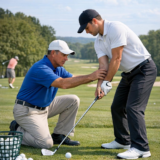
This article critically examines the methodological framework advanced by Lanny Wadkins for refining golf swing mechanics and optimizing course strategy, situating his approach within contemporary principles of sport biomechanics and decision science. Emphasizing an integrated pathway that aligns objective biomechanical assessment with targeted motor-learning drills and pragmatic on-course decision frameworks, the discussion foregrounds how technical refinement and strategic choice interact to produce measurable performance gains. Key themes include the use of kinematic and kinetic diagnostics to identify individual constraints, the design of high-specificity practice interventions that promote durable motor patterns, and the translation of these technical adaptations into adaptive shot-selection processes under competitive pressure. By synthesizing empirical insights from movement science with Wadkins’s practitioner-informed heuristics, the article aims to offer coaches and advanced players a coherent, evidence-aligned model for intervention planning, session design, and in-play management that can be evaluated and implemented across levels of play.
Kinetic Chain and Body Sequencing in the Golf Swing: Diagnostic Indicators and Corrective Drills
Kinetic in the context of human movement denotes the generation and transfer of motion through linked segments; in golf this manifests as an integrated cascade from the ground through the legs,pelvis,torso,shoulders,arms,and ultimately into the clubhead.A rigorous appraisal of sequencing must prioritize proximal-to-distal timing and intersegmental energy transfer, as inefficiencies (temporal delays, simultaneous rotations, or energy leaks) degrade both accuracy and ball speed. Quantitative cues-ground-reaction force spikes, pelvis-to-shoulder rotational timing, and clubhead acceleration profiles-provide objective markers for diagnosing breakdowns in the chain.
Common diagnostic indicators can be observed visually and corroborated with simple measurements; practitioners should attend to the following signs when evaluating a player’s motion:
- Early Release (Casting): rapid hand/club acceleration ahead of body rotation resulting in weak impact and open face tendencies.
- Hip-Lag or Over-Rotation: inadequate pelvis lead or excessive early trunk rotation, both producing inconsistent launch direction.
- Loss of Posture / Lateral Slide: vertical collapse or lateral displacement that short-circuits force transfer from legs to torso.
- Stagnant Ground Force: minimal weight shift or poor push-off that limits clubhead speed potential.
Corrective interventions should pair motor learning principles with progressive overload of sequencing patterns; the following drills are evidence-informed, task-specific remedies to restore efficient chain dynamics:
- Step-and-Turn Drill: countermovement step toward target at transition to emphasize lower-body initiation and delay of arm release.
- Separation Drill (Pause at Top): brief hold at the top to rehearse torso rotation while maintaining wrist lag, promoting proximal lead.
- Resistance-Band Hip Rotation: light elastic resistance anchored to the hips to train pelvic torque and ground-force application.
- Impact-Bag Feed: slow, controlled strikes against an impact bag to ingrain correct shaft lean and compressive impact created by coordinated sequencing.
Mapping indicators to succinct corrective actions streamlines practice objectives and facilitates coach-athlete feedback loops; the table below summarizes pragmatic pairings for immediate application and measurable progress tracking.
| Indicator | Rapid Corrective Drill |
|---|---|
| Early Release | Separation Drill (Pause at Top) |
| hip-Lag | Step-and-Turn Drill |
| Lateral Slide | Resistance-Band Hip Rotation |
| Poor Compression | Impact-Bag Feed |
Measurement and progression: employ high-frame-rate video, force-plate proxies (e.g., directional push tests), and objective tempo targets to quantify sequencing gains; iterative testing ensures drills translate into on-course performance enhancements rather than isolated biomechanical changes.

Optimizing Grip, Stance, and Alignment for Reproducible Ball Striking: Technical Adjustments and Practice Protocols
the concept of optimizing-understood in contemporary American usage as making a system as effective or useful as possible-is central to achieving reproducible ball striking. In the context of grip, stance and alignment this means establishing a set of measurable, repeatable parameters that minimize variance under pressure. By treating each contact point (hands, feet, eyes) as a controllable variable, the practitioner can apply iterative adjustments and objective measurement to refine outcomes rather than relying on feeling alone. Optimization here is both technical (biomechanical setup) and methodological (practice design), and both strands must be aligned to reduce scatter and increase shot predictability.
Technical adjustments should be specific, observable and constrained so thay can be consistently rehearsed. Key targets include:
- Grip pressure: maintain a numeric range (e.g., 4-6/10) to balance control and fluidity.
- Grip orientation: define a neutral hand rotation with visible knuckles for reproducible face control.
- Stance width: set stance as a percentage of shoulder width for each club category (wider for long clubs, narrower for wedges).
- Alignment cues: use a reference line from toes through target,verified visually and with an alignment rod.
These elements should be codified into a pre-shot checklist so that setup becomes a reliable motor program rather than an ad hoc adjustment.
Practice protocols that optimize transferability combine high-quality repetition with immediate feedback and progressive challenge. recommended drills and metrics (kept simple for on-range use) can be organized as follows:
| Drill | Primary Focus | Metric |
|---|---|---|
| Alignment Rod Drill | Visual setup & aim | % of sessions aligned |
| Gate Grip Drill | Consistent grip width/pressure | Grip variance (qualitative) |
| Footprint stance Drill | Repeatable foot positioning | Steps to set-up (time) |
Each practice block should include a baseline assessment, a focused block of 50-100 targeted repetitions, and a retention check under simulated pressure; record simple metrics (dispersion, perceived control, tempo) to inform subsequent adjustments.
To ensure on-course translation, integrate technical checkpoints into strategic decision-making and feedback cycles. Coaches and players should use a compact toolbox:
- Pre-shot ritual: identical setup sequence to cue motor memory.
- Objective feedback: video frames, dispersion circles, or simple shot-tracking to quantify changes.
- Progression rules: only advance to variable conditions once a reproducibility threshold (e.g.,8/10 consistent setups) is met.
This structured approach-coupling precise setup variables with disciplined practice and objective metrics-creates a reliable pathway from technical adjustment to durable, on-course ball striking performance.
Transition Dynamics and Tempo Control: Drills to synchronize Lower and Upper Body Movements
Effective sequencing at the transition requires precise coordination between pelvic initiation and upper‑torso unwinding. Biomechanically, the optimal pattern follows a distal‑to‑proximal initiation in which the hips begin rotation, followed by the torso, arms and club – a kinematic sequence that maximizes clubhead speed while preserving consistency. Emphasize controlled weight transfer to the lead leg and maintenance of spine angle through the early downswing; these elements reduce compensatory shoulder overswing and promote a repeatable impact position. Ground reaction force timing and center‑of‑mass trajectory are therefore primary variables to observe when refining the transitional window between backswing and downswing.
Practical interventions should target tempo, spatial sequencing and sensory feedback. Try the following drills to isolate and re‑train motor patterns:
- Step Drill: Start with a narrow stance, step the lead foot in at the top to cue aggressive hip rotation and immediate lower‑body lead.
- Pump Drill (3/4 swings): Make two short pumps to the top and feel the pelvis initiate before allowing the arms to swing through.
- Metronome Cadence Drill: Use a metronome set to a consistent beat to enforce a steady backswing:downswing ratio and prevent rushing through transition.
- Resistance Band Hip Snap: Attach a band to the hips to provide proprioceptive feedback on pelvic acceleration at transition.
These drills emphasize temporal control as much as positional correction, enabling the practitioner to internalize a stable tempo under variable conditions.
| Drill | Primary Focus | Tempo Target (B:S:D) |
|---|---|---|
| Step Drill | Lower‑body lead | 3:1 |
| Pump Drill | Sequencing & feel | 4:1 |
| Metronome Cadence | Consistent tempo | 3:1-3.5:1 |
| Resistance Band Snap | Pelvic acceleration | 2.5:1 |
Use short, focused sets (6-10 repetitions per drill) and track tempo consistency with video or a smartwatch; small, quantifiable targets improve transfer from practice to on‑course execution.
Design practice blocks that progress from slow, high‑feedback conditions to higher speed, lower feedback simulations. Begin with mirror work and slow‑motion video (60-120 fps) to confirm the hip‑first sequence, then integrate the metronome and gradually increase swing intensity while maintaining the targeted tempo ratio. Common deviations to correct include early arm drop (indicative of deficient pelvic torque) and late hip rotation (which often causes casting and a weak impact). Objective monitoring – video frame‑by‑frame analysis, cadence logs, and measured dispersion on short iron trials - will accelerate retention of the refined transition dynamics and ensure the newly learned tempo survives competitive pressure.
Clubface Management and Impact Position: Measurement techniques, Feedback Methods, and Training Aids
Effective feedback is both timely and interpretable. Coaches and players should combine real-time,sensory cues with objective post-shot diagnostics. Common feedback modalities include:
- Auditory/haptic (smart grips or metronomes) for tempo and rhythm cues that indirectly influence face control.
- Visual (impact stickers, face-tape, or ball-mark analysis) to show contact location and implied face rotation through impact smear.
- Data-driven (launch monitor outputs: face angle, ball spin axis, side spin) for quantifiable cause-affect tracking across sessions.
Use layered feedback: immediate sensory cues during drill work, followed by objective verification to consolidate learning and minimize ambiguity.
Training aids serve distinct roles-sensory augmentation, mechanical constraint, or objective measurement-and should be selected according to the training objective. The table below summarizes representative aids and their primary utility:
| Aid | Primary feedback | Typical drill |
|---|---|---|
| face-angle rod / mirror | Visual alignment of face | Slow-motion takeaway to impact mirror check |
| Impact bag / towel | Haptic feel of compressive impact | Punch shots to emphasize square face at contact |
| Launch monitor / IMU | Quantitative face/ball metrics | Baseline testing and progressive metric tracking |
Integrating measurement and feedback into a systematic practice plan enhances retention and transfer to the course. establish a baseline (30-50 shots recorded under consistent conditions),apply focused interventions (single-variable drills for 10-15 minutes),and re-test using the same metrics to evaluate efficacy.emphasize repeatability (small standard deviations in face angle and impact location) rather than single best shots, and combine quantitative outputs with coach-guided qualitative observation to refine cueing.Over time, this convergent approach-objective measurement, immediate sensory feedback, and purpose-driven training aids-produces durable improvements in clubface management and impact position.
Strategic Club Selection and Risk Management: Course Mapping, Yardage Control, and Decision Frameworks
Course mapping must be treated as an empirical layer atop sound swing mechanics: overlay a scaled hole diagram with prevailing wind vectors, hazard edges, and the player’s measured dispersion envelope to produce repeatable, actionable targets. The term strategic, in its lexical sense, signals the necessary orientation here - planning choices to achieve defined objectives – and that orientation should govern club selection as much as swing intent. when a golfer selects a club,they should do so not merely by nominal loft or yardage on a scorecard,but by reference to a mapped target corridor that reconciles desired landing area,required roll,and the acceptable margin for error given the lie and surrounding hazards.
Effective distance control derives from integrating physical measurement with situational modifiers: carry and roll numbers must be adjusted for elevation, wind, and turf conditions before a club is chosen. Key pre‑shot inputs include, but are not limited to, the following considerations:
- Measured carry (median and 90th percentile)
- wind/slope adjustment (vectorized yardage)
- Lie and firmness (affects roll)
- Hazard buffer (distance to trouble + safety margin)
- Shot‑shape probability (preferred versus likely curvature)
These inputs should be quantified where possible to reduce reliance on heuristics alone.
To operationalize risk management in club selection, use a concise decision matrix that ties risk tolerance to a club and tactical objective.The following table is a simple template that players and coaches can adapt to individual dispersion profiles and course context:
| Risk Tolerance | Typical Club choice | Tactical objective |
|---|---|---|
| Conservative | Higher‑lofted club / shorter carry | Ensure green or safe layup; minimize penalty |
| Balanced | Standard club for measured carry | Optimize birdie chance with controlled variance |
| Aggressive | Lower‑lofted / longer carry | Maximize scoring potential accepting higher penal risk |
implement a compact decision routine that can be rehearsed pre‑shot to ensure consistency between tactical intent and execution: measure → adjust → choose → commit. Concretely, measure your carry and dispersion bands, apply adjustments for wind and slope, select the club and target corridor that align with your chosen risk tier, then commit to a swing plan that produces the intended trajectory and landing pattern. Coaches should document outcomes over multiple rounds to refine the player’s probability distributions; over time, that dataset permits shifting from qualitative judgments to an evidence‑based decision framework that reduces strokes through superior club selection and disciplined risk management.
Target Selection and Shot Shaping Under Pressure: Mental Strategies, Routine Development, and execution Guidelines
Effective target selection requires an explicit decision-making framework that converts environmental information into a single, executable aim point. Under competitive stress the golfer must prioritize a small set of diagnostic variables-wind vector,lie consistency,landing zone margin,and hole geometry-then synthesize them into a one-sentence plan. A concise checklist reduces cognitive load and preserves working memory for execution:
- Wind and wind-history (direction, gusts, prevailing pattern)
- Margin of error (safe bail-out vs. aggressive line)
- Green contour (preferred side for approach)
- Club reliability (strokes-gained expectation under pressure)
This prioritized template turns ambiguous course conditions into discrete, measurable targets that can be rehearsed pre-shot.
Developing a pre-shot routine functions as a cognitive anchor that stabilizes motor output. The routine should be invariant in duration and content across both practice and competition to maximize transfer; key components include visualization of the intended land-and-roll, two consistent breathing cycles to downregulate arousal, and a single external swing cue to minimize internal focus. Recommended elements:
- Visualization: see trajectory, landing, and next shot position
- Breath control: two slow breaths to reset autonomic state
- Single swing thoght: one external imagery-based cue (e.g., “finish to the target”)
Consistency in these elements produces repeatable pre-performance psychophysiology, improving decision-to-action fidelity.
Execution under pressure demands simplified technical goals and absolute commitment to the chosen shape. Emphasize alignment to the aim point, tempo preservation, and a binary commitment rule: either execute the chosen shape fully or select a safer alternative. The following compact reference aligns common shot shapes with primary ball-flight expectations and a single setup cue for use under duress:
| Shot Shape | Primary Ball Flight | Key Setup Cue |
|---|---|---|
| Draw | Right-to-left, penetrating | Closed stance, feet aligned left |
| Fade | Left-to-right, controlled stopping | Open stance, clubface slightly open |
| Punch/Low | Low trajectory, limited spin | Ball back in stance, shorter backswing |
Use this table as a rapid-reference during on-course decision points to reduce deliberation time.
Mental strategies for pressure resilience focus on process orientation, error-tolerant planning, and physiological regulation. Adopt a rule-based approach to mistakes (e.g., one-club conservative recovery after a miss) and practice stress-exposure drills that simulate tournament constraints to build adaptive coping scripts. Tactical cues to reinforce during competition:
- Process focus (aim-point and routine adherence vs. outcome)
- Reframing (error = information for next decision)
- Micro-goals (execute tempo for first one second of the swing)
For transparency, the supplied web search results referenced retail “Target” store locations and are unrelated to these golf-specific instructional prescriptions; the above recommendations derive from applied motor-control and performance-psychology principles tailored to course strategy and swing refinement.
Integrating Biomechanical Refinement with Course strategy: Personalized Practice Plans and Objective Performance Metrics
A diagnostic phase grounded in biomechanics and objective measurement establishes the foundation for meaningful improvement. Employing launch monitors, high-speed video, and inertial sensors permits quantification of the kinematic sequence, clubface orientation at impact, and body segment contributions. These data-driven profiles reveal whether swing variability is primarily driven by motor control noise, suboptimal sequencing, or physical limitations such as restricted thoracic rotation or hip mobility. Anchoring instruction to measurable deficits converts subjective coaching cues into reproducible intervention targets and creates a baseline against which progress can be verified.
From the diagnostic profile, a periodized, individualized practice regimen is constructed to align mechanical change with tactical objectives on the course. Sessions are organized by micro-goals (mobility, sequencing, impact geometry) and macro-goals (shot-shaping, course management under pressure). Core components include:
- Targeted drills emphasizing specific kinematic corrections (e.g., shallow-to-steep conversion or maintaining lag).
- Constraint-led tasks that couple environmental complexity with technical aims (e.g., side-hill lies with adjusted swing plane).
- Transfer training integrating pre-shot routine and decision heuristics to encourage on-course application.
Each element is time-boxed and progressively overloaded to favor retention and reduce reintegration errors when under competitive stress.
Objective performance metrics function both as progress indicators and as decision-making aids. Typical variables to record regularly are carry distance, lateral dispersion, backspin rate (when relevant), greens in regulation (GIR), and short-game strokes gained. The following table provides a concise example of how baseline values can be translated into short-term targets for a mid-handicap player:
| Metric | Baseline | 6-Week Target |
|---|---|---|
| Average Carry (Driver) | 240 y | 250 y |
| Lateral Dispersion (±) | 25 y | 18 y |
| GIR | 52% | 60% |
routine synthesis between practice data and on-course outcomes ensures coaching remains adaptive and evidence-based. Pre-round simulations, combined with deliberate decision rehearsals (club/target selection under specified error tolerances), enhance situational transfer. Maintain a concise checklist for post-round debrief:
- Compare predicted vs. observed dispersion and distance.
- evaluate strategic choices against expected penalty/reward tradeoffs.
- Adjust subsequent practice emphases based on discrepancies between mechanical targets and tactical execution.
This cyclical model-measure, practice, apply, reassess-creates a feedback-rich habitat where biomechanical refinement is explicitly harnessed to improve on-course decision-making and performance.
Q&A
1. What is the purpose and scope of the article “Refining Swing mechanics and Course Strategy: Lanny Wadkins”?
Answer:
The article synthesizes coaching practice and applied biomechanics to present a systematic method-attributed to Lanny Wadkins’s coaching beliefs-for improving golf performance. it integrates biomechanical assessment, targeted drill progressions, and a practical decision-making framework for on-course strategy. The aim is to give coaches and advanced players an evidence-informed roadmap for translating swing changes into reliable scoring improvement.
2. What theoretical and empirical bases underpin the article’s approach?
Answer:
The approach rests on three interlocking bodies of knowledge:
– Biomechanics and motor control: using kinematic and kinetic analysis to identify movement patterns, sequencing, and constraints on performance.
– Motor learning and practice science: principles of specificity, variability, and blocked-to-random practice progressions to optimize skill acquisition and retention.
– Performance analysis and decision theory: applying outcome-based metrics (e.g., strokes-gained, dispersion statistics) and expected-value reasoning for strategic choices on course.
3. How does the article define a biomechanical assessment for the golf swing?
Answer:
The article defines a biomechanical assessment as a structured evaluation that quantifies:
– Static setup (posture, balance, joint ranges)
– Dynamic kinematics (pelvis, thorax, arm, and club trajectories; timing/sequencing)
– Kinetics (ground reaction forces and weight transfer)
– Club/ball interaction (attack angle, clubface orientation, launch conditions)
Assessment is intended to reveal movement constraints, asymmetries, and timing errors that limit consistency and distance.
4. what measurement tools and metrics does the article recommend?
answer:
Recommended tools:
– High-speed video for 2D/3D kinematics
– Inertial measurement units (IMUs) and wearable sensors
– Launch monitors (ball speed, launch angle, spin, dispersion)
– Force plates or pressure mats for weight transfer analysis
– Electromyography (EMG) for muscle activation where available
Key metrics:
– Clubhead speed, ball speed, smash factor
- Attack angle, dynamic loft, face angle at impact
– Sequence timing (e.g., pelvis-to-torso to arms) and tempo ratios
- Lateral/vertical center-of-pressure transfer and peak ground reaction forces
– Dispersion statistics (grouping, miss bias), strokes-gained by shot type
5. How should assessment data be interpreted and prioritized?
Answer:
Interpretation should follow a hierarchy:
1. Performance outcomes: prioritize deficits that most directly reduce scoring (eg, consistent face-angle errors or severe dispersion).
2. Movement constraints that explain the outcomes (eg, limited thoracic rotation causing early extension).
3. Safety and durability considerations (eg, excessive lumbar shear).
Prioritization criteria include potential impact on strokes gained, modifiability within the training timeframe, and risk of unintended consequences.
6. What focused drills does the article propose to address common biomechanical deficits?
Answer:
The article presents drills organized by biomechanical target. Examples include:
– Posture & setup: wall-posture holds and slow-motion full swings to ingrain neutral spine and hip hinge.
– Rotation & sequencing: step-through turn drill and split-hand rotation swings to emphasize thoracic rotation and delay arm casting.
- Weight transfer/power: medicine-ball throws and tempo-controlled step drills to coordinate ground force application with rotation.
– Clubface control: gate drills with alignment sticks and short-range impact tape feedback to refine release and face awareness.
Each drill includes progressions (reduced speed → full speed → on-course integration) and suggested repetitions distributed across sessions.7. How does the article bridge practice drills to on-course performance?
answer:
The article advocates a staged transfer model:
– contextualized practice: integrate variable conditions (different lies, club selection) to increase adaptability.
– Constraint-led tasks: manipulate task, environment, or equipment constraints to elicit desired adaptive behaviour.
– Simulated pressure and decision tasks: incorporate scoring games, time pressure, and cognitive loads to replicate competitive demands.- explicit rehearsal of pre-shot routine and outcome-focused feedback (strokes-gained or dispersion) to create direct links between practice and scoring.
8. What practical decision-making framework for course strategy does the article recommend?
Answer:
The article recommends a three-step framework:
1. Situation appraisal: evaluate lie, wind, slope, pin position, and hazards.
2. Outcome mapping: estimate expected strokes for plausible options using player-specific performance data (e.g., strokes-gained by distance and shot shape).3. Risk-reward decision rule: choose the option that maximizes expected value subject to the player’s risk tolerance and contingency plan (i.e., acceptable miss pattern and recovery options).
This framework is intended to be rapid and repeatable under course conditions.
9. How should coaches quantify and monitor performance gains?
Answer:
Monitoring should combine objective and subjective measures:
– Objective: strokes-gained by domain (tee-to-green, approach, short game, putting), dispersion metrics, clubhead speed, and launch conditions tracked longitudinally.
– Statistical approach: use baselines, minimal detectable change, and confidence intervals rather than isolated single-round comparisons.
– Process measures: adherence to practice plan, drill proficiency, and transfer tasks success rates.
– Periodic reassessment: repeat biomechanical testing at planned intervals to verify that movement adaptations are occurring and that they correlate with performance outcomes.10.What periodization and session design does the article propose?
Answer:
Suggested structure:
– macrocycle: define phases (diagnosis, technical change, consolidation, competition-peaking).
– Mesocycles: 3-6 week blocks focused on a primary adaptation (e.g., sequencing, power) while maintaining other skills.
– Microcycle: balanced distribution-technical sessions, variability/transfer sessions, and on-course strategy/simulation sessions within each week.
Session design principles: warm-up → specific technical work with immediate feedback → variable practice → simulated pressure/strategic decision tasks → cool-down and reflective review.
11. How does the article treat individual differences and coach-athlete personalization?
Answer:
The article emphasizes individualization:
– Accepts multiple technical solutions that produce similar outcomes; use outcome-based tolerance for technique variability.
– Tailors interventions to physical capacity, injury history, learning preferences, and competitive schedule.
- Recommends simple screening (mobility, strength, motor control) to match drills and loading parameters to the athlete’s capacities.
12. What limitations and caveats does the article discuss?
Answer:
Key limitations include:
– Technology and lab-based assessments may not fully capture on-course dynamics; ecological validity is critical.
– Overemphasis on technical change risks degrading performance if not accompanied by sufficient transfer practice.
– Small-sample or case-based evidence limits generalizability; individual responses vary.
– Resource constraints (access to force plates, motion capture) may limit implementation; pragmatic low-tech proxies are offered.
13. What future research directions or innovations does the article propose?
Answer:
Suggested directions:
– Longitudinal, controlled studies linking specific biomechanical interventions to strokes-gained outcomes.
– Sensor fusion and machine-learning models to predict individual response to technique changes.
– Better ecological validation of lab-derived metrics through wearable monitoring during actual rounds.
– Optimization studies on practice dose, variability, and feedback schedules for durable transfer.
14.What are the practical takeaways for coaches and advanced players?
Answer:
– Begin with outcome-focused assessment-identify the performance metric you need to change.
– Use biomechanical data to diagnose constraints, but prioritize changes with clear scoring benefit.
– Implement drills with clear progressions and always include variability and pressure to promote transfer.
– Apply a structured decision-making rubric on course that uses player-specific performance data.
– Monitor gains objectively and be prepared to iterate based on data and individual response.
15.Notes on sources and further reading
Answer:
The user-provided web search results returned content unrelated to Lanny wadkins (they refer to Acellus Academy and online education). For article-specific detail, consult the original article URL you provided (https://golflessonschannel.com/refining-swing-mechanics-and-strategy-lanny-wadkins/) and primary sources in biomechanics, motor learning, and performance analysis journals. If you want, I can: (a) generate a referenced reading list on the biomechanics and motor-learning literature; (b) produce a printable checklist or session plan based on the Q&A; or (c) draft interview questions for Lanny Wadkins-style coaching clarification. Which would you prefer?
Lanny Wadkins’s integrated approach to refining swing mechanics and course strategy-grounded in biomechanical assessment, targeted drill design, and pragmatic decision frameworks-offers a coherent model for translating technical adjustments into competitive performance gains. By emphasizing objective measurement of kinematic and kinetic variables, the systematic use of focused drills to address identified deficits, and the application of simple, repeatable on-course decision rules, Wadkins’ method bridges the conventional divide between technique and tactics. This synthesis underscores the value of aligning movement efficiency with strategic choice-making to optimize scoring outcomes under the variable demands of tournament play.
For practitioners, the implications are twofold: first, incorporate routine biomechanical screenings and evidence-based drills into coaching cycles to accelerate motor learning; second, develop decision frameworks that reduce cognitive load during competition, enabling players to execute mechanically sound swings within the constraints of course management. For researchers, Wadkins’ framework invites empirical validation through longitudinal interventions that quantify changes in performance metrics (e.g., strokes gained, dispersion patterns) and examine the interaction between biomechanical adaptations and strategic behavior across competitive contexts.while the model is promising, its full utility will be realized through iterative refinement-integrating advances in motion analysis, wearable sensors, and cognitive training-and through collaborative studies that test transfer from range-based improvements to on-course performance. Such efforts will not only clarify the mechanisms by which mechanical and strategic interventions produce measurable gains but will also provide practitioners with robust, generalizable protocols for elevating player performance in both practice and competition.