
This article examines the integrated process by which Lanny Wadkins refines swing mechanics and on-course strategy, situating his methods within contemporary understandings of biomechanics, motor learning, and decision science. By treating technical execution and tactical choice as mutually informing elements of performance,the analysis foregrounds how targeted biomechanical adjustments are translated into durable behavioral change through progressive drill design,objective feedback,and scenario-based rehearsal. The discussion addresses both the micro-level mechanics of the golf swing – sequencing, timing, and force submission – and the macro-level frameworks that govern club selection, risk management, and shot planning across diverse playing conditions.
Drawing on systematic video analysis, kinematic principles, and empirically grounded practise prescriptions, the article articulates a replicable framework for coaches and advanced players seeking to align technical refinement with strategic intent. Emphasis is placed on measurable intervention points, principles for designing drills that transfer to competitive contexts, and decision heuristics that reduce cognitive load under pressure. The resulting synthesis aims to bridge applied biomechanics and practical course-management, offering evidence-informed guidance for enhancing consistency, adaptability, and scoring performance.
Integrating Biomechanical principles into Swing Mechanics: Kinematic Sequencing, Joint angles, and Energy Transfer
Kinematic sequencing underpins the transfer of mechanical energy from the ground through the body to the clubhead. In a model informed by Wadkins’ repeatable swing, initiation begins with the lower body: a controlled lateral weight shift and hip rotation generate a ground-reaction torque that precedes trunk rotation. this proximal-to-distal activation-hips → torso → lead arm → club-maximizes peak clubhead velocity while reducing compensatory movements that degrade accuracy. Quantifying timing windows (e.g.,pelvic peak velocity preceding shoulder peak velocity by ~20-40 ms) provides objective targets for practice and diagnostic video analysis.
Optimizing posture and joint angles creates stable levers for that energy transfer. key biomechanical targets include spine angle maintenance, an appropriate
- Hip rotation: 40-60° of relative rotation between pelvis and torso at transition.
- Wrist hinge: retain lag through downswing with ~30-45° radial deviation at impact region.
- Spine tilt: consistent angle maintained from address to impact to protect plane of rotation.
Translating these principles into drills emphasizes measurable outcomes rather than only feel. The table below provides concise drill-objective-metric triplets suitable for a training block focused on sequencing and angles. Use high-frame-rate video and simple inertial sensors to record progress and convert subjective cues into objective thresholds.
| Drill | primary Objective | Measurable Cue |
|---|---|---|
| Step-and-swing | Promote early pelvis rotation | Pelvis velocity leads torso by 20-40 ms |
| Pause-at-top with mirror | Verify wrist set and spine tilt | Wrist angle 30-45°; spine tilt ±3° of baseline |
| Impact-window strikes | Train consistent impact posture | Clubface deviation <±3° at impact |
Mechanical refinement directly informs strategic choices on course. When swing timing and impact geometry are predictable, a player can more reliably select trajectory, club, and target lines to manage risk-particularly under varying wind and lies. Integrating pre‑shot routines that reinforce the measured sequencing cues reduces performance variability: for example, a brief kinetic-check (hip feel) and a visual alignment confirmation before every shot. In short, marrying biomechanical precision with cognitive decision rules produces both greater shotmaking flexibility and fewer forced errors during tournament play.
Contextual clarification: the name referenced in the search corpus also denotes a contemporary novel distinct from the golfer’s technical profile. The literary work explores different vectors-psychological, social, and mythopoetic-so biomechanical language applied earlier is not relevant to that subject. Nonetheless, a concise formal summary highlights its primary thematic architecture and stylistic devices.
the novel constructs a mosaic of village life around an enigmatic child figure, employing a lyrical, often fragmented narrative voice. Formal techniques include magical realist elements, polyphonic interiority, and associative imagery that compress grief, community dynamics, and folkloric resonance into episodic scenes. Critical attention centers on how language functions as a repository for memory and communal projection rather than on linear plot mechanics.
Key thematic nodes and stylistic markers that scholars typically extract are:
- childhood perception as an epistemic lens for communal change.
- Nature and place functioning as character and moral mirror.
- Linguistic experimentation that collapses boundaries between speech, thought, and myth.
For comparative clarity, the table below contrasts the two distinct referents briefly so readers can disambiguate scholarly discussion versus technical coaching material.
| Referent | Domain | Primary Focus |
|---|---|---|
| Lanny Wadkins | Sports Biomechanics / Coaching | Swing mechanics, sequencing, course strategy |
| Lanny (novel) | Literature / Cultural Studies | Narrative voice, community, magical realism |

Optimizing Grip, Posture, and Address Position for Consistent Ball Striking and Shot Control
establishing an effective hand placement is foundational to reproducible contact and shot-shape control.Emphasize a **neutral to slightly strong grip** that allows the clubface to return square through impact; avoid extremes that force compensations elsewhere in the swing. Maintain a moderate grip pressure-typically described as a **4-6 on a 1-10 scale**-so the wrists remain responsive while the forearms can stabilize the clubhead. Key tactile cues that support this configuration include:
- Thumb alignment: left thumb (for right-handed players) centered on the grip, creating a clear connection between hands and club.
- V-formation: both index thumb-forefinger V’s pointing between the right shoulder and chin.
- Palmar contact: contact points distributed across the base of the fingers rather than deep in the palm.
Postural geometry determines the initial delivery plane and the kinematic sequence during the swing. Adopt an **athletic spine angle**-a forward tilt from the hips with a neutral spine-coupled with slight knee flex and balanced shoulder height; this promotes rotational freedom while preserving consistency.Aim for a head position that is stable but not rigid, and a chest-to-target relationship that facilitates a natural shoulder turn. The following table summarizes concise setup parameters by club category to standardize ball position and stance width during practice.
| Club Type | Ball Position | Stance Width |
|---|---|---|
| Driver | Toward left heel | Shoulder-width + |
| Mid-iron (6-8) | Center to slightly forward | Shoulder-width |
| Wedge | Centered | Narrower than shoulders |
Address position must harmonize grip and posture to produce controlled ball striking; small systematic adjustments yield disproportionate improvements in consistency. Prioritize a **slight forward shaft lean (2-4°)** at setup for longer clubs and an impact-oriented lower-body connection with approximately **55/45 weight distribution** favoring the lead side at impact. Use pre-shot checks-clubface square to the target, feet-hips-shoulders parallel to the intended line, and visual confirmation of ball position-to reduce setup variability. Quantify changes with video capture or launch-monitor metrics to ensure that setup alterations produce the intended dispersion and trajectory outcomes.
Transfer these static elements into dynamic consistency through structured drills and feedback cycles that emphasize reproducibility over force. Recommended practice progressions include:
- Mirror setup drill: perform slow-motion addresses and swings to ingrain visual and kinesthetic cues.
- Alignment-rod routine: verify body and clubface alignment before every shot for immediate error correction.
- Impact-bag or half-swings: train forward shaft lean and compressive contact in isolation.
- One-handed tempo reps: refine release timing and reduce compensatory wrist action.
Temporal Coordination of Hips, Torso, and Upper Extremities for efficient Clubhead Delivery
Efficient transfer of energy from the ground to the clubhead depends on precise temporal sequencing of the lower body, trunk, and upper extremities. Contemporary biomechanical models emphasize proximal-to-distal sequencing,wherein the hips initiate the downswing,the torso follows with rotational acceleration,and the arms and hands release last to maximize clubhead velocity. When timing is optimized, angular velocities peak sequentially rather than together, reducing intersegmental interference and improving impulse delivered to the ball. From a performance perspective,temporal coordination is therefore as critical as joint range-of-motion or strength; mistimed rotation impairs both accuracy and distance despite adequate physical capacity.
Quantifying the sequence clarifies coaching priorities. The table below summarizes a concise phase model with practical kinematic objectives for each temporal window, suitable for use in movement analysis or a practice plan.
| Phase | Timing Cue | Primary Kinematic Objective |
|---|---|---|
| Initiation | Lead hip shift | Ground-force onset, stabilize base |
| Separation | Torso lags relative to hips | Create X‑factor and elastic storing |
| Delivery | forearms accelerate, wrists unhinge | Maximize clubhead angular velocity |
| Deceleration | Shoulder/torso dissipate energy | Control follow‑through and balance |
Translating theory into motor learning requires focused drills and salient cues that reinforce timing rather than isolated strength. Recommended interventions include:
- Hip‑first drill: practice downswing starts by gently rotating the lead hip while holding the top for a half-second to ingrain initiation sequencing.
- Pause‑and‑go: pause at the top, then execute a purposeful hip turn before allowing torso and arms to move, emphasizing separation.
- throwing progression: perform medicine‑ball throws with sequential lead‑hip → torso → arm activation to sensitize the nervous system to proximal‑to‑distal rhythms.
Each cue or drill should be introduced with low load and high repetition to permit neuromuscular adaptation before increasing speed or resistance.
Assessment and progression must be objective and incremental. Use high‑speed video or wearable inertial sensors to verify the temporal order of peak angular velocities and to quantify separation angles and intersegmental delays.Train tempo with metronome‑driven repetitions and prescribe progression criteria (e.g., consistent hip lead in 8/10 trials at target tempo) before increasing velocity. Emphasize that improving coordination reduces compensatory stresses on the lumbar spine and shoulder complex; thus, temporal refinement serves both performance and injury‑risk mitigation. Ultimately, the goal is a repeatable, energy‑efficient pattern were timing, not brute force, produces superior clubhead delivery.
Targeted Drill Progressions to Correct Tempo,Transition,and Impact Position Faults
Assessment should precede intervention: begin each session with objective tests of rhythm,transition timing,and impact geometry (e.g., metronome counts, high-speed video of the downswing, and contact/ball-flight analysis). From the assessment, construct a graded progression that isolates one variable at a time, then re-integrates elements into the full swing. This staged approach minimizes compensations and clarifies causation between drill stimulus and mechanical change. Employ quantifiable metrics-tempo ratios,transition delay (ms),and clubface/shaft angle at impact-to monitor adaptation and retention.
Introduce drills in an ordered series that moves from reduced to full complexity, emphasizing neural patterning before power expression. Begin with simplified movement patterns that encode the desired timing, then add speed and load as proficiency increases. Use the following targeted drills to address tempo, transition, and impact faults:
- Metronome cadence drill: set subdivisions to enforce ideal backswing-to-downswing ratio.
- Pause-at-top half-swing: trains clear transition sequencing without inertial carryover.
- Step-and-drive: creates ground-reaction timing cues for a synchronized lower-body initiation.
- Impact-bag contact: reinforces a stable, square impact with forward shaft lean.
Pair each drill with precise coaching cues and short practice sets to encourage motor learning: limit repetitions to focused blocks of 8-12 attempts with randomization between drills to promote transfer. Below is a concise progression matrix to guide practice sequencing and to set brief, measurable learning objectives for each stage.
| Drill | Primary Fault addressed | Short Outcome Metric |
|---|---|---|
| Metronome Cadence | inconsistent tempo | Desired backswing:downswing 3:1 |
| Pause-at-top half-Swing | Early transition/over-rotation | Stable shaft plane at transition |
| Step-and-Drive | Late lower-body initiation | Ground-reaction lead by 50-100 ms |
| Impact-Bag | Open face/weak impact | Forward shaft lean; solid contact |
Conclude each practice block with objective reassessment and a concise retention plan: record a baseline,apply the progression for 1-2 weeks,then retest under varied conditions (different clubs,altered lies). Prioritize drills that show measurable enhancement and fade those that no longer contribute to gains. Emphasize deliberate variability and constrained randomness to foster robust transfer to on-course performance, ensuring that technical refinement coexists with strategic execution.
Utilizing Ground Reaction Forces and Weight-Shift Training to Enhance Power and Stability
Ground reaction forces underpin the transfer of energy from the golfer’s body into the club and ultimately into the ball. By intentionally shaping the interaction between the feet and the turf, the skilled player converts vertical and horizontal force vectors into rotational momentum with minimal energy leakage. Lanny Wadkins’ instructional emphasis-rooted in sequencing and balance-aligns with contemporary biomechanical models that prioritize center-of-pressure migration, timely ankle/hip extension, and coordinated pelvis-thorax separation to maximize clubhead speed while preserving control.
Effective practice protocols focus on deliberate weight-shift patterns and sensory feedback to reinforce efficient force delivery. Recommended modalities include force-plate biofeedback, resisted step-drills, and rotational medicine-ball progressions that replicate swing kinetics. Key drills and cues (selective and evidence-based) are:
- Heel-to-toe transfer: emphasize gradual medial pressure at transition to prime hip drive.
- Step-and-swing: initiate downswing with a controlled lateral step to create ground impulse.
- Med-ball throws: prioritize hip-to-shoulder sequencing, mirroring impact timing.
- Stability holds: single-leg balance with club across chest to isolate force application.
These interventions target neuromuscular timing and motor pattern consolidation rather than pure strength gains.
| Phase | Primary Objective | Simple Outcome Metric |
|---|---|---|
| Preparation | Optimize stance and base width | Center-of-pressure range (mm) |
| Transition | Generate lateral impulse | Peak horizontal GRF (N) |
| Impact | Maximize vertical-to-rotational transfer | Clubhead speed (mph) |
| Stabilization | Maintain balance and repeatability | Single-leg hold time (s) |
Translating these adaptations onto the course requires intentional integration into shot strategy and routine under variable conditions. Use progressive overload-increasing rotational velocity and ground impulse in controlled increments-while monitoring balance degradation and dispersion of impact location. Emphasize reproducible motor programs with concise cues such as “drive ground, rotate hips” and “finish balanced”. When deployed judiciously, weight-shift training enhances both power and stability, allowing players to expand scoring options without compromising shot consistency.
Strategic Course Management and Shot Selection: Decision Frameworks Informed by competitive Context
Effective decision-making on the course requires a principled framework that balances expected value with variance management under competitive pressure. Players must integrate probabilistic assessments (likelihood of success given shot choice) with tournament context-for example, weather conserving a one-shot lead in stroke play differs from the aggressive tactics frequently enough rewarded in match play.This framework privileges decisions that maximize long-term scoring efficiency while accounting for the player’s individual skill distribution across shot types,prevailing environmental conditions,and the dynamic scoreboard. Adopting such a model encourages systematic rather than purely instinctual choices, enabling repeatable, coachable outcomes.
Operationalizing this framework relies on a compact set of tactical heuristics that can be evaluated quickly between shots. Useful heuristics include:
- Score Differential: prioritize preservation over gain when leading; seek high-upside plays when trailing.
- Wind & Conditions: adjust target lines and club selection proactively rather than reactively.
- Pin & Green Complexity: favor conservative targets when hole locations amplify error cost.
- Shot Confidence: select shots within the player’s practiced repertoire to reduce execution variance.
These heuristics function as decision shortcuts that align the player’s mental state,technical capacity,and competitive aim.
Selection of a shot must be translated into precise mechanical parameters so the intended strategy is executable under pressure. Club choice, swing length, face orientation, and intended trajectory all become constrained variables fed by the tactical decision; as an example, choosing a lower-trajectory punch to control distance into a wind requires specific setup and swing adjustments that should be rehearsed in practice. Emphasizing mechanical robustness-technical solutions that tolerate small execution errors-reduces catastrophic outcomes and aligns swing refinement with strategic objectives. Training should therefore couple situational simulation (e.g., practicing shots from skewed lies, into wind, or to difficult pins) with measurable mechanical checkpoints.
To aid on-course application, implement a concise pre-shot decision routine and a rapid assessment matrix that translates risk into action. Below is a simple decision matrix that can be consulted under time constraints; practitioners should adapt thresholds to personal performance data and event context.
| Risk Level | Tactical Choice | Swing Adjustment | Expected Outcome |
|---|---|---|---|
| Low | Conservative target short of hazard | Three-quarter swing,neutral face | High probability par,low variance |
| Medium | Attack center of green | Full swing,controlled tempo | balanced reward-risk |
| High | Aggressive line to flag | committed swing,trajectory focus | High reward,greater variance |
- Pre-shot decision routine: evaluate score,conditions,and confidence; select option consistent with the decision matrix.
- post-shot audit: record outcome versus expectation to refine personal probabilities and future choices.
Consistent application of these elements yields strategic choices that are technically feasible and optimized for the competitive habitat.
Objective Monitoring and feedback Systems: Video Analysis, Quantitative Metrics, and Practice Periodization
contemporary motion-capture and video-analysis platforms provide a reproducible foundation for examining the kinematic sequence that characterized Lanny Wadkins’ swing. Using synchronized high‑speed video and markerless 3D tracking, practitioners can isolate the timing of pelvis rotation, shoulder turn, and wrist release with sub‑frame precision. When combined with calibrated club and ball tracking (radar or photometric launch monitors),visual data become corroborated by physical outputs,enabling the derivation of reliable baselines and the detection of small but performance‑critical deviations. Emphasis is placed on **repeatability of capture conditions** (camera placement, lighting, and warm‑up protocol) to ensure longitudinal comparability between sessions.
Quantitative metrics translate biomechanical observations into actionable targets for swing refinement and strategic decision‑making. Key variables include **clubhead speed, attack angle, face‑to‑path relationship, smash factor, spin rate,** and lateral dispersion. the following table summarizes representative targets and primary diagnostic uses for a player modeled on Wadkins’ historical tendencies.
| Metric | Representative Target | Diagnostic Purpose |
|---|---|---|
| Clubhead speed | 95-105 mph | Power ceiling and conditioning progress |
| Face‑to‑path | ±2° | Shot shape control and alignment |
| Smash factor | 1.45-1.50 | impact quality and center‑contact consistency |
Integrating objective measures into a periodized practice plan optimizes transfer from practice to competition. Microcycles (7-10 day units) should alternate high‑intensity skill acquisition with lower‑intensity consolidation focused on variability reduction; mesocycles (4-8 weeks) emphasize specific outcomes (e.g., reducing face‑to‑path variance or increasing consistent impact conditions) while preserving recovery and tapering phases before key events. Data‑driven thresholds-such as allowable weekly dispersion or minimum smash‑factor consistency-guide progression and inform when to reintroduce technical change versus maintaining strategy under pressure. This structured approach reduces trial‑and‑error and preserves the situational reliability that underpinned Wadkins’ competitive decision‑making.
Feedback loops must be immediate, precise, and interpretable to be effective.Combine augmented video playback (frame‑by‑frame and synchronized ball flight overlays) with numeric dashboards so that a single practice rep yields both visual and quantitative feedback. Recommended components for a feedback protocol include:
- immediate replay with annotated kinematic cueing;
- Short‑term metrics (session mean and standard deviation for selected variables);
- Micro‑goals for each practice set (e.g., reduce lateral dispersion by 10%); and
- Periodic retesting every mesocycle to evaluate retention and strategy efficacy.
When implemented consistently, this architecture supports principled decision‑making on the course and enables deliberate, measurable refinement of swing mechanics and competitive strategy.
Q&A
Note: The provided web search results returned materials on petroleum and industrial refining, which are unrelated to the subject of this article (golf instruction and Lanny Wadkins). The following Q&A is based on the article topic you supplied - “Refining Swing Mechanics and Strategy: Lanny Wadkins” – and synthesizes principles of biomechanics, targeted drills, and decision frameworks in an academic, professional tone.
Q1: What is the central premise of “refining Swing Mechanics and Strategy: Lanny Wadkins”?
A1: The article posits that performance gains are maximized when mechanical refinement and strategic decision-making are integrated rather than treated separately. Using Lanny Wadkins as a case exemplar, it argues that targeted biomechanical adjustments coupled with explicit shot-decision frameworks produce measurable improvements in consistency, shot dispersion, and scoring outcomes.
Q2: How does the article define “integrated approach” in the context of golf performance?
A2: An integrated approach couples objective biomechanical assessment (kinematic sequencing, clubface control, body alignment, tempo) with context-driven strategic processes (risk-reward analysis, course-management heuristics, and mental routines). The approach emphasizes iterative feedback loops: measurement → targeted intervention → on-course validation → refinement.
Q3: Which biomechanical principles are emphasized as most relevant to refining a repeatable swing?
A3: The article emphasizes: (1) efficient kinetic chain sequencing (pelvis rotation preceding torso, which precedes arms and club), (2) consistent spatial relationships at address and impact (shaft plane, wrist set, spine angle), (3) dynamic balance and center-of-mass control through transition, and (4) tempo and rhythm as stabilizers of timing and clubface orientation. These principles are framed as constraints to be optimized rather than prescriptive dogma.
Q4: What assessment tools and metrics does the article recommend for diagnosing swing faults?
A4: Recommended tools include high-speed video for kinematic visualisation, launch monitors for ball-flight metrics (launch angle, spin rate, speed, dispersion), and inertial measurement units or motion-capture systems for segmental timing. Metrics prioritized are clubhead speed, smash factor, descent angle, lateral dispersion, and sequencing indices (e.g., pelvis-torso separation timing).
Q5: Describe the targeted drills recommended to address common sequencing and impact issues.
A5: The article outlines drills aligned with specific faults:
– For late hip rotation: “lead-leg bracing” and step-through drills emphasizing early weight shift.
– For inconsistent face control: impact-bag contacts and short-swing half-mallet drills focused on square-face feel.
- For tempo irregularity: metronome-paced swings and pause-at-top drills to recalibrate transition timing.
– For swing plane errors: alignment-stick gate drills and mirror work to entrench consistent geometry.
Each drill is coupled with objective success criteria (e.g., reduced lateral dispersion, improved clubface angle at impact).
Q6: How does Wadkins’ strategic framework complement mechanical work?
A6: According to the article, Wadkins’ framework prioritizes: (1) pre-shot decision routines that align shot choice to the player’s current mechanical reliability; (2) conservative risk management when mechanical variance is high; and (3) progressive risk-taking as mechanical metrics stabilize during a round.Strategy thus becomes dynamic, contingent on measured swing consistency rather than static course plans.Q7: What decision-making tools are proposed to formalize course strategy?
A7: The article recommends decision aids such as:
– A risk-reward matrix mapping shot difficulty to expected value,
– A ”confidence slider” reflecting current mechanical reliability (derived from practice metrics),
– Pre-shot checklists that include both mechanical cues and target boundaries,
– Scenario-specific playbooks (e.g., tee shots for wet conditions, approach options for downwind).
These tools aim to reduce cognitive load and increase the alignment between mechanical state and tactical choices.
Q8: How should a coach implement the integration of mechanics and strategy in practice sessions?
A8: Implementation steps include:
1. Baseline assessment (video, launch monitor) to quantify mechanical variability.
2.Goal-setting with measurable targets (dispersion radius, impact face angle consistency).
3. Drill prescription targeted to primary faults, with progression criteria.
4. Simulated on-course practice sessions where strategic decision aids are used; collect performance data.
5. iterative refinement based on on-course validation, adjusting drills or strategic thresholds as needed.
Q9: What role does technology play in the integrated model, and what are its limitations?
A9: Technology provides objective measurement (kinematics, ball flight), enabling precise diagnosis and progress tracking. However, limitations include potential overreliance on numbers at the expense of perceptual feel, cost/access constraints, and the need to contextualize lab-derived metrics to on-course conditions. The article stresses triangulation: combine technology with coach observation and on-course validation.
Q10: How does the article recommend measuring success and transfer to competition?
A10: success should be measured both by practice metrics (reduced variability in key kinematic and ball-flight measures) and competitive outcomes (greens in regulation, strokes gained, scoring average, penalty avoidance). Importantly,transfer is assessed via simulated pressure drills and by monitoring whether strategic decisions taken under match conditions align with pre-established decision frameworks.
Q11: What are the psychological or cognitive considerations highlighted when refining mechanics and strategy?
A11: The article underscores the need to integrate mental routines with mechanical cues to manage arousal and attentional focus during decision-making. It recommends pre-shot routines that include a swift mechanical checklist and a strategic affirmation (e.g., “play to the safe side”), and gradual exposure to pressure through practice to enhance decision fidelity under stress.
Q12: Are there limitations or areas for future research identified?
A12: yes. Limitations include individual variability in anatomical constraints, the difficulty of fully replicating competitive pressure in practice, and limited longitudinal evidence linking specific integrated interventions to long-term performance gains. Future research directions proposed are randomized controlled trials comparing integrated versus isolated interventions, and studies on the minimal dose of on-course validation needed for durable transfer.Q13: How can practitioners adapt the article’s recommendations to different player levels?
A13: For beginners, prioritize foundational stability, simple decision rules, and high-frequency deliberate practice with basic drills. intermediate players should use more precise measurement and begin integrating strategic matrices. Advanced players and elite athletes can apply fine-grained biomechanical analysis and nuanced risk management, with a heavier emphasis on marginal gains and mental robustness.
Q14: What practical checklist does the article provide for a single coaching session focused on integration?
A14: A practical checklist:
1. Conduct 10-15 swing repetitions with video + launch monitor capture.2. Identify one primary mechanical fault and one strategic inconsistency.
3. Prescribe 2-3 targeted drills with objective success criteria and time-bound practice (e.g., 20-30 minutes).
4. Finish with 10-12 simulated shots on course or target-based scenarios, applying the decision framework.
5. Record outcome metrics and set next-session objectives.Q15: What is the article’s concluding recommendation for coaches and players?
A15: The article concludes that lasting performance improvement requires coupling precise mechanical interventions with adaptive strategic frameworks. Coaches should operationalize this by using measurable diagnostics, prescribing targeted drills, and training decision protocols within on-course contexts to ensure that mechanical gains reliably translate into lower scores.
If you would like, I can convert this Q&A into a formatted interview-style document, summarize the key drills into a practice plan, or generate session templates for beginner, intermediate, and advanced players.
In sum, Lanny Wadkins’s integrated approach-anchoring biomechanical analysis to targeted drills and explicit decision frameworks-offers a coherent model for refining both swing mechanics and on-course strategy. By treating technical adaptation and tactical choice as mutually informing processes, this framework moves beyond isolated drill work to emphasize context-dependent motor learning, individualized intervention, and measurable performance outcomes. For practitioners and researchers alike,the approach suggests clear avenues for implementation: quantify baseline mechanics and shot outcomes,design progressive drills that replicate competitive constraints,and operationalize decision rules that can be practiced under pressure.
Future work should test the efficacy of this model using longitudinal, performance-based metrics (e.g., strokes gained, dispersion patterns, consistency under simulated competition) and leverage modern sensor and video technologies to validate causal links between specific mechanical changes and strategic gains. Coaches should also attend to individual variability-physical capacity, learning preferences, and psychological profile-when translating Wadkins’s principles into practice. Ultimately, the integration of rigorous biomechanical insight with actionable strategy fosters not only more efficient swing refinement but also more resilient on-course decision-making.
Wadkins’s synthesis thus serves as both a practical roadmap for coaches and players and a testable hypothesis for sport science: that durable performance improvement arises from aligning how a player moves with what a player chooses to do. Continued refinement, empirical evaluation, and thoughtful individualization will determine the model’s lasting impact on high-performance golf.
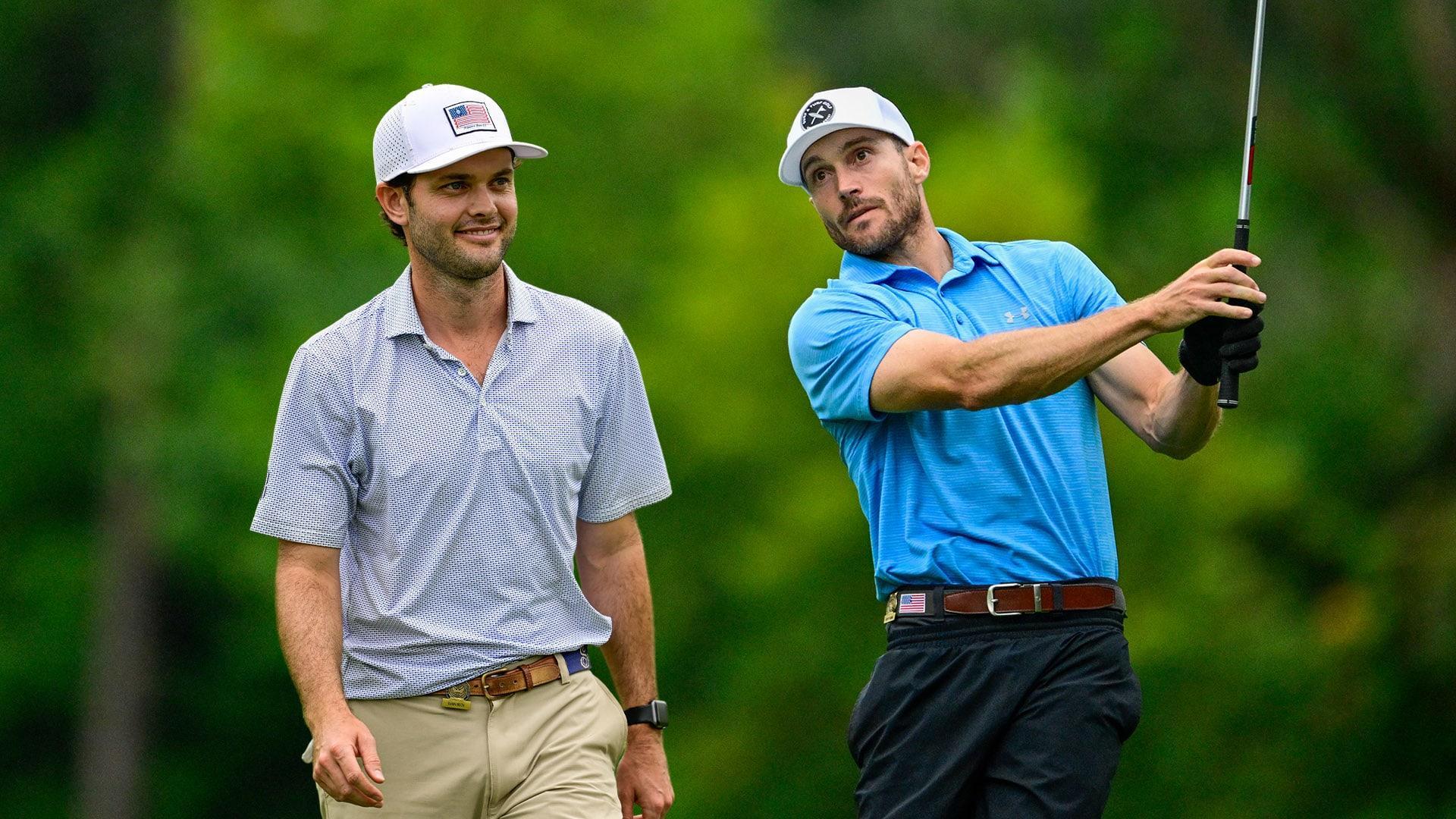
Refining Swing Mechanics and Strategy: Lanny Wadkins
fundamentals First – The Wadkins Approach to a Repeatable Golf Swing
Lanny Wadkins emphasizes that great shots come from simple, repeatable mechanics paired with smart on-course decisions. Below are the core swing principles he prioritizes and how to train them.
Grip, Posture, and Setup
- Neutral, consistent grip – grip pressure that is firm but relaxed so the wrists can hinge and release naturally.
- balanced posture – athletic stance with a slight knee flex, hinge at the hips, and spine angle that supports rotation.
- Alignment and ball position – align feet, hips and shoulders to the target line; adjust ball position per club to control launch and spin.
Takeaway, Coil, and Tempo
- Smooth takeaway – start the club back with a one-piece motion driven by the shoulders rather then the hands.
- Coil against a stable lower body – create torque with the torso while maintaining balance on the trail leg.
- Controlled tempo – Wadkins often stresses a steady backswing tempo and a slightly quicker release through impact to promote consistency.
Transition, Impact, and Release
- Transition timing – avoid shifting too early; let the club reach the top before initiating downswing with the lower body.
- Solid impact fundamentals – compress the ball with forward shaft lean on shorter clubs, and maintain extension on longer clubs.
- Controlled release – a complete but controlled release encourages better ball flight and directional control.
Drills and Exercises to Build Efficient, Repeatable Swing Mechanics
Practical drills make Wadkins’ concepts trainable. Use these drills at the range to ingrain the movements and improve ball striking.
1. One-Plane Takeaway Drill (Tempo & Path)
- Place a club across your shoulders and make slow half-swings, focusing on keeping the clubhead on one plane during the takeaway and backswing.
- Goal: consistent swing plane and smoother transitions.
2.Knee-Stack Drill (Lower-Body Stability)
- Make slow swings while lightly tapping your trail knee on the ground at the top of the backswing to feel the coil and lower-body stability.
- Goal: prevent swaying and promote proper hip rotation.
3. Impact Bag or Towel Drill (Compression & Release)
- Hit a soft bag or folded towel with short irons to learn forward shaft lean and proper compression at impact.
- Goal: better crisp contact and lower scores around the green.
4. Alignment Stick Gate (Path & Face Control)
- Create a “gate” with two alignment sticks a few inches wider than the clubhead and swing through to train a square clubface and inside-out path when needed.
- Goal: consistent ball flight and reduced slices or hooks.
Course Strategy: Think Like a Pro
Wadkins pairs technical coaching with a pragmatic strategic approach. Strong course management turns good swings into lower scores.
Pre-Shot Routine & Target Selection
- Use a consistent pre-shot routine to calm nerves and sharpen focus.
- Pick a specific target (not just the green) – a landing area, a fairway patch or a spot on the green – then visualize the shot shape and carry.
Club Selection & Risk Management
- Choose clubs based on landing zone and recovery options, not ego. Hitting a controlled 7-iron instead of a forced driver can save strokes.
- When hazards exist, play to the larger margin for error – aim for safer parts of the green or fairway to avoid big numbers.
Shot Shaping vs. Simplicity
- While shaping shots is valuable, default to simple miss-safe targets under pressure. Save the riskier shapes for low-pressure practice rounds.
- Know your “go-to” shot: the ball flight and distance you can rely on most days.
Putting and Short Game: Where Wadkins Wins holes
A refined short game is central to Wadkins’ philosophy: you don’t always need a great drive if you can save pars and scramble well.
Putting Fundamentals
- Focus on a consistent setup and a pendulum-like stroke with minimal wrist action.
- Develop distance control-make long putts to the back of the cup to build confidence for tap-ins.
Chipping & Pitching
- Use different clubs as landing tools: more lofted clubs for soft stops, lower-loft chips for roll-out shots.
- practice bump-and-run shots to get comfortable using lower-lofted clubs around the green.
Practice Plan: Weekly routine Inspired by Wadkins
A balanced plan addresses swing mechanics,short game,and on-course strategy.
| Day | Focus | Duration |
|---|---|---|
| Monday | Short game (chipping & putting drills) | 60 minutes |
| Wednesday | range: mechanics & ball striking (drills) | 75 minutes |
| Friday | On-course situational play, club selection practice | 90 minutes |
| Saturday | Full swing + pressure shots (compete with a friend) | 90-120 minutes |
On-Course decision-Making Checklist
- What’s the safest target that still allows scoring?
- What are the wind and lie conditions?
- Which club gives you the best margin of error?
- what’s the recovery option if the shot misses?
Benefits of Combining Mechanics with Strategy
- lower scores through smarter decisions rather than just added power.
- More consistent ball striking thanks to drilling repeatable swing patterns.
- Greater mental control on the course when you trust a repeatable setup and routine.
Case Study: Turning Practice Into Performance (Hypothetical)
Player A – a mid-handicap golfer – used a Wadkins-inspired plan for six weeks:
- Week 1-2: Focused on grip, posture, and the one-plane takeaway drill.
- Week 3-4: Added impact bag and alignment-gate work; practiced controlled 7-iron to 150-yard distance.
- Week 5-6: Put emphasis on course management-choosing targets, playing safer tee shots, and short game finishing.
Result: tighter dispersion off the tee, improved greens-in-regulation, and a two-to-four stroke decrease per round-an example of how mechanics plus strategy pay off.
Common Mistakes and quick Fixes
- Over-swinging – fix: practice with a metronome or count to maintain tempo.
- Early extension (standing up) – fix: hinge drills and posture holds to feel consistent spine angle.
- Poor club selection – fix: make a habit of visualizing the landing zone and choosing the club that matches it.
Practical Tips for Immediate Improvement
– Warm up with short game for 10-15 minutes before full swings.
– Record your swing to compare with practice drills and track progress.
– Practice under pressure: simulate a score or play a “challenge” to force decision-making.
– Keep a concise on-course notebook: preferred yardages, go-to clubs, and typical miss directions.
SEO Keywords & Phrases Used Naturally
This article incorporates high-value golf keywords to improve visibility: Lanny wadkins, golf swing, swing mechanics, golf instruction, golf drills, course strategy, course management, club selection, short game, putting, ball striking, shot selection, tee shot strategy, practice plan.
Further Reading & Resources
- Range session templates for structured improvement.
- Short game games and drills to practice under pressure.
- Guides on club fitting and yardage books for better course management.
Use these principles to build a repeatable swing and a smarter on-course mindset. Refining mechanics without strategy (or vice versa) limits progress; combining both-Lanny Wadkins style-produces reliable, lower-scoring golf.