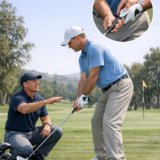
In the pursuit of mastering the ideal golf swing, many players-especially seniors-encounter a recurring and importent error that detracts from their game. This flaw not only diminishes shot distance and precision but also causes considerable frustration during play. Recognizing and addressing this widespread issue is vital for golfers at every level aiming to boost their skills. Fortunately, with expert guidance and proven techniques, players can fine-tune their swing mechanics and develop a more reliable and effective stroke. This article explores the root causes of this swing challenge and offers practical solutions to help golfers enhance their overall performance.
Key Challenges Affecting Amateur Golfers
Many amateur golfers struggle with swings that produce unpredictable results, leading to inconsistent shots and disappointing rounds. A primary culprit behind these struggles is improper grip and stance alignment, which considerably disrupts swing dynamics. An incorrect grip compromises club control and power, often causing slices or hooks. Achieving the right grip ensures better alignment with the target and promotes a smooth swing path. It is essential to maintain grip pressure that is firm yet relaxed to preserve tactile feedback and control throughout the swing.
Equally significant is the alignment of the body. While many golfers concentrate on their upper body positioning, they frequently neglect the placement of their feet and lower body. Misalignment in these areas can trigger compensatory movements during the swing, resulting in inconsistent ball contact. For improved accuracy, golfers should position their feet, knees, hips, and shoulders parallel to the intended target line. Practicing stance alignment in front of a mirror or using alignment tools can be highly effective in identifying and correcting these errors.
Another often overlooked aspect is the follow-through. Many players emphasize the backswing and impact but fail to complete a full follow-through. A proper follow-through demonstrates maintained balance and contributes to better shot dispersion and distance control. Incorporating swings that emphasize an extended follow-through can markedly enhance shot consistency. the following table summarizes these common issues and their recommended corrections:
| Common Issue | Suggested Correction |
|---|---|
| Improper Grip | Modify grip pressure and ensure correct hand positioning. |
| Body Misalignment | Align feet, knees, hips, and shoulders parallel to the target line. |
| Incomplete Follow-Through | Maintain balance and extend the swing through the shot. |

How Misalignment Impacts your Golf Performance
Many golfers underestimate how crucial proper alignment is to their success on the course. Errors in alignment can trigger a cascade of swing faults,undermining both distance and accuracy. when a golfer’s body is not correctly positioned relative to the target line, achieving a straight shot becomes significantly more difficult. Common signs of poor alignment include:
- Closed stance: For right-handed players, facing too far left, frequently enough causing pulled shots.
- Open stance: Facing too far right, which typically results in pushed shots.
- Incorrect shoulder angle: Shoulders pointing away from the target can severely disrupt swing mechanics.
Compounding the problem, poor alignment often leads golfers to unconsciously alter their swing path to compensate for their body’s position. this adjustment frequently causes erratic swings, increased hooks or slices, and missed ball contact. Without awareness of these misalignments,players risk ingraining bad habits that may take months to correct. Prioritizing alignment creates a stable foundation for a consistent and effective swing.
| Alignment Problem | Likely Result |
|---|---|
| closed Stance | shots pulled left |
| Open Stance | Shots pushed right |
| Incorrect Shoulder Position | Irregular swing path |
To address these issues, golfers can incorporate simple yet effective practices into their routines.Using alignment aids such as clubs or sticks provides visual guidance for proper stance and shoulder positioning. Additionally, dedicating time to drills focused on alignment helps embed correct habits. Emphasizing alignment during practice sessions can significantly boost performance and elevate overall play.
Professional Advice for Optimizing Swing Technique
One of the most frequent swing faults among amateur golfers is improper weight transfer, which often results in inconsistent ball striking and unpredictable shots. To enhance this aspect of your game,consider the following strategies:
- Maintain balance: Keep a centered posture to ensure smooth transitions from backswing to downswing.
- Manage footwork: Shift your weight deliberately from the back foot during the backswing to the front foot during follow-through.
- Incorporate drills: Practice weight-shift drills like the ‘step drill’ or use alignment sticks to guide your stance and movement.
Another common error is over-reliance on upper body strength rather than engaging the core for power generation. Excessive arm use can cause a strained swing and diminished control. To correct this, try these approaches:
- Activate your core: Strengthen and engage core muscles to produce a full-body swing that maximizes power and accuracy.
- Initiate with the lower body: Begin your downswing with your hips rather of your arms for a smoother motion.
- Commit to fitness: Include core-strengthening exercises in your workout routine to improve swing stability and overall performance.
many golfers overlook the significance of proper grip and hand placement. An incorrect grip can drastically alter the clubface angle at impact, affecting shot direction. To optimize your grip, follow these tips:
- Check hand positioning: Ensure your hands are neutral-not too strong or too weak.
- Maintain light grip pressure: A relaxed grip allows for better wrist mobility and increased clubhead speed.
- Regularly reassess: Periodically evaluate and adjust your grip; minor tweaks can yield considerable improvements.
Effective Drills to Correct Swing Errors
addressing common swing mistakes requires consistent practice with targeted drills. Focusing on grip and stance adjustments can dramatically improve swing accuracy. Consider these exercises to refine your fundamentals:
- Mirror Practice: Use a full-length mirror to observe and correct your grip and stance, providing immediate visual feedback.
- Alignment Stick Setup: Place two sticks on the ground-one aligned with your feet and another pointing toward your target-to establish consistent setup positions.
- Pumping Drill: Without hitting a ball, perform small, repetitive swing motions to build muscle memory and reinforce proper mechanics.
Once your basics are solid, work on swing mechanics to enhance fluidity and power. The following drills target common mechanical faults:
- Half-Swing drill: Limit your swing to a half-back and half-through motion to focus on balance and form.
- Weighted Club Swings: Use a weighted club or add weight to your current club to build strength and improve swing control.
- Pause at the Top: After completing your backswing, pause briefly before initiating the downswing to improve timing and control.
Incorporating course-specific scenarios into your practice prepares you for real-game challenges. Try these drills to simulate competitive conditions:
- Target Practice: set up targets at varying distances on the driving range to sharpen your accuracy with different clubs.
- Pressure Putting: Create putting drills where missing a putt results in a penalty, helping you develop focus under pressure.
- Simulated rounds: Play practice rounds with specific score goals to mimic tournament conditions and build mental toughness.
Recognizing and correcting the most common swing errors that hinder amateur golfers is crucial for anyone serious about improving their game. By emphasizing sound mechanics and integrating purposeful drills, players can make significant strides in their on-course performance. As golf continues to evolve by blending tradition with modern techniques, addressing these foundational issues empowers golfers of all abilities to raise their level of play and fully enjoy the sport.For those ready to refine their swing and adopt a more effective approach, the journey toward advancement starts today.

unlock Your Best Swing: The #1 Mistake Holding Bad Golfers Back – And How You Can Fix it Today!
The Critical Swing Flaw That stops Most Golfers Cold
If you’ve ever wondered why your golf swing fails you when it matters the most, you’re not alone. The #1 mistake holding bad golfers back isn’t complex – it’s inconsistency in their swing mechanics. More specifically, most struggling golfers lose control of their clubface alignment and body positioning during the swing, which leads to poor contact and erratic ball flight.
Understanding and addressing this problem unlocks the door to more powerful, precise, and repeatable golf swings.Let’s dig deeper into why this happens and how you can fix it starting today.
Why Consistency In Your Golf Swing Matters
Every golf shot is a product of thousands of tiny physical inputs working together – grip pressure, stance, timing, hip rotation, wrist hinge, and more. Even a minor deviation in any of these factors shifts your clubface angle at impact and affects your ball’s trajectory and distance.
Common Consequences of Inconsistent Swing Mechanics
- Slice or hook caused by misaligned clubface
- Chunked or thinned shots due to poor body weight transfer
- Reduced distance and power from inefficient swing tempo
- Lack of confidence stemming from unpredictability
The Core Fix: Mastering Clubface Control and Posture
To fix the biggest swing mistake, you must develop reliable control over your grip, posture, and swing path.Here’s how:
1. Perfecting Your Grip Mechanics
the grip’s position directly affects how the clubface aligns at impact. An unstable or incorrect grip leads to an open or closed clubface, causing slices or hooks.
- Neutral grip: Ensure your hands are positioned so you see two to three knuckles on your lead hand.
- Grip Pressure: Hold the club firm but relaxed – too tight restricts wrist movement, too loose reduces control.
2.Setting Up a Solid Posture and Alignment
The stance and alignment set the foundation for a powerful swing. Without proper posture, it’s tough to maintain balance and generate consistent power.
- Shoulders Parallel to Target: Align your shoulders square to the intended target line.
- Proper Spine angle: Tilt your spine slightly away from the target to promote a natural swing plane.
- Even Weight Distribution: Keep your weight balanced between the balls of your feet and heels.
Pro Tip: Use alignment sticks during practice to check your stance and swing path for better muscle memory.
How to build Consistency: Drills That work
Practice makes permanent. Integrate these drills into your routine to reinforce muscle memory and refine your swing mechanics.
| Drill Name | Purpose | How to Do It |
|---|---|---|
| Slow Motion Swing | Develop control over clubface and tempo | Practice swinging in slow motion while focusing on grip and body rotation |
| impact Bag Drill | Improve strike consistency | Hit an impact bag to emphasize solid contact point and body position |
| One-Handed swings | Enhance grip strength and wrist action | Use only your lead hand to swing the club and focus on smooth follow-thru |
Understanding the Role of Tempo and Timing
Many golfers with inconsistent swings rush the downswing or abruptly decelerate impacting power and accuracy. A smooth, controlled tempo creates a repeatable rhythm that optimizes clubhead speed and ball striking.
- Count “1-2” during your backswing and downswing to maintain steady pacing.
- Use a metronome app designed for golf to train consistent tempo.
- Keep your lower body stable to let your arms swing naturally.
Case Study: From Handicap 20 to Single Digits
John, an amateur golfer stuck at a 20 handicap, struggled with slicing and inconsistent distance. After focusing on grip adjustment and posture correction-specifically addressing his open clubface and weight shifts-he improved his swing consistency dramatically.Within three months of targeted practice, John cut his handicap to under 10, gaining confidence and distance off the tee.
Benefits of Fixing the #1 Swing Mistake
- Better Ball Flight: Reduced slice/hook means straighter, more predictable shots.
- increased Distance: Efficient power transfer leads to longer drives and approach shots.
- Improved Confidence: Knowing your swing mechanics boosts mental toughness on the course.
- Lower Scores: More consistency directly impacts scoring and enjoyment of the game.
Final Practical Tips for Golfers ready to Fix Their Swing
- Record your swing on video and compare it against professional swings to identify flaws.
- Seek feedback from a qualified PGA instructor for personalized advice.
- Be patient and focus on incremental progress rather than overnight perfection.
- Use quality practice aids like alignment sticks, impact bags, and tempo trainers.