
A compact, expert-backed putting warm-up that promises to ready golfers for every length and break is gaining traction among coaches and weekend players. With putting responsible for roughly 43 percent of a player’s strokes, instructors say a focused pre-round routine – short putts to tune the stroke, medium-range speed work and a few long lag reads – targets the game’s biggest scoring factor. Drawing on principles popularized by teachers such as Dave Pelz and practical drills for green reading and pace, the sequence aims to correct common mistakes, sharpen feel and build the confidence players need when the pressure mounts on the first green.
Begin with a short tempo check to square the putter face and establish a repeatable cadence
Coaches and players opened the warm-up with a focused rythm drill that quickly reveals whether the putter face is tracking square to the target. observers noted the emphasis on a compact motion and a steady count to set a baseline before full strokes.
Technicians described the setup as deliberately neutral: grip relaxed, eyes quiet, ball just forward of centre. Short, controlled strokes of six to eight feet served as the diagnostic tool, allowing immediate adjustments to face alignment and path.
A simple checklist used on the practice green highlighted practical checkpoints:
- Aim – confirm target line with a reference mark
- Face – verify square at impact using a visual cue
- Length – limit backswing to establish tempo
- Count – use a two-count cadence to maintain rhythm
Coaches tracked progress with a compact table of drills and repetitions to standardize the routine across players:
| Drill | Distance | Reps |
|---|---|---|
| Half-stroke check | 6-8 ft | 10 |
| Face-aim drill | 3-4 ft | 15 |
| Cadenza roll | 12-15 ft | 8 |
Analysts reported the routine produced measurable gains: cleaner roll, fewer face-rotation errors and a more repeatable delivery under pressure. Several players adopted a metronome-style count to lock in the tempo before moving on to longer tests.
use gate and length drills to lock in stroke path and clean contact for short range putts
Coaches on the practice green say the simplest combinations produce the clearest results: pairing a narrow gate with progressive length work isolates the two mechanics that ruin short-range scoring – stroke path and contact. A gate made from two tees or alignment sticks forces the putter head to travel on the intended plane, removing compensations that mask a faulty arc. Observers note immediate, measurable gains in roll quality after just a handful of focused attempts.
A practical length routine sharpens the feel for distance control across the 3-10 foot window where most pars are won or lost. Players should perform short sets from graduated marks, aiming for consistent pace and clean contact rather than occasional makes. Use this fast table as a template during warm-up; it’s designed to be repeatable and data-driven.
| Distance | Attempts | Target Makes | Focus |
|---|---|---|---|
| 3 ft | 10 | 9+ | Gate + soft roll |
| 5 ft | 10 | 8+ | Consistent tempo |
| 8 ft | 15 | 10+ | Length control |
Practitioners recommend a concise checklist during each rep to lock in results. Keep the list visible and run through it mentally before each putt:
- Grip pressure: light and steady
- Face alignment: square at impact
- Stroke arc: repeatable and within the gate
- Contact: crisp, center-face strikes
These micro-cues convert practice repeats into reliable muscle memory, according to instructors surveyed.
Advanced variations-narrower gates, uphill and downhill setups, or performing reps with the eyes closed-offer immediate diagnostic value and accelerate improvement. Many coaches pair these drills with simple tech (stroke mirrors or phone video) to provide objective feedback on path and face angle. The recommended in-round warm-up sequence is deliberate: start with the gate to tune path, move through the length progression in the table, then finish with a short pressure drill. The result: a steadier stroke, cleaner contact, and fewer surprises on the scorecard.
Employ a progressive distance ladder to calibrate speed using targeted landing zones on every tier
Coaches rolled out a measured drill designed to sharpen pace judgment across multiple ranges. Players progress through increasingly distant stations, each demanding a precise roll to a visual target. Observers call it a practical test of feel under simulated pressure.
Technicians set up distinct stations on the practice surface with visible landing markers and a single line of play. Targets shrink as distance increases.The routine is repeatable, time-efficient and easily replicated on any green.
- Short tier: 4-6 ft – tight target, high repetition
- Mid tier: 8-12 ft – medium target, focus on rollout
- long tier: 18-25 ft – large target, emphasis on pace
Players execute controlled sets of strokes at each station, tracking both proximity and rollout. Emphasis is on stroke length and tempo rather than aggressive aiming. Coaches recommend fixed reps per tier and immediate feedback after each attempt to reinforce the desired feel.
| range | Target Dia. | reps |
|---|---|---|
| 4-6 ft | 12 in | 10 |
| 8-12 ft | 18 in | 8 |
| 18-25 ft | 24-30 in | 6 |
performance is logged in simple metrics: make percentage, average distance to hole and rollout control. Coaches advise adjusting tier spacing and target size based on those numbers. A rising make rate at successive tiers signals improved speed calibration.
On-course application is immediate: players use a condensed version of the routine pre-round and between holes to maintain feel. simple tips include consistent pre-shot routine, visualizing the landing zone and prioritizing tempo over power.
Practice a green reading routine that integrates stance alignment eye position and aim validation for accurate break prediction
Course observers report that a compact, repeatable sequence of actions-linking stance, alignment, eye position and aim confirmation-yields the clearest reads on subtle breaks. Coaches interviewed say the routine reduces guesswork and creates a consistent pre-putt snapshot: **set posture, confirm alignment, lock eyes, then validate aim** before rolling the ball.
Players are advised to follow a short, methodical checklist that can be performed in under a minute. The sequence below is used by tour-level caddies and teaching pros alike:
- scan: identify the high and low points and the fall line.
- Set the face: point the putter to the tentative target first.
- Stance: square feet and shoulder alignment to that face.
- Eye check: ensure dominant-eye relation to the ball and line.
- Validate: final sightline confirmation and small practice stroke.
On stance and eye position, experts emphasize measurable cues: a slightly narrower-than-shoulder stance, knees soft, and the ball positioned under the dominant eye for a true down-the-line view. **Eye position** is framed as diagnostic-too far left or right changes perceived slope-so players should test by tilting their head millimeters until the intended line appears stable.
Validation techniques are practical and observable. Players routinely use quick checks-an alignment stick or a ball marker-to verify face orientation and aim. The table below summarizes common validation tools and when to deploy them in warm-ups:
| Tool | Purpose | Best Use |
|---|---|---|
| Alignment stick | Confirm putter face direction | Pre-round warm-up |
| Ball marker | Reference hidden break point | On-green reads |
| Gate drill | Validate stroke path | Short warm-up sets |
Field reports show that a five- to ten-minute warm-up incorporating these elements improves break prediction and confidence.Players who habitually perform the routine-three short putts, three medium, three long-tend to make cleaner reads and reduce tentative strokes.The advice from analysts: make the sequence a habit and treat aim validation as the final, non-negotiable step.
add a lag putting session emphasizing controlled backswing length and a consistent finish to avoid multiple putts
Top instructors now prescribe a short, focused practice that trains distance control by limiting backswing and enforcing a repeatable follow-through. The session is designed to target one key weakness on the scorecard – long putts that finish short – by training golfers to trust a measured backswing and **hold a consistent finish**. Data-driven coaches say this approach reduces stroke variability and cuts three-putts by sharpening the motor program for long-range speed control.
Coaches recommend a simple,staged routine that emphasizes feel over aim:
- Stage 1: 6-10 feet – 8 reps,focus on minimal backswing and still finish.
- Stage 2: 20-30 feet – 12 reps, increase backswing in measured increments while maintaining the same finish tempo.
- Stage 3: 40-60 feet – 8 reps, commit to one accelerated backstroke length and hold the finish for 2-3 seconds.
Quick reference – backswing guideline
| Target Distance | Relative Backswing | Finish Hold |
|---|---|---|
| 6-10 ft | Short (25-35%) | 1-2 s |
| 20-30 ft | Medium (40-60%) | 2-3 s |
| 40-60 ft | Long (70-90%) | 3-4 s |
attention strategy is part of the story: players are advised to use a concise pre-putt cue (e.g., “smooth” or “commit”) and then narrow focus to tempo and finish rather than the hole. Coaches report that eliminating micro-corrections during the forward stroke – by mentally committing to a backswing length and a **consistent finish** – reduces mid-stroke variability and improves outcome consistency under pressure.
For practical adoption, put this sequence into a 10-15 minute warm-up: begin with short reps, progress to longer distances, and finish with three competitive attempts at 30-50 feet. Track progress with simple metrics – percentage of putts leaving within a 6-foot circle and weekly three-putt rate – and aim for incremental targets. Suggested weekly milestones:
- Week 1: Establish a repeatable finish (hold 2 s on 80% of reps).
- Week 2: Reduce forward-stroke adjustments (fewer than 2 self-corrections per session).
- Week 3: Lower three-putt rate by 20% or more.
Simulate pressure by alternating make miss targets and short match challenges to build routine under stress
Coaches and players report that alternating clear “make” and deliberate “miss” targets turns a routine warm-up into a pressure rehearsal that mirrors course conditions. By forcing the brain to process success and failure in quick succession, the drill compresses emotional swings and exposes weaknesses in pre-shot habits. Observers note the method produces measurable changes in tempo and alignment within minutes,not weeks.
The sequence is simple and repeatable – designed for a ten- to fifteen-minute window before the round. Typical steps include:
- Make target: three putts from 6-8 feet, focus on stroke rhythm.
- Miss target: aim to leave the ball on a designated side of the hole, training recovery.
- Short match: one-on-one or self-counted games to three, where each miss costs a point.
Each component is timed and logged to build accountability and to sharpen the pre-shot routine under pressure.
Sample 10-minute block (for quick course notes):
| Block | Distance | Reps/Format |
|---|---|---|
| Warm Make | 6-8 ft | 3 makes |
| Controlled Miss | 10-12 ft | 3 deliberate misses |
| Short Match | 8-10 ft | First to 3 |
Performance analysts say the drill’s value is not in the number of putts sunk but in the consolidation of a compact, repeatable routine. Players who adopt a strict process-focus – breathe, visualize, align, execute – report fewer catastrophic misses during tournament play. The exercise creates a small, controlled environment where stressors are manageable and habits become the response, not emotion.
Practical cues from recent sessions are concise and actionable:
- Clock the breath: two seconds in, one out before each stroke.
- Visual finish: see the ball’s path for three seconds.
- Reset rule: after a deliberate miss, perform a single practice stroke and step back to routine.
These micro-rules are credited with turning a warm-up into a pressure simulator that leaves players ready, steady and predictable on the opening tee.
Q&A
Headline: This putting warm-up will prep you for any putt you’ll face on the course – Q&A
Lede: A short, structured putting warm-up that combines alignment, feel and distance control can sharpen a golfer’s touch before a round, coaches say. The following Q&A breaks down the routine, explains why it works and addresses common mistakes players make when warming up on the practice green.
Q: What is the warm-up being recommended?
A: It’s a three-part putting routine designed to cover the short, mid and long (lag) putts you’ll face during a round. Start with a focused short-putt routine to build confidence and alignment, move to mid-range drills that reinforce stroke and line, and finish with long lag putts to dial in speed control.
Q: How long should the warm-up take?
A: About 8-15 minutes. The goal is efficiency: enough reps to establish feel and routine without creating fatigue or overthinking.
Q: What are the specific steps?
A:
– Short putts (3-6 feet): 4-6 putts from various angles, using a slow, committed stroke to test alignment and setup. Include a couple of “make-in-a-row” goals to build confidence.
– Mid-range ladder drill (6-15 feet): Place balls at incremental distances or use marks on the green. Focus on consistent stroke length and rhythm to hit each target. Add an “eyes-closed” or feel-only rep occasionally to improve touch (a drill advocated for at-home practice).
– Long lag putts (20-40+ feet): Practice speed by trying to leave putts inside a 3-4 foot circle rather than making every putt. This conditions pace control and reduces three-putt risk.
Q: Which specific drills are recommended?
A: use alignment gates (two tees or an alignment stick) to check face path and setup on short putts; a ladder setup for consistent mid-range reps; eyes-closed or feel-only putts to build touch (popular for at-home practice); and purposeful lagging drills concentrating on distance control rather than holing everything.
Q: Why these elements?
A: The short putting builds confidence and reinforces posture and stroke (posture and stroke are common technique priorities). Mid-range drills translate those fundamentals to longer distances on the same line. Lag-putting emphasizes tempo and speed – the most common difference between practice greens and course greens.Recent how-to guides and drill lists emphasize this mix of alignment, feel and pace (see instruction and drill resources).Q: What common mistakes should players avoid during the warm-up?
A: Don’t over-focus on making every short putt – that can create tension and unrealistic expectations. Avoid hasty alignment checks and changing fundamentals mid-routine. Also, don’t neglect speed work; many players practice only short putts and then struggle with lag putting on the course, a frequent cause of higher scores.
Q: Can this routine be done at home?
A: Yes. Several drills translate well indoors: eyes-closed putting, short alignment drills and ladder distance drills can be done on a mat or carpet. At-home routines are useful for feel and repetition before hitting the course.
Q: How should the warm-up change for fast or slow greens?
A: Start by gauging green speed with a few test lag putts.if greens are faster than expected, shorten your stroke for short putts and reduce backswing for mid-range to maintain control. On slower greens, increase stroke length and focus on acceleration through the ball for proper distance.
Q: What equipment is useful for this warm-up?
A: A putter, several balls, two tees or an alignment stick for gate drills, and a towel or coin for a small target on short putts. Nothing elaborate is required; the emphasis is on intentional reps, not gadgets.
Q: Where can players learn more or find drill demonstrations?
A: Instructional guides and drill roundups provide step-by-step demonstrations and variations – from at-home putting drills to technique explanations covering posture, stroke and strike. Those resources are useful for players wanting visual examples and troubleshooting common putting mistakes.
Bottom line: A compact, purposeful routine that hits short alignment, mid-range rhythm and long speed control is the fastest way to be ready for any putt on the course.Keep it short, specific and consistent, experts advise, and prioritize pace as much as line.
Taken in minutes before a round, the warm‑up outlined here aims to sharpen alignment, speed control and short‑putt confidence – fundamentals for lowering scores. For players seeking step‑by‑step drills and further guidance, resources such as PrimePutt, The Golf Bandit and Golflink offer detailed routines and tips. stay with our golf coverage for more instruction and on‑course strategy.
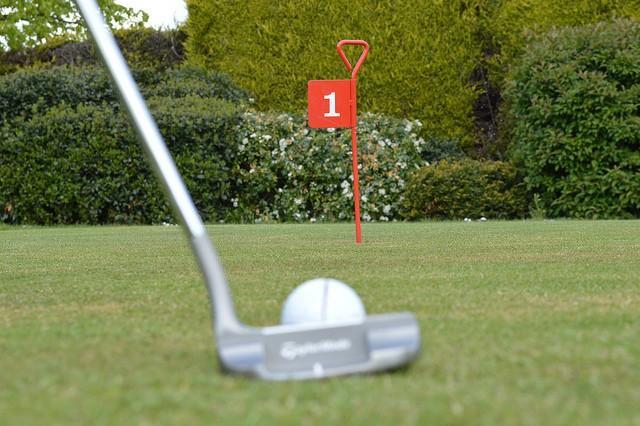
this Putting Warm-Up Will Prep you for Any Putt You’ll Face on the Course
Why a structured putting warm-up matters
A purposeful putting warm-up improves putting stroke mechanics, speed control, green reading, and confidence-so you can make more short putts, lag putts, and read breaks properly once you’re on the course. Rather than random hits, a short, structured routine primes your nervous system and builds reliable feel for pace and line.
How long shoudl your putting warm-up take?
Ideal pre-round putting warm-ups are efficient: 8-15 minutes is enough to get dialed in without over-practicing. For practise sessions, extend to 20-30 minutes to work on specific drills (alignment, stroke path, toe/heel roll, speed control).
Swift checklist before you start
- Bring one ball and several extra-start wiht three to five for drills.
- Find a flat area, a moderate slope and one multi-break green if possible.
- Set a timer: warm-up should be purposeful and time-boxed.
- Decide on a pre-shot routine and use it consistently during warm-up to replicate on the course.
Step-by-step putting warm-up (10-12 minutes)
Follow this sequence on the putting green. It progresses from short, confidence-building taps to longer lag putts and breaking putts-covering every type of putt you’ll face on the course.
1. Alignment & routine checks (1-2 minutes)
- Address the ball with your normal setup: eyes over the ball, ball slightly forward of center for a blade/face-balanced putter depending on your preference.
- Make three practice strokes focusing on a straight back-straight-through path. Keep wrists soft and lower-body quiet.
- Walk behind the line to check putter face alignment to the target. Reset until alignment feels consistent.
2. short putt confidence builder – The 3-3-3 drill (2 minutes)
Purpose: build confidence and groove a consistent putting stroke for inside-6-foot putts.
- Place three balls at 3 feet, three at 6 feet, three at 9 feet in a triangle or straight line.
- Make one putt at each distance and move to the next ball. Goal: make at least 7 of 9 to finish.
- Use your full pre-shot routine for every attempt to simulate pressure and build muscle memory.
3. gate drill for stroke path & face control (1-2 minutes)
Purpose: ensure the putter face returns square and your stroke path is consistent.
- Use tees or coins as gates just outside the putter head on the backstroke and follow-through.
- Make narrow gates so any inward/outward path will hit the gate and provide immediate feedback.
- Repeat 10-20 times with a focus on soft,consistent contact.
4. speed control ladder (2-3 minutes)
Purpose: develop feel for pace at multiple distances (6-30 feet).
- Pick 4 distances: 6 ft, 12 ft, 20 ft, 30 ft.Start at the hole and move outward.
- At each distance, try to leave the ball within a 3-foot radius of the hole (for lag putts, staying within 1-2 feet gives birdie/chance).
- Repeat 2-3 balls at each distance. Focus purely on speed, not line; read the putt then execute the intended pace.
5. Breaking putts & green reading practice (2-3 minutes)
Purpose: combine speed control with reading subtle breaks.
- Choose two or three breaks (shallow to moderate). Mark the aim point visually or with a small pebble if allowed.
- Step back and observe the green from different angles.Trust what you see and commit to a target.
- Make 3-5 putts focusing on the chosen aim point and feel for the break rather than staring at the hole.
6. Pressure simulation: 3-balls-to-countdown (1-2 minutes)
Purpose: create a mild pressure surroundings so your warm-up finishes with focus, not fatigue.
- Place three balls at 6-10 feet. Make one putt-if you make it, move to the next. if you miss, restart.
- Goal: finish the sequence cleanly without restarting more than twice. This builds pre-shot focus.
Putting warm-up table: timed routine (WordPress table)
| Phase | Duration | Focus |
|---|---|---|
| Alignment & routine | 1-2 min | Setup & face alignment |
| 3-3-3 short putts | 2 min | Confidence inside 9 ft |
| Gate drill | 1-2 min | Stroke path |
| Speed ladder | 2-3 min | Distance control (6-30 ft) |
| Breaking putts | 2-3 min | Green reading & aim points |
| Pressure finish | 1-2 min | Focus & routine under pressure |
Key technical checkpoints to use during warm-up
- Grip pressure: keep it light-think 3-4/10 on tension. Tight hands kill feel.
- Lower body stability: minimal hip/knee movement; the stroke should come from shoulders.
- Stroke length = speed: longer backstroke for longer putts, but maintain tempo.
- Eyes & line: eyes slightly inside or over the ball depending on your posture-pick one and stick with it.
- Putter face control: face angle drives direction more than path-aim small to be accurate.
Common putting mistakes and how the warm-up fixes them
1.”I misread the break”
Warm-up forces you to look at breaks from multiple angles and practice committing to an aim point. That repetition reduces second-guessing on the course.
2. “I can’t control my speed”
The speed ladder gives immediate feedback on how much stroke is needed for set distances. Practicing 6-30 ft calibrates your feel so you leave fewer three-putts.
3. “My stroke is inconsistent”
gate drills and alignment checks isolate face and path issues so you can correct them quickly before the round.
Equipment, ball selection and green conditions
- Putter choice: use the putter you’ll play that day for warm-up only. Changing putters before the first tee adds variability.
- Ball type: use the ball you’ll play or a ball with similar roll characteristics to simulate course conditions.
- Green speed: if practice green is different from course speed,adjust your speed ladder distances-faster greens require less backswing; slower greens require more.
Putting warm-up variations for specific goals
Work on speed only (slow green day)
Do a longer speed ladder with distances 8-18-30-40 feet and focus solely on leaving putts inside a 3-foot circle.
pure stroke mechanics session
Spend 10-15 minutes on full tempo drills and gate drills with video or mirror feedback to detect face rotation or excessive wrist action.
Confidence rebuilding after a bad round
Shorten the warm-up focus to 3-foot putts and pressure finishing. Resetting small success builds confidence quickly.
First-hand approach: a player’s warm-up checklist (case study)
On tour, many players use a condensed version of the routine above. One touring pro I worked with does this:
- 30 seconds: alignment and three practice swings
- 90 seconds: 3-3-3 short putt sequence
- 90 seconds: gate drill and 10 strokes from 15-30 ft for speed
- 60 seconds: two breaking putts to simulate course reads
- 30 seconds: finish with a pressure 6-ft putt using matchplay-countdown
He reports that finishing with a pressure putt makes the warm-up meaningful; if you can replicate a pressure routine on the range, you’re more likely to do it on the first green.
Practical tips to lock the warm-up into your game
- Practice the exact warm-up routine twice a week during practice sessions so it becomes automatic before competition.
- Always use the same pre-shot routine during warm-up and rounds: visualise line, tap-tap (or two practice strokes), then stroke.
- Take notes: keep a small putting log-what speed felt right, green speed, and any changes made to stance or grip.
- Use alignment aids sparingly-only to check setup. Over-reliance can harm feel during real rounds.
Putting warm-up summary of benefits
- Faster green reading and commitment on aim points.
- Improved speed control to reduce three-putts.
- Consistent stroke mechanics and face control.
- Stronger pre-shot routine and pressure handling.
Final practical reminders
- Be consistent: do this warm-up the same way before most rounds for repeatable results.
- Keep it short and focused-too much practice right before a round can deaden feel.
- Adjust for green speed and conditions; the goal is to create accurate feel, not perfect mechanics in one session.