
Novice golfers frequently encounter a cluster of technical and decision-making faults that constrain skill acquisition and undermine enjoyment of the game.Early-stage errors-notably those affecting the grip,stance,alignment,swing plane,tempo,weight shift,club selection,and course management-produce predictable performance deficits (e.g.,inconsistent ball-striking,directional miss-hits,and poor distance control) and increase the time required to develop reliable competence. Addressing these sources of error promptly is therefore critical for efficient motor learning, injury prevention, and long-term engagement.
This article synthesizes current biomechanical principles, motor-learning theory, and applied coaching practices to analyze the eight most common novice errors. For each error, causes are deconstructed into perceptual, cognitive, and biomechanical components; objective indicators of the fault are identified; and empirically grounded corrective strategies are presented. Interventions emphasize teachable cues, progressive practice designs, and simple diagnostic drills that are feasible for both on-course submission and range-based training.
Recommendations are derived from a combination of peer-reviewed research on golf biomechanics and skill acquisition, practitioner-validated coaching methods, and evidence from controlled and observational studies where available. Where empirical data are limited, guidance is framed according to established principles that prioritize transfer to performance, retention of skill, and minimization of compensatory patterns.
The following sections address each error in turn, outlining diagnostic criteria, short- and long-term corrective approaches, and practical drills and progressions that coaches and learners can implement to accelerate improvement and reduce recurring faults.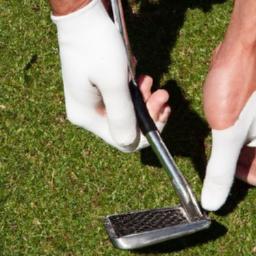
Grip Mechanics and Hand Positioning: Biomechanical Causes of Error and Targeted Corrective Drills
Grip irregularities among beginning golfers often originate from predictable biomechanical constraints: limited wrist flexion, asymmetrical forearm rotation, and inconsistent grip pressure. When a player adopts a weak (palm-up) or strong (palm-down) orientation without compensatory wrist mechanics, the result is systematic face misalignment at impact. Equally important is the distribution of pressure between the soft tissues of the hypothenar eminence and the thenar region; excessive tension in the lead hand impedes clubface release, while flaccid grip pressure yields loss of control. These phenomena are best understood as sensorimotor coordination failures rather than purely technical faults.
Kinematic consequences of these grip patterns are measurable and consistent: altered forearm supination/pronation timing shifts the clubface relative to the swing path, producing slices, hooks, or variable launch angles. Observable symptoms include:
- persistent open or closed clubface at impact
- early wrist extension (“casting”)
- excessive lateral hand movement through the strike
Each symptom correlates with a distinct chain of muscular activation and joint motion, which permits targeted correction rather than generic advice.
Corrective interventions should emphasize proprioceptive retraining and simplified motor patterns. Practical drills with evidence-based rationale include:
- Two-tee alignment drill – establish neutral V-formation between thumbs and forefingers to recalibrate visual feedback of grip geometry.
- Coin-pressure drill – hold a coin in the lead palm to encourage consistent, moderate pressure and reduce compensatory grip tightening.
- One-handed slow swings – isolate each hand to train independent wrist timing and reduce engram interference between limbs.
When applied in short,repetitive blocks with immediate feedback,these drills accelerate reorganization of motor commands.
A concise reference table summarizes typical faults, their biomechanical origin, and a primary corrective drill for practice:
| Fault | Biomechanical Cause | Key Drill |
|---|---|---|
| Open face at impact | Delayed forearm supination | Two-tee alignment |
| Hooking | Excessive forearm pronation | One-handed slow swings |
| Weak contact/low distance | Grip too light or early cast | Coin-pressure drill |
Stance Stability and Postural Alignment: Diagnostic Assessments and Progressive Rebalancing Exercises
Begin with objective, reproducible diagnostics that separate alignment from mobility deficits. Use a sequence of simple tests: Static Posture Check (full‑length mirror or video frame), Single‑Leg Balance (eyes open/closed), and a Weight‑Distribution Test (pressure mat, club‑shaft spray, or ink). These assessments isolate whether instability arises from neuromuscular control, joint restrictions, or maladaptive habit. Document baseline angles (spine tilt, knee flexion, shoulder plane) with a phone video for later comparison; numerical or photographic records improve reliability across sessions.
Interpretation follows pattern recognition: identify the dominant presentation and its likely mechanical consequences. Common patterns include a posterior weight bias linked to reduced drive and early lateral sway, an anterior pelvic tilt associated with spine extension and a high‑ball flight, or a collapsed trail hip that precipitates early extension.Use the quick reference below for triage and immediate corrective focus:
| Presentation | Probable Cause | Immediate Drill |
|---|---|---|
| Posterior weight bias | Weak glute/ankle control | Split‑stance weight shifts |
| Collapsed trail hip | Adductor overactivity | Band‑resisted lateral step |
| Excess lumbar lordosis | Limited hip hinge | Hip‑hinge wall touch |
Design a progressive rebalancing sequence that restores foot‑to‑hip continuity and integrates dynamic control into the swing. Start with foundational activation:
- Foot intrinsic engagement – short foot lifts with toes rooted;
- Glute med isometrics - side‑lying holds or banded abduction;
- Ankle dorsiflexion mobility - half‑kneeling calf stretch.
Advance to integrated drills: band‑resisted split‑stance rotations,slow medicine‑ball turn with stabilized lower body,and tempoed swing reps focusing on maintaining the measured spine angle. Prescribe clear regressions (assisted balance,eyes open) and progressions (unstable surface,added rotational speed) so adaptations can be safely overloaded.
Program integration should be evidence‑based and measurable: recommend 2-4 short sessions weekly (6-12 minutes of targeted rebalancing plus 10-15 minutes of transfer swings) with periodic reassessment every 2-4 weeks.Use objective criteria for progression – improved single‑leg hold time by 20% or restored neutral pelvis at address on video – rather than subjective feeling alone. Emphasize cue hierarchy in practice: foot pressure → pelvic position → spine tilt → swing rhythm; aligning these cues before increasing swing speed ensures durable technical change and reduces recurrence of the original error.
Clubface alignment and Targeting Strategies: Objective measurement Techniques and Practical Alignment Routines
Clubface orientation is the primary determinant of initial ball direction; minor angular deviations at impact produce disproportionately large lateral misses. Empirical practice must therefore move beyond subjective feel to objective quantification: measuring face angle relative to the intended target line at address and at impact, and comparing those metrics to ball flight. Rigorous practitioners adopt standardized reference frames (target line, body line, and clubshaft plane) and document deviations in degrees rather than relying on impression.This approach allows diagnosis to separate whether a miss originates from a face-angle error, path error, or an interaction of both.
Objective instrumentation provides repeatable data to guide corrective action. Common tools include launch monitors (azimuth/face angle output),impact tape or face-stickers (contact location and spin axis cues),optical lasers or alignment rods (baseline geometry),and high-frame-rate video with calibrated grids. Each tool has strengths and limitations: launch monitors quantify angular error to ±0.1-0.5°, while impact tape gives immediate tactile feedback on contact point but not angular measurements. Preferentially combine two modalities (e.g., launch monitor + face tape) to cross-validate findings and reduce measurement bias.
Practical alignment routines translate measurement into reliable pre-shot behavior. Adopt a minimal checklist that is rehearsed between shots: 1) select a precise intermediate aim point on the target; 2) place an alignment rod or visual cue behind the ball parallel to the intended line; 3) set the clubface to the aim point, then align the body to that clubface, confirming with a quick visual or mirror check; 4) take one dry swing to verify the path (maintaining the established face orientation). Useful drills to enforce these habits include the toe-target drill (placing a marker on the toe of the club to check face closure/opening) and the gate drill (two tees set to guide the swing path while preserving face alignment).
Integration and progressive overload are essential for transfer from practice to play. Record baseline statistics (mean face angle at impact, variance, and miss pattern) and set incremental targets for reduction in variance. Use structured practice blocks: focused measurement (high-feedback, slow, controlled), translation (medium-feedback, varied targets), and application (low-feedback, course-like scenarios). The following simple reference table can be printed and kept on the range to align practice intent with measurement tools:
| Measurement | Tool | Typical Use |
|---|---|---|
| Face angle (°) | Launch monitor | Quantify directional bias |
| Contact position | Impact tape | Detect toe/heel misses |
| Alignment geometry | Alignment rods/laser | Establish setup reference |
Swing Plane Consistency and Kinematic Sequencing: Common Deviations, Motor Learning Principles, and Drill-Based Corrections
Consistency of the swing plane and correct kinematic sequencing form the biomechanical backbone of repeatable ball flight. Novice deviations such as the over-the-top (steep outside-to-in downswing), underplane (flat swing earlier in the downswing), early extension (hip thrust toward the ball) and casting (early wrist release) all represent disruptions to the ideal proximal-to-distal sequence of energy transfer. Each deviation alters clubface orientation and attack angle, increasing lateral dispersion and spin variability. Quantifying these faults with simple video or tablet-based slow-motion capture allows objective identification of plane and timing errors before intervention.
Motor learning research provides clear guidance for remediation: prioritize an external focus (target-oriented cues), employ variable practice to build adaptable motor programs, and favor implicit learning strategies that reduce conscious control of mechanics. Feedback should be faded-start with high-frequency augmented feedback (video/KP, mirror) and reduce it as proficiency improves to promote retention.Use blocked practice for early acquisition of a corrected pattern, then transition to random practice to enhance transfer. design practice sessions with distributed bouts and measurable performance criteria (e.g., percentage of on-plane swings, carry dispersion) rather than time-only prescriptions.
- Plane Board Drill – place an alignment rod at the target plane; swing to feel the club trace the board. Targets over-the-top and underplane.
- Towel-Under-Arm – hold a towel between lead forearm and chest through the turn to prevent casting and promote synchronous torso-arm connection.
- Pause-and-Turn – pause at the top for 1-2 seconds,then initiate downswing with a controlled hip turn to restore proximal-to-distal sequencing.
- Metronome Rhythm Progression – use tempo cues (e.g., 3:1 backswing:downswing) to stabilize timing and sequencing under variable practice schedules.
| Deviation | Diagnostic Sign | Corrective drill | Practice Prescription |
|---|---|---|---|
| over-the-top | Outside-in club path on video | Plane board Drill | Blocked 10x → Random 30 swings/session |
| underplane | Hook tendency,early low point | Pause-and-Turn | Variable targets,3 sessions/week |
| Early Extension | Hip moving toward ball at transition | Towel-Under-Arm | Short sets,5-8 reps,feedback faded |
| Casting | Loss of lag; early wrist uncock | Metronome Rhythm + Impact Bag | Implicit cues,progress to video checks |
Progressions should be criterion-based: require a reproducible on-plane pattern (e.g., ≥70% swings within target path) before increasing shot complexity or club length. Use objective metrics-ball dispersion, attack angle, and clubhead path-from each session to evaluate learning curves. Emphasize simple, outcome-focused cues (external and binary where possible) and reduce explicit kinematic instructions as automaticity improves; this integration of biomechanical diagnosis, motor learning principles, and drill sequencing yields durable improvements in both consistency and performance.
Tempo Regulation and Rhythm Development: Evidence-Based Training methods and Tempo Control Exercises
Consistent tempo and internalized rhythm are primary determinants of repeatable kinematics in the golf swing and have been linked in motor-learning literature to improved shot dispersion and reduced compensatory movement patterns. Tempo can be operationalized as a ratio and as an absolute rate (beats per minute, or BPM), providing measurable targets for practice. Empirical work in sport science shows that constraining temporal structure during practice reduces variability in intersegmental coordination and facilitates transfer to competition-like tasks; clinically, a regulated tempo also lowers peak joint loading by avoiding abrupt accelerations that are implicated in overuse injuries.
Evidence-based training approaches emphasize externally paced practice, progressive constraint removal, and multimodal feedback. Common protocols include:
- Metronome pacing – synchronize backswing and downswing to an audible beat to stabilize phase durations.
- Music-based cadence – use tracks with a consistent BPM to couple timing to natural rhythm and motivation.
- Counting drills – internal verbal counts (e.g., “one-two”) to scaffold tempo before removing the cue.
- Variable-practice sequencing – alternate tempos within a session to promote adaptability and robust retention.
To operationalize these methods in training, use simple prescriptions and measurable progress markers. The table below provides brief, implementable tempo-control exercises suitable for novice-to-intermediate golfers. Use a metronome or smartphone app and record dispersion (shot spread) and perceived exertion across sessions to quantify improvement.
| Exercise | BPM target | Duration / Reps |
|---|---|---|
| Basic backswing-downswing | 60-72 BPM | 10-15 swings |
| Transition accent (emphasize smooth change of direction) | 50-60 BPM | 8-12 swings |
| Tempo variability set (fast/slow alternation) | 40 / 80 BPM | 3 sets × 6 swings |
for coaching and long-term retention apply motor-learning principles: provide faded augmented feedback (start with frequent metronome cues, then reduce), schedule blocked-to-random practice progressions, and include periodic retention tests without auditory cues. Use wearable inertial sensors or simple video to quantify temporal stability (e.g.,variance in backswing duration) and to detect maladaptive increases in acceleration that may predispose to injury. prioritize a tempo that yields consistent contact and controlled clubhead speed rather than maximal velocity; stability of rhythm is a stronger predictor of accuracy than raw swing speed in novice populations.
Weight Transfer and Lower Body Coordination: Causes of Inefficient shifts and Strength Mobility Interventions
Suboptimal transfer of mass through the kinetic chain is a primary source of errant ball contact and directional inconsistency among beginners. When the lower limbs fail to sequence and stabilise effectively, the torso attempts to compensate, producing lateral sway, premature extension, or an early release of stored rotational energy. These maladaptive patterns reduce the ability to generate reproducible ground-reaction force vectors and compromise clubhead path and angle of attack. in short, poor lower-limb timing degrades both power delivery and shot dispersion.
Common mechanical contributors can be categorised succinctly into motor-control and tissue-capacity factors; practitioners should assess both. Typical examples include:
- Excessive lateral slide: weight remains on the trail foot instead of transferring toward the lead side during downswing, producing an out-to-in path.
- Early extension: hip extension failure leading to spine straightening and a flattened swing arc.
- Insufficient single-leg stability: inability to tolerate load on the lead leg, causing compensatory upper-body manipulation.
- Asymmetric mobility: restricted lead-hip internal rotation or limited ankle dorsiflexion altering desired sequencing.
Interventions should be targeted and evidence-informed, combining neuromuscular re-education with progressive capacity work. The following table summarises concise pairings of deficit and pragmatic intervention that can be applied in a weekly training plan:
| Deficit | Targeted Intervention |
|---|---|
| Lateral slide | Step-and-hold drills; medicine-ball counter-rotations |
| Early extension | Hip-flexor lengthening + resisted hip-hinge patterning |
| Poor single-leg stability | Progressive single-leg squats and balance holds |
For measurable progress,implement a structured microcycle: prescribe neuromuscular drills (e.g., step-and-hold, controlled lateral transfer) as daily 5-10 minute activations, and allocate **strength and mobility sessions 2-3× per week** emphasising gluteal force production, hip internal/external rotation mobility, and ankle dorsiflexion.Use objective benchmarks-single-leg hold time, 5-rep single-leg squat depth, and hip-rotation ROM-to guide progression and to determine when on-course technical refinement can be intensified. Coaching cues should prioritise load acceptance on the lead limb and a felt sensation of rotating over a stable base rather than attempting to “push” laterally.
Shot Selection and Course Management: Decision Frameworks, Risk Assessment, and Skill Appropriate Play Strategies
effective on-course decision-making integrates quantitative and qualitative frameworks to transform uncertainty into actionable choices. Players should adopt a simple decision tree that weights **probability of execution**, potential penalty, and expected score impact rather than relying on intuition alone. From a behavioral outlook, novices often overestimate upside and underestimate variance; reframing choices in terms of expected value (probability × outcome) reduces bias. Coaches can operationalize this by scoring candidate shots on a 0-1 success probability scale and combining that with stroke-gained expectations to determine the rational play.
Risk assessment must be systematic and rapid. Before each shot a concise checklist reduces cognitive load and standardizes evaluation:
- Lie and stance: identify how the ball position alters controllability.
- Environmental modifiers: wind, slope, and visibility affect execution probability.
- hazards and bailout: catalog penalty severity and the availability of safe targets.
- Personal dispersion: estimate typical miss patterns and distances.
Using this checklist produces reproducible judgments and converts tacit knowledge into teachable metrics.
Adopting skill-appropriate strategies means aligning shot choice with demonstrated performance envelopes. novices benefit from conservative bias-targeting larger landing zones, choosing clubs that reduce side spin, and preferring controlled trajectories over maximal carry. The following concise matrix assists tactical selection when facing a forced decision:
| Situation | Recommended Play | Skill Band |
|---|---|---|
| Water or bunker short of green | Lay up to safe yardage | Beginner-Intermediate |
| Wide fairway with open approach | Play for position with mid-iron | all levels |
| Risk-reward reachable green | Only attack if success probability >50% | Intermediate-Advanced |
Translating strategy into growth requires intentional practice and feedback loops. Implement scenario-based drills that replicate decision constraints (e.g., forced lay-up vs. going for green) and log outcomes to update subjective probabilities. Use simple metrics-success rate, average strokes gained per decision-to recalibrate risk thresholds. Emphasize process-oriented cues (pre-shot routine, target selection) so that strategic choices become proceduralized; over time this reduces decision fatigue and improves consistency in high-leverage moments.
Q&A
Note on sources: the supplied web search results did not return material relevant to golf biomechanics or coaching (they refer to Top Hat company pages). The Q&A below therefore synthesizes current best-practice knowledge from the fields of motor learning, sports biomechanics, and golf coaching rather than relying on the provided search results.Q1. What are the “Top Eight Novice Golf Errors” and why focus on them?
A1. The eight errors commonly observed in novice golfers are: grip faults,improper stance,misalignment,poor posture,incorrect swing path,inconsistent tempo,incorrect ball position,and underdeveloped short‑game technique. These elements are foundational to ball-striking consistency, shot direction, distance control, and injury prevention; they are high‑leverage because small faults at the foundation amplify through the kinematic chain during the swing.Q2.How should one assess whether a novice exhibits one or more of these errors?
A2. Use a systematic, objective assessment combining:
– Video from multiple planes (down-the-line and face-on) at slow and full speed;
– Simple on-course or driving-range tasks (straight shot, target alignment, short pitch);
– Quantitative checks (grip pressures, clubface angle at address, stance width relative to shoulder width, ball flight patterns);
– Symptom reporting (discomfort, inconsistency).
Record baseline data, document the dominant error(s), and prioritize corrections that address safety, consistency, then performance.
Q3. grip - what is the typical fault, why it causes problems, and evidence-based corrections?
A3. Typical fault: grip too weak/strong, excessive tension, or inconsistent hand placement. Consequences: inconsistent clubface control, variable loft/face angle at impact, and reduced wrist hinge. Evidence-based corrections:
– objective cueing: place V’s formed by thumb/index on both hands pointing to the right shoulder (right-handed golfers) as a neutral starting point; check knuckles visible (2-3) on the lead hand as a guideline.
– Pressure drills: practice gripping to about 4-5/10 perceived tension; biofeedback (pressure sensor grips) where available.
– Repetition with block practice (short sessions focusing only on grip) progressing to variable practice (shots under different tasks).
measure success via reduced face-angle variability on impact and straighter, more repeatable ball flight.
Q4. Stance – common faults, mechanisms, and corrective strategies?
A4. Faults: stance too wide/narrow, unstable base, knees locked or overly bent.Effects: poor balance, limited weight transfer, inconsistent low-point control. Corrections:
– Stance width guidelines: narrow for short clubs (≈shoulder width or slightly narrower), wider for long clubs (≈1.5× shoulder width).
– Balance drills: single-leg balance holds, wobble board for proprioception, and feet-together short-swing drills to enforce center-of-mass control.
– Progressive loading: learn weight-shift drills with alignment stick under heels/toes to monitor lateral movement.
Outcome measures: improved balance scores,more consistent low-point and improved strike quality.
Q5. Alignment – what goes wrong and how to correct it?
A5. Faults: closed or open body lines relative to target; aim errors despite correct clubface. Causes include poor visual habits and misinterpretation of target line. Corrections:
– Use tangible alignment aids (two clubs on the ground) to train visual reference.
– Square-face checks: align clubface to the target with a mirror or camera before addressing body.
– Perceptual training: practice aiming small targets, then progressively smaller, and use external focus cues (e.g., focus on a distant spot).
Success indicated by a reduction in consistent left/right misses unrelated to ball curvature.
Q6. Posture – problems, biomechanical implications, and remedies?
A6. Faults: excessive forward tilt, upright stance, rounded upper back, or bent knees. Implications: inefficient swing plane, restricted hip rotation, lower-back stress. Corrections:
– Neutral spine set-up: hinge at hips with a slight knee flex; maintain chest up and shoulder blades back.
– Flexibility and strength: hip flexor and posterior chain mobility work, thoracic rotation exercises, and core/bracing training.- Drill: “wall posture” – stand with buttocks and shoulder blades lightly against a wall while setting posture to feel correct hinge.
Outcomes: increased rotation range, reduced compensatory lumbar movement, and improved clubhead speed/profile.
Q7. Swing path - what errors are typical, underlying causes, and evidence-based drills?
A7.Typical errors: outside-in (slice-producing) or inside-out (hook-producing) excessively. Causes: poor sequencing, overactive arms, incorrect takeaway, or early extension. Corrections:
– Promote correct kinematic sequencing: drills that emphasize lower-body initiated turns (step-through drill, hip-turn drills).
– Path-focused drills: alignment stick just outside the ball to prevent outside-in, or gate drills to encourage desired release.
- Use video feedback and slow-motion analysis to reinforce desired path; incorporate variable practice to promote adaptability.
Measure by reduced side-spin, more consistent shot shapes, and clubhead path metrics where available.
Q8. Tempo – why novices struggle and how to improve it?
A8. Problem: haste on backswing or transition, inconsistent rhythm leading to timing breakdowns.Effects: poor sequencing, deceleration, or casting. Corrections:
- Metronome training: practice swings synchronized to a set tempo (e.g., 3:1 backswing-to-downswing rhythm) and progressive variations.- Constraint-led cues: reduce task complexity (shorter swings) and use external targets (like a distant peg) to promote automaticity.
– Periodize tempo training: controlled practice sessions emphasizing tempo,then integrate into full-shot practice.
Outcome measures: improved temporal consistency and better contact quality.
Q9. ball position – typical errors, why they matter, and correction principles?
A9.Errors: ball too far forward/back relative to club selection, inconsistent relative to stance. Consequences: poor launch angle, inconsistent contact (fat/thin shots), and variable trajectory. Corrections:
– Use club-specific ball-position guidelines (e.g., back of the ball opposite lead heel for short irons; inside lead heel for driver) as starting norms rather than absolutes.
– Teach perception through drills: place tees at reference points, then hit layup shots to learn feel for low‑point.
– Test empirically: adjust ball slightly and observe strike pattern to find individual optimal position.
Outcomes: more consistent strike location, predictable launch angles, and distance control.
Q10. Short game – what novice deficits are common and how to remediate them?
A10. Deficits: poor distance control, inconsistent contact in chipping and pitching, incorrect greenside bunker technique. Evidence-based corrections:
– Emphasize fundamentals: narrow stance, forward-weighted setup for chips; consistent ball position for pitches.
– Focused drills: landing-target drills (repeat to same landing spot), distance ladder (varying lengths to develop feel), and bump-and-run progression.
– Motor learning approach: blocked practice to acquire, then high-variability practice and contextual interference to retain and transfer skills.
– Strength and mobility: wrist stability and thoracic rotation exercises for controlled strokes.Success metrics: reduced proximity to hole (strokes gained: short game proxy), improved up-and-down percentage.Q11. How should corrections be sequenced and dosed for novice golfers?
A11. Prioritize safety and stability first (posture, stance), then grip and alignment, then dynamic elements (swing path, tempo). use the following progression:
– initial assessment and selection of 1-2 priority faults.
– Short, frequent practice: 10-20 minutes focused sessions 4-5 times/week with deliberate practice principles.- Blocked practice for acquisition → variable practice for transfer.
– Periodic re-assessment every 2-4 weeks with objective measures (video, shot dispersion) to guide next steps.Q12.What role do strength, mobility, and injury prevention play in correcting these errors?
A12.They are foundational. Deficits in hip mobility, thoracic rotation, or poor core stability predispose golfers to compensatory technical faults and overuse injuries (lumbar spine, wrists). Incorporate a brief screening (hip internal/external rotation,thoracic rotation,shoulder ROM) and a corrective exercise program: posterior chain strengthening,anti-rotation core work,hip mobility drills,and eccentric hamstring control. Such interventions support technique changes and reduce injury risk.
Q13. When should a novice seek a qualified professional, and what should they expect?
A13. Seek a certified golf coach or sports physiotherapist when:
– Multiple errors persist after several weeks of structured practice;
– Pain or persistent discomfort occurs; or
– The player wants faster, measurable progress.
Expect a systematic assessment, individualized drills, use of objective feedback (video, launch monitor if available), and an integrated plan combining technique and physical preparation.
Q14. How can progress be objectively tracked?
A14. Use a combination of:
– Video analysis of set drills (compare frame-by-frame).
– Ball-flight metrics (dispersion, carry distance, launch angle, spin) if available.
– Performance outcomes: up-and-down percentage, greens-in-regulation, scoring on practice drills.
– Subjective measures: perceived consistency and confidence. Reassess every 2-4 weeks.
Q15.Common misconceptions to avoid when correcting novice errors?
A15. Avoid: (1) fixing too many things at once; (2) overreliance on mechanical cues without motor learning principles; (3) excessive hand/arm focus to the exclusion of body sequencing; (4) assuming “one-size-fits-all” positions-individual anthropometrics and mobility alter ideal set-up. employ external focus cues and variability to foster robust learning.
Closing practical recommendations
– Prioritize one primary error at a time and design brief, frequent practice tasks emphasizing external focus and variability.
– Use video feedback and simple objective metrics to confirm change.
– Pair technical instruction with basic physical training aimed at mobility and stability.
– If pain or plateau occurs, consult a trained coach or sports medicine practitioner.
If you would like,I can convert this Q&A into a printable handout,produce drill sheets with step-by-step progressions for a specific error (e.g.,swing path),or suggest a 6‑week practice plan targeted to a particular combination of faults.
Note on sources: the provided web search results did not return material related to golf; the following outro is therefore composed from general principles of evidence-based motor-skill acquisition, biomechanics, and injury-prevention literature as applied to the eight novice errors discussed in this article.
Conclusion
This review has identified grip, stance, alignment, posture, swing path, tempo, ball position, and short-game technique as recurrent, interrelated sources of performance variability and injury risk in novice golfers. Across these domains,the literature supports a multifaceted,evidence-based corrective approach: (1) task-specific technical cues and incremental skill progressions that simplify complex movement patterns; (2) augmented feedback (video,launch-monitor data,and coach-mediated instruction) to accelerate reliable motor learning; (3) individualized physical-preparation strategies that address mobility,stability,and strength deficits contributing to compensatory mechanics; and (4) practice designs emphasizing variability,deliberate repetition,and contextual interference to promote transfer to on-course performance.For practitioners and researchers, recommended next steps include implementing structured assessment batteries to quantify baseline technical and physical contributors (e.g., clubface orientation, swing-plane metrics, tempo ratios, and relevant mobility measures), applying iterative corrective protocols with objective monitoring, and evaluating outcomes with both performance and injury-related endpoints. Future research should prioritize longitudinal, randomized or quasi-experimental designs to determine the relative efficacy of specific corrective interventions, dose-response relationships for practice and conditioning, and the interaction between technical coaching and physical training in reducing injury incidence.
In sum, addressing novice golf errors requires integrated, evidence-informed practice that links accurate diagnosis to tailored corrective strategies and systematic monitoring. Such an approach not only improves immediate shot consistency but also supports long-term skill retention and reduces the biomechanical stresses that underlie many preventable injuries.

top Eight Novice Golf Errors: Causes and Corrections
Quick Reference: Errors,Causes & Corrections
| Error | typical Cause | Fast Correction |
|---|---|---|
| Weak/Strong Grip | Poor hand placement,tension | Set V’s to trail shoulder,relax to 4/10 |
| narrow/Wide Stance | Fear of rotation or balance issues | Feet shoulder-width,slight knee flex |
| Poor Alignment | No reference line,aiming at ball | Use alignment stick; target-focus |
| Over-swing / Casting | Trying to hit too hard | Shorten backswing; slow tempo |
1. Grip Problems (Weak, Strong, or Tension)
Causes
- Incorrect hand placement (palms too far to the left/right).
- Grip pressure too tight – often 8-10/10 from nervous beginners.
- Using only fingers or only palms, which reduces control and feel.
evidence-based Corrections
- Neutral grip check: For a right-handed golfer, the V formed by thumb and forefinger on each hand should point to the right shoulder or slightly toward the chin area. Adjust until both V’s are roughly aligned.
- Grip pressure: Aim for about 3-5 on a 10-point scale. Too light gives loss of control; too tight blocks wrist hinge and feel.
- Interlock vs Overlap vs Ten-Finger: Try all three. Many beginners start with a ten-finger grip for comfort, then move to an overlap or interlock as feel and strength improve.
- Drill – The Tee-Two-Finger Drill: Hold the club with normal grip; place a tee across the handle and try to keep it in place during a slow practice swing to find consistent pressure.
2. Poor Stance and Setup
Causes
- Feet too narrow (limits rotation) or too wide (reduces mobility).
- Ball position incorrect for clubs (e.g., ball too far forward with short irons).
- Excessive sway or standing too upright/too bent at the waist.
Corrections
- basic stance: Driver – feet slightly wider than shoulder-width; Irons – shoulder-width; Wedges – narrower. Knees soft, weight balanced on balls of feet.
- Spine angle: Hinge from the hips, keep a neutral spine (not hunched or fully upright).
- Ball position: Driver just inside left heel; mid-iron centered; wedges back in stance. Use drill: place clubs on ground perpendicular to feet to check ball location.
- Drill – Mirror setup or video from down-the-line to confirm consistent setup.
3. Bad Alignment (Aim Errors)
Causes
- Aiming the body at the ball rather than at a target line.
- Visual bias – squaring shoulders to a false target such as the ball or tee.
- Lack of pre-shot routine to establish a reliable aim.
Corrections
- Use an alignment stick during practice: place one on the ground pointing at the target and one parallel to your feet.
- Target-focus method: pick a small intermediate target (blade of grass, leaf) 10-15 feet in front of the ball on your target line. Align body to that-your aim will be more accurate.
- Develop a short pre-shot routine: visualise shot, align feet-hips-shoulders, take a practice swing, then execute.
4.Swing Plane & Path Errors (Inside-to-Out, Outside-to-In)
Causes
- Poor takeaway or early wrist flip causes incorrect swing plane.
- Over-the-top move (outside-to-in) due to steep shoulder or arm dominance.
- Lack of body rotation leading to compensatory arm action.
Corrections
- Check takeaway: keep clubhead low and slow for first foot of swing; shoulders and chest turn with arms.
- Use an alignment stick or shaft on the ground angled along desired plane to groove the correct path.
- drill – Baseball Swing Drill: make half-swings focusing on turning shoulders and keeping club on plane; feel connection from torso to arms.
- Impact bag or slow-motion swings: train the feeling of square clubface at impact and correct downpath.
5. Over-swinging & loss of Balance
Causes
- Trying to hit the ball too hard rather of accelerating through impact.
- Poor lower-body sequencing – upper body dominates.
Corrections
- Shorten backswing: limit to a three-quarter swing until tempo is consistent.
- Focus on weight transfer – start down-swing with lower body (hips) turning toward the target.
- Drill – Feet-Together Drill: make short swings with feet together to force balance and synchronization.
- Use a metronome or count (1-2) to establish a consistent tempo rather than max power.
6. Early Release / Casting
Causes
- Releasing the wrist angle too early, losing lag and distance.
- Compensating with hands due to poor sequencing or tension.
Corrections
- Impact bag drill: swing into an impact bag to feel a delayed release and shaft lean at impact.
- Find wrist hinge in backswing and consciously maintain it until just past impact – practice slow, half-swings first.
- Drill – Split-Hand Drill: place trail hand lower on grip and make swings to promote stronger release timing and forearm use.
7. Poor Short Game: Chipping & Pitching Mistakes
Causes
- Using full swing mechanics for short shots or flipping wrists at impact.
- Poor club selection or inconsistent ball position for chip vs pitch.
Corrections
- Lower your hands and weight slightly toward the front foot for crisp contact on chips.
- Use a variety of clubs to control roll vs carry: lower-lofted club for more roll, higher-lofted for more carry.
- Drill – landing Spot Drill: choose a single landing spot and practice pitches/chips to land consistently then check roll-out.
8. Putting Errors: Aim, Stroke & Speed Control
Causes
- Poor read of green slopes and incorrect speed control.
- Excessive wrist action or an inconsistent stroke path.
Corrections
- Use gate drills to stabilize stroke path and keep wrists quiet.
- Practice distance control with ladder drills – putt to multiple concentric targets (3, 6, 9 feet).
- read putts from low and high and pick a precise aim point. Develop a consistent pre-putt routine.
6-Week Practice Plan for Beginner Golfers
Structure your weekly practice to build fundamentals, mechanics and course skills. Aim for 3 sessions/week: two range/short-game sessions and one on-course or simulated round.
- Weeks 1-2: Setup, grip, stance, alignment – 30 minutes on thes each session. Mirror and alignment stick drills.
- Weeks 3-4: On-plane swings and tempo – half-swings and slow-motion drills; impact bag work. Add short-game basics (30 minutes).
- Weeks 5-6: Integrate full swings, course management, and pressure drills (play-to-target). Add putting ladder for speed control.
Top Drills: Simple & Effective
- Alignment Stick Routine – two sticks for aim and stance.
- Impact Bag – trains forward shaft lean and delayed release.
- Tee-Two-Finger Drill – grip pressure awareness.
- Feet-Together drill – balance and tempo.
- Landing Spot Drill (short game) – control carry and roll.
- Putting Ladder – distance control and consistent stroke.
Equipment & Fit tips for Novice Golfers
- Start with forgiving game-enhancement irons (cavity back) to build confidence.
- Get a basic fitting if possible: correct shaft flex and lie angle improve ball flight and reduce compensations.
- Use a mallet or blade putter that matches your stroke (face-balanced vs toe-hang) for better roll.
benefits & Practical tips for Faster Improvement
- Small consistent changes beat big swings. Pick one error to fix at a time (e.g., grip for two weeks).
- Record video from down-the-line and face-on once per week to monitor progress.
- Short, focused practice sessions (30-45 minutes) with clear goals outperform long unfocused hitting sessions.
- Course management: avoid high-risk shots until mechanics are repeatable; play percentage golf.
Common Myths Debunked
- Myth: “Grip tighter for more power.” Reality: Excessive tension kills speed; proper sequencing and relaxed grip create more clubhead speed.
- Myth: “Stand up for the driver.” Reality: Maintain spine angle and tilt slightly away from the target for better launch.
- myth: “More wrist action gives more distance.” Reality: Controlled wrist hinge and delayed release (lag) maximize power and consistency.
Case Study: From Slice to Straight Shots in 8 Weeks (Novice Example)
Player: 35-year-old beginner with persistent slice (outside-to-in path, open face).
- Week 1-2: Neutral grip established; grip pressure reduced to 4/10.
- Week 3-4: Alignment stick and takeaway drills corrected early over-the-top move; adoption of feet-together drill improved balance.
- Week 5-6: Impact bag and split-hand drills reduced casting; straighter ball flight observed at the range.
- Outcome: After 8 weeks, the player went from striking 60% fades/slices to 70% straighter or controlled draws, with improved distance and lower scores.
SEO Keyword Integration (Natural Usage for Search)
The article above includes targeted beginner golf keywords such as: novice golf, golf grip, golf stance, swing mechanics, alignment, golf tips, beginner golfers, golf drills, putting, chipping, driving, golf swing, and course management. Use these phrases naturally in practice notes, post titles, and meta tags to boost visibility on search engines.
Final Practical Tips (Actionable Items to Use Immediately)
- Before every round, do a quick 5-minute routine: alignment stick checks, 5 short chips, 5 putts, and 10 half-swings to feel tempo.
- Keep a practice log: what you worked on, what improved, and what to repeat next session.
- Consider 3-4 lessons with a PGA instructor focused on fundamentals; use video feedback and a targeted practice plan.
Want a printable checklist of the Top Eight Novice Golf Errors and drills? save this page or copy the quick reference table for range sessions.