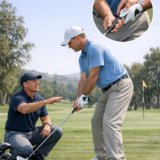
Novice golfers commonly encounter a cluster of technical and perceptual errors that constrain performance, elevate injury risk, and reduce long-term engagement with the game. This review synthesizes current evidence from biomechanics, motor-learning research, experimental intervention studies, and applied coaching literature to identify the eight most prevalent beginner errors and to present empirically grounded corrective strategies. Emphasis is placed on interventions that are measurable, replicable, and feasible for use by coaches, clinicians, and recreational players.
The article focuses on the following error domains: grip, stance, alignment, ball position and posture, swing mechanics (including backswing and downswing sequencing), weight transfer and rotational kinematics, tempo and rhythm, and short-game/putting fundamentals. For each domain we define the error, describe its typical kinematic and performance consequences, summarize diagnostic markers and simple objective assessments, and evaluate remedial protocols supported by research-ranging from motor learning principles (e.g., variable and blocked practice, attentional focus) to biomechanically informed drills and progressive task constraints.
Corrective recommendations are presented with attention to dose, progression, and outcome metrics (accuracy, distance variability, clubhead speed, consistency, and player-reported enjoyment/confidence).Where high-quality experimental evidence is lacking, the review highlights expert consensus and provides rationale for pragmatic approaches while identifying priorities for future research. The goal is to equip practitioners and begining players with a concise, evidence-based toolkit that improves technique, enhances performance, and fosters sustained participation.
Grip Deficiencies Among Novice Golfers: Biomechanical Assessment and Evidence Based Corrective Strategies
Grip dysfunction in novice golfers commonly manifests as incorrect hand placement, excessive or inconsistent grip pressure, and maladaptive wrist orientation at address and during the swing. Biomechanically, these deficiencies alter the kinematic chain from the distal segments to the torso: altered grip pressure changes clubhead release timing, while an overly strong or weak forearm rotation biases clubface orientation at impact, increasing dispersion and spin variability. Contemporary practitioner discussions and player self-reports (see peer forum analyses such as r/golf threads) corroborate that these problems are among the earliest barriers to repeatable ball flight, especially under on-course stress.
Objective assessment requires both static and dynamic measures to quantify the defect and its performance consequences. Static inspection should document grip type (overlap, interlock, ten-finger), lead-hand V alignment, and wrist tilt at address. Dynamic assessment uses high-speed video to evaluate forearm pronation/supination timing, launch monitor outputs (face-angle, spin axis, smash factor), and, where available, grip-pressure sensors to record temporal pressure profiles. Key assessment components include:
- Hand placement mapping: photographic record of lead and trail hand positions.
- Pressure profiling: peak and variability of grip pressure through takeaway and impact.
- Temporal sequencing: timing of forearm rotation relative to hip/shoulder turn.
Interventions with empirical and applied support focus on re-establishing neutral hand alignment, normalizing pressure, and retraining release timing. Evidence-based corrective strategies include repeatable, measurable drills and tools: grip-pressure biofeedback (pressure-sensing grips), mirror/video augmented feedback, and short, targeted drills that isolate hand action (e.g., slow-motion impact-focused swings, towel-under-arm to stabilize connection). The following concise table synthesizes common deficiencies, their biomechanical result, and a practical drill with rationale:
| Deficiency | Biomechanical Consequence | Corrective Drill |
|---|---|---|
| Excessive grip pressure | Delayed release, loss of clubhead speed | Pressure-sensor swings “5/10” target |
| Strong/weak lead hand | Open/closed face at impact | Glove-overlap alignment with taped V cue |
| Uncontrolled wrist tilt | Inconsistent loft and spin | Slow-motion half-swings to feel hinge |
For practical implementation, adopt a phased protocol: (1) baseline measurement (video + launch data + pressure), (2) targeted intervention (selected drill(s) with biofeedback) practiced in short, high-quality blocks (e.g., 10-15 minutes, 3-4×/week), and (3) re-assessment at 2-4 weeks to quantify change in face-angle consistency and dispersion metrics. Coaches should prioritize simple, externally focused cues and objective feedback over voluminous verbal instruction; clinicians may integrate grip retraining into motor-control rehabilitation when needed. Monitoring should emphasize consistency metrics (standard deviation of impact face angle, pressure variability) rather than only ball flight aesthetics-these are the most sensitive indicators of durable grip correction.
Posture Stance and Weight Distribution: Objective Evaluation Methods and Targeted Interventions to Improve Stability and Power
Objective evaluation begins with quantifiable, repeatable measures rather than subjective impressions. Recommended tools include high‑speed video for kinematic sequencing, 3D motion capture or wearable IMUs for joint angles and segment timing, and force plates or pressure mats to record center‑of‑pressure and ground reaction forces (GRF).Simple clinical measures – inclinometer for thorax tilt, a goniometer for knee flexion, and timed single‑leg balance tests – provide low‑cost baselines. Together these methods permit decomposition of instability into sensorimotor deficits (timing/coordination), structural postural alignment (spine tilt/hip hinge), and weight distribution errors (static and dynamic), enabling targeted intervention planning.
Clear, objective targets improve training specificity. Typical evidence‑informed targets used in practice are: a neutral thorax/hip hinge with spine tilt ≈ 25-35°, knee flexion at address ≈ 15-25°, and an address weight distribution near 50:50 to 55:45 (lead:trail) shifting toward 60-80% on the lead side at impact depending on swing style. The table below summarizes practical metrics, recommended measurement tools, and concise targets for monitoring progress.
| Metric | Tool | Target |
|---|---|---|
| Spine/hip hinge | Inclinometer / video | 25-35° tilt |
| Knee flexion | Goniometer / video | 15-25° at address |
| Weight distribution | Force plate / pressure mat | 50:50→60-80% lead at impact |
Interventions should be multimodal, progressive, and measurable. Use a combination of neuromuscular drills, strength and mobility training, and real‑time biofeedback. Core components include:
- Alignment and address drills with an alignment stick to train consistent foot and shoulder placement;
- Step or pause drills (single‑step to transition) to practice controlled weight transfer and timing;
- Pressure‑feedback routines using a mat or balance board to reinforce lead‑foot loading patterns;
- Strength exercises (single‑leg Romanian deadlift, lateral lunges, anti‑rotation Pallof press) to increase hip and trunk stability supporting GRF delivery;
- Rotational power work (medicine‑ball throws) to convert stable base into clubhead speed.
Each intervention should be paired with the objective metric it seeks to change (for example, use force‑plate feedback when training weight shift) and progressed from low‑load, high‑control to high‑speed, sport‑specific movements.
implement a measurement and progression plan: baseline, 3-6 week reassessments, and sport‑specific transfer tests (clubhead speed, dispersion under pressure). Use predefined success criteria (e.g., consistent 50:50±5% at address and >60% lead at impact on 8/10 trials; reduction in medio‑lateral sway by >20% during pre‑shot routine) to decide progression. Monitor for compensations – increased lateral tilt,tucked chin,or excessive knee collapse – and adjust interventions to prioritize safe,efficient force transfer. When objective feedback is combined with targeted drills and progressive loading, stability and power typically improve measurably within 6-12 weeks in novice golfers.
Alignment and Aiming Errors: Perceptual Training, Routine Adjustments, and Practical Recommendations for Target Accuracy
Novice players commonly misdirect shots not as of swing mechanics alone but due to systematic perceptual and aiming errors: incorrect clubface orientation at address, body-to-target misalignment, and erroneous visual anchoring to the ball rather than the intended target.Cognitive and sensorimotor research indicates that these are often stable biases-egocentric frame errors and reduced external-focus attentional control-that degrade target accuracy under pressure. Corrective approaches should therefore address both the physical geometry of set-up and the perceptual processes that govern where the player thinks they are aiming. Separating clubface alignment from body alignment and training the visual system to adopt distal targets are central to reducing directional dispersion.
Evidence-based perceptual training includes structured drills that shift attention outward, immediate augmented feedback, and gaze/visual-search training. Studies in motor learning show that an external focus of attention (e.g., on a distant target or intermediate cue) improves movement consistency more than an internal focus (e.g., “square your shoulders”). Augmented feedback modalities-video replay, alignment rods, laser pointers on the shaft, and mirror-based self-observation-provide corrective error signals that accelerate recalibration of aiming. Incorporating brief, high-quality feedback trials (blocked early, then randomized) leverages both error-detection and retention mechanisms demonstrated in learning science.
Routine adjustments that produce reliable aiming include concise pre-shot checks and repeatable geometries.Practical elements that novices can adopt instantly are:
- Two-step aiming: pick a visible intermediate mark ~1-3 m in front of the ball, align clubface to that mark, then align feet/hips to the clubface.
- Clubface-first verification: momentary confirmation of face angle with the lead eye before set-up.
- Use of alignment aids: alignment rods, spare club on the ground, or a portable mirror to create reliable visual references.
These small routine changes reduce cognitive load during the pre-shot process and make aiming behaviorally repeatable under varying conditions.
For on-course transfer, implement short, focused sessions that combine perceptual drills with on-course rehearsal. A simple practice template accelerates transfer by balancing variability with feedback: begin with 5-10 minutes of alignment-only drills, progress to paired-target shaping (varying intermediate cues), and finish with pressure-replication shots. The table below offers a compact practice prescription that is easy to log and evaluate in subsequent sessions.
| Drill | Duration | Primary Benefit |
|---|---|---|
| Intermediate-target alignment | 8-10 min | Improves distal aiming and direction |
| Clubface verification (mirror) | 5 min | Reduces face-angle bias at setup |
| Randomized on-course targets | 10-15 min | Enhances transfer and decision-making |
Implementation note: track alignment errors (e.g., via video or target grids) every 5-10 sessions to quantify improvement and adjust routines. Small, measurable changes in aiming behavior produce disproportionately large reductions in dispersion, making alignment-focused training one of the highest-return interventions for novices seeking consistent target accuracy.
Swing Plane Sequencing and Mechanics: Kinematic Diagnostics and Drill Based Corrective Protocols
In experienced kinematic models the optimal sequence progresses from lower to upper segments: **pelvis rotation → thorax (torso) rotation → lead arm acceleration → club release**. This proximal-to-distal transfer produces a cascade of peak angular velocities that maximize clubhead speed while preserving control of the club path and face orientation. Deviations from this pattern-such as early extension, lateral slide, or an over-the-top swing-alter the plane and timing, producing predictable curvature and dispersion in ball flight. Quantifying the sequence with temporal markers (time-to-peak pelvis, torso, arm, club angular velocity) provides an objective baseline for corrective work and for monitoring training response.
Objective diagnostics combine accessible technology and observational cues to identify sequencing faults. Useful measures include high-speed frontal and down-the-line video (120-240 fps) for plane and face analysis, inertial measurement units (IMUs) on pelvis and thorax for angular velocity timing, and simple goniometric estimates of separation (X‑factor). Common diagnostic indicators are:
- Late pelvis rotation (pelvis peak after torso peak)
- Early arm release/casting (club peak before arm/torso)
- Plane mismatch (shaft angle diverging from shoulder plane at transition)
These metrics allow clinicians and coaches to distinguish timing errors from mobility or strength constraints.
Corrective protocols should be drill-based, progressive, and targeted to the diagnosed fault. Effective, evidence-aligned drills include:
- Step-through or feet-together drill – reduces lateral motion, reinforces synchronized lower-body lead.
- Pause-at-top with split-hand drill – increases proprioception of shaft plane and delays premature release.
- Pelvis-first wall-contact drill – uses a light wall cue to initiate correct pelvic rotation and prevent early extension.
- One-arm lead-arm acceleration – isolates proximal-to-distal timing and builds proper sequencing without compensatory forces.
Each drill should be prescribed with explicit kinematic goals (e.g., pelvis peak velocity occurring ~25-50 ms before torso) and objective feedback (video or IMU) to accelerate motor learning.
| Common Fault | Diagnostic Sign | Suggested Drill |
|---|---|---|
| Over‑the‑top | Down‑the‑line video: steep out-to-in shaft path | Pause‑at‑top / One‑arm |
| Casting | Club peak velocity before arm/torso | Split‑hand release drill |
| Late lower‑body | Pelvis peak after torso | Pelvis‑first wall contact |
Implementation guidance: prioritize one sequencing goal per practice session, use short, high‑quality reps (6-12 reps × 3-6 sets) with objective feedback, and re-test kinematic markers weekly. Progress is best achieved by coupling targeted mobility/strength work with the drill protocol to ensure the neuromuscular system can reproduce the desired timing under load.
Tempo Rhythm and Timing Irregularities: Motor Learning Principles and Structured Practice Schedules for Consistent Delivery
Tempo, rhythm and timing irregularities in novice swings are best conceptualized as deficits in the coordination and sequencing component of skill acquisition rather than merely a mechanical fault. Motor learning frameworks (e.g., Schmidt’s schema theory; Bernstein’s degrees of freedom problem) indicate that early learners benefit from structured exposure to variability to form stable sensorimotor mappings.empirical work shows that variability introduced at appropriate times promotes robust generalized motor programs, reducing the occurrence of rushed or stalled transitions between backswing and downswing that commonly cause inconsistent contact and dispersion.
Practice scheduling should therefore move beyond rote repetition toward schedules that balance repetition for stabilization with variability for generalization. Use a progression that combines blocked practice for initial patterning, followed by random and variable practice to consolidate adaptability. Effective, evidence-aligned drills include:
- Metronome-paced half-swings (focus: consistent tempo at 60-80 beats per minute)
- Targeted variability sets (same swing shape, different target distances)
- Part-whole transfer (short-segment acceleration drills integrated into full swings)
Augmented feedback should be scheduled to foster internal error detection rather than dependency.Begin with frequent, descriptive knowledge of results (KR) and knowledge of performance (KP) to establish the pattern, then progressively reduce feedback frequency (faded schedule) and shift to summary or bandwidth feedback. Favor external-focus verbal cues (e.g., “feel the clubhead sweep through the ball”) and rhythmic cues (metronome or count-based) over prescriptive joint cues; research consistently links external focus and rhythmic entrainment with improved retention and transfer in complex ballistic tasks like the golf swing.
Below is a compact, evidence-inspired microcycle to improve tempo consistency; use it as a template and adapt intensity and volume to the learner’s fatigue and attention capacity.
| Session | Primary Focus | Feedback Strategy |
|---|---|---|
| A – Patterning | Blocked reps with metronome | High-frequency KR/KP |
| B – Variability | Random targets; variable distances | faded summary KR |
| C – Transfer/Retention | Integrated full-swings under time pressure | Infrequent, external-focus cues |
Monitor progress with periodic retention tests (48-72 hours) and adjust practice distribution to emphasize variability once baseline tempo stability is achieved.
Short Game Technical Errors in Chipping and Putting: Technique Modifications, Measurement Criteria, and replication Protocols
Novices frequently display predictable faults around the green-overactive wrists, excessive loft at impact, inconsistent address positions, and variable stroke tempo. Targeted technique modifications reduce variability and improve proximity-to-hole outcomes: for chipping, adopt a slightly open clubface with a narrow stance, place the weight on the lead foot (~60-70%), hinge minimally at the wrists, and accelerate through impact to promote consistent contact. For putting, emphasize a pendular shoulder-driven stroke, maintain a neutral wrist, set the ball slightly forward of center for mid-to-long putts, and use a shorter backswing for near-range strokes. coaching cue examples include “lead-side pressure,” “quiet wrists,” and “accelerate through the turf,” each linked to specific kinematic targets measurable in practice.
Objective measurement is essential to determine whether technique modifications produce meaningful change.use the following metrics as core criteria: face angle at impact (degrees), loft at impact (degrees), ball speed (m/s), launch angle (degrees), contact location (mm from club center), and proximity to hole (cm). A compact reference table provides practical thresholds derived from performance studies and applied coaching norms:
| Metric | Novice Threshold | Target Benchmark |
|---|---|---|
| Face angle at impact | ±6° | ±2° |
| Loft at impact | 12-22° (chip) | 8-15° (chip) |
| proximity to hole (10-30 m) | 200-400 cm | <100 cm |
Replication protocols should be standardized to ensure internal validity and practical transfer. Prescribe blocks of 30-60 trials per condition with randomized order of distance and lie to avoid sequence effects; include at least three separate testing sessions over two weeks to assess short-term retention. Control environmental variables (same green, consistent ball type, defined hole location) and document measurement devices (high-speed camera at ≥240 fps, launch monitor or radar, or calibrated pressure plate for weight distribution). Define success criteria a priori (e.g., mean proximity reduction ≥20% with p<0.05 or effect size ≥0.5) and report both central tendency and dispersion (mean ± SD, and 90% confidence intervals) to capture consistency improvements.
For applied implementation, pair technique changes with immediate and delayed feedback: use augmented feedback (video with overlaid kinematic traces; launch monitor numbers) initially, then shift to summary feedback as consistency improves. Progression principles include (1) constrained practice-reduced shot types and simplified lies, (2) variable practice-mixed distances and breaks to improve adaptability, and (3) fidelity checks-periodic blinded reassessment against the measurement criteria. Coach checklist (for each session):
- Pre-test metrics recorded
- 30-60 repetitions per drill
- Objective feedback provided every 5-10 trials
- Retention test at 48-72 hours
Compliance with these protocols enhances replicability and allows coaches and researchers to quantify the efficacy of short-game interventions rigorously.
Integrated Coaching Framework for Novices: Progress Monitoring, Club Selection Strategies, Injury Prevention, and Enjoyment Enhancement
an integrated approach situates technical coaching within a structured, measurable learning plan that prioritizes both skill acquisition and sustained participation. Baseline assessment should combine objective performance metrics (e.g., dispersion from target, clubhead speed, average greens‑in‑regulation) with psychometric indicators (e.g., self‑efficacy, enjoyment). Regular, scheduled re‑assessments-every 4-8 sessions for technique markers and monthly for outcome metrics-allow for data‑driven adjustments. Monitoring tools to implement this include:
- Portable launch monitors and smartphone video for kinematic feedback
- short standardized on‑course tests (9‑hole scoring templates) for transfer
- Player‑reported outcome measures (confidence, perceived exertion, enjoyment)
Club selection within the framework emphasizes simplification and appropriate loft/gap management to maximize early success and minimize compensatory swing faults. Novices benefit from a reduced, gap‑filled set and hybridization of long irons. The following succinct decision matrix guides pragmatic selection:
| Club | Primary Use | Beginner Strategy |
|---|---|---|
| Driver | Max distance off tee | Optional-use fairway wood for control |
| Hybrid (3-4) | Long approach, forgiving | Prioritize over long irons |
| mid/Short Irons | Approach accuracy | Ensure 8-12° loft gaps |
| Putter | Scoring | Fit for comfort and confidence |
Injury prevention and enjoyment are co‑dependent outcomes in the novice pathway. Structured warm‑ups, progressive load management, mobility and trunk‑stability conditioning reduce musculoskeletal risk and support technical learning. Evidence‑based preventative elements include dynamic warm‑ups targeting thoracic rotation and hip mobility, graded practice durations (e.g., 20-40 minute focused sessions), and cross‑training to address asymmetries. coach‑led behaviors that foster safety and retention include:
- Prescribed warm‑up and cool‑down protocols
- Individualized fitness referrals when compensatory patterns emerge
- Positive, competency‑based feedback and small, achievable performance targets
Q&A
Q: What is the purpose of this Q&A?
A: To summarise, in an academically grounded and practitioner‑oriented way, the eight most frequent errors made by novice golfers (grip, stance, alignment, swing mechanics, tempo, posture, weight transfer, club selection) and to provide evidence‑based corrective strategies, assessment methods, and practice progressions that coaches and learners can apply.
Q: On what evidence are these eight errors and corrective strategies based?
A: The selection and recommendations are grounded in three complementary evidence streams common to sport‑science and coaching: (1) biomechanics research identifying kinematic and kinetic correlates of ball flight and consistency; (2) motor‑learning studies on skill acquisition, feedback, and practice structure; and (3) applied coaching and clinical literature (including objective measurement tools such as launch monitors, force plates/pressure mats, and video motion analysis). Where direct randomized trials in golf are limited, recommendations rely on mechanistic evidence and best‑practice translation from related domains (e.g., throwing and hitting sports) and established coaching consensus.
Q: What are the eight most frequent novice errors and why do they matter?
A: Briefly:
– Grip: incorrect forearm/hand relation or inconsistent pressure → inconsistent clubface orientation at impact.- Stance: feet too narrow/wide or inconsistent ball position → unstable base, inconsistent contact.
– Alignment: poor aim of body and clubface → directional errors independent of swing mechanics.
– Swing mechanics: early extension, over‑casting, reverse pivot, casting → loss of power and directional control.- Tempo: erratic swing timing and sequencing → reduced repeatability and timing errors at impact.
– Posture: insufficient spine tilt or collapse → restricted rotation and inconsistent strike height/angle.
– Weight transfer: lack of lateral/vertical transfer or excessive sway → poor energy transfer and inconsistent strike.
– Club selection: inappropriate loft/distance choices and poor yardage control → poor scoring and decision errors.
Each matters as it either alters the clubhead path/face angle at impact or degrades the golfer’s ability to reproduce an effective impact condition, both of which increase error magnitude and variability.
Q: How should coaches assess a novice’s grip and what evidence‑based corrections exist?
A: Assessment: static and dynamic video from down‑the‑line and face‑on views; check for consistent lead‑hand V (between thumb and forefinger), neutral face alignment, and grip pressure (subjective scale or hand dynamometry in research settings).Observe face angle through impact using launch monitor data (side spin, starting direction) if available.
Corrections:
– Cue a neutral hand rotation and “hold the club like a bird” to reduce excessive grip pressure.
– Progressive drill: place an alignment stick along the shaft, practise slow half‑swings focusing on face awareness, then increase speed.
– Feedback: immediate video or launch‑monitor face‑angle feedback is effective (motor learning evidence supports augmented feedback for early learners).
Measurement: reduction in off‑line deviations, more consistent launch direction, decreased side spin.
Q: How do stance errors present and how can they be corrected?
A: Presentation: inconsistent base width, incorrect ball position (too far forward/back), knees locked or overly bent.
corrections:
– Evidence‑based guideline: base width ~ shoulder width for short/medium clubs, slightly wider for longer clubs; ball position adjusted gradually with club length.
– Drill: set footprints or alignment sticks to standardise stance width and ball position; perform 10 slow swings focusing on replicating the setup.
– Progression: add shots under mild variability (different clubs, short routines) to build adaptability.
Assessment: stability on pressure mat or observation of sway; consistent bottom-of-swing position and strike location.
Q: What alignment mistakes do novices make and how are they fixed?
A: Mistakes: misaligning feet,hips,shoulders,and clubface leading to systematic misses (pushes,pulls).
Corrections:
– Use external references (two alignment sticks: one on target line, one along feet) to create a habitual alignment setup.
– Training exercise: “aim‑and‑hold” – set up repeatedly to target, hold for 3-5 seconds, then execute swing; this increases internal depiction of alignment.- Objective check: monitor miss patterns (e.g., consistent pull left) and corroborate with video of setup line vs target line.
Q: What are common swing mechanics faults and evidence‑based interventions?
A: Common faults: early extension, casting, reverse pivot, over‑rotation, and poor sequencing.Interventions:
– Emphasise kinematic sequencing: proximal‑to‑distal activation (hips → torso → arms → club) as a general model; motor learning interventions that focus on outcome and simplified movement goals can accelerate acquisition.
– Drills: “pump” drill for correct downswing sequence (stop at transition, rehearse hip rotation), slow‑motion swings with focus on maintaining lag, impact bags for feel of forward shaft lean.
– Use augmented feedback (video, inertial sensors) to show changes in swing plane, pelvis rotation, and clubhead lag.
Assessment: improved clubhead speed, better smash factor, and more consistent impact location on face.
Q: How should tempo be addressed in novice practice?
A: Rationale: Stable tempo improves inter‑trial consistency and timing of the kinematic sequence.
Corrections:
– Use metronome or auditory cues to create a repeatable backswing:downswing ratio (many coaches use ~3:1 or 2.5:1 for beginners).
– Drill progression: start with exaggerated slow tempo focusing on rhythm, then gradually increase toward game‑speed while maintaining relative timing.
– Motor‑learning note: blocked practice with external cues is useful initially; introduce variable practice once basic tempo is consistent.
Measurement: reduced variance in swing time, improved timing of impact relative to peak hip rotation.
Q: What postural faults commonly occur and how do they affect performance?
A: Faults: overly flexed or extended spine, rounded shoulders, lack of athletic tilt – these constrain rotation and alter swing arc.
Corrections:
– Teach an “athletic posture”: neutral spine, slight knee flexion, hip hinge with chest over ball.
– Drills: wall hip‑hinge, posture sticks along the spine during swings, resistance‑band rotational drills to promote torso stability.
– Assessment: video lateral view for static posture and during swing for maintenance of spine angle.
Q: How should novices be trained to perform appropriate weight transfer?
A: Problems: lateral sway, insufficient shift to trail side on backswing, or failure to re‑load into lead side on downswing.
Corrective strategies:
– Educate on center‑of‑pressure movement: feel of pressure on trail foot during backswing, then transfer to lead foot at impact.
– drills: step or pause drills (pause at top then shift weight quickly), medicine‑ball rotational throws to link lower‑body drive to upper‑body rotation.
– Objective tools: pressure mats or force‑plate data show timing and magnitude of weight transfer; use these when available.
Outcomes: improved ball strike quality, increased ball speed, and reduced fat/thin shots.Q: How should club selection errors be corrected for novices?
A: Errors: choosing wrong club for distance/conditions, over‑reliance on longer clubs, poor yardage control.
Strategies:
– Build a simple yardage book: measure average carry and total distance for each club under usual conditions using range practice and launch‑monitor data if available.
– Practice partial swings at set percentages (e.g., 50%, 75%, 100%) to learn distance control with each club.
– Decision training: incorporate on‑course scenarios during practice to build shot selection judgment (variable practice benefits transfer).
Measurement: reduced dispersion in scorecard performance for approach shots; consistent carry distances.
Q: How should a coach design a training program that integrates these corrections?
A: Programme structure:
– Initial assessment (video, launch data, pressure mat if possible) to prioritise faults.
– Short‑term goals: stabilise setup (grip, stance, alignment, posture) and build a simple repeatable swing pattern.
– medium term: refine sequencing, tempo, weight transfer, and distance control through a mixture of blocked and variable practice with augmented feedback.
– Progression principles: emphasise external focus of attention, distributed practice early, increasing variability later, and regular objective re‑assessment (every 4-8 weeks).
– Monitor: use objective metrics (impact location, launch direction, ball speed, dispersion) and subjective scales (RPE, confidence).
Q: What assessment tools and metrics are recommended to monitor progress?
A: Practical tools: high‑speed video, launch monitors (ball/bat speed, launch angle, spin, carry), pressure mats/force plates for weight transfer, and inertial measurement units for swing tempo and plane.
Key metrics: consistency of launch direction, side spin magnitude, carry distance variability, impact location on clubface, timing of weight shift, and swing time variance. Use pre‑post comparisons with effect sizes rather than single tests to gauge real change.
Q: When should a novice golfer seek professional coaching or medical evaluation?
A: Seek a certified coach when: multiple interacting faults exist, self‑guided interventions plateau, or when objective data indicate persistent inconsistencies. Seek medical evaluation if pain, joint limitations, or acute injuries arise or if physical restrictions (e.g., severe mobility deficits) limit safe execution – then integrate corrective exercise or physiotherapy into the training plan.
Q: Are there common myths about correcting novice errors that evidence contradicts?
A: Common myths and clarifications:
– Myth: “Grip should be very tight to control the club.” Evidence and biomechanics suggest excessive grip pressure reduces wrist hinge and increases variability; moderate, consistent pressure is superior.
– Myth: “More practice always leads to faster improvement.” Evidence from motor learning shows practice quality, variability, and feedback schedule matter more than sheer volume.
– Myth: “Fix everything at once.” Best evidence suggests staged, prioritized interventions (setup first, then sequencing and variability) are more effective.
Q: What practice frequency and duration is recommended for sustained improvement?
A: For novices, short daily sessions (20-30 minutes focused practice) or 3-4 structured sessions per week combining technical drills and on‑course decision practice are effective. Distributed practice with intentional goals and feedback yields better retention than long, massed sessions.
Q: What are the key takeaways for coaches and novice golfers?
A: – Prioritise setup (grip,stance,alignment,posture) as errors here propagate through the swing.
– Use objective assessment tools where possible; focus on one or two primary faults at a time.
– Apply motor‑learning principles: structured feedback, progressive drills, and transition from blocked to variable practice.
– Emphasise feel and rhythm (tempo) and practise weight transfer with both technical and functional drills.
– Measure progress with repeatable metrics and adjust the programme based on data and retention tests.
If you would like, I can: (1) produce a printable coach’s checklist for each error with drills and progressions, (2) convert the Q&A into a short workshop outline, or (3) draft sample practice sessions for a 6‑week improvement plan. Which would you prefer?
In closing, this review has synthesized the principal motor‑skill and equipment‑selection errors commonly observed among novice golfers-defined here in the conventional sense as individuals new to the activity or possessing limited experience [1]-and aligned practical corrective strategies with the best available empirical evidence. Consistent findings indicate that prioritizing a small number of foundational elements (grip, posture, stance, alignment) and integrating them with progressive, feedback‑rich practice produces larger and more durable gains in shot consistency than unfocused repetition alone. Complementary interventions that address swing mechanics,tempo,weight transfer,and club selection are most effective when individualized to the learner’s anthropometrics and motor capabilities and when accompanied by objective monitoring (e.g., video analysis, launch‑monitor metrics).
For practitioners and coaches, the implications are clear: adopt an evidence‑based, hierarchical approach to instruction that (1) establishes reproducible set‑up and address positions, (2) employs constrained and task‑specific drills to scaffold movement patterns, (3) uses augmented feedback judiciously to guide error correction, and (4) prescribes progressive challenge to transfer improvements to on‑course performance. For researchers,remaining gaps include long‑term retention studies,transferability across varied learning environments,and the interaction of cognitive load with motor learning in novice populations.
Ultimately, improving novice performance depends less on prescriptive gimmicks and more on principled coaching informed by motor‑learning science. By translating empirical insights into structured practice,clear feedback,and individualized equipment choices,coaches and learners can accelerate the transition from novice to competent golfer and foster sustainable gains in consistency and confidence.