—
Building a Solid Foundation: How Core Strength Drives Your Swing Power
Building a solid foundation in core strength for your golf game isn’t just about getting stronger; it’s about making each swing feel effortless and confident. Your core is the engine that powers your rotation and adds distance to each hit. To truly understand how your core affects your swing, focus on rotational power, stabilityand balanced posture.
Rotational power is crucial in a golf swing. When you turn your hips into the downswing, the momentum generated by your core muscles helps propel the club through impact. Think of your body as a coiled springand your core is the trigger that releases that stored energy. For beginners, exercises like planks and Russian twists can help develop this rotational power.Advanced players might focus on dynamic movements like the cable wood chop exercise, which mimics the turning action of the swing.
Stability is another aspect that’s often overlooked but is critical in maintaining consistency from swing to swing. A stable core allows you to hit the ball with precision, even when under pressure. On the course, use your core to stabilize your lower body while your upper body continues to rotate. This separation of upper and lower body is what gives you the feel of a controlled, powerful hit. To build stability, incorporate moves like deadlifts and squats into your routine, paying close attention to proper form and controlled movements.
Proper posture is the foundation of your swing mechanics. A stable core helps you maintain a neutral spine, allowing you to set up correctly at address and follow through smoothly. Begin by assessing your posture with the help of a coach or a video analysis. For drills, practice the ‘address position’ daily-set up at the ball as you would for a full swing. Focus on keeping your weight centered, knees slightly bentand spine tilted from the hips. This setup enhances the efficiency of your swing and helps in transferring power from your legs to your arms via your core.
integrating core strength into your golf game involves not just physical training but also mindful practice on the course. As you stand behind each tee box, visualize your core engaging and powering your swing. During rounds, pay attention to how your body feels mid-swing-do your abs and lower back engage properly? If not, take time to review your form and incorporate specific drills.A strong core can transform every aspect of your game, from driving long and straight to shaping shots around hazards and greens.
Unlocking Precise Putting: Let Your Centered Core Guide Your Stroke
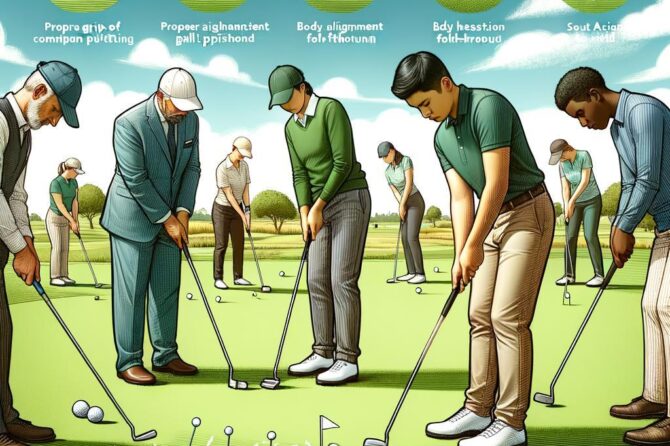
Mastering the art of putting is one of the most critical aspects of golfand a strong, centered core is the foundation of a reliable putting stroke. Your core muscles, from your hips to your abdomen, play a vital role in stability, which in turn helps you to consistently hit the sweet spot on the putter face. For beginners,understanding and incorporating core strength into your putting can feel like a daunting challenge,but it’s a fundamental skill that will elevate your game tremendously.
The key is to focus on a stable base. When you’re behind the ball, make sure your feet are shoulder-width apartand your weight is evenly distributed. Take a moment to engage your core by drawing your navel toward your spine. This subtle contraction helps to stabilize your lower body and reduce unwanted movement when you’re executing your stroke. For more advanced players, this might mean incorporating deeper core work into your off-course fitness routine.
An effective way to improve your core stability is through specific drills that target your midsection and lower back.One such drill is the bridge exercise, where you lie on your back, bend your kneesand lift your hips to create a straight line from your knees to your shoulders. Hold this position for 10 to 15 seconds, focusing on maintaining a neutral spine and a firm core. This will not only strengthen your muscles but also build the muscle memory needed to lock into a stable posture on the green.
Another crucial element to consider when putting is the connection between your core and the rest of your body. Your hands, armsand shoulders should all work in harmony with your steady core to achieve a smooth and controlled motion. Imagine your putter as an extension of your arm, moving your shoulders horizontally in a straight line without any jerky up and down motion. Start with short putts and gradually increase the distance to build confidence and consistency. Beginners might find it helpful to start with putts of around 10 feet, while more experienced players can work on longer putts from 30 to 40 feet.
Weather conditions and course setup can also influence your putting technique, so it’s significant to adapt accordingly. On a windy day, such as, you’ll need to ensure your stance is firm and your grip is slightly firmer than usual to minimize the impact of the wind. when facing long or downhill putts, your core stability becomes even more crucial to keep your shoulders level and your stroke true. Remember,no matter the challenge,your core provides the stability and control to deliver the ball accurately into the hole.
—