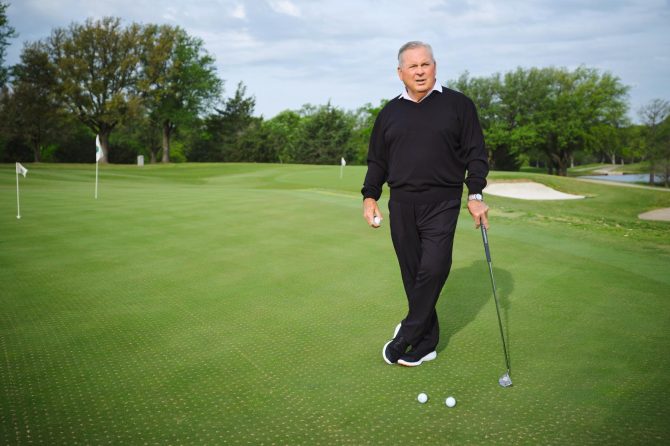
This article synthesizes contemporary biomechanical research, evidence-based putting methodologies, and advanced driving strategies to present a coherent framework for improving swing consistency, short-game precision, and distance control. Drawing on insights from leading coaches, swing-analysis technologies, and performance-oriented coaching programs, the discussion integrates kinematic principles, launch-monitor metrics, and on-course decision-making to bridge theory and practice. Emphasis is placed on diagnostic assessment, targeted drill progressions, and equipment considerations-such as club fitting and shaft dynamics-that demonstrably influence reproducible outcomes. By combining objective measurement, progressive skill acquisition, and strategic course management, the material aims to equip experienced players and instructors with actionable protocols to elevate scoring performance and long-term development.
Optimizing Swing Kinematics Through Sequencing Analysis and Specific Drills for Power and Control
To improve swing kinematics through sequencing, begin with a biomechanical baseline: assess pelvic rotation, torso coil, arm lag, wrist hinge, and clubhead path using video or a launch monitor. Target measurements include a backswing hip turn of approximately 45°-55° for recreational players and torso rotation near 85°-100° for low handicappers, an X‑factor (torso vs. pelvis separation) of 20°-40°,and a backswing-to-downswing time ratio close to 3:1 for repeatable tempo.In practice, sequence training should prioritize ground reaction forces and proximal-to-distal activation (hips → torso → arms → hands) to create efficient energy transfer and consistent impact conditions. For beginners, explain this as “start the downswing with the hips,” while advanced players refine that feeling with metrics such as clubhead speed (mph) and smash factor. To train the sequence, incorporate these drills and setup checkpoints to build reliable motor patterns:
- Towel under armpits drill – maintain connection to avoid early arm separation and preserve torso-arm sequencing.
- Medicine ball rotational throws – emphasize hip-to-shoulder transfer to increase power without casting the club.
- Step-through/step-down drill – initiate downswing with a controlled weight shift to the led leg to improve ground force timing.
- Video mirror feedback – 60 fps slow motion to check hip rotation and wrist hinge at the top of the swing.
Common faults include casting (loss of lag), early extension (spine straightening at transition), and overactive upper body; correct these with focused short‑radius swings and half‑swings before reintroducing full speed.
Next,translate sequencing into power and shot control through specific,measurable drills and equipment awareness. for distance, work on compressing the ball at impact by achieving a slightly downward iron attack angle of -2° to -4° for mid‑irons and a neutral to slightly up angle of attack for the driver (0° to +3°) while maintaining forward shaft lean of 1°-3° at impact for irons. Use a metronome or audible tempo app to maintain a 3:1 backswing-to-downswing tempo, and set weekly targets such as a +2-5 mph increase in clubhead speed or a +10-20 yd carry gain with consistent center-face contact.Practical drills include:
- Pause-at-the-top drill – pause 1 second at the top to rehearse sequencing and avoid rushing the transition.
- Gate/impact bag drill – narrow gates to encourage center-face contact and correct face angle at impact.
- Three-quarter flighted shot drill – control trajectory for wind: narrower stance, ball slightly back, and reduced wrist release for lower spin.
- Wedge landing target practice – use 10-15 yard landing zones to calibrate trajectory and spin for scoring shots.
Equipment considerations are integral: choose shaft flex and kick point to match swing tempo, optimize loft for desired launch/spin, and inspect groove condition for short‑game spin control. For example, in strong wind play a lower-lofted 3/4 swing with the ball back in the stance to maintain control and comply with rule 14‑2 on ball placement when addressing special relief situations.
integrate technical gains into course strategy and the mental game so sequencing improvements lead to lower scores. Establish a practice-to-play routine where range sessions alternate technical (30-40 minutes sequencing drills) and situational practice (30-40 minutes simulated holes and pressure putting), and use objective benchmarks-such as TrackMan/GCQuad metrics: clubhead speed, launch angle, spin rate, and dispersion-to quantify progress. For on‑course submission, decide strategically when to prioritize control over power: for example, on a 420‑yard par‑4 into wind, play a 3‑wood or long iron to a preferred 160-180 yd landing area rather than attempting full driver distance that increases risk. Troubleshooting common in‑round problems:
- Loss of lag under pressure – implement a pre‑shot routine with two slow practice swings focusing on hip-start downswing.
- Ball flight inconsistent in wet/soft conditions – play more loft and expect higher spin; use landing-zone targets instead of green-to-flag shots.
- Short‑game sequence breakdown – rehearse hands‑ahead impact for chips and half‑swings for pitches, using alignment sticks to mark low point.
Additionally, incorporate mental skills-breathing, imagery, and a concise pre‑shot checklist-to preserve sequencing under stress. By combining measurable sequencing targets, tailored drills for power and control, and strategic decision‑making, golfers of all levels can convert technical improvements into reliable scoring performance on course.
Integrating Ground Reaction Forces and Lower Limb Mechanics to Enhance Driving Distance and Stability
Effective integration of lower-limb mechanics begins with a clear biomechanical framework: the swing is a ground-driven acceleration pattern in which ground reaction forces (GRF) are converted into rotational torque through the hips and trunk and finaly into clubhead speed. At address adopt a stable base with stance width roughly 1.0-1.25× shoulder width (wider for driver, narrower for short irons), a slight knee flex of 15°-25°, and a neutral spine angle so the pelvis can rotate freely.Weight distribution at address should be close to 50/50 or slightly trail-sided (up to 55/45) to allow a dynamic coil; at the top of the backswing expect approximately 60-65% of weight on the trail foot. As skilled players frequently enough generate peak vertical GRF near impact of ~2.0-2.5× bodyweight, emphasize a sequencing priority: ground push → hip extension and rotation → thorax rotation → arms and club. To build proprioception and measurable improvements, use these practice checkpoints and drills:
- Setup checklist: shoulder-width stance (measure with club across toes), 15° knee flex, ball position one ball forward of center for driver.
- Drills: toe-tap drill for timing weight shift,medicine-ball rotational throws to train hip-to-shoulder sequencing,and pressure-mat awareness swings to see center-of-pressure travel.
- Measurable goals: establish a reproducible weight shift pattern within 3-5 practice sessions and track clubhead speed changes with a launch monitor.
Once baseline mechanics are established, apply lower-limb kinetics to increase driving distance while maintaining stability by controlling the timing and direction of force application. Specifically, instruct players to initiate the transition with a controlled lateral-to-vertical ground push from the trail leg that converts into hip extension and a forward center-of-pressure shift so the lead leg can “brace” at impact; this bracing reduces energy leak and increases effective mass behind the club. For beginners, cue a gentle lateral shift (feel of shifting weight to the inside of the trail foot) and then a strong, but short, lead-leg brace; for advanced players refine the timing so that maximum lead-leg vertical loading occurs within ~50 ms of impact
Set progressive, measurable targets such as improving clubhead speed by 3-6 mph over 8-12 weeks while maintaining strike quality (smash factor within ±0.05 of baseline). translate biomechanical gains into on-course performance and stability under varying conditions by adapting lower-limb strategy to lie, slope, and wind. Uphill and downhill stances require adjustments: on an uphill lie increase trail-side weight bias at setup by ~5-10% and shallow your attack angle to avoid skying the ball; on a down-hill lie shift more weight forward and accept a slightly steeper attack angle. In crosswinds emphasize lead-leg bracing to maintain face control and prioritize directional control over maximal distance. Equipment choices also interact with mechanics-shaft flex and driver loft affect launch angle and spin, so pair a more flexible shaft or higher loft with a golfer who produces higher vertical GRF but needs more launch. For practice routines integrate short, medium, and long sessions: In addition to physical training, cultivate a concise pre-shot routine that includes a single cue about lower-limb intent (e.g., “brace and transfer”) to maintain consistency under pressure-this links the mental game to the kinetic sequence and produces measurable scoring improvements through better strike quality and course management. Understanding the causal relationship between the clubface and the swing path is the foundation for repeatable shot-shape control. In simple terms, ball curvature is governed primarily by the face-to-path relationship at impact: if the face is open relative to the path the ball will start right and curve right (slice/fade), and if it is closed relative to the path it will start left and curve left (hook/draw). For practical measurement, target a face-to-path differential of approximately 2°-4° open for a controlled fade and 2°-6° closed for a controlled draw with mid-irons; large shapes (6°-10°) produce more dramatic curvature but increase dispersion. Also monitor attack angle and dynamic loft: a driver attack angle between -2° and +4° is typical for maximizing distance, while iron attack angles are more descending (typically -4° to -1°) to compress the ball. To internalize these principles, start with slow, half‑speed swings and use simple biofeedback tools (impact stickers, face tape or a launch monitor) to correlate visual ball flight with measured numbers before increasing speed. Having established the numbers, translate them into mechanical cues and repeatable setup fundamentals. Begin with grip and wrist set-weak,neutral,or strong grips will influence how the face rotates through impact-so choose a grip that allows you to return the face to the desired target position without excessive forearm manipulation. Set the ball position slightly forward for fades with drivers and slightly back for draws with short irons; for example, move the ball one ball diameter forward or back to bias initial launch. Practice drills that build feel and consistency include: When troubleshooting common errors, note that an early cast/flip often produces an open face and excessive spin (slice); correct it with the towel drill and by strengthening the lead wrist at impact. Conversely, excessive forearm rotation through impact can over-close the face-correct with slower tempo drills and reduced hand action to stabilize face rotation. Equipment considerations are also pivotal: use an adjustable driver head to set face angle within ±2°, ensure correct lie angles on irons, and consider shaft torque/stiffness as they affect face rotation and feel. integrate these technical skills into course management and the mental game so that shot shaping becomes a scoring tool rather than an exhibition of technique. Prioritize pre-shot routines that include visualizing the starting line, desired curvature, and intended landing area; for example, into a left-to-right wind, select a stronger fade that starts just inside the hazard and lands with minimal rollout. Use situational strategies: when the wind is down, favor higher spin/hold with more lofted clubs; in a strong headwind, lower trajectory by reducing loft and increasing clubhead speed while maintaining a stable face-to-path relationship. Practice routines should mirror course scenarios-spend one range session per week on trajectory control (20 shots low,20 shots mid,20 shots high) and one short session on shaping around obstacles (dogleg practice using target zones). Remember the rules and equipment constraints under the USGA/R&A: all clubs must conform to rules of equipment,so shape shots through technique and equipment settings that remain legal.By combining measurable practice goals, deliberate mechanical checks, and strategic on-course decision-making, golfers of any level can make clubface and path management a reliable component of lower scores and consistent play. Establish a consistent, evidence‑based setup and stroke that prioritizes repeatable geometry and speed control. Begin with a setup checklist: putter length that allows the eyes to be roughly over the ball (commonly 33-35 inches), ball position slightly forward of center for a slight upward strike, and a forward press so the hands are ~1-2 inches ahead of the ball at address to de‑loft the face. maintain a stable tripod (feet, knees, hips) with 60/40 weight distribution toward the lead foot to encourage a shoulder‑driven pendulum, and set the putter face square to the intended target line.In terms of stroke mechanics, adopt a one‑piece shoulder turn with minimal wrist hinge: for most players the putter face should rotate less than 2°-3° through impact and the path should remain within ±3° of the target line to prevent side spin. Common errors include excessive wrist break, gripping too tightly (aim for a 4-5/10 tension), and inconsistent ball position; correct these with gradual adjustments rather than wholesale changes so that proprioception and tempo are preserved. Translate mechanical consistency into perceptual strategies for reliable distance control and accurate green reading. First, train your visual system to read the fall line by using a plumb‑line routine: stand behind the ball and visualize the steepest slope to the hole, then pick a mid‑green aim point that reflects the combined effect of slope and grain. Consider green speed (stimpmeter) and wind: a 10-12 ft stimpmeter green will require roughly 15-25% more stroke length than an 8-9 ft green at the same distance. When deciding line, use a two‑part process – grade (slope magnitude) and direction (fall line) – and commit to a target point rather than compensating mid‑stroke. For advanced players, apply vector decomposition: break long putts into an initial speed target to reach the desired gate (leave within 3 feet for a make probability >65%) and a lateral offset for break. Integrate rules awareness and course strategy by choosing the safest line to two‑putt under pressure (e.g., play the high side on fast greens) and by repairing ball marks and avoiding spike marks that alter roll under the Rules of Golf (Rule 13 and 14 considerations for putting surfaces). practice with purposeful drills, measurable benchmarks, and scenario‑based routines to turn technique into lower scores. Use the following unnumbered drills and checkpoints to progress from beginner to low handicap: transition to course scenarios by practicing under varied conditions: wet greens, downhills, sidewind, and different stimpmeter speeds, and simulate pressure by using competitive games (matchplay money, 3‑hole challenges). Troubleshooting checkpoints include checking grip tension, shoulder pivot symmetry, and alignment with an intermediate target; if misreads persist, use the plumb‑bob recheck and perform three practice strokes focusing solely on pace before addressing line. incorporate mental strategies – pre‑shot routine, visualization of desired roll, and a commitment cue – to reduce indecision; set measurable goals such as converting 40% of 4‑footers, 20% of 8‑footers, and lagging 30+‑footers to within 3 feet over a 30‑day practice cycle, then reassess equipment (loft, lie, face condition) and technique based on recorded outcomes to continuously refine the process. Begin by integrating a statistical shot-value framework-based on concepts such as Strokes Gained and expected strokes to hole-into everyday decision making on the course. Collect simple, repeatable data for each player: average carry distances with each club, dispersion (left/right and short/long in yards), and green-approach proximity (e.g., median proximity-to-hole from 150 yd). Use these inputs to compute a basic expected-value comparison for two or more options: for example, an aggressive 180‑yard approach that has a 30% probability of landing within 15 ft of the hole but a 40% probability of forcing a penalty versus a layup to 110 yards with a 65% probability of leaving a 20-25 ft wedge. Calculate the expected strokes by combining the probability-weighted outcomes (probability × expected strokes from that location); when the aggressive option yields a lower expected strokes total by more than a predefined margin-suggested threshold: 0.15-0.25 strokes-the risk is statistically justified. In practice, maintain a simple scorecard column for the round to log outcomes and update probabilities over time so your model reflects real dispersion under course and wind conditions. Next, translate those statistical choices into consistent swing mechanics and short-game technique so tactical decisions are executable under pressure. For shot-shaping and trajectory control,emphasize repeatable setup fundamentals: ball position 1-2 ball widths left of center for a mid-iron draw,weight bias of 55% on the front foot at address for lower ball flight,and a controlled wrist hinge of approximately 70-90° at the top for solid contact. For the short game, train specific distance-control drills such as a wedge “ladder” (hit 10 balls to distances of 10, 20, 30, 40 yd with the same swing length) and a putting “6‑4‑2” drill (6 ft, 4 ft, 2 ft repetitively to ingrain speed). Equipment considerations are integral: verify club lofts with a loft-and-length chart, and use a ball that matches your spin profile-lower-spin balls reduce dispersion for players with higher swing speed, while higher‑spin balls increase check on firm greens for finesse shots. Aim for measurable improvement targets: reduce 1‑club dispersion by 5-10 yards and increase approaches inside 30 yards of the hole by 10% over 6 weeks, using the drills above and weekly range sessions focused on trajectory and contact. apply the model in real-course scenarios through a tactical decision framework that accounts for rules, conditions, and psychology. Before each shot, run a five-point checklist: For example, when facing a narrow green guarded by water with a back-right pin and a 15‑mph crosswind, beginners should default to a conservative play to the widest portion of the green or a layup to a comfortable wedge distance to avoid penalty strokes; advanced players with reliable shot-shaping and a single-digit dispersion should factor in green slope and accepted miss zone-choosing a controlled draw at ¾ swing to reduce dispersion and check the ball. Common mistakes include confusing ego shots with expected-value plays and over-rotating the upper body when attempting higher-trajectory recovery shots; correct these by rehearsing the pre-shot routine, using a narrow-target practice session (15-20 minute blocks), and employing breathing/visualization techniques to manage pressure. By combining measurable statistics with rigorous technique drills and a disciplined in-play checklist, golfers from beginner to low-handicap can make repeatable, high-value tactical decisions that measurably lower scores. To accelerate motor learning and reproducible swing mechanics, adopt a periodized practice plan that alternates blocked repetitions for technical acquisition with random practice for transfer to the course. Begin each session with a brief objective: for example, improve driver launch (target launch angle 10°-14°, spin 1,800-3,000 rpm, attack angle +1°-+5°) or iron descent control (target attack angle −3° to −6°). Use a launch monitor (TrackMan, FlightScope) to record ball speed, smash factor, launch, spin, and face-to-path for every drill rep; then set incremental, measurable goals such as reducing shot dispersion by 20% within four weeks or achieving a consistent 3:1 backswing-to-downswing tempo on full shots. Practical implementation includes: These steps combine objective metrics and repeatable checkpoints so players from beginner to low-handicap can quantify improvement and reduce strokes through targeted mechanical change. Short game and putting demand high-repetition, feedback-rich practice that emphasizes feel, green speed, and contact quality. For putting, measure stroke parameters (loft at impact, face rotation, impact location) using a pressure mat or putting analyzer and aim for a stable tempo (~2:1 backswing to downswing) and minimal face rotation at impact (±1-2°). For chipping and bunker play, practice with a variety of lofts and bounce angles to learn how each club interacts with turf and sand; such as, a wedge with higher bounce (10°-12°) is more forgiving in soft sand, whereas lower bounce (4°-6°) better suits tight lies. Implement these drills: Additionally, practice on different Stimp speeds (simulate by using mat/green variations) so you can adapt to firm or soft conditions; combine this with mental routines (pre-shot visualization and a two-breath calming sequence) to reduce performance variability under pressure. translate practice metrics into on-course decision-making using shot-tracking and GPS technologies (Arccos, Shot Scope, Garmin) to analyze club distances, dispersion patterns, and penalty frequency. Integrate that data into course strategy by creating club-by-club gapping charts (carry and total distance averages, ±1 SD dispersion) and plan conservative targets when facing hazards or wind: for example, if wind reduces carry by 10% on a 200-yard approach, choose a club that covers the adjusted carry plus a 5-10 yard safety margin. Use face-to-path diagnostics to intentionally shape shots-keep face-to-path differentials within ±2-4° to produce predictable fades or draws-and adjust stance, alignment, and swing path accordingly. Practice situational rounds where every hole has a pre-determined risk management objective (play to a side of the fairway, avoid a particular hazard, or target a conservative pin position) and collect post-round analytics to measure success (greens hit in regulation, scrambling percentage, up-and-downs inside 20 ft). For equipment and rules awareness, work with a fitter to confirm loft/lie and shaft specifications and remember key Rules of Golf implications: generally play the ball as it lies unless taking relief per the Rules (see Penalty Areas, Rule 17; Unplayable Ball, Rule 19), and practice the preferred relief and drop procedures so rule decisions are efficient under tournament conditions. This integrated feedback loop-technology metrics, disciplined practice, and on-course application-creates accelerated, measurable skill acquisition for golfers across ability levels. Begin each session with a structured mobility and movement-planning routine that protects the lumbar spine and optimizes rotation for the golf swing. Start with a dynamic warm-up of 8-12 minutes that includes thoracic rotation drills (seated T-spine windmills,2 sets × 8-10 reps each side),hip-car rotation and hinge patterns (world’s greatest stretch,2 sets × 6-8 reps),and loaded shoulder activation (band pull-aparts,2 sets × 12-15). Maintain a neutral spine at address with a forward tilt of approximately 20°-30° from vertical and knee flexion of about 15°-25°; these setup checkpoints reduce shear on the lumbar discs while allowing optimal shoulder turn. For golfers with a history of back pain or conditions referenced in clinical summaries (for example, spinal stenosis or chronic low back pain as described by orthopaedic sources), include pain-monitoring rules: stop or modify activity for sharp/neurological symptoms (numbness, progressive weakness), and consult a medical professional before resuming full-swing practice. progression is essential: begin with half- and three-quarter swings focusing on rotation sequencing, then ramp to full swings over several sessions to avoid sudden load spikes to the lumbar region. Integrate targeted strength and stability work to translate mobility into resilient swing mechanics and improved short‑game control. Emphasize anti-rotation core training (Pallof press, 3 sets × 8-12 sec hold per side), single-leg balance and hip hinge strength (single‑leg Romanian deadlifts, 3 sets × 6-8 reps), and rotational power (medicine-ball throws, 3 sets × 6-10 reps) to develop a reliable kinematic sequence and reduce compensatory lumbar motion. For measurable goals, aim for a 20% increase in single‑leg RDL load or a 10-15% faster 3‑step medicine-ball throw distance over a 12‑week block, which correlates with improved clubhead speed transfer without increasing spinal load. When practicing on the range, manage volume to protect tissues: limit full‑swing repetitions to 100-150 swings per session for most amateurs (advanced players may progressively increase volume under a program), and alternate heavy technical sessions with low-load skill sessions (putting, chipping, alignment drills) to allow recovery. Equipment considerations such as correct shaft flex, appropriate club length, and proper grip size are also critical; an ill‑fitted driver or overly stiff shaft can force compensatory movements and increase injury risk, so include a club‑fitting checkpoint in the season plan. prioritize systematic load management and recovery strategies so technical improvements translate to sustained on‑course performance. Structure weekly training with 2-3 strength sessions (45-60 minutes), daily 10-15 minute mobility work, and 1-3 golf‑specific practice rounds, using periodization to taper intensity before key competitions. Employ objective markers-session RPE, sleep quality, resting heart rate, and a simple movement screen (single‑leg squat, active hip internal/external rotation)-to adjust volume; reduce intensity when RPE > 7 for more than two consecutive days or when movement screens show loss of control.recovery modalities should include prioritized sleep (7-9 hours), targeted soft‑tissue work (foam roll thoracic and gluteal regions, 5-10 minutes), and progressive cool‑down swings after practice. On the course,use strategic play to mitigate repetitive stress: when facing forced carries in adverse wind,choose a lower‑trajectory punch shot or layup that reduces torso strain and preserves energy for the remainder of the round. Lastly, combine these physical protocols with mental-game techniques-pre‑shot routines, tempo control, and risk‑reward assessment-to keep decision‑making consistent under fatigue and thereby protect both performance and player health. Q1: How is the term “advanced” defined in the context of golf techniques,and why is that definition vital for structuring training programs? Q2: What biomechanical principles underpin a refined golf swing for improved consistency and power? Q3: What measurable metrics should players and coaches monitor to evaluate swing improvements? Q4: What advanced drills strengthen proper sequencing and rotational power? Q5: How should a player adapt driver setup and swing to balance distance and accuracy? Q6: What evidence‑based principles improve putting precision and distance control? Q7: Which specific putting drills yield measurable reduction in three‑putting frequency? Q9: What course management strategies elevate scoring for advanced players? Q10: How can technology be integrated into training without creating dependence that reduces on‑course adaptability? Q11: What are common technical errors that differentiate competent players from advanced performers, and how are they corrected? Q12: when should a player seek a coach or sports scientist, and what assessments are most informative? Q13: What role dose physical conditioning play for advanced golfers, and which attributes matter most? Final note: The framing of “advanced” techniques in this Q&A aligns with established dictionary definitions emphasizing higher‑level and well‑developed skill sets (see Cambridge, Merriam‑Webster). For implementation, pairing biomechanical principles with evidence‑based motor learning practices and objective measurement yields the most reliable improvements in swing, putting, and driving precision. this article has synthesized biomechanical principles, evidence-based drills, and strategic course management into a coherent framework for advancing swing mechanics, driving strategy, and putting precision. The principal conclusion is that measurable improvements in consistency and scoring emerge when technical changes are: (1) grounded in sound biomechanical rationale, (2) integrated with context-specific decision making on the course, and (3) practiced through progressive, feedback-rich drills that prioritize retention and transfer to play. Emphasizing objective measurement-such as stroke-gained metrics, driving accuracy, greens-in-regulation, and putts per round-enables both players and coaches to quantify progress and refine interventions systematically. For practitioners, the recommended approach is iterative: identify the limiting factor (e.g., setup, sequencing, release, green reading), select targeted, evidence-based drills, implement a structured practice plan with regular objective assessment, and adjust based on performance data and video/biomechanical feedback. Coaches should combine external measurement tools (launch monitors,high-speed video,putting sensors) with on-course observation to ensure that technical improvements translate into better scoring outcomes. Players should adopt phased training cycles (micro- and mesocycles) that balance technique work, pressure-based repetitions, and strategic simulation under realistic conditions. while the methods presented here are supported by contemporary biomechanical and motor-learning principles,ongoing empirical validation in diverse playing populations will strengthen their generalizability. Continued collaboration between researchers,coaches,and players-grounded in systematic measurement and critical evaluation-will accelerate improvements in performance. Readers are encouraged to apply these principles deliberately, track their outcomes, and contribute observations that can inform future refinements in advanced golf training.
Advanced Clubface and Path Management Techniques for Precise Shot Shape Control and Repeatability
Evidence Based Putting Mechanics and Perceptual Strategies for Improved Distance Control and Green Reading
Course Management and Tactical Decision Making Using Statistical shot Value and Risk Assessment models
Structured Practice Protocols and Feedback Systems Including Technology Assisted Metrics for Accelerated Skill Acquisition
Injury Prevention and Load Management for Sustained Performance Through Mobility Strength and Recovery Guidelines
Q&A
A1: “Advanced,” per standard lexical sources,denotes a higher,more developed or later stage of skill (see Cambridge,Merriam‑Webster). In golf this implies techniques that require refined motor control, deeper tactical understanding, and integration of biomechanical principles. Defining “advanced” explicitly allows coaches and players to set appropriate entry criteria (e.g., consistent sub‑handicap performance, reliable shot shaping, repeatable putting within specified distance thresholds) and to design periodized programs that shift emphasis from basic skill acquisition to variability, precision, and competition‑relevant transfer.
A2: Key biomechanical principles include:
– Kinematic sequence: proximal‑to‑distal energy transfer (pelvis → torso → arms → club) to maximize clubhead speed while minimizing compensatory movements.
– Ground reaction force utilization: efficient leg drive and weight transfer generate torque and stability.
– X‑factor (shoulder‑to‑hip separation): controlled separation enhances rotational potential but must be balanced with spine angle maintenance to avoid loss of face control.
– Clubface control at impact: minimizing wrist collapse and ensuring consistent wrist hinge/release timing.
– Temporal consistency (tempo and rhythm): stable timing between backswing and downswing improves repeatability.
Applying these principles requires objective feedback (video, launch monitor, force plates) and drills that emphasize sequencing rather than isolated strength.
A3: Relevant objective metrics:
– Clubhead speed (mph or m/s): proxy for distance potential.- Ball speed and smash factor: efficiency of energy transfer.
– Launch angle and spin rate: influence flight and carry.
– Attack angle and face angle at impact: affect launch and dispersion.
– Swing path and face-to-path differential: determine shot curvature.
– Shot dispersion (lateral and vertical): consistency measure.Tracking trends over sessions and correlating with outcomes (carry, dispersion) informs training adjustments.
A4: Effective drills:
– Medicine‑ball rotational throws (weighted rotational power development).
– Impact‑bag drills to reinforce forward shaft lean and stable impact position.
– Slow‑motion segmented swings with pause checkpoints (top of backswing, transition) to engrain sequencing.
– Step‑through or step‑into downswing drills to emphasize weight transfer and ground force generation.
– Tempo metronome drill to stabilize timing (set backswing:downswing ratio).
Protocols should progress from low speed with high technical focus to full‑speed integration.
A5: Adaptations include:
– Tee height and ball position to encourage appropriate attack angle (slightly upward for many players) and reduce spin.
– Shaft selection (flex, torque, kick point) and driver loft chosen based on launch‑spin optimization using launch monitor data.
– Swing emphasis on center‑face contact: slight reduction of maximal lateral movement,improved face control.
– Tactical adjustments: partial swings or controlled lower‑risk trajectories on tight hole designs.
Decision‑making should be data‑driven: prioritize carry and dispersion metrics relative to course demands.
A6: Evidence‑based principles:
– Stroke type identification: determine whether player uses arc or straight stroke and practice consistently within that pattern.
– Tempo regularity: consistent backswing‑to‑forward ratio improves distance control; metronomic practice aids retention.
– Feedback scheduling: faded augmented feedback (less frequent immediate feedback over time) promotes internalization of feel.
– Variable practice: practicing putts at varied distances and green speeds improves adaptability and transfer.- Pre‑shot routine and visualization: reduces variability in setup and stroke execution.
A7: High‑utility drills:
– Ladder drill (putts from 3, 6, 9, 12 feet) for graduated distance control.
– Clock drill (8-12 putts around a hole at equal radius) for start line and short‑range confidence.- Gate drill with small alignment gates to enforce square clubface at impact.
– Long‑putt roll‑control drill (targeting a circle around the hole) to practice pace over greater distances.
Practice should record success rates and three‑putt frequency to quantify improvement.Q8: How should practice be structured to produce durable performance gains rather than short‑term improvements?
A8: Structuring principles:
– Deliberate practice with clear objectives, immediate corrective feedback, and increasing difficulty.
– Incorporation of variability (random practice, different lies, wind scenarios) to improve transfer to on‑course play.
– Spaced practice scheduling rather than massed sessions for better retention.
– Use of contextual interference: interleave shot types and tasks to foster adaptable motor programs.
– Periodization: phases focusing sequentially on technique, power, speed, and competition simulation.
A9: Strategies:
– Risk‑reward analysis for each hole: quantify expected-value outcomes for aggressive vs conservative plays.
– Play to strengths and mitigate weaknesses (e.g., aim for preferred shaping side, favor holes that suit strong iron play).
– Target selection and yardage management: select intermediate targets instead of flag hunting when conditions or lie are unfavorable.
– Wind and lie compensation planning: understand how trajectory and spin interact with environmental factors.
– Mental routines to maintain decision consistency under pressure.
A10: Best practices:
– Use technology (launch monitors, pressure mats, video) primarily for objective baseline assessment and periodic validation of technical adjustments.
– Limit constant reliance by alternating tech‑assisted sessions with naturalistic practice (no devices) emphasizing feel and decision making.- Focus on metrics that directly translate to performance (carry, dispersion) and avoid overfitting to non‑meaningful numbers.
– Use technology to quantify progress and guide training cycles rather than as an ongoing crutch.
A11: Common errors and corrections:
– Early release/casting: correct with impact bag and delay‑release drills to restore lag.
– Over‑rotation or sway of lower body: correct with stability drills, step‑through drills, and video feedback to reinforce pivot.
– Inconsistent face control: correct with face‑awareness drills using alignment rods and impact tape to monitor contact location.
– Poor tempo: correct with metronome and mirrored practice to stabilize timing.
Interventions should be simple, targeted, and validated via measurable outcomes.
A12: Seek professional input when:
– Plateaus persist despite structured practice.
– Injuries or movement restrictions affect mechanics.
– Objective data (launch monitor, dispersion) show persistent inefficiencies.
Useful assessments:
– full‑swing and putting video analysis.
– Launch monitor session for ball/club metrics.
– Movement screening and mobility/stability tests.
– Strength and power profiling for tailored conditioning.
A13: Role and key attributes:
– Conditioning supports consistent biomechanics, injury prevention, and power generation.
– priorities: rotational power and control, hip and thoracic mobility, single‑leg stability, posterior chain strength, and aerobic capacity for tournament performance.
– Program design should be golf‑specific, emphasizing transfer through integrated rotational and power exercises rather than generalized bodybuilding.Q14: How can progress be quantified and what timeframes are realistic for seeing improvements in advanced skills?
A14: Quantification:
– Use baseline metrics (clubhead speed, carry, dispersion, putting make percentages, Strokes Gained components).
– Track session and tournament data longitudinally; evaluate trends every 4-8 weeks.
Timeframes:
– Technical changes with deliberate daily practice can show measurable improvements in weeks, but durable transfer and on‑course reliability often require 8-16 weeks with progressive overload and variability.
– Physical adaptations may require 8-12 weeks; integrated motor learning and tactical change can take multiple months.Q15: What ethical or safety considerations should be observed when implementing advanced drills or equipment?
A15: Considerations:
– Ensure drills and loads match the athlete’s physical capacity to avoid injury (progressive loading).
– Maintain informed consent when using biomechanical monitoring or performance data; respect privacy.
– Avoid unverified interventions that may harm health or generate false expectations.
– Encourage balanced practice to protect mental health and prevent overtraining.