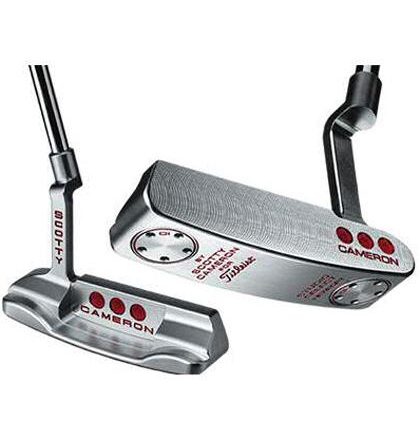
The modern pursuit of peak golf performance requires a systems-based approach rather than isolated tweaks. Contemporary research in biomechanics, motor learning, and performance science shows that enduring improvements in the swing, tee shots, and putting come from aligning movement mechanics, perceptual decision-making, and pragmatic on-course tactics. This piece integrates those areas to provide evidence-informed methods for refining swing structure, maximizing driver effectiveness, and increasing putting dependability – all with an emphasis on transfer to competitive situations and varied course surfaces. Organized into linked modules - swing fundamentals, driving strategy, and putting methodology – the article connects theoretical concepts (such as, angular momentum, ground reaction forces, and visual-motor coupling) to practical diagnostics and drill progressions that accelerate skill acquisition and reduce variability. Where useful, objective benchmarks and progression criteria are supplied so coaches and players can measure betterment and individualize programs.Written for coaches, serious amateurs, and sport-performance researchers, the guidance here aims to translate scientific principles into usable practice systems. By prioritizing reproducible training structures,decision frameworks,and measurable targets,the material helps players increase shot-to-shot consistency and cumulative scoring while enabling practitioners to tailor interventions to athlete-specific constraints and competitive aims.
Foundations of Biomechanics for a Consistent, efficient Golf Swing
Start by locking in static elements that allow dynamic principles to operate consistently. create a repeatable address position by attending to posture (a forward-spine inclination of about 20-30° with roughly 10-15° knee flex), appropriate stance width (approximately shoulder-width for mid-irons, widening to ~1.2-1.5× shoulder width for driver),and correct ball position (center for short irons,incrementally forward through the set,and just inside the left heel for the driver). Use a neutral grip so the face can square at impact and establish a modest forward shaft lean for iron shots (hands ~1-2 inches ahead of the ball) to encourage a descending strike and predictable low-point location. Equipment influences these positions - shaft length, lie angle, and loft will affect spine tilt and swing plane – so engage a qualified clubfitter to align gear with your posture and swing arc. To make these checks routine on the range, try this setup checklist:
- Mirror check: visually confirm spine tilt and shoulder plane.
- Rod beneath feet: verify stance width and toe flare relative to your target line.
- ball-position ladder: hit a series of shots moving the ball progressively forward across a half-bucket to observe how flight and strike change.
From a stable setup, cultivate a dependable kinematic sequence and impact profile that favor efficiency. Prioritize a proximal-to-distal activation: commence with a stable lower-body coil (hips typically rotate ~40-50° on the backswing for athletic players, with shoulders reaching ~80-100° on a full turn), then accelerate through the hips, torso, arms, and finally hands/clubhead - maintaining the X-factor separation that generates power without “casting.” At impact aim to have roughly 60-70% of weight on the lead foot, the hands slightly ahead of the ball, and the low point of the arc just past the ball for irons; with the driver, shallow the attack slightly upward while preserving face control. Typical faults include early extension, loss of lag (casting), and excessive forearm roll; address these with focused drills. Practical progressions for different skill tiers include:
- Pump drill: pause at the top and ”pump” down to feel retained lag (beginner → intermediate).
- Step-through: step into the lead side at impact to reinforce correct weight transfer (intermediate → advanced).
- Impact checks: use impact tape or short grass divots to verify low-point and face orientation (all levels).
Also bring short-game mechanics into the same framework: for chips and pitches adopt a narrower stance, reduce spine tilt, and control wrist hinge to vary loft and run; from bunkers open the face and use a steeper entry angle with a slightly wider base to stabilize through the sand.
Convert technical improvements into measurable on-course gains through structured practice cycles, scenario training, and compact mental routines.Implement a three-phase weekly cycle: technical week (slow, movement-specific corrections with immediate feedback), power/speed week (focus on constrained targets and launch-monitor metrics such as clubhead speed and smash factor), and course-simulation week (replicate wind, variable lies, and pressured decisions). Define objective targets – for example, narrowing dispersion by 10-15 yards, raising greens-in-regulation by 5-10%, or halving three-putts within 12 weeks – and use conservative club choices when hazards dictate (e.g.,play to a layup to leave a 100-120 yard approach rather than forcing a risky carry). Modify trajectory in wind by moving the ball slightly forward and de-lofting the club in headwinds. For the mental side, adopt a short pre-shot routine, controlled breathing, and visualization of the intended flight. When a mid-round fix is needed:
- re-check setup (grip, ball position, spine angle);
- simplify – reduce swing length to restore mechanics under pressure;
- alter strategy (aim point, club choice) to lower risk while keeping scoring potential.
Combined, targeted biomechanical work, progressive drills, and deliberate strategy let players from novice to low handicap build a repeatable, efficient swing that transfers to better scoring.
Kinematic Sequencing: Increasing Speed Without Sacrificing precision
Performance gains require an observable, reproducible model of how the body should sequence. The downswing should be initiated by the pelvis, then the torso, then the lead arm, followed by the hands/wrists and finally the clubhead – the classic kinematic sequence. To make that pattern reliable, standardize setup: stance width roughly shoulder distance for irons and slightly broader for the driver, ball position about 1-2 inches left of center for mid-irons and off the inside of the lead heel for driver, and an initial weight distribution near 50/50 (with a slight trail-foot bias for driver, e.g., ~55/45). Aim for a backswing with ~90° shoulder turn (men) / ~80° (women), a hip turn of about 40-45°, and a wrist hinge approaching ~90° at the top to store rotational potential for later release.Train the pattern with these checkpoints and drills:
- Step drill: a half-swing while lifting the lead foot 2-3 inches to focus on hip initiation and letting the arms follow.
- Single-arm swings: 25-30 reps with the trail arm only to feel torso-driven motion.
- Impact-bag/short-impact: train arriving at impact with ~5-8° shaft lean and ~60% weight on the lead side.
After the sequence is clean, develop power and accuracy together by emphasizing timing over raw force. Use a launch monitor to establish baselines for clubhead speed, ball speed, carry, and smash factor; then set attainable increases (for instance, aim for a +3-5 mph rise in clubhead speed over 6-8 weeks while maintaining or improving smash factor – a good driver smash factor target is ~1.45). Progress from slow, controlled reps to full-speed swings while keeping the pelvis→torso→arms→hands→club order intact. useful practice progressions include:
- Tempo counting (3:1 backswing:downswing): three slow counts up, one decisive count down to ingrain the rapid energy transfer;
- Towel-under-armpit: 2-3 sets of 20 to preserve torso-arm connection and reduce casting;
- Pause-and-pump: a one-second pause at the top with two small hip pumps to feel correct sequencing before release.
Frequent faults are starting the downswing with the arms (casting), early extension, or reverse-pivot. Solve these by returning to the slow drills, using video or launch-monitor feedback, and establishing measurable checkpoints (consistent center-face strikes and repeatable carry distances within ±10 yards). Equipment remains critically important: match shaft flex and length to your speed and work with a fitter to find a driver loft that provides a stable launch given your typical wind and course conditions (many amateurs find 9-12° common). The combination of measurable positions, progressive drills, proper gear, and on-course repetitions produces reliable increases in clubhead speed while protecting accuracy – the route to lower scores for all ability levels.
Driver Tactics: Balancing Aggression with Smart Risk control
Reliable tee shots start with a repeatable setup and a plan that balances distance and precision. position the ball just inside the lead heel (for right-handers), set tee height so roughly half the ball sits above the crown, and widen the stance slightly to allow rotation. Strive for a positive attack angle in the range of +1° to +3° with the driver, targeting a launch angle around 12°-14° and spin in the neighborhood of 2000-3000 rpm for a favorable carry/roll trade-off; early face closure typically produces lower launch and higher spin. Match driver loft and shaft profile to your swing speed – for example, players between ~95-105 mph clubhead speed often fare well with ~10°-12° loft and a mid-launch flex. translate fundamentals to measurable outcomes by setting progressive goals (e.g., add 10-15 yards of average carry or shrink dispersion to a 20-25 yard corridor). Key drills include:
- Impact tape drill: combine impact tape with launch-monitor readings to confirm center strikes and track spin/launch;
- Attack-angle exercise: place a headcover ~6 inches behind the ball and practice striking the ball without touching the cover to encourage an upward strike;
- Tempo-and-rotation: count 1-2 on takeaway and 1-2-3 through transition to coordinate lower-body rotation and reduce casting.
With fundamentals dependable,layer in course-management techniques that reduce penalties and maximize scoring opportunities. Before each hole identify primary and secondary corridors – the conservative line versus the high-reward line – and confirm distances to hazards,layup points,and green centers with GPS or a rangefinder. As an example, on a 430-yard par 4 with a fairway bunker at 260 yards, a conservative play might be a 3-wood to a 230-250 yard layup, while the aggressive option requires a >260-yard driver carry into a tighter landing area. Know the Rules of Golf for penalty scenarios and choose relief options accordingly.Train decision-making with routines such as:
- scenario practice: play nine holes using only conservative or only aggressive choices to quantify scoring differences;
- Wind/trajectory drill: hit 10 shots in varying wind,note club selection and deviation to build a personal wind chart;
- Pre-shot checklist rehearsal: confirm aim,yardage,landing zone,preferred miss,and commit to the routine before each practice shot.
Connect driving strategy with short-game proficiency and shot-shaping so positional advantages become scoring gains. Practice predictable shot-shaping – controlled fades with a slightly open face and neutral-to-out-to-in path, draws with a slightly closed face and in-to-out path – and use small stance or ball-position adjustments (1-3 inches or ½-1 ball) to create measurable curvature. For short game, maintain a repeatable setup (~60% weight on lead foot, hands ahead at impact) and accelerate through the shot to avoid deceleration. Try drills like:
- Trajectory ladder: intermediate targets at 15, 25, 35 yards to train landing zones;
- Shape-the-shot ladder: produce five left‑to‑right targets from one setup to learn face/path relations;
- Up-and-down challenge: from three lies inside 30 yards, track conversion percentage (aim for >70% for low handicappers).
Use conservative decision thresholds (e.g., only attempt high-carry shots when you estimate >50% probability of success) and visualization to limit decision anxiety. Integrating technical parameters, properly fitted equipment, and percentage-based decisions helps golfers systematically lower scores while managing in-round risk.
Using Launch-Monitor Data to Tune Ball Flight and Equipment
Meaningful use of launch monitors starts with a controlled protocol that separates equipment effects from swing variability. zero the unit, use one model of ball, and keep tee height identical for driver tests; for iron work use a consistent lie and turf simulation. Collect at least 10 solid impacts and analyze median values to minimize outliers. Focus on core metrics: ball speed, clubhead speed, smash factor, launch angle, spin rate, attack angle, and spin axis/side spin. As a practical guideline, players with ~95-105 mph clubhead speed often target a driver launch of 10-14° and spin ~2000-3000 rpm to optimize carry; elite players on tour commonly average over 300 yards of total driving distance, so equipment and technique must be tuned for each player’s profile. Rather than fixating on single numbers, prioritize the interaction of launch angle and spin (the launch‑spin window) because it defines peak carry and ideal trajectory for course conditions such as firm fairways or windy links-style layouts.
With baselines set, convert metrics into tangible mechanical and short-game changes. First close any setup gaps that influence launch and spin: stance width, ball position, shaft lean at address, and spine tilt. Such as, moving the ball one ball forward can increase attack angle by roughly 0.5-1°, frequently enough raising launch and reducing spin when paired with a shallower driver attack. then use measured drills:
- Impact-tape practice: groove center-face contact using half-swings; target marks inside a central ~1.5″ diameter to lower sidespin.
- Attack-angle ladder: place alignment rods, vary ball position across three sets of 10 swings, and track attack-angle and launch/spin changes on the monitor.
- Wedge spin control: test 15-30 yard shots with varied swing lengths and record repeatable spin windows; account for groove wear and ball selection.
Avoid common missteps like closing the face to “force” lower spin (which often induces lateral curvature) or steepening the shaft (which can increase spin through greater spin loft). Address these issues with feel-based drills (soft hands through impact) and monitor dynamic loft and attack-angle changes. For less experienced players prioritize consistent center contact and tempo before pursuing numeric optimization; advanced players refine spin axis and subtle face-path relationships to shape shots reliably in wind and on slopes.
marry equipment choices and course strategy based on measured data to reduce scores. Use objective metrics to pick driver loft,adjust hosel settings,and choose shaft flex/torque to achieve the desired launch-spin window – for example,reduce spin (>~3500 rpm) by lowering loft or fitting a stiffer shaft to encourage a shallower attack; conversely,low-launch/low-spin players may need more loft or a higher-launch shaft. Fit irons and wedges so carry gaps sit around 8-12 yards and confirm these on-course into greens of varying firmness. Remember Rules compliance (USGA/R&A specs). Translate monitor outputs into course plans – if your average driver carry is ~250 yards with a 10-yard offline dispersion,choose conservative tee shots on short par‑4s and use lower-launch trajectories into firm putting surfaces. Use the monitor’s consistent feedback to build confidence and set measurable practice aims such as cutting carry dispersion by 20% over six weeks using the targeted drills above.
Putting: Evidence-Based Stroke Mechanics and Reliable Green-reading
Build a reproducible putting posture and a mechanically sound, evidence-based stroke. Place the ball slightly forward of center (~1-2 cm) to encourage a shallow arc and early forward roll; stand shoulder-width with the putter shaft inclined slightly toward the lead arm so the eyes sit over or just inside the target line. Use a pendulum-like stroke driven by the shoulders and minimal wrist action (hinge under 5-10° if any). Control timing with a backswing:forward ratio close to 2:1 – practicing with a metronome near ~60 bpm helps lock tempo. typical putter lofts of 3-4° encourage prompt forward roll,though initial skid varies with green speed and putter loft; expect the ball to begin rolling true within the first ~18-24 inches on most surfaces. Consolidate fundamentals with quick setup checks and corrections:
- setup checkpoints: eyes over line, ball 1-2 cm forward, ~55-60% weight on lead foot, shoulders aligned parallel to the target line.
- Common issues: wrist flipping (correct with toe-tap or arm-lock drills), inconsistent ball position (use an alignment stick), and rushed tempo (use a metronome).
Use mirror and short-gate drills to validate face alignment and make square-at-impact behavior habitual.
Advance by adopting systematic green-reading procedures grounded in observable cues rather than guesswork.Identify the fall line (the direction water would run) and decide weather the putt is primarily a pace (distance) or line (break) problem. Inspect grain direction via turf sheen and blade orientation – putts moving with the grain will often pick up speed. A staged, AimPoint-style read works well: (1) walk the putt to feel slope underfoot, (2) estimate slope magnitude in small increments (roughly 0.5°-2° per notable tier),and (3) choose an intermediate aiming point a putter head or two in front of the ball to control initial roll. Practice drills that convert reads into reliable outcomes:
- Walk-and-feel: repeat walking putts to distinguish ~1° vs ~2° slopes and log read confidence;
- Clock-face break: place tees at 3, 6, and 9 o’clock positions on a 10-20 ft circle to practice visualizing break;
- Ladder pace drill: stop putts at 3, 6, 9 ft intervals to link backswing length with distance control.
These exercises help players convert visual and tactile slope details into numeric aiming and pace decisions,improving stroke consistency across green speeds and weather conditions.
Embed these skills into a realistic practice program to secure measurable gains. Structure sessions into blocks – such as, 30-40 minutes focused on short-range precision (3-6 ft), 30 minutes on medium-range control (10-30 ft), and 15-20 minutes on green-reading scenarios – and set weekly targets such as making 8/10 from 6 ft within four weeks or halving three-putts over two months. Test putter length and grip size for neutral wrist posture and confirm the putter lie so the sole rests flat; even small changes can shift impact by degrees and inches of path. On-course, use a compact pre-shot routine: mark and replace the ball according to the Rules, pick a target, visualize the intended roll, commit to a single line, and execute – this script reduces indecision and second-guessing. for advanced refinement, measure face rotation with impact tape or pressure sensors and experiment with slight arc adjustments to match your natural stroke. Troubleshooting tips:
- If putts consistently miss left: check for an open face at impact or misalignment – use an alignment mirror;
- If distances are too long/short: adjust backswing length incrementally and re-test with ladder drills;
- Under pressure: simulate tournament conditions (timed putts, competitive reps) to build resilience.
Linking mechanical fundamentals to empirical green-reading and disciplined practice enables players at every level to achieve measurable improvements in stroke reliability and scoring.
Progressive Drills to Cement Motor Patterns and Fix Frequent Faults
Begin by creating repeatable motor patterns for the full swing through graded progressions that move from static setup work to dynamic impact-focused practice. Start with address fundamentals: a neutral grip, shoulders parallel to the target line, precise ball position for each club (for example half-shaft forward for a 3-wood, center-left for mid-irons), stance width ~1.0-1.5× shoulder width for longer clubs, 5-7° forward spine tilt, and balanced knee flex. Reinforce the intended kinematic order (hips → torso → arms → release) with isolating drills such as:
- Gate drill: tees outside the club path to train a straight takeaway and stop over-the-top moves;
- Impact bag: short, controlled strikes holding follow-through to feel shaft lean and low-point control;
- Towel-under-armpits: promotes torso-arm connection and prevents casting during transition.
Use a metronome or counting to stabilize tempo (a starting target is a 3:1 backswing-to-downswing ratio) and measure progress with dispersion objectives (for example,8 of 10 shots within 15 yards of the intended target with a 7‑iron). For common issues (early extension, casting, over-the-top), prescribe focused corrections (shortened swings, exaggerated hip rotation, slow-to-fast tempo drills) and quantify weekly improvements via range sessions and launch-monitor reports when possible.
Once motor patterns are established, transfer them to the short game and shot‑shaping with drills that respect turf interaction, bounce, and green firmness. Emphasize loft and bounce management: opening a 56° wedge raises effective loft and bounce - useful in soft sand and fluffy lies – whereas a closed face lowers launch on tight, dry chips. Recommended progressions:
- Landing-zone ladder: towels at 10‑yard increments to hone distance control for chips and pitches;
- 1‑2‑3 bunker sequence: practice shallow, medium, deep lies with a feet-only swing to feel consistent sand contact (observe the rule not to ground the club in a bunker before the stroke);
- Green-stroke rhythm: alternate three putts inside a 6‑ft circle to ingrain speed and read subtle breaks.
In on-course situations – as an example, an uphill 40‑yard pitch to a firm, windy green – teach trajectory control (add half a club, open the face for a higher arc, or lower the ball with forward ball position and shaft lean) and set measurable targets (e.g., reduce putts per green from 2.3 to 1.8 across eight rounds). Use explicit cues to correct fat bunker shots (too steep,weight back) and thin chips (insufficient lead-hand forward) with instructions that suit beginners and refine for low-handicappers (controlled wrist hinge,consistent low-point).
Embed motor-pattern practice within course-management and mental strategies so technical gains convert to lower scores under stress. Build pre-shot routines that lock setup checks:
- Alignment-stick scan: confirm feet, hips, and shoulder alignment pre-shot;
- Visual rehearsal: choose an intermediate landing spot and a closer reference to guide shot geometry;
- Club-selection rule: when uncertain, pick the club that leaves the easiest next shot rather than the one that maximizes carry.
Simulate tournament-like constraints on the range (windy tee shots, firm fairways, sloped lies) and apply decision rules (e.g.,always take a conservative line on par‑5s when paired with a shorter-hitting partner). Include equipment checks (shaft flex, correct lie, wedge bounce selection) and set quantified practice targets such as reducing penalty strokes by 30% in six weeks through focused bunker/recovery work or improving GIR by 5 percentage points by refining mid‑iron contact.Finish sessions with pressure simulations (counted-score 9‑hole practice or competitive games) to strengthen the ability to perform trained motor patterns within the Rules and match stress,thereby linking technical skill directly to scoring improvements.
Periodized Practice: Using Metrics to Sustain Performance Under Pressure
Start with a clear baseline assessment and then organize training into macro-, meso-, and microcycles. Track objective metrics – clubhead speed, launch angle, attack angle, spin rate, shot dispersion, strokes gained, GIR, and scrambling % – to identify strengths and weaknesses. Record a two-week baseline with a launch monitor or shot-tracking system (such as, target driver launch ~10-14°, spin in the 1800-3000 rpm band, and driver attack angle ~+2° to +5°; irons generally show -4° to -8°). Map a 12-16 week macrocycle into 3-6 week mesocycles (foundation, skill-specific, and pre-competition/taper) and weekly microcycles for maintenance and recovery. The process is: quantify, prioritize, prescribe – ensuring practice hours go to objectively identified needs (e.g., add power work if clubhead speed is 3-5 mph below target, or increase short-game volume if scrambling <40%).
Translate metrics into focused technical interventions connecting swing mechanics, short game, and equipment with on-course outcomes. For swing mechanics,emphasize address fundamentals (driver just inside the front heel; 7‑iron centered),modest spine tilt for driver (~3-5° away from the target),and forward weight at impact (~60/40) to promote iron compression. pair drills to metrics:
- Tempo/sequence: metronome at 60-72 bpm for 50 swings to stabilize transition;
- Impact bag/gate: 3 sets of 10 to improve forward shaft lean and face control while watching ball flight;
- Landing-zone chips: towels at 8-12 ft and 30 chips aiming at the first towel to quantify proximity to the hole;
- Putting clock: make 10 consecutive putts from 3, 6, and 9 ft to sharpen speed control.
Include equipment checks (loft/lie, shaft flex, and ball compression) and use specific corrective cues for common faults: early extension → wall-tap/alignment-stick spine drill; casting → towel-under-arm for 3×20 reps.Set measurable targets (e.g., reduce mean 7‑iron dispersion to <20 yards offline, increase GIR by 10% in an 8‑week mesocycle) and adapt drills based on incoming data. Offer beginner modifications (shorter arcs, fewer reps) and advanced progressions (weighted-club swings, fine-tuning launch conditions) to suit all skill levels.
Include pressure-specific conditioning and on-course scenario practice so gains carry into competitive scoring.Use quantitative pressure simulations (constrained-reward practice where failure costs a stroke or forfeit, timed reps, or heart-rate monitoring to link physiological arousal with performance) and realistic course tasks: play par‑3s with a mid-iron focus, take conservative lay-ups on windy par‑4s using percentage golf (e.g., play to 100-120 yards short of forced carries when wind >15 mph), and rehearse recovery sequences from plugged lies and difficult bunkers. Useful situational drills:
- Pressure Scramble: 9 holes where a missed GIR costs 10 push-ups before the next tee to simulate consequence;
- One-Score Test: 18 holes chasing a target score; log strokes gained on approach and putting;
- Wind Work: 30 lower-trajectory 3/4 shots to reduce spin when facing crosswinds.
end each cycle with objective retesting of baseline metrics and a coached debrief to shape the next mesocycle. Throughout, keep a consistent pre-shot routine, visualization habits, and breathing techniques to manage arousal and link technical competence to decision-making, so improvements in mechanics, short-game skill, and strategy sustain performance under pressure.
Q&A
Note: the web search results returned unrelated material and did not inform this golf content. The Q&A below is an independent, evidence-aligned supplement to “Unlock Advanced golf Tricks: Master Swing, Putting & Driving Skills.” the responses are concise and geared to practical submission.
1. Q: what core biomechanical ideas underpin a high-functioning golf swing?
A: Efficient swings rely on coordinated sequencing, timely segmental activation, and efficient ground-to-club energy transfer. key elements are a stable base for generating ground reaction forces, proximal-to-distal rotation of hips and torso, maintenance of spine angle, and controlled wrist action to optimize clubhead speed and impact conditions. Minimizing excessive lateral movement and keeping the center-of-mass path consistent improves repeatability.
2. Q: How does kinematic sequencing influence speed and accuracy?
A: Proper sequencing (hips → torso → arms → hands → club) lets large segments generate momentum transferred to distal segments at the right time,maximizing clubhead speed while maintaining desirable face orientation at impact. Breakdowns in sequence reduce distance and increase variability in ball flight.
3. Q: Which objective metrics best evaluate swing performance?
A: Key measures include clubhead speed, ball speed, smash factor (ball speed/clubhead speed), launch angle, spin rate, carry distance, lateral/longitudinal dispersion, and face-to-target alignment at impact. For putting, track launch direction, launch speed, roll quality, and the percentage of putts finishing inside a defined radius.
4. Q: What evidence-based practices increase driving distance without degrading accuracy?
A: Combine technical sequencing improvements with power and mobility training (rotational power, hip mobility, leg strength) and equipment fitting (appropriate shaft flex, loft, and head design). Focus on improving effective clubhead speed and launch/spin conditions via center strikes and dynamic loft control rather than radical swing changes that increase inconsistency.
5. Q: How should practice be structured to foster long-term motor learning?
A: Use deliberate practice protocols: set clear performance goals, practice under varied conditions, progress from blocked to random practice, seek specific feedback (video, launch monitor, coach), and distribute practice to support consolidation. Introduce contextual interference to improve transfer to on-course situations.
6.Q: Which drills improve sequencing and top-of-swing transition?
A: Useful drills include pause-at-the-top to feel retained lag and lower-body initiation; medicine-ball rotational throws to train separation and explosiveness; slow, metronome-paced swings emphasizing hip initiation; and impact-bag or towel-under-arm drills to maintain connection and prevent early release.
7.Q: Evidence-based putting methods to boost consistency?
A: Emphasize shoulder-led pendulum strokes, segmented distance-control drills (ladder, circle), and alignment verification. Combine a compact pre-shot routine, visualization, and pressure-simulation practice. Use technology (laser alignment, stroke analyzers) for objective feedback.
8. Q: Which putting drills transfer best to on-course performance?
A: Drills focusing on distance control under variable conditions (ladder), short‑putt pressure (circle drill), and randomized-distance practice show strong transfer. Pair repetition with pressure elements (limited attempts,scoring) and variability to mirror play.
9. Q: Ideal pre-round warm-up to maximize readiness?
A: A warm-up should include dynamic mobility (hips,thoracic spine,shoulders),activation exercises (glutes,core),progressive swing builds (short to long clubs,low to full effort),and a short putting/chipping routine. A 10-20 minute individualized warm-up raises neuromuscular readiness without fatigue.
10. Q: How does course management improve scores and how to implement it?
A: Course management lowers variance and penalties by selecting shots aligned with probabilistic outcomes and personal strengths. Identify risk zones, choose target lines favoring safer misses, position tee shots to optimize approach angles, and select clubs to leave favorable short-game distances. Pre-round mapping using your dispersion stats enhances decisions.
11. Q: How to identify an optimal driver setup (loft/shaft/length)?
A: Use launch-monitor testing to compare ball speed, launch angle, spin rate, and dispersion across setups. The ideal combination produces the best carry/total distance with controllable dispersion and consistent smash factor. Factor in swing tempo and variability when choosing loft and shaft characteristics.
12. Q: Common driver faults and corrective strategies?
A: Common faults include early extension, upper-body rotation without hip engagement, casting, and excessive lateral sway. Use posture-retention drills,alignment-rod/wall drills to prevent sway,impact-position exercises,and tempo work to re-synchronize sequencing.
13. Q: Practical steps to improve putting alignment and reads?
A: Combine objective alignment checks (visual or laser) with multi-angle green reads, assess slope/grain, estimate green speed, and correlate perceived slope with practice strokes. Commit to a single line and stroke to minimize indecision under pressure.
14. Q: How to split practice time among full swing, short game, and putting?
A: Prioritize short game and putting (they account for most strokes inside 100 yards). A practical split is ~40% short game, 30% putting, 30% full swing – adjusted to the player’s weakest area and schedule.
15. Q: Which training modalities increase rotational power for driving?
A: Plyometrics, medicine-ball rotational throws, resisted cable rotations, and selected Olympic-lift accessory work develop rate of force and rotational power. Prescribe progressively, paying attention to technique, load management, and injury prevention.
16.Q: How to measure and track improvement reliably?
A: Track launch-monitor metrics, on-course shot-tracking/strokes-gained stats, and drill success rates (e.g., putts made inside 3 ft). Keep a practice log with measurable goals and periodically retest (e.g.,10-ball dispersion tests,timed putting drills).
17.Q: Pitfalls when using technology (launch monitors, apps) and how to avoid them?
A: Risks include overreliance on raw data without context, mistaking single-session variance for trends, and making changes solely on device output. Mitigate by combining quantitative data with video and coach interpretation, using adequate sample sizes, and focusing on actionable metrics tied to on-course performance.
18. Q: How to manage technique changes during competition seasons?
A: Avoid major overhauls mid-season; prefer small, targeted tweaks that can be rehearsed under pressure. Emphasize maintenance routines, cue-based practice, and pre-shot routines. Save extensive reconfigurations for off-season or low-stakes periods.
19. Q: What is the role of the mental game, and how to improve readiness?
A: Mental skills regulate stress, focus, and decisions that shape motor execution. Use consistent pre-shot routines, process-focused goals, pressure simulation, imagery rehearsal, and arousal-control techniques (breath work, progressive relaxation) to maintain optimal states.
20. Q: How should an instructor build an individualized plan using these principles?
A: Start with a baseline technical, physical, and statistical assessment. Identify high-leverage deficits, set SMART performance goals, choose drills and conditioning consistent with motor learning (progressive overload, variability), and schedule periodized practice with routine reassessment. Keep interventions measurable, evidence-informed, and aligned with the player’s calendar and injury history.If desired, I can:
– Convert this Q&A into a printable FAQ.
- Design an 8-week sample plan for a specified handicap and time availability.
– Supply video links or references demonstrating the drills described.
Summary: The advanced methods in this article – precise swing mechanics, evidence-aligned putting protocols, strategic driving techniques, and disciplined course management - are most effective when combined into a structured, data-driven practice system. Improvement results from coupling biomechanical understanding with objective feedback (kinematics, launch and stroke metrics), focused drills that isolate faults, and tactical decision-making that reduces risk. Equally critically important are periodized practice design (goal setting, variability, spaced repetition), performance tracking, and periodic expert review to recalibrate technique and strategy. With iterative,evidence-based application and committed coaching,players can convert technical concepts into consistent on-course outcomes and sustained scoring improvements.

Elevate Your Golf Game: Pro Secrets for Perfect Swings, Powerful drives & Precision Putting
Pro Swing mechanics: Build a Repeatable Golf Swing
Start with fundamentals adn layer in power and timing. A consistent golf swing is a combination of setup, sequence, and balanced finish. Use these biomechanical principles and drills to build a repeatable swing that produces accuracy and consistency.
Key fundamentals
- Grip: Neutral to slightly strong – keep forearms linked to the clubface for consistent face control.
- Posture & Setup: Hinge at hips,50/50 or 60/40 weight bias (slightly more on the front foot for irons),knees flexed.
- Shoulder turn: Aim for ~90° relative turn for full shots (varies by flexibility).
- Sequencing: Hips lead the downswing, then torso, then arms, promoting proper weight transfer.
- Impact position: Slight forward shaft lean for irons; square clubface at impact for accuracy.
Measurable swing targets
- Driver: Target smash factor >1.45 (ball speed / clubhead speed).
- Iron shots: Clubface square within ±3° at impact for tight dispersion.
- Weight shift: 55-60% onto front foot at impact for most full shots.
- Tempo: Consider a 3:1 backswing-to-downswing ratio for stable rhythm.
Swing drills (practical & measurable)
- Towel-under-arm drill – hold a small towel under your trail armpit during contact for better connection. Goal: keep towel in place through impact on 10 consecutive swings.
- Pause-at-top drill – stop 1 second at the top to improve sequencing.Aim for 8/10 swings where club returns on plane.
- Impact bag drill – feel a solid, forward-impact position; measure by how compressed the bag is and whether the hands are ahead of the ball.
Driving distance & Accuracy: Unlock More Power
Power comes from efficient mechanics, not just brute force. Improve driving distance with correct launch conditions, improved swing speed, and better energy transfer.
Launch and spin basics
- Launch angle: Optimize by swing speed - faster swing speeds need lower loft to maximize carry (see table below).
- Spin rate: Excess spin kills roll; aim for moderate spin (2200-3000 rpm depending on conditions).
- Smash factor: Efficiency metric – better contact increases carry for the same clubhead speed.
| Swing Speed (mph) | Recommended Driver Loft | Target Smash Factor |
|---|---|---|
| < 90 | 10.5°-13° | 1.40-1.46 |
| 90-105 | 9°-11° | 1.45-1.48 |
| > 105 | 8°-10° | 1.48+ |
Driving drills to add yardage
- Step-and-drive: Start with feet together,take a step into the downswing to train lateral weight shift and hip rotation.Measure by increase in ball speed or carry distance over 20 swings.
- Overspeed training: Use lighter training clubs or speed sticks to train the nervous system. Add 2-4 mph swing speed over 6-8 weeks cautiously.
- Center-face contact drill: Place a strip of impact tape or foot spray on the driver face and work for a 90% center-hit rate in a session.
Precision Putting: Lower Scores on the Green
Putting is where strokes disappear or accumulate.improve green speed control, alignment, and mental routine for consistent putting.
Putting fundamentals
- Setup: Eyes over the ball or slightly inside, relaxed shoulders, and an aligned putter face.
- Stroke: Pendulum motion from the shoulders; minimize wrist break.
- Speed control: Prioritize distance control on long putts over line precision.
- Pre-shot routine: Same three-step routine before every putt to calm nerves and set rhythm.
Putting drills (trackable)
- Clock drill – 12 balls at 3, 6, 9, and 12 feet around the hole. Goal: make 10/12 for confident mid-range putting.
- Ladder drill – place tees at 6, 12, 18 feet and try to leave >80% inside a 3-foot circle. Track your inside percentage each session.
- Gate drill – use two tees just wider than your putter head to ensure a square, straight-back-straight-through stroke. Achieve 15/15 clean passes without hitting tees.
Green reading & speed
Read putts by combining slope, grain, and pace. For speed, practice lagging to a 3-foot circle from varying distances – aim to leave at least 60% inside that circle from 30+ feet in practice sessions.
Short Game & Course Management
Scoring is often decided inside 100 yards. Efficient chipping, pitching, bunker play, and smart course management reduce big numbers.
Short game principles
- Club selection: Think roll-out, not loft-only – use wedges for trajectory, sand and lob for soft landings when necessary.
- Landing spot: Pick and aim to land shots consistently on the same intended spot to control distance and spin.
- Spin: Use clean contact and spin-friendly grooves on short shots; minimize spin on bump-and-runs.
Chipping & bunker drills
- Area-target drill: Place a towel 10-15 feet from the pin and try to land 10 consecutive chips onto the towel to train landing consistency.
- bunker 1-2-3 drill: Hit sand shots to 10, 20, 30 yards and track how frequently enough you get within 10 feet – aim for 70% proximity.
Course management checklist
- Play to your strengths – favor fairways and approaches where your scoring clubs are most reliable.
- Pin position assessment – when pin tucked, aim for the fat side of the green to avoid high-risk shots.
- Risk-reward: Evaluate strokes gained vs. risk of a penalty or big number.
Practice Plan & Golf Fitness
| Day | Focus | Duration |
|---|---|---|
| Mon | Putting + Short game | 60-75 min |
| Wed | Full Swing + Driver | 60-90 min |
| Fri | Course Play (9-18 holes) | 90-240 min |
| sat | Fitness & Mobility | 30-45 min |
Golf fitness essentials
- Mobility: thoracic rotation, hip flexor length, and ankle mobility impact your swing range. Add dynamic warm-ups.
- Power: Medicine ball rotational throws and kettlebell swings improve explosive hip rotation.
- Stability: Single-leg balance and anti-rotation core drills help maintain posture under pressure.
Benefits & Practical Tips
- Smarter practice beats longer practice – use measured goals (e.g., 80% first-putt make, 70% fairway hit) to track progress.
- Data-driven tweaks - use launch monitor feedback for driver and wedge tuning (launch angle, spin, carry).
- Pre-shot routine consistency lowers anxiety and reduces costly mistakes on the course.
- Video analysis – record swing from down-the-line and face-on angles to spot early compensations.
Case Study: Example Player progression
player profile: Club golfer, 18 handicap, inconsistent driver contact and poor lag putting. Approach used:
- Month 1: focus on setup, impact position, clock putting drill. Result: fairway accuracy +10%, 3-foot putt make rate increased 12%.
- Month 2-3: Driver fitting and overspeed training, short-game proximity drills. Result: +15 yards carry and reduced up-and-down failures by 25%.
- Month 4-6: Course management coaching and consistent practice plan. Result: Handicap dropped to 11 with improved scrambling percentage.
Tip: Track quantifiable metrics (fairways hit, greens in regulation, putts per round) to see which practice yields the best score improvements.
First-Hand practice session Template (60-90 minutes)
- Warm-up (10 min): dynamic mobility, light swings, 20 slow swings focusing on tempo.
- Putting (15-20 min): 30 short putts (3-6 ft) then 20 lag putts from 20-35 ft using ladder drill.
- Short game (15-20 min): 30 pitch/chip repetitions to a target area – use towel drill for landing consistency.
- Full swing (20-30 min): 40-60 balls – start with wedges, move to mid-irons, then driver. Use impact tape or launch monitor feedback if available.
- Cool-down (5-10 min): mobility and notes – write one measurable goal for next session.
Swift Checklist Before Every Round
- Warm up with 10-15 minutes on the putting green and 10-15 balls on the range.
- Set club selection plan for common yardages (e.g.,100/125/150/175 yards).
- Decide aggressive vs.conservative lines on holes with hazards or hidden trouble.
- hydration and fueling – maintain energy for consistent tempo.
SEO & Keyword notes
This article naturally uses high-value golf keywords such as golf swing, driving distance, putting stroke, short game, golf drills, swing mechanics, weight transfer, tempo, grip, alignment, consistency, launch angle, and green reading to support search visibility and user relevance.