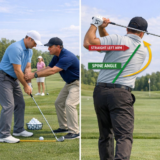
Mastering advanced elements of golf demands a synthesis of biomechanical precision, cognitive strategy, and deliberate practice. As competitive and recreational players seek to reduce scoring variability and increase shot reliability, attention must shift from simplistic cues to evidence-based refinements in swing mechanics, driving strategy, and short-game execution. This article examines those refinements through the lenses of human movement science, motor learning, and pragmatic course management, with the aim of transforming intermittent success into consistent performance gains.
The subsequent analysis delineates key mechanical principles that underpin an efficient swing, explores driving approaches that optimize distance while managing dispersion, and evaluates putting techniques validated by empirical research.emphasis is placed on segmental sequencing, energy transfer, and postural stability as biomechanical foundations; on decision frameworks for teeing strategy and risk-reward assessment on longer holes; and on perceptual-motor factors, green-reading, and routine structuring that enhance putting reliability. Each section integrates diagnostic indicators, targeted drills, and measurable progress metrics to facilitate systematic advancement.
By combining theoretical exposition with applied drills and course-management heuristics, the article provides a structured pathway for players and coaches to diagnose weaknesses, prioritize interventions, and monitor outcomes. The objective is not merely to present isolated tips,but to offer a cohesive,science-informed approach that yields durable improvements in swing quality,driving control,and putting efficiency.
Biomechanical Foundations of an Efficient Golf Swing: Kinematic Sequencing, Center of Mass Management, and Practical Assessment Protocols
Efficient kinematic sequencing begins with a biomechanically sound pattern: from the ground up the motion should progress pelvis → torso → upper arms → forearms → club. In practical terms, this means initiating the downswing with a controlled hip rotation (a led of ~40-50° total hip turn through impact) that creates a stable platform for the torso to unwind (target ~80-100° of shoulder turn at full rotation for most adults). maintain a consistent spine tilt of approximately 10-15° toward the target during address so the swing plane allows the hands to return to the ball on a descending arc with the long irons and a slightly shallower arc with short irons and wedges. To develop feel for correct sequencing and lag, practice these drills:
- Pump (3/4) Drill - pause three-quarters downstroke to confirm hip initiation before allowing the arms to follow;
- Step-Through Drill – start with the lead foot slightly open and step through at impact to train weight transfer and hips-first sequencing;
- Medicine Ball Rotations – explosive throws to mirror rotational power while protecting the lumbar spine.
These exercises are scalable: beginners begin with slow,exaggerated reps to ingrain patterning; low handicappers use tempo and video feedback to refine milliseconds of sequencing and increase clubhead speed without sacrificing accuracy.
Center of mass (COM) management and ground-reaction integration are equally critical because they dictate balance, low-point control, and shot dispersion. At address strive for an initial 50/50 weight distribution, shifting to ~60-70% on the trail leg at the top of the backswing and returning to ~60-70% on the lead leg by impact for maximal compression and consistent divot patterns. Minimize excessive lateral sway (keep lateral movement under 3-6 cm where possible) by emphasizing rotational force generation rather than translation; common faults such as early extension (pelvis moving toward the ball) can be corrected with a chair-or-bench drill to maintain hip hinge and proper spine angle. Equipment choices also alter COM behavior: a stiffer shaft and slightly shorter length can reduce unwanted lateral motion for players with excessive sway, while loft and bounce selection in the short game influence how low the COM sits through the shot.Practice checkpoints include:
- Impact bag contact to feel forward shaft lean and low-point consistency;
- Feet-together swings for balance and better proprioception of the COM;
- pressure-mat or force-plate sessions (if available) to quantify weight shift and ground-reaction timing.
establish practical assessment protocols and link biomechanical improvements to on-course decision-making. Use high-speed video (ideally 240 fps or greater) from down-the-line and face-on angles, combined with launch monitor data (carry distance, launch angle, spin rate, and smash factor) to set measurable goals such as +2-4% increase in clubhead speed or a 10-15% reduction in lateral dispersion over a 6-8 week cycle. Translate these gains into strategy: when the wind is down, employ a full, rotational sequence to maximize distance; when playing into wind or on firm links-style turf, lower the COM and shallow the arc to produce a penetrating ball flight (think forward ball position, reduced wrist release, and a controlled weight shift). Remember rules and equipment limits when planning strategy (maximum of 14 clubs in the bag), and incorporate situational drills that simulate course stress-such as pressure putting games after a sequence of full swings or forced carries over a hazard-to merge the mental and mechanical aspects of performance. For continued progression, track practice with objective metrics, reassess every 4-6 weeks, and adapt drills for differing physical abilities (e.g., rotational exercises for mobile athletes versus stability and sequencing drills for those with limited rotation) so technical mastery directly improves scoring and course management.

Integrating Rotational Mobility and Stability into Swing Mechanics with Targeted Mobility Drills and strength Conditioning
Effective golf instruction begins with objective assessment and progressive integration of mobility into the swing; therefore, start by establishing baseline measures and consistent setup fundamentals. Use simple clinical tests - a seated thoracic rotation test, supine hip internal/external rotation with a goniometer, and a single-leg balance/time test - to quantify range of motion and stability. As a rule of thumb, target a thoracic rotation of ≥45°, lead hip internal rotation of ≥25°, and trail hip external rotation of ≥30° as realistic mid-term goals for many adult golfers; record these with an inclinometer or smartphone app every 4-6 weeks to track progress. In addition,emphasize a reproducible address position that preserves the player’s posture: maintain a spine tilt roughly 15-20° from vertical (varies with body proportions) and distribute weight approximately 55% on the trail foot at address to facilitate a stable coil. For pragmatic setup checkpoints and quick on-range screens, consider the following list:
- Seated thoracic rotation (degrees left/right)
- Single-leg balance ≥10 s (eyes open)
- Address spine angle and weight distribution check with an alignment stick
These baseline measures provide the objective feedback necessary to prescribe drills and monitor improvement in swing mechanics and scoring consistency.
Next, translate mobility and stability gains into the kinetic sequence through targeted drills and strength conditioning that mimic the demands of the golf swing. Implement a two‑phase training protocol: a mobility phase to restore thoracic and hip ROM, followed by a stability/force-transfer phase to improve sequencing. Useful mobility drills include band-assisted thoracic rotations,half-kneeling windmills,and supine hip stretches (perform 2-3 sets of 8-12 controlled reps per side,daily or every other day). Follow this with stability and power work such as Pallof presses, cable chops, medicine‑ball rotational throws, single‑leg Romanian deadlifts, and rotational carries (perform strength work 2-3 times per week, 3 sets of 6-12 reps; explosive throws 3-5 reps × 3-4 sets). To integrate these changes into the swing, use on‑tee swing drills that preserve the improved sequencing: half‑swings with a 1‑second pause at the top to teach transition sequencing, step‑through drills to reduce lateral sway, and impact‑bag or alignment‑stick strikes to reinforce lower‑body bracing. For convenience, here are practical practice drills to rotate directly into technical work:
- Band thoracic rotations - mobility, 2-3×12
- Pallof press – anti‑rotation stability, 3×10-12 per side
- Medicine ball rotational throws – power transfer, 3×5 explosive reps
- Half‑swing pause at top – sequencing cue to feel hip lead
When correcting common faults such as early extension, casting, or excessive slide, cue players to maintain a steady spine angle and initiate transition with a controlled lower‑body rotation (aim for a hip turn of roughly 20-35° relative to address for many golfers), and reassess with video or launch monitor data to confirm improved clubhead speed and dispersion.
integrate these technical and physical adaptations into course strategy and routine so improvements carry over to scoring situations. Before a round, perform a 10-15 minute dynamic warm‑up (mobility drills + light medicine‑ball throws) and a short targeted session on the range that rehearses the new sequencing at reduced intensity before building to full swings; in cold or windy conditions prioritize mobility and short‑game precision because restricted ROM and altered ball flight require different club selection and trajectory control. Apply tactical shot‑shaping by using improved rotation to create controlled fades or draws and lower trajectories into the wind by reducing loft through forward press and a more compact turn. To maintain in‑round consistency when fatigue sets in, default to a shortened swing with a focus on core bracing and tempo (e.g., 3:1 backswing to downswing timing feel) and rely on pre‑shot routines to stabilize mental state. Troubleshooting on the course often follows predictable patterns; use the checklist below to diagnose and correct quickly:
- Excessive sway → perform single‑leg balance/step‑through drill to re‑establish axis
- Loss of lag → practice slow‑motion half‑swings with an impact bag
- Reduced distance in cold/wind → warm up longer and choose one club stronger
Measure progress via repeat ROM tests, launch monitor numbers (ball speed, spin rate, dispersion), and scoring trends (strokes gained or fairways/greens in regulation). By combining accurate measurement,targeted drills,and strategic on‑course submission,players of all levels can convert improved rotational mobility and stability into better swing mechanics,more reliable short game execution,and lower scores.
Technical Diagnostics and Corrective Drills for Club Path, Face Angle, and Consistent Impact Performance
Begin by conducting a systematic diagnostic that isolates club path, face angle at impact, and the resulting ball flight. Use a combination of simple on-range tools and instrumented feedback: alignment rods to define the target line; impact tape or foot spray to locate strike position; and a launch monitor to record face angle (°), club path (°), attack angle (°), carry distance, spin rate, and smash factor.For baseline targets, aim for club path within ±3° of your intended line for most stroke shapes, face angle within ±2° of square for controlled ball flight, and center-face impact within 10-15 mm of the geometric center to preserve distance and spin consistency. In addition, check setup fundamentals that bias path and face: ball position relative to stance, shaft lean at address, grip pressure, and toe/heel alignment of the clubhead. To progress logically, start with static checks (alignment, grip, ball position), then move to impact-location verification, and finally quantify dynamic data on the launch monitor so you can separate mechanical faults from compensations caused by tempo, balance, or equipment mismatch.
After diagnosis, apply targeted corrective drills that address the root cause rather than the symptom; progress each drill from slow and deliberate to full-speed under realistic conditions. useful practice sequences include:
- Neutral Path Gate Drill - Place two alignment rods just outside the clubhead to create a gate; swing through ensuring the clubhead travels within the gate. Goal: reduce excessive out-to-in or in-to-out path to within ±3°.
- Face Tape Feedback – Use impact tape on the face for 20-30 reps, then adjust grip and wrist set to move off-center strikes toward the center. Target: center strikes within 15 mm of the sweet spot on 80% of reps.
- Attack Angle Control – For drivers work on a shallower, upward angle of attack using a tee slightly higher and a forward ball position; target +2° to +4°. For mid-irons practice descending strikes with a front-of-ball low point; target -3° to -6°.
- Impact-Bag/Face Rotation Drill – Use a soft impact bag to train late face rotation (pronation) through impact; beginners begin with slow half-swings, advanced players progress to full swings with tempo focus.
Explain each drill to learners in plain terms: why it changes the path or face, what to feel (lead wrist ulnar deviation vs radial deviation, lower body sequencing), and how to measure improvement (reduced spin axis tilt, straighter dispersion, or improved smash factor). Also adjust drills for physical ability – seated trunk-turn variations, slower tempos, or exaggerated pauses at key checkpoints for older golfers – so that all levels can build reliable motor patterns.
translate technical gains into course strategy and pressure-readiness by linking shot-shaping technique to practical play. If diagnostics reveal a persistent open face at impact, plan conservative strategies such as aiming slightly left of the target when playing into the wind, selecting a lower-lofted club to reduce spin, or intentionally shaping a controlled fade to a safe side of the green. Conversely,for an in-to-out path with a closed face,use a narrower stance or weaker grip in practice to neutralize the draw before employing it in match play. Integrate a pre-shot routine that emphasizes process goals (alignment, visualizing a landing zone, and committing to a swing length), and set measurable on-course targets such as: keep 70% of tee shots in the fairway, control approach spin to within 800-1200 rpm for wedge shots from 100-120 yards, or reduce side spin bias by 50% over four rounds. Troubleshoot common mistakes with quick checks on the course:
- Too much hand action/early release – check for forward shaft lean at impact and delay hand rotation with impact-bag repetitions.
- Over-the-top path – feel for inside takeaway and lower-body lead; use the gate drill to enforce an in-to-square start.
- Open face tendency – verify grip strength and wrist set, and rehearse half-swings focusing on clubface awareness.
By combining measured diagnostics, progressive corrective drills, and course-aware strategy adjustments, golfers can convert technical improvements in club path and face control into consistent impact performance and lower scores under varied conditions.
Optimizing Driving Performance through Launch Conditions, Equipment Fitting, and Advanced Shot Shaping Strategies
To begin, optimizing launch conditions requires disciplined measurement and repeatable setup so that the desired ball flight becomes predictable. Start by quantifying three primary launch variables with a launch monitor: launch angle (°), spin rate (rpm), and smash factor (ball speed ÷ clubhead speed). As a general target, many players produce peak driver distance when launch angle is approximately 10-15° with spin between 1,800-2,800 rpm and a smash factor near 1.45-1.50; however, adjust those ranges to the individual: beginners often record lower clubhead speeds (70-85 mph) and should prioritize higher launch and forgiveness, while low-handicappers with higher speeds (>strong>105 mph) should aim for slightly lower spin to maximize roll.Consequently, follow a step-by-step routine: (1) set ball position just inside the left heel for a right-handed driver swing and ensure a slight spine tilt away from the target to promote an upward attack angle of about +2° to +4°; (2) tee height so the ball’s equator is at or slightly above the center line of the clubface when the driver is grounded; and (3) execute controlled swings emphasizing center-face contact.Common errors include a too-steep downswing (causing high spin and thin strikes), weight-on-heels at impact, and excessive body lift-correct these with an impact-bag or half-swing drill that encourages forward weight transfer and upward strike. For practical application on the course, use these launch parameters to choose when to hit a driver versus a 3-wood: if wind is into you and measured spin or launch is excessive, select a lower-lofted fairway wood to keep the ball flight penetrating and reduce dispersion.
Next,equipment fitting and setup fundamentals bridge measured launch conditions to consistent performance. A proper fitting sequence is essential: record a 20-shot sample with your current driver to establish baseline clubhead speed, ball speed, launch angle, and spin; then iteratively change onyl one variable (shaft flex/weight, loft, or head model) to observe causation. Key fitting principles include selecting a shaft flex and torque that match your tempo and release (such as, players with faster transition and late release often benefit from stiffer, lower-torque shafts), choosing loft to optimize dynamic loft at impact (increase static loft by 1-2° if spin is high), and considering head center-of-gravity (CG) placement to influence launch and spin. In addition, apply these practical setup checkpoints during practice:
- Grip pressure: keep it firm but relaxed (about 5-6/10) to preserve clubhead speed and feel;
- Alignment: use an alignment stick parallel to the target line to establish consistent feet/shoulder alignment;
- Ball position & tee height: verify with a routine pre-shot check to maintain a consistent attack angle.
For drills, include a shaft-flex tempo drill (swing with a weighted training shaft for 10-15 minutes) and a tee-height progression drill (three tee positions to train upward attack) with measurable goals: after six weeks aim to increase average smash factor by 0.03-0.05 or reduce average driver spin by 200-400 rpm. remember equipment must conform to the rules of Golf-always verify clubs are conforming and that any adjustable hosel settings are legal for competition play.
advanced shot-shaping strategies integrate technique, equipment settings, and course strategy to convert improved driving performance into lower scores. Shot shape is resolute by the relationship between clubface angle and swing path at impact; to create a controlled draw, close the face slightly relative to the path (face-to-path differential of roughly 3-5°), and for a fade do the inverse. Practically,implement these progressive drills to train shape control:
- Path/face gate drill: place two alignment rods to create a narrow channel and practice swings that produce the desired start-line and curvature;
- Three-quarter release drill: hit 10 balls with an abbreviated release to reduce spin when playing into wind;
- Low-trajectory punch drill: choke down an inch and play the ball back in stance to keep the ball under gusty winds.
In course scenarios, translate these skills into strategy: when the prevailing wind is left-to-right, choose a controlled draw and aim to the left-side of the fairway to use roll to your advantage; conversely, against firm course conditions, prefer a lower-spinning flight to maximize run-up onto greens. Also address the mental layer-use pre-shot routines and decision trees (e.g., “if wind >15 mph, select club X and play ¾ swing”) to reduce indecision under pressure.By combining measurable practice targets, equipment that matches your swing profile, and deliberate on-course shaping choices, golfers at every level can convert improved driving mechanics into consistent fairway hits and tangible score reduction.
Evidence Based Putting Mechanics and Green Reading Techniques to Enhance distance Control and Alignment
Begin with a repeatable setup and stroke that minimizes variables: adopt a shoulder-driven,pendulum stroke with minimal wrist hinge and a stable lower body. Place the ball slightly forward of center (approximately 0-1 inch) relative to your stance so the putter’s low point occurs just after impact; this promotes a forward roll. Maintain a relaxed grip pressure and a shaft tilt of about 3-5° forward so the putter face returns square through impact. For tempo, use a consistent rhythm – a 2:1 backswing-to-forward-swing ratio is effective for most players – and rehearse it with a metronome or count to develop muscle memory. Common faults to correct are deceleration through the ball, excessive wrist action, and an unstable head position; address these with short, eyes-on-target drills and mirror feedback. For setup checkpoints,practice the following until they are automatic:
- Weight distribution: 50/50 to 60/40 front foot bias depending on feel.
- Putter face alignment: visual check that the leading edge points at the intended target line.
- Eye position: over or slightly inside the ball so the stroke naturally returns the face square.
Next, translate stroke consistency into reliable distance control by combining biomechanical evidence with green-reading techniques. Read greens by first identifying the fall line visually and by walking a small arc around the putting area to feel grain and slope; note that grain toward the hole slows a ball and grain away speeds it, especially late in the day or on warm summer surfaces. use stimp speed as a reference: recreational greens often play between 7-10 ft on a Stimpmeter, while tournament surfaces run 10-12+ ft; adjust stroke length and tempo accordingly rather than changing face angle. For breaking putts,pick an aiming point on the green (a blade of grass,discoloration,or seam) and commit to it – the aiming-point method reduces indecision compared with trying to visualize the entire curved path. To build measurable control, set progressive targets (for example: from 6 ft make 20/25 putts; from 20 ft get inside 3 ft on 70% of attempts) and use the following drills to calibrate speed and read subtle breaks:
- Ladder drill: place tees at 5‑foot increments from 6-30 ft and practice landing putts to stop inside progressively closer rings.
- Fall-line walk: from the hole walk 3-4 steps around it to identify where the green dips and rises – then apply that sensory data to aimpoints.
- Two-meter reference drill: place a coin 2 m (≈6.5 ft) past the hole and practice length control so the ball finishes inside the coin for uphill, level, and downhill putts.
integrate mechanics and green-reading into realistic course management and practice routines that produce measurable improvement. Equipment choices matter: choose a putter length and toe-hang that match your natural arc (face‑balanced for straight-back/straight-through strokes, toe‑hang for arcing strokes) and ensure the grip size allows light hands and wrist control. On the course,adapt strategy – when faced with an elevated lip or severe slope,favor a firmer,lower-trajectory putt (a “punch” putt) and know under the Rules of Golf you may mark,lift,clean and replace your ball on the putting green to remove surface variables before reading.Use a simple, repeatable pre‑shot routine: read, pick an aimpoint, visualize a 1‑line roll, breathe, and commit. For weekly practice, devote 15-20 minutes daily divided into short-range make drills, mid-range pace drills, and one long-lag block; increment goals such as reducing three-putts by 50% in six weeks or improving inside-6‑ft conversion to 80%+. Troubleshooting steps include:
- If putts are consistently left/right: check face alignment at address and impact with a mirror or alignment stick.
- If pace is poor on longer putts: isolate tempo with metronome drills and use the ladder drill to recalibrate.
- If reads vary round-to-round: standardize a green-reading routine and note wind, grain direction, and stimp for consistency.
By systematically linking setup fundamentals, evidence-based stroke mechanics, and objective green-reading protocols, golfers of all levels can create reliable distance control and alignment that translate directly into fewer putts and lower scores.
Course Management, Tactical Decision Making, and Risk Assessment to Translate Technique into Lower Scores
Effective scoring begins with a methodical pre-shot and hole strategy that combines objective data and situational judgment. First,build a simple yardage and risk map for each hole: note carry distances (to hazards and bunkers),preferred landing zones in yards,and the conservative bailout lines that keep you in play; use a rangefinder to verify distances within ±1 yard and record typical club carries in your yardage book.Next, quantify your dispersion and decision thresholds-know your average fairway miss (for many amateurs this is 15-25 yards off-target) and set a rule that favors a shot with a 60-70% chance of keeping the ball in play over a lower-percentage hero shot. Consequently, apply simple probabilistic rules during play: when facing a forced carry longer than your 3-wood carry + 10 yards in a crosswind, choose the safer club that leaves an easier chip rather than risking a penalty. For practice and preparation, include these checkpoints and drills to turn strategy into habit:
- Yardage-check drill: verify 5 common targets with a rangefinder and hit 10 balls to each, recording average carry.
- Wind-awareness exercise: play 9 holes using only one club for tee shots to learn wind effects and trajectory control.
- Bailout simulation: practice forced carries and alternate bail routes on the range to ingrain conservative options.
These steps align tactical decision-making with reliable technique so that on-course choices minimize score volatility and reduce penalty strokes under pressure.
Building on reliable course decisions, translate strategy into repeatable ball flight and shot-shaping mechanics by emphasizing setup fundamentals and micro-adjustments. To shape a controlled draw or fade, adjust alignment and face-to-path relationship: for a controlled draw, set feet and shoulders 2-4° right of target with the clubface 1-2° closed relative to that path; for a fade reverse those relationships. Additionally, manipulate launch and spin through ball position and shaft lean: placing the ball 1-1.5 inches back of center promotes a lower trajectory and reduced spin for windy conditions, while a forward ball position increases launch and spin for softer greens. Use these targeted drills to internalize mechanics and shot selection:
- Gate and face-control drill: place two tees 1.5 clubhead widths apart to feel the correct clubhead path and maintain square face through impact.
- Trajectory ladder: hit 5 balls with progressively adjusted ball positions (increments of 0.5 inches) to observe carry changes and learn club/ball interaction.
- Short-game shaping series: practice bump-and-run, flop, and partial wedge shots from fixed distances (20, 35, 50 yards) to build a repertoire for recovery shots.
Common mistakes include over-rotating the upper body to create a shot shape (correct with slower tempo and a compact hip turn) and attempting face control without consistent impact (correct with mirror work and impact tape to confirm contact). Integrating equipment considerations-such as using a lower-lofted gap wedge for bump-and-run or a higher-bounce wedge in soft bunkers-further refines tactical choices that convert technique into lower scores.
reinforce tactical decisions and swing improvements with a disciplined short game and putting plan that directly impacts scoring outcomes. Prioritize up-and-down percentage and three-putt reduction as measurable goals (such as, increase up-and-downs by 10-15% and cut three-putts in half over 8-12 weeks). Practice routines should be specific and time-bound: spend two weekly 30-minute sessions on distance control (use the 3-club drill: hit pitches with three different clubs to land on the same spot) and three weekly 15-minute putting drills (clock drill at 3-6 feet to build stroke consistency and a 20-foot lag drill to improve speed control). Additionally, factor environmental and rule considerations into tactical choices: account for green firmness and grain when reading putts, take free relief from immovable obstructions per Rule 16.1 when appropriate, and modify spin expectations on wet turf versus firm, dry conditions. Use these troubleshooting checkpoints to diagnose and correct common short-game errors:
- Distance inconsistency: check finish positions and wrist action; favor accelerating through impact and use a metronome for tempo.
- Chunked chips: narrow stance and move ball slightly back to reduce steep attack angles.
- Poor green reads: walk putt lines from behind the ball, feel the slope with flat-footed practice, and use the “two-step” rule to visualize break at the hole.
By linking measurable short-game targets, deliberate practice, and situational rules knowledge with your swing and equipment choices, you will convert technical improvements into consistent lower scores across all skill levels.
Monitoring Progress with Objective Metrics, Practice Periodization, and Video Analysis for Sustained Skill Acquisition
Begin by establishing a baseline with objective metrics that directly link practice to scoring outcomes: use launch monitor data (ball speed, carry, launch angle, spin), on-course statistics (fairways hit, greens in regulation (GIR), average putts per hole), and advanced measures such as Strokes Gained vs. the field or target standard. For example, record driver smash factor ≈ 1.45, driver launch angle between 10-14°, and a target GIR progression (beginners: 20-40%, intermediates: 40-60%, low handicappers: > 60%) as measurable goals. To make this operational, perform monthly 30-ball sessions on a launch monitor to track dispersion (radius in yards) and weekly on-course audits of short-game frequency and outcomes; then translate those numbers into practice priorities (e.g., reduce 3‑putt rate to ≤10% or tighten approach dispersion to 20 yards radius). Integrate the following simple logging routine so improvements are visible and attributable:
- Record launch monitor outputs: ball speed, launch, spin, carry, total.
- Track on-course stats: fairways, GIR, scrambling %, putts/round.
- Set short, medium, and long-term targets (4-week, 8-week, season).
These metrics provide the feedback necessary to prioritize swing mechanics, short-game technique, or course management interventions and to quantify progress beyond subjective feel.
From those metrics,design a periodized practice plan that balances technical work,deliberate repetition,and physical preparation across micro-,meso-,and macrocycles. A practical template is a 6-8 week mesocycle focused on one primary skill (e.g., ball striking or scrambling) nested within a weekly microcycle that includes three quality sessions (two technical, one simulation) plus two maintenance sessions (mobility/short game). Progress intensity by increasing complexity: begin with template drills and controlled reps, then add variability, pressure, and on-course simulation. As a notable example, a week targeting approach consistency might progress as follows:
- Session A (Technical): 40 weighted-swing reps with mid-irons using alignment sticks and impact tape to reduce open-face errors.
- Session B (Short Game): 60 sub-30‑yard shots-alternate chip, pitch, and flop-aiming for 5 ft proximity percentages and recording outcomes.
- Session C (Simulation): 9-hole practice with deliberate club restrictions and course-management goals (play to a safe side of the green, limit hero shots).
Include physical work (rotational strength, hip hinge patterning, and thoracic mobility) two times weekly to support swing mechanics, and schedule planned rest and reassessment weeks every 4-6 weeks to consolidate gains and avoid overtraining.this structure allows both beginners and low handicappers to progress steadily with measurable benchmarks.
Use video analysis as the bridge between data-driven goals and motor learning: combine high-frame-rate recording (ideally 120 fps or higher) from two angles (face-on and down-the-line) with marker-based references (alignment sticks, vertical plumb line) to quantify positions such as wrist hinge at the top (~~90° for many swings), shaft angle at impact, and shoulder turn. Begin reviews with global checkpoints-grip, posture, ball position (driver off the inside of the front heel; mid-iron slightly forward of center), and weight distribution-then analyze dynamic positions using slow-motion to identify transition faults (early extension, overactive forearms) and correct them with targeted drills. Practical corrective steps include:
- Mirror or camera drill: rehearse takeaway to 45° with 10-15° shoulder tilt to preserve spine angle.
- impact bag / short-toss drill: train forward shaft lean and compressing the ball to improve contact and reduce thin/duffed shots.
- Pressure-scenario repetitions: simulate windy links or tight fairway lies to rehearse shot-shaping and course-management decisions under stress.
combine video feedback with the objective metrics noted earlier to create a closed-loop learning system: set a technical target (e.g., reduce face-open impact by 3-5°), practice the corrective drill for two weekly sessions, and re-measure on the launch monitor and via on-course outcomes. This ensures that technical changes are transferable to scoring, accommodates different learning modalities (visual, kinesthetic), and reinforces the mental routines necessary for sustained skill acquisition.
Q&A
Note: the provided web search results returned unrelated content (automotive parts). The Q&A below is therefore based on accepted principles in golf biomechanics, motor learning, and coaching practice relevant to the article title “Unlock Advanced Golf Tricks: Perfect Swing, Putting & Driving Skills.”
Q1: What are the primary biomechanical principles that underpin an effective golf swing?
A1: The effective golf swing depends on coordinated sequencing of body segments (the kinematic sequence), efficient transfer of angular momentum from pelvis to thorax to upper limbs and club, controlled ground reaction forces, and maintenance of balance and center-of-pressure stability. Optimal mechanics minimize energy leaks (excessive early wrist action, lateral slide, or early extension) and promote consistent clubhead speed and face-to-path control at impact.
Q2: What is the kinematic sequence and why is it important?
A2: The kinematic sequence describes the temporal order in which body segments accelerate during the downswing: typically hips/pelvis initiate, followed by trunk/torso rotation, then upper arms and forearms, and finally the club. This proximal-to-distal sequence maximizes clubhead speed while reducing joint loads and improving timing. Deviations from this sequence frequently enough result in loss of speed, timing errors, and inconsistent impact conditions.
Q3: How does grip, stance, and address posture affect swing consistency?
A3: Grip determines clubface orientation relationships to the forearms and influences release patterns. Stance width and ball position influence swing plane and weight transfer; address posture (spine angle, knee flex) affects rotational capability and ability to maintain axis stability. Consistent setup promotes reproducible swing mechanics and easier error diagnosis.
Q4: What launch-monitor metrics are most informative for improving driving distance and consistency?
A4: Key metrics include clubhead speed, ball speed, smash factor (ball speed/club speed), launch angle, spin rate, attack angle, and carry distance. These metrics allow objective assessment of efficiency (smash factor), optimal launch conditions (launch angle and spin), and the impact of swing changes on performance.
Q5: what are evidence-based targets for driver launch and spin for maximizing distance for most amateurs?
A5: While individual targets vary, many recreational players maximize distance with a launch angle in the ~10-14° range and spin rates roughly between 1800-3000 rpm depending on swing speed. Lower spin tends to increase rollout in calm conditions but too little spin reduces carry. Working with a launch monitor helps identify an individual’s optimal window.
Q6: What common swing faults reduce driving distance and how can they be corrected?
A6: Common faults: early release (loss of wrist lag),out-to-in swing path (slice),excessive lateral head/hip slide (inefficient energy transfer),and deceleration through impact. Corrections include impact-bag or towel-under-armpit drills for lag and connection,inside-path takeaway and gate drills for path correction,and tempo drills (3:1 backswing-to-downswing rhythm) to encourage acceleration through impact.
Q7: How should advanced players structure practice to transfer improvements from range to course?
A7: Use deliberate practice principles: set specific objectives, use focused drills, incorporate variability, and simulate on-course decision-making. Split sessions into technical work (30-40%), situational practice (40-50%), and performance under pressure (10-20%). Include blocked practice for initial skill acquisition and interleaved/variable practice to enhance retention and transfer.
Q8: Which motor-learning strategies accelerate durable skill acquisition in golf?
A8: Strategies supported by research include distributed practice, variable practice (changing targets, lies, clubs), reduced augmented feedback frequency (to avoid dependency), use of external focus cues (focus on clubhead or ball flight rather than body parts), and constraint-led approaches that alter task/environment constraints to encourage desired solutions.
Q9: What are the essential components of a repeatable putting stroke?
A9: Key components are stable setup (posture, eye position over ball), consistent face-to-path alignment, pendulum-like shoulder-driven stroke (minimizing wrist movement), steady tempo, and reliable speed control. A consistent setup and pre-putt routine facilitate reproducible stroke mechanics and confidence.
Q10: How should golfers read greens and control putt speed effectively?
A10: Effective green reading integrates slope, grain, green speed, and visual references. Players should assess the fall line and feel required break relative to distance. Speed control is developed through drills (distance ladder, ladder drill with progressive lengths) emphasizing acceleration through the ball and feel. Evidence favors practicing a variety of distances and slopes rather than only straight putts.
Q11: What drills are recommended for improving putting alignment and face control?
A11: Recommended drills: gate drill (two alignment sticks to create a narrow path to encourage square face at impact), mirror or single-stick alignment for setup, face-angle feedback drills using impact tape or a ball with alignment lines, and the clock drill for short putt confidence and directional control.
Q12: What is the role of tempo in full swing and putting, and how can it be trained?
A12: Tempo (the ratio of backswing to downswing) underpins timing and rhythm. For full swing, many players benefit from a steady tempo often approximating a 3:1 backswing-to-downswing duration; speed is generated through sequencing rather than hurried movements.Tempo can be trained with metronome apps, count rhythms, and slow-motion swings progressing to full speed. In putting, consistent stroke tempo improves distance control; practice with a metronome or rhythmic counts can stabilize tempo.
Q13: How can players use simple metrics to measure progress across swing, driving, and putting?
A13: Trackable metrics include clubhead speed, ball speed, carry distance, fairways hit, greens in regulation (GIR), proximity to hole (for approach play), putts per round, and strokes gained (if available). On the practice range, track dispersion patterns and consistency of launch-monitor metrics. Improvements should be quantified over time rather than judged by single-session variability.
Q14: What equipment considerations materially affect swing and driving performance?
A14: Equipment factors include shaft flex and length, clubhead loft and lie, center-of-gravity location, and grip size. A fitted shaft and properly lofted driver optimize launch and spin; correct lie angles and club lengths aid alignment and consistency. fitting should be evidence-based using launch-monitor data and trajectory observation.
Q15: What on-course strategies enhance scoring beyond pure technique?
A15: Effective course management includes selecting targets that minimize risk (play for the widest part of fairways/greens), shot-shaping according to prevailing conditions, conservative play from trouble areas, knowledge of pin placements, and adaptive club selection based on carry margin and expected roll.A pre-shot routine and clear decision rules reduce mental errors.
Q16: How should golfers address variability due to whether and turf conditions?
A16: Adaptation strategies: lower ballistic trajectory in windy conditions (stronger ball flight with reduced spin), alter club selection for wet/firm turf (more club for less roll on soft turf, less club for firm turf with more rollout), and adjust stance/ball position for uneven lies. Practice in varied conditions to build adaptable motor programs.
Q17: What are high-yield drills for improving swing sequencing and power?
A17: high-yield drills: step-through drill (promotes early pelvic rotation and weight shift), towel-under-armpit drill (connection of arms and torso), impact-bag or slow-motion impact drill (feel of forward shaft lean and compression), and medicine-ball rotational throws (develop explosive torso rotation and hip drive). Combine technical drills with speed training (over-speed training cautiously and under professional supervision).
Q18: How can players identify and correct chronic consistency issues?
A18: Use objective feedback (video and launch monitor) to identify repeating patterns: face-angle at impact, path tendencies, attack angle, and impact location on the face. Apply targeted corrective drills, change only one variable at a time, and record results. If self-correction is limited, consult a qualified coach for a structured intervention.
Q19: Which psychological or cognitive techniques support execution under pressure?
A19: Techniques include pre-shot routines, visualization, arousal regulation (breathing, cue words), focusing on process goals rather than outcomes, and using simulation practice that recreates competitive pressure. Periodic exposure to pressure situations (competition or practice with consequences) enhances performance resilience.
Q20: How should an advanced golfer design a weekly practice plan to improve swing,driving,and putting?
A20: example weekly structure for a committed amateur:
– 3-4 range sessions (45-60 minutes): each session contains 15-20 min warm-up,20-30 min focused technical work with feedback (video/launch monitor),and 15-20 min situational/shot-simulation practice.
– 3-4 short-game/putting sessions (30-45 minutes): mix of distance control drills, breaking putts, bunker exits, and pressured scoring games.
– 1 on-course playing/practice round per week to apply skills under real conditions.
– Include one session of strength/mobility work targeting rotational power and joint stability.
Adjust volume based on competition schedule and recovery.
Q21: What objective signs indicate that a change in technique is ready to be adopted on the course?
A21: Indicators include consistent improvement in relevant metrics across multiple sessions (reduced dispersion, improved launch conditions, better proximity to hole), transfer during situational practice and simulated pressure, and absence of compensatory faults. If improvements are inconsistent or introduce other issues, continue deliberate practice until stable.
Q22: What are the main pitfalls when attempting advanced swing changes and how can they be avoided?
A22: Pitfalls: overloading instruction (too many cues), rapid change without consolidation, ignoring transfer to play, and excessive reliance on external feedback devices. Avoid these by prioritizing one or two changes at a time, using progressive drill formats, combining technical practice with simulated play, and reducing feedback frequency to promote internalization.
Q23: What role do strength and mobility play in advanced golf performance?
A23: strength (particularly rotational and anti-rotational strength), power, and mobility (thoracic rotation, hip internal/external rotation, ankle mobility) underpin the ability to generate efficient kinematic sequencing, maintain posture, and recover from dynamic loads.A targeted conditioning program reduces injury risk and improves swing kinetics.
Q24: How can coaches and players use data effectively without becoming data-dependent?
A24: Use data to set objective baselines,identify trends,and validate or refute changes. prioritize a few meaningful metrics (e.g., clubhead speed, spin, carry, proximity) and use them alongside qualitative video analysis and on-course outcomes. Data should inform decisions but not replace coach judgment or on-course feel.
Q25: What immediate next steps should a reader take after studying the article to accelerate improvement?
A25: 1) Conduct a baseline assessment (video and/or launch monitor) to identify one or two high-impact areas. 2) Implement a four-week focused practice plan with daily brief sessions emphasizing deliberate,variable practice. 3) Use objective feedback sparingly and track metrics weekly. 4) Schedule at least one coaching session for targeted biomechanical adjustments and equipment fitting if needed.
If you would like, I can:
– Convert these into an FAQ suitable for publication,
– Create a 4-week sample practice plan tailored to a specified handicap and time availability,
– Provide drill videos and progress-tracking templates (links or embedded content).
the integration of refined swing mechanics, evidence-based putting methodologies, and strategic driving approaches offers a coherent framework for advancing golf performance. This article has synthesized biomechanical principles, empirical insights into short-game control, and pragmatic course-management strategies to show how technical refinement and tactical decision-making together foster consistency and lower scores.Emphasizing measurable change-through targeted drills,objective feedback (video analysis,launch monitors),and progressive practice design-aligns training with the physiological and cognitive demands of high-level performance.
For practitioners and serious amateurs, implementation requires a staged approach: prioritize foundational swing stability and sequencing, develop repeatable putting routines grounded in green-reading and tempo control, and adopt driving tactics that balance distance with course positioning. Regular assessment, individualized warm-up and mobility protocols, and deliberate practice focused on transfer to on-course situations will accelerate skill retention and competitive readiness. Coaches should contextualize interventions within each player’s movement profile, risk tolerance, and scoring objectives to maximize efficacy.
From a research viewpoint, continued exploration of golfer-specific biomechanics, the interaction between perceptual-cognitive factors and shot selection, and longitudinal studies of practice interventions will strengthen evidence-based coaching. Future work should also examine technology-assisted feedback modalities and their role in facilitating durable motor learning across varying skill levels.
Ultimately, unlocking advanced golf skills is a multifaceted endeavor requiring disciplined technique work, informed strategic play, and iterative evaluation. When practitioners and players adopt an integrated, data-informed approach, improvements in swing consistency, putting reliability, and driving effectiveness become both attainable and lasting.
Note: the provided web search results where unrelated to the topic (they referenced automotive retail pages) and thus were not incorporated into the above synthesis.