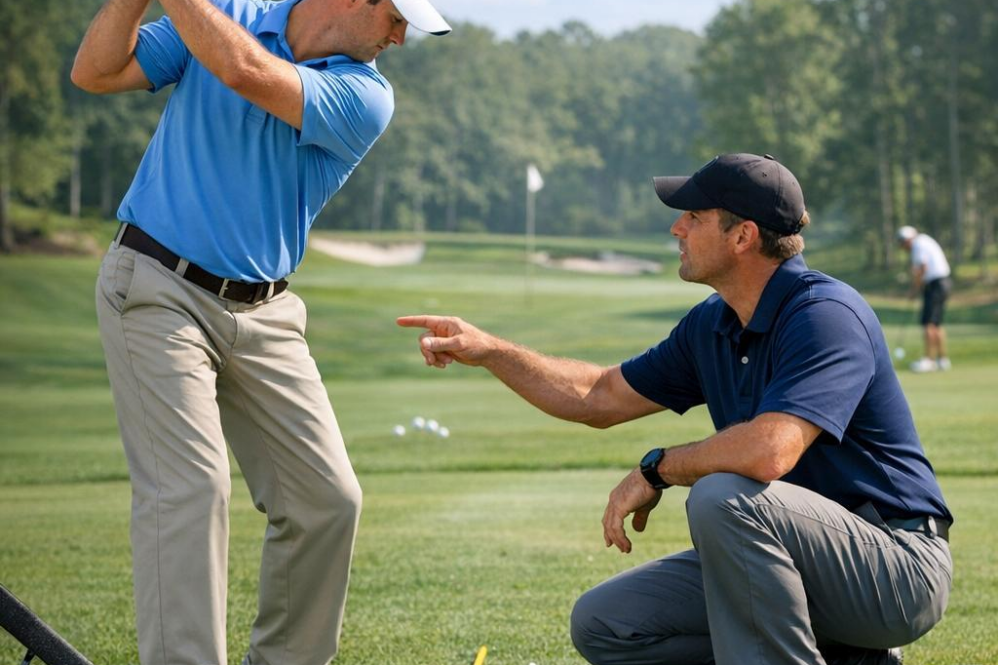
Unlocking the Power Behind Arnold Palmers Legendary Swing
Arnold Palmer’s swing is often hailed as the perfect balance between power and finesse, offering a timeless model for golfers aiming too enhance both consistency and distance. Central to his technique was a fundamentally sound setup featuring a slight forward shaft lean of about 5 degrees and a ball position just inside the left heel for his driver setup, which encouraged an upward strike essential for maximizing launch angle and carry distance. Beginners can practice this by placing a tee at different heights to experiment with driving the ball off the tee with a sweeping motion, rather than a downward chop. Palmers’ swing tempo was fluid, approximately a 3:1 backswing to downswing ratio, allowing golfers of all skill levels to appreciate the rhythm without rushing. A key practice drill involves using a metronome app or counting “one-two-three, one” aloud during swings to ingrain this tempo, thereby promoting consistency and reducing common mishits tied to over-swinging or deceleration.
Moving into the short game, Palmer’s finesse around the greens demonstrated impeccable touch and creativity, especially with his distinct use of the wrist hinge and controlled release to manipulate the ball’s spin and trajectory.This translates to practical instruction emphasizing the importance of a square clubface at impact paired with a soft, rhythmic wrist cocking motion during chips and pitches that encourages spin control and accuracy. A recommended drill is to place alignment sticks on the ground to ensure a consistent swing path and impact position, focusing on releasing the clubhead through the ball smoothly. For golfers struggling with distance control, Palmer’s technique underscores the value of progressive practice swings where the length of the backswing increases incrementally-allowing players to dial in clubhead speed and feel. Additionally, course scenarios such as playing from tight lies or uneven stances require adjusting ball position slightly back in the stance and softening grip pressure to maintain control and precision, mirroring Palmer’s adaptive short game approach.
Complementing swing mechanics, Palmer’s strategic course management offers profound lessons in shot selection and mental toughness. he was a master at “playing to the miss,” meaning he would aim away from hazards while positioning the ball in ideal landing zones to set up easier subsequent shots. Instructionally, golfers can adopt this mindset by first mapping the course with colored markers or yardage books to identify safe target areas and applying club selection that factors in rollout and wind conditions. For example, under windy conditions or firm fairways, opting for a club that lands short but releases out can reduce risk and improve scoring potential. This strategic thinking is enhanced by visualizing shot shapes such as draws or fades-skills Palmer famously utilized. Players are encouraged to practice intentional shot shaping on the range using alignment rods and markers to simulate fairway corridors, linking technical mastery of trajectory control with smarter course choices. By blending these mechanics with thoughtful planning, golfers foster resilience and lower their scores by reducing penalty strokes and boosting confidence on complex layouts.
How Targeted Drills Can Transform Your Driving Accuracy
Driving accuracy begins with a solid foundation in setup fundamentals. start by positioning the ball just inside your front heel to promote an upward strike, optimizing launch angle and reducing side spin. Ensure your feet are shoulder-width apart, and align your shoulders parallel to your intended target line. Arnold Palmer emphasized maintaining a relaxed grip pressure-too tight and you risk tension that disrupts swing fluidity. To build consistency, incorporate targeted drills such as the gate drill, where two alignment sticks frame the clubhead path to instill a square clubface at impact. This drill develops muscle memory for proper swing plane and clubface control,reducing hooks or slices and ultimately increasing fairway hit rates. For measurable progress, track your shot dispersion using a launch monitor aiming for a 5-degree or less face angle variance at impact.
Progressing from setup to swing mechanics, mastering the sequence of body movements is crucial for driving precision. A connected downswing, initiated by hip rotation rather than arm pulling, aligns with Palmer’s teachings on using the body’s larger muscles for power and control. Practice the step drill, where you pause at the top of your backswing, then step forward with the lead foot as you begin the downswing. This cultivates timing and weight transfer, with biomechanical studies showing optimized driving distance correlates to a 45-degree hip clearance through impact. Additionally, integrate specific motion feedback through video analysis or biofeedback devices available at many training centers. By reinforcing kinematic sequencing within your driving routine, you maintain a consistent swing path and clubface orientation, critical for tight landing zones and avoiding out-of-bounds trouble.
Beyond technique, effective course management transforms driving accuracy into scoring advantage. Arnold Palmer championed strategic tee shot placement, especially on dogleg holes or narrow fairways. Practice visualizing landing areas and selecting appropriate club loft and tee height, remembering that lower tee heights reduce launch angle but enhance roll on firm courses. Mental routines such as pre-shot visualization and controlled breathing alleviate pressure during critical drives, supporting focus and swing rhythm. Incorporate drills like the fairway target challenge, where you deliberately place tee shots within specific distance markers (e.g.,220-240 yards) to simulate course conditions and sharpen distance control. This approach enables golfers of all levels to develop adaptive strategies, balancing aggression with prudence, which aligns driving accuracy with maximizing scoring opportunities across diverse playing environments.
Putting Like Palmer Secrets to Reading Greens and Building Confidence
Mastering the subtleties of green reading starts with developing a keen eye for slopes,grain,and speed-an approach Arnold Palmer famously emphasized in his putting lessons. Begin by evaluating the green from multiple angles, ideally from behind the ball and the hole, to detect any uphill or downhill tendencies. Palmer advised players to imagine a clock face around the hole to visualize the direction and severity of breaks, helping golfers calibrate the putt’s aim and speed. For practical submission,use this technique during practice rounds by placing balls in various positions around the cup and using alignment aids or markers to learn how the ball reacts to different inclines. Combining these observations with feel-sensitive strokes allows golfers at all levels to build the confidence necessary for aggressive, well-judged putts on the course.
Proper setup is paramount to translating green reading insight into dependable strokes. palmer’s instruction highlighted the importance of a stable yet relaxed stance, with eyes positioned directly over or slightly inside the ball to promote an accurate reading of the line. Align your shoulders,hips,and putter face parallel to the intended target line and maintain a light grip pressure to encourage a smooth,pendulum-like stroke. For beginners, drills focusing on consistent setup and stroke rhythm include the “gate drill,” where alignment sticks or tees create a narrow putting lane, reinforcing steady, square contact. More advanced players can experiment with varying the putter’s loft between 3°-4° to match green speeds and reduce skidding, adapting their stroke arc accordingly. Incorporating video analysis or feedback devices during practice helps golfers fine-tune mechanics that sustain accuracy and speed control.
Confidence in reading and putting is bolstered not only by technique but also by incorporating course management strategies championed by Palmer. Recognize how external conditions, such as wind direction, moisture, and green firmness, influence ball roll-adjusting putt length and aim accordingly. Such as, on damp or slow greens, apply a firmer stroke with a straighter target line to compensate for reduced roll, whereas firm, fast greens might require softer touch and earlier break recognition. Additionally, embracing a routine before each putt, including practice strokes gauging speed behind the ball, can calm nerves and solidify commitment to the chosen line.To cultivate this mental discipline, incorporate pressure-simulation drills such as “pressure putt games” where only made putts count.This well-rounded approach, drawing from Palmer’s legendary insight, transforms green reading and stroke execution into reliable tools for lowering scores and increasing confidence across all skill levels.