Unlocking the game of golf doesn’t have to be confusing or overwhelming-especially when you focus on the right fundamentals from the start. Many beginners jump straight into hitting balls at the range without understanding how the swing actually works,why putts miss the hole,or how to keep the driver in play. The result is inconsistent contact, wasted practice time, and growing frustration.
This article, **”Unlock Beginner Golf Basics: Fix Your Swing, Putting & Driving,”** is designed to give you a clear, evidence-based foundation.You’ll learn:
– **Core swing mechanics** rooted in basic biomechanics, so you understand how to create a repeatable motion rather than relying on tips and guesses.
– **Driving essentials** that improve accuracy and distance, including simple setup and alignment strategies that keep you in the fairway.
– **Step‑by‑step putting drills** that build touch, green-reading skills, and confidence on short putts-the fastest way to lower your scores.
– **course management principles** tailored to beginners, helping you make smarter decisions that minimize big mistakes.
Whether you are wholly new to golf or looking to fix recurring issues early in your journey, this primer will help you practice with purpose, accelerate your improvement, and build a solid, reliable game from tee to green.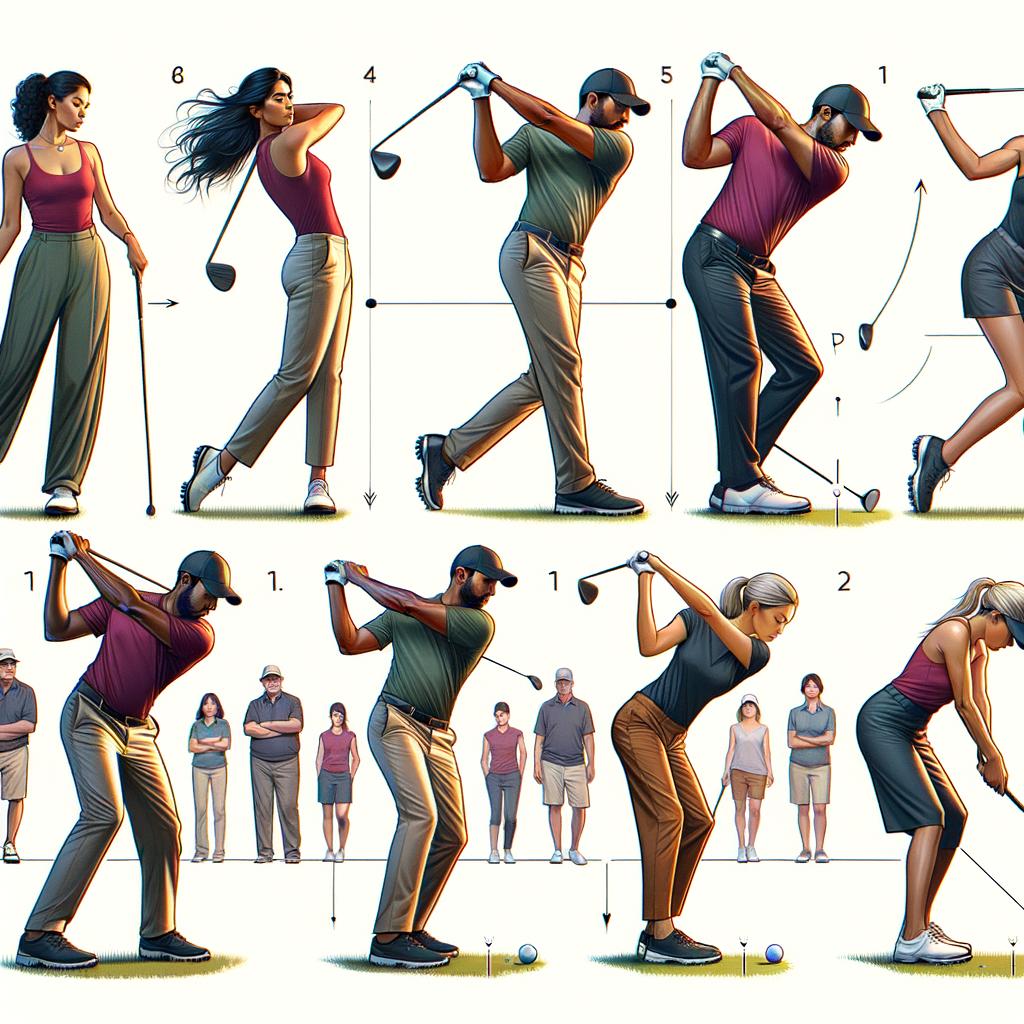
Fundamental Setup and Grip Essentials for a Repeatable Golf Swing
Your setup is the foundation of a repeatable golf swing, and it begins with a balanced, athletic posture that you can reproduce on the range and under pressure on the course. Stand with your feet roughly shoulder-width apart for mid‑irons, slightly wider for the driver and slightly narrower for wedges. Distribute your weight 55-60% on the balls of your feet,not in the heels,with a gentle knee flex that feels like a ready position in other sports. Bend from the hips so your spine tilts forward about 25-35 degrees, keeping your back long and your chest over the arches of your feet.This neutral posture allows the club to swing on plane without manipulation and helps maintain dynamic balance throughout the backswing and downswing, which is essential for solid contact and consistent ball flight.
The grip connects your body to the clubface, so small changes here create big differences in direction and spin. Place the club in the fingers of the lead hand (left hand for right‑handed golfers),running from the base of the little finger to the middle of the index finger. When you close the hand, you should see 2-3 knuckles, and the lead thumb sits just right of center on the shaft for a neutral grip that controls clubface rotation. The trail hand then fits on from underneath, with the lifeline covering the lead thumb. Choose the style that feels secure and allows your wrists to hinge naturally: overlap (Vardon), interlock, or ten‑finger. For beginners or players with smaller hands or limited grip strength, a ten‑finger grip can improve clubhead speed and control, while low‑handicappers often prefer overlap or interlock for better feel and shot shaping.
Onc the basic grip and posture are set,fine‑tuning your alignment,ball position,and distance from the ball will make your motion more repeatable from tee to green. Aim the clubface first: set it square to your target line, then build your stance so your feet, knees, hips, and shoulders are parallel left of the target (for right‑handers), like train tracks. Ball position should move slightly forward as the club gets longer: just inside the lead heel for the driver, one to two ball widths back for mid‑irons, and under the lead chest for wedges and most short‑game shots.Maintain roughly a hand’s width (about 4 inches) of space between your hands and thighs at address; being too close restricts the swing path, while standing too far encourages reaching and loss of posture.On the course, use intermediate targets (a discolored patch or leaf a few feet in front of the ball) to simplify alignment when fairway contours, wind, or visual hazards make aiming feel uncomfortable.
To build these setup and grip fundamentals into your muscle memory, incorporate structured practice routines with clear checkpoints and measurable goals. on the range or practice tee, lay down two clubs on the ground to form a simple alignment station. Use the following checklist before each swing:
- Grip check: Club in the fingers, 2-3 lead‑hand knuckles visible, both “V” shapes (thumb and index finger) pointing between trail shoulder and chin.
- Posture check: Weight balanced in the balls of the feet, slight knee flex, neutral spine tilt from the hips, arms hanging naturally.
- Ball position check: Adjust forward or back based on club; note the position relative to your lead heel for consistency.
- Alignment check: Feet, hips, and shoulders parallel to the target line; clubface square to your intended start line.
set a target such as 8 out of 10 solidly struck shots within a 20‑yard dispersion for mid‑irons or 60% of drives finding a defined “fairway” area. For visual learners, use alignment sticks and mirrors; for feel‑based learners, rehearse slow‑motion setups focusing on sensations in your hands, feet, and core.In windy or uneven lies, keep these same checkpoints, but adjust ball position and spine tilt slightly to match the lie while preserving your core fundamentals.
link your setup and grip directly to scoring and course management so they hold up when it matters most. On tight driving holes, a slightly stronger grip (showing an extra half‑knuckle on the lead hand) and a stable, balanced stance can reduce a slice and promote a controlled draw that starts right and curves back to the fairway. Around the greens,softening the grip pressure to about a 3 out of 10 on chips and pitches allows the clubhead to release,improving contact and distance control. In wet or windy conditions, maintain the same grip structure but use a firmer pressure for driver and long‑iron shots to prevent the club from twisting, while keeping your posture and alignment routines identical to your fair‑weather swing. Before every shot, pair your physical setup with a simple mental cue-such as “balance and breathe” or “light grip, solid base”-to reduce tension. Over time, this consistent pre‑shot routine across full swing, short game, and trouble shots will make your setup and grip automatic, freeing you to focus on strategy, target selection, and smart decisions that lower your scores.
Biomechanics of the Backswing and Downswing to Generate Controlled Power
The foundation of controlled power starts before the club even moves. A stable setup allows the backswing and downswing to work as an efficient kinetic chain rather than a series of disconnected motions. At address, position your feet roughly shoulder-width apart (slightly wider with the driver), with 60-55% of your weight on the lead side for short irons and closer to 50-50 for longer clubs and the driver. Maintain a neutral spine tilt of about 30° forward from the hips,letting the arms hang naturally under the shoulders. Check that the grip pressure stays at about 4 out of 10 to allow wrist mobility. These fundamentals ensure the body can rotate freely without swaying, which is crucial for both beginners learning a repeatable motion and low handicappers seeking precise control of launch and spin.
As the club moves into the backswing, your goal is to coil, not contort.Biomechanically, that means turning the upper body against a stable lower body to store energy in the core and hips rather than simply lifting your arms. A high-level checkpoint is a shoulder turn of roughly 80-100° with a hip turn of about 35-45° at the top, creating a powerful X-factor (the separation between shoulder and hip rotation) without straining the lower back. Keep the trail knee flexed and the lead knee pointing generally toward the ball or slightly inside it to avoid excessive sway. For many golfers, a simple feel is to turn the chest over the trail thigh while keeping the head relatively centered. To train this, practice no-club rotations in front of a mirror, crossing your arms over your chest and turning to your trail side while keeping your belt buckle inside your trail foot. This drill helps beginners learn body awareness and gives advanced players a way to refine coil without overswinging.
Transitioning into the downswing is where controlled power is either created or lost. The sequence should follow ground-up biomechanics: pressure shifts into the lead foot, the hips start unwinding, then the torso, arms, and finally the clubhead follow. Rather than yanking the club from the top with the hands, feel the lead foot “plant” and the lead hip begin to rotate and slightly open toward the target, with the club still completing its change of direction. A useful objective for most golfers is to have slightly more than 70% of pressure on the lead foot by impact, which improves strike and distance control. To ingrain this sequence, use the following practice drills:
- Step-Through Drill: Make a normal backswing, then step your lead foot toward the target as you start the downswing. this exaggerates weight shift and helps players who hang back or flip at impact.
- Pause-at-Top Drill: Pause for one second at the top, then initiate the downswing only by pressing into the lead heel and turning the hips. This sharpens the feel of proper sequencing and helps prevent casting.
On the course, effective backswing and downswing mechanics must adapt to different lies, wind, and strategic demands. Into a strong headwind,for example,focus on a shorter,more compact backswing (about ¾ length) and a controlled,three-quarter downswing to lower spin and keep the ball flight down. From an uphill lie, your spine tilt matches the slope slightly, and you accept a higher trajectory with less distance, emphasizing balance and a smooth tempo instead of maximum coil. For beginners, a simple on-course swing thought is: “turn to the top, then turn through to a full finish.” better players can refine this by tracking fairways hit, greens in regulation, and proximity to the hole when they intentionally dial back to 80-90% effort.Over a few rounds, compare scoring results when swinging at “full power” versus “controlled power” and use the data to shape your course management decisions.
To ensure these biomechanics translate into better scoring, integrate targeted practice routines and troubleshooting into your training. Set specific goals such as center-face contact on 8 out of 10 shots on the range, verified by impact tape or foot spray, and consistent start direction within a 10-yard window for your driver. When contact is thin or fat, common issues include losing posture, excessive sway, or early release of the wrists.Use checkpoints like:
- Trail hip inside trail heel at top: Prevents sway and maintains coil.
- Lead hip slightly open at impact: Encourages rotation rather than sliding.
- Chest facing target in full finish: Confirms complete follow-through and proper deceleration.
Combine these with simple mental cues-such as focusing on rhythm and balance rather than raw speed-to keep tension low under pressure. Over time, this blend of biomechanically sound movement, equipment that fits your swing, and smart on-course decisions leads to more fairways hit, tighter approach shots, and ultimately, lower scores.
Common Beginner Swing Faults and Corrective Drills for Consistent Contact
Many contact issues start before the club moves. A poor grip, inconsistent posture, or faulty ball position can cause thin shots, fat shots, and slices even with a reasonably good motion. Begin by checking three setup fundamentals. Grip: with the clubface square, let your lead hand (left for right-handers) sit on the club so you can see 2-3 knuckles, and align the “V” between thumb and index toward your trail shoulder. posture: Hinge from the hips with a neutral spine, slight knee flex, and weight balanced over the balls of your feet-avoid sitting back on your heels. Ball position: For short irons, place the ball roughly in the center of your stance; for mid-irons, move it one ball forward; for driver, position it off the lead heel. On the range, use alignment sticks to create a “T” on the ground so you can visually confirm both target line and ball position. This simple checkpoint system gives beginners and low handicappers a repeatable setup that promotes center-face contact and a more predictable ball flight.
One of the most common beginner faults is the over-the-top move, where the club travels from outside to inside on the downswing, often producing a slice, pull, or weak glancing blow. The cause is usually an upper-body lunge from the top without proper weight shift or hip rotation. To correct this, focus on initiating the downswing from the ground up. A useful drill is the “step-through” drill:
- Set up with your feet close together and the ball in the middle.
- As you complete your backswing, step with your lead foot toward the target and then swing, feeling the weight transfer into your front side.
- Notice how the club naturally shallows and approaches the ball from the inside, encouraging a slight in-to-out path.
On the course,especially on tight driving holes,visualize your trail elbow staying “tucked” near your side through impact and imagine swinging the clubhead out to right-center of the fairway. This promotes a gentle draw or at least reduces the severity of a slice, which directly leads to fewer penalties and better scoring opportunities.
Another frequent beginner mistake is early extension-standing up out of posture and moving the hips toward the ball in the downswing. This makes consistent low-point control almost unachievable, often producing topped shots or thin contact. To maintain posture and create room for your arms to swing, use the “chair drill”. At the range or at home:
- Stand with your backside lightly touching a chair or golf bag at address.
- Make slow practice swings feeling your glutes stay in contact with the backrest as you rotate.
- During the downswing, feel your lead hip turning around the chair, not sliding into it, maintaining the original spine angle within about 2-3 degrees.
Layer this into real-course play by choosing one “posture round” where your only swing thought on full shots is “keep my hips back and turn.” Track how many shots you strike solidly (no tops or chunks) per 9 holes. A realistic goal is to increase your solid-contact rate by 20-30% over several practice sessions, which will quickly translate into more greens in regulation and fewer wasted strokes around the green.
In the short game, common faults such as scooping with the hands, decelerating, or playing the ball too far forward lead to bladed or chunked chips and pitches. To build consistent contact, adopt a slightly narrower stance with 60-70% of your weight on your lead side, handle leaning slightly ahead of the ball, and a quiet lower body. A simple drill is the “line-in-the-sand” drill (which you can adapt on grass): draw a line perpendicular to your target line and practice striking the ground on the target side of the line with a wedge,without a ball. Focus on brushing the turf in the same spot each time. Then, place balls just behind the line and repeat the motion, allowing the club to bottom out after the ball. On the course, particularly from tight lies or into the grain, commit to this “down and through” motion rather than trying to lift the ball. This improves your spin control, helps you stop the ball closer to the hole, and reduces three-putts, a key factor for both beginners and low handicappers seeking to lower scores.
poor tempo and inconsistent swing length create erratic contact with all clubs, including wedges and putter. Many golfers rush from the top, especially under pressure or in windy conditions. To develop a repeatable rhythm, use a 3:1 tempo ratio-the backswing taking about three counts and the downswing one.A practical drill is the “half-swing ladder”:
- Hit five balls with waist-high to waist-high swings, focusing on solid contact and balanced finish.
- Increase to chest-high to chest-high swings for five balls, keeping the same tempo.
- Finish with five full swings, matching the feel of the shorter motions.
This progression builds awareness of clubhead control and sequence. On the course, choose a pre-shot routine that includes one or two slow-motion rehearsals, then a deep breath to reset your tempo before stepping in. Mentally, replace mechanical thoughts with one tempo cue such as “smooth-through.” As you track fairways hit, greens in regulation, and number of putts, you’ll see how improved rhythm and contact-not more speed-lead to better distance control, tighter shot dispersion, and ultimately lower scores.
Driving Fundamentals for Accuracy Off the Tee with Proper Club and Target Selection
Accuracy off the tee begins long before you swing; it starts with selecting the right club and defining a smart target line. Instead of automatically reaching for the driver, evaluate the hole layout, hazards, wind direction, and your personal dispersion pattern. on tight par 4s or doglegs, a 3-wood, hybrid, or long iron may keep you in the fairway more often than a driver while still leaving a manageable approach. A practical rule of thumb is to choose the longest club that gives you at least a 70-75% chance of hitting your normal landing area without bringing trouble (out of bounds, water, fairway bunkers) into play. From the tee, identify a small, precise target such as a tree, yardage marker, or grandstand pole beyond the fairway, then align the clubface first to that target and your body parallel to it. This pre-shot decision process helps golfers of every skill level commit mentally, reduce tension, and swing with confidence.
Once you have chosen the club and target, a repeatable setup is crucial for driving accuracy. For most players, place the ball just inside the lead heel with the driver and slightly farther back (about one ball width) with a 3-wood or hybrid. Set your stance shoulder-width to slightly wider for stability, with 60% of your weight favoring the trail side to encourage an upward angle of attack.Check these key setup checkpoints before every tee shot:
- Grip: Neutral hand placement where you can see 2-3 knuckles on the lead hand, avoiding a grip that is too strong (hooks) or too weak (slices).
- Posture: Bend from the hips with a straight spine,slight knee flex,and arms hanging naturally-no reaching or collapsing.
- Alignment: Clubface aimed at your intermediate target; feet, hips, and shoulders aligned parallel left (for right-handers) of that line.
- Ball position: Forward enough to promote a shallow, sweeping strike rather than a steep, chopping motion.
Beginners can place an alignment stick on the ground along the toe line, while advanced players can use two sticks-one for clubface direction and one for stance-to refine alignment during practice sessions.
From a swing mechanics standpoint, accuracy off the tee comes from controlling the clubface and swing path, not from swinging as hard as possible. Focus on a smooth tempo where the backswing and downswing maintain a 3:1 rhythm-if your backswing takes about three counts, the downswing should take one. On the course, think of generating speed from the ground up: initiate the downswing by rotating the hips toward the target, allowing the torso, arms, and club to follow in sequence. to encourage a consistent path that reduces slices and hooks, feel your club travel “back and around” on the backswing and “down and through” on the same shallow plane. Useful practice drills include:
- Feet-together drill: Hit half-speed drives with your feet together to improve balance and centered contact.
- fairway-gate drill: Place two alignment sticks or headcovers on the ground about a clubhead’s width apart just before impact; practice swinging through the “gate” without hitting them to stabilize your path.
- Fairway-finder swing: Choose a “fairway swing,” about 80-85% power, that you use under pressure; measure success by hitting at least 7 out of 10 balls in a 25-30-yard wide target zone on the range.
strategic target selection turns your driving into a powerful course management tool. Instead of always aiming at the center of the fairway, plan backward from the green to decide the best angle for your second shot. Such as, on a dogleg right with deep left fairway bunkers, a controlled fade with a 3-wood toward the right-center might leave a clear approach, even if it’s 10-15 yards shorter. Factor in wind and firmness: into a strong headwind, choose more loft (perhaps a 3-wood instead of driver) and accept more club on the next shot; downwind, consider a more penetrating ball flight with less loft but aim slightly wider, as the dispersion pattern increases with distance. A simple on-course decision guide is:
- If the penalty for a miss is severe (water,out of bounds,lost ball): favor a shorter club and a safer side of the fairway.
- If the landing area is generous: use driver, but favor the side that opens the green and avoids being blocked by trees or bunkers.
- In crosswinds: aim upwind and choose a shot shape (fade or draw) that works with-not against-the wind, reducing curve.
This targeting discipline helps beginners avoid “hero shots” that lead to big numbers, while low handicappers can refine their strategy to attack pins from favorable positions.
To translate these fundamentals into lower scores, build structured practice sessions that combine technical work with real-course simulations. On the range, divide your session into segments: first, rehearse your setup checkpoints with no more than 3-4 swing thoughts; next, run a “play the course” exercise where you imagine specific holes, choose clubs and targets accordingly, and hit only one ball per scenario to mimic on-course pressure. Track measurable goals such as fairways hit percentage, average dispersion left and right, and percentage of tee shots that leave a full, comfortable yardage into the green (for example, 120-150 yards for mid-irons). Mentally,commit to a clear pre-shot routine that includes a deep breath,one rehearsal swing matching your intended shot shape,and a final focus on a single cue like “smooth tempo” or “finish in balance.” By blending smart club choice, precise target selection, and disciplined practice, golfers at every skill level can turn the tee box into a scoring advantage rather than a source of stress.
Course Management strategies to Minimize Mistakes and Play to Your Strengths
Effective course management begins on the tee by making decisions that fit your natural shot shape and dispersion pattern rather than chasing the “perfect” line. Before every tee shot,assess hazard locations,wind direction,and your typical miss. if your common pattern is a 10-15 yard fade, choose targets that allow that ball flight to finish safely, even on a slight mishit. For beginners, this might mean using a 3-wood or hybrid instead of driver to keep the ball in play and avoid out-of-bounds. More advanced players can use intermediate targets (tree trunks, bunker edges, or distant mounds) to refine alignment and commit to either a controlled draw or fade.A simple pre-shot checklist helps: Where is the safest side to miss? Which club leaves a comfortable approach distance, such as 100-140 yards, where you tend to hit the most greens?
Once off the tee, play to your strengths by choosing approach shots that match the trajectory and spin you can reliably control. Instead of always “going at the flag,” identify the largest margin for error: middle of the green, safe side of water, or away from deep bunkers.For most golfers, a controlled ¾ swing with one extra club produces better contact and distance control than a full, aggressive swing. In practice, measure your average carry distances with each iron (not your best shot) and build a simple yardage chart.Then on the course, select the club that covers the front of the green and doesn’t bring trouble long into play. Key setup checkpoints include: ball position just forward of center for mid-irons, weight 55-60% on lead side for crisp contact, and shoulders parallel to the target line to reduce unintended sidespin and big misses.
The short game is where smart strategy can quickly lower scores by minimizing big numbers around the green. Before choosing a shot, read the lie first: if the ball is sitting down in the rough or on a tight, firm lie, avoid high-risk flop shots unless you have elite skill and practice. Instead, favor simpler, repeatable shots that you can execute under pressure. A useful guideline is: putt when you can, chip when you can’t putt, pitch only when necesary. For basic chips,set 60-70% of your weight on the lead foot,handle slightly ahead of the ball,and use a putting-like motion with a wedge or mid-iron. Practice routine ideas include:
- Landing-spot drill: Place a tee or towel 1-2 yards onto the green and hit 10 chips trying to land each ball on that exact spot.
- One-club challenge: Use only a pitching wedge around the green for an entire practice session to learn different trajectories with the same club.
- Up-and-down game: drop 10 balls in varied lies; track how many times you get down in 2 strokes. Aim to improve this percentage over time.
A key element of minimizing mistakes is choosing equipment and setups that match your swing speed, mobility, and shot tendencies. Golfers with slower swing speeds may benefit from higher-lofted drivers (11-13°) and more forgiving cavity-back irons that help launch the ball higher and straighter, while better players can optimize performance with shot-shaping blades or players’ distance irons. Irrespective of level, use alignment sticks in practice to engrain proper setup fundamentals. Helpful checkpoints include:
- Feet, hips, and shoulders parallel to the target line for stock shots; slightly closed for draws, slightly open for fades.
- grip pressure at about 4-5 out of 10 to maintain clubface control without tension.
- Spine tilt of roughly 5-10 degrees away from the target with longer clubs to promote an upward strike with the driver.
By rehearsing these positions on the range, you reduce on-course compensations that lead to hooks, slices, and topped shots-mistakes that inflate scores and erode confidence.
connect your mental game and practice habits to your course strategy by setting clear, measurable goals for each round that do not depend solely on score. Such as, a beginner might aim to avoid penalty strokes on more than two holes and to use a pre-shot routine on every shot. A low handicapper might target no three-putts and hitting the correct “safe side” of the green on at least 12 holes. Between shots, manage emotions and decision making with a simple breathing routine and a consistent process: assess lie and conditions, pick a smart target, choose a shot that matches your practiced swing, then commit fully. Over time, combine this with focused practice drills-such as 9-hole “no-flag” rounds where you always play to the middle of the green-to train your brain to value smart, repeatable choices. This alignment of technique, equipment, and strategy ensures you are always playing to your strengths, minimizing avoidable errors, and steadily moving toward lower, more consistent scores.
Step by Step Putting Routine to Improve Alignment, Pace and Green Reading
Begin by establishing a consistent pre-putt routine that locks in alignment and posture before you even think about stroke mechanics. approach the ball from behind on the target line, standing at least 2-3 yards back so you can see the entire putt, including the high side of the break. Pick a very precise target: not just “the hole,” but a spot where you want the ball to enter the cup (often the high edge on a breaking putt) and an intermediate target 6-12 inches in front of the ball on that line. As you walk into the setup, place the putter face square to this intermediate target first, then set your feet, hips, and shoulders parallel to that line. Your eyes should be either directly over the ball or just inside the target line by about 1-2 inches; use a simple checkpoint by dropping a ball from the bridge of your nose to see where it lands relative to the ball.This alignment-first routine reduces compensations and allows your stroke to be a simple, repeatable motion.
Once alignment is set, refine your green reading using a structured, step-by-step approach that blends visual and tactile feedback. Start your read from low to high, standing below the hole to feel the slope with your feet-your balance will subtly shift toward the downhill side. Then, walk around the putt in a semi-circle, pausing on the high side to judge overall tilt and grain direction, especially on Bermuda or other grain-sensitive grasses. Look at the area from 2-3 feet around the hole, where most of the break happens. For a beginner, simplify this by categorizing putts as straight, left-to-right, or right-to-left and choosing a conservative “capture speed” that would roll the ball 12-18 inches past the cup. More advanced players can apply a system (such as matching slope percentage with distance) to create a consistent start line. in all cases, commit to a single read; indecision is a bigger enemy than a slightly imperfect line.
having determined line and entry point, focus on pace control through a calibrated, repeatable putting stroke. Set up with a stable lower body, light grip pressure (around 3 out of 10), and the ball positioned slightly forward of center to encourage a slight upward strike, improving roll. The stroke itself should be a pendulum motion driven primarily by the shoulders, with minimal wrist hinge. To ingrain distance control, incorporate drills such as:
- Ladder drill: Place tees at 3, 6, 9, and 12 feet; roll three balls to each, focusing on matching stroke length to distance and leaving every ball within a 12-inch circle.
- Fringe-to-fringe drill: On a practice green, putt from fringe to fringe without going long, developing feel on fast or slow greens.
- Eyes-closed drill: Hit putts from 10-15 feet with your eyes closed to train your sense of impact and distance, then open your eyes to check results and make adjustments.
By tracking your average leave distance over a week (aiming to improve from 3 feet to under 2 feet), you create measurable goals that translate directly into fewer three-putts.
To tie mechanics and green reading into on-course performance, adopt a brief but disciplined checklist that you can use under pressure and in varying conditions. Before each putt, quickly assess three key variables: slope, speed of the green, and wind. On downhill putts or fast, dry greens, narrow your stance slightly, shorten your backstroke by 10-20%, and favor a softer grip to reduce hit. On uphill or into-the-grain putts, allow for a slightly longer stroke and be willing to start the ball firmer on your line. Use a mental cue such as “Read, Aim, Roll” to keep the process simple: read the break, aim the face to your intermediate target, and roll the ball with your chosen tempo. Common faults-like decelerating through impact,peeking early,or over-reading subtle breaks-can be countered with specific focuses such as holding your finish until the ball stops and defaulting to a simpler,less aggressive line when unsure. This strategic consistency boosts confidence from round to round.
build a weekly practice plan that blends technique work, pressure simulation, and performance tracking so your putting routine steadily lowers your scores. Devote at least 20-30 minutes per practice session to structured drills: start with 5-10 minutes on alignment (using a chalk line or alignment stick and a line on your ball), then 10-15 minutes on distance control drills at varying lengths and slopes, and finish with competitive games like “21 putt” where you earn points for one-putts and lose points for three-putts. Beginners should focus on making 90% of putts inside 3 feet before moving back, while low handicappers can test themselves on 8-12 foot putts with specific make-percentage goals. Adjust routines based on course conditions-practicing more downhill and sidehill putts before playing fast, tournament-style greens, for example. Over time, this integrated routine aligns your technical skills, mental approach, and course management, turning your putting from a liability into a reliable strength that protects every full-swing gain you make throughout the bag.
Evidence Based Putting Drills to Build Distance Control and Short Putt Confidence
Putting performance is highly sensitive to small errors in speed control, face angle, and start line, so effective training starts with a repeatable setup.Begin by checking three fundamentals before each stroke. First, set your eyes either directly over the ball or just inside the target line; for most golfers this means the ball is positioned about 1-2 inches forward of center in your stance with a slight bend from the hips.Second,ensure the putter shaft and your lead forearm form a nearly straight line,promoting minimal wrist breakdown and more consistent loft at impact. Third, use a neutral grip pressure-firm enough to control the putter but relaxed enough to avoid tension in the shoulders. For beginners, think of holding the putter at a 4 out of 10 pressure level, while low handicappers can refine by matching grip pressure to green speed and putter head weight.
To build distance control, use an evidence-based ladder drill that focuses on stroke length and tempo rather than “hit” or “jab.” On a reasonably flat practice green, place tees or coins at 10, 20, 30, and 40 feet from a starting point. Your goal is not to hole the putt but to finish the ball within a three-foot radius of each marker. Work through the ladder in both directions, paying attention to how far the putter swings back relative to the distance. Helpful checkpoints include:
- Short putts (10-15 ft): putter head travels roughly from toe to heel length on either side of the ball.
- Mid-range (20-30 ft): backstroke length increases while tempo stays constant-count “1” back, “2” through.
- Long putts (30-40+ ft): use more body rotation in the shoulders, not extra hand action, to add energy.
On the course,apply this by making one rehearsal stroke while looking at the hole,matching the stroke length you learned on the practice green,then step in and copy that exact motion.
For short putt confidence inside six feet, combine start-line training with pressure-based games. Use a chalk line, string, or alignment sticks to create a straight path from ball to hole on a level putt of 3-5 feet. Place two tees just wider than the putter head to form a “gate” and another gate a foot in front of the ball just wider than the ball itself.Focus on delivering the putter face square through both gates. If you strike a tee, it indicates either path error or face rotation. Correct by:
- Softening grip pressure if the stroke feels rigid or “steery.”
- Allowing the shoulders to rock while the wrists stay quiet.
- Checking ball position-too far back tends to cause a closing face and pulls; too far forward can cause pushes.
Turn this into a measurable routine: do sets of 20 balls from three, four, and five feet.Low handicappers should require 18/20 makes at three feet and 16/20 at five feet before leaving the green, while beginners can start with 12/20 and improve weekly.
Course conditions and strategy greatly influence distance control and short putt outcomes, so your practice should simulate real-play variables. On fast greens (stimp 11-13), prioritize a shorter stroke with softer acceleration to avoid excessive roll; on slower, grainy greens, use a slightly longer stroke with firmer contact to get the ball to the hole. A simple drill is to putt from 20 feet uphill and 20 feet downhill to the same hole,tracking how far past or short you finish. Adjust your stroke until your average leave is within 12-18 inches of the cup, regardless of slope. Strategically, aim to leave long putts hole-high or slightly below the hole to create more makeable next putts. For beginners,that means thinking in two-putt “zones” instead of trying to hole every 40-footer; for advanced players,use your green-reading routine (slope,grain,and wind) to choose conservative lines on fast downhill putts and more aggressive lines on slow,uphill putts where a confident stroke is rewarded.
integrate these drills into a structured putting practice plan that supports your full swing and overall scoring goals. Devote at least 50% of practice putting time to distance control and lag putting (20-40 feet),30% to short putt start-line work (inside six feet),and 20% to mixed “game” formats that simulate on-course pressure. For example:
- Three-Ball Lag Game: From 30, 40, and 50 feet, you must finish all three balls within three feet to “unlock” the next distance.
- Par-18 Putting Course: Create nine holes of different lengths on the practice green and keep a score relative to par (two putts). Track your average score over time.
- One-Ball Routine: play one ball around the entire putting green as if you are on the course, using your full read-and-routine process each time.
By consistently measuring make rates, leave distances, and performance under simulated pressure, golfers of all skill levels can connect their putting drills to real score improvements, reduce three-putts, and turn short putts into a genuine scoring weapon.
integrating practice Plans and Feedback Tools to Accelerate Skill Acquisition
To accelerate skill acquisition, practice must shift from random ball-hitting to structured sessions with clear goals, time blocks, and feedback loops. Begin every week by designing a simple practice plan that allocates time across the full game: for example, 40% short game (putting, chipping, pitching, bunker play), 40% full swing (irons and driver), and 20% course management and mental rehearsal. Within a 60-minute range session, you might dedicate 10 minutes to setup fundamentals, 20 minutes to one technical swing priority, 20 minutes to target-based skills drills, and 10 minutes to pressure games. This structure helps beginners avoid “ball beating” and gives low handicappers a framework to refine specific patterns, such as controlling start direction and clubface angle at impact. Crucially, limit yourself to 1-2 swing keys per session so feedback remains focused and measurable.
From there,integrate feedback tools that match your level and learning style. Even without technology, you can create powerful feedback using simple aids: alignment sticks, foot spray, and tees. For example, place two alignment sticks about clubhead-width apart to form a “gate” just outside the ball; your goal is to swing through without hitting the sticks, reinforcing proper swing path. Spray the clubface with foot spray or impact powder to see strike location (heel, toe, high, low), then adjust ball position or posture until you consistently center contact within a 10-15 mm impact window. Advanced players can add launch monitors, swing apps, and wearable sensors to track club path, face-to-path, angle of attack, and spin rates, using these numbers to verify if technical changes actually improve ball flight. The key is to pair each drill with immediate, visible feedback so every shot teaches you somthing concrete.
Linking your practice plan to swing mechanics and short game technique ensures that feedback translates into lower scores. For full swing, use a “block-random” progression: first, repeat a specific motion (like shallowing the club or stabilizing your lead wrist) with slow-motion rehearsals, then test it with different clubs and targets. A simple progression might be:
- Block drill: 10-15 balls at 50-70% speed focusing only on balanced finish and solid contact.
- Random drill: Alternate between a 7-iron, hybrid, and driver, changing targets every shot to simulate the course.
- Pressure drill: Create a scoring challenge (e.g., “Hit 7 of 10 shots within a 20-yard fairway target”) and track your percentage.
For the short game, practice landing-spot control: place a towel 3-4 paces onto the green and chip balls that must land on the towel, not just finish near the hole. Beginners learn trajectory and carry vs. roll; better players refine spin control and distance gapping. Use your phone to record face-on and down-the-line videos, checking key checkpoints like shaft lean at impact, weight distribution (aim for 60-70% on the lead side on most chips), and clubhead-low point after the ball.
Practice plans should also incorporate course management and situational play so range skills transfer under real pressure. Once or twice a week, run a “simulated round” on the range: imagine a specific hole (e.g., a 380-yard par 4 into a crosswind) and play the sequence-tee shot with your chosen target line, then an approach shot distance based on where your drive would realistically finish. Pay attention to wind direction, lie quality, and hazards, and practice conservative decisions such as aiming at the widest part of the fairway or the safest section of the green. On the course, use feedback tools like a GPS or rangefinder to verify carry distances (e.g., your 7-iron consistently carries 145-150 yards, not 160), then update your yardage book or notes. For beginners, a simple rule such as “always take one more club into the green” can reduce short-side misses; low handicappers can track strokes gained by category (tee, approach, short game, putting) to identify which part of their plan needs more practice time.
integrate mental game and error-correction routines directly into your practice plan so feedback leads to better decision-making, not just better mechanics. Build a consistent pre-shot routine-taking 10-15 seconds for club selection, one clear swing thought, and one rehearsal swing-and use it on every practice shot to make it automatic under pressure. When you miss, apply a simple post-shot analysis:
- What was the intention? (Target, shape, and yardage)
- What did the ball do? (Start line, curve, height, distance)
- What is the most likely cause? (face open/closed, path left/right, fat/thin)
Beginners might only label misses as “too much curve” or “hit behind the ball,” while advanced players can diagnose a path-face relationship error or an overly steep angle of attack. Over time, log your sessions-number of fairways hit, up-and-down percentage, putts inside 6 feet made-and set measurable goals such as “improve 3-foot putt conversion from 70% to 85% in four weeks.” By combining structured practice plans, targeted feedback tools, and simple tracking, you create a feedback-rich habitat where each session leads to tangible, on-course scoring improvement.
Q&A
**Q: I’m a complete beginner. What are the first fundamentals I should focus on in golf?**
**A:** Start with three pillars:
1. **Grip**
– Use a *neutral grip*: the “V” formed by your thumb and index finger on each hand should point between your chin and right shoulder (for right‑handed players).
– Pressure should be firm enough to control the club,but light enough to keep your forearms relaxed-about a “4 out of 10.”
2.**Posture & Setup**
– Feet shoulder‑width apart for irons; a bit wider for the driver.
– Slight knee flex, bend from the hips (not the waist), with your spine straight and chest tilted forward.
– Let your arms hang naturally from your shoulders.
3. **Alignment**
– Clubface aims at the target.
– Feet, knees, hips, and shoulders form a line parallel to the target line (like train tracks: ball on the outer rail, your body on the inner rail).
These basics improve consistency before you ever try to “hit it hard.”
—
**Q: How can I build a simple, repeatable swing as a beginner?**
**A:** Think of the full swing in three stages, guided by basic biomechanics:
1. **Backswing (loading)**
– Turn your shoulders around your spine, not just lifting your arms.
– Hips rotate slightly; your weight shifts into the inside of your back foot (right foot for right‑handers).
– Keep your lead arm relatively straight but not locked.2. **Downswing (unwinding)**
– Start from the ground up: shift pressure into your lead foot, then rotate hips, then torso, then arms and club.
– Avoid “throwing” the club from the top with just your hands; allow the body’s rotation to pull the club down.
3. **Impact & Follow‑Through**
– At impact, your hips are slightly open to the target, chest starting to open, lead wrist flat, and weight mostly on the lead leg.
– Finish facing the target, belt buckle toward the target, and most of your weight on your front foot.
A simple mental cue: *turn, shift, turn*-turn back, shift forward, turn through.
—
**Q: What are common beginner swing faults and quick fixes?**
**A:** Three frequent issues:
1. **Slice (ball curves right for right‑handers)**
– **Cause:** open clubface and/or out‑to‑in swing path.
– **Fix:**
– Check grip: rotate both hands slightly to the right (more “knuckles” showing on the lead hand).- Practice swinging the club “from inside the line,” feeling the club travel slightly from in-to-out relative to the target line.
2. **Topping the ball (thin shots)**
– **Cause:** Standing up out of posture, trying to “lift” the ball.
– **Fix:**
– Maintain spine angle; feel your chest stay “over the ball” through impact.
– Focus on brushing the grass after the ball, not scooping it into the air.
3. **Fat shots (hitting the ground before the ball)**
– **Cause:** Weight staying on the back foot, early release of the wrists.
– **Fix:**
– practice half‑swings focusing on finishing with almost all your weight on the lead leg.
– Place a small towel 3-4 inches behind the ball and swing without touching the towel.
—
**Q: How should a beginner practice to fix their swing efficiently?**
**A:** Use short, structured sessions:
1. **Block Practice (mechanics)**
– 10-15 balls with a single focus (e.g., grip or posture).
– Slow to medium speed,exaggerating the desired move.
2. **Random Practice (adaptation)**
– Alternate clubs and targets frequently (e.g., 7‑iron, wedge, hybrid, repeat).
– This builds the ability to transfer your improved motion to different situations.3. **Feedback Tools**
– Use alignment sticks on the ground to confirm aim and swing path.
– Film your swing from “down the line” and “face on” to compare setup and motion to checkpoints.
—
### Driving: Basics for Distance and Accuracy
**Q: How should my driver setup differ from my iron setup?**
**A:** Key differences:
– **Ball Position:** Inside the lead heel (more forward than for irons).
– **Stance Width:** Slightly wider than shoulder‑width for stability.
– **Spine tilt:** A small tilt away from the target (lead shoulder slightly higher) to help hit “up” on the ball.
– **Clubface:** aim square to target; avoid closing the face excessively to “fight a slice,” which frequently enough leads to hooks.
This setup encourages an upward strike on the ball, maximizing distance.
—
**Q: As a beginner, how do I hit the driver straighter without losing too much distance?**
**A:** Focus on controlled balance and centered contact:
1. **Tempo Over Power**
– Swing at about 70-80% of your maximum speed. A smoother tempo helps sequence your body correctly.
2. **Center contact Drill**
– Use face tape or a dry‑erase marker to see where the ball contacts the clubface.
– Adjust your distance from the ball and tee height until strikes cluster near the center.
3. **Simple Accuracy Routine**
– Pick a specific small target (not just “the fairway”).
– Take one rehearsal swing feeling balanced, then one committed swing with no extra thoughts.
– Keep the same pre‑shot routine to promote consistency.
—
**Q: What are some course-management tips for beginner drivers?**
**A:** Let strategy help your swing:
– **Choose the Right Club:** If the hole is tight or trouble is close, consider a 3‑wood or hybrid off the tee. Control often saves more strokes than raw distance.
– **Play to Your Shot Shape:** If your typical shot is a small fade, aim slightly left to allow for that curve, rather than constantly fighting it.
– **Avoid Hero Shots:** Aim for the widest safe area of the fairway, even if it’s not the longest route.—
### Putting: Building a Reliable Stroke
**Q: What are the fundamentals of a good putting setup?**
**A:** For a consistent stroke:
– **Grip:** Light, symmetrical grip; both palms facing each other. Use a style that relaxes your hands (conventional, reverse‑overlap, or claw).
– **Eyes & Head Position:** Eyes roughly over or just inside the ball‑to‑target line,head still.
– **Posture:** Slight bend from the hips, arms hanging comfortably, a bit of knee flex.
– **Ball Position:** Slightly forward of center in your stance for most putts.The goal is to create a stable, pendulum‑like motion primarily driven by shoulders, not wrists.
—
**Q: How should I move the putter for a consistent stroke?**
**A:** Biomechanically, think “rock the shoulders”:
– The putter moves back and through with similar length (slightly longer through on longer putts).
– Wrists stay quiet; the triangle formed by shoulders and hands remains intact.
– Pace controls distance-longer stroke, not harder hit.
—
**Q: Can you outline stepwise putting drills for beginners?**
**A:** Three progressive drills:
1. **Short‑Range Confidence (3‑Foot Circle Drill)**
– Place tees in a circle 3 feet around a hole (4-6 spots).
– putt one ball from each tee.
– Target: Make 20 in a row before you finish. Builds confidence and start‑line control.
2. **Distance Control (Ladder Drill)**
– On a flat area, place tees at 10, 20, 30, 40 feet.
– Hit 3 putts to each distance, trying to stop within a 3‑foot circle around an imaginary hole.
– Work both up and down the “ladder” to train feel.
3. **End‑Zone Drill (Lag Putting)**
– Create a “safe zone” behind a hole (e.g., 1-3 feet past).
– From 30-40 feet, aim to finish every putt in the safe zone, not necessarily in the hole.
– This trains you to avoid leaving putts short and reduces 3‑putts.
—
### Integrating Biomechanics and Course Management
**Q: How do biomechanics actually help me learn golf faster?**
**A:** Biomechanics focuses on efficient body movement:
– **Energy Transfer:** Using ground reaction forces (pressing into the ground and rotating) increases power without extra effort.
– **injury Prevention:** Good posture and sequencing reduce strain on the lower back, shoulders, and wrists.
– **Consistency:** Repeating the same movement patterns underlies reliable ball‑striking.
By understanding and practicing efficient movement rather than “muscling” the ball, you progress faster and more safely.
—
**Q: How can course management accelerate my improvement as a beginner?**
**A:** Smart decisions reduce pressure and allow your swing to develop:
– **Play to Your Strengths:** If short irons are more reliable than long clubs, choose conservative tee shots to leave those distances.
– **Avoid High‑Risk Targets:** Aim away from water, thick rough, and bunkers, even if it means a longer next shot.
– **Accept a “Bogey Plan”:** On tough holes, plan for bogey rather of forcing hero shots that frequently enough lead to doubles or worse.
Good management lets you score better with your current skills while you work on swing and putting mechanics.
—
**Q: How should I structure a weekly practice routine as a beginner?**
**A:** A balanced template (2-3 sessions per week):
– **Session 1 (Swing Fundamentals – 60 minutes)**
– 15 min: Grip, posture, and alignment check with short irons.
– 25 min: Full‑swing practice (block, then random clubs).- 20 min: Driver setup and tempo work.
– **Session 2 (Short Game & Putting – 60 minutes)**
– 15 min: 3‑foot circle drill.
– 20 min: Ladder distance drill.- 25 min: Basic chips and pitches around the green (focus on contact and landing spots).
– **Optional Session 3 (On‑Course Focus)**
– 9 holes with simple goals: pick smart targets,commit to tempo,track fairways hit,greens in regulation (or greens reached in 3 on par 4s),and total putts.
Keeping written notes on what you practiced and what improved helps reinforce learning and guide your next sessions.
—
If you’d like, I can turn this Q&A into a structured article outline or add visuals/diagrams suggestions for each section.
In Retrospect
As you move forward from these fundamentals, remember that lasting improvement in golf comes from consistent, focused practice. By applying the basic swing checkpoints, reinforcing solid putting habits, and building a reliable driving routine, you create a foundation that supports every shot you take on the course.
use the drills and checklists outlined in this guide as part of a structured practice plan rather than one-time exercises. Track simple metrics-such as fairways hit, putts per round, and solidly struck iron shots-to measure your progress objectively and adjust your practice accordingly.Most importantly, be patient with your progress.Every accomplished player once stood where you are now: learning how to square the clubface, control distance on the greens, and keep the ball in play off the tee.With disciplined practice and a clear focus on these beginner basics,you’ll not only correct common mistakes but also build the confidence and consistency needed to enjoy the game for years to come.