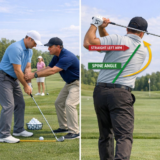
Unlock Elite Golf Performance: Master Swing, Putting & Driving Skills synthesizes contemporary biomechanical insights, performance science, and practical coaching methodologies to offer a coherent framework for measurable enhancement in golf performance. Grounded in empirical research and validated training protocols, this article examines teh kinematic and kinetic determinants of an effective swing, the neuromuscular and perceptual factors that underpin putting consistency, and the mechanical and strategic considerations that optimize driving distance and accuracy. The emphasis is on translating laboratory findings into replicable drills and on integrating technical refinement with on-course decision-making.
Drawing on biomechanical analysis, motion-capture findings, and evidence-based motor-learning principles, the subsequent sections decompose each facet of play-full swing, short game, and long game-into actionable components. For the swing, attention is given to sequencing, angular velocity, and ground-reaction force application; for putting, to stroke mechanics, visual-motor calibration, and routine stability; for driving, to launch conditions, clubface control, and shot selection under tactical constraints. Each component is paired with progressive drills, objective measurement strategies, and metrics for tracking adaptation, enabling practitioners to prioritize interventions according to individual strengths and constraints.
The goal is to provide coaches, performance specialists, and advanced players with a rigorous yet practical roadmap for reducing stroke variability and lowering scores. By bridging biomechanical diagnosis, targeted intervention, and course-management strategy, this work aims to foster durable performance gains that are demonstrable in practice and competitive play.
Integrating Biomechanical Analysis into Swing Mechanics to maximize Consistency and Distance
Begin with a biomechanically informed setup that creates repeatable swing mechanics: establish a neutral spine with a forward tilt of ~20°–25° from vertical, knee flex ~20°, and a shoulder plane that tilts slightly inside the target line to promote on-plane rotation. For the driver, position the ball just inside the led heel and set a shallow positive attack angle of +2° to +4° to optimize launch and reduce spin; for mid-irons, place the ball progressively more central and aim for a shallow descending blow with a target dynamic loft that produces the planned carry. Integrate the kinematic sequence as a guiding principle: pelvis rotation peaks first,followed by thorax (shoulders),then arms,and finally the club; use this sequence to convert ground reaction forces into clubhead speed rather than relying on arm-only snapping. In practical terms, measure progress with clubhead speed (using a launch monitor) and with simple kinematic checks on video: seek a clear lead-hip rotation before hands pass the top, and ensure the clubhead’s maximum angular velocity occurs after pelvis peak to demonstrate efficient energy transfer.
translate analysis into targeted practice with progressive, measurable drills and setup checkpoints that address common faults (casting, early extension, reverse pivot).Begin with slow,segmented movement patterns and graduate to full-speed practice with feedback: use high-speed video or a launch monitor every 10-15 practice swings to check sequence and impact metrics. Recommended drills include the following to build transfer to the course:
- Pelvic-Lead Drill: set feet narrow,rotate hips to a 45° lead-hip turn on the backswing,and practice initiating the downswing with a controlled lateral shift toward the target; repeat in sets of 3×10 with a 30-60s rest.
- Medicine Ball Rotational Throws: perform 10-15 throws focusing on hip-to-shoulder separation (X‑factor goal ~20°-40° for most golfers), 2-3 times per week to improve torque and sequencing.
- Impact Bag / Compression Drill: hit an impact bag or short swings into a towel with a mid‑iron to train forward shaft lean and proper low-point control; target consistent divot pattern instantly after ball contact for irons.
- Tempo metronome 3‑2‑1 Drill: use a metronome (or count) to create a 3:2:1 rhythm for backswing, transition, and downswing to stabilize timing and reduce deceleration.
These drills are scalable: beginners should focus on slow, deliberate reps with alignment rods to ingrain setup, while advanced players can add resistance (band work) and speed-capacity sets measured by launch monitor numbers for clubhead speed and smash factor.
apply biomechanical improvements to course strategy and short‑game scoring by using technique adjustments to manage real‑world conditions: for a firm, downwind fairway favor a higher swing speed with a slightly closed face to reduce spin, whereas into the wind shorten the backswing and increase loft to maintain carry. Short game benefits directly from better biomechanics-consistent low‑point control and forward shaft lean produce repeatable wedge distances and predictable spin on firm greens, improving proximity to hole and scoring. Troubleshoot common errors with these checkpoints:
- Early extension: check for loss of spine angle at transition-correct with wall‑tap or chair‑back drills to feel maintained posture.
- Casting (early release): use the towel drill or impact bag to train wrist hinge retention through transition.
- Reverse pivot: rehearse weight transfer with the step drill (lead foot step toward target on transition) to re-establish proper center‑of‑pressure shift.
complement technical work with a consistent pre‑shot routine,breath control,and visualization to reduce performance variability under pressure; set short‑term measurable goals (for example,reduce dispersion by 20% in 6 weeks as measured by carry direction and distance on the range) and adjust equipment only after consistent biomechanical patterns are proven using launch data and professional club fitting. this integrated approach links efficient movement patterns to tactical choices on the course, producing measurable gains in both consistency and distance across all skill levels.
optimizing Clubface Control and Tempo Through Evidence Based Drills for Reproducible Ball Striking
Begin with a reproducible setup that prioritizes clubface square to the target line at address, consistent ball position, and an established spine angle – these are the foundations of reliable clubface control and tempo. At address, most mid-irons should be positioned with the ball one ball-width left of center for short irons and progressively more forward for longer clubs; drivers are typically off the inside of the left heel for right-handed players. Ensure shaft lean at impact of approximately 5°-10° forward for irons to promote compressive contact and a negative angle of attack (commonly ~-1° to -3° for struck irons), whereas drivers frequently enough require a slightly positive attack angle (+1° to +3°). Equally vital, understand that the clubface orientation at impact is the primary determinant of initial ball direction: path influences curvature, but face-angle control directly governs where the ball starts. To make these variables measurable in practice, use an impact tape or launch monitor to track face angle and smash factor and record face-angle deviation targets of ±2° or better for reproducible ball striking.
Next, develop tempo and release mechanics with evidence-based drills that progress from motor-pattern learning to on-course execution; start slow and add speed only when consistency is proven. Use a metronome set between 60-80 beats per minute to train a backswing-to-downswing timing ratio near 3:1 (for example: three beats back, one beat through) and practice a three-tier progression – half swings, three-quarter swings, full swings – until face-angle variance is within your target. Complement tempo work with targeted face-control drills:
- Gate drill: place two tees slightly wider than the clubhead at impact to train a square face through impact;
- Impact bag: slow-motion strikes to feel shaft lean and face compression, aiming for minimal head rotation at impact;
- Toe‑up / Toe‑up drill: swing to a toe‑up on the takeaway and reproduce toe‑up on the follow-through to ingrain a consistent wrist hinge and release.
For measurement, use a launch monitor to set practice goals: reduce lateral dispersion by a specified yardage (e.g., reduce 7‑iron dispersion to within 10 yards) or achieve a consistent smash factor target for each club. Progressively integrate variability by practicing into different wind conditions and turf types so the motor pattern is robust under real course stresses.
translate technical gains into course strategy and scoring via deliberate practice and situational rehearsal. Start each practice session with setup checkpoints (neutral grip pressure ~4-6/10, shoulders square, ball position verified) then move to scenario-based routines such as fairway-bunker transitions or uphill/downhill lies; this connects face control and tempo to shot selection and club choice. Troubleshooting common faults is essential:
- Early hand release/flip: practice delayed release with the toe‑up drill and shorter swings until the hands stop dominating the clubhead;
- Open face at impact: check grip strength and address alignment, and use a stronger wrist set on the takeaway to reduce late face opening;
- Rushed tempo: return to the metronome or count-based rhythm (one-two-three) until consistency returns.
Equipment considerations also matter – incorrect lie angle, excessive shaft torque, or inappropriate grip size can mask technique improvements, so confirm fittings before making swing changes. set measurable on-course targets (for example, hit 70% of fairways or reduce average approach dispersion by 15 yards within eight weeks) and couple technical practice with mental routines (pre-shot routine, breathing, visualization) to ensure that improved clubface control and tempo produce reproducible ball striking under tournament and recreational pressures, consistent with the Rules of Golf (notably avoiding anchoring the club to the body).
Progressive Driving Protocols: Sequenced Strength Mobility and On Course Application for Increased Carry and Accuracy
Begin with a structured assessment that sequences mobility, stability, and basic setup fundamentals to create a repeatable driving motion. First, evaluate thoracic rotation (goal: ~45° of usable rotation in the upper spine) and hip internal/external rotation (goal: ~30°-40° of lead-hip internal rotation) because limited rotation commonly restricts coil and reduces clubhead speed. Next, establish a setup checklist that beginners and advanced players can use: spine tilt of approximately 10°-15° away from the target for the driver, ball position just inside the lead heel, shoulders square or slightly open to the target line, and a relaxed grip pressure allowing forearm supination through impact. To build the physical template, integrate two to three weekly strength/mobility sessions emphasizing posterior chain strength and rotary stability-examples include single-leg Romanian deadlifts, kettlebell swings, and resisted thoracic rotations with a band. Practice checkpoints:
- Use a mirror or video to confirm spine angle and ball position at setup.
- Test thoracic rotation by rotating the shoulders while keeping the hips fixed; aim for smooth, pain-free range.
- Measure progress with simple metrics: increase driver carry by monitoring clubhead speed and launch with a launch monitor; target +1 mph = ~2-2.5 yd carry improvement.
This systematic approach ensures a player develops the physical capacity to safely produce speed and maintain accuracy.
Progress from physical readiness to precise swing sequencing and contact quality by isolating vector and timing components of the driver swing. Emphasize a two-part tempo model: a controlled takeaway to create width and a powerful transition that initiates lower‑body drive into the downswing. Key technical markers are hip clearance on the downswing, maintenance of the wrist hinge until the transition (to prevent casting), and achieving approximately 60%-70% of weight over the lead foot at impact for consistent launch and reduced spin. To refine these, employ targeted drills:
- Impact tape/impact sticker checks to monitor center-face contact and adjust face control.
- Step-through drill: take a normal backswing,then step the trail foot through the swing on the follow-through to encourage proper weight transfer and hip rotation.
- Slow‑motion tour tempo drill: practice the swing at 50% speed focusing on maintaining the wrist hinge until the transition and producing a square face at impact.
Common faults include early extension (hips moving toward the ball before impact), casting the club (releasing the hinge to early), and an open face at address. Correct these by reducing swing length to re-establish sequencing, strengthening hip hinge patterns off the range, and using alignment sticks to rehearse face-path relationships. Use measurable goals such as hitting 70% of range drives to the center third of the target at practice and increasing driver carry by 5-10 yards over 8-12 weeks as validation of technique change.
translate physical and technical improvements to strategic, on-course execution with a focus on club selection, shot shape control, and mental routines that reduce penalty risk and optimize scoring. When playing, consider conditions-wind, firmness, and elevation-and adjust: in a 10-15 mph headwind play one club longer, in gusty crosswinds align for shape and use lower-lofted options to reduce spin; when firm fairways permit rollout, choose a tee strategy that targets preferred landing zones rather than absolute distance. Practice routines that replicate course pressure include:
- Simulated tee pressure: play three drives to a defined target with a small penalty (e.g., two‑meter circle) for misses to train decision-making under stress.
- Gap‑control sessions: hit 5 balls at 50%, 75%, and 100% effort to understand partial‑swing trajectories and to dial carry distances for lay-ups and aggressive lines.
- Pre‑shot routine rehearsal: spend 60-90 seconds on alignment, visualization, and a dry swing to enforce consistency.
For beginners, emphasize conservative club selection and hitting fairways to avoid penalties under Rules of Golf guidance (e.g.,no preferred lies unless local rule). Low handicappers should pursue controlled shot shaping-using fade/draw bias to use course contours-and set measurable targets such as hitting 70% of fairways in a wind-adjusted plan and limiting drives out of play to one or fewer per round. Integrate breathing and focus cues to manage competitive anxiety and ensure technical changes hold under pressure; in this way, strength and mobility gains connect directly to lower scores through deliberate, measurable on-course application.
Precision Putting: Motor Learning Principles Stroke Mechanics and Feedback Strategies to Reduce Three Putts
Applying contemporary motor-learning principles to putting begins with structured, progressive practice that moves from controlled, blocked repetitions to variable, game-like scenarios. Start with short, high-frequency drills to ingrain the pendulum motion-aim for 200-300 putts per practice session with immediate knowledge-of-results (make/miss) feedback, then progress to sessions that introduce variability (different distances, slopes, and lighting) to promote transfer. For measurable goals, set benchmarks such as make 40/50 putts inside 6 ft, leave 80% of lag putts inside 3 ft from 20-40 ft, and reduce three-putts to below 10% of holes played. In addition, use a faded feedback schedule: provide video or coach feedback intermittently rather than after every stroke to strengthen intrinsic error-detection. follow the Rules of Golf on the putting green-you may repair ball marks and clean your ball, but you must not anchor the putter against your body (anchoring is prohibited)-and practice with those constraints to ensure on-course legality and consistency.
Mechanically, prioritize a stable foundation and minimal wrist action so that face angle and path control distance and direction. Establish a setup with a slightly open stance for arced strokes or square stance for straight-back-straight-through; position the ball just forward of center for most modern mallets and mid-blades to promote a slight forward press at impact. Maintain a light grip pressure (approximately 3-5 on a 1-10 scale) and shoulder rotation of roughly 10-20° on the backstroke and follow-through; wrist hinge should be negligible. For face/path geometry, aim for a putter-path arc of <5° off the target line for “straight” stroke types or a shallow inside-to-square-to-inside arc of 3-6° for arced strokes, and keep face rotation within ±1-2° of square at impact to avoid misses. To train these mechanics, incorporate the following drills and checkpoints:
- Gate Drill: place tees just wider than the putterhead to train a square impact path;
- Metronome Tempo: use 60-80 BPM with a 2:1 back-to-through duration to stabilize tempo;
- Distance Ladder: feed putts from 3, 6, 12, 20, 30 ft aiming to leave within 3 ft (progressively increase miss-tolerance);
- Video/mirror Check: verify minimal wrist action and parallel shoulder plane at address.
Also troubleshoot common errors: if putts are consistently left/right, first check face angle at impact with a chalk line; if pace is poor, increase stroke length proportionally-use the rule of thumb that backstroke length should increase roughly 1 inch per 3 feet of putt distance for predictable roll.
integrate strategic course management and feedback strategies to systematically reduce three-putts. read greens by first assessing slope direction and percentage-on swift Stimp greens (e.g., 10-12 ft) reduce intended ball speed by ~10-15% compared with slow greens (8-9 ft)-and always play for an uphill or center-leave when possible. on the course, adopt a two-tiered putting plan: (1) for putts inside 12 ft, select a line and commit to a “hole-or-die” execution routine; (2) for lag putts beyond 12 ft, adopt a target-gate strategy (pick an intermediary aim point designed to leave the ball 3 ft past the hole on chosen speed) to minimize the chance of three-putting. Use pressure simulations in practice (competitive games, putting for points, or teammate accountability) and objective feedback tools (launch monitors, stroke sensors, or simple outcome logs) to quantify progress-record percentage of putts made, average distance left, and three-putt frequency after each session. In addition, adapt to situational factors such as wind, grain, and green firmness, and emphasize a consistent pre-shot routine that includes breath control and visualization to connect technical execution to the mental game. Together, these mechanical refinements, deliberate practice structures, and on-course strategies create a replicable pathway for golfers at all levels to improve stroke consistency, pace control, and ultimately shrink three-putt rates and scoring averages.
Level Specific Training Programs and Measurable Metrics for Monitoring Swing Putting and Driving Progress
Begin with the fundamentals of the full swing by isolating setup, kinematic sequence, and impact position into measurable checkpoints. Address posture with a spine tilt of approximately 10-15° from vertical, feet shoulder-width for mid-irons, and ball position one ball forward of center for mid-irons and just inside the left heel for driver; these baseline measurements help standardize repeatable motion across sessions. Progressions should move from static to dynamic testing: first validate setup and takeaway with mirror and alignment-rod checks, then quantify motion with simple metrics such as clubhead speed, ball speed, smash factor, and 5-shot dispersion at fixed targets; typical targets are 60-80 mph (beginners), 80-95 mph (intermediate), and 95-115+ mph (low handicaps) for driver clubhead speed. For technique improvement, use these drills to isolate specific faults and reinforce correct sequencing:
- Mirror takeaway drill – ensure clubhead and toe line move back on plane for the first 2-3 feet.
- tempo metronome - 3:1 backswing-to-downswing rhythm; use counts to ingrain timing.
- Impact tape / face-contact drill – train center-face strikes and monitor gear effect (spin).
Common faults and corrections should be recorded: early extension (correct with wall-drill to feel hip hinge), over-the-top (use inside-path swing-feel with tee tucked behind ball), and insufficient shoulder turn (mobile-rotation stretch plus a half-turn drill).By moving from qualitative cues to quantitative targets, golfers of every level can track progress, set weekly goals (e.g., reduce 5-shot dispersion by 20%, raise smash factor by 0.05), and connect mechanical changes to on-course scoring.
Short-game and putting instruction emphasizes feel, contact, and green-reading with measurable benchmarks that correlate directly to scoring. Establish a consistent putting setup with eyes approximately over or slightly inside the ball, hands ahead at address to produce a slight forward shaft lean at impact (2-4° loft at impact for most putters), and a stroke path appropriate to the putter type (straight-back-straight-through for blade-style; slight arc for mallets). use these drills and metrics to quantify improvement:
- 3-6-10 Foot Percentage Drill – record make-rate from each distance; aim for 60%+ at 3 ft, 40%+ at 6 ft, 20-25% at 10 ft for mid-handicaps, and higher for low handicappers.
- Lag-putt ladder – measure leaving putts inside 3 ft from 30-50 ft 70% of the time to reduce 3-putts.
- Gate and face-balance drills – eliminate face-rotation faults and casting by practicing through narrow gates and with weighted putters.
For chips and bunker play, track up-and-down (scrambling) percentage as a performance metric - set staged goals (beginners: 30%+, intermediates: 40-55%, low handicaps: 60%+). Address common mistakes: deceleration through the ball (teach a forward-lean impact and accelerate through), thin or fat strike (use a low-point drill with a towel an inch behind the ball for chips), and poor green reading (use the break-sighting method: read slope at putt origin, midpoint, and near the hole and practice under various grain and moisture conditions). integrate mental tools such as pre-putt routine and pulse-control breathing to maintain consistency under pressure; developing a simple, repeatable routine often yields larger gains than technique tinkering.
Driving and course-strategy sessions should combine technical parameters with situational decision-making to maximize scoring opportunities while managing risk.Set technical targets such as tee height roughly 1-2 inches above the driver crown (or so the equator of the ball is near the top third of the face), a slightly forward ball position, and an angle of attack that for most better players is slightly positive (+2° to +5°) to optimize launch and reduce spin; measure results by carry distance, total dispersion (lateral and distance), and fairways-hit percentage. Practice routines that develop distance and control include:
- fairway-target protocol - alternate between aiming at narrow and wide targets to train accuracy under simulated pressure.
- Path and face control drill – place a headcover just outside the ball to feel an in-to-out path when shaping intentional draws, or inside for fades.
- Penalty-prevention exercise – play “preferred-miss” drills where the golfer practices their safest miss from typical teeing areas and records which miss keeps them in play most often.
Course management instruction should translate those technical outputs into strategic choices: choose tee positions and clubs to leave approach shots at preferred distances to the pin (e.g., 85-120 yards for wedge shots where control is highest), factor wind and firmness into club selection, and apply statistical goals such as aiming to increase GIR by 5% or reduce penalty strokes per round by 0.5. For different skill levels, recommend multiple approaches-visual learners use alignment sticks and visual targets, kinesthetic learners perform weighted-swing drills, and analytical players track metrics with launch monitors and scorecards. In all cases, pair technical practice with a mental pre-shot routine and brief course-planning checklist to ensure that mechanical gains transfer reliably to lower scores on the course.
Translating Practice to performance: Course Strategy Integration and Pressure Simulation Techniques
Begin by converting controlled-range outcomes into reproducible course decisions through a structured, measurable routine that links swing mechanics to on-course targets. First,establish a baseline of carry and total distance for each club-use a launch monitor,GPS,or marked-range sessions to record average carry (in yards) and dispersion (standard deviation or 5-10 shot window). Then translate those numbers into landing-zone strategy: for approach shots, aim for a landing zone 10-20 yards short of the green edge to allow for roll-out on mixed turf; for tee shots, select a target line that prioritizes angle-of-approach to the next shot rather than maximum distance. In practice, alternate between technical swing drills (e.g., alignment rod drill to maintain a 5-7° spine tilt and 2-4° forward shaft lean at address for mid-irons) and variable-distance, random-target sessions that replicate course variability. To implement this on the course,follow these setup checkpoints:
- Ball position by club (e.g.,center for short irons,forward of center ~1-1.5 ball diameters for long irons/woods);
- Grip and pressure at ~4/10 tension to allow proper release;
- Alignment with an intermediate target 10-20 yards ahead to control body-path.
set measurable goals such as reducing your 3-wood dispersion by 15 yards or increasing fairways hit by 10 percentage points within six weeks through focused range-to-course correlation drills.
Next, refine the short game and pressure-specific simulations so that touch and technique survive competitive stress. Begin with step-by-step mechanics: for chips and pitches, control launch and spin by varying swing length and loft-use a 25-50% swing from waist rotation for bump-and-run shots and a 75-90% swing with increased wrist hinge for full pitches; open the face 10-15° for high, soft-landing pitches. Practice drills should be applied under graduated pressure:
- Zone-chipping drill: place three concentric circles at 5, 15, and 30 feet from the hole and score +1/-1 for each prosperous landing zone;
- Bunker-contact drill: practice shallow entry (56° wedge, bounce 10-12°) with an open-face setup and aim to take sand 1-2 inches behind the ball;
- Putting clock drill: hit consecutive 6-10 foot putts from different angles with a goal of 75% conversion under a 60-second time limit to simulate tournament pace.
For beginners, emphasize fundamentals-weight slightly forward, soft hands, and using lower-lofted clubs to simplify contact-while advanced players refine spin control and trajectory by adjusting face loft, swing arc, and ball position. To simulate pressure, incorporate consequences (score penalties or gamified stakes) and replicate environmental variables such as wind, wet greens, or tight lies so that the short game remains reliable when the tournament clock is running.
integrate course management, shot shaping, and mental routines into a decision tree that operates under pressure and varying whether conditions. Begin every hole with an information checklist: lie, yardage to hazards, preferred landing area, prevailing wind vector, and green firmness. Then apply this decision algorithm: choose the club that leaves the largest margin for error (e.g., lay up to 120 yards short of a hazard rather than attempting a risky 200-yard carry), select shot shape (fade/draw) by adjusting face-to-path by approximately 2-4°, and execute with a rehearsed pre-shot routine of visualization, one practice swing, and controlled breathing. Troubleshooting steps include:
- Alignment correction: place an intermediate target and check toe/heel contact in short swings;
- Trajectory adjustment: add one club for every 10-20 mph headwind, or reduce loft/ball height for wind avoidance;
- Risk management: keep penalty strokes to a minimum by prioritizing safe bailout areas and understanding local course rules regarding relief from abnormal conditions.
Set performance metrics such as reducing penalty strokes by 30% or cutting three-putts in half within 8-12 weeks, and pair these goals with mental strategies (pre-shot cue words, controlled breathing, and a 10-second routine) to ensure that practice-derived mechanics transfer consistently to competitive play.
Technology and Data Driven Coaching Using Launch Monitors High Speed Video and Wearables to Personalize Instruction
Begin instruction by establishing an objective baseline with integrated technology: use a calibrated launch monitor (e.g., radar or camera-based systems) to record clubhead speed, ball speed, launch angle, spin rate, attack angle and face‑to‑path, while capturing synchronized high‑speed video (≥240 fps) and wearable inertial sensors to quantify body sequencing (pelvic rotation, shoulder turn, and tempo). First, perform a 30-60 shot baseline protocol with a driver, a mid‑iron and a wedge to capture full‑swing and short‑game metrics; then compare measured values to target ranges (for many amateurs: driver launch 10-14°, driver spin 1,800-3,000 rpm, iron attack angle −4° to −8°, and for clubhead speed set incremental goals such as +2-4 mph in 6-8 weeks).Next, apply step‑by‑step corrective sequencing: (1) review slow‑motion impact frames to identify vertical low‑point and face angle errors, (2) use wearable gyroscope traces to correct early release or insufficient separation (increase X‑factor by controlled shoulder rotation drills), and (3) validate adjustments immediately on the monitor so changes in smash factor, spin and dispersion are measurable. to develop repeatable motor patterns, train progressively from tempo and path first, then load power elements, always confirming with data rather than feel alone.
Translate objective metrics into short‑game and putting refinements by combining launch data,ball‑flight video and wrist/putter‑shaft wearables to measure stroke path,face rotation,and impact location. For wedge play, use carry and spin numbers to create a landing‑zone practice plan: select a target 10-15 yards deep and practice landing the ball on that zone; use the monitor to record spin rate and adjust loft/shaft lean to increase hold (center strikes with appropriate dynamic loft increase spin most effectively). For putting, analyze face angle at impact and tempo (backswing:downswing ratios near 3:1 often produce consistent distance control) using high‑speed video and accelerometer traces; then implement drills:
- Gate Drill: narrow gate to ensure square face through impact for 3-5 minutes per session;
- three‑Ball Distance Drill: putt progressively shorter and longer distances aiming for 1-2 feet proximity feedback;
- Wedge Landing‑Zone Drill: use a towel or target to train carry and spin for specific yardages.
Beginner players should focus on consistent contact and basic setup (ball position, light forward shaft lean), while low handicappers should use recorded spin/launch trends to refine trajectory and shot‑shaping around pins and greens with measurable stopping distances.
integrate shot‑by‑shot data into course strategy and practice programming so on‑course decisions are driven by reliable performance metrics rather than estimation. Use aggregated shot‑tracking (manual or app‑based) combined with launch monitor carry/roll profiles to build a personal club‑distance chart under varying conditions (e.g., wet vs.firm turf, temperature shifts-expect roughly ~1-2% carry change per 10°F, and wind adjustments where headwinds can reduce carry by 10-25% depending on strength). Then apply that chart during pre‑shot planning: choose layups to preferred angles, plan hole management to avoid penalty areas, and select shot shapes that minimize exposure (fade into left‑to‑right pin, draw to hold a close‑cut green). To operationalize practice into scoring improvement, schedule weekly sessions with specific measurable objectives (reduce 95% dispersion radius for 7‑iron to ±15 yards in eight weeks; increase fairway hit percentage by 10%), and use situational drills to simulate tournament pressure (random target practice, constrained time, or two‑ball competition).incorporate mental routines-pre‑shot breathing, data‑informed confidence cues and routine checks of conditions-so technology informs strategy while the player maintains a consistent on‑course process for reproducible scoring outcomes.
Q&A
Note: the web search results provided were unrelated to the topic and therefore were not used. Below is an academically styled, professional Q&A tailored to the article “Unlock Elite Golf Performance: Master Swing, Putting & Driving Skills.”
1) What are the primary biomechanical principles that underpin an efficient full swing?
– Efficient swings optimize sequencing of the kinetic chain: ground reaction force generation, transfer of force through the legs/hips to the torso, and timed release through the arms and club. Key principles include stable lower-body support, controlled pelvic rotation with appropriate separation from thoracic rotation (torso-pelvis “X-factor”), maintenance of a consistent swing plane, and an impact position that aligns clubhead speed with optimal loft and face orientation. Minimizing unnecessary lateral movement and optimizing segmental timing improves energy transfer and reduces injury risk.
2) How should a coach or player assess swing mechanics objectively?
– Use a multimodal assessment: 3D motion-capture or high-speed video for kinematics (swing plane,segmental timing),radar/LiDAR launch monitors (clubhead speed,ball speed,launch angle,spin),force plates or pressure mats for ground reaction forces and weight shift,and simple on-course performance metrics (dispersion patterns,strokes gained). Baseline metrics and repeated measures allow identification of deficits and monitoring of intervention effects.
3) Which swing variables most strongly predict driving distance and accuracy?
- Driving distance is primarily influenced by clubhead speed and the efficiency of energy transfer (smash factor), moderated by launch angle and spin rate. Accuracy is influenced by clubface orientation at impact, swing path, and consistency of tempo/rhythm. In practice, improving clubhead speed without preserving face control or effective launch conditions can increase distance but worsen dispersion.
4) What evidence-based drills improve clubhead speed while preserving control?
– Progressive overspeed training (carefully dosed) to increase neuromuscular power; medicine-ball rotational throws to enhance torso-pelvis sequencing; impact-bag or weighted club swings to strengthen impact-position muscles; and targeted speed sessions on a launch monitor to monitor smash factor and dispersion.Progressions should prioritize maintaining impact face control and optimal launch/spin profiles; use objective feedback (ball speed, dispersion) to prevent maladaptive increases in spin or face-rotation.
5) How do you optimize launch conditions (launch angle and spin) for maximum driving carry?
- optimize launch by matching loft and shaft characteristics to an individual’s attack angle and clubhead speed. Generally, higher clubhead speed benefits from lower spin and moderate-to-high launch angles; slower speeds can benefit from higher launch and moderate spin. Use launch-monitor data to identify the ideal launch/spin window and adjust driver loft, shaft flex/length, and tee height accordingly.6) What are the common mechanical causes of offline tee shots, and how are they corrected?
– Causes: open/closed clubface at impact, over-the-top or inside-out swing path deviations, poor setup/alignment, inconsistent weight distribution. Corrections: alignment-stick drills to establish setup, gate drills to refine path and face control, impact bag or short-swing drills to groove correct impact position, and tempo/sequence work to stabilize timing. Emphasize small, repeatable changes and use objective metrics to confirm improvement.
7) What role does putting technique vs. green reading play in putts saved?
– Both matter substantially. Stroke mechanics (face control, path, tempo, and distance control) determine the ball’s initial direction and speed; green reading determines target selection and intended line. Empirical analyses of scoring show that distance control (leaving short putts makeable and reducing three-putts) and first-putt proximity have outsized effects on strokes gained. Thus, practice should allocate time to both mechanics and green-reading strategies.8) Which putting drills produce the greatest transfer to on-course performance?
– Distance control drills (ladder or clock drills), alignment and face-control drills (mirror, rail or gate drills), and pressure-simulated routines (competitive makes/misses) have demonstrated transfer. Incorporating variability (different slopes, lengths, and grass speeds) and immediate objective feedback (measured proximity or make percentage) accelerates learning and retention.
9) How should golfers structure practice time between technique work, drills, and on-course play?
– Adopt a periodized practice schedule: diagnostic assessment → focused technical blocks (4-8 week cycles) with high variability and feedback-based drills → integration phase with on-course simulation and pressure work → maintenance with mixed practice and match play. Employ deliberate practice principles: clear objectives, immediate feedback, repetition with variation, and progressive difficulty. Weekly time allocation depends on goals, but a balanced model often includes ~40-60% technique/drill work and 40-60% simulated/on-course play within an overall weekly plan.
10) How can players quantify putting consistency and improvement?
– Use metrics such as putts per round, one-putt percentage, three-putt avoidance, and proximity to hole (first-putt distance). Track make rates from standardized distances (e.g., 3 ft, 6 ft, 10 ft) and measure variability in stroke tempo using metronome-based assessments. Longitudinal tracking with these objective metrics reveals true improvement beyond perceived performance.
11) What strategies improve short-game scoring (pitching, chipping) in tournament contexts?
– Prioritize center-of-face strikes, consistent contact, proper landing zone planning, and variable club selection. Practice variable-distance chips and pitches with target landing zones, not just strokes. Course management strategies-selecting the low-risk target, playing to preferred side of green, and understanding recovery options-are essential in tournaments where conservative play often produces lower scores.
12) How should training address injury prevention while enhancing power and flexibility?
- Implement a balanced conditioning program: mobility work for hips, thoracic spine, and shoulders; strength for lower-body and core; and eccentric control for deceleration. Emphasize movement quality over volume; monitor load and pain signals; include adequate recovery and progressive overload. Screening (e.g., movement screens) helps individualize interventions.
13) What mental and cognitive factors should be integrated into elite performance training?
– Include routines for pre-shot preparation, arousal regulation, and focusing strategies.Train decision-making under pressure using scenario-based practice and simulated stressors. Mental rehearsals and visualization can support motor planning and confidence. The integration of cognitive drills with technical practice enhances transfer to competitive situations.
14) How does course management affect scoring, and what analytical tools can assist decision-making?
– Course management reduces variance by aligning shot selection with a player’s strengths and minimizing exposure to high-risk scenarios. Tools: shot-tracking data, strokes-gained analytics, GPS and mapping apps, and simple risk-reward calculations (lie, angle, hazard proximity). Use objective data-rather than ego-to choose clubs and targets that maximize expected-value outcomes over the round.
15) What are realistic timelines and benchmarks for measurable improvement in swing, driving, and putting?
– Timelines vary by baseline and practice quality.With deliberate, monitored training, measurable changes in swing mechanics or putting consistency can appear within 6-12 weeks; appreciable increases in clubhead speed and distance often require 8-16 weeks of combined technical and physical training. Meaningful on-course scoring improvements may take multiple practice cycles (3-6 months) as technical gains are integrated with tactical and mental skills. Use repeated objective assessments to set realistic benchmarks.
16) How should coaches individualize interventions based on player level and biomechanics?
– Tailor interventions by combining objective assessment (kinematics,launch data,physical screening) with the player’s goals and constraints. Novices benefit from simplified cues and high-variability practice; intermediate/advanced players require nuanced biomechanical adjustments, equipment fitting, and strategic refinement. Use an iterative approach: implement small changes, quantify effects, and adapt based on measured outcomes.
17) What measurement technologies are recommended for coaches seeking evidence-based refinement?
– High-speed video for kinematics, launch monitors (radar/photometric) for ball/club metrics, force plates/pressure mats for ground reaction and weight transfer, inertial measurement units (imus) for portable segmental kinematics, and putting-analysis systems (laser/pressure-based) for stroke path and tempo. Combine technologies with standardized testing protocols to ensure reliable longitudinal comparisons.
18) How should progress be validated to ensure changes translate to competitive rounds?
- Validate by comparing practice-based improvements to on-course performance metrics (strokes gained categories, fairway/green hit rates, putts per round, proximity). Use competition simulation sessions and measure transfer under pressure. If practice improvements do not translate, reassess skill specificity, psychological factors, and the representativeness of practice tasks.
If you would like, I can: (a) convert this Q&A into a companion checklist for coaches and players; (b) provide specific drill progressions with session plans and measurable targets; or (c) create a sample 12-week periodized program incorporating the above principles. which would you prefer?
optimizing golf performance requires an integrated, evidence-based approach that bridges biomechanical insight, targeted skill acquisition, and strategic on-course decision-making. Biomechanical analysis provides objective markers-kinematic sequences, joint-loading patterns, and clubhead dynamics-that elucidate why specific swing adaptations produce greater consistency and power. When these markers are translated into empirically supported drills and practice structures, they create a principled pathway for improving driving distance and accuracy, refining stroke mechanics on the greens, and enhancing movement economy under pressure.
Equally important is the synthesis of technical work with deliberate course management and psychological preparation. Consistent putting performance emerges not only from refined stroke mechanics and green-reading protocols but also from practice environments that replicate competitive tempo and stress. Similarly, driving performance benefits from a balance of efficiency-focused mechanics, strength and mobility conditioning, and situational shot selection that aligns with a player’s measurable capabilities. Periodized training, regular objective assessment (video, launch monitor metrics, stroke analytics), and iterative coach-athlete feedback loops ensure that gains in the practice setting transfer to tournament play.
practitioners and players should adopt an individualized, data-informed framework: use objective measurement to set priorities, select drills with demonstrated transfer, and adapt strategies to the athlete’s physiological profile, learning preferences, and competitive goals. Future advances in wearable sensors, machine learning analysis of swing patterns, and longitudinal tracking will further refine these methods, but the core imperative remains the same-integrate rigorous analysis, deliberate practice, and strategic application to unlock elite performance on the course.